Short answer: Private drum lessons in San Diego run $55–$110 per lesson depending on length — roughly $230–$450 per month for weekly instruction. A 30-minute lesson sits at the lower end; a full hour at the upper end.
Group classes are cheaper ($20–$40 per class) but they're a different product — much less individual correction, which matters a lot on drums.
Ages 6–7 is the sweet spot to start. And you don't need to buy a drum set — studios provide the kit, and a $30 practice pad covers home practice for the first several months.

Why Drums Are Great for Kids and Teens
Pots. The coffee table. The back of your car seat. The steering wheel. If your child turns every surface in the house into a drum, you already know what they want.
Here's the thing most parents don't realize: that impulse isn't a nuisance to be managed. It's raw musical instinct looking for somewhere to go. Drums turn that energy into an actual skill — and the payoff reaches well past music.
Serious brain workout
Playing drums uses all four limbs at once, each doing something different. That's a genuine coordination challenge — the brain has to track multiple independent patterns simultaneously.
Research consistently associates music training with stronger cognitive development in children. Drummers specifically build timing, counting, and sustained concentration. Those skills transfer — many parents report better focus on homework after a few months of lessons.
Confidence and self-expression
There's something specific about sitting behind a drum kit. It feels powerful. Kids who perform for an audience — even a small one — build self-esteem quickly.
Drums also give energetic kids a healthy outlet. Instead of pounding on furniture, they channel that energy into music. For kids who struggle to express feelings in words, drumming offers another language.
Discipline and routine
Weekly lessons plus short daily practice create structure. Kids learn to show up, focus, and improve incrementally.
Drumming also teaches patience in a very concrete way. You can't learn a paradiddle in one day. Kids see clearly that steady work produces real results — and that lesson outlasts the drumming.
Most beginner drummers play basic rock beats and simple songs within 2–4 months of consistent weekly lessons. Drums give faster early wins than most instruments, which keeps kids motivated through the harder stretches later.
What Age Should Kids Start Drum Lessons?
This is the first question most parents ask. The short answer: it depends on the child — but there are clear patterns.

The trial lesson is the fastest way to tell whether a child is physically and mentally ready for a full kit.
Ages 4–5: rhythm exploration
Young kids learn through play. Rhythm games, hand percussion, and general music exposure are perfect at this age. Lessons focus on fun, not technique.
At four or five, most children can't control standard drumsticks well. Smaller hands need smaller sticks or shakers. Look for teachers who run play-based programs for little ones rather than pushing formal instruction too early.
Ages 6–7: the sweet spot
This is when structured drum lessons usually click. Kids at this age can count to four, hold drumsticks properly, and sit through a 30-minute lesson. They also have enough arm strength to control the sticks rather than just flailing.
Ages 8–12: fast learning
A golden window for drumming. Kids in this range learn quickly, can handle real rudiments, and are ready to join school band programs. Coordination and focus are both strong enough for meaningful progress.
Teens: it's never too late
Teenagers often make the fastest progress of anyone. They have coordination, focus, and — most importantly — real motivation. Many professional drummers didn't start until their teens.
Teens also know exactly what music they love. Playing along to favorite songs gives them a concrete goal, which makes practice feel less like a chore.
Is Your Child Ready? Quick Checklist
- Can they count to four out loud?
- Can they hold drumsticks without constantly dropping them?
- Do they keep a steady beat when dancing or clapping?
- Can they focus on one activity for 20–30 minutes?
- Do they ask to play drums on their own, unprompted?
If you checked most of these, your child is ready. If not, wait a few months and try again — there's genuinely no rush. A child who starts at seven and loves it will pass a child who started at five and resented it.
What Private Drum Lessons Cost in San Diego
Price is usually the first practical question. Let's separate the two things parents often see mashed together in search results.
Private lessons — the real numbers
This is what most families actually want: a weekly one-on-one lesson with a teacher who corrects technique in real time.
| Private Lesson Length | Per Lesson | Per Month (Weekly) | Best For |
|---|---|---|---|
| 30 minutes | $55–$85 | $230–$340 | Ages 6–9, first-year beginners |
| 45 minutes | $65–$95 | $260–$380 | Ages 9–13, band prep, steady progress |
| 60 minutes | $75–$110 | $300–$450 | Teens, serious students, audition prep |
Most beginner kids do best with 30–45 minute lessons. Shorter lessons keep young students engaged and cost less. As they grow into real repertoire and rudiment work, a full hour makes more sense.
In-home lessons typically add $10–$25 per lesson for the teacher's travel time.
Group classes — cheaper, but a different product
Group drum classes run $20–$40 per class. That's genuinely less money, and for a young child just exploring rhythm it can be a reasonable first step.
But be clear about the trade-off, because on drums it's bigger than on most instruments. Drumming technique is physical and specific — grip, wrist motion, seat height, pedal control, limb independence. In a group of six kids, a teacher can't reposition six sets of hands. Bad habits set in quickly and take months to unlearn later.
The honest framing: group classes are for discovering whether your child likes drums. Private lessons are for teaching them to play.
What the private lesson price usually includes
Most studios include the drum kit for lessons — a genuine benefit, since a kit is the most expensive instrument purchase in music. You should also get lesson materials and a weekly practice plan. Some teachers provide play-along tracks or practice videos. Ask what's included before you book.
Payment models to understand
- Monthly tuition — one flat monthly payment for weekly lessons. Easiest to budget, and no surprise in five-week months.
- Pay-per-lesson — more flexible, but your bill jumps 25% in months with five weeks.
- Packages — buy five or ten lessons upfront, often at a small discount.
Always ask about the make-up lesson policy. Life happens with kids. Good schools offer make-up credits or a clear, fair policy in writing.
The transparency test
Ask each school this exact question: "Including every fee — registration, recital, books, anything else — what will I pay you in total over 12 months for once-a-week 45-minute private drum lessons?"
A clear single number means a transparent school. Vague answers or a long list of "it depends" is a red flag. A school at $60/lesson with a $60 annual fee, $80 recital fee, and required books can easily cost more per year than a school at $80/lesson with nothing added on.
Private vs. Group vs. Band Programs
San Diego families have three main paths. Each serves a different purpose.
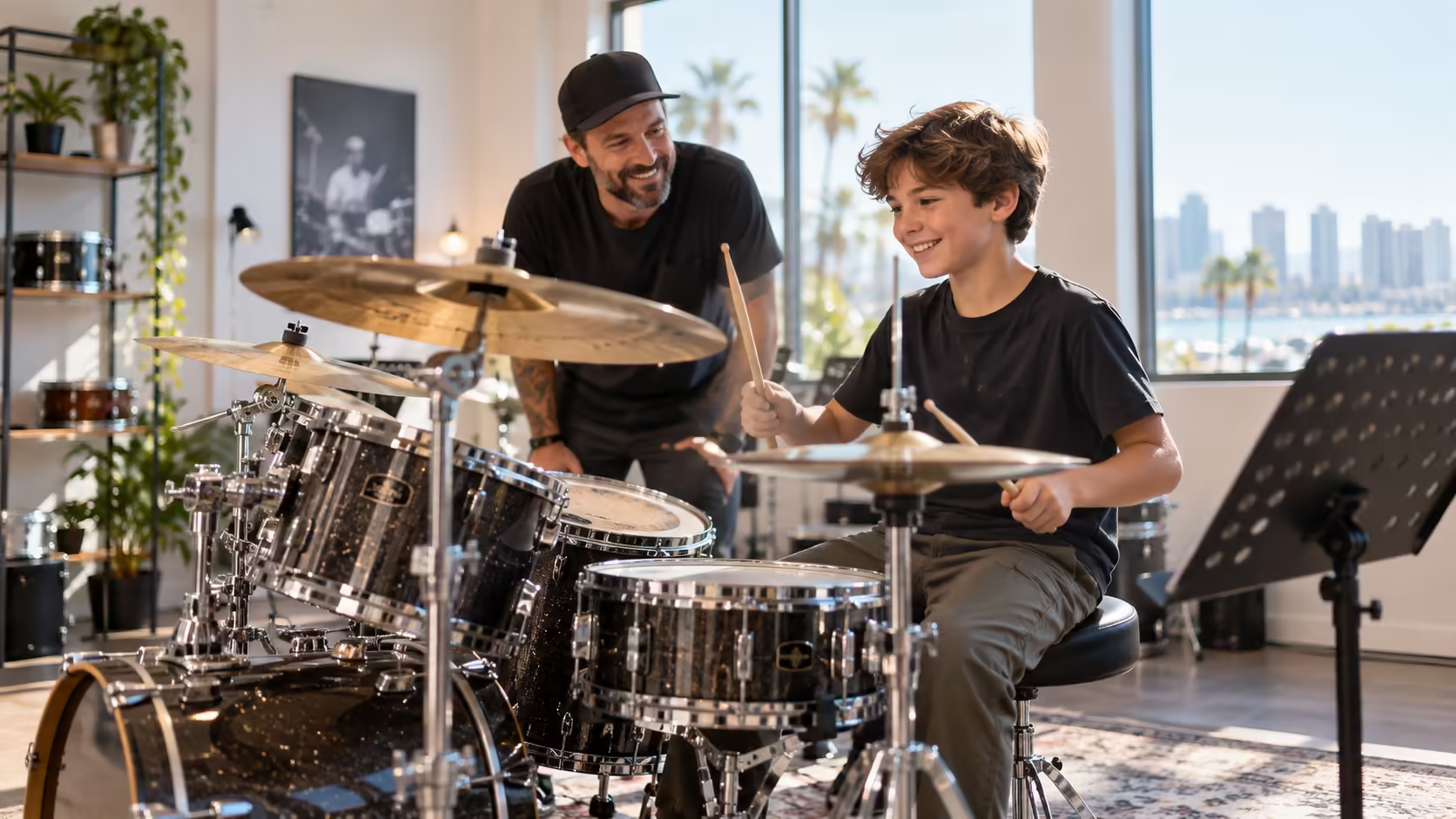
Private lessons build the technical base. Everything else builds on top of that foundation.
Private lessons — where technique gets built
One-on-one attention. The teacher adapts to your child's pace and goals, and corrects technique in real time. This is how strong fundamentals get built fast — grip, posture, stick control, and the limb independence that separates a real drummer from someone who bashes.
Best for: anyone serious about actually learning the instrument. This is the default choice for a reason.
Group lessons — low-cost exploration
Lower cost, plus a social element. Kids learn basic ensemble skills early and stay motivated by seeing peers play. For younger children especially, the group energy can be what makes it fun.
Best for: young kids testing whether drumming sticks, families on a tight budget, or a pre-private trial run.
Band programs and ensembles — where it gets fun
Band programs combine lessons with real performance experience. Students typically get a weekly private lesson plus a weekly group rehearsal, working toward a live show.
This format is powerful because it gives drumming a purpose. Practicing for a performance is completely different from practicing for its own sake.
Private lessons teach skills. Band programs teach performance. Most families start with private lessons for the first 6–12 months to build technique, then add ensemble or band playing once the fundamentals are solid.
Jumping straight into a band without fundamentals tends to lock in bad habits that take months to unlearn.
Acoustic vs. Electronic Drums for Beginners
This decision shapes your child's entire first year. Here's the honest breakdown.
| Acoustic Kit | Electronic Kit | |
|---|---|---|
| Feel | Authentic — real rebound and response | Close, but different. Mesh heads help. |
| Dynamics | Full range, whisper-soft to loud | More limited dynamic response |
| Noise | Very loud — the main drawback | Nearly silent with headphones |
| Space | Large footprint, heavy | Compact, often foldable |
| Extras | None — it's just drums | Built-in metronome, play-along tracks, recording |
| Starting price | $300–$900 for a student kit | $300–$800 for an entry model |
The smart combo setup
Many San Diego families land on the same clever solution: buy an electronic kit for home practice, and let the child play acoustic kits at weekly lessons.
This solves the noise problem completely. Home practice stays neighbor-friendly with headphones, and your child still gets real acoustic experience — real rebound, real cymbal response, real volume — every single week at their lesson.
If you're in an apartment or condo, this is almost always the right answer.
Noise, Apartments & Neighbor-Friendly Practice
Drumming is loud. That's the point. But it causes real problems in apartments, condos, and townhomes. Here's how families handle it.
Quiet practice tools, cheapest first
- Practice pad ($20–$40) — a small rubber pad, nearly silent. Handles most beginner stick work.
- Mesh drum heads — dramatically quieter than traditional heads on an acoustic kit
- Low-volume cymbals — perforated cymbals cut volume substantially while keeping the feel
- Electronic kit with headphones — the quietest full-kit option available
Soundproofing basics that actually help
- Put a thick rug or drum mat under the kit — kills floor vibration, which is what travels to downstairs neighbors
- Choose a room away from shared walls
- Use a garage or basement if you have one
- Close doors and windows during practice
Set practice windows and tell your neighbors
Pick a consistent daily time — say 5:00 to 5:30 p.m. Then actually tell the neighbors what to expect. Most people accept predictable noise that stops at a known hour. It's unpredictable noise that generates complaints.
This one conversation prevents most drum-related neighbor conflict.
Kids should wear ear protection when playing an acoustic kit. Drums regularly exceed safe volume levels, and hearing damage from loud music is permanent and cumulative.
Foam earplugs work, but musician's earplugs are better — they lower volume evenly across frequencies so your child still hears the music clearly rather than a muffled version. They run $15–$40 and are genuinely worth it.
What Gear Beginners Actually Need
Good news: you don't need to buy much, and you definitely don't need a kit on day one.
Start small — this is all you need
Drumsticks ($10–$20)
Size 7A for smaller hands, 5A for older kids and teens. Ask the teacher which size fits your child before buying.
Practice pad ($20–$40)
A simple rubber pad for daily stick control work. Nearly silent, portable, and genuinely effective. This is the single highest-value purchase.
Ear protection ($15–$40)
Non-negotiable once your child plays an acoustic kit. Musician's earplugs are worth the upgrade over foam.
Metronome (free)
A free phone app works perfectly. Timing is the drummer's core job, and a metronome is how you build it.
That's it. Under $100 total gets a beginner drummer fully equipped for their first several months.
When you're ready for a kit
Wait at least 3–6 months. Let your child prove the interest is real before spending $300–$900.
When you do buy, match the kit to the child's size. A full-size kit is genuinely hard for a seven-year-old to play — they can't reach the pedals comfortably or get around the kit. Junior and compact kits exist specifically for this, and they make a real difference in how quickly a small child progresses.
Nice-to-have accessories
- Adjustable drum throne — proper seat height matters more than beginners realize. It affects pedal control and posture.
- Music stand — for sheet music and drum charts
- Stick bag — keeps sticks from vanishing into the house
How Often Should Kids Practice Drums?
Practice is where the progress actually happens. Here's what works.
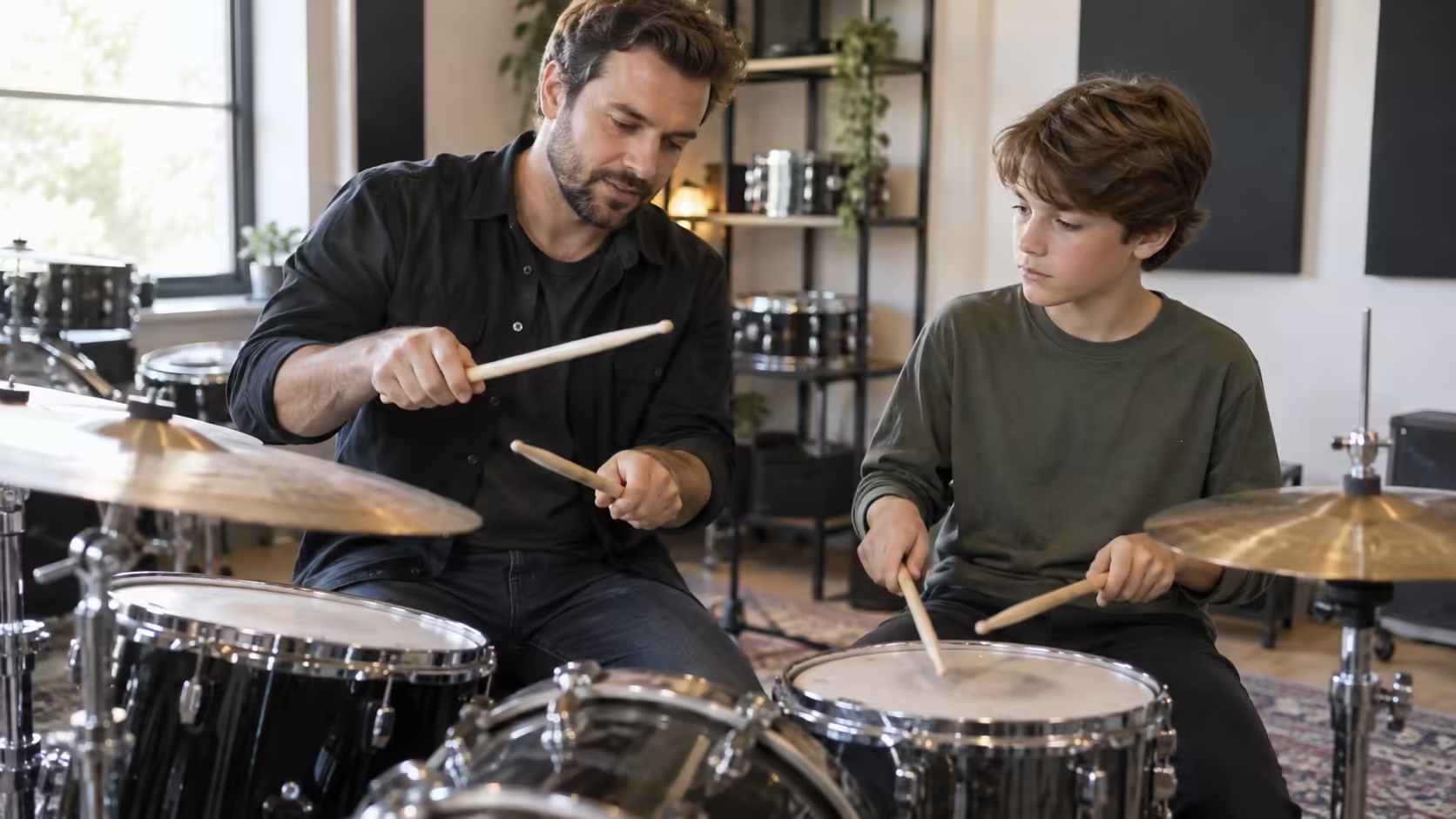
Technique work in lessons, short daily reps at home. That combination is what builds real drummers.
Consistency beats long sessions. Aim for 20–30 minutes most days rather than one marathon on the weekend. Five 25-minute sessions build coordination far faster than one two-hour session, because the brain consolidates motor skills during sleep — five practices give it five chances to lock things in.
What a good practice session includes
- A steady beat with a metronome (this is the foundation of everything)
- Basic rhythms and counting out loud
- Stick control exercises on the practice pad
- Rudiments — single strokes, double strokes, paradiddles
- Playing along to a favorite song
Make practice something they want to do
- Use play-along tracks. Drumming alone is boring; drumming with a band is thrilling.
- Record progress monthly. Kids can't hear their own improvement — video proves it to them.
- Celebrate small wins. A new fill, a clean paradiddle, a song played start to finish.
- End on something fun. Always finish practice with a beat they love playing. Ending on joy makes them want to come back tomorrow.
Put practice before screen time. The household rule becomes "drums first, then games." Kids internalize this fast, and it removes the daily negotiation entirely.
Keeping Teens Motivated
Teens drop hobbies when they lose the sense of forward motion. Four things prevent that.
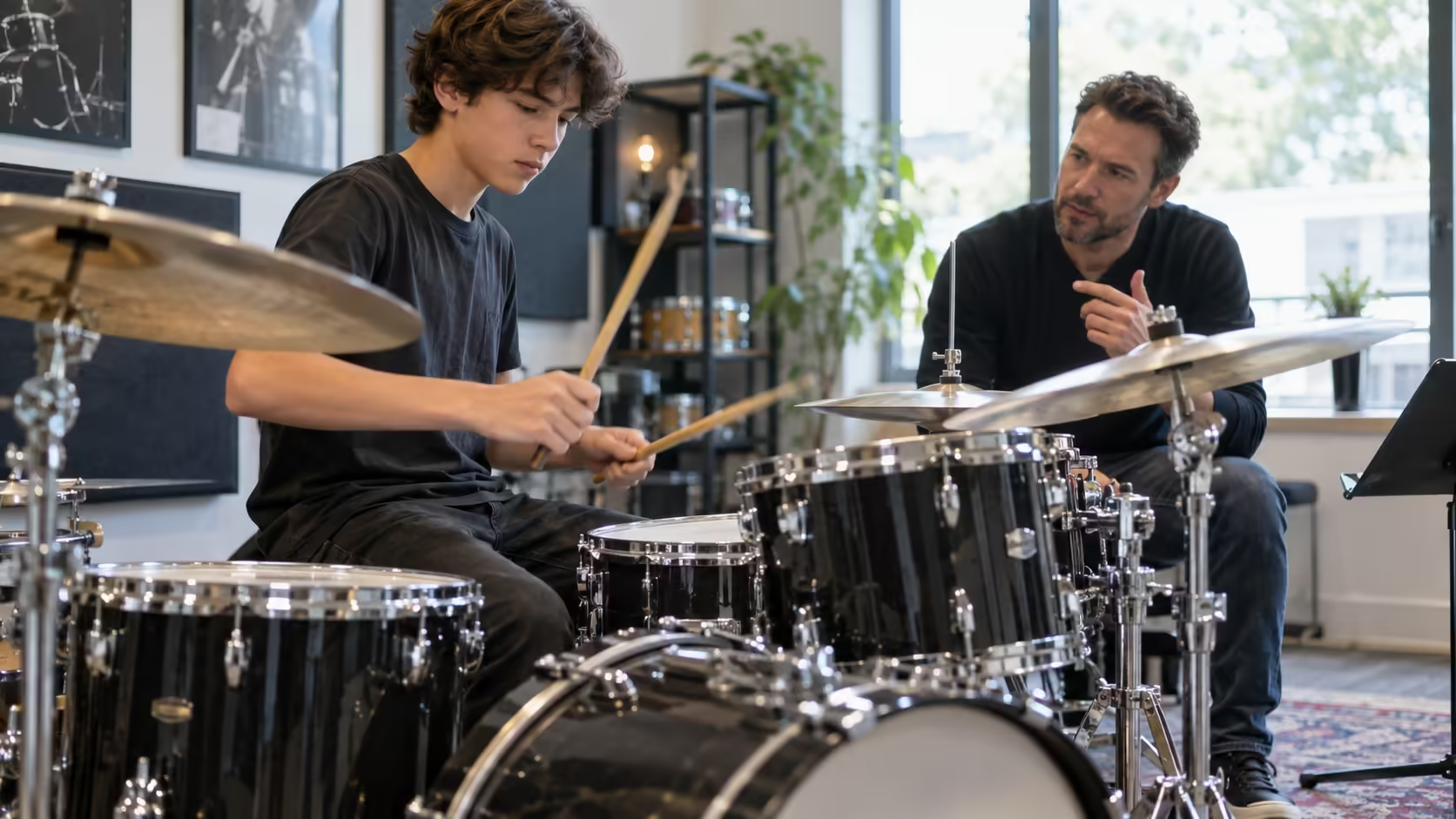
Teens practice hardest when they're working toward something specific — a gig, an audition, a recording.
1. Set real, concrete goals
"Get better" is not a goal. These are:
- Play a first live show
- Learn a favorite song end to end
- Audition for the school jazz band
- Record a cover video
2. Find performance opportunities
Recitals, band showcases, and battle-of-the-bands events keep teens hungry. Nothing beats the rush of playing live for an audience — and once a teen experiences it, practice motivation takes care of itself.
3. Let them pick the music
Teenagers practice dramatically harder on songs they chose. A good teacher can guide technique and reading while letting the teen own the repertoire. This is the single biggest lever on teen retention.
4. Make it social
Group rehearsals and jam sessions turn drumming into a social activity rather than a solitary chore. When friends are involved, teens stay committed.
How to Choose a Drum Teacher in San Diego
The teacher matters more than the studio. Here's how to pick a good one.
What to look for
- Experience teaching kids specifically — a great player isn't automatically a great teacher, and teaching a seven-year-old is a genuinely different skill
- Music degree or professional playing background
- A clear curriculum they can explain in plain language
- Strong, recent reviews — look for patterns, not one-offs
- Performance or recital opportunities for students
- Transparent pricing with no vague answers
Questions to ask before booking
- How much experience do you have teaching kids my child's age?
- Do you provide a drum kit for lessons?
- Are lessons always private, or sometimes grouped?
- What happens if we miss a lesson?
- How do you guide practice between lessons?
- How soon could my child join a band or recital?
- What's the total monthly cost including any fees?
Write down the answers and compare two or three teachers before deciding.
Take the trial lesson — and watch your kid, not the teacher
Most schools offer a free or low-cost first lesson. During it, pay attention to your child more than the instructor. Does the teacher make learning fun? Is your child engaged or shutting down? Do they walk out excited?
Trust that reaction. It tells you more than any credential list.
Drum Lessons at K&M Music School
If you've read this far, you know what drum lessons in San Diego involve — the right starting age, the real private lesson costs, the gear, the noise question, and what to ask a teacher. Here's how K&M Music School fits into that picture.
Drum Lessons at K&M
Weekly one-on-one drum lessons — full kit provided, flat monthly rate, no surprise charges
- Every lesson is private — one student, one teacher, no group sessions
- Full acoustic kit provided at every lesson — no purchase needed to start
- Same flat monthly rate whether the month has 4 lessons or 5
- One-time $50 registration fee — not annual
- 100% free trial lesson — no credit card required
- No recital fees, no material surcharges, no 5-week-month upcharges
Where K&M sits in the market
Compare our rates to the private lesson ranges in the cost section above. Our $70 / $80 / $90 per-lesson pricing sits in the middle of the San Diego private drum market at every lesson length — a fair rate for one-on-one instruction with an experienced teacher, a full kit provided, and an on-site recital hall.
What's different isn't the number. It's what's not tacked on:
30-minute weekly lessons: $280 × 12 = $3,360 + $50 registration = $3,410/year
45-minute weekly lessons: $320 × 12 = $3,840 + $50 registration = $3,890/year
60-minute weekly lessons: $360 × 12 = $4,320 + $50 registration = $4,370/year
That's the complete number. No annual re-registration, no recital fees, no book surcharges, no five-week-month upcharges. Ask any other school for their full annual total and compare.
What drum students get at K&M
- Always one-on-one — grip, posture, seat height, and limb independence corrected in real time, every week
- A full acoustic kit at every lesson — your child plays real drums from day one, no purchase required
- Experienced teachers who work with kids — patient with six-year-olds, serious with teens preparing for band auditions
- A structured curriculum — rudiments, reading, timing, and groove built on a sequenced 9-level program, so students progress instead of plateauing on the same three beats
- An on-site recital hall in Mira Mesa — performance is built into the program, not an extra charge
- Guidance on home practice setup — practice pads, electronic kits, and noise management for apartments
- 501(c)(3) nonprofit status — mission-driven, not investor-driven
We're about 15 minutes from most of North San Diego, including La Jolla, UTC, Sorrento Valley, and Carmel Valley.
The fastest way to know if drums are right for your child is to put them behind an actual kit and watch what happens. K&M offers a 100% free trial drum lesson — no instrument needed, no credit card, no pressure.
Book Your Free Trial Lesson5703 Oberlin Dr, Unit 108, San Diego, CA 92121 (Mira Mesa) • 858-588-3938 • Learn more about drum lessons
Frequently Asked Questions
How much do private drum lessons cost in San Diego?
Private drum lessons in San Diego typically cost $55 to $110 per lesson depending on length and teacher experience — roughly $230 to $450 per month for weekly instruction. A 30-minute lesson sits at the lower end, a full hour at the upper end. Group drum classes are a separate, cheaper option at $20 to $40 per class, but they provide much less individual correction.
What is the best age to start drum lessons?
Ages 6 to 7 is ideal for most children — that's when kids can typically count to four, hold drumsticks properly, and focus for a 30-minute lesson. Four and five year olds can start with rhythm games and hand percussion. Teens and adults can start at any age and often progress very quickly.
Do kids need their own drum set before starting lessons?
No. Nearly every studio provides a full drum kit for lessons. At home, a simple practice pad and a pair of sticks is enough for the first several months. Many families wait six months to a year before buying a kit.
Are private drum lessons worth it compared to group classes?
For drums specifically, yes — private lessons are where technique gets built. Grip, posture, stick control, and limb independence all need real-time correction from a teacher watching one student. Group classes are fun and cheaper, but a child in a group rarely gets their hand position fixed, and bad habits set in fast on drums.
How do we practice drums in an apartment without bothering neighbors?
Use a practice pad for daily stick work — it's nearly silent. For a full kit, an electronic kit with headphones is the quietest option. Mesh drum heads and low-volume cymbals also cut noise dramatically. Set consistent practice hours and let neighbors know the schedule.
Should beginners get an acoustic or electronic drum kit?
Many families use a combination: an electronic kit at home for quiet practice, plus acoustic kits at weekly lessons for the real feel and sound. Acoustic kits offer better dynamics and authentic feel; electronic kits solve the noise problem and include built-in metronomes and play-along tracks.
How often should kids practice drums?
Aim for 20 to 30 minutes most days rather than one long weekend session. Short daily practice builds coordination much faster because the brain consolidates motor skills during sleep. Five 25-minute sessions beat one three-hour session every time.
Are drum lessons good for energetic or hyperactive kids?
Often, yes. Drumming channels physical energy into a real skill and gives kids a constructive outlet. Many very active children focus better behind a kit than in a seated activity, because drumming engages the whole body while still demanding concentration.