Two-Piano / Piano Duet Recitals in San Diego: What You Need

Katherine Dvoskin, Co-Founder of K&M Music School
I hope you enjoy this blog post! If you're interested in scheduling a free trial lesson, just click.
Author: Katherine Dvoskin | Co-Founder of K&M Music School
Published December 29th, 2025
Two-piano and duet recitals are exciting. They wow audiences and challenge players. San Diego has many great places to play. You can plan, perform, or just enjoy. This guide explains venues, costs, and setup. It also covers marketing and gear needs.
San Diego’s weather helps year-round events. The arts scene is active and supportive. There are big halls and small studios. Crowds here love live classical music. Use this info to plan or find a show. Enjoy the music in America’s Finest City.
Quick Reference Guide
Planning Essentials Book the venue 3–6 months ahead. Choose two grands or one piano for duet. Pick top venues if needed. Start marketing 6–8 weeks before.
Costs & Logistics Venue rental is $100–$2,000+. Piano tuning costs $100–$300 per piano. Set a marketing budget of $200–$1,000. Tickets usually cost $10–$50. Event insurance is $100–$500. Piano rentals are available citywide.
Performance Details Program length is 60–90 minutes. Plan 20–40 hours of rehearsal. Do a sound check 2–3 hours before. Coordinate closely with your partner. Popular pieces include Mozart, Brahms, and Rachmaninoff.
What Is a Two-Piano Recital vs. Piano Duet? Understanding the Basics
Many people use these terms interchangeably, but they describe different performance styles. Understanding the difference helps you plan the right event for your goals and resources.
Piano Duet (Four Hands, One Piano)
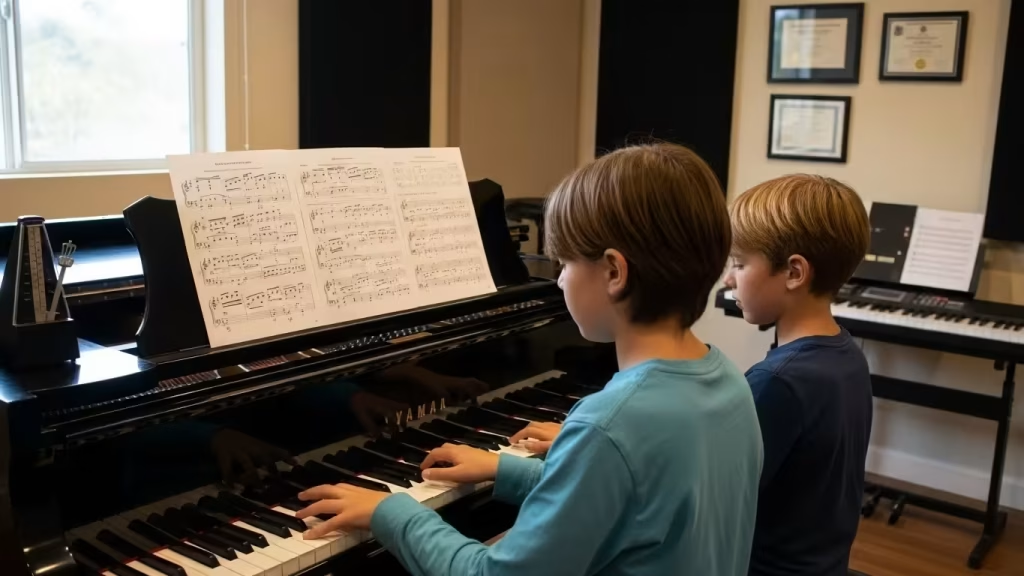
Two players share one piano. One plays low notes (bass). One plays high notes (treble). They sit side by side. They match breathing, pedal, and dynamics.
Famous pieces: Mozart four-hands, Brahms “Hungarian Dances,” Schubert “Fantasy in F minor.”
Needs only one grand piano. Cheaper and easier to set up. Great for small venues. Hard part: sharing pedals and space. Clear cues prevent hand collisions.
Two-Piano Recital (Four Hands, Two Pianos)
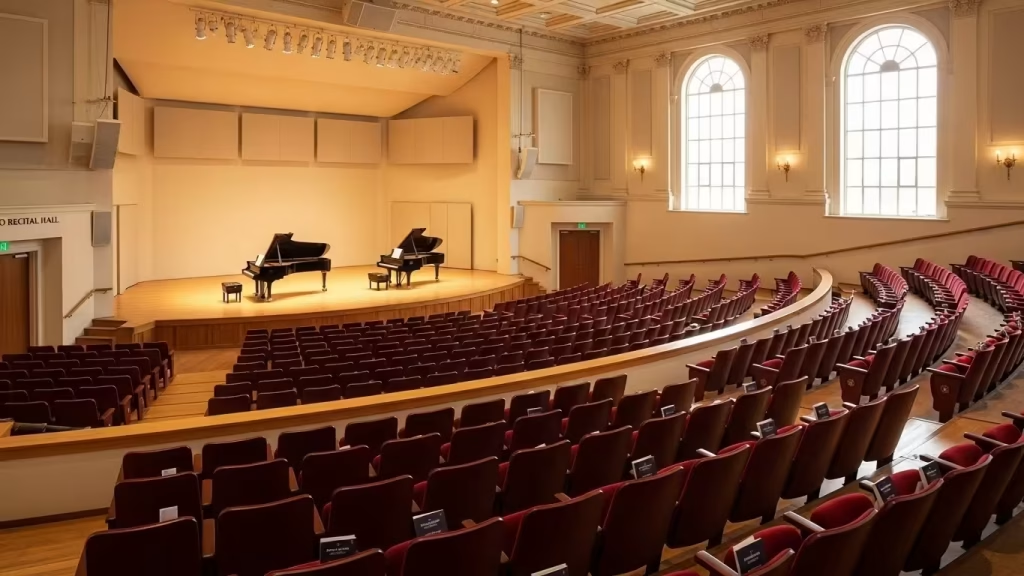
Two players on two grand pianos. Pianos sit side by side or face each other. Bigger, fuller sound. Composers write special music for this setup. Uses the full range of both instruments.
Famous pieces: Rachmaninoff Suite No. 2, Poulenc Sonata, Saint-Saëns “Carnival of the Animals.”
🎵 Music Lessons in San Diego
Transform Your Musical Journey with K&M Music School

Expert Music Lessons
Piano, Violin, Cello, Guitar, Ukulele, Saxophone, Bassoon, Harp, Voice, and Toddler group lessons.
Why Choose Us?
All Ages Welcome!
From toddlers to adults—everyone can discover the joy of music.
100% Free trial lesson • No credit card required
Two-piano performances require more space and resources. You need a large stage to accommodate both instruments comfortably. Finding venues with two grand pianos or renting a second piano increases costs significantly.
However, the visual and auditory impact justifies the extra effort. Audiences love watching two pianists perform complex works together. The stereo effect of two pianos creates a rich, immersive listening experience.
Which Format Works Best for Your Event?
Consider your budget first. Piano duets cost less because you only need one instrument. Two-piano recitals require either renting a second piano or finding a venue that owns two grand pianos.
Think about your available space. Piano duets fit in smaller venues like private studios, galleries, or intimate recital halls. Two-piano performances need larger stages with proper spacing between instruments.
Your musical repertoire matters too. Some pieces only exist for two pianos, while others work specifically for four-hand piano duets. Check what music you want to perform before deciding on your format.
Finally, consider your skill level and rehearsal access. Piano duets require intense coordination but less rehearsal space. Two-piano pieces give each performer more independence but require practice space with two pianos.
Why Host or Attend Two-Piano Recitals in San Diego?
San Diego offers unique advantages for piano performances. The city combines perfect weather, excellent venues, and an enthusiastic arts community.
San Diego’s Vibrant Classical Music Scene
San Diego supports a thriving classical music culture. The San Diego Symphony performs year-round at Copley Symphony Hall. Universities like UCSD and San Diego State have strong music programs with regular student and faculty recitals.
Local music organizations actively promote piano performances. The San Diego Music Teachers Association connects pianists, teachers, and venues. Community music schools offer performance opportunities for students and adult learners.
The city’s cultural diversity brings audiences with varied musical backgrounds. Many San Diego residents appreciate classical music and actively seek live performances. This creates a receptive environment for both traditional and contemporary piano repertoire.
Tourism adds another dimension. Visitors often look for cultural activities beyond beaches and theme parks. A well-marketed two-piano recital can attract both locals and tourists interested in live music.
Perfect Venues for Piano Duet Performances
San Diego’s climate allows year-round performances without weather concerns. Unlike cities with harsh winters, you can reliably schedule events any month. Outdoor venues remain viable options nearly 12 months a year.
The city offers exceptional acoustic spaces. Historic theaters like the Balboa Theatre provide old-world charm with modern technical capabilities. University concert halls deliver professional-grade sound in intimate settings.
San Diego has many venue sizes. Big symphony halls seat 2,000+ people. Mid-size halls fit 300–500 guests. Small studios fit 50–100 people. This helps match any budget or event.
Most venues are easy to reach. Parking is usually good. Public transit is nearby. ADA access is common. All ages and abilities can attend.
Supportive Audiences for Classical Piano
San Diego audiences like classical music. Many residents are well educated. There are university staff, military officers, and retirees. They value cultural events.
The senior community actively engages with classical music. Many retirees have time and resources to attend daytime and evening performances. They form a reliable, enthusiastic audience base.
Music education remains strong in local schools. Students learning piano want to see professional performances for inspiration. Parents of young musicians often attend recitals to support the broader music community.
Military families add diversity. Many enjoy live classical music. Some bases don’t offer this often.
Top San Diego Venues for Two-Piano and Piano Duet Performances
Professional Concert Halls
Balboa Theatre Built in 1924. Seats about 1,400. Great for piano sound. Book ~6 months ahead. Evening rentals start around $2,000.
Copley Symphony Hall Home of the San Diego Symphony. Seats about 2,200. Top-tier acoustics and support. Prestigious choice, higher cost. Steinway concert grands on site. Book 8–12 months ahead.
Conrad Prebys Concert Hall (UCSD) Seats about 400. Modern hall with chamber acoustics. Ideal for recitals. UCSD ties may lower cost. Has two quality grand pianos.
Jacobs Music Center includes multiple performance spaces. The Joan and Irwin Jacobs Music Center offers flexibility with various hall sizes. Professional staff assist with technical needs, piano tuning, and event coordination. This venue caters to serious classical music presentations.
Pricing for professional halls ranges from $500 to $3,000+ depending on hall size, day of week, and rental duration. Most include basic lighting and sound equipment. Piano rental or usage fees may apply separately.
Intimate Performance Spaces
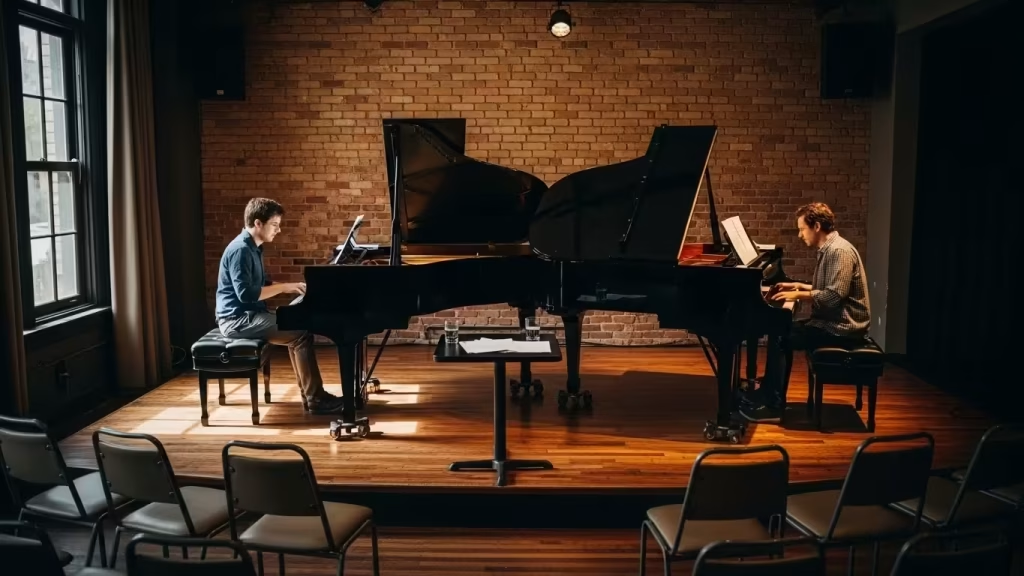
Smaller venues create special connections between performers and audiences. Art galleries occasionally host piano performances, combining visual and musical arts. The atmosphere feels casual yet sophisticated.
Private music studios welcome recitals when equipped with quality instruments. Many piano teachers rent their studios to other performers on weekends. Costs run $50-200 for several hours, making this the most budget-friendly option.
Community centers throughout San Diego have performance spaces. Facilities like the La Jolla Community Center offer stages with pianos at reasonable rates. These venues serve neighborhoods well and attract local audiences.
Churches with quality instruments provide excellent acoustics and ambiance. Many congregations welcome secular classical music performances. Rental fees may be waived or reduced if your event benefits the church community. Always discuss your repertoire to ensure it aligns with the venue’s values.
🎹 Two-Piano Recital Planner
Your complete step-by-step guide to planning a successful recital
🤝 Stage 1: Find Your Piano Partner
Finding the right partner is crucial. Look for compatible skill level, musical taste, and commitment level.
📱 Recommended Apps for Finding Partners
💡 Pro Tip
Don't rush this step! The right partner can make all the difference. Look for someone who shares your commitment level and musical vision, not just technical ability.
🎼 Stage 2: Select Your Repertoire
Choose music that showcases both pianists and suits your skill level. Aim for 45-60 minutes of music.
📱 Recommended Apps for Music Selection
💡 Pro Tip
Include at least one crowd-pleaser! Even in classical recitals, pieces like Brahms Hungarian Dances or Rachmaninoff's Symphonic Dances get audiences excited.
📅 Stage 3: Create Your Rehearsal Schedule
Consistent practice is key. Plan for 2-3 rehearsals per week for 8-12 weeks before the performance.
📱 Recommended Apps for Scheduling
🏛️ Stage 4: Secure Your Venue
Book your venue 3-4 months in advance. Make sure it has two quality pianos!
📱 Recommended Apps for Venue Management
💡 Pro Tip
San Diego venues to consider: Athenaeum Music & Arts Library, St. Paul's Cathedral, SDSU School of Music, or private studios like K&M Music School!
📣 Stage 5: Promote Your Recital
Start marketing 6-8 weeks before the event. Use multiple channels to reach your audience.
📱 Recommended Apps for Marketing
💡 Pro Tip
Post behind-the-scenes rehearsal videos on social media! People love seeing the process, and it builds anticipation for the performance.
🎭 Stage 6: Performance Day
The big day is here! Stay organized and enjoy the moment you've worked so hard for.
📱 Recommended Apps for Event Day
🎉 Congratulations on Your Performance!
Ready to share your recording? Upload to YouTube or SoundCloud to build your portfolio!
💡 Pro Tip
Celebrate afterwards! Whether you nailed it or had a few mishaps, you did something amazing. Take your partner out for dinner and plan your next collaboration!
Unique San Diego Locations
San Diego’s climate enables creative outdoor venues. The Japanese Friendship Garden offers a serene setting for smaller recitals. The Botanical Building in Balboa Park creates a magical atmosphere with natural acoustics.
Historic buildings add character to performances. The Westgate Hotel’s elegant ballroom can accommodate pianos for special events. The San Diego Natural History Museum occasionally hosts evening performances in unique settings.
Waterfront locations provide stunning backdrops. Some performers arrange permits for Shelter Island or Seaport Village outdoor spaces. These require careful planning for sound amplification and instrument protection.
North County wine country venues attract audiences seeking combined cultural and culinary experiences. Wineries in Temecula Valley (just outside San Diego County) host classical music series. Pairing wine tastings with two-piano recitals creates memorable evenings.
Weather considerations remain minimal in San Diego. However, outdoor events still need backup plans for rare rain or unexpectedly high winds. Always protect pianos from direct sunlight, humidity changes, and temperature extremes.
Venue Selection Checklist
Create a systematic approach to choosing your venue:
Piano Availability and Quality: Does the venue own one or two grand pianos? What brands (Steinway, Yamaha, Kawai)? When were they last tuned? Can you arrange a test playing before committing?
Seating Capacity: Match venue size to your expected audience. Better to fill a 100-seat room than have a 300-seat hall look empty.
Acoustic Properties: Visit the venue and clap or play to test sound reflection. Carpeted rooms absorb too much sound. Hard surfaces may create harsh echoes. Ideal spaces balance warmth with clarity.
Stage Size Requirements: Measure carefully for two-piano setups. Each grand piano needs roughly 5×7 feet. Add space for pianist benches and walking paths. Total stage should be 15×12 feet minimum for two pianos.
Technical Support: Does the venue provide sound system, recording equipment, and lighting? Is staff available during your event, or must you manage everything?
Parking and Accessibility: Adequate parking frustrates nobody. Ensure handicap access, elevators if needed, and clear signage. Consider public transportation options for attendees without cars.
Booking Tips
Get quotes in writing. Include rental, insurance, tech staff, piano use, and cleaning. Hidden fees add up fast.
Top venues fill months ahead. Weekends go first. Weeknight evenings and Sunday afternoons are easier. They also cost less.
Finding Two Pianos in San Diego
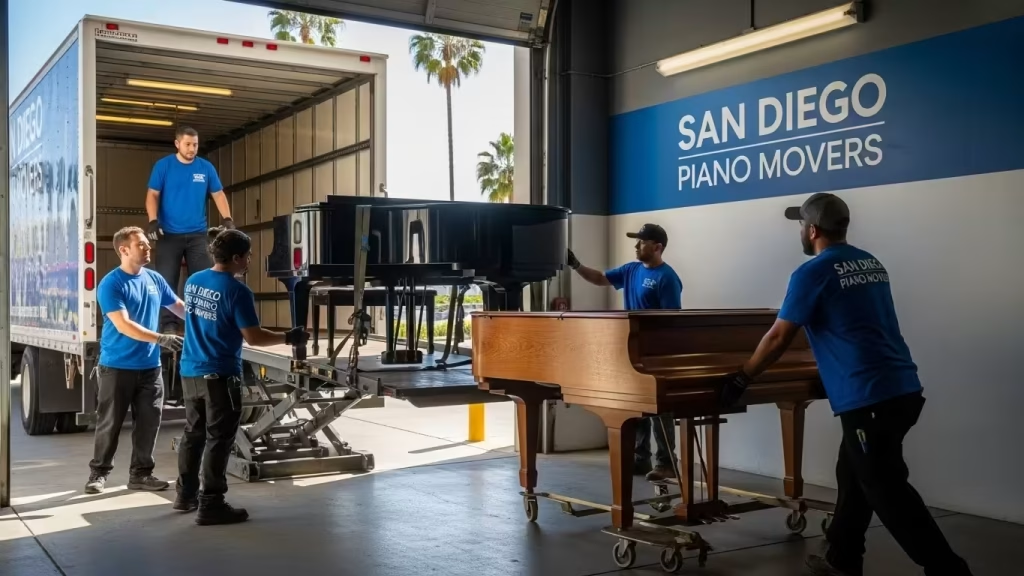
Great pianos make the show. Good instruments let you play your best.
Venues with Two Grands
UCSD’s Conrad Prebys Hall has two concert grands. Call the music department for dates and fees.
Church options: Some larger churches have two grands. Try Episcopalian or Presbyterian churches. Ask the office about rentals.
Some private music schools have two pianos. Some Montessori schools do too. Contact them to ask about availability. Be flexible and build good relationships with admins.
Most venues only have one grand piano. This means you’ll need to rent a second instrument for two-piano recitals. Plan for this significant expense in your budget.
Piano Rental Options in San Diego
Several companies rent grand pianos throughout San Diego County. Bertrand’s Music offers a selection of Yamaha grands with delivery services. Rental costs typically start at $400-600 for a weekend, plus $150-300 for delivery and setup.
Gary’s Piano Warehouse in North County provides rental and moving services. They maintain various piano brands and sizes. Request instruments at least 4-6 weeks before your event date.
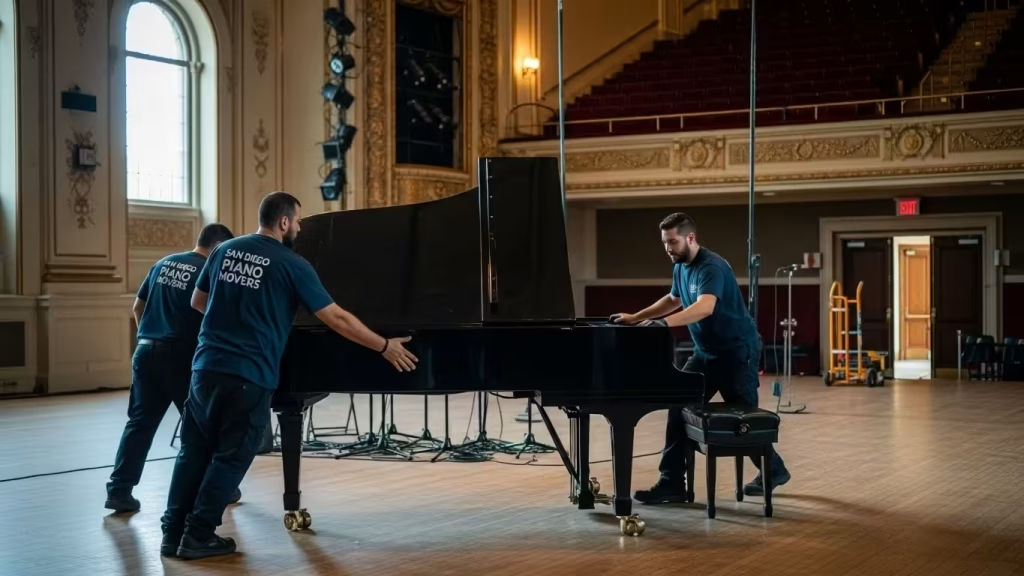
San Diego Piano Movers specializes in transporting instruments safely. If you borrow a piano from a friend or institution, hire professional movers. Attempting to move grand pianos without experience risks damage to the instrument and injury to people.
Delivery fees depend on distance and stairs. Ground-floor delivery within San Diego city limits runs $150-250. Multiple flights of stairs or long distances increase costs. Factor in both delivery and pickup fees when budgeting.
Insurance becomes essential when renting. Most rental contracts require proof of event insurance covering the instrument. Policies typically cost $100-200 and protect against damage during your event.
Piano Quality Considerations
Brand consistency matters for two-piano performances. Matching two Steinways sounds more cohesive than pairing a Steinway with a Yamaha. Different manufacturers have distinct tonal characteristics that can clash.
Ask about specific piano models. A Steinway Model B (7-foot grand) partners well with another Model B or a Model D (concert grand). Mixing a small grand with a concert grand creates balance issues.
Action responsiveness affects playability. Test both pianos before your performance day. Keys should respond evenly across the keyboard. Sticky keys or uneven action make difficult passages nearly impossible.
Pedal sensitivity varies between instruments. The sustain pedal timing must feel similar on both pianos. Inconsistent pedal response forces pianists to adjust technique mid-performance.
Tuning and Preparation
Schedule piano tuning for 1-2 days before your performance. Pianos drift out of tune during transport and temperature changes. Tuning too far in advance means they’ll slip again before your event.
Find qualified piano technicians through the Piano Technicians Guild. San Diego has several certified technicians who tune professionally. Expect to pay $100-150 per piano for standard tuning.
Pitch matching between two pianos requires special attention. The technician must tune both instruments to identical A440 standard pitch. Even slight variations create unpleasant beating sounds when playing together.
Keep pianos in stable temps. San Diego weather helps. Moves from cold trucks to warm rooms shift pitch. Let pianos rest 24 hours before final tuning.
Work with your tuner: Explain your program. Say if pieces are very demanding. Mention any extended techniques. Ask for small voicing tweaks to fit your sound.
Plan Your Duet Recital: Step by Step
Set Goals
Decide your main purpose. Student showcase? Pro debut? Charity event?
Know your audience: Students attract families. Pros attract classical fans and critics. Community shows attract general audiences.
Pick the Date
Avoid big holidays. Check for competing concerts the same night.
Pick the time: Sat/Sun evenings (7–8 PM) fit working adults. Sunday afternoons (2–4 PM) fit families and seniors. Weeknights work for smaller, focused crowds.
Make a Budget
List every cost: venue, pianos, tuning, marketing, programs, snacks, insurance, backup funds. Estimate ticket, sponsor, and donation income. Make sure the math works.
Selecting Repertoire for Two-Piano or Piano Duet Performance
Program length should be 60-90 minutes including intermission. Shorter programs leave audiences wanting more. Longer than 90 minutes tests attention spans, especially for general audiences.
Balance familiar and new works. Include one or two pieces audiences likely know—this builds confidence and enjoyment. Add lesser-known compositions to educate and surprise listeners.
Popular Two-Piano Repertoire by Difficulty:
Intermediate Level:
- Mozart: Sonata in D Major, K. 448
- Bizet: Jeux d’enfants (Children’s Games)
- Fauré: Dolly Suite, Op. 56
Advanced Level:
- Rachmaninoff: Suite No. 2, Op. 17
- Brahms: Variations on a Theme by Haydn
- Poulenc: Sonata for Two Pianos
Virtuoso Level:
- Stravinsky: The Rite of Spring (two-piano arrangement)
- Lutosławski: Variations on a Theme by Paganini
- Bartók: Sonata for Two Pianos and Percussion
Piano Duet Classics:
- Schubert: Fantasy in F minor, D. 940
- Brahms: Hungarian Dances
- Dvořák: Slavonic Dances
- Debussy: Petite Suite
Consider programming variety. Mix music from all periods. Use Baroque, Classical, Romantic, and Contemporary. Include slow lyrical pieces. Add fast, energetic finales. Sprinkle in playful character pieces. This keeps the audience engaged.
Plan your intermission placement carefully. End the first half with an exciting piece that leaves audiences eager to return. Start the second half with something captivating to recapture attention.
Order pieces thoughtfully. Begin with an accessible work to welcome the audience. Build intensity through the program. Save your most impressive or meaningful piece for the finale.
🎵 Music Lessons in San Diego
Transform Your Musical Journey with K&M Music School
Expert Music Lessons
Piano, Violin, Cello, Guitar, Ukulele, Saxophone, Bassoon, Harp, Voice, and Toddler group lessons.
Why Choose Us?
All Ages Welcome!
From toddlers to adults—everyone can discover the joy of music.
100% Free trial lesson • No credit card required
Finding a Piano Partner in San Diego
Chemistry matters as much as technique. You’ll spend dozens of hours rehearsing together. Find someone whose musical interpretation and personality mesh well with yours.
Start with your network. Ask your piano teacher for referrals. Contact the San Diego Music Teachers Association for leads. Post on local classical music Facebook groups.
University music departments connect you with skilled pianists. UCSD and San Diego State have graduate programs in piano performance. Contact department offices to post collaboration opportunities.
Online platforms like MusoMatch and BandMix help musicians find partners. Create detailed profiles specifying your skill level, preferred repertoire, and commitment level.
Audition carefully before committing. Play through excerpts from your planned program together. Assess technical compatibility, tempo preferences, and dynamic balance. Discuss practice schedules and reliability expectations.
Set clear agreements upfront. Will you share costs equally? How many rehearsals per week? Who takes lead on logistics vs. musical decisions? Written agreements prevent misunderstandings later.
Rehearsal Planning
Adequate rehearsal time prevents disaster. Two-piano repertoire requires 20-40 hours of joint rehearsal for a full program. Piano duets need even more due to physical coordination challenges.
Find practice spaces with two pianos in San Diego. Conrad Prebys Concert Hall rents practice rooms with two grands. Some private studios allow hourly rental for duet rehearsals. Expect to pay $30-60 per hour.
Church rehearsal times work if you’re performing there. Many churches allow extended practice access before events. This lets you rehearse in your actual performance space.
Create a rehearsal schedule immediately. Consistent regular sessions (twice weekly minimum) work better than marathon practices. Plan extra sessions during the final two weeks before performance.
Structure rehearsal time efficiently. Don’t just play through pieces repeatedly. Isolate problem sections. Practice difficult transitions multiple times. Record yourselves and listen critically.
Technical rehearsals differ from interpretive work. Early sessions focus on notes, rhythms, and basic coordination. Later rehearsals refine phrasing, dynamics, pedaling, and emotional expression.
Schedule at least one dress rehearsal in your performance venue. Stage lights feel different than studio lighting. Hall acoustics change your volume perception. Practice entrances, bows, and transitions between pieces.
Marketing Your Two-Piano Recital in San Diego
Even brilliant performances need audiences. Strategic marketing fills seats and builds your reputation.
Creating Promotional Materials
Design eye-catching flyers and posters. Use high-quality images of pianists at grand pianos. Include essential information: event name, date, time, location, ticket price, and purchase instructions.
Write compelling event descriptions. Highlight the audience benefit. “Feel the power of two grand pianos in Rachmaninoff’s Suite No. 2.” Skip dry lists of pieces and composers. Make it about the experience. Make it exciting and clear.
Professional photography elevates your marketing. Invest in quality photos of both performers at pianos. Action shots during rehearsal work better than stiff posed portraits.
Create digital graphics optimized for social media. Square format (1080×1080 pixels) works best for Instagram. Horizontal format (1200×630 pixels) suits Facebook events. Vertical format (1080×1920 pixels) matches Instagram Stories.
Write detailed program notes. Provide context about composers and pieces. Share interesting stories or historical background. Educational content builds audience appreciation and engagement.
Online Marketing Strategies
Facebook Events reaches local audiences effectively. Create a public event page with complete details. Invite friends and ask performers to invite their networks. Post regular updates as the date approaches.
Instagram builds visual interest. Share rehearsal photos and short video clips. Use relevant hashtags: #SanDiegoMusic, #PianoRecital, #ClassicalMusic, #LiveMusic, #SanDiegoEvents, #PianoDuet.
Eventbrite and similar platforms help with ticketing and discovery. People search these sites specifically for local events. The platform handles ticket sales and sends automated reminders to ticket buyers.
Local event listing sites boost visibility. Submit your event to San Diego Reader, SDVoyager, Times of San Diego, and KPBS Community Events Calendar. Most accept free listings if submitted 2-4 weeks ahead.
Email marketing works for building long-term audiences. Collect addresses at your event for future announcements. Services like Mailchimp offer free tiers for small lists.
Create a simple landing page or website. Include all event details, performer bios, audio samples, and easy ticket purchase options. This gives you a central link to share everywhere.
Traditional Marketing Methods
Physical flyers still work in certain contexts. Post at coffee shops frequented by arts enthusiasts. Target locations near universities, music stores, and cultural venues.
Music schools welcome announcements. Leave flyers at piano studios and community music schools. Post on university music bulletin boards. Students and teachers are a ready audience.
Local newspaper arts sections cover community events. Contact the San Diego Union-Tribune arts desk. Smaller community newspapers like the La Jolla Light often feature local cultural events.
Radio stations provide free community calendar listings. Classical KSDS 88.3 FM Jazz and San Diego Public Radio announce local performances. Submit information 3-4 weeks before your event.
Word-of-mouth remains powerful. Ask performers to personally invite people. Encourage everyone involved to mention the event in conversations. Personal connections drive attendance more than impersonal advertising.
Partnerships and Cross-Promotion
Collaborate with local music organizations. The San Diego Music Teachers Association reaches hundreds of teachers and students. Offer member discounts to encourage group attendance.
Partner with complementary businesses. Wine shops, bookstores, and art galleries attract culture-oriented customers. Offer to display promotional materials in exchange for mentioning their business in your program.
University music departments welcome community performances. Offer free student tickets to UCSD and SDSU students. They fill seats and represent future audience members and performers.
Arts councils provide resources and connections. The San Diego Commission for Arts and Culture maintains event calendars and funding opportunities. Register your event for broader visibility.
Music teacher networks create built-in audiences. Piano teachers bring students to performances for educational value. Offer group rates for studios attending together.
Ticket Pricing and Sales for San Diego Piano Recitals
Thoughtful pricing balances accessibility with revenue needs. San Diego audiences vary widely in budget and price sensitivity.
Determining Ticket Prices
Research comparable local events first. Check prices for San Diego Symphony chamber music concerts, university faculty recitals, and similar classical performances. This establishes market expectations.
Consider your audience’s budget. Student and community recitals typically charge $10-25. Professional performances range $25-50. Prestigious venues or renowned performers justify $50-75 tickets.
Factor all your costs. Calculate total expenses (venue, pianos, marketing, etc.). Estimate realistic attendance. Determine per-ticket price needed to break even. Add modest profit margin if appropriate.
Professional vs. student pricing differs significantly. Student recitals rarely charge more than $15-20, as audiences consist mainly of supportive families. Professional performances can command higher prices reflecting years of training and career investment.
Early bird discounts encourage advance purchases. Offer $5 off tickets bought 3+ weeks before the event. This generates early revenue and helps gauge attendance projections.
Group discounts fill seats efficiently. Offer “$50 for 3 tickets” deals. Piano studios or friend groups appreciate savings and fill multiple seats simultaneously.
Ticket Sales Platforms
Eventbrite dominates local event ticketing. The platform handles payment processing, sends confirmation emails, and provides attendance tracking. Free for free events; 2-5% fee plus $0.79 per paid ticket.
Brown Paper Tickets charges lower fees (2.5% + $0.99) and supports independent artists. The company donates profits to arts education. Interface is slightly less polished than Eventbrite but very functional.
Venue box offices work for established spaces. Balboa Theatre and similar venues sell tickets through their systems. This adds prestige but means sharing revenue and less control over customer data.
Direct sales eliminate platform fees but require more work. Accept payments via Venmo, PayPal, or checks. Maintain careful records. Email confirmation details to buyers manually.
Cash at the door remains common for smaller recitals. Have a clearly marked table with cash box. Bring plenty of change. Consider accepting credit cards via Square or similar mobile readers.
Free vs. Paid Recitals
Free admission removes barriers and builds audiences. Student recitals often offer free entry since young performers value experience more than revenue. Emerging professionals build followings through free concerts.
Suggested donation models compromise between free and paid. “Free admission, suggested donation $15” encourages giving without mandatory fees. Audiences give generously when they enjoy performances.
Sponsorship opportunities offset costs for free events. Local businesses may sponsor performances in exchange for program recognition. Music-related businesses (piano stores, music schools) appreciate targeted exposure.
Grant funding supports community-focused events. The City of San Diego Commission for Arts and Culture offers grants for public performances. San Diego Foundation provides arts funding. Applications require advance planning.
Building audience loyalty through occasional free events makes sense strategically. Offer free first-time attendance or student rush tickets. Converting attendees into repeat paying customers generates long-term value.
Technical Requirements for Two-Piano Performances
Professional presentation requires attention to technical details. These elements dramatically affect audience experience.
Stage Setup and Spacing
Piano placement affects both sound and sightlines. Position pianos with curved sides facing each other approximately 6-8 feet apart. This allows pianists to see each other for coordination while creating stereo sound for audiences.
Alternative configurations include side-by-side parallel positioning. This works better in narrow stages but reduces eye contact between performers. Some pianists prefer this setup for pieces requiring less coordination.
Audience viewing angles matter. Ensure people can see both performers, not just piano lids blocking their view. Angle pianos slightly open (approximately 45-degree lid position) for good sound projection without visual obstruction.
Stage dimensions need careful measurement. Each grand piano occupies roughly 5×7 feet. Add pianist benches (3 feet behind each piano). Include walking paths around instruments. Total stage should be at least 20×15 feet for comfortable two-piano setup.
Piano bench positioning requires precision. Adjust height for each performer’s comfort. Position laterally so pianists can reach their full range without stretching. Test seating positions during rehearsal and mark final positions with tape.
Lighting Design
Stage lighting should illuminate performers without creating glare. Position lights slightly above and in front of pianists. Avoid lights directly overhead that cast shadows on keyboards and sheet music.
Sheet music illumination requires special attention. Clip-on LED music lights work well for individual performers. Some venues have adjustable spotlights that can illuminate music stands without blinding performers.
Dramatic lighting enhances atmosphere. Use warmer colored gels (amber, light pink) for romantic repertoire. Cooler blues suit contemporary pieces. Subtle lighting changes between pieces add polish.
House lights should dim gradually, not plunge audiences into darkness suddenly. Maintain low ambient lighting so people can find seats and read programs comfortably.
Work with venue lighting technicians when available. Explain your vision and defer to their expertise on equipment capabilities. Schedule lighting checks during dress rehearsal, not on performance day.
Sound Reinforcement
Acoustic piano performances rarely need amplification in proper concert halls. Natural piano sound fills spaces designed for classical music beautifully. Trust the instrument and venue acoustics.
Use mics in big or “dead” rooms. Choose good condenser mics. Place them 6–12 inches above the strings. Keep them a bit back from the hammers. Use a stereo pair for a fuller sound.
Mic technique matters. Too close = harsh and clicky. Too far = weak and muddy. Test placements to find the sweet spot.
Balancing Two Pianos
Give each piano matching mics. Set equal gain on both. Walk the hall and listen. Adjust until both pianos sound even.
Recording vs. Live Sound
Recording needs more mics. Often 4–6 per piano for different angles. Mix the tracks later for best quality.
Video Recording and Streaming
Pros give the best results. Budget $500–$1,500 for a videographer. DIY works with a smartphone and tripod. Center the camera and raise it above heads.
Streaming is easy to start. Use YouTube Live or Facebook Live. A phone or laptop and solid internet can work.
Camera Choices
One wide shot shows both pianos. Multiple angles need more gear and editing.
Audio for Video
Use an external audio recorder. Sync the good audio to the video later. Avoid the camera’s built-in mic in big halls.
Day-of Logistics
Arrive 3–4 hours early. Check gear, sound, and lights. Fix problems before doors open.
Piano Checks
Play scales across the keyboard. Test the pedals. Call the tuner for quick touch-ups if needed. Plan 15–30 minutes per piano for this.
Sound check procedures verify everything works. Play portions of pieces at various dynamics. Walk through the hall listening from different seats. Adjust as needed based on what you hear.
Lighting adjustments may be required. Stage lights look different with performers present than in empty halls. Check for shadows, glare, or inadequate illumination. Make final tweaks during dress rehearsal run-through.
Last-minute issues will arise. One piano may sound different. A light may burn out. Sheet music goes missing. Allow time buffers so problems don’t create panic or delay curtain time.
Performer Preparation
Warm-up routines prevent injury and build confidence. Arrive early enough to practice slowly and gently. Focus on difficult passages needing extra attention. Avoid exhausting yourself before performing.
Managing performance anxiety requires personal strategies. Deep breathing exercises calm nerves. Positive visualization builds confidence. Some performers meditate or listen to music. Find what works for you.
Communication signals between pianists need rehearsal. Establish clear cues for starting pieces together, fermatas, and tempo changes. Often, a small nod or breath suffices. Practice these non-verbal cues.
Page-turning arrangements must be decided. Will performers turn their own pages? Hire page turners? Use digital displays? Page turners need rehearsal to learn when to turn without disrupting performance.
Dress code and attire should look polished and professional. Traditional concert attire remains appropriate—suits or dresses in black, navy, or dark colors. Ensure clothing allows comfortable movement. Avoid jewelry or shoes that make noise.
Audience Management
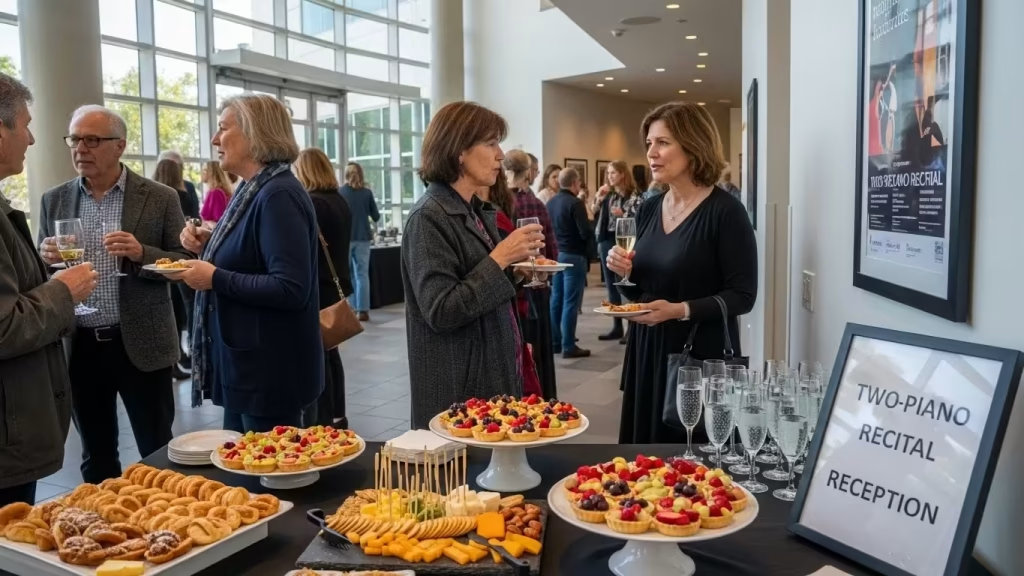
Greeting and seating guests creates welcoming atmosphere. Station friendly volunteers at doors to welcome attendees, answer questions, and direct people to seats.
Program distribution happens as guests enter. Print enough programs for all attendees plus extras. Include performer bios, program notes about pieces, and acknowledgments of sponsors or supporters.
Handling late arrivals requires tact. Request late arrivals wait until breaks between pieces to enter. Seat them quietly in back rows to minimize disruption. Announce this policy in pre-concert announcements.
Intermission coordination keeps events on schedule. Announce intermission length (typically 15 minutes). Ring a bell or flicker lights when time to return. Have restroom locations clearly marked.
Post-performance receptions extend the experience. Simple refreshments (cookies, punch, coffee) encourage mingling. This builds community and allows audience members to congratulate performers personally.
Emergency Preparedness
Backup plans prevent disasters. What if a performer gets sick? Can you postpone or find a substitute? What if the venue loses power? Have flashlights and contingency plans ready.
Medical emergency procedures should be clear. Know where first aid kits are located. Have emergency contact numbers accessible. Identify any audience members with medical training.
Weather contingencies matter for outdoor events. Have indoor backup locations confirmed. Monitor forecasts closely. Communicate changes to ticket holders via email and social media immediately.
Last-minute cancellation policies protect everyone. Have clear refund or rescheduling procedures. Purchase event insurance covering cancellations due to illness, weather, or unforeseen circumstances.
Costs and Budgeting for San Diego Two-Piano Recitals
Understanding expenses helps you plan realistically and avoid financial surprises.
Venue Rental Costs
Price Ranges for San Diego Venues:
- Community centers: $100–400. Seats 50–150. Includes chairs, basic sound, piano.
- Church halls: $200–600. Seats 100–300. Includes piano, sound, parking.
- University halls: $300–800. Seats 200–400. Includes pro pianos, tech help.
- Private studios: $50–200. Seats 30–75. Small room, grand piano.
- Pro concert halls: $1,000–3,000+. Seats 400–2,200. Top acoustics, pro staff.
Peak vs. off-peak:
Weekend evenings cost more. Weekday afternoons cost 30–50% less. Tuesday–Thursday nights are cheaper than Fridays.
What’s included:
Some places rent the room only. Others include sound, lights, staff, and piano. Read the contract. Ask what every fee covers.
Extra fees to expect:
- Cleaning deposit: $100–300, often refundable
- Parking fees for guests
- Overtime if you run late
- Event insurance if required
- Security deposit if the venue asks
Negotiating venue contracts may be possible. Student performers, nonprofit organizations, or multiple booking agreements sometimes receive discounts. Always ask politely about flexibility.
Piano-Related Expenses
Rental fees for one grand piano: $400-600 for a weekend rental. High-end concert grands cost more ($800-1,200). Vertical upright pianos rent for less but suit duets only, not two-piano repertoire.
Tuning costs run $100-150 per piano for standard pitch adjustment. Pitch raises (if piano is significantly flat) cost $150-250. Bringing two pianos to perfect pitch match requires experienced technicians and may cost $250-400 total.
Piano moving and setup adds $150-300 per piano depending on distance and difficulty. Stairs, narrow doorways, or long carries from truck to venue increase costs. Professional movers prevent damage worth far more than their fees.
Instrument insurance matters. It protects against big losses. Event insurance costs about $100–$200. It can cover rented pianos, liability, and cancellations. Venues often ask for proof.
Marketing Budget
- Design: $50–$150 (Canva or Fiverr)
- Printing 100 flyers: $30–$100
- Facebook boosts: $20–$100
- Google/Instagram ads: +$50–$200
- Photography: $100–$500 (students cost less)
- Website hosting: $10–$30/month
- Domain: $10–$15/year
- Social media: Free; paid boosts: $50–$150
Extra Costs
- Musician fees: $200–$1,000+ per pianist
- Ticket platform fees: 2–5% + $0.79 (Eventbrite)
- Programs: $0.50–$2.00 each (B/W copies $0.10–$0.25 per sheet)
- Reception: snacks $50–$100; catered $500–$1,000
- Video/recording: $500–$1,500 pro; DIY is cheaper
- Event insurance: $100–$300 required by many venues
Revenue Ideas
Be realistic on tickets. First events sell ~40–60% of seats. Popular shows may hit 80–90%.
Sample budget (150 seats):
- Ticket price: $20
- Expected attendance: 100
- Gross revenue: $2,000
- Eventbrite fees (5% + $0.79): $179
- Net revenue: $1,821
Sponsorships help. Ask local piano stores and schools. $100–$500 is common for recognition.
Merchandise sales add modest revenue. Sell CDs of previous recordings ($10-15 each). Offer downloadable recordings ($5-10 per album). Some performers sell sheet music arrangements.
Donation requests work for nonprofit or benefit concerts. Place donation boxes at exits. Include donation information in programs. Send follow-up emails thanking attendees and inviting donations.
Grant applications require advance planning (3-6 months lead time). City of San Diego Commission for Arts and Culture offers project grants. San Diego Foundation funds arts initiatives. Most grants require detailed proposals and reporting.
Building an Audience for Piano Duet Recitals in San Diego
Sustainable performance careers require cultivated audiences. One-time events don’t build lasting connections.
Connecting with the Local Music Community
Join San Diego music organizations like the San Diego Music Teachers Association. Membership provides networking opportunities, performance venues, and access to engaged music communities.
Attend other local recitals regularly. Support fellow musicians and learn from their successes and challenges. People notice who shows up and will reciprocate by attending your events.
Connect with local music teachers. They want shows for their students. They also want inspiring concerts to attend. Build these relationships. You’ll get steady, reliable audiences.
Participate in piano clubs and organizations. The San Diego Piano Guild and similar groups connect piano enthusiasts. Volunteer, perform at their events, and become a recognized community member.
Engage with conservatory communities at UCSD and SDSU. Attend student and faculty recitals. Introduce yourself to professors and graduate students. Collaboration opportunities often emerge from these connections.
🎵 Music Lessons in San Diego
Transform Your Musical Journey with K&M Music School
Expert Music Lessons
Piano, Violin, Cello, Guitar, Ukulele, Saxophone, Bassoon, Harp, Voice, and Toddler group lessons.
Why Choose Us?
All Ages Welcome!
From toddlers to adults—everyone can discover the joy of music.
100% Free trial lesson • No credit card required
Creating a Mailing List
Collect email addresses at every event. Place a simple sign-up sheet near the exit with a pen attached. Offer incentives: “Join our mailing list for early access to tickets and special offers.”
Digital sign-up options work well too. Create a Google Form or Mailchimp landing page. Share the link on social media and in event listings. Make it quick and easy—just name and email required.
Stay top-of-mind with a newsletter. Send it monthly or quarterly. Share dates, tickets, and news. Add rehearsal photos and quick stories. Include a short music tip.
Use strong subject lines. “Rachmaninoff by candlelight — tickets out now!” Avoid boring titles.
Building Engagement Through Social Media
Show behind-the-scenes. Post practice clips and notes. Tell a quick story about the piece or composer.
On social media, share 30–60 sec videos. Pick a hard passage or a beautiful slow part. Post a short lesson or fun fact. Introduce each performer with a mini bio.
Use hashtags: #SanDiegoMusic #PianoRecital #ClassicalMusic #LiveMusic #SanDiegoEvents #PianoDuet #TwoPiano #ChamberMusic. Reply to comments. Ask questions like “Favorite two-piano piece?” Tag local musicians and venues.
Educational Content That Attracts Audiences
Offer education, too. Give a 10-minute pre-concert talk. Explain the era, the composer, and a challenge in the music. Write clear program notes. Don’t just list titles. Add one-line context, e.g., “Brahms turned folk tunes into these dances.”
Composer background information makes music more relatable. Share brief biographical details that humanize composers. Mozart wrote his two-piano sonata to perform with a talented student he admired.
Interactive Q&A sessions after performances extend engagement. Invite audience members to ask questions about the music, your training, or your partnership. This personal connection builds loyal followers.
Music appreciation workshops serve your community beyond performances. Offer free or low-cost sessions at libraries, senior centers, or community colleges. Teach basics of listening to classical music. These efforts build goodwill and future audiences.
Legal and Insurance Considerations
Boring but essential, legal protection prevents expensive problems.
Event Insurance Protects Your Wallet
It helps if someone slips, things break, or a performer gets hurt.
Venues have rules. Many require $1–2 million in coverage. Community centers may not require it, but it’s still smart.
Insure the instruments too. Rentals often need proof of coverage. Fixing a damaged concert grand can cost $10,000–$50,000.
General liability covers audience injuries. If someone trips on your gear, it pays medical and legal costs.
Where to buy in San Diego:
Online companies like Insurevent or EventHelper sell policies. Local agents can help too. One event usually costs $100–$300.
Performance Rights and Licensing
Copyright laws for public performances protect composers and publishers. Music published after 1928 likely requires performance licenses. This applies even to free concerts in public spaces.
ASCAP, BMI, and SESAC pay composers. Many venues have blanket licenses. Ask the venue if your event is covered.
Public domain:
Music published before 1928 is free to use. Mozart, Beethoven, Brahms, and Schubert are safe choices.
When you need permission:
Modern pieces may need a license. Ticketed events without a venue license need approval. Contact the publisher or a rights group.
Costs:
Small shows may cost $50–200. Big, all-modern programs can cost more. Public domain music costs $0.
Contracts: Read Everything
Know cancel rules, overtime fees, and insurance. Note deposit dates and what’s included. Get all promises in writing.
Performer agreements:
Set rehearsal times and who picks music. Decide how to split costs. Plan what happens if someone drops out.
Vendor contracts:
List deliverables, due dates, and payments. Include cancel terms and liability.
Payments:
Write down deposit due dates. Write down final payment dates. Confirm allowed payment methods.
Special Considerations for Different Performance Types
Student Duet Recitals
Pick music that fits each age and level. Keep tone kind: fun over perfection. Guide parents on practice, dress, and behavior.
Offer group chances to build confidence. Teach listening, teamwork, and ensemble skills.
Professional Two-Piano Concerts
Higher performance standards reflect years of training. Professional concerts demand technical excellence, mature interpretation, and polished presentation. Audiences expect more, and reviews matter for career development.
Professional marketing approaches emphasize credentials, past performances, and reviews. Include your training, teachers, competition wins, and performance history in promotional materials.
Media coverage opportunities expand your reach. Contact arts journalists at San Diego Union-Tribune, San Diego Reader, and local radio stations. Send professional press releases and high-quality photos.
Reviews and press releases matter for career building. Positive reviews from respected critics serve as professional credentials. Request reviewers from music publications to attend opening night performances.
Building professional reputation requires consistency. Regular high-quality performances, reliable professionalism, and active community engagement create lasting reputations.
Fundraising Benefit Recitals
Cause alignment with music enhances authenticity. Music therapy programs, music education initiatives, or arts organizations fit naturally. The connection between your performance and beneficiary should be clear.
Donation strategies include suggested amounts, matching donor challenges, or specific funding goals. “Your $50 donation provides one month of piano lessons for an underserved child” creates concrete impact.
Silent auctions and raffles add revenue streams. Music-related items (concert tickets, CD collections, piano lessons) appeal to your audience. Local businesses often donate items for tax deductions.
Sponsor recognition in programs, social media, and verbal acknowledgments rewards supporters. Create sponsorship tiers ($100, $500, $1,000+) with corresponding recognition levels.
Tax-deductible contributions require nonprofit status. Partner with established 501(c)(3) organizations if you’re not one. They handle donations and provide tax receipts to donors.
Community Outreach Performances
Free or low-cost concerts help everyone. They remove money barriers. Play at senior centers, libraries, hospitals, and community centers. This brings live classical piano to people who might miss it otherwise.
Accessible locations matter for outreach. Choose venues near public transit. Ensure wheelchair accessibility. Consider underserved neighborhoods without many cultural offerings.
Diverse programming appeals to varied audiences. Mix familiar melodies with quality art music. Include pieces from different cultures and time periods. Make programs welcoming to classical music newcomers.
Educational mission should be explicit. Help audiences understand what they’re hearing. Speak briefly about pieces from stage. Demystify classical music and make it approachable.
Building long-term audiences through outreach creates future concert-goers. People who experience excellent free performances may become paying customers later. View outreach as investment in future audiences.
Resources for Pianists in San Diego
Take advantage of San Diego’s rich musical ecosystem.
Music Organizations and Associations
San Diego Music Teachers Association connects teachers, performers, and students. Membership provides access to masterclasses, festivals, and performance opportunities. Visit their website for events and membership information.
CAPMT gives teacher training, legal help, and networking. They hold a state conference every year.
Piano Care
PTG San Diego lists certified tuners and techs. Use them to keep pianos sounding great.
Community Programs
San Diego Youth Symphony and Suzuki schools offer shows and groups. Many neighborhood programs rent practice space.
College Events
UCSD, SDSU, and Grossmont host recitals and masterclasses. They run community programs too.
Finding Teachers & Coaches
Ask music groups, online directories, and university faculty. Look for degrees and active performers.
Chamber coaches train duos on balance and timing. Collaborative piano teachers specialize in duet work. University piano faculty often teach privately. Go to local recitals and ask who the performers study with.
Practice Spaces with Two Pianos
UCSD may rent practice rooms to the public. Call for rates. SDSU sometimes allows outside users. Ask the school office.
Community music schools occasionally rent practice space during off-hours. Relationships with staff help access these resources. Rates typically run $20-40 per hour.
Church facilities with quality pianos may allow practice access. Congregations sometimes welcome community musicians using their instruments. Expect to make donations or pay modest fees.
Private studios for rent exist but are rare for two-piano setups. Most piano teachers have only one grand. Network within music communities to find teachers with two pianos willing to rent space.
Sheet Music and Scores
Local music stores in San Diego have limited classical piano inventory. Bertrand’s Music carries some sheet music. Call ahead about specific repertoire availability.
IMSLP has free public-domain scores. Henle, Bärenreiter, and Peters sell urtext editions online.
Local libraries (San Diego):
Central Library lets you check out scores. UCSD and SDSU have large music collections. Community members can get access.
Digital subscriptions:
Apps like nkoda or PlayScore offer many scores on a tablet. You pay a monthly fee. Good if you like reading music on a screen.
Rare and out-of-print sources require specialized searching. AbeBooks and used music dealers sometimes have historic editions. Digital copies prevent handling delicate originals during performance.
Frequently Asked Questions About Two-Piano and Piano Duet Recitals in San Diego
How much does it cost to rent a venue for a piano recital in San Diego?
Venue rental costs in San Diego range from $100 to over $2,000 depending on several factors. Community centers and small churches charge $100-400. University recital halls run $300-800. Professional concert halls like Balboa Theatre cost $1,000-3,000 or more.
Bigger halls cost more. Weekends cost more than weekdays. Extras raise price: sound, lights, piano, tech crew. Fancy venues charge more.
Save money: community centers, small churches, weekday afternoons (often 30–50% less).
What’s usually included:
Basic: room, chairs, building access. Premium: sound and lights, tech staff, sometimes a piano.
Always ask what’s included and what costs extra before you sign.
One piano vs. two pianos
Piano duet = two players on one piano. It’s common and has lots of music (Schubert, Brahms, Mozart, Debussy).
Two-piano recital = two separate grand pianos on stage. Bigger sound and textures, but needs more space and budget. Renting a second grand can cost $400–$600.
Choose based on the piece: some are for four-hands, some for two pianos.
Recital length
Aim for 60–90 minutes total. Under 60 feels too short. Over 90 can lose the audience.
Add a 15-minute intermission if over 60 minutes. Place the break in the middle.
Where can I find a piano partner in San Diego?
Local musician networks provide the best connections. Join the San Diego Music Teachers Association and attend their events. Music teachers know skilled pianists and can make introductions.
Music schools and teachers offer referral services. Contact UCSD and SDSU music departments. Post notices on music school bulletin boards. Piano teachers often know students or colleagues seeking collaborative opportunities.
Online platforms like MusoMatch, BandMix, and Facebook musician groups connect partners. Create detailed profiles specifying your skill level, preferred repertoire, rehearsal availability, and goals.
Audition tips: Before committing, play through several pieces together. Assess technical compatibility, musical taste alignment, and personal chemistry. Discuss practice schedules, reliability expectations, and logistics openly. Strong partnerships require both musical and interpersonal compatibility.
What are the best two-piano pieces for beginners?
Mozart’s Sonata in D Major, K. 448, is accessible for intermediate pianists. The music is elegant and transparent, teaching ensemble skills without overwhelming technical demands.
Bizet: “Jeux d’enfants.” Short, charming pieces.
Fauré: “Dolly Suite.” Lyrical and friendly.
Both sound impressive and are manageable.
Difficulty path:
Start with easy, simplified melodies. Then play original works for intermediates (Mozart, Bizet, simple Brahms). Advanced: Rachmaninoff, Poulenc, and modern complex pieces.
Where to get music:
IMSLP has free public-domain scores. Buy new editions on Sheet Music Plus, Henle, or Amazon. Check local music stores for four-hand books.
Venue booking timeline
Book 3–6 months ahead for most places. Big halls and weekends can need 8–12 months.
Peak seasons:
Holidays (Nov–Dec) and spring (Mar–May) are busy. Book earlier for those dates. Summer (Jun–Aug) has more openings, but some audiences travel.
Flexibility advantages: Offering multiple possible dates increases booking success. Weekday evenings and Sunday afternoons have more availability than Saturday evenings. Off-peak times often cost less too.
Last-minute options exist but limit choices. Community centers, churches, and smaller spaces sometimes have openings 4-6 weeks out. Last-minute bookings work better for flexible performers with lower attendance expectations.
Do I need a business license to host a paid recital?
San Diego city requirements vary based on event frequency and revenue. One-time performances typically don’t require business licenses. Regular performance series or substantial ticket revenue might trigger requirements.
If you run concerts as a business, you likely need a license. If ticket sales are business income, you likely need a license. Call the San Diego City Treasurer’s Office to confirm.
Simple vs. complex events:
A small student recital usually doesn’t need a license. A pro concert series run as a business usually does. If you’re unsure, ask the city licensing office.
Where to get info:
San Diego City Treasurer Business Tax & Licensing Division. Call (619) 615-1500. Visit sandiego.gov/treasurer/taxesfees/businesstax.
Outdoor two-piano recitals in San Diego
Yes, you can host outdoors. Best seasons: spring and fall. Summer evenings also work. Rain is rare outside winter. Always have a backup plan.
Places to consider:
- Balboa Park courtyards
- Japanese Friendship Garden
- Community park amphitheaters
- Private properties with space
Piano protection needs are critical. Never expose pianos to direct sunlight—this damages finishes and affects tuning. Use canopies or tents for shade. Protect instruments from wind, humidity changes, and temperature extremes.
Amplification requirements: Outdoor spaces lack walls and ceilings that reflect sound. You’ll likely need sound reinforcement even for acoustic pianos. Rent quality PA systems and microphones to ensure audiences hear clearly.
Success Stories: Notable Two-Piano Recitals in San Diego
San Diego has hosted memorable two-piano performances that inspire future events.
Local Examples and Inspiration
The Anderson & Roe Piano Duo performed at UC San Diego’s Conrad Prebys Concert Hall in 2019. Their innovative programming mixed classical masterworks with contemporary arrangements. They packed the 400-seat hall and received standing ovations.
What made them special: The duo combined technical excellence with theatrical flair. They moved between pianos during pieces, creating visual interest. Their genuine enjoyment and obvious partnership chemistry captivated audiences beyond just musical notes.
SDSU often hosts two-piano recitals. The music is advanced. Standards are high. Tickets stay affordable. These shows serve students and the public.
Local teachers run duet and two-piano shows. They use community centers and churches. Students learn ensemble skills. Families love seeing kids play together.
Lessons learned:
- Start marketing early. Begin 8–10 weeks ahead.
- Invite people personally. Texts and emails beat posters.
- Pick an easy venue. Central location and simple parking win.
- Give short program notes or talks. A little context helps people enjoy the music.
Technical rehearsals prevent disaster. Every successful organizer emphasized doing complete run-throughs in the performance space. Acoustics, lighting, sightlines, and logistics differ from rehearsal studios. Never skip the dress rehearsal.
Conclusion
Two-piano and duet recitals in San Diego are special. The city has great halls and friendly audiences. The weather helps year-round concerts.
Plan the basics early. Pick a venue 3–6 months ahead. Secure two good pianos or one for duet. Set a budget and timeline. Market your show across a few channels.
Rehearse a lot with your partner. Aim for tight timing and balance. Do a sound check on show day.
San Diego supports all levels. Students gain stage time. Pros build fans. Communities get live music.
Remember the core steps. Book early. Budget for tuning and promo. Practice together often. Promote with clear messages. Play to connect with your audience.
Start now. Contact venues to check dates. Reach out to local pianists and groups. Explore duet and two-piano music.
Join the local scene. Attend shows. Support other players. Share your own events.
Your concert matters. Live music brings people together. Every recital adds beauty to the city.
Ready to begin? Email a few venues today. Message the K&M Music School. Your recital journey starts here.