


Short answer: No, you're not too late. Adult beginners are one of the fastest-growing groups in San Diego music studios. Lessons cost about $40–$110 per lesson depending on length, or roughly $170–$450 per month for weekly private instruction.
Most adults play their first full song in 4–8 weeks with 20–30 minutes of practice most days. Piano and guitar are the most popular starting points, but the best instrument is whichever one plays the music you already love.

Why "It's Too Late" Is a Myth
Picture a 45-year-old accountant sitting at a piano for the first time. Hands hovering over the keys. He expects to feel ridiculous. Instead, ten minutes in, he plays a simple melody and grins like a kid.
That scene repeats in San Diego studios every single week.
The "I missed my window" belief almost always comes from childhood. Many adults quit piano or band in middle school. They carry the memory of struggling, so they assume musical ability has an expiration date. It doesn't.
Your brain is still building
Here's the part most people miss: your brain rebuilds itself at any age. Neuroscientists call this neuroplasticity. In plain words, every time you practice, your brain forms new connections. You aren't fighting your brain — you're training it.
Research consistently associates instrumental music practice with better memory, attention, and executive function in older adults. Studies on lifelong musicians and late-starting learners alike point the same direction: learning an instrument is one of the more cognitively demanding hobbies available, and the brain responds to that demand.
Two things adults do better than kids
Adults actually have advantages children don't:
- Motivation. You're choosing this and paying for it. That changes how you practice.
- Discipline. You already know how to build a habit and stick to it.
Children often learn physical coordination a little faster. Adults learn concepts much faster — theory, structure, pattern recognition. It roughly evens out, and the motivation gap usually tips the balance toward the adult.
5 Real Benefits for Adult Learners
Why bother learning an instrument after 30, 40, or 60? Because the payoffs reach well past the music itself.
Stress relief that actually works
Playing music is genuinely absorbing in a way scrolling isn't. Twenty minutes at a keyboard can reset a rough workday faster than another pass through the news.
Better memory and focus
Learning music demands attention, memory, and planning all at once. That combination is associated with real cognitive benefits, especially for adults over 50.
A creative outlet that's yours
Most adult life is obligation. Music is one of the few things you do purely because you want to — and that matters more than it sounds.
New people
Group classes, recitals, and jam sessions connect you with adults who share the interest. Making friends gets harder after 30 — shared hobbies are the shortcut.
Straightforward joy
Playing a song you love, on an instrument, with your own hands, is a specific kind of satisfaction. It doesn't fade with repetition.
Ask yourself: which of these five do you need most right now? That answer is what will keep you practicing on the days you don't feel like it.
Which Instrument Should You Choose?
San Diego studios teach nearly everything: piano, guitar, voice, drums, bass, ukulele, violin, cello, flute, saxophone, and more. Two questions narrow the list fast.
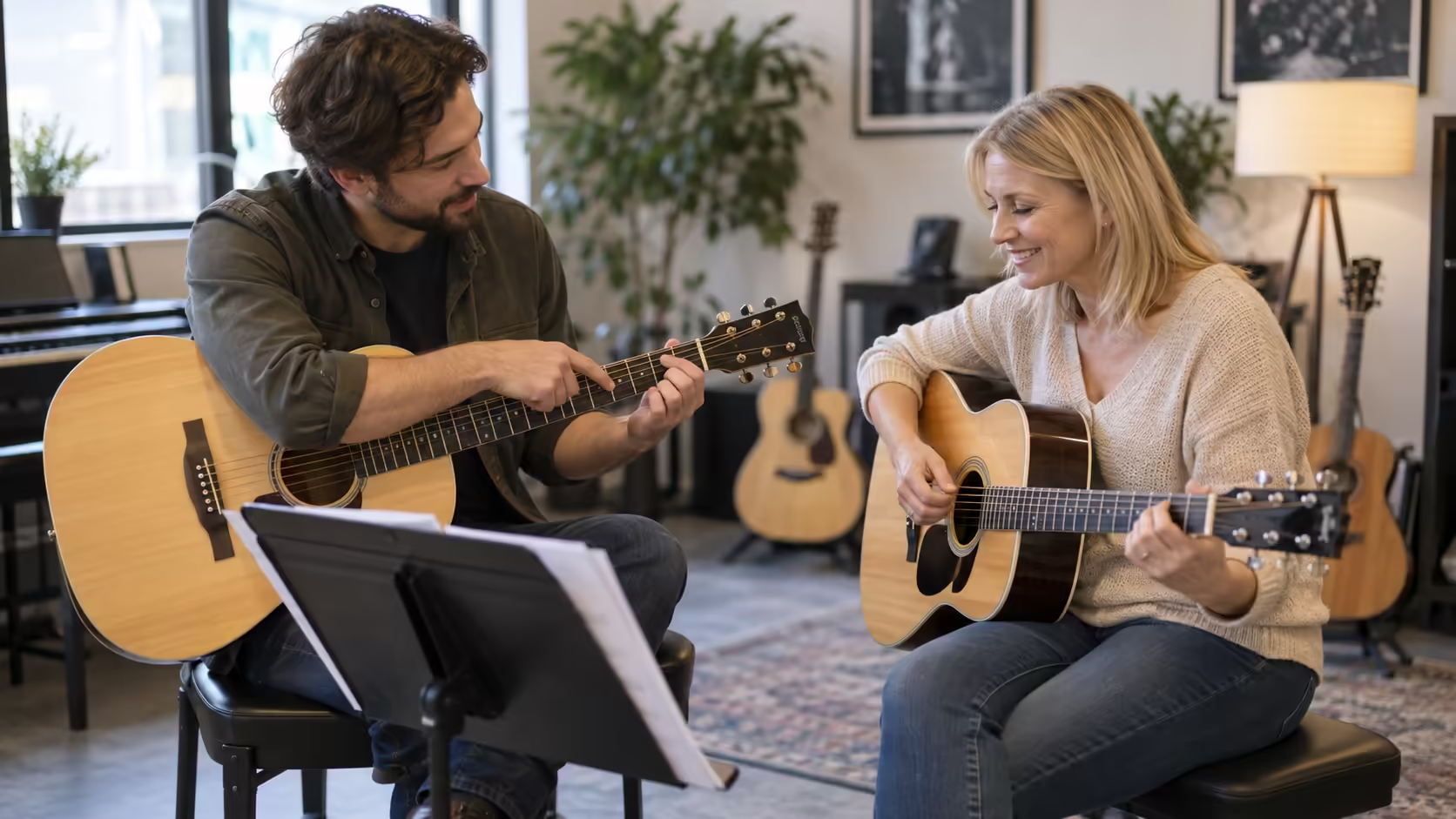
Guitar is one of the two most popular adult starting points — portable, social, and forgiving for campfire songs and rock.
Question 1: What music do you already love?
Guitar fits campfire songs, folk, and rock. Piano covers classical, pop, and jazz. Voice lets you sing what you already hum in the car. Match the instrument to your actual playlist and practice stops feeling like homework.
Question 2: What do you want to play by next summer?
A specific goal makes the choice obvious. "Play Let It Be at my sister's wedding" points straight at piano or guitar. "Sing at my church" points at voice.
How the popular options compare
| Instrument | First Full Song | What to Expect Early On |
|---|---|---|
| Ukulele | 3–5 weeks | Fastest to a real song. Small, gentle, cheap to start. |
| Voice | 4–8 weeks | No instrument to buy. Great for confidence. Breath work is the focus. |
| Piano | 6–10 weeks | Quick early wins. Coordinating both hands takes patience. |
| Guitar | 6–10 weeks | Fingers get sore for the first 2–3 weeks, then it passes. |
| Drums | 8–12 weeks | Very fun for rhythm. You need practice space (or an electronic kit). |
| Violin / Cello | 10–16 weeks | Slowest start, but deeply rewarding. Playing in tune takes real patience. |
Rent before you buy. Most San Diego music shops rent instruments monthly, so you can test-drive your choice without a big commitment. Many schools will also let you try an instrument during a trial lesson before you spend a dollar.
Private, Group, In-Home, or Online?
Every adult learns in a different environment, and San Diego offers all four formats.
| Format | Best For | Trade-off |
|---|---|---|
| Private lessons | Fastest progress, specific goals, busy adults | Costs the most per session |
| Group classes | Lower cost, social energy, low-pressure start | Less one-on-one correction |
| In-home lessons | No commute, tight schedules, parents | Higher rate; scheduling depends on the teacher |
| Online lessons | Flexibility, far suburbs, self-starters | Requires more self-motivation |
Private lessons
Private lessons give you a teacher's full attention. Progress comes fastest because every minute is yours. This is the top choice for busy adults with specific goals — and for anyone who'd feel self-conscious making beginner mistakes in front of a group.
Group classes
Group lessons cost less and add social energy. You learn alongside peers who laugh at the same mistakes. Adult group guitar and voice classes are especially common in San Diego.
In-home lessons
In-home lessons remove the commute entirely. Convenient for parents and anyone with a tight schedule — but expect to pay $10–$25 more per session for the teacher's travel time.
Online lessons
Online lessons work well for self-starters. Video calls, screen-shared sheet music, and recorded feedback make remote learning genuinely practical. They typically cost 20–30% less than in-person rates.
Start private for the first three months to build a solid foundation — correct hand position, real technique, no bad habits to unlearn later. Then add a group class or ensemble for community and the fun of playing with other people.
You get the fast start and the social side. Best of both.
What Adult Lessons Cost in San Diego
Let's talk money without pretending. Music lessons are an investment — but they cost less than most adults assume.
| Format | Typical Range (San Diego) | Best For |
|---|---|---|
| Group class | $20–$40/class | Social learners, budget-conscious starters |
| Private, 30 min | $40–$80/lesson • $170–$320/month | Casual adult beginners, tight schedules |
| Private, 45 min | $55–$95/lesson • $230–$380/month | Steady progress, balanced depth and cost |
| Private, 60 min | $70–$110/lesson • $290–$450/month | Total beginners, clear goals, serious learners |
| Online private | $30–$75/lesson | Flexible schedules, far suburbs |
Do the monthly math
One weekly private lesson lands somewhere around $250–$360 a month depending on length. Compare that to a gym membership plus a weekly date night. The difference is that music gives you a skill you keep permanently.
Questions to ask before you pay
- Am I billed monthly or per lesson?
- What's the makeup policy for missed lessons?
- Are there registration, material, or book fees?
- Is there a minimum commitment or contract?
- Do you charge extra in months with five weeks?
Three ways to lower the cost
- Choose a shorter lesson to start. A 30-minute weekly lesson is enough to build real momentum in the first few months.
- Book a daytime slot. Many studios discount off-peak hours because their evenings fill with kids. If you work from home or have a flexible schedule, this is real money.
- Ask about the total annual cost, not the lesson rate. A school at $50/lesson with a $60 annual fee, $80 recital fee, and required books can cost more per year than a school at $70/lesson with nothing added on.
What Happens at Your First Lesson
The first lesson feels mysterious, so let's remove the mystery entirely.
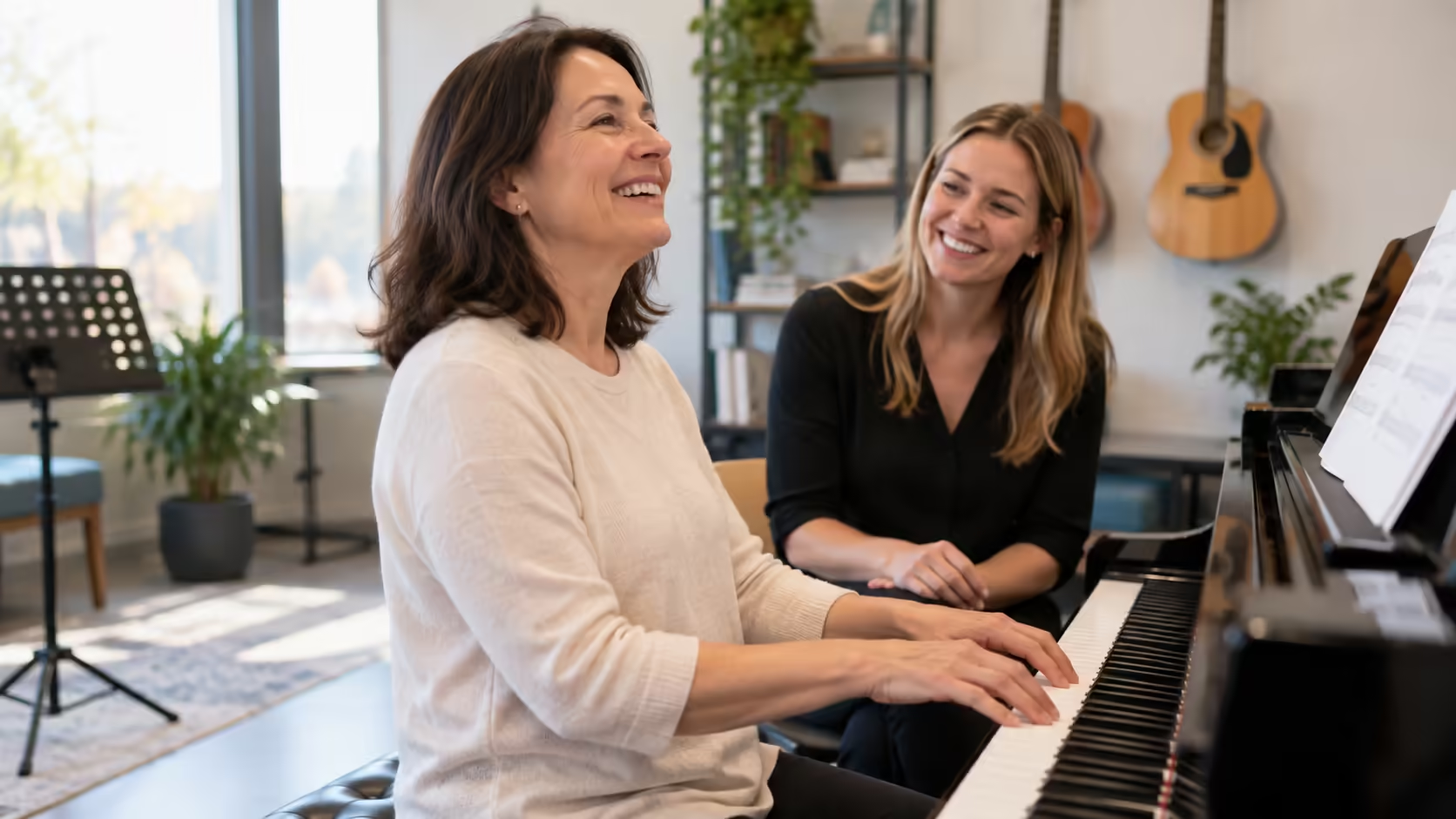
First lessons are conversational and low-pressure. Nobody expects you to know anything — that's the entire point.
Before you arrive
Show up ten minutes early. Bring nothing but yourself. Most studios have pianos, guitars, and drums ready for you to try.
Minutes 1–10: your goals
You talk about why you want to learn and what songs excite you. The teacher listens more than they talk. This part matters — it's how the teacher builds the plan around you instead of handing you a generic curriculum.
Minutes 10–30: your hands on the instrument
The teacher demonstrates something simple, then hands the instrument to you. You'll try a basic chord or a few notes. Your hands will feel clumsy. That's completely normal, and teachers see it every single day.
Minutes 30–45: practice together
You work through a small exercise with the teacher. They'll correct your posture or finger position with gentle guidance — not criticism.
The last five minutes: your plan
You leave with two or three simple exercises. Not a homework mountain. That's your practice plan for the week.
Nobody judges you. In fact, most teachers are quietly delighted when an adult walks in — because adult students practice with real intention, show up on time, and actually want to be there. You are, genuinely, the easy student.
How Much Practice Do You Really Need?
Here's the secret nobody tells beginners: quality beats quantity.

Twenty focused minutes a day beats two hours on Saturday — every single time.
Twenty to thirty minutes a day, four to five days a week, is plenty. That's less than one TV episode. What matters is showing up consistently, not marathon sessions.
Why short and daily wins
Your brain consolidates new motor skills during sleep. Five short practices a week give your brain five separate chances to lock in new patterns. One long Saturday session gives it one. The math isn't close.
The Two Songs Rule
Always end practice with something you enjoy. Play one simple tune you already know, even imperfectly. Ending on joy makes you want to come back tomorrow. Ending on frustration makes you quit.
Fitting practice into a real adult schedule
- Morning coffee — 15 minutes before work, while the house is quiet
- Right after dinner — before the couch swallows you
- Lunch break — if you work from home, this is the most underused window
- Waiting on kids — keep a travel instrument or review your notes in the car
A realistic timeline
| Timeframe | What to Expect |
|---|---|
| Weeks 1–2 | First clear sounds, basic hand position, first few notes or chords |
| Weeks 4–8 | Your first full song, start to finish |
| Month 3 | Smooth chord changes, steadier rhythm, real confidence emerging |
| Month 6 | A piece you're genuinely proud to play for someone |
| Year 1 | A small repertoire, ability to learn new songs semi-independently |
Do You Need to Read Music?
This question stops a lot of adults cold. The short answer: no, not to start.
Plenty of guitarists and ukulele players never learn standard notation. They use tabs, chord charts, and their ears — and they play hundreds of songs that way.
That said, a little theory accelerates everything. Knowing basic chords, rhythm, and key names helps you play with other people and figure out songs much faster. Think of theory as a map. You can drive without one, but it cuts your travel time dramatically.
The song-first approach
Many teachers who specialize in adults use a song-first method: they teach the music you actually want to play, then slip in theory as questions naturally come up. "Why do these three chords sound good together?" opens a door, and your teacher walks you through it.
Best of both worlds: ask for a balanced plan. Say "Teach me songs, but explain the why as we go." Any good teacher will say yes immediately.
7 Tips to Stay Motivated as an Adult Student
Adults quit for one reason more than any other: they lose steam around week six. These seven habits keep the fire going.
Set a specific, dated goal
"Play Let It Be at Thanksgiving dinner" beats "get better." Write it down and stick it on your music stand where you'll see it.
Keep a practice log
A simple calendar with an X on every practice day builds a visible streak. Streaks are addictive in the best possible way.
Record yourself monthly
Your ear adapts to your own progress, so improvement hides from you. Video doesn't lie. Compare month one to month three and you'll be genuinely shocked.
Play with someone else early
A duet, a class, a jam night. Music is a language, and languages grow fastest in conversation.
Choose a teacher you enjoy talking to
Chemistry matters more than credentials at the beginner stage. You'll practice more for someone who makes you laugh.
Expect the week-six plateau
Nearly everyone hits one. The fix is simple: switch songs or exercises for a week, then come back to the hard thing fresh.
Reward your milestones
New strings at month three. A nicer music stand at month six. A concert ticket when you play your first song for someone. Celebrate the wins out loud.
Making Music Part of San Diego Life
Lessons build your skills. The city builds your confidence. San Diego's music scene has genuinely welcoming corners for beginners.

Voice students often find the fastest route to performing — no instrument to carry, and open mics are everywhere.
Open mics and jam nights
These happen across the city every week, and many venues actively encourage beginners. Go twice just to watch before you ever sign up to play. That takes the edge off completely.
Adult recitals
Many San Diego studios host relaxed semester showcases where grown-ups play for each other. Applause follows, nerves vanish, and you walk out feeling like an actual musician. If a school offers this, it's a real sign they take adult students seriously.
Community ensembles
Adult ensembles — strings, guitar, choir — let you make music with other people without audition pressure. This is where most adults discover the part of music that actually hooks them for life.
The natural path forward
Lessons for six months. An ensemble or group class next. An open-mic cameo after that. Then who knows — backyard concerts happen more often than you'd think.
Adult Lessons at K&M Music School
If you've read this far, you know what adult music lessons in San Diego involve — the costs, the formats, the practice reality, the questions worth asking. Here's how K&M Music School fits into that picture, so you can compare us fairly.
Adult Lessons at K&M
Weekly private lessons on any of our 11 instruments — flat monthly rate, no surprise charges
- One private lesson per week with your assigned teacher
- Same flat monthly rate whether the month has 4 lessons or 5
- One-time $50 registration fee — not annual
- 100% free trial lesson — no instrument needed, no credit card required
- No recital fees, no material surcharges, no 5-week-month upcharges
Where K&M sits in the market
Compare our per-lesson rates against the San Diego range in the cost section above: our $70/$80/$90 per-lesson pricing falls squarely in the middle of the private lesson market — a fair rate for a structured conservatory program with experienced teachers and an on-site recital hall.
What makes our pricing different isn't the number — it's what's not tacked on. Multiply the monthly rate by 12, add $50 once, and that's your total for the year:
30-minute weekly lessons: $280 × 12 = $3,360 + $50 registration = $3,410/year
45-minute weekly lessons: $320 × 12 = $3,840 + $50 registration = $3,890/year
60-minute weekly lessons: $360 × 12 = $4,320 + $50 registration = $4,370/year
That's the complete number. No annual re-registration, no recital fees, no book surcharges, no extra charge in five-week months. Ask any other school for their full annual total and compare.
What adult students get at K&M
- Teachers who work with adults every week — not a kids' studio that tolerates grown-ups
- 11 instruments under one roof — piano, guitar, voice, violin, cello, flute, ukulele, saxophone, bassoon, harp, drums. Try before you commit.
- Evening and weekend slots for working schedules
- A structured curriculum — the 9-level Russian conservatory program, adapted for adult pacing and goals
- An on-site recital hall in Mira Mesa with two grand pianos, for when you're ready to play for someone
- 501(c)(3) nonprofit status — mission-driven, not investor-driven
We're about 15 minutes from most of North San Diego, including La Jolla, UTC, Sorrento Valley, and Carmel Valley. If that's a workable drive for a weekly slot you can actually keep, we'd love to meet you.
The only real risk is another year passing while you wonder. K&M offers a 100% free trial lesson for adult beginners — no instrument needed, no credit card, no pressure. Come play that first clumsy note.
Book Your Free Trial Lesson5703 Oberlin Dr, Unit 108, San Diego, CA 92121 (Mira Mesa) • 858-588-3938 • Explore all 11 instruments
Frequently Asked Questions
Is it too late to learn an instrument as an adult?
No. Your brain stays adaptable throughout life — a property called neuroplasticity. Adults may develop physical coordination a little more slowly than children, but they learn concepts much faster and practice with far more intention. Motivation and discipline more than make up the difference.
How much do adult beginner music lessons cost in San Diego?
Expect about $40 to $80 for a 30-minute private lesson and $70 to $110 for a full hour. Weekly monthly plans typically run $170 to $450 per month depending on lesson length. Group classes cost less at roughly $20 to $40 per class.
How long does it take an adult to learn an instrument?
Most adults play their first full song within 4 to 8 weeks of weekly lessons and consistent short practice. Smooth, confident playing usually arrives around the six-month mark. Basic competence comes faster than most adults expect.
What is the best instrument for an adult beginner?
Piano and guitar are the most popular choices for adults because they suit a wide range of music and give quick early wins. Ukulele is the fastest to a first song. Voice requires no instrument purchase at all. The best choice is whichever instrument plays the music you already love.
How much should an adult beginner practice?
Twenty to thirty minutes a day, four to five days a week, is plenty. Short daily sessions beat one long weekend session because your brain consolidates new skills during sleep — five short practices give your brain five chances to lock in the patterns.
Do adults need to learn to read music?
Not to start. Many guitarists and ukulele players use tabs and chord charts and never read standard notation. That said, a little theory speeds everything up. A good teacher will teach the songs you want first and layer in theory as questions come up.
Are group or private lessons better for adult beginners?
Private lessons produce faster progress because every minute is focused on you. Group classes cost less and add social energy. Many adults do best starting private for the first few months to build a solid foundation, then adding a group class or ensemble for community.
Do I need my own instrument before my first lesson?
Usually not for the trial lesson — most schools have instruments available. Within the first month, rent one so you can practice at home. Renting before buying lets you confirm you enjoy the instrument before making a larger purchase.


