
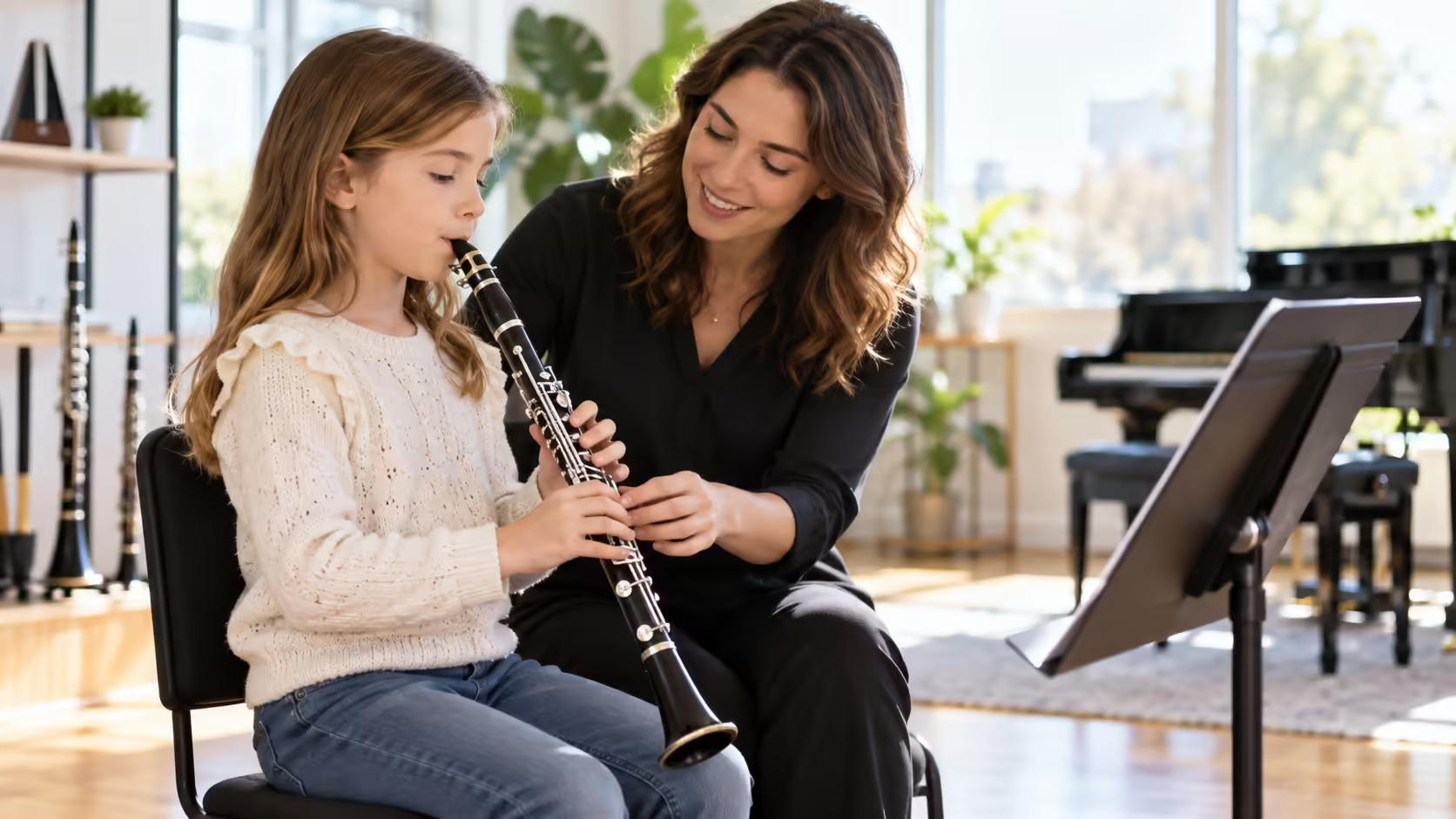

Short answer: Most clarinet teachers point to ages 8 to 10, with 9 as the most common single answer. By then children usually have their adult front teeth, hands big enough to cover the tone holes, and enough breath control to make a steady sound.
But readiness matters more than the birthday. Some 7-year-olds are ready. Some 9-year-olds aren't. Teens and adults can start at any age — and often progress fastest of all.
If your child is under 8: recorder or piano is a great bridge. Nothing is lost by waiting a year.

Why Ages 8–10 Work: Three Readiness Rules
Why do teachers land on 8 to 10 again and again? Three body-based reasons — and each one you can check at home this afternoon.
1. The front teeth rule
Clarinet players rest the mouthpiece against their upper front teeth. That small anchor point matters more than most parents realize. The mouth shape players form around the mouthpiece is called the embouchure, and it needs a stable surface to press against.
Baby teeth wobble. Missing teeth leave a gap. Either one makes it hard to form a consistent seal, and the sound comes out thin or squeaky no matter how hard the child tries.
Most children have their adult front teeth by around age 8. That single developmental fact explains most of why this age range exists.
2. Finger reach and hand size

Fingers have to fully cover the tone holes. If air leaks, notes squeak — and no amount of effort fixes it.
A clarinet is longer than young children expect, and the tone holes have to be completely covered. Small hands struggle to seal them. Air leaks out, notes squeak, and frustration builds fast.
This is easy to test: rent or borrow a clarinet and see whether your child can reach and cover comfortably. Not straining. Not stretching. Comfortably.
There is one workaround worth knowing about — the E-flat clarinet, a smaller cousin of the standard B-flat instrument. Some teachers use it with small beginners. The honest caveat is that it's harder to make sound good, so it's not a universal fix. If you're curious, ask a teacher to let your child try one before you commit.
3. Breath support
Clarinet needs steady, controlled air. Unlike piano, nothing happens unless the player pushes air through with control. Breath capacity and breath discipline both grow with age.
Can your child blow out birthday candles with a steady, sustained breath — not a quick puff — without getting dizzy?
That's the same muscle group and the same kind of control a clarinet needs. If they can do that comfortably, breath support is likely fine.
The Best Starting Age, Age by Age
General rules help. Specific ages help more.
| Age | Verdict | What's Going On |
|---|---|---|
| 4–6 | Usually too young | Hands, teeth, and breath control generally aren't ready yet |
| 7 | Possible for some | Depends entirely on teeth and hand size — check before enrolling |
| 8–10 | The sweet spot | Adult front teeth in, hands big enough, breath strong enough, school band approaching |
| 11–14 | Excellent | Strong coordination and focus; often very fast progress |
| 15+ and adults | Also great | Self-driven practice and clear goals more than offset a later start |
For children under 8, the answer isn't "wait and do nothing." It's redirect the energy. General music classes, singing, piano, or recorder all build rhythm and note-reading now — and every hour of that transfers directly to clarinet later.
Starting at 7 or 8: Possible, With Checks
Seven is the edge of the range, but it does happen. Some seven-year-olds are genuinely ready. Many aren't quite there yet — and the difference is physical, not a matter of effort or interest.
Run this three-point check before enrolling a 7 or 8-year-old:
The 7-and-8-Year-Old Check
- Adult front teeth are in — the embouchure needs a stable anchor
- Fingers reach and fully cover the tone holes — test this on an actual clarinet, not in theory
- Attention holds for 30 focused minutes — that's what a lesson asks for
Pass all three? Go ahead. Fail one? Wait a year and start piano in the meantime. Genuinely nothing is lost — and a year of piano makes the eventual clarinet start noticeably faster.
Why 9 and 10 are the golden window
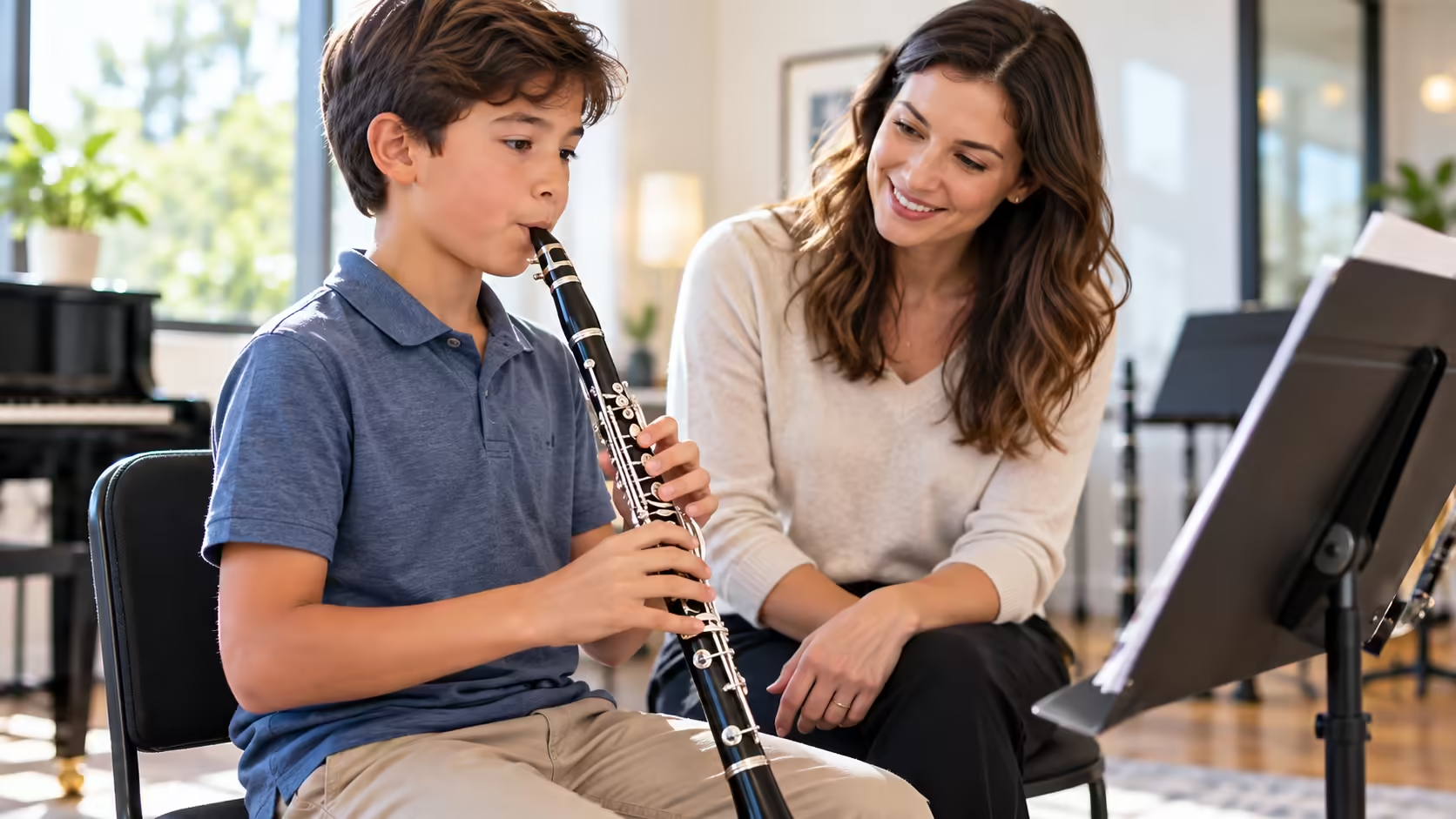
By 9 or 10, the physical requirements line up — and school band is usually right around the corner.
Two things converge at 9 and 10. The physical requirements are reliably met, and school band programs typically start in 4th or 5th grade.
That timing creates a real opportunity: starting private lessons the summer before band means your child walks into the first rehearsal already able to produce a clear tone and hold the instrument correctly. That head start affects everything from chair placement to whether they enjoy the experience at all.
Can You Be Too Old to Start?
No. Teens and adults can start clarinet at any age, and adult beginners frequently surprise their teachers with how fast they move.
What adults have working in their favor:
- Self-driven practice — nobody has to chase you to the music stand
- Clear goals — joining a community band, playing in church, working through jazz standards
- Budget for a decent instrument — no school-rental compromises, and a good clarinet is genuinely easier to play
- Patience — you've learned harder things before and you know what a plateau feels like
Adults also come with their adult teeth firmly in place and full breath capacity, which removes two of the three childhood readiness questions entirely.
The best age to start clarinet is the age you actually are. A motivated 45-year-old will out-practice a pushed-along 10-year-old every week of the year.
7 Signs Your Child Is Ready
Birthdays tell only part of the story. These are the signals teachers actually look for — and parents can check most of them at home.
Adult front teeth are in
The physical anchor for the mouthpiece. This is the single most important readiness marker for clarinet specifically.
Fingers cover the tone holes
Test this on a real instrument before you enroll. Comfortable coverage, not straining.
They can focus for 20–30 minutes
That's the length of a beginner lesson. If 20 minutes of anything is a struggle, wait a few months.
They follow simple instructions
Lesson one is largely "do this with your fingers and this with your breath." That skill comes first.
They're curious about instruments
Unprompted interest — asking to hold it, asking how it works — is the strongest green light of all.
They hunt for melodies
Kids naturally drawn to music — humming, picking out tunes, asking for songs — absorb lessons noticeably faster.
They'll practice without constant reminders
Not perfectly. But some willingness to pick it up on their own predicts whether this lasts past month three.
Most signs present? Book a trial lesson. Only a few? Wait a few months and check again — readiness changes fast at this age.
Too Young? Best Starter Instruments
Waiting doesn't mean doing nothing. The years before clarinet are ideal for building exactly the skills clarinet will need.
| Instrument | What It Builds | Transfers to Clarinet As |
|---|---|---|
| Recorder | Breath control, finger patterns, reading | Almost directly — similar hand position and breath use |
| Piano | Note reading, rhythm, two-hand coordination | Music literacy, which speeds up everything later |
| Ukulele | Rhythm, small-hand friendly, fast early wins | General musicianship and confidence |
What should a 6-year-old play first?
Piano or recorder. Both build genuine musical skill while the child physically grows into clarinet range. Around ages 8 or 9, most children are ready to make the switch — and they arrive already able to read music.
Nothing is lost by waiting. A 9-year-old with two years of piano behind them is meaningfully ahead of a 7-year-old who spent two frustrating years wrestling a clarinet that was too big.
The early years aren't a race. They're a foundation.
The First Year: What to Expect
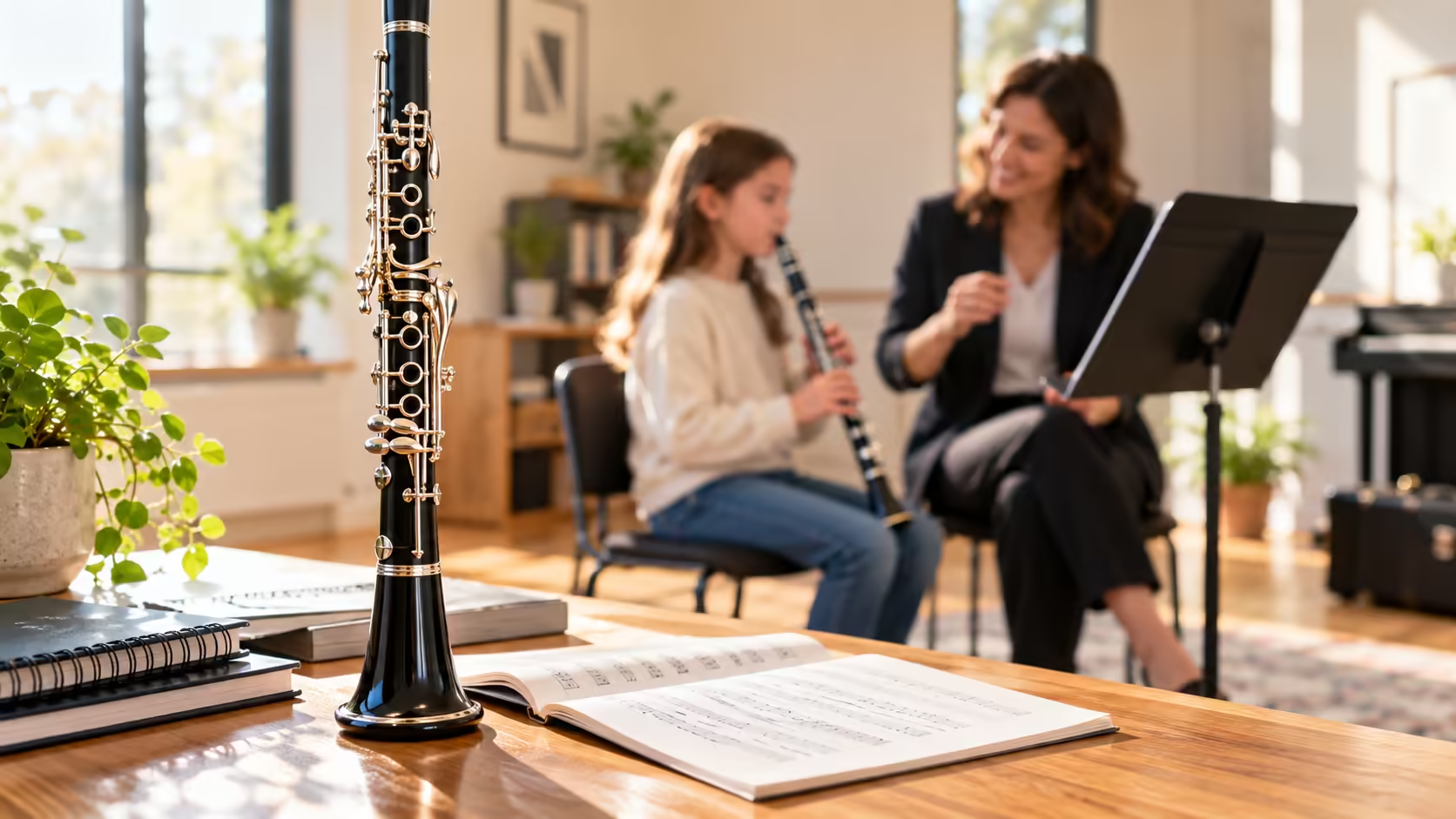
First clear sound usually comes in week one. First real song within a couple of months.
Here's how a typical first year unfolds. Treat the pacing as normal, not guaranteed — every child moves differently.
| Timeframe | What Usually Happens |
|---|---|
| Week 1 | First clear sound on the mouthpiece, basic assembly, how to hold it |
| Weeks 2–4 | First few notes, learning to read them, building a consistent embouchure |
| Month 2 | Simple songs, start to finish |
| Months 3–6 | More range, cleaner tone, real rhythm reading, first scales |
| Around 1 year | Ready for school band and beginner repertoire |
Lesson length by age
Most teachers schedule 30 minutes for young beginners and 45 to 60 minutes for older kids, teens, and adults. A focused half hour is plenty at 8 or 9.
The practice rhythm that works
Short daily sessions beat weekend marathons. Fifteen minutes a day, five days a week, builds far more skill than one 90-minute Saturday struggle. Embouchure is a muscle — it responds to frequency, not duration.
About the squeaks
Every clarinetist squeaks. Every single one, including professionals warming up. Squeaks mean air is moving and fingers are still learning — they are a sign of progress, not failure.
Frame them that way for your child, out loud, in the first week. It saves a lot of discouragement later.
One gear note
Plastic clarinets are correct for beginners. They're durable and stable. A wooden clarinet is a later step — it costs considerably more and needs careful temperature and humidity management, which is not what a nine-year-old needs to worry about.
What Clarinet Lessons Cost
Parents rarely ask about age without also asking about money. Here's the honest picture.
Private lessons
| Lesson Length | Per Lesson | Per Month (Weekly) | Best For |
|---|---|---|---|
| 30 minutes | $55–$85 | $230–$340 | Ages 8–10, first-year beginners |
| 45 minutes | $65–$95 | $260–$380 | Ages 11–13, band students |
| 60 minutes | $75–$110 | $300–$450 | Teens, audition prep, adult learners |
Group classes are a cheaper alternative at $20–$50 per class, though a child in a group rarely gets individual embouchure correction — which is the thing that matters most in the first year on clarinet.
Rent the clarinet — don't buy yet
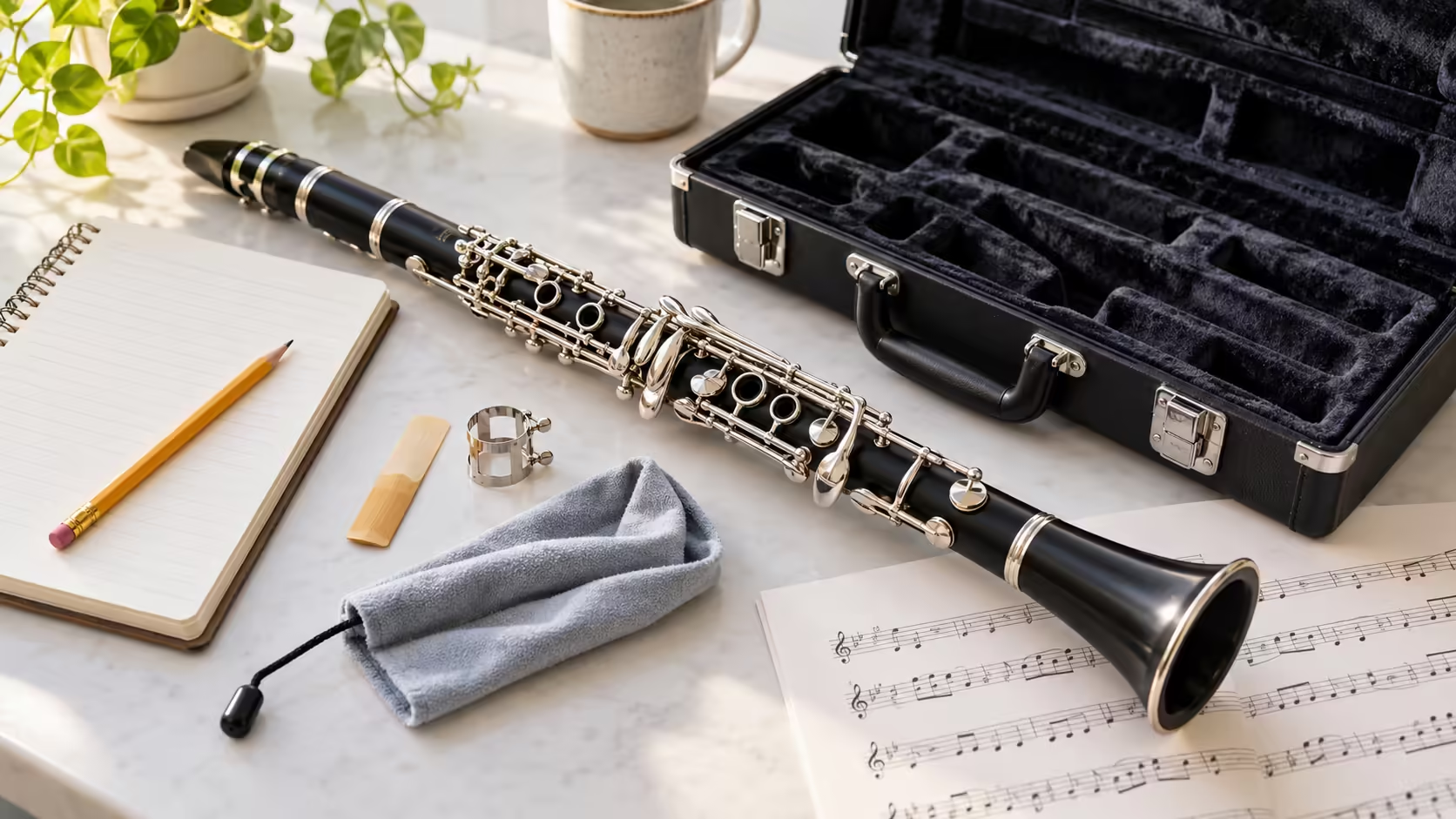
Reeds are the cost parents don't expect. They're consumable, and beginners go through them.
Rentals run about $20–$40 a month for a plastic student clarinet, usually month-to-month, and typically include basic maintenance. Many rental programs also apply part of your payments toward an eventual purchase.
If you do buy: beginner clarinets start around $300, and good-quality student models run $1,000–$1,500. Avoid the very cheapest instruments online — they're often genuinely difficult to play, and a child who can't get a sound out blames themselves rather than the instrument.
The cost most parents forget: reeds
Clarinet reeds are consumable. They chip, warp, and wear out — and beginners go through them faster than experienced players because they're still learning to handle them gently.
- Reeds: $15–$30 per box of 10, and a beginner may need a box every 1–2 months
- Reed case: $10–$20 (protects them, extends their life — worth it)
- Cork grease: $3–$5
- Cleaning swab: $8–$15
- Music stand: $15–$25
After month one, expect about $265–$395/month (lessons + rental + reeds). Group classes or school band lower this considerably.
How to Pick a Clarinet Teacher
The teacher matters as much as the timing. A good teacher at 8 builds a musician; a poor fit at 8 builds an instrument that lives in a closet. Match the teacher to the age.
For ages 8–10
Find someone genuinely experienced with small beginners. Ask about playful methods, games, and how they handle short attention spans. A teacher who mostly coaches high school players may not enjoy teaching an eight-year-old through the squeak phase — and that shows up in the room.
For ages 11–14
Band support becomes the priority. Ask whether the teacher works with school band repertoire, helps with chair auditions, and knows the local band programs.
For teens and adults
Goal-driven instruction wins. Audition prep, jazz, community band, or just playing for pleasure — say your goal out loud in the first conversation and watch whether the teacher's interest is real.
Five questions for a trial lesson
- How many beginners my child's age are you currently teaching?
- What does the first month look like?
- What practice do you expect from a young student?
- Do students perform — recitals, festivals, band?
- What's your makeup and cancellation policy?
- No clear beginner path — "we'll see how it goes" isn't a plan
- One rigid method applied identically to every student
- No performance or goal structure
- No plan for the squeak phase — a good teacher will bring it up before you do
- Vague answers about total monthly cost
A trial lesson costs little. Choose the teacher your child talks about at dinner.
Clarinet Lessons at K&M Music School
If you've read this far, you know what readiness actually looks like and what the first year costs. Here's how K&M Music School fits in.
Clarinet Lessons at K&M
Weekly one-on-one lessons — flat monthly rate, no surprise charges
- Every lesson is private — one student, one teacher
- Same flat monthly rate whether the month has 4 lessons or 5
- One-time $50 registration fee — not annual
- 100% free trial lesson — no credit card required
- No recital fees, no material surcharges, no 5-week-month upcharges
Why the free trial matters for this particular question
Everything in this guide comes down to one thing you can't fully judge from an article: is your specific child ready right now?
Teeth, finger reach, and breath control are physical and individual. A teacher who works with beginners weekly can assess all three in about ten minutes — and tell you honestly whether to start now or wait six months.
That's what the free trial lesson is for. No credit card, no obligation, and a straight answer either way.
What clarinet students get at K&M
- Teachers experienced with young beginners — patient through the squeak phase, which is most of month one
- A structured curriculum — embouchure, air support, and reading built in the right order on our 9-level program
- Band-ready preparation — students who start the summer before 4th or 5th grade band arrive able to play
- A bridge if they're not ready yet — we teach piano too, so a year of waiting builds real music literacy instead of being lost time
- An on-site recital hall in Mira Mesa — performance built into the program, never an extra charge
- 501(c)(3) nonprofit status — mission-driven, not investor-driven
We're about 15 minutes from most of North San Diego, including La Jolla, UTC, Sorrento Valley, and Carmel Valley.
Teeth, finger reach, breath support — a teacher can check all three in one short lesson and tell you honestly whether to start now or wait. K&M offers a 100% free trial clarinet lesson, no credit card required.
Book Your Free Trial Lesson5703 Oberlin Dr, Unit 108, San Diego, CA 92121 (Mira Mesa) • 858-588-3938 • Explore all our lessons
Frequently Asked Questions
What is the best age to start clarinet lessons?
Most teachers recommend ages 8 to 10, with 9 being the most common single answer. By then children usually have their adult front teeth, hands large enough to cover the tone holes, and enough breath control to produce a steady sound. Readiness matters more than the exact birthday.
Can a 6-year-old play the clarinet?
Rarely. A full-size clarinet is too long for small hands, and most six-year-olds still have gaps where their adult front teeth will come in — and the front teeth are what anchor the mouthpiece. Piano or recorder is a better start at that age, with clarinet revisited at 8 or 9.
Do you need adult teeth to play the clarinet?
Teachers strongly prefer it. The clarinet mouthpiece rests against the upper front teeth, so permanent teeth provide a stable anchor for the embouchure. Most children have their adult front teeth by around age 8, which is one reason that age works so well.
How much do clarinet lessons cost?
Private clarinet lessons typically run $55 to $110 per lesson depending on length — roughly $230 to $450 per month for weekly instruction. Group classes cost $20 to $50 per class. Add $20 to $40 a month for a clarinet rental, plus ongoing reed costs.
Should I rent or buy a beginner clarinet?
Rent first. Rentals run about $20 to $40 a month, usually include maintenance, and many programs apply part of your payments toward an eventual purchase. Beginner clarinets cost $300 to $1,500 to buy, and very cheap instruments are often genuinely hard to play.
Am I too old to learn clarinet as an adult?
No. Adults can start clarinet at any age and often progress quickly because they practice with intention and have clear goals. Community bands welcome adult beginners, and adult learners typically prefer 45 or 60-minute lessons.
What instrument should my child play before clarinet?
Piano builds note reading and rhythm. Recorder builds breath control and finger patterns, and it uses a similar hand position. Either transfers directly to clarinet and makes the eventual start smoother. Nothing is lost by waiting a year or two.
When do kids start clarinet in school band?
Most school band programs begin around 4th or 5th grade, which puts students at roughly age 9 or 10. Many families start private lessons four to six months before band tryouts so their child arrives already able to produce a clear tone.


