

Short answer: Many parents wonder if their child is musically talented — and the signs are often easier to miss than to spot. Look for melody memory, rhythm awareness, pitch sensitivity, deep emotional response, repeated curiosity about instruments, fast musical learning, and the urge to create music (not just copy it).
If you notice several of these patterns over weeks or months, keep music in your child's daily life and consider trying lessons. Don't look for one perfect moment — look for a pattern.

Why So Many Parents Ask, "Is My Child Musically Talented?"
A lot of parents ask this question after a small surprise. Maybe their child sings in tune without much help. Maybe they remember a melody after hearing it once or twice. Maybe they notice a wrong note that no one else hears. These moments stand out because they feel a little different.

Those small "wait — did you hear that?" moments are usually the start of the question.
At the same time, parents don't want to overreact. They don't want to label too early. That's wise. A child can love music without having unusual musical talent. Still, some children do show strong early signs — and those signs are worth noticing.
This guide walks through the seven clearest signs, what they look like at home, what they don't mean, and what to do once you see them.
What "Musically Talented" Actually Means
Before we get to the signs, it helps to define the idea in simple words.
A musically talented child often shows a natural ease with one or more music skills. These may include:
- Melody memory
- Rhythm and beat awareness
- Pitch sensitivity
- Sound sensitivity
- Fast musical learning
- Musical creativity
- Emotional connection to music
That doesn't mean the child can already play an instrument well. It also doesn't mean they're destined to become a professional musician. It simply means music seems to click faster or deeper for them than it does for many other children.
There's no single test that proves a child is musically gifted. Gifted children tend to show a cluster of traits — early interest, sharp ears, emotional connection, focus — across time. You're looking for a pattern, not one isolated moment.
Why Parents Often Miss the Signs
Many signs of musical talent hide inside normal child behavior. That's why parents miss them.
Lots of children sing. Lots of children dance. Lots of children bang on tables. So how can a parent tell the difference between normal musical play and a stronger signal? Usually, the difference is in the quality, consistency, and depth of the behavior.
Four reasons parents overlook real signs
1. The signs can look ordinary at first
A child humming a tune may seem cute, not important. Yet if that child can repeat songs very accurately after one hearing, that may mean strong melody memory.
2. Parents expect talent to look dramatic
Many adults imagine "gifted" means playing advanced songs at age four. Real early talent is often much quieter — beat, listening skill, focus, sound memory.
3. Children show talent in different ways
One child may tap in time with every song. Another notices wrong notes. Another invents songs while playing with toys. They may all be showing musical talent — just in different forms.
4. Parents compare children too much
One child may show strong rhythm but average singing. Another may sing beautifully but struggle with beat. Musical ability isn't one single thing.
So: if you're asking, "Is my child musically talented?", don't look for perfection. Look for repeated signs across time.
Is My Child Musically Talented? 7 Signs Parents Often Miss
Here are the seven clearest signs. Remember: one alone doesn't prove musical giftedness. A cluster of signs is what matters.
Your Child Remembers and Repeats Music Very Easily
This is one of the strongest clues. Some children hear a song once or twice, then hum it later with surprising accuracy. They sing tunes from a TV show, repeat melodies from the car radio, or recognize a song from just a few notes.
What this looks like at home
- Your child hums yesterday's song while getting dressed
- They know what song is playing after the opening notes
- They repeat a melody more accurately than expected for their age
- They sing parts of songs even if they don't know all the words
Why this matters
Melody memory supports later music learning. It helps with singing, ear training, instrument learning, and listening skill.
Parent tip
Try a simple test during normal life. Play a short tune, then pause it. See if your child sings or hums the next part. Keep it light and playful.
Your Child Has a Strong Sense of Beat and Rhythm
Rhythm often shows up in the body before it shows up in formal training. A child with strong rhythm may clap, tap, bounce, march, or sway in time with music — without thinking about it. They may copy simple beat patterns easily and stay on beat better than other children their age.
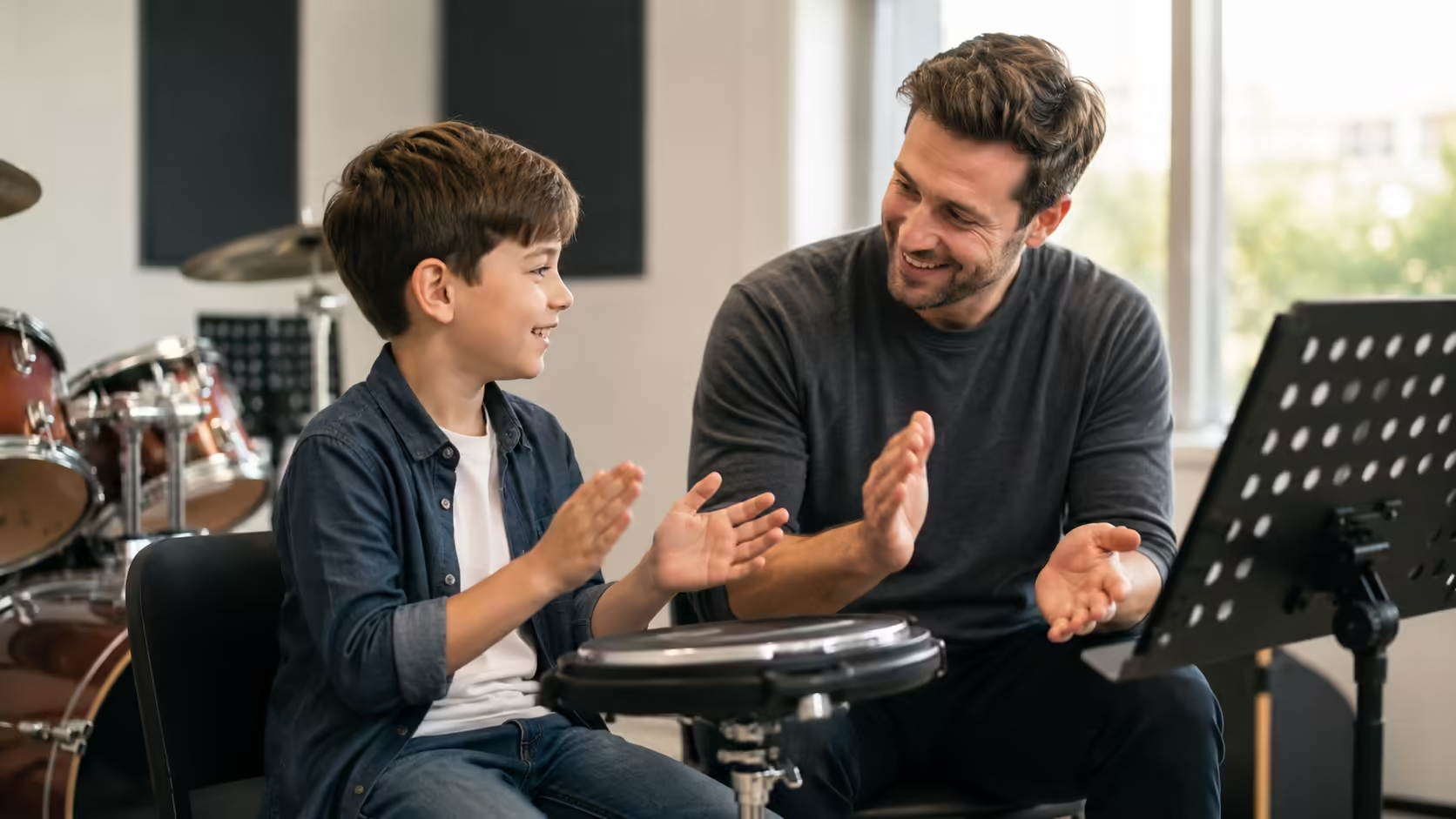
Rhythm copy-back games are one of the easiest ways to spot natural beat awareness.
What this looks like at home
- Your toddler bounces to the beat without coaching
- Your child can echo a clap pattern after hearing it once
- They keep steady time during songs more often than expected
- They notice when others speed up or slow down
Why this matters
Rhythm is a core music skill. It supports singing, piano, drums, dance, violin, guitar, and group playing.
Parent tip
Play a "copy my rhythm" game. Clap a short pattern and see if your child repeats it. Then make it a little harder.
Your Child Notices Pitch, Wrong Notes, or Sounds That Feel Off
Some children hear sound differences very quickly. They may say a song sounds "wrong." They may notice when a toy instrument is off. They may sing on pitch without much training.
What this looks like at home
- Your child says a song sounds different today
- They notice when you sing a note "wrong" on purpose
- They match pitches in a song with unusual ease
- They react strongly to sound changes others ignore
Why this matters
Pitch awareness supports singing, ear training, harmony, and deeper listening.
Parent tip
Sing a simple tune and change one note on purpose. Ask, "Did that sound the same?" Keep the mood fun — not test-like.
Your Child Has a Deep Emotional Response to Music
This is the sign many parents miss because it doesn't always look like "skill." But it matters a lot.
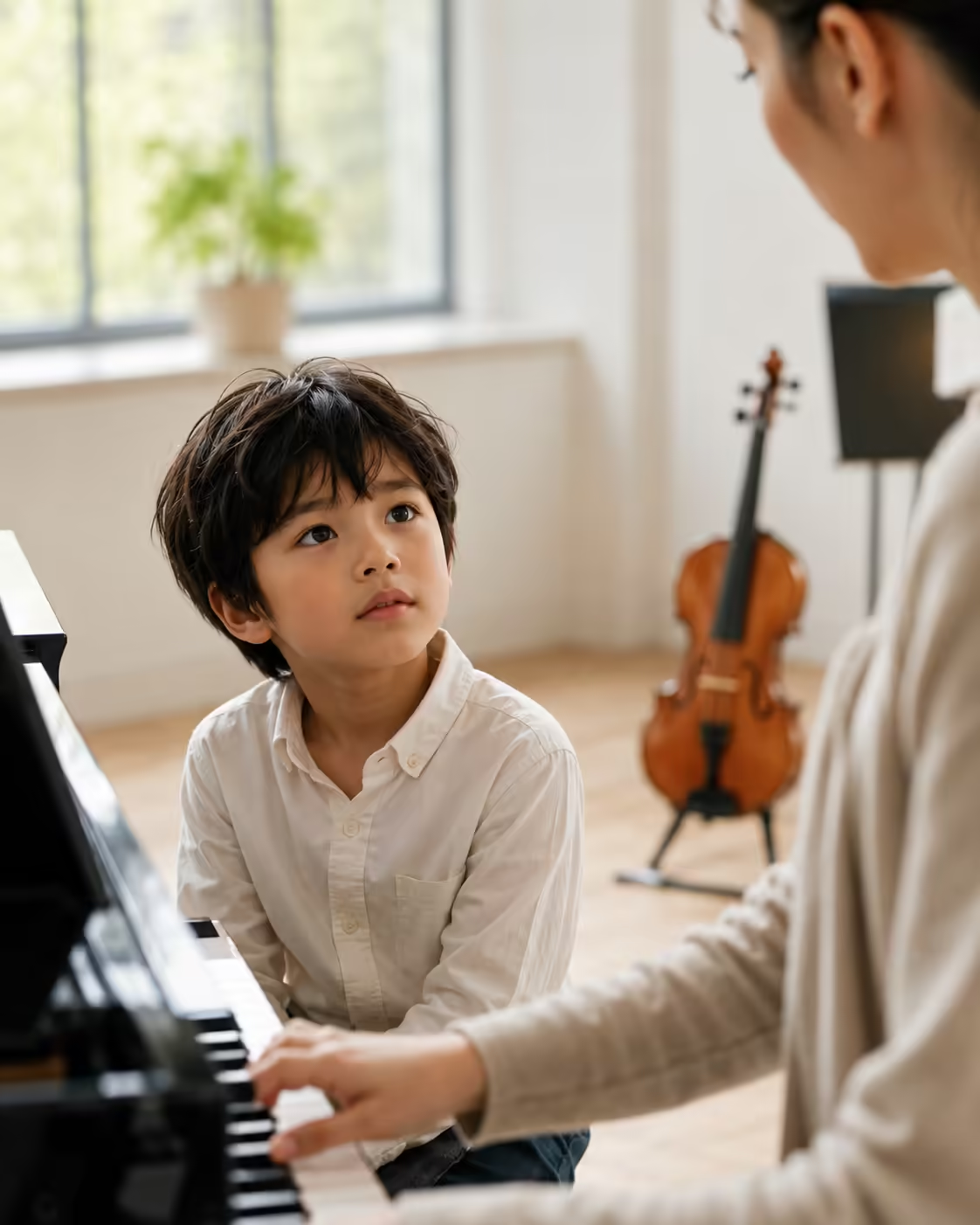
A child who goes completely still while listening is often hearing more than the rest of the room.
Some children feel music very deeply. They become calm during a gentle song. They light up with joy during favorite music. They may become quiet, focused, or even emotional when listening.
What this looks like at home
- Your child asks for the same song when upset
- They grow unusually still while listening
- Their mood shifts quickly with music
- They seem connected to certain songs in a powerful way
Why this matters
A deep emotional tie to music often supports long-term interest. It can keep a child motivated through practice and help music become a lasting part of life.
Parent tip
Notice which songs your child chooses on their own. Their favorites may tell you more than any short test.
Your Child Keeps Returning to Instruments and Sound Exploration
Curiosity is one of the clearest early clues. Some children can't stay away from instruments. They return to the piano again and again. They tap on tables, explore toy xylophones, or turn household objects into drums. They enjoy trying sounds, changing patterns, and listening closely to what happens.
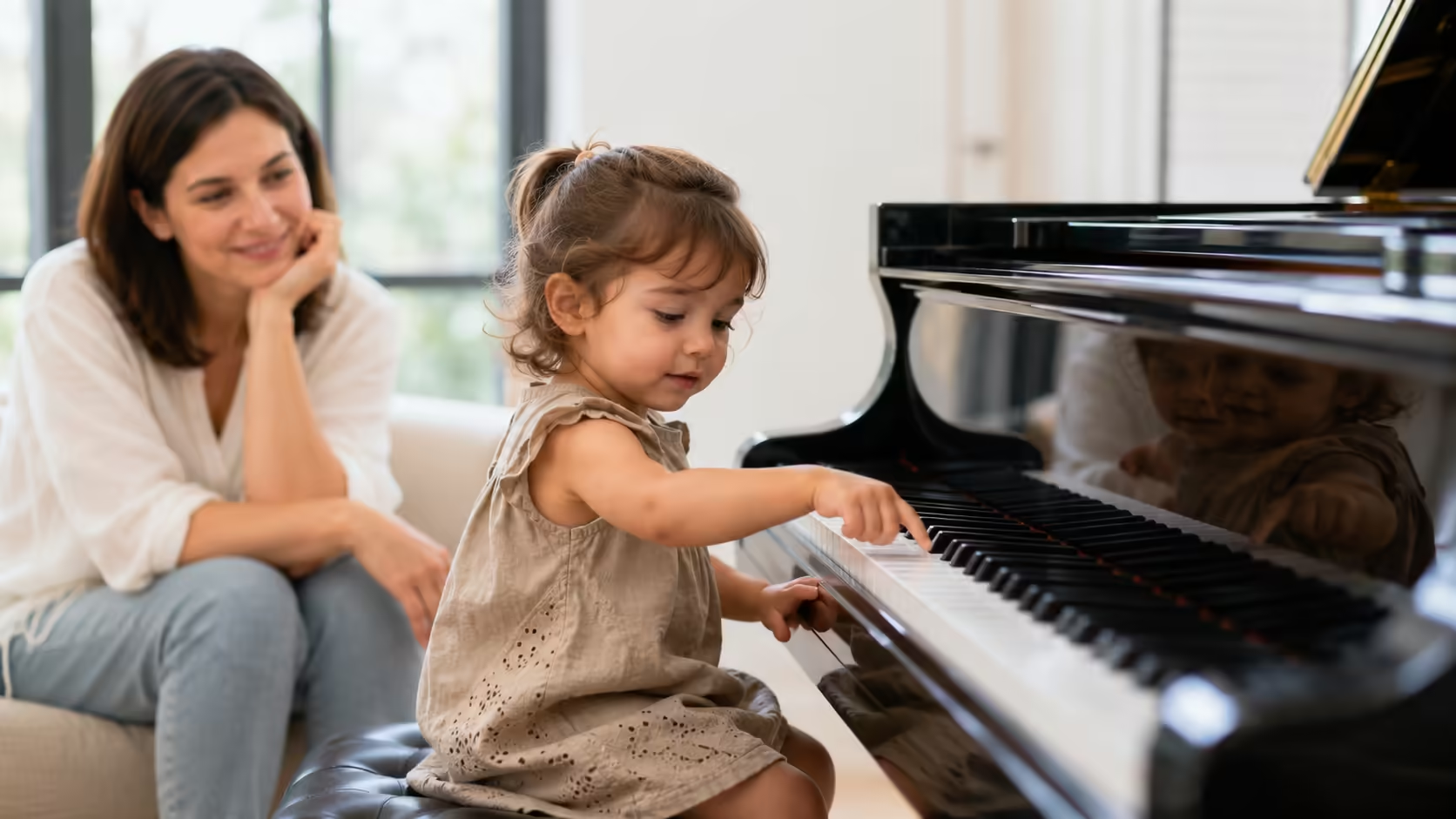
A toddler who keeps coming back to the piano is usually telling you something.
What this looks like at home
- Your child drifts back to the keyboard every day
- They test loud and soft sounds on purpose
- They try to copy songs by ear on simple instruments
- They create their own sound games during free play
Why this matters
Repeated musical exploration often comes before formal skill. A child who keeps coming back is telling you something important.
Parent tip
Keep one or two easy sound tools available at home. A small keyboard, drum, or ukulele can reveal a lot. If the curiosity stays strong for weeks, a toddler group music class is often the best next step for very young children.
Your Child Learns Musical Ideas Faster Than Expected
Some children pick up musical patterns quickly. They learn a song fast, copy a melody with little help, or understand simple music ideas sooner than their age suggests.
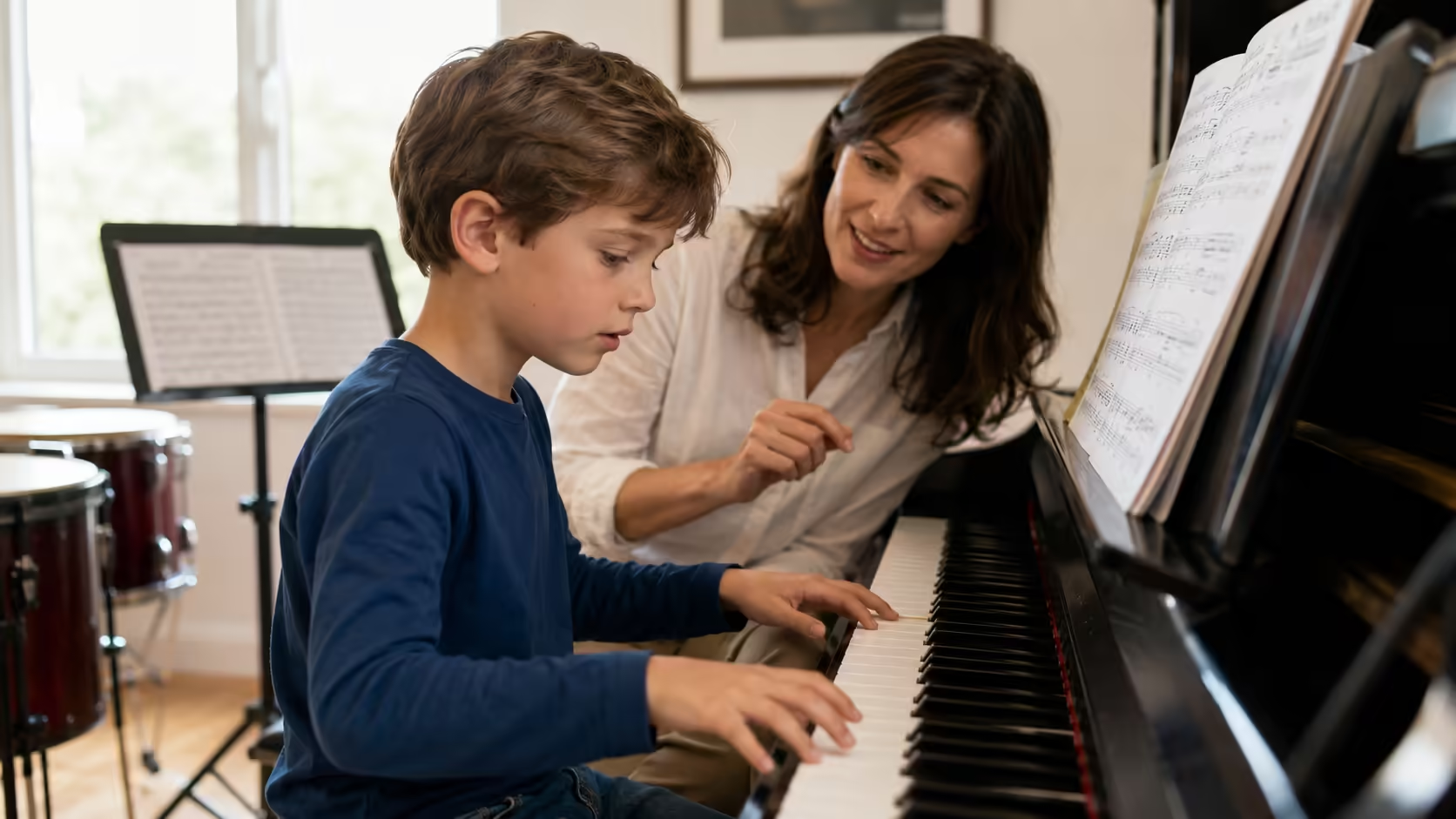
Watch how fast a child absorbs a correction. Quick response to musical feedback is very telling.
What this looks like at home
- Your child copies a new song after very little exposure
- They understand fast vs. slow, high vs. low, loud vs. soft with ease
- They remember teacher feedback well once lessons begin
- They improve quickly from one week to the next
Why this matters
Fast musical learning can signal strong listening, memory, and pattern recognition — three of the underlying skills behind most musical ability.
Parent tip
If your child starts lessons, watch how fast they absorb corrections. Quick response to musical feedback can be one of the clearest signs.
Your Child Creates Music, Not Just Copies It
This is one of the most charming — and most often missed — signs.
Some children do more than repeat songs. They invent them. They make up melodies for toys. They create silly songs during bath time. They change the words to familiar tunes. They build rhythm patterns while playing.
What this looks like at home
- Your child sings made-up songs during play
- They invent little tunes for pets or toys
- They change songs and enjoy the result
- They seem driven to create sound, not just repeat it
Why this matters
Creativity is a real part of musical ability. Some children show their strongest gift through invention rather than imitation.
Parent tip
Record a few of these playful moments. Over time, you may notice patterns in rhythm, tune, or confidence that didn't seem obvious in the moment.
Quick Summary: The 7 Signs at a Glance
| Sign | What to Watch For | What It Supports |
|---|---|---|
| 1. Melody memory | Repeats tunes accurately after one hearing | Singing, ear training, learning new pieces |
| 2. Rhythm sense | Moves and claps in time naturally | All instruments, ensemble playing |
| 3. Pitch awareness | Notices wrong notes and off-key sounds | Singing, harmony, fine listening |
| 4. Emotional response | Feels music deeply, asks for specific songs | Long-term motivation, expression |
| 5. Instrument curiosity | Keeps returning to keyboards, drums, sound toys | Sustained interest, exploration |
| 6. Fast learning | Picks up musical ideas quickly | Real progress in lessons |
| 7. Music creation | Invents songs and rhythms during play | Composing, improvisation, deep musicality |
Bonus Signs That Strengthen the Picture
The seven signs above are the core. A few additional clues can strengthen the picture if you notice them.
Your child often asks to hear music
Musically gifted children may request music often. Music excites and engages them more than many other activities. They notice when the playlist ends.
Your child recognizes a song after only a few notes
This is a strong indicator of musical memory and sound awareness — beyond just liking music.
Your child returns to music without being pushed
Self-initiated music — pulling out an instrument, asking for songs, singing during play — is one of the most honest signals. It says music is something they choose, not something done to them.
Signs That Don't Always Mean Musical Talent
Parents also need balance. Some behaviors are lovely — but they don't always point to unusual musical talent on their own.
- Loving music. Many children love music. That's wonderful. It doesn't always mean rare ability.
- Being energetic during songs. Jumping, spinning, or shouting can simply mean your child enjoys the moment.
- Taking lessons early. Early lessons can help, but they don't prove natural talent.
- One good musical moment. A single lucky moment isn't enough. You want repeated signs over time.
None of these are bad. They just shouldn't be the sole basis for deciding whether your child is unusually gifted.
At What Age Can You Notice Musical Talent?
This is one of the most common parent questions. Signs often appear as early as ages 3 or 4 — though some children show signs earlier, and others later.
- Movement to the beat
- Strong interest in songs
- Repeating sound patterns
- Attraction to instruments
- Melody memory
- Pitch matching
- Simple song invention
- Rhythm copying
- Faster progress in lessons
- Clear rhythm and pitch strengths
- Longer focus on music tasks
- Stronger creative output
Some children bloom later. If your child is older and just starting to show interest, don't assume the window is closed — it isn't.
How to Support a Musically Talented Child Without Pressure
If you see several signs, the next step is support — not stress.
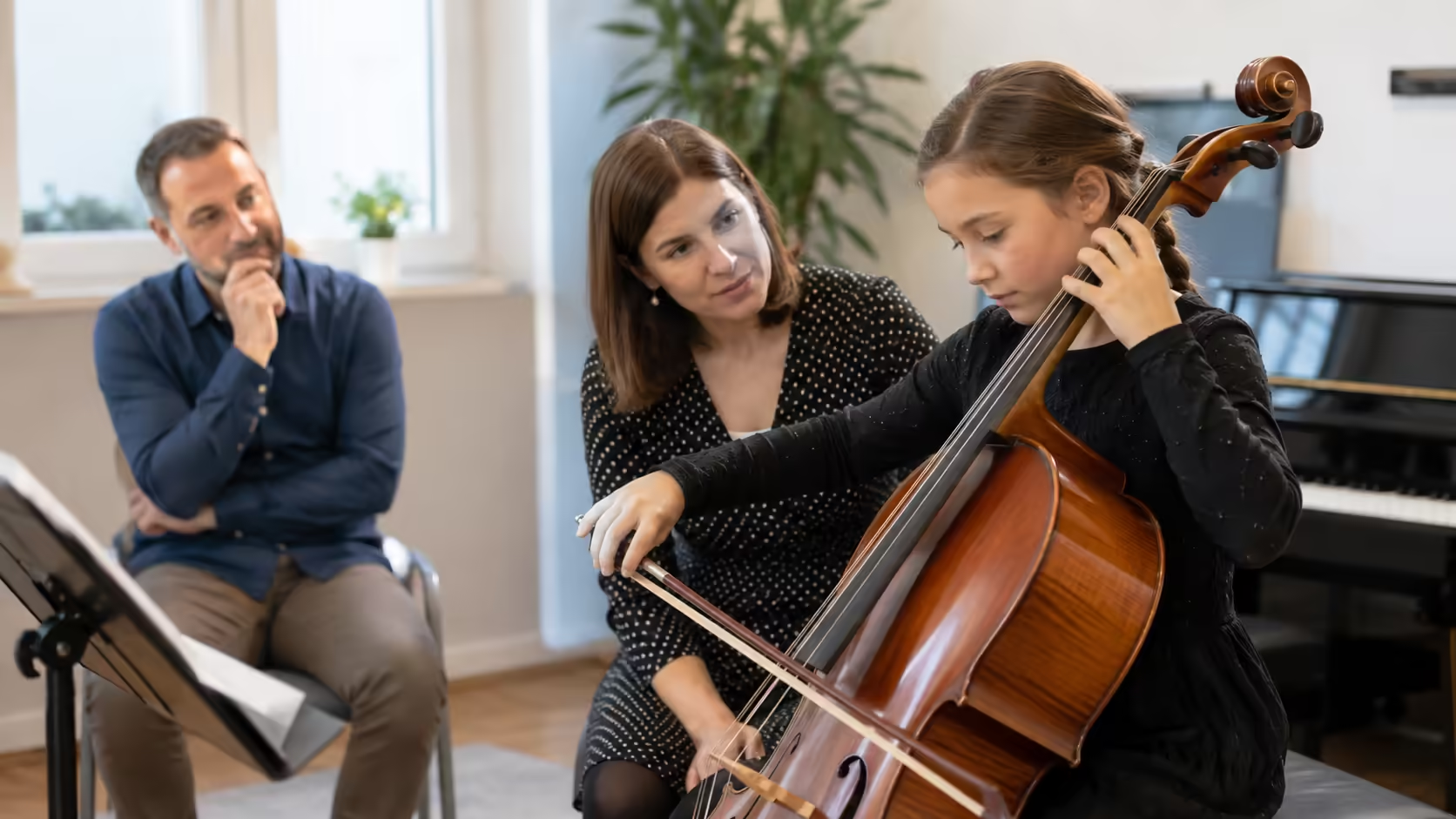
Steady support, patient teachers, and room to explore — that's what turns early signs into real skill.
1. Make music part of daily life
Sing in the car. Play different styles of music at home. Let music feel normal, warm, and fun.
2. Give your child room to explore
Let children try different instruments and styles of music to find what they enjoy most. Don't lock in a "this is your instrument" decision too early. Schools that offer multiple instruments under one roof — piano, violin, cello, guitar, voice, drums, and more — make this exploration much easier.
3. Keep correction gentle
Children learn best when they feel safe. If they sing off-key or miss a beat, keep the moment light. Pressure can shut down musicality faster than almost anything else.
4. Consider lessons if interest stays strong
A good teacher matters. Look for someone patient, supportive, and experienced with young children. Encouragement and a nurturing environment help musical promise grow into real skill. For age-by-instrument guidance, our best age to start music lessons guide breaks down realistic starting ages for piano, violin, cello, guitar, voice, and more.
5. Watch for joy
A happy child who keeps coming back to music is usually on a healthy path. If joy starts to disappear, slow down and figure out why before pushing forward.
Should You Start Music Lessons Right Away?
Maybe. It depends on the child.

Lessons work best when the child is ready — not when the parent is.
Lessons can help if your child:
- Shows clear and repeated interest
- Can focus for short periods
- Enjoys copying songs or rhythms
- Keeps returning to music on their own
You may want to wait a bit if your child:
- Strongly resists structure
- Loses interest very quickly
- Seems to enjoy music only in short, playful bursts
A gentle group class, a beginner piano readiness program, or a playful early-childhood music session can be a great first step before formal private lessons.
Parent Checklist: Does My Child Show Signs of Musical Talent?
Use this simple checklist to spot patterns. Don't score your child from one day. Watch for trends over weeks and months.
The 7 Signs Checklist
- Remembers tunes easily after one or two hearings
- Moves, claps, or taps in time with music
- Notices wrong notes or sound changes
- Feels deeply connected to certain songs
- Seeks out instruments and sound play on their own
- Learns musical ideas quickly
- Makes up their own songs or rhythms
The more signs you notice consistently, the stronger the clue. A child showing 4 or 5 of these regularly is showing real musical aptitude — and is likely ready to thrive in a structured lesson program.
If you're seeing these signs at home, the best way to know what's next is a free trial lesson. A patient K&M teacher will gently explore your child's musical instincts — and you'll see in 30 minutes what could take you months to figure out alone.
Book Your Free Trial Lesson10 instruments • All ages • No credit card required
Frequently Asked Questions
What are the top signs a child is musically talented?
The strongest signs include accurate melody memory, a natural sense of beat and rhythm, sensitivity to pitch (noticing wrong notes), a deep emotional response to music, repeated curiosity about instruments, quick learning of musical ideas, and the urge to create music — not just copy it. Look for a pattern across several signs, not one isolated moment.
At what age can you notice musical talent in a child?
Signs often appear as early as ages 3 or 4 — some children show them earlier, others later. Toddlers may show movement to the beat and strong interest in songs. Preschoolers often show melody memory, pitch matching, and simple song invention. Some children bloom later, so don't assume the window closes if your child is older.
Can a child be musically talented without perfect pitch?
Yes. Perfect pitch is one possible sign, but musical talent is much broader than that. Rhythm, melody memory, creativity, emotional response to music, and quick learning all matter as much as — or more than — perfect pitch.
Can a shy child still be musically gifted?
Yes. Shy children can be very musical. They often show their talent through listening, memory, pitch sensitivity, or making music privately — they just may not perform in front of others. Public performance is a separate skill from musical ability.
Does musical talent mean my child should become a professional musician?
No. Musical giftedness opens doors, but the child decides the path. Many naturally gifted people enjoy music as a meaningful lifelong hobby rather than a career. The goal is to nurture the gift, not to predetermine an outcome.
Can music lessons help even if my child isn't highly gifted?
Absolutely. Music lessons build focus, patience, memory, coordination, and confidence — benefits every child can enjoy regardless of natural talent. A child who simply loves music will get real, lasting value from good lessons.
What should I do if my child loses interest in music for a while?
Watch behavior over weeks, not days. A short dip in interest is normal and rarely meaningful. If interest stays low for months, talk to the teacher about pace, repertoire, or whether the instrument is still the right fit — sometimes switching keeps the spark alive.
Should I start music lessons right away if I see these signs?
Maybe. Start lessons if your child shows repeated interest, can focus for short periods, enjoys copying songs or rhythms, and keeps returning to music on their own. Wait a bit if they strongly resist structure or lose interest very quickly. A free trial lesson is the easiest way to see if formal lessons fit right now.


