
Short answer: Music can start very early with singing, rhythm, and play. Formal instrument lessons usually start between ages 4 and 10 depending on the instrument. Piano works well around 5–8, violin and cello 4–6, guitar 6–10, drums 6–7, woodwinds and brass 8–10, and formal private voice usually around age 12+. Readiness matters more than the exact number — a focused 5-year-old can do better than an uninterested 8-year-old.

Why Age Depends on Readiness
Parents often want one clean number. The better question is usually: is my child ready to learn this specific instrument in this specific lesson format? A 6-year-old can be ready for piano and not yet ready for guitar. A 5-year-old can be ready for violin with a playful Suzuki teacher but not for a book-heavy piano method. A 9-year-old can be brand new to music and still do beautifully.
Signs your child is ready for music lessons
- Shows real interest in the specific instrument
- Can follow simple directions
- Can focus for 10–30 minutes (age-dependent)
- Can handle small frustration without quitting right away
- Is willing to practice a few minutes most days
- Has the body size, hand strength, breath support, or teeth the instrument needs
Fine motor skills matter for piano, guitar, and violin. Hand size affects piano, guitar, cello, and trombone. Breath control matters for every wind instrument. And focus and motivation matter for all of them.
Music by Stage: Birth to Teen
Birth to age 3: music exposure first
This is the age for singing, clapping, rhythm games, listening, and parent-child music classes. Children under 4 build rhythm, pitch sense, movement, imagination, and motor skills through play — not formal practice. The goal is a warm relationship with music.
Ages 3 to 5: playful structure begins
Around age three, children can join more organized music classes — movement, singing, rhythm instruments, and listening. The goal is still musical understanding, not full instrument mastery. Some children also begin violin or cello in this stage with a young-child approach and an involved parent.
Ages 5 to 8: prime beginner years for many instruments
This is the window most parents picture when they ask the "best age" question. It's strong for piano, violin, cello, beginner choir, and — toward the upper end — drums and guitar as control and stamina grow.
Ages 8 to 11: more options open up
Many children can now try woodwinds, guitar, percussion, and larger instruments more easily. Breath control, hand size, and focus are usually stronger.
Age 12+: voice and late starters
Formal private voice lessons usually start more safely around age 12 as the voice matures. Motivated late starters can still do very well on almost any beginner instrument at this age.
Instrument-by-Instrument Guide
Each instrument has its own readiness curve. The "best age" below is what works for most kids — your child may be ready a year earlier or later.

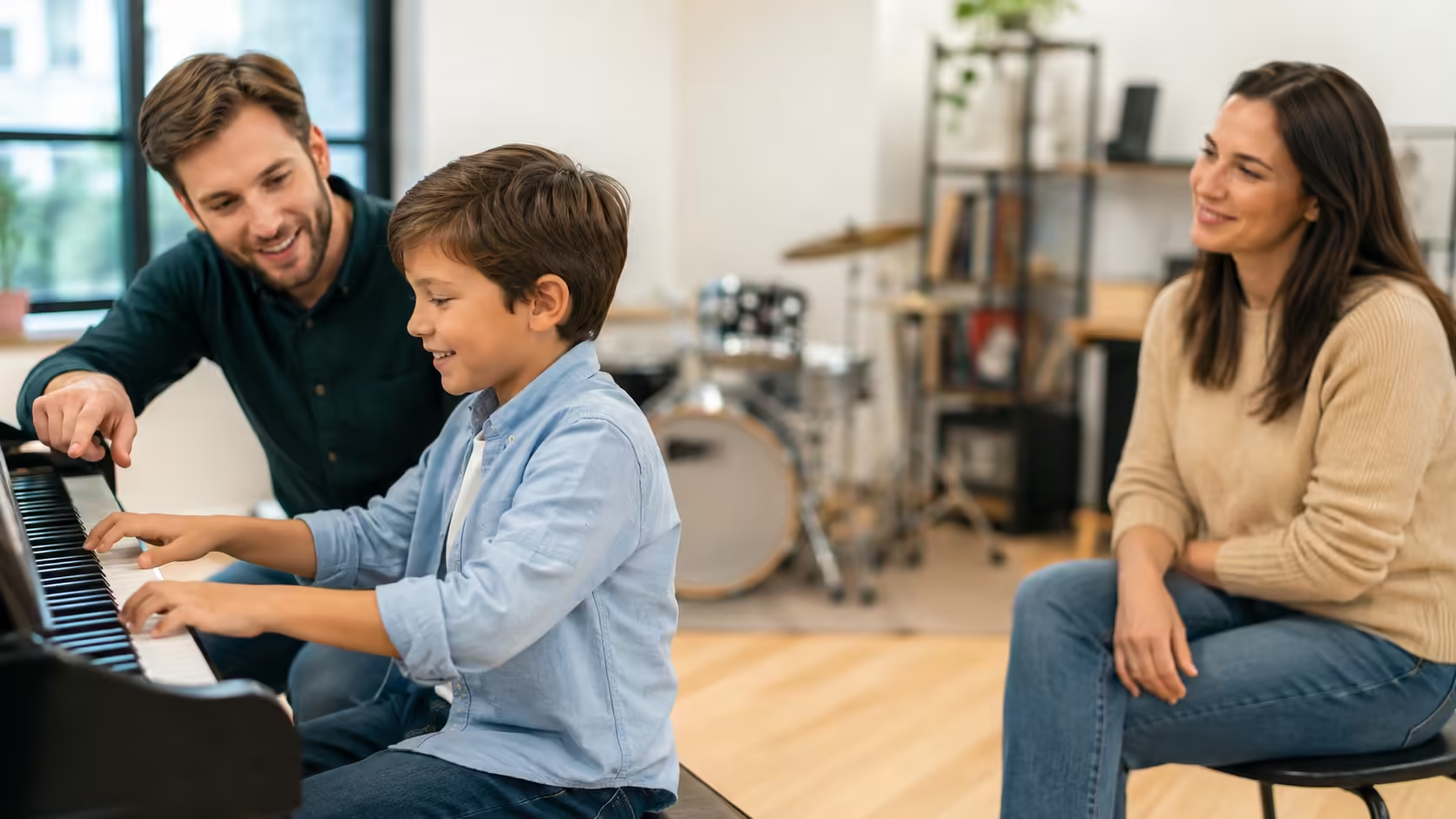
A clear visual layout and quick first wins make piano one of the most beginner-friendly instruments.
Piano
Best: 5–8Piano is often the most popular first instrument. Many children are ready around ages 6 to 8; some focused 5-year-olds can begin with the right teacher. The keyboard's left-to-right layout makes notes, intervals, and chords visible — early songs sound musical fast, which keeps young students motivated. Ready when: the child can place five fingers comfortably on five nearby keys, move fingers somewhat independently, sit and attend through a short lesson, and copy simple patterns.
If you'd like to see how K&M's age-by-age progression works in practice, our piano lessons program is built around it.
Violin
Best: 4–6Violin often starts younger than many other instruments because fractional-sized instruments exist (1/16 size and up) and methods like Suzuki teach by ear before reading. The early lessons focus on posture, bow hold, rhythm, and listening — not advanced repertoire. Ready when: the child enjoys imitation games, can copy body position, tolerates slow early progress, and the family can support short daily practice.
For more on whether your child is ready, see our parent's guide to the best age for violin, or learn about violin lessons at K&M.
Cello, Viola & Bass
Best: 5–7 (cello), 7+ (viola, bass)Cello can start around 5 to 7 if a fractional-sized instrument fits comfortably. Viola and upright bass usually come a bit later — often around age 7 and up — because of size, posture, and bow setup. Some children fall in love with cello's deep voice immediately, and that interest can carry them through the early posture and bowing learning curve.
K&M's cello program handles fractional sizing and posture from day one.
Guitar
Best: 6–10 (often 7–8)Guitar typically works best between ages 6 and 10. Fender — the major guitar manufacturer that publishes a kids' guitar resource — suggests 6 to 10 as the sweet spot, since children need the fine motor skills and attention span for basic technique. Many kids do best closer to 7 or 8. Ready when: the child holds a pencil well, has patience for short finger drills, and genuinely wants guitar (not just "some instrument").

Guitar is more physical than it looks — finger pressure and stretch matter more than age alone.
A 3/4-sized guitar makes a huge difference for younger beginners. See our guitar program for age-appropriate setup.
Ukulele
Best: 5–7Ukulele is small, light, and friendly for young hands. Fewer strings, easier early chords, and quick strumming wins make it a gentle first string instrument — especially in playful group classes. If a child is very young and the goal is rhythm, singing, and joy, ukulele is a smart entry. (If they specifically want guitar, though, forcing ukulele first can backfire.)
Drums & Percussion
Best: 6–7Full drum-kit lessons usually work best from ages 6 to 7, when most children have the coordination, focus, and size to reach a kit. Drums need more than enthusiasm — a student has to coordinate hands and feet, follow rhythm patterns, sit through instruction, and manage the volume. Children under 6 can build a strong foundation with hand drums, rhythm sticks, shakers, and clapping games before moving to the full kit.
See K&M's drum lessons for the age-by-age progression we use.

A short consultation with a teacher often clears up "is my child ready?" faster than any chart.
Flute, Clarinet & Woodwinds
Best: 8+Flute and clarinet usually start around age 8. Woodwinds ask for breath support, finger reach, posture, and embouchure — the way lips, tongue, and facial muscles work together to make sound. Younger children can learn embouchure, but most do better once they're a little older and more physically settled. School band instruments often begin around age 9 for the same reason.
Saxophone
Best: 10+Saxophone usually works best from age 10 — even the smallest alto sax is sizable, and breath control matters. Strong 8- or 9-year-olds sometimes start earlier in school or private programs, but body size and lung capacity, not a magic birthday, are the real factors.
Trumpet, Trombone & Brass
Best: 8–10Brass usually starts around ages 8 to 10. Front teeth matter (the mouthpiece sits against them), and lip control and breath pressure take some maturity. Some trumpet programs accept focused younger children, but for trumpet specifically, it's often smart to wait until permanent front teeth are in. For trombone, arm length also matters.
Voice & Singing
Best: 12+ (private)Singing should be part of every child's life from birth — at home, in choir, in school. But formal private voice lessons generally start more safely around age 12, when the voice is maturing and a teacher can work on technique without straining a still-developing instrument. Younger children can absolutely sing — they just usually do best in choir, music classes, or family singing, with private lessons added later.
Best Age to Start Music Lessons: At-a-Glance Chart
| Instrument | Best Beginner Age | Why |
|---|---|---|
| Piano | 5–8 | Visual layout, quick first wins |
| Violin | 4–6 | Fractional sizes; ear-based methods |
| Cello | 5–7 | Fractional sizes; posture is key |
| Viola / Bass | 7+ | Size, posture, bow setup |
| Ukulele | 5–7 | Small body, easy first chords |
| Guitar | 6–10 (often 7–8) | Finger strength & attention span |
| Drums | 6–7 | Coordination, focus, kit reach |
| Flute / Clarinet | 8+ | Breath support, embouchure, finger reach |
| Saxophone | 10+ | Size, breath capacity |
| Trumpet / Trombone / Brass | 8–10 | Front teeth, lip control, arm length |
| Voice (private) | 12+ | Vocal development; sing in choir earlier |
Group Classes vs Private Lessons: Which Should Come First?
Age isn't the only variable — lesson format matters too.
Group classes work well when
- Your child is under 5 or 6
- You want broad music exposure first
- Your child likes movement and social learning
- You're testing interest before buying an instrument
Private lessons work well when
- Your child has chosen a specific instrument
- The instrument needs close teacher support (violin, cello, brass)
- Your child learns better one-on-one
- A young but serious student is starting violin or cello
Early-childhood music classes build a strong base before formal lessons. But very young serious beginners — especially on violin — often do best with private instruction from the start.
5 Common Mistakes Parents Make When Starting Music Lessons
Picking the instrument for the child
A child who loves drums won't stay with piano just because piano seems more practical. Interest sustains practice.
Starting too formally, too soon
A toddler who loves sound may still hate structured weekly lessons. That doesn't mean "not musical" — it usually means the format is wrong for now.
Waiting for a perfect age that doesn't exist
The "best age" is whenever the child is ready enough and interested enough. Waiting another six months for a magic number usually doesn't help.
Ignoring physical fit
A child may love saxophone but be too small this year. That's not a "never" — it's a "start piano now and revisit sax in a year or two."
Expecting instant progress
Strings squeak. Brass buzzes badly. Guitar fingers hurt. Piano hands collapse. Every instrument has a messy early stage — that's not failure, it's normal.
Book a free trial lesson. Thirty minutes with a teacher will tell you more about your child's readiness than any chart — and there's no pressure to enroll.
Book a Free Trial Lesson100% free trial • No credit card required
Frequently Asked Questions
Is 4 too young to start music lessons?
No. Age 4 can work well for playful music classes and sometimes for violin or cello with the right teacher. For most other instruments, it's better to start with parent-child music play and group classes first, then move to formal lessons when readiness signals are clearer.
Is 7 too late to start music lessons?
Not at all. Seven is still early for many instruments. In fact, it's a very strong age for piano, strings, beginner choir, drums, and most starter tracks — the child has better focus, finger control, and stamina than at 4 or 5.
What is the best first instrument for most kids?
Piano, violin, cello, ukulele, and beginner percussion are the most common strong first choices. Piano is the most popular default because the layout is visual and early songs sound musical quickly. The truly best first instrument is the one your child is excited about.
Does my child need to read before starting music lessons?
Not always. Some piano methods lean on reading from the start, while methods like Suzuki begin by ear. Reading helps, but it isn't required for every instrument or teaching style — younger children can start ear-based methods and add notation later.
Is it ever too late to start music lessons?
No. Older kids, teens, and adults start later all the time and do very well. Motivation can make a late start move surprisingly fast. The "right age" is whenever the student is interested and willing to practice — not a fixed cutoff.
At what age can a child start piano lessons?
Most children are ready for piano lessons between ages 5 and 8. Some five-year-olds can begin if hand size, finger control, and focus are strong. Younger children often do better with playful music classes and keyboard exploration first.
What's the best age for violin lessons?
Violin often works well around ages 4 to 6 because fractional-sized instruments exist and methods like Suzuki teach by ear early on. Some 3- and 4-year-olds can start if the teacher uses a playful, posture-and-bow-hold approach and parents support daily practice.
When should kids start guitar, drums, or woodwinds?
Guitar typically works best between ages 6 and 10 — often closer to 7 or 8 once finger strength and attention develop. Drums usually start around ages 6 to 7. Flute and clarinet often start around age 8, saxophone around age 10, and brass around ages 8 to 10, partly because front teeth and breath control matter for mouthpiece work.