


Short answer: Music lessons teach a child to sing or play an instrument — the goal is music skill. Music therapy uses music to support non-music goals like communication, coping, mood, or development, and is led by a credentialed music therapist. If the goal is learning music, start with lessons. If the goal is support in daily life, look at therapy. Some children benefit from both.

Why Parents Mix Up Music Lessons and Music Therapy
It makes sense that parents confuse the two. Both use songs, rhythm, instruments, and listening. Both can happen one-on-one or in groups. Both can look playful from the outside.
The key difference is purpose. A child may play a drum in both settings, but the goal changes everything. In a lesson, the drum is there to teach timing and technique. In therapy, the same drum may be there to build turn-taking, motor planning, or stress relief.
That difference shapes who leads the session, how progress is measured, what happens between sessions, and what results you should expect. Once you see the goal clearly, the choice gets much easier.
What Are Music Lessons for Children?
Music lessons are about learning music. The child is there to build musical ability over time — to play an instrument, improve singing, read music, follow rhythm, refine pitch and tone, build practice habits, and prepare for recitals, band, choir, or auditions.
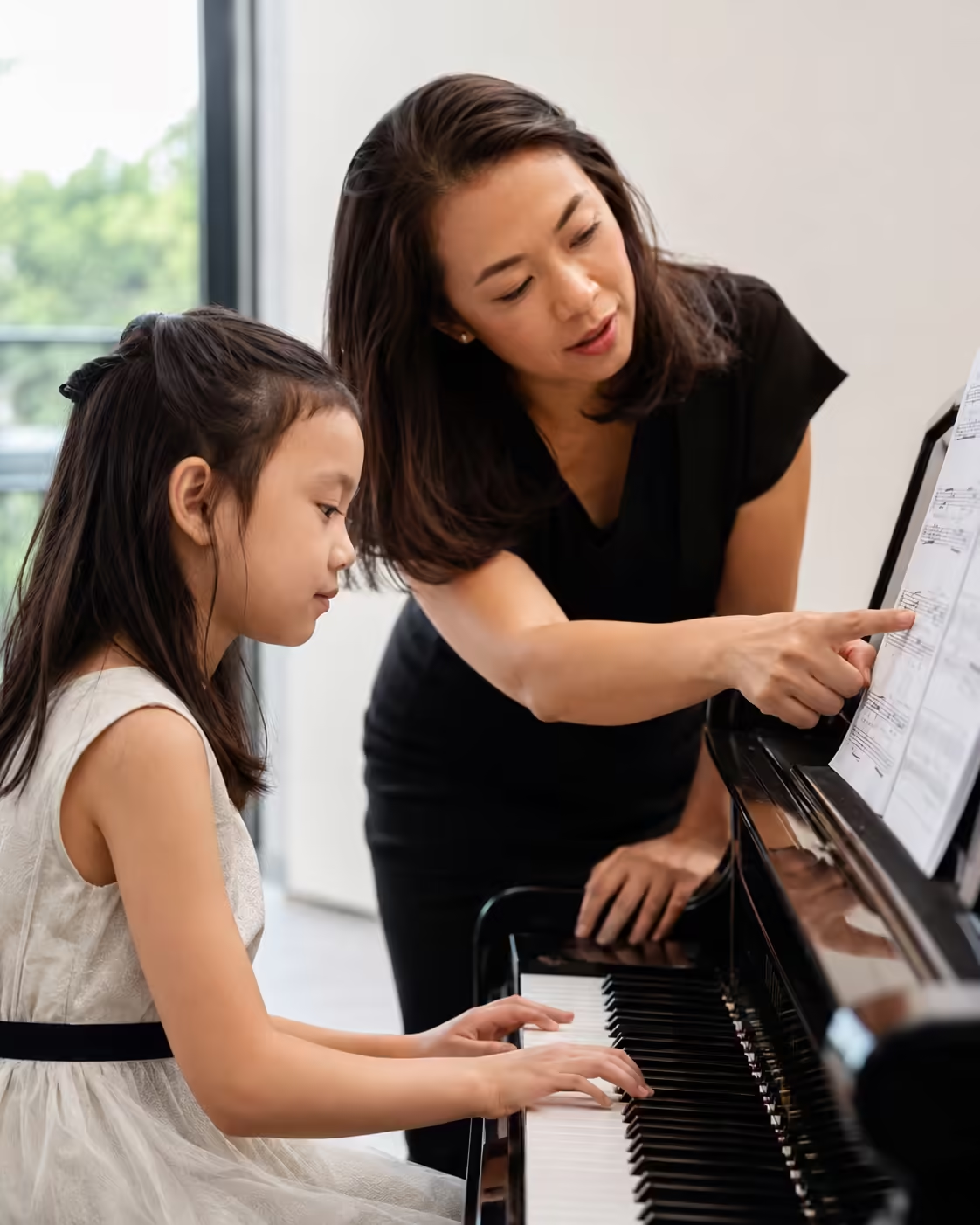
In music lessons, the goal is musical skill — technique, reading, rhythm, and steady progress.
A typical lesson includes a warm-up, review of past material, a new skill or song, short feedback, and a home practice plan. The structure can be strict or gentle depending on the teacher and child — some focus on performance, others on play, creativity, and confidence first.
Parents usually choose lessons to build music skills, but the benefits often spill over. Research from the University of Georgia, for example, has linked music lessons with better problem-solving and time-management skills. Lessons won't fix every challenge, but they can build patience, focus, self-control, and real pride in effort.
Music lessons work best when
- The child wants to learn an instrument or voice
- The child can tolerate some structure
- The child can practice, even for short periods
- The family can support practice at home
- The main goal is skill, enjoyment, and musical growth
What Is Music Therapy for Children?
Music therapy is different from music instruction. A child does not need to be "good at music" to benefit — in fact, musical skill is often not the point at all. According to the American Music Therapy Association, music therapy is the clinical, evidence-based use of music to accomplish individualized goals, delivered by a credentialed professional.

In music therapy, music is the tool — the goals are communication, coping, regulation, or development.
A session uses singing, rhythm, instruments, listening, movement, and songwriting — but toward non-music goals. One child may need help with communication; another with anxiety, illness, pain, mood, coping, or movement. A music therapist uses music on purpose. The session may feel like fun, but it still has clear, tracked goals.
What a therapist may do in session
- Singing simple songs and call-and-response
- Playing drums or shakers; turn-taking with instruments
- Movement to music
- Writing or changing song lyrics
- Listening to calming music
- Using musical cues to ease transitions
- Using familiar songs to spark speech or emotional expression
This is why therapy can look like a lesson from the outside — but the reason behind each activity is different.
Music Lessons vs Music Therapy: Side by Side
| Music Lessons | Music Therapy | |
|---|---|---|
| Main goal | Learn music skills | Support non-music goals |
| Focus | Playing, singing, technique, theory | Communication, coping, mood, movement, development |
| Led by | Music teacher | Credentialed music therapist |
| "Success" means | The student plays or sings better | The child functions better / meets personal goals |
| Musical skill required? | It's the point | Not required at all |
| Home follow-up | Practice between lessons | Strategies vary by goal |
| Typical payment | Private pay | Private pay, school, hospital, or community (insurance varies) |
Music Teacher vs Music Therapist: Why Credentials Matter
A music teacher is trained to teach music — technique, theory, ear training, repertoire, and performance. Some also have experience with young children, neurodivergent learners, or adapted methods.
A music therapist completes clinical training and credentialing to use music toward health and developmental goals. This matters because a kind teacher is still not the same as a therapist. A warm, musical session doesn't become therapy just because a child feels better afterward — and a therapist using piano or guitar in session isn't running a piano lesson. Same instruments, different profession, different goals.
K&M Music School provides music lessons — including adapted lessons for students who need a slower pace or extra support — not clinical music therapy. If your child needs therapy, we'd point you to a credentialed music therapist (the American Music Therapy Association keeps a public directory). We're always happy to talk through which path fits.
Signs Your Child May Need Each

Start with one question: what does your child need most from music right now?
Lean toward lessons if…
- Your child shows clear musical interest (taps rhythms, sings, asks for an instrument)
- They want a skill, hobby, or creative outlet
- They can handle simple structure and short repetition
- Your family can support a little home practice
- Your main goal is music growth and enjoyment
Lean toward therapy if…
- The main need is communication, mood, coping, movement, or behavior
- Your child struggles with anxiety, stress, or strong feelings
- They have speech, social, sensory, or developmental needs
- They're coping with illness, pain, or hospital care
- They respond to music more easily than to other approaches
Can a Child Need Both?
Yes — and this is one of the most helpful things parents can hear. The two services don't cancel each other out. Music therapy can give support while lessons build music skills.
For example, a child with anxiety might use music therapy for confidence and regulation, while also taking guitar lessons for fun. Some children start with therapy first and add lessons later when they're ready for a lesson format. Others already love lessons but still benefit from therapy for emotions, grief, change, or self-expression.
Adapted lessons vs music therapy
Parents often search for this too. Adapted music lessons are still lessons — the teacher slows the pace, uses visual supports, shortens tasks, or adjusts the method, but the goal stays music learning. Music therapy aims at non-musical goals even when musical progress happens along the way. If a child needs extra help learning piano because of attention or sensory needs, adapted lessons may fit. If regulation or communication comes first, therapy may fit better.
Music Lessons vs Music Therapy for Common Needs
The label matters less than the need. Here's a quick orientation by common situation — but treat it as a starting point, not a diagnosis.
| Situation | Often a Better First Step | Why |
|---|---|---|
| Autism | Therapy for connection/regulation; lessons if the child wants the skill | Many autistic kids love music; the goal decides the path (often both) |
| ADHD | Therapy first if regulation is the barrier; lessons once ready | Rhythm and structure can build attention and self-control |
| Anxiety | Therapy if anxiety blocks learning; lessons build confidence over time | Mayo Clinic Press notes music therapy may lower anxiety and lift mood |
| Speech delay | Therapy first | Songs, rhythm, and repetition support attention to sound and language |
| Sensory needs | Therapy if regulation is the main issue | A therapist adjusts volume, tempo, and movement to the child's responses |
| Illness / hospital care | Therapy | Supports coping, pain, mood, and adjusting to treatment |
| Shy child | Depends: gentle lessons if it's temperament; therapy if it's distress | Ask: is my child quiet, or is my child struggling? |
How Age Affects the Choice
Age matters, but readiness matters more.
Babies & toddlers
Informal music — singing, swaying, rhythm games, parent-child play — can start very early; PBS Parents notes music activity can begin soon after birth. This isn't formal lessons. The goal is exposure, bonding, and response. Therapy may fit if there are early developmental or regulation concerns.
Preschoolers
Around age three, children can start playful, organized music classes — the goal is musical understanding, not performance. This is also an age where therapy can help with communication, sensory needs, and emotional regulation.
Early elementary
This is often when formal beginner lessons start to make sense. PBS Parents notes many children are ready for more formal lessons by around age five, with the focus still on learning and understanding music. Still, no age rule fits every child.
Tweens & teens
Older kids often use music to shape identity, connecting strongly to favorite artists and styles. Mayo Clinic Press notes music can help children and teens connect with feelings, calm stress, and build a sense of self — useful whether they're in lessons, therapy, or both.
Cost, Insurance & Time
| Music Lessons | Music Therapy | |
|---|---|---|
| Payment | Usually private pay | Private pay, school, hospital, or community-based |
| Insurance | Generally not covered | Varies by plan and state |
| Home effort | Practice between lessons | Strategies vary by goal |
| Progress | Musical skill over time | Personal goals, tracked by the therapist |
Mayo Clinic Press notes that insurance coverage for music therapy varies by state. It's worth asking about cost and coverage early — families often assume therapy is always pricier, but a hospital, school, nonprofit, or group setting can change that.
A Simple Parent Checklist Before You Decide
Answer these honestly and the right next step usually becomes clear:
- What is my child's main goal right now?
- Is my child asking for an instrument, or asking for help?
- Does my child enjoy repetition and practice?
- Does my child need support with stress, mood, movement, or communication?
- Am I choosing this because my child wants it, or because I hope it will fix something?
- What would success look like in three months?
Book one intro music lesson and one consultation with a credentialed music therapist, then compare the goals, the fit, and — most importantly — your child's response. The difference usually becomes obvious fast.
If your child wants to learn an instrument or sing, K&M offers private and adapted music lessons for kids, teens, and adults. Book a free trial lesson and see how your child responds — no pressure, no commitment.
Book a Free Trial Lesson100% free trial • No credit card required • For music therapy, see the AMTA directory below
Frequently Asked Questions
What is the difference between music lessons and music therapy?
Music lessons teach music skills — singing, playing an instrument, reading notes, rhythm, and technique. Music therapy uses music as a tool to support non-music goals like communication, coping, mood, movement, or development, and is delivered by a credentialed music therapist. If the goal is learning music, start with lessons. If the goal is support in daily life, look at therapy.
Can music therapy help with anxiety?
It may. Mayo Clinic Press notes that music therapy has shown benefits such as decreased anxiety, improved mood, and better quality of life, and that music can help children relax and process difficult feelings. If anxiety is the main barrier rather than a desire to learn music, therapy is often the better first step.
Can music lessons help with confidence?
Yes. Many children feel real pride as they learn songs, improve, and perform. Beyond music skill, lessons can also build patience, focus, and persistence — a child who works through a hard piece learns something that carries into the rest of life.
Is music therapy only for children with disabilities?
No. Music therapy supports many children — not only those with disabilities. It can help with anxiety, grief, stress, illness or hospital care, emotional regulation, and self-expression. A child does not need musical talent or a diagnosis to benefit; the therapist uses music as the tool toward each child's specific goals.
Can a music therapist teach piano, or can a music teacher provide therapy?
Some music therapists can teach instruments, and many music teachers are warm and supportive — but the two are still different services. Music therapy is a separate clinical profession with its own credentials and goals. A kind, encouraging lesson is not therapy, and a therapy session is not a substitute for skill-building lessons. Always ask what the main goal of the session is.
At what age should a child start music lessons?
Children enjoy music from birth, but formal lessons usually start later. Playful music classes can begin around age three, and many children are ready for formal beginner instrument lessons around age five — though readiness matters more than age. Music therapy has no single starting age; babies through teens can benefit depending on the need.
Can music therapy and music lessons happen at the same time?
Yes. Many children benefit from both. Music therapy can support regulation, communication, and coping, while lessons build music skills and enjoyment. Some children start with therapy and add lessons later when they're ready for a lesson format; others take lessons for fun while using therapy for emotional support.
Does insurance cover music therapy?
Coverage varies by plan and location. Some families pay privately; in other cases support comes through hospitals, schools, nonprofits, or community programs. Mayo Clinic Press notes that insurance coverage for music therapy varies by state, so it's worth asking about cost and coverage early.
Are adapted music lessons the same as music therapy?
No. Adapted music lessons are still lessons — the teacher slows the pace, uses visual supports, shortens tasks, or adjusts the method, but the goal remains music learning. Music therapy aims at non-musical goals like communication or regulation, even when musical progress happens along the way.
- American Music Therapy Association — "What Is Music Therapy?" (and the AMTA member/therapist directory for finding a credentialed professional)
- Cleveland Clinic — Music Therapy; Cleveland Clinic Children's — Creative Arts Therapies
- Mayo Clinic Press — "How Music Can Help Mental Health With Children"
- PBS Parents — "What's the Right Age to Begin Music Lessons?"
- University of Georgia — research on music lessons, problem-solving, and time management


