


Short answer: Don't react fast. Most kids need understanding before they need a final answer. Find the real reason — is it practice, the teacher, the instrument, the schedule, or pressure? Try one smart fix for 2–4 weeks, then decide. Often the problem isn't music itself; it's the setup around music.

Why Kids Want to Quit Music Lessons
"I want to quit" is a short sentence with a lot of possible meanings. It might mean practice feels hard. It might mean they feel behind. It might mean they don't like the teacher. It might even mean they're too busy and don't know how to say it clearly.
That matters because the right answer depends on the cause. A child who loves music but hates the pressure needs a reset. A child who never connected with the instrument needs a switch. A child who's burned out needs less on the schedule.
The most common reasons
- Practice feels too hard or too long
- Progress feels too slow
- Lessons stopped being fun
- They don't connect with the teacher
- The songs feel boring
- They feel forced into it
- School and other activities are too much
- They picked the wrong instrument
- They feel embarrassed by mistakes
- They want more choice and control
Temporary Frustration vs. a Real Wish to Stop
This is one of the biggest questions in this whole topic. A child who had one bad lesson may just be frustrated. A child who's been asking to quit for months is telling you something deeper. Look for patterns.
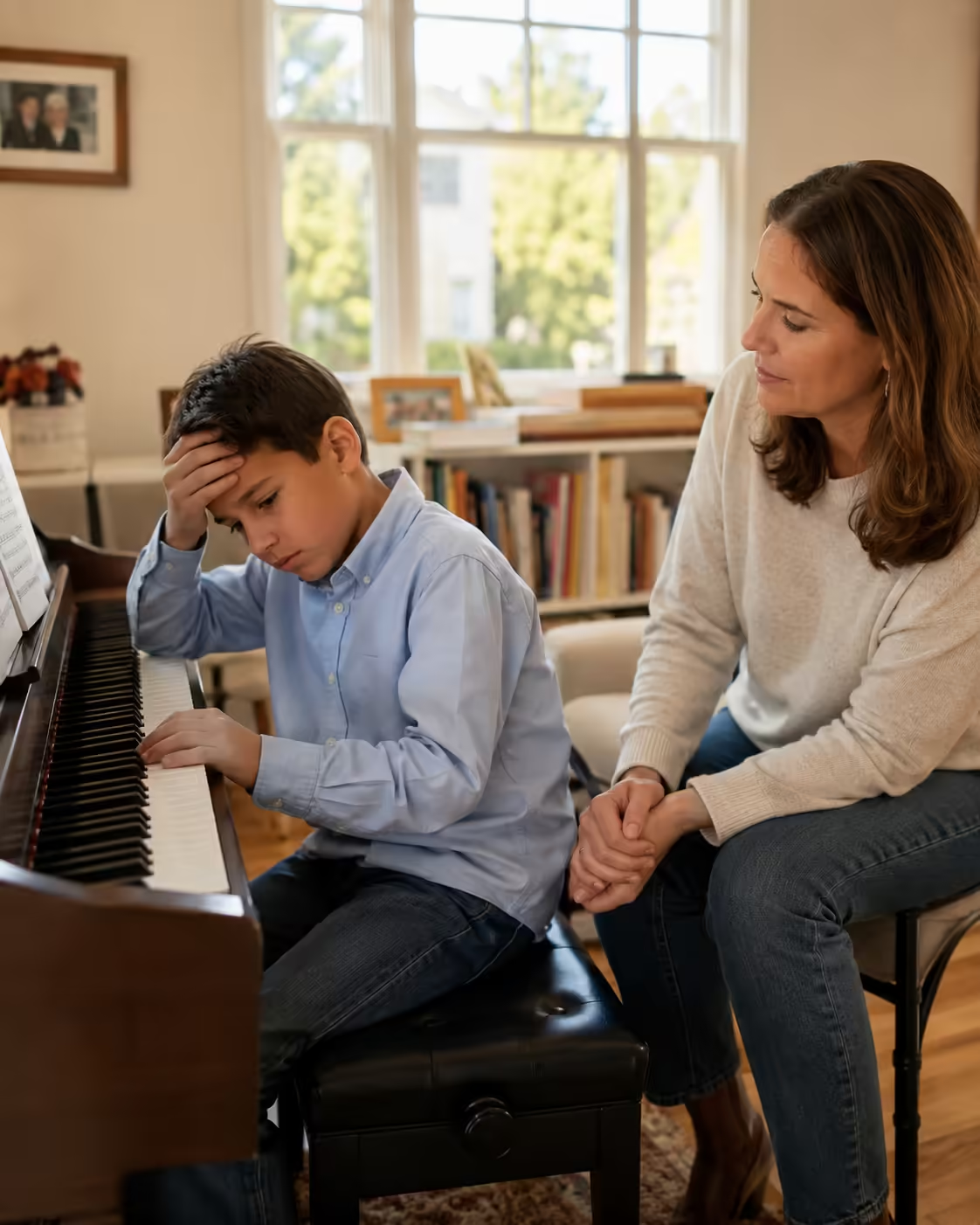
A single tough practice isn't the whole story — pattern matters more than one bad day.
| Probably Temporary Frustration | Probably a Deeper Problem |
|---|---|
| Had a bad week or recital | Dreads every lesson |
| A hard new piece just started | Cries or shuts down often |
| School pressure is high right now | Practice fights happen daily |
| Still smiles sometimes during music | Says "I'm bad at music" repeatedly |
| Vents after one tough lesson | Has asked to quit for weeks or months |
Step 1: Stay Calm — What to Say (and Not Say)
When parents hear "I quit," the first reaction is often fear — about the money spent, the time invested, all the hope you had. That's normal. Your first job is still to stay calm.
A fast, angry reply turns a hard moment into a power struggle. A calm reply keeps the door open and shows your child you care about the truth, not just the outcome.
What not to say
- "You're not quitting after all we paid."
- "You always give up."
- "Other kids stick with it."
- "You just need to try harder."
- "You'll thank me later."
These lines may stop the conversation, but they rarely solve the problem — and they teach your child to hide their real feelings next time.
What to say instead
- "Tell me what feels hard."
- "I want to understand."
- "We don't need to decide today."
- "Let's figure this out together."
- "Is it the lessons, the practice, or something else?"
Step 2: Find the Real Problem
This is where families finally get clarity. Most "I want to quit" moments come from one of four root causes.
1. The practice setup is wrong
The most common one. Your child may like the lesson but hate the daily work. Practice may be too long, at the wrong time of day, full of corrections, or just unclear — they don't know what to actually do. Short, clear, well-timed practice fixes a lot of "I want to quit" complaints. (If you're not sure how long practice should be, our age-by-age guide to lesson and practice length is a good starting point.)
2. The teacher isn't the right fit
Sometimes the teacher is skilled but not right for your child. That doesn't mean anyone failed — it means the fit is off. Signs: your child likes music but dreads that specific teacher, tenses up during lessons, or perks up at the mention of trying someone new. A teacher switch can save lessons entirely.
3. The instrument is the wrong fit
Some children don't want to quit music — they want to quit that instrument. A child on violin may want something less exact at first. A child on piano may want more movement. A child who loves rhythm may light up at drums. Ask: "Do you want to stop music, or try music a different way?"
4. They're burned out
Burnout is real in children. School, homework, sports, social stress — music becomes one more demand. Signs include constant tiredness, short temper, low focus, no joy in favorite activities, and dread before lessons. If your child is overloaded, music will feel heavy even if they once loved it. The answer here is less pressure, not more.
Root Cause Reference Table
Use what your child says (or shows) to find the likely root cause and the right first move.
| What Your Child Says or Shows | Likely Root Cause | Try First |
|---|---|---|
| "I hate practice" | Practice setup | Shorter practice + clear daily task |
| "My teacher is mean" | Teacher fit | Watch a lesson; talk to teacher; consider switch |
| "I don't like this instrument" | Instrument fit | Try a trial lesson on another instrument |
| "I never have time" | Overloaded schedule | Move practice time or reduce activities |
| "I'm bad at music" | Confidence | Easier music, small wins, praise effort |
| Cries or dreads every lesson | Burnout or stress | Pause pressure; review the whole setup |
The Traffic-Light Decision Framework
There's no single rule that fits every family. Forcing months of misery backfires; quitting on the first bad day usually means leaving real value on the table. A middle path works best. Where does your situation actually sit?
Keep going (with support)
- Mild frustration only
- Still some joy in lessons
- Teacher fit is okay
- Child is open to small changes
Reset before deciding
- Daily practice fights
- Boredom or growing stress
- Child wants change, not full exit
- Family needs a new approach
Okay to stop for now
- Ongoing dread for weeks
- Major stress or shame
- Poor fit after honest changes
- Home life is getting worse
The 7-Step Parent Plan
If your child has just said "I want to quit," walk through these seven steps in order — don't skip ahead.
Listen without arguing
Let your child speak first. Don't interrupt with reasons, lectures, or money talk. Say "tell me more" — and mean it.
Name the problem in one sentence
"Practice feels too long and lonely." "The teacher style feels too strict." "You like music, but dislike piano." A clear problem leads to a clear fix.
Talk to the teacher
Teachers have seen this before. You may learn your child is doing better than they think — or that the current setup is too hard. Either way, the teacher's read matters.
Make one small change first
Don't change everything at once. Test one fix: cut practice to 10–15 minutes, change the practice time, add one fun song, sit nearby for support, or try a different teacher.
Test the change for 2–4 weeks
One good day doesn't prove the problem is fixed. One bad day doesn't prove it failed. Track mood, fights, comments, and signs of pride or interest.
Review honestly
At the end of the trial: Is your child less upset? Is the home calmer? Is there any spark again? Does your child want to continue with the new setup?
Decide and move forward
Pick one path — continue, switch teacher, switch instrument, take a short break, or stop for now. Once you decide, move forward calmly. Don't keep re-opening the fight every week.
Talking Scripts by Age
The words matter. Keep them short and kind, and match them to your child's age.
For younger kids (ages 5–8)
- "Show me what feels hard."
- "Do you want help or a break?"
- "Is this too tricky right now?"
- "Do you like the songs?"
For older kids and tweens (ages 9–12)
- "Be honest — what part makes you want to stop?"
- "Do you want to quit music, or quit this version of music?"
- "What would make lessons worth trying again?"
- "Would you rather switch something than stop?"
For teens
- "Let's look at this like a real choice."
- "What is working? What isn't?"
- "What would you commit to if we made changes?"
- "Do you want a break, a reset, or a full stop?"
Teens need more ownership of the decision. They still need support — but they should also start to learn responsibility for their own commitments.
How to Motivate Without Pressure
Motivation grows when a child feels success, choice, and joy. Fear and pressure make learning harder. The fix isn't bribes — it's a few small structural changes.

Small wins beat big rewards — a tiny progress chart often does more than a sticker.
Let them play songs they know
Always include one favorite or familiar piece. It anchors the session in joy, not work.
Keep goals tiny
"Play four smooth bars" beats "practice for 30 minutes." A small, clear goal gives a quick sense of success.
Sit nearby (without correcting)
Ten minutes of quiet parent presence often lowers practice stress more than any chart or reward.
Praise effort, not just results
"You kept going through the hard part" carries more weight than "that sounded great."
Give them some choice
Let your child pick one piece from the teacher's options. Ownership protects motivation.
Keep music alive at home
Play music your family enjoys. Sing along. Dance. Music in the air feeds interest in lessons.
Signs It's Time to Stop for Now
Sometimes the kindest answer is a pause or a real stop. These are the signals that go beyond ordinary frustration:
- Emotional: dread that lasts for weeks, shame after every lesson, tears before practice, harsh self-talk like "I'm terrible," no joy at all even after changes.
- Family: music is causing daily fights, siblings feel the stress, the parent-child bond is suffering, the home is filled with tension around lessons.
- Schedule: schoolwork is suffering, sleep is poor, there's no free time, your child is genuinely overloaded.
- Physical: pain while playing, posture issues, or physical discomfort that doesn't improve with teacher attention.
Alternatives to Quitting Music Entirely
Quitting formal lessons doesn't have to mean quitting music. Many children just need a different version of it.

Sometimes a small shift — a new teacher, a new instrument, a different format — brings the joy back fast.
| If Your Child Needs... | Try This Instead |
|---|---|
| Less pressure, more social fun | Group class, school band, or choir |
| More movement | Drums or percussion class |
| A break without quitting completely | Pause private lessons; keep playing at home |
| To explore other styles | Voice lessons, songwriting apps, or family jam time |
| A different teaching style | Switch teachers within the same school |
| More flexibility | Online lessons (often quicker to schedule) |
Even if your child later quits formal lessons, the time wasn't wasted. Listening skills, patience, discipline, executive function, and stage comfort all transfer to school and life. And some children return to music years later, on their own terms.
Book a free trial lesson with a different teacher or on a different instrument. Sometimes the right fit is one conversation away — and a fresh perspective can save the relationship your child has with music.
Book a Free Trial Lesson100% free trial • No credit card required
Frequently Asked Questions
Should I force my child to continue music lessons?
Usually, no — not blindly. First, find the real reason your child wants to quit. A short period of committed practice can help kids push through frustration. Ongoing misery and dread is different, and that's a signal something needs to change.
How long should a child try music lessons before quitting?
There's no perfect number. Many families set one term, one semester, or a clear three- to six-month trial. The key is giving it a fair try at a reasonable lesson length, then reviewing honestly with your child and the teacher.
What if my child likes music but hates practicing?
That points to a practice problem, not a music problem. Shorter sessions, clear tasks, a better time of day, less correction, and a fun piece to end on usually help. Many practice fights are about how — not whether — practice happens.
What if the teacher is the problem?
A teacher switch can make a huge difference. Style and personality fit matter as much as skill. Signs of a fit issue: your child likes music but dreads that specific teacher, tenses up during lessons, or perks up at the mention of someone new.
Is it okay to let a child quit piano lessons?
Yes, sometimes. If the setup harms your child's confidence or your home life even after honest changes, stopping is a reasonable choice. It doesn't mean you failed — it means you listened and chose what fits your child best right now.
Can changing instruments solve the problem?
Often yes. Some children don't want to quit music — they want to quit that specific instrument. A child on violin may want something less exact at first. A child on piano may want more movement. Ask: "Do you want to stop music, or try music a different way?"
Do kids who quit music lessons ever come back?
Yes, many do — sometimes years later, on their own terms. Skills built in early lessons don't disappear. A child who quits at 10 may pick guitar back up at 16 because they want to play in a band. The investment isn't wasted.
How can I motivate my child without nagging?
Focus on fun, small wins, and giving the child some choice. Let them pick one favorite piece. Praise effort, not just performance. Keep practice short and protect at least one easy "win" at the end of each session.


