Short answer: Voice lessons in San Diego usually cost $50–$90 per hour. Short 30-minute private lessons start lower; longer lessons with experienced coaches sit at the upper end. Group classes and some online lessons are cheaper.
The biggest cost surprise isn't the lesson rate — it's the hidden fees. Annual memberships, recital fees, and per-session billing on 5-week months can quietly add hundreds of dollars per year. Always ask for the full annual cost before you book.

Quick Answer: What You'll Pay for Voice Lessons in San Diego
Voice lessons in the San Diego area generally cost $50 to $90 per hour. The exact number depends on lesson length, teacher experience, lesson format, and whether the school adds extra fees like annual memberships or recital charges.
Here's how prices typically scale:
- Budget start: a short 30-minute private lesson at a local school
- Mid-range option: a standard 45 or 60-minute private lesson
- Premium option: advanced coaching, in-home convenience, or a high-demand teacher
- Lower-cost path: group classes or some online lessons
Common ranges by format:
| Format | Typical Range (San Diego) | Best For |
|---|---|---|
| Group class, 30–60 min | $150–$200/month | Young kids, social learners, budget-conscious beginners |
| Private, 30 min | $35–$50/lesson | Young kids, casual adult beginners |
| Private, 45 min | $50–$70/lesson | Teens, intermediate adults, steady growth |
| Private, 60 min | $65–$90/lesson | Serious students, audition prep, adult coaching |
The big surprise for most people: voice teachers don't all offer the same service. One teacher may focus on beginner singing basics. Another may coach auditions, studio recording, belt technique, resonance, or musical theater performance. The price reflects what's actually in the lesson.
Why Voice Lesson Prices Vary So Much
A voice lesson isn't a fixed-price product like a movie ticket. The price changes because the service changes. Here's what actually moves the number.
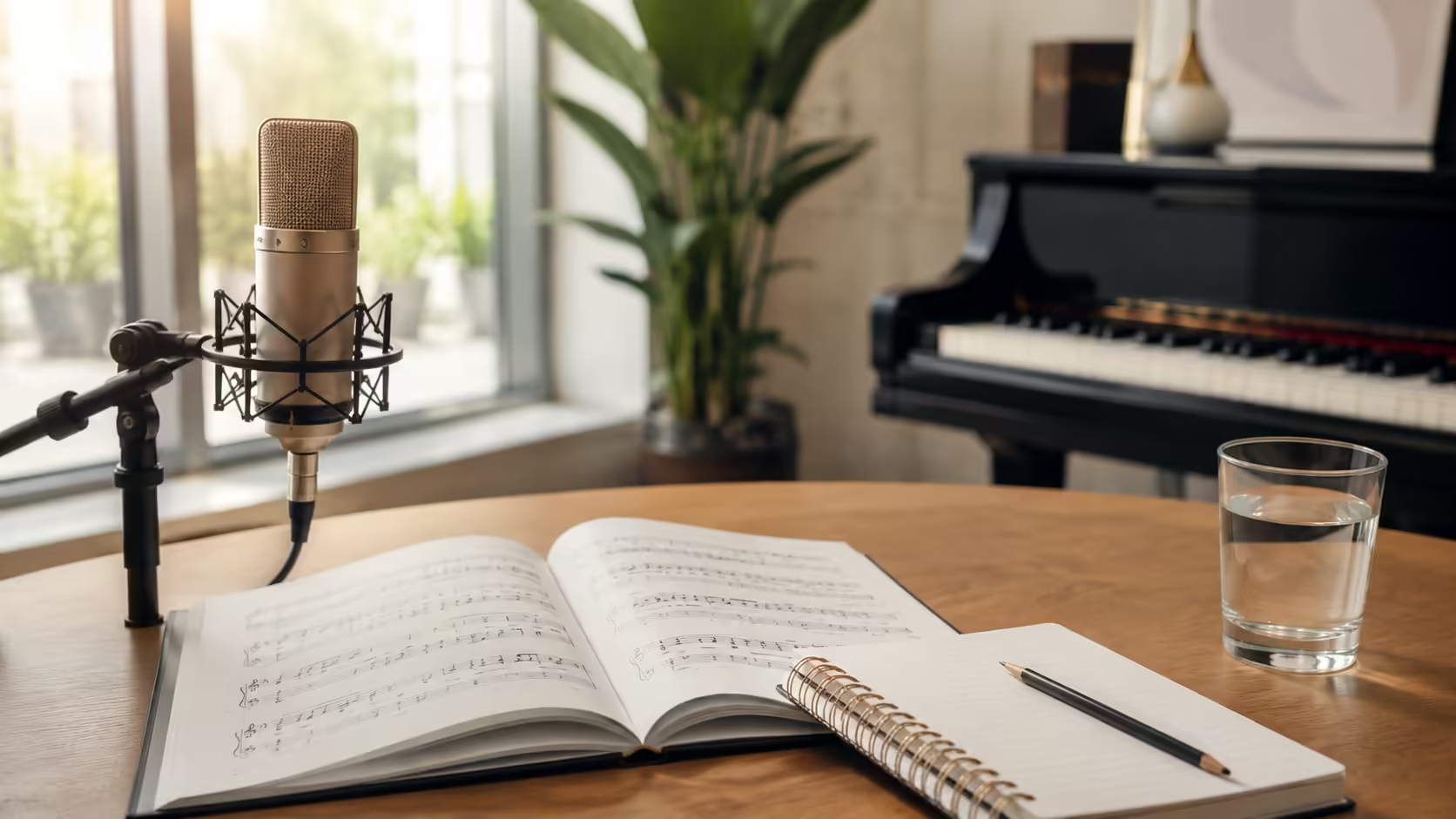
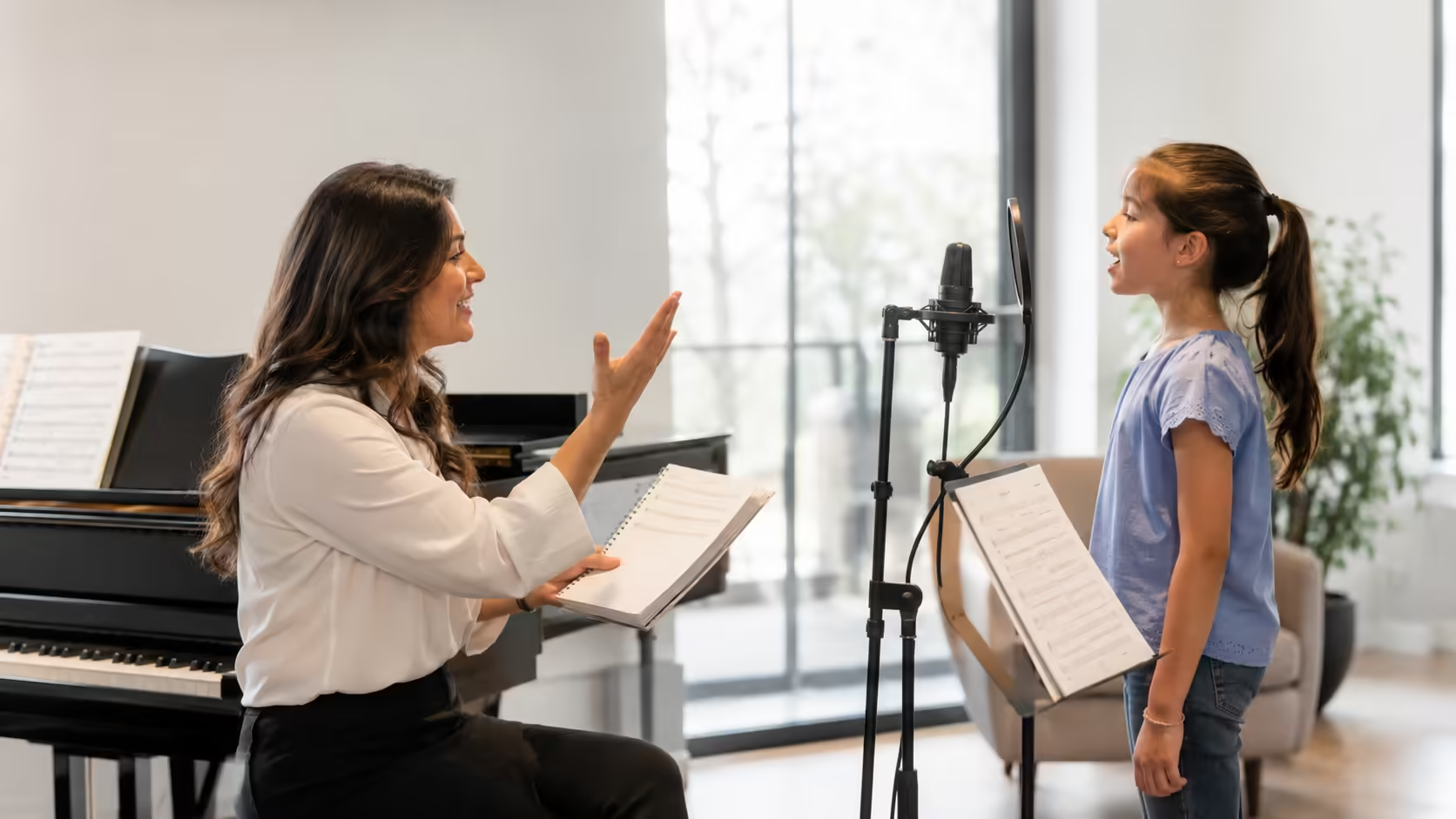
A real voice studio — piano, mic, sheet music, and a teacher who can actually hear you in the room.
Teacher experience and training
A newer teacher may charge less than one with decades of stage and coaching experience. Some teachers hold degrees in vocal performance. Others specialize in pop, jazz, classical, opera, worship music, or musical theater. That depth often raises the rate — but a kind, well-trained newer teacher can still be a great fit for a beginner.
Lesson length
Shorter lessons cost less per visit. Many schools list a 30-minute private lesson as their entry point, which makes voice lessons easier to try without a big commitment. Longer lessons work better for teens, adults, and singers who want full song-coaching time.
Private vs. group
Private lessons cost more because the teacher works with one student at a time. Group classes are cheaper per person, but each student gets less direct feedback — and that trade-off matters if you want fast progress.
Lesson format
Voice lessons can happen in a studio, online, or at home. Each format has its own price and convenience trade-offs.
Your goal as a student
A singer prepping for a college audition needs more from a lesson than someone learning to sing happy birthday in tune at family parties. The teacher's prep time, materials, and depth of feedback all affect price.
Private vs. Group Voice Lessons in San Diego
Private lessons are usually the best choice if you want personal help. You get direct feedback on your own voice, and the lesson is built around your goals.
What you get in a private voice lesson
A strong private lesson usually includes:
- Vocal warm-ups
- Breath support work
- Posture and alignment checks
- Pitch and tone training
- Song coaching
- Diction help
- Practice notes for the week
A beginner may work on matching pitch and calm breathing. An audition singer may work on phrasing, vowels, stage energy, and smooth voice changes. The lesson scales to where you are.
Why private lessons cost more
The teacher gives you full attention for the entire session. That means faster correction and more precise coaching. If your goal is real progress, private lessons often give better value per minute than a general group class — even at a higher rate.
Who should choose private lessons
- Beginners who want clear guidance
- Students who feel shy in groups
- Singers preparing for auditions
- Adults who want faster progress
- Students with specific voice issues or habits to fix
When group lessons make sense
Group classes can be a good lower-cost entry. They feel less intense, often social, and that helps some students stick with lessons longer.
- Pros: Lower price per student, friendly setting, good for confidence building, ideal for young beginners
- Cons: Less personal correction, less solo singing time, slower technical progress, pace may not match your needs
Online vs. In-Person Voice Lessons in San Diego
People often ask whether online voice lessons cost less. The honest answer: sometimes.
Are online voice lessons cheaper?
Online lessons may cost less because the teacher doesn't need studio space or travel time. But great online coaches often charge the same as in-person teachers — so the real benefit is usually convenience, not just price.
Benefits of online voice lessons
- Easier scheduling
- No driving across San Diego
- Comfortable home setup
- Good for busy adults
- Wider teacher choice
Benefits of in-person voice lessons
- Better room sound — the teacher actually hears your tone
- Easier live correction of breath, posture, and resonance
- Piano support in the room for real-time accompaniment
- Stronger face-to-face connection — especially valuable for kids and beginners
For serious vocal work — especially breath support, resonance, and tone — a teacher in the room with you typically makes a meaningful difference. For convenience and scheduling, online is hard to beat.
Voice Lesson Costs by Age: Kids, Teens, and Adults
Lesson length — and price — often shifts with age and goal.
Children's voice lessons

Young students learn breath, posture, and pitch in short, focused sessions.
Young students often start with 30-minute private lessons. That length matches their attention span and energy, and it keeps the cost manageable for families.
Parents should ask any school these questions:
- Is the lesson private or group?
- Are weekly lessons required?
- Are there recital fees?
- Is there an annual registration or membership fee?
- What's the total monthly cost including everything?
Teen voice lessons
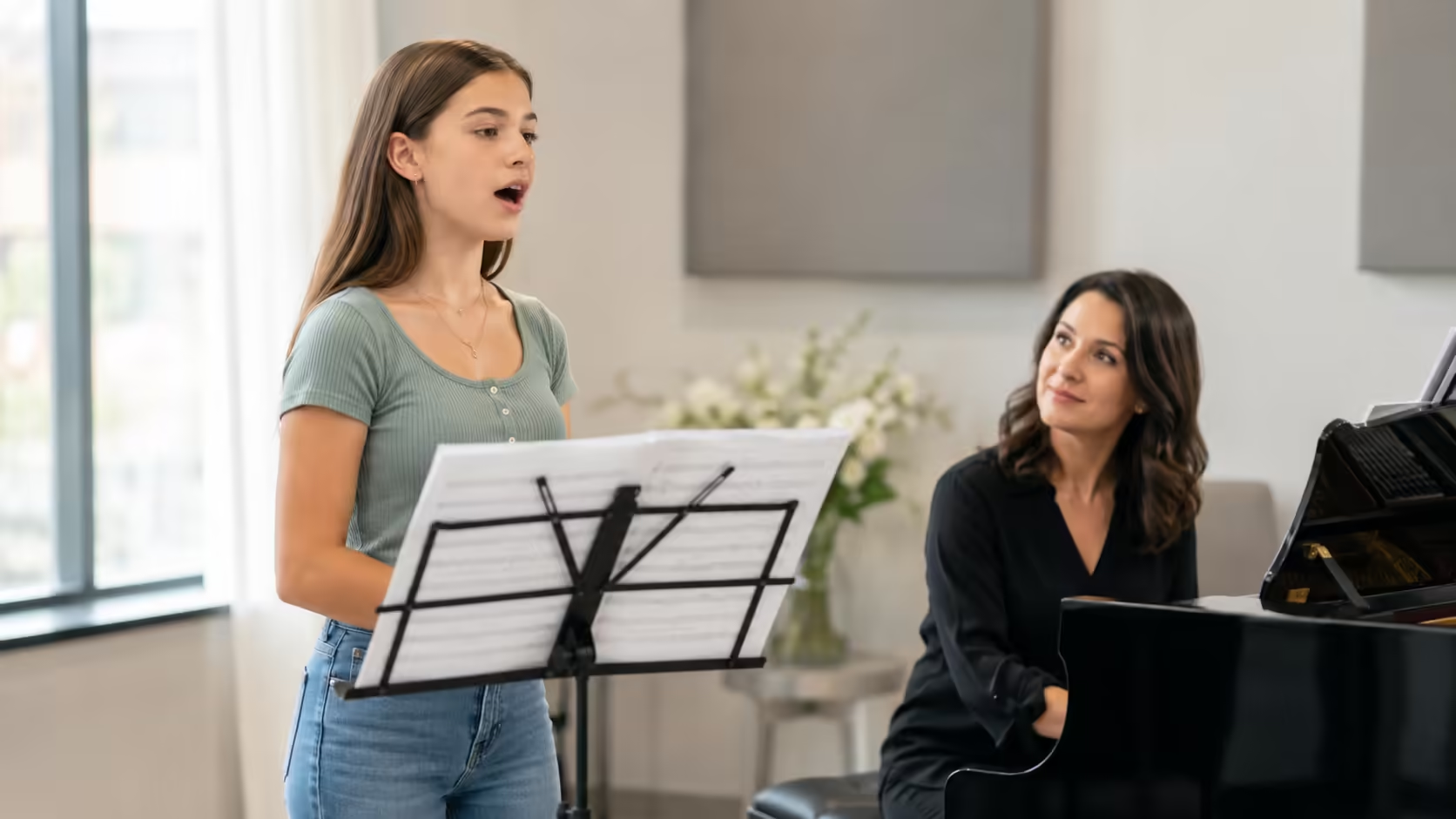
Teens preparing for school musicals or auditions get the most from longer lessons.
Teens often need more time, especially when preparing for school musicals, choir auditions, or solo performances. A 45 or 60-minute lesson gives enough time for full warm-ups, technique, and song work — rather than rushing every section.
Adult voice lessons
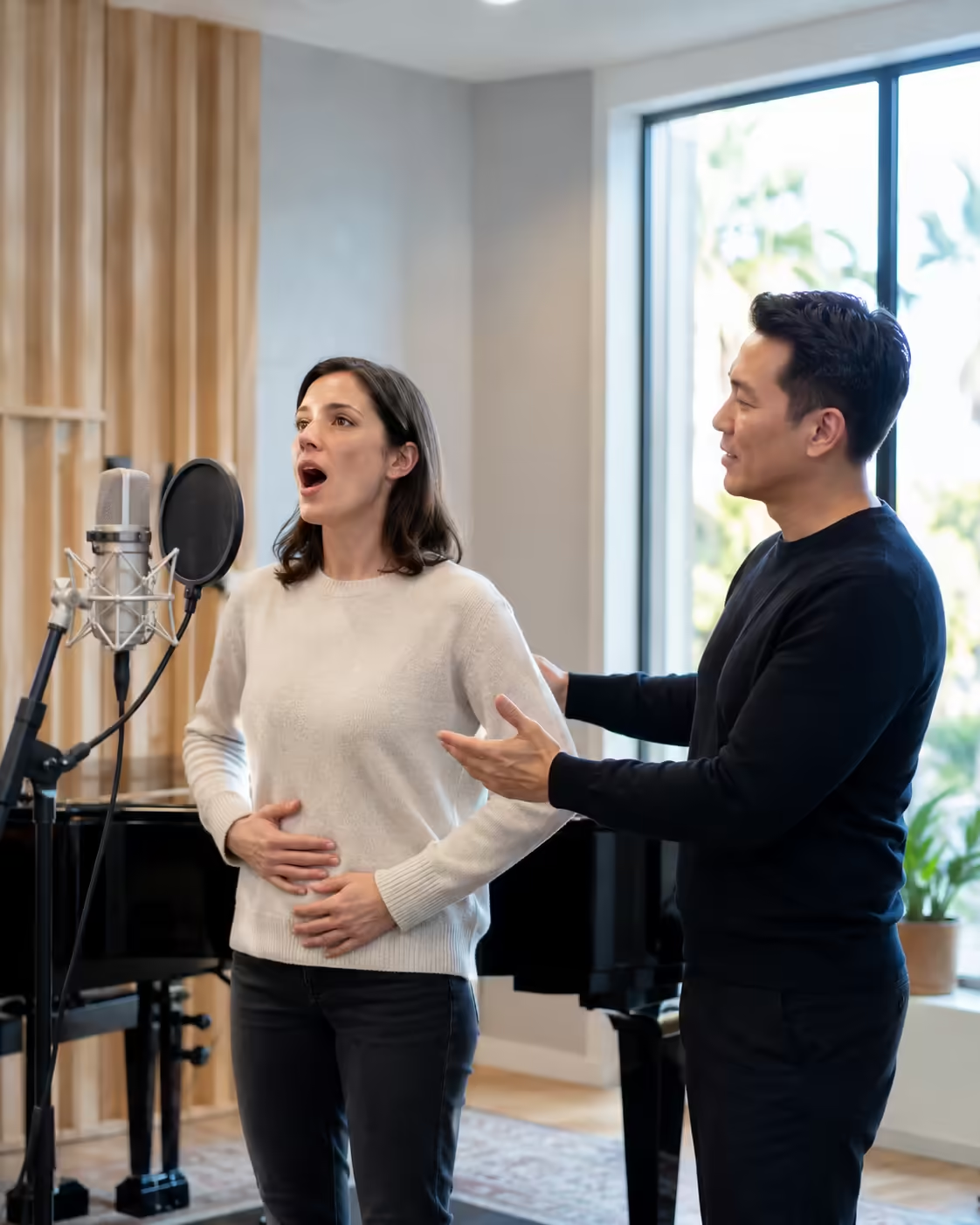
Adults often choose 45 or 60-minute lessons for deeper breath, technique, and song work.
Adults take voice lessons for fun, confidence, wedding singing, church or worship, recording, or personal growth. Most adults choose 45 or 60-minute lessons because they give time for proper warm-up, real technique work, and song coaching — rather than scratching the surface.
What Actually Happens in a Voice Lesson
A lot of new students worry about this. Good news: most first lessons are simple and welcoming.
First lessons are gentle — warm-ups, getting comfortable, and finding your starting point.
The typical flow of a voice lesson
Brief talk about your goals
What do you want to sing? Why are you here? The teacher needs to know before they can build the lesson around you.
Gentle warm-ups
Lip trills, sirens, scales — nothing scary. The point is to get your voice ready and find your comfortable range.
Breathing and posture work
Breath support is the foundation of singing. Posture supports the breath. Both get attention every lesson.
Pitch and tone exercises
Specific drills targeted at what your voice needs — not a generic warm-up set.
Song practice
The fun part. You bring a song or the teacher suggests one that fits your level. You work on it together.
Feedback and home practice steps
You leave knowing exactly what to work on before the next lesson. A short, clear assignment — not vague advice.
How long until you improve?
Some students notice small changes in a few lessons. Stronger results usually take weeks or months of steady practice. The best progress comes from short, regular practice between lessons — not long, random cram sessions.
How Often Should You Take Voice Lessons?
The best schedule depends on your goal and budget. But there's a clear pattern.
Weekly lessons are the most common choice — and the most effective — because they keep momentum. Skills don't slip away between sessions, and the teacher can build progressively on what you covered last time.
If weekly cost feels too high, every other week can still work if you practice steadily in between. But progress is meaningfully slower, and bad habits have more time to take root before correction.
Most students at any price point get the best value from a weekly slot they can hold consistently — same teacher, same time, every week.
How to Choose a Voice Teacher in San Diego Without Overpaying
A good fit matters more than a flashy ad. Price matters — but so do personality, teaching style, and lesson structure.
Good signs to look for
- Clear explanation style
- Healthy vocal approach (no pushing or straining)
- Strong, recent reviews
- Clear schedule and cancellation policy
- Free trial lesson or first call
- Experience with your age group or music style
- Transparent pricing — the school can tell you the full annual cost in one number
Red flags to walk away from
- No posted policy
- No clear teaching plan
- Pressure to pre-pay for many lessons fast
- Harsh or shaming feedback style
- Vague or shifting answers about cost
- No trial lesson available
Questions to ask before booking
- What styles do you teach? (Classical, musical theater, pop, jazz, worship, etc.)
- Do you teach beginners?
- Do you offer private or group lessons?
- What's the lesson length, and what's the monthly cost?
- Are there any extra fees beyond tuition?
- Do you offer a trial lesson?
- Do you teach online, in-person, or both?
These simple questions help you compare voice teachers fairly — and surface anything a school is being vague about.
Are Voice Lessons Worth It?
For most people, yes. Voice lessons build confidence, improve tone, and make singing feel less scary. They also help you avoid bad habits that waste years of self-teaching.
Signs voice lessons are worth the cost
- You want faster, steadier progress
- You feel stuck teaching yourself
- You want healthy vocal technique that protects your voice long-term
- You want help choosing songs that match your range
- You need support for auditions, church, weddings, or performance
Signs you may want to wait
- You have no time to practice between lessons
- Your budget covers one lesson with no follow-up
- You're not sure yet what you actually want from singing
Even then — a single free trial lesson can teach you a lot. You'll know whether you're ready, and you'll know whether the teacher is the right fit.
Voice Lessons at K&M Music School
If you've read this far, you understand the San Diego voice lesson market — the price ranges, the hidden fees, the questions to ask. Here's how K&M Music School fits into that picture, so you can compare us against other schools fairly.
Voice Lessons at K&M
Weekly private voice lessons — flat monthly rate, no surprise charges
- One private lesson per week with your assigned teacher
- Same flat rate whether the month has 4 lessons or 5
- One-time $50 registration fee — not annual
- 100% free trial lesson for new students — no credit card required
- No recital fees, no material surcharges, no 5-week upcharges
What you get
- Patient, experienced voice teachers who work with kids, teens, and adults
- A structured curriculum — the 9-level Russian conservatory program, adapted for every student
- An in-person studio in Mira Mesa with a real piano, sheet music library, and on-site recital hall
- 501(c)(3) nonprofit status — mission-driven, not investor-driven
- One transparent annual number — multiply your monthly rate by 12 and add $50 once. That's your total cost. No surprises.
We've kept this article honest because that's how we run the school. Compare us against any other San Diego voice teacher using the same questions and the same total-annual-cost test — and let the comparison speak for itself.
The best way to know if voice lessons are right for you is to actually try one. K&M offers a 100% free trial voice lesson — meet your teacher, hear your own voice in a real coaching setting, and decide for yourself.
Book Your Free Trial Lesson5703 Oberlin Dr, Unit 108, San Diego, CA 92121 (Mira Mesa) • 858-588-3938 • Learn more about voice lessons
Frequently Asked Questions
How much do voice lessons cost in San Diego?
Most voice lessons in San Diego range from about $50 to $90 per hour. Pricing depends on lesson length, teacher experience, lesson format, and whether the school adds extra fees like annual memberships or recital charges. Short 30-minute lessons may start lower; longer lessons with experienced coaches tend toward the upper end of the range.
How much are voice lessons in San Diego for beginners?
Beginners usually start with a 30-minute private lesson or a small group class. Short private lessons are often the lowest entry point at most San Diego schools, which makes voice lessons easier to try without a big commitment.
Are private voice lessons better than group classes?
Private lessons usually produce faster progress because the teacher works on your voice specifically — pitch, tone, breath support, diction. Group classes are a friendlier and lower-cost start, especially for young or shy beginners, but progress on technical issues is slower.
Are there hidden fees on top of voice lesson tuition?
Often, yes. Many schools charge annual membership fees, recital fees, material fees, or surcharges for 5-week months. Always ask for the total annual cost — not just the weekly rate — before booking. Schools that quote you a single flat monthly number with one transparent registration fee are usually the easiest to budget for.
How long should a voice lesson be?
It depends on age and goal. Young kids and beginners often do well with 30 minutes. Teens preparing for school musicals, choir auditions, or solo performances usually benefit from 45 minutes. Adult students and serious singers typically prefer 60-minute lessons for full warm-up, technique work, and song coaching.
Can adults start voice lessons with no experience?
Yes. Many adults start from zero. A good teacher meets you exactly where you are. Adult beginners typically choose 45 or 60-minute lessons to give breath, technique, and song work enough time in each session.
Should I take voice lessons weekly or every other week?
Weekly lessons keep momentum and produce the fastest progress. Every-other-week lessons can work if you practice steadily between sessions, but bad habits have more time to set in before correction. For serious students or anyone learning technique, weekly is the better choice.
What's the best way to compare voice teachers in San Diego?
Ask each school for the total monthly cost including all fees, find out if they offer a free trial lesson, and book a trial with the top two or three. Thirty minutes with the teacher tells you more than any website. Look for someone who explains things clearly, uses a healthy vocal approach, and respects your goals.