How long does it take to learn guitar? Most beginners who take guitar lessons in San Diego play their first simple song within 2 to 4 weeks. With consistent practice of 20 to 30 minutes per day, you can expect to play 5 to 10 songs confidently within 3 to 6 months and reach an intermediate level in 1 to 2 years.
That answer surprises many new students. They walk into our studio at K&M Music School expecting to hear "a year or more" — and discover they could be strumming a recognizable tune before the month is out.
Whether you are looking for guitar lessons near Mira Mesa, La Jolla, North Park, Pacific Beach, or anywhere across San Diego County, the timeline is similar — what matters most is how you practice and who you learn from. Students from Chula Vista to Carlsbad follow the same proven path.
But the real answer is more nuanced than a single number. How quickly you progress depends on how often you practice, whether you have a structured plan, what style of music you want to play, and whether you are working with a qualified teacher or going it alone. If you already play another instrument like piano or have some background in basic music theory, you may progress even faster.
Over the past 25 years, I have helped hundreds of guitarists — from six-year-olds picking up a ukulele for the first time to adults in their sixties rediscovering a childhood dream. This guide distills everything I have learned about what separates the student who plays songs in three months from the one who is still struggling after a year.
The Honest Timeline: From First Chord to Confident Playing
Before we talk timelines, let's define what "playing confidently" actually means — because it is not the same as playing perfectly.
Confident guitar playing means you can pick up your instrument and play a song from start to finish without freezing up at chord transitions, losing the rhythm, or needing to stop and look up what comes next. Your sound is clean enough that a listener recognizes the song. You feel comfortable, not anxious.
That is a very different bar from "flawless." Even professional musicians make small errors during live performances. The difference is that confident players recover smoothly and keep the music moving. Perfectionism, ironically, is one of the biggest obstacles to sounding good — it makes you tense, which makes your playing stiff, which makes you sound worse.
The Six Milestones Every Guitarist Passes Through
Here is what the journey looks like for a typical student taking guitar lessons in San Diego and practicing regularly:
Your First Song
You learn basic open chords (G, C, D, Em) and can strum through a simple 3- or 4-chord song slowly. Chord transitions are still rough, but the song is recognizable.
3 to 5 Songs
Your chord changes become smoother. You start to develop basic strumming patterns and can play several simple songs with growing confidence.
5 to 10 Songs Confidently
You have a repertoire of beginner songs you can play from memory. Basic music theory starts clicking. Chord progressions feel more natural.
Fingerpicking & Barre Chords
You tackle bar chords, fingerpicking patterns, and more complex songs. This is often the hardest phase — but it unlocks the entire fretboard.
Intermediate Level
You play a wide range of popular songs, understand chord charts, and start jamming with other musicians. Many guitarists begin performing at open mic nights.
Advanced Playing
Complex solos, improvisation, advanced music theory, and genre fluency. You are a versatile musician who can learn most songs by ear.
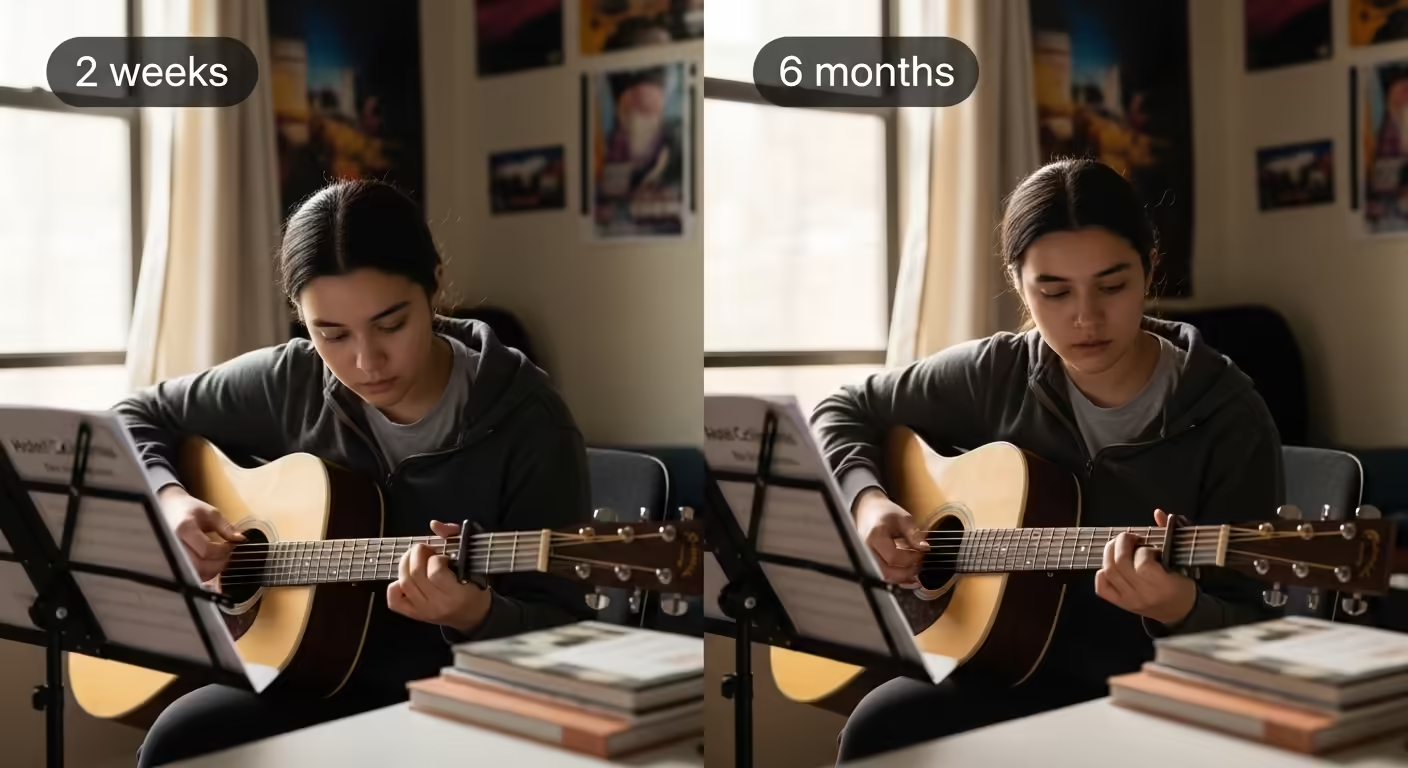
The difference between a student who plays songs in 3 months and one who takes 12 months is almost never talent. It's almost always practice consistency.
Your First Year of Guitar, Week by Week
One of the most common questions new students ask is: "What will I actually learn each week?" Here is a detailed roadmap based on what we see in our studio, assuming you are taking weekly private guitar lessons and practicing most days.
Weeks 1–2: The Foundation
Getting Comfortable with the Instrument
Everything feels awkward at first — that is completely normal. These first sessions are about building physical comfort and learning the basics that everything else depends on.
- How to hold the guitar properly (posture matters more than you think)
- Right-hand strumming technique and left-hand finger placement
- Your first 2–3 open chords: typically Em, G, and D
- Reading a basic chord chart
- Simple downstroke strumming on a slow, steady rhythm
By the end of week two, most students can slowly strum through a simple chord progression. Your fingertips will be sore — that is normal and temporary.
Weeks 3–4: Building the Foundation
First Song Territory
This is the phase where most students experience their first real thrill. You add a few more basic chords (C, A, Am) and start putting them together into recognizable songs.
- Chord transitions become the primary focus — getting from G to C without a long pause
- Introduction to basic strumming patterns (down-down-up-up-down-up)
- Your first complete simple song, played slowly
- Basic music theory: what a chord is, why certain chords sound good together
Months 2–3: The Growth Phase
Building a Repertoire of Beginner Songs
Progress accelerates here. Your fingers are toughening up, chord shapes are becoming muscle memory, and you can start learning songs you actually want to play.
- Mastering all major open chords and common easy chord progressions
- Learning 3–5 full songs from start to finish
- Playing along with recordings at near-tempo speed
- Introduction to fingerpicking basics
- More varied strumming patterns and rhythm guitar techniques
Months 4–6: The Breakthrough
Barre Chords and Beyond
This is the period many guitar teachers consider the most critical. Barre chords are a significant technical hurdle — they require more finger strength and precision than anything you have done so far. Students who push through this phase unlock the entire fretboard.
- Bar chords (F, Bm, and movable shapes)
- Power chords for rock and pop songs
- More complex strumming and picking patterns
- Playing 5–10 songs confidently from memory
- Beginning to understand keys, scales, and how songs are constructed
Months 6–12: The Confidence Shift
From Student to Guitarist
Something changes around this point. You stop thinking of yourself as "someone learning guitar" and start thinking of yourself as a guitarist. You can pick up a chord chart for a song you have never played and work through it on your own.
- You can learn most popular songs by reading a chord chart
- Fingerpicking and more advanced techniques become accessible
- Jamming with other musicians feels possible, even exciting
- Many students play at their first open mic night or family gathering
- Your musical ear is developing — you start recognizing chord progressions in songs you hear
8 Beginner Songs You Can Learn in Your First Months
One of the best ways to stay motivated on your guitar journey is to learn songs you love early. All of these beginner songs use simple chords — mostly 3 or 4 open chords — and have straightforward strumming patterns that new guitarists can handle.

These songs work because they rely on the same handful of basic chords that every beginner learns first. Many are 4-chord songs that repeat the same progression through the entire track, so once you master the chord transitions for the first verse, you can play the whole song.
Songs by The Beatles are also excellent for beginners. Tracks like "Let It Be" and "Love Me Do" use simple chord progressions and have been the starting point for millions of guitarists around the world.
How Practice Frequency Changes Your Guitar Timeline
Nothing — not talent, not the quality of your instrument, not your age — affects your progress more than how often and how well you practice. Here is what consistent practice looks like at different frequencies for reaching the point where you play 5 to 10 songs confidently:
| Practice Frequency | Daily Time | Time to 5–10 Songs | What to Expect |
|---|---|---|---|
| Every day | 20–30 min | 2–4 months | Fastest progress. Muscle memory builds rapidly. Chord transitions become smooth within weeks. |
| 3–4 days/week | 20–30 min | 4–6 months | Strong, steady progress. This is the sweet spot for most students balancing work or school. |
| 1–2 days/week | 20–30 min | 8–12 months | Slow but real progress. You may find yourself re-learning things between sessions. |
| Occasionally | Varies | 12+ months | Frustratingly slow. Inconsistent practice is the #1 reason students quit guitar. |
Notice that we recommend 20 to 30 minutes per day, not two hours. Short, focused daily sessions beat marathon weekend sessions every time. Your brain consolidates motor skills during sleep — so practicing a little every day gives your brain more overnight processing cycles than cramming once a week.
If you want to build an effective practice routine, structure each session around three elements: warm-up exercises (5 minutes), focused skill work like chord transitions (10 minutes), and playing songs you enjoy (10 minutes). That balance of discipline and fun keeps you improving without burning out.
Acoustic vs. Electric vs. Classical: Which Guitar Should Beginners Start With?
The guitar you choose affects your early experience more than most people realize. Here is an honest comparison of the three main types:

| Feature | Acoustic (Steel-String) | Electric Guitar | Classical (Nylon) |
|---|---|---|---|
| Best for | Singer-songwriters, folk, country, campfire playing | Rock, blues, metal, pop riffs | Classical, flamenco, fingerstyle, young beginners |
| Ease on fingers | Harder — steel strings require more pressure | Easier — lighter strings, lower action | Easiest — nylon strings are gentle on fingertips |
| Portability | High — no amp needed | Lower — needs an amp for full sound | High — no amp needed |
| Startup cost | $150–$400 | $200–$500 (guitar + amp) | $100–$300 |
| Neck width | Medium | Narrow — easier for small hands | Wide — more space between strings |
Our recommendation: Choose the guitar that matches the music you want to play. If you love acoustic singer-songwriter music, start with an acoustic guitar. If you want to play rock riffs and power chords, pick up an electric guitar. Motivation matters more than technical ease — you will practice more if you love the sound your instrument makes.
For children under 10, a classical guitar with nylon strings is often the best choice because it is easier on small fingers and the wider neck helps with finger placement. Bass guitar is another option worth considering for students who are drawn to rhythm and groove rather than melody and chords.
How Long Each Guitar Style Takes to Learn
Your musical goals have a major impact on your timeline. A student aiming to strum campfire songs has a very different path from one who wants to play jazz guitar. Here is a realistic breakdown by style:
| Style | Time to Play Confidently | Key Skills Required |
|---|---|---|
| Campfire / Sing-Along | 2–4 months | Open chords, basic strumming, simple songs |
| Rock Riffs & Power Chords | 1–3 months | Power chords, palm muting, basic riffs |
| Pop / Singer-Songwriter | 2–4 months | Open chords, chord progressions, rhythm patterns |
| Blues Guitar | 6–12 months | 12-bar blues, bending, pentatonic scales, feel |
| Classical Guitar | 1–2 years | Fingerpicking, reading sheet music, music theory |
| Jazz Guitar | 2–3+ years | Extended chords, improvisation, advanced music theory, chord substitutions |
These timelines assume regular practice and structured music lessons. A self-taught guitarist may take significantly longer, particularly for styles like blues and jazz that depend on nuance and feel that are hard to learn from YouTube videos alone.
Learning Guitar at Every Age: Kids, Teens, and Adults
One of the most persistent myths in music education is that you have to start young to become a good guitarist. It is simply not true. Students of every age learn to play songs confidently — they just bring different strengths to the process.

Ages 6–12
Children
Most children are ready for guitar lessons around age 6 or 7, when their fingers are long enough to form basic chords. Younger kids (under 5) often start with ukulele — a smaller musical instrument with only four strings that builds the same foundational skills. Children learn through play, repetition, and encouragement. Short lessons (30 minutes) with plenty of variety work best. Young musicians progress steadily when lessons feel fun rather than like homework.
Ages 13–19
Teens
Teenagers are often the fastest learners. They have the finger strength and coordination of adults, the neuroplasticity of youth, and — critically — strong motivation driven by the music they love. Teens who want to play songs by their favorite artists practice with an intensity that is hard to match. Guitar classes for teens often incorporate learning songs from current artists, which keeps engagement high.
Ages 20–40
Adults
Adult beginners bring focus, discipline, and clear goals — three qualities that accelerate learning. Many adults worry they are "too old to start," but in practice, adult students often reach the 5-to-10-songs milestone in the same 3-to-6-month window as younger students. Adults tend to practice more consistently and understand music theory concepts faster. The main challenge is finding time in a busy schedule — which is why consistent practice matters more than long sessions.
Ages 50+
Older Adults
Learning guitar later in life is not only possible — it is one of the most rewarding things you can do. Older adults may need a bit more time to build finger dexterity, but they compensate with patience, life experience, and a deep love for the music they want to play. Many of our most dedicated students are retirees who finally have the time to pursue a musical journey they have been dreaming about for decades.
Private Guitar Lessons vs. Self-Teaching vs. Online Courses

How you learn matters almost as much as how often you practice. Here is an honest comparison of the three main approaches:
Private Guitar Lessons with a Teacher
Private guitar lessons offer the fastest path to confident playing. A qualified teacher watches your hands, corrects mistakes in real time, and builds a structured plan around your specific goals. They catch bad habits — like poor thumb placement or tension in your wrist — before those habits become ingrained.
At K&M Music School, our guitar teachers tailor every lesson to the individual student. A teenager who wants to learn rock riffs gets a completely different curriculum from an adult who wants to play fingerstyle acoustic. That personalization is the biggest advantage of private lessons.
Online Lessons and Courses
Online lessons range from live one-on-one video sessions (which offer many of the benefits of in-person instruction) to pre-recorded courses you work through at your own pace. The best online courses provide structure, which is their main advantage over self-teaching. The downside is the lack of real-time feedback — nobody is there to tell you that your chord is buzzing because your finger is too close to the fret.
Self-Taught with YouTube and Tabs
Many guitarists start by watching free YouTube videos and reading guitar tabs. This approach works — plenty of skilled musicians are self-taught. But it is usually the slowest route because you do not know what you do not know. A self-taught guitarist might spend months struggling with a technique that a teacher could fix in five minutes. Without structure, it is easy to jump between tutorials without building a solid foundation.
The Bottom Line
If speed and confidence are your priorities, private lessons with a qualified teacher give you the biggest advantage. If budget is a concern, supplement less-frequent lessons with structured online practice. Pure self-teaching is viable but requires exceptional self-discipline and typically takes 1.5 to 2 times longer to reach the same milestones.
Guitar Lesson Costs in San Diego (2026 Pricing)
Guitar lesson pricing in San Diego varies based on lesson format, duration, and teacher experience. Here is what you can expect to pay:
| Lesson Type | Duration | Price Range |
|---|---|---|
| Private Lessons | 30 minutes | $30–$55 |
| Private Lessons | 60 minutes | $55–$100 |
| Group Classes | 45–60 minutes | $15–$35 |
| Online Lessons | 30–60 minutes | $25–$75 |
Premium guitar teachers with advanced degrees or extensive performance experience charge at the higher end of these ranges. Newer teachers or group guitar classes are more budget-friendly. Many music schools, including K&M, offer a free trial lesson so you can find the right fit before committing financially.
Music Lesson Areas Across San Diego
San Diego has strong music education options throughout the metro area. Students take guitar lessons in neighborhoods including North Park, Pacific Beach, La Jolla, Mission Valley, Chula Vista, Carlsbad, Oceanside, El Cajon, and Santee. K&M Music School is located at 5703 Oberlin Dr in the Mira Mesa area, centrally positioned for families across North County and central San Diego.
How to Find the Right Guitar Teacher in San Diego
The quality of your teacher can make or break your guitar journey. Here is what to look for — and what to avoid.

Green Flags
- Asks about your goals and musical tastes in the first lesson
- Adapts the curriculum to your level and interests
- Explains the "why" behind exercises, not just the "what"
- Gives you a clear practice plan between lessons
- Is patient and encouraging, especially with beginners
- Has verifiable teaching experience and positive reviews
- Plays well but focuses on teaching, not showing off
Red Flags
- Uses a rigid, one-size-fits-all curriculum
- Spends more time playing than teaching
- Cannot explain concepts at a beginner level
- Makes you feel bad about mistakes or slow progress
- Has no clear lesson plan or structure
- Is frequently late, cancels often, or seems disengaged
- Pushes advanced material before you have the basics
Questions to Ask Before Your First Lesson
Use these six questions to evaluate any guitar teacher before committing:
- Experience & style: What is your teaching background, and do you specialize in specific genres?
- Beginner approach: How do you structure lessons for someone starting from zero?
- Practice guidance: Do you assign specific practice material between sessions?
- Trial option: Can I try a single lesson before committing to a package?
- Progress tracking: How do you measure and communicate student improvement?
- Performance opportunities: Do you offer recitals, group jams, or other chances to play for an audience?
A great teacher answers all of these confidently. If you are comparing options, schedule a free trial lesson to experience the difference firsthand.
5 Common Mistakes That Slow Down Guitar Progress
After 25 years of teaching, I see the same patterns again and again in students who feel stuck. Avoid these pitfalls and you will reach your goals significantly faster.
Skipping the Basics to Learn Hard Songs
It is tempting to jump straight to your favorite complex song, but without solid basic guitar skills — clean open chords, steady rhythm, smooth transitions — you will hit a wall. Every advanced technique is built on the fundamentals. Students who rush past basic chords and simple songs almost always have to circle back later and relearn what they skipped.
Practicing Inconsistently
Playing for two hours on Saturday and then not touching your guitar until the next Saturday is far less effective than 20 minutes every day. Guitar is a motor skill, and motor skills require consistent, frequent repetition to develop. Irregular practice means you spend most of each session re-learning what you forgot, instead of building on what you know.
Comparing Yourself to Advanced Guitarists
Watching a professional musician play effortlessly can be inspiring — or demoralizing. Remember that every guitarist you admire was once a beginner who could not switch from G to C without pausing. Social media amplifies this problem because you only see polished performances, never the years of practice behind them. Compare yourself to where you were a month ago, not to someone who has been playing for a decade.
Ignoring Proper Technique
Bad habits formed early — like gripping the neck too tightly, hunching over the guitar, or placing fingers flat instead of curved — create a ceiling on your abilities later. A good teacher catches these issues early. Self-taught guitarists are especially vulnerable here because there is nobody watching their form.
Not Having a Structured Plan
Noodling around without a goal is enjoyable, but it is not efficient learning. The fastest-progressing students follow a structured lesson plan that builds skills in a logical sequence. Whether you work with a teacher or study on your own, have a clear roadmap for what you are working on each week and why.
7 Tips to Learn Guitar Faster (From a Teacher With 25 Years of Experience)

Practice Every Day, Even If It's Just 15 Minutes
Daily practice — even a short session — builds muscle memory faster than anything else. Keep your guitar out of its case, somewhere visible and easy to grab. Removing friction is half the battle. Regular practice, not marathon sessions, is what separates students who progress from those who stall.
Learn Songs You Actually Love
Motivation is everything in the early months. If you love learning songs by your favorite artists, you will practice willingly and more often. Ask your teacher to incorporate songs you care about into your lessons. The best learning happens when you do not feel like you are "studying" — you are just playing music you enjoy.
Drill Your Chord Changes Deliberately
Smooth chord transitions are the single biggest factor in sounding good as a beginner. Spend 5 minutes of each practice session switching between two chords as cleanly and quickly as you can. Time yourself: how many clean switches can you make in 60 seconds? Track that number and watch it climb week over week.
Use a Metronome from Day One
Rhythm is more important than notes. A guitarist who plays simple chords in perfect time sounds better than one who plays complicated parts out of rhythm. Start slow — absurdly slow if needed — and only increase speed when you can play cleanly at the current tempo. Free metronome apps make this easy.
Record Yourself Playing
Recording yourself is uncomfortable but incredibly effective. You hear things in a recording that you miss while playing — timing issues, buzzy chords, uneven strumming. Record yourself once a week and listen back. Comparing recordings from week one to week eight is also a powerful motivator when progress feels slow.
Push Through the Fingertip Soreness
Your fingertips will be sore for the first two to three weeks. This is normal and temporary. Calluses develop naturally with regular practice. Do not let initial discomfort convince you that guitar "isn't for you." Every guitarist who ever lived went through this phase. Take short breaks during practice if needed, but keep showing up.
Follow a Structured Learning Plan
Whether you work with a teacher or study independently, have a clear plan. Know what skills you are building this week, what songs you are working toward, and what comes next. A structured approach prevents the aimless wandering that causes many self-taught guitarists to plateau. If you are not sure how to structure your practice, build an effective practice routine using a proven framework.
Guitar Progress Estimator
Curious how long it will take you to start playing songs? Select your practice frequency and learning method below to get a personalized estimate based on what we see in our studio.
Estimate Your Guitar Timeline
Select your situation and we'll show you a realistic timeline.
Your Estimated Guitar Timeline
* Estimates based on 25 years of teaching data. Individual results vary.
San Diego's Guitar Community: Where to Play Once You're Ready
One of the best things about learning guitar in San Diego is the vibrant local music scene waiting for you once you build enough confidence to perform. Playing for an audience — even a small, friendly one — accelerates your growth in ways that practicing alone simply cannot.

Open Mic Venues for Developing Guitarists
San Diego has a welcoming open mic scene that is ideal for musicians ready to take the stage for the first time. These venues attract supportive crowds who remember what it is like to be a beginner:
- Lestat's — An intimate coffeehouse setting that is one of the most beginner-friendly stages in San Diego
- Winston's — A laid-back Ocean Beach venue with a diverse, encouraging crowd
- The Casbah — A San Diego institution with open mic nights that draw serious music lovers
- Java Joe's — A classic spot for singer-songwriters and acoustic performers
If the idea of performing makes you nervous, that is completely normal. Learning to overcome stage fright is a skill just like mastering chords — it gets easier with practice and preparation. Many of our students perform at K&M recitals first, which provides a supportive, low-pressure environment before stepping onto a public stage.
Jamming with Other Musicians
Once you reach the 6- to 12-month mark, joining a jam session is one of the most fun and educational things you can do. Playing with other musicians forces you to listen, keep time, and adapt in real time — skills that solo practice cannot fully develop. San Diego has a thriving community of musicians who organize casual jams through music schools, meetup groups, and local shops.

Frequently Asked Questions About Learning Guitar
Yes, with consistent daily practice and structured lessons, most students can play several simple songs confidently within 3 months. You will have mastered basic open chords, developed smooth chord transitions, and built a small repertoire of beginner songs. You will not be an advanced guitarist in 3 months, but you will absolutely be making real music.
Absolutely. Thirty minutes of focused daily practice is ideal for most beginners. It is long enough to cover warm-ups, skill-building exercises, and song practice, but short enough to maintain concentration and avoid burnout. Consistency matters far more than duration — 30 minutes every day beats 3 hours once a week.
Most children are ready for guitar lessons around age 6 or 7, when their hands are large enough to form basic chords on a properly sized guitar. Children under 5 can start with ukulele, which has a smaller body, shorter neck, and fewer strings — making it an ideal stepping stone to guitar. The right starting age depends on the individual child's interest, attention span, and physical development.
You do not need to master music theory to play songs, but understanding basic music theory — such as how chords are built, what keys are, and why certain chord progressions sound good together — will make you a better and faster learner. Think of theory as a map: you can explore without one, but you will get where you are going much faster with it. Most guitar teachers weave basic theory into practical lessons naturally.
Start with whichever matches the music you want to play. Acoustic guitar is great for singer-songwriters, folk, and campfire playing. Electric guitar is better for rock, blues, metal, and pop. While acoustic steel strings are harder on your fingers initially, electric guitar requires purchasing an amp. The most important thing is choosing an instrument that excites you — because you will practice more if you love the sound it makes.
In San Diego, private guitar lessons typically cost $30 to $55 for a 30-minute session and $55 to $100 for a 60-minute session. Group classes are more affordable at $15 to $35 per session. Online lessons range from $25 to $75. Pricing varies based on the teacher's experience, the school's location, and lesson format. Many schools offer free trial lessons to help you decide.
It is never too late to learn guitar. Adults often progress faster than they expect because they bring focus, discipline, and clear goals to their lessons. Many adult beginners at our school reach the "play 5 to 10 songs confidently" milestone within the same 3-to-6-month window as younger students. Adults over 50 may need slightly more time to build finger dexterity, but they compensate with patience, dedication, and a deep love for music.