
Short answer: Many children do well starting guitar lessons in San Diego between ages 6 and 10. Private lessons typically cost $35–$45.50 per 30-minute session, and monthly plans range from about $135 to $235. In the first lessons, kids learn posture, string names, easy chords, simple songs, and basic rhythm.

Why Guitar Lessons for Kids Are So Popular in San Diego
Kids hear guitar everywhere: pop songs, movie soundtracks, church music, rock, and even video game scores. That familiarity makes the instrument feel exciting before the first lesson even starts.
Guitar is also practical. A child can play alone at home, learn with a teacher, or later join a band, school talent show, or youth music group. A beginner can start with short riffs, open strings, and easy chords, then build up over time.
For many San Diego families, guitar also feels flexible. A starter guitar is easy to carry. Lessons are available in studios, at home, and online. Many schools teach both acoustic and electric, so parents can choose what fits their child best.
Music lessons can also help children with language development, counting, self-esteem, and focus — especially when classes stay fun and age-appropriate. The benefits of music education go well beyond the instrument itself.
Best Age to Start Guitar Lessons for Kids
Many children do well starting guitar between ages 6 and 10. At this age, they often have better hand control, more focus for short lessons, and more patience for small practice tasks. However, age is not the only factor. Some children are ready at 5. Others do better starting at 7 or 8.
| Age Range | Readiness | Notes |
|---|---|---|
| Ages 4–5 | Possible for some | Short lessons and a small guitar matter a lot. Very patient teacher needed. |
| Ages 6–7 | Strong starting point | Good hand control developing. Keep lessons playful. |
| Ages 8–10 | Very smooth start | Focus and hand strength are usually strong enough for chords and strumming. |
| Ages 11+ | Excellent | Older beginners often move faster. They follow instructions well and choose songs they like. |
Signs Your Child Is Ready
- They ask about guitar or talk about wanting lessons
- They can focus for about 10 to 15 minutes
- They can follow simple, step-by-step directions
- They do not give up right away when something feels new
- Their hands can manage simple finger movements
Signs Your Child May Need More Time
- They lose focus in under five minutes
- They get upset quickly with finger tasks
- They cannot handle even a short home routine
- They prefer singing and moving more than sitting and learning
If your child loves music but is not quite ready for guitar, you can wait a few months, try music games at home, or start with rhythm play and singing. Ukulele is also a great bridge instrument for younger children — it is smaller, softer on fingers, and builds skills that transfer to guitar later.
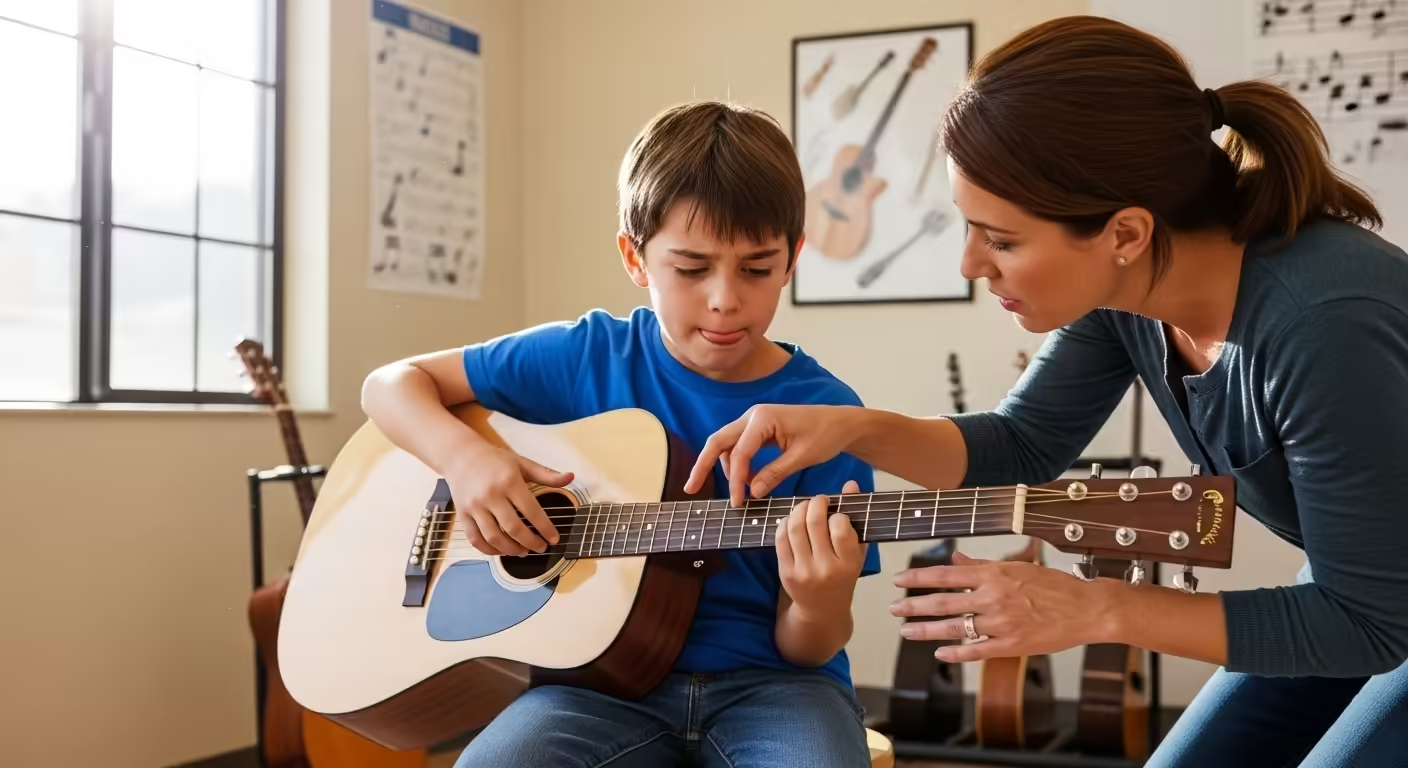
A patient teacher who understands children makes a big difference in the first few weeks of guitar lessons.
How Much Do Kids Guitar Lessons Cost in San Diego?
Cost is one of the biggest questions parents ask. The honest answer: it depends on the format. Here are real price points from public San Diego lesson pages.
| Lesson Format | Typical Cost | Source |
|---|---|---|
| Group guitar class | ~$160/month | Staump Music School |
| Private 30-min weekly | ~$135–$182/month | Rock and Roll SD / SDSOM |
| Private 60-min weekly | ~$235/month | Rock and Roll San Diego |
| Single 30-min lesson | $35–$45.50 | Rock and Roll SD / SDSOM |
| Single 60-min lesson | ~$65 | Rock and Roll San Diego |
| Private monthly plan | ~$210/month | Staump Music School |
Prices from public lesson pages as of early 2026. Billing varies by school — some charge monthly, some per lesson, and some add registration or yearly fees.
What Changes the Price?
- Private vs. group: Private costs more but moves faster
- Lesson length: 30-minute lessons are common for young beginners; 45 and 60 minutes cost more
- Teacher experience: Teachers with extensive child-teaching experience may charge more
- Location: Studio lessons can cost less than in-home lessons
- Extras: Recitals, materials, registration fees, and instrument rental add up
Extra Costs Parents Should Expect
Lesson price is only one part of the total cost. Parents should also ask about registration fees, guitar purchase or rental, picks, a tuner, lesson books, and replacement strings. Some schools let students use a school guitar for the first month, then offer rentals for about $22.50/month. Beginner guitars start at about $89.
Begin with a 30-minute lesson. Try a group class if your child is brand new. Ask for a trial lesson. Rent before buying. Avoid a high-end instrument too early. Choose a school with month-to-month plans if you want flexibility.
What to Expect From Guitar Lessons for Kids
What Happens in the First Lesson
Most first lessons are simple. A good teacher wants the child to feel safe, curious, and successful. The first day usually includes meeting the teacher, learning the guitar parts, holding the instrument properly, learning string names, playing one note or riff, and trying a first strum pattern.
Beginner Progress Timeline
How Long Should a Lesson Be?
For many young beginners, 30 minutes is enough. It gives the teacher time to teach, correct posture, hear the child play, and set home practice goals without mental fatigue. Older children may do well with 45 or 60 minutes.
How Much Should Kids Practice at Home?
Most young beginners do best with 10 to 15 minutes of daily practice. A simple checklist, the same time each day, with one skill goal and one fun song goal works well. Short daily practice is more effective than one long weekend session.
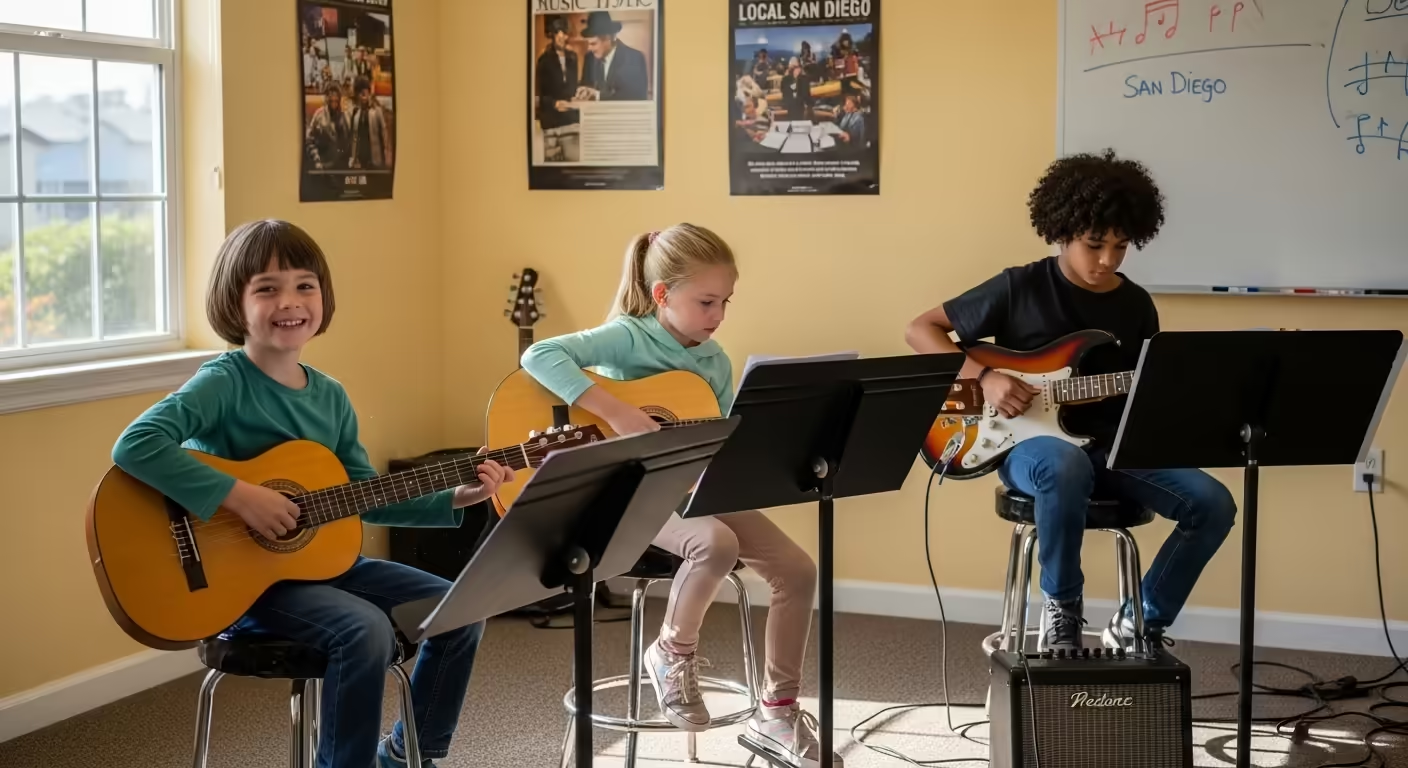
Group guitar classes are a social, lower-cost way for kids to start learning in San Diego.
Private, Group, and Online Guitar Lessons for Kids
Private Lessons
One-on-one lessons where the teacher moves at your child's speed. Best for shy children, kids who need extra help, or students with specific goals. Private lessons cost more but every minute is focused on one student.
Group Classes
Group lessons feel fun, social, and lower-pressure. They are a good fit if your child likes learning with others, feels nervous alone with a teacher, wants a lower-cost start, or learns well by watching peers.
Online Lessons
Online lessons save drive time and help busy families stay on schedule. They work better for older children. Very young beginners often do better in person because posture, hand angle, and attention are easier to guide face to face.
Acoustic, Electric, or Ukulele First?
There is no single best answer. The best instrument is often the one your child wants to pick up every day.
- Acoustic guitar: Simple, portable, no extra gear needed
- Electric guitar: Can be easier on small fingers because strings often feel lighter
- Classical guitar: Nylon strings feel softer — good for very young beginners
- Ukulele first: Smaller and easier to hold for children under 6 or 7. Skills transfer to guitar later.
A full-size guitar can feel huge to a young child. Smaller instruments (1/2 size, 3/4 size) help kids hold proper posture and reach the fretboard easily. Ask your teacher what size fits your child before buying.
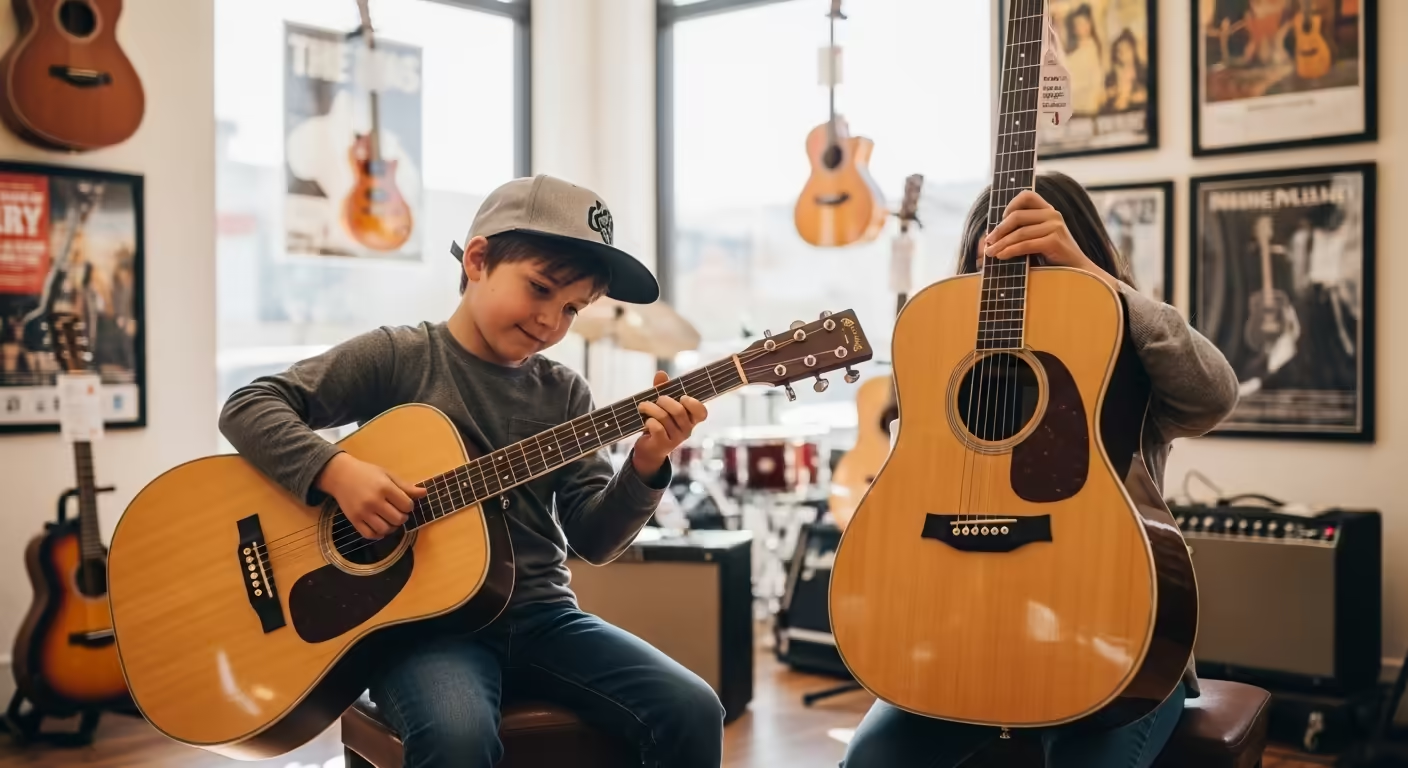
Choosing the right guitar size helps kids hold proper posture and play comfortably from day one.
Check the statements that apply. We'll give you a quick read.
- My child asks about guitar or shows interest in playing
- My child can focus on a task for 10–15 minutes
- My child can follow simple step-by-step directions
- My child does not give up immediately when something is new
- My child's hands can manage basic finger movements
- We can support 10–15 minutes of daily home practice
Check the boxes above to see your result.
How to Choose the Best Guitar Lessons for Kids in San Diego
Look for a Teacher Who Understands Children
A great player is not always a great kids' teacher. For children, you want someone who explains in short, clear steps, keeps lessons calm and fun, uses age-appropriate songs, notices when attention drops, and adjusts pace without making the child feel bad.
Questions to Ask Before You Book
Age and Experience
What ages do you teach? Do you teach complete beginners? How much experience do you have with kids?
Lesson Details
How long are beginner lessons? Do you offer acoustic and electric? Do you offer a trial lesson?
Practice and Progress
How much home practice do you expect? Do you use books, songs, or both? Can parents sit in?
Cost and Extras
What guitar size do you suggest? Are there extra fees? Do you offer instrument rental?
What Parents Can Do at Home to Help
Keep Practice Short and Regular
A short daily habit beats one long weekend session. Ten minutes after school or 15 minutes after dinner works well for most kids.
Keep the Guitar Easy to Reach
If the guitar lives in a closet, kids forget it. Keep it visible on a stand or wall hook so they are reminded to pick it up.
Praise Effort, Not Perfection
"I like how you kept going" works better than "Play it right." Rewarding effort keeps children willing to practice and improve.
Let Your Child Choose Some Songs
Children work harder when they like the music. Let them request a favorite song — it is one of the best ways to keep motivation high.
Common Problems Parents Run Into
"My child wants to quit after two lessons"
Before you stop, check: Is the guitar too big? Is practice too long? Are the songs boring? Is the teacher fit poor? Is your child simply tired after school? Sometimes one small change fixes the problem.
"My child says guitar hurts"
A little finger soreness at the start is normal. Keep practice short. Ask the teacher to check string height, hand position, and instrument size. Pain should be mild and brief.
"My child likes music but hates practice"
That usually means practice feels too big. Cut it down: 5 minutes on chords, 5 minutes on one easy melody, 2 minutes playing something fun. Short success works better than long pressure.
"I don't know if progress is happening"
Look for small wins. Can your child hold the guitar better? Remember string names? Keep a steady beat? Change one chord? Play part of a song? Those are real signs of progress.
Book a free trial lesson at K&M Music School in San Diego. Our teachers work with kids of all ages and make the first lesson fun, clear, and pressure-free.
Book Your Free Trial Lesson100% Free trial lesson • No credit card required
Frequently Asked Questions
What is the best age to start guitar lessons for kids?
Many children do well starting between ages 6 and 10. Some can begin at age 5 with a patient teacher and a small guitar. Around ages 7 to 8, most kids have enough hand strength, focus, and patience for a smooth start.
How much do kids guitar lessons cost in San Diego?
Costs vary by format. Group classes run about $160 per month. Private 30-minute weekly lessons range from $135 to $182 per month. Single private lessons start around $35 to $45.50 per session. Some schools also charge registration or annual fees.
Should my child take private or group guitar lessons?
Private lessons offer personal pacing and close feedback. Group lessons feel more social and cost less. Neither is always better. Private works well for shy kids or those with specific goals. Group works well for social learners and brand-new beginners.
Does my child need a guitar before the first lesson?
Not always. Some schools let students use a school guitar for the first lesson or first month. Rentals are also available at around $22.50 per month. Beginner guitars start at about $89. Ask your school what they recommend before buying.
How much should kids practice guitar at home?
Most young beginners do best with 10 to 15 minutes of daily practice. Short, consistent sessions build habits faster than one long weekend session. A simple routine with one skill goal and one fun song goal works well.
Should kids start on acoustic or electric guitar?
Either can work. Acoustic guitar is simple and portable. Electric guitar can feel easier on small fingers because the strings are often lighter. Classical guitars have soft nylon strings. The best choice is usually the one your child is most excited about, in the right size.