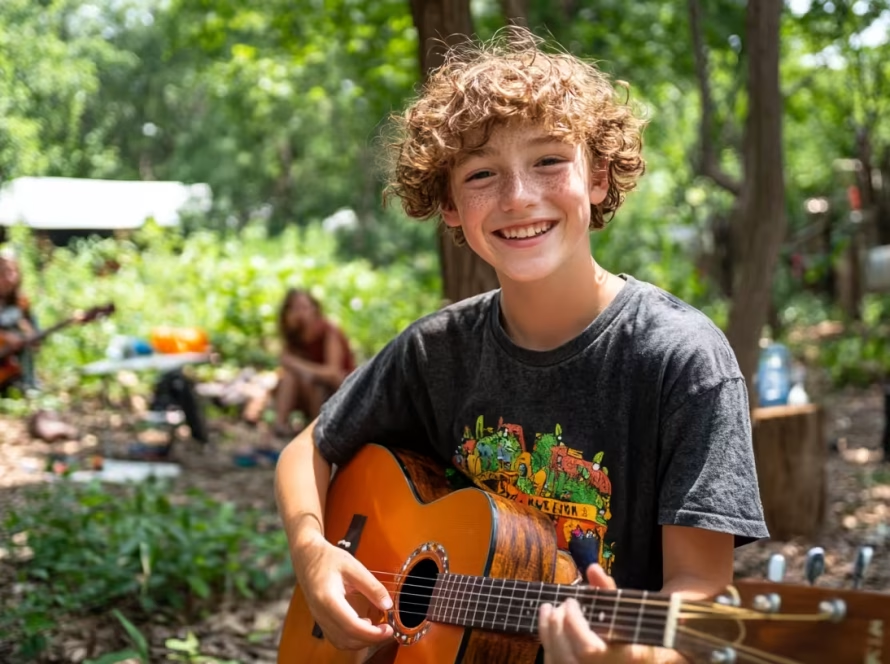
Short answer: The best music lessons for kids in San Diego are the ones your child will enjoy enough to keep doing. That usually means the right mix of age-appropriate teaching, a good instrument fit, a format that matches your child's personality, and a schedule and cost that work for your family. At K&M Music School, we help San Diego families find that fit with 10 instruments, private and group formats, and a free trial lesson to start.

Why San Diego Families Look for Music Lessons
Parents want more than a busy afternoon activity. They want something useful, fun, and realistic. Good music lessons help children build steady habits, try new skills, and feel proud of small wins.
Music lessons also help in daily life. A child learns to listen closely, repeat a pattern, and stay with a task for a few minutes longer each week. Over time, these small skills add up. For many families, that is a big reason to start.
San Diego is a strong city for youth music education because it offers many kinds of programs. Families can find classes for babies, toddlers, beginners, and serious young musicians — all within a short drive. K&M Music School in San Diego teaches 10 instruments to students from toddlers through adults, making it easy to explore options in one place.
Best Music Lessons for Kids in San Diego by Age

Violin works well for focused young children, especially with patient teacher support and small-size instruments.
Best Music Lessons by Instrument
Piano
Piano is one of the most common first instruments. The layout is easy to see and understand. Children can see high and low notes clearly and play simple songs early, which helps motivation. Piano also builds note reading, rhythm, hand coordination, and ear training. At K&M Music School, piano lessons are available for ages five and up in private and group formats.
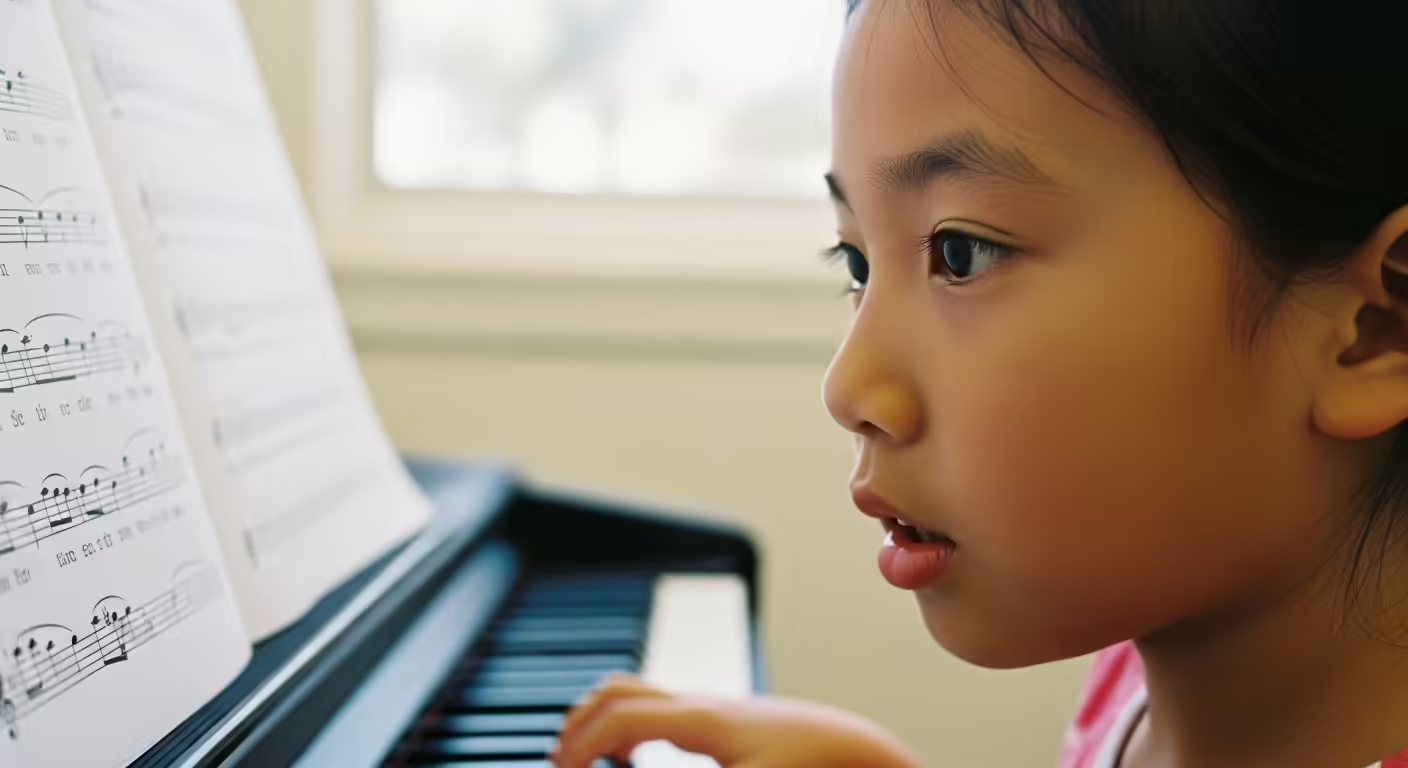
Piano helps children understand music visually — high notes to the right, low notes to the left.
Violin and Strings
Violin is popular for young beginners, especially in Suzuki-style programs that use repetition, listening, and parent support. It can start earlier than many instruments. Viola and cello are also strong choices for children who enjoy string instruments. K&M Music School offers violin lessons and cello lessons for students of all ages.
Guitar and Ukulele
Guitar is a favorite because it connects quickly to songs kids already know. Ukulele can be even easier for younger beginners — it is smaller, lighter, and has softer strings. Both instruments work well in private and group settings.
Drums
Drums can be great for energetic children. A good drum teacher turns that energy into timing, control, and focus. Rhythm skills help with all kinds of music, not just drums. Ask about practice pads or electronic drums if noise is a concern.
Voice and Choir
Voice lessons help with breathing, pitch, clear words, and stage confidence. Choir is a strong option for social children who like singing with others. Younger children may do better in group singing first. Older kids and teens are often ready for private voice lessons.
Band Instruments
If your child is joining school band, a few early private lessons on flute, clarinet, saxophone, trumpet, or trombone can improve tone and basic technique. This prevents frustration and helps kids feel more confident with their peers.
Private vs. Group Music Lessons for Kids

Group classes bring social energy and shared fun — perfect for first-time music learners.
| Feature | Private Lessons | Group Classes |
|---|---|---|
| Attention | One-on-one, fully focused | Shared among students |
| Pace | Custom to the child | Set by the group level |
| Correction | Immediate, detailed | General guidance |
| Social energy | Quiet, focused | Fun, shared experience |
| Cost | Higher | Lower |
| Best for | Focused growth, shy kids | Social learners, first-timers |
Many San Diego families start in a group class, then move to private lessons as the child's interest deepens. At K&M Music School, families can choose private, group, or a combination — and switch formats as their child grows.
Best Lessons by Your Child's Learning Style
Every child learns differently. That is why no single "best" program exists for every family.
You do not have to pick the "best" instrument in the abstract. You just need the best first step for your child.
Answer two quick questions for a personalized recommendation.
What Do Music Lessons for Kids Cost in San Diego?
Cost matters. Families need something they can keep up for months, not just two weeks. Here is a realistic picture of what to expect.
| Lesson Length | Per Session | Monthly (4 lessons) |
|---|---|---|
| 30 minutes | $40–$65 | $160–$260 |
| 45 minutes | $60–$90 | $240–$360 |
| 60 minutes | $75–$120 | $300–$480 |
Beyond the lesson fee, families may also see registration fees, books and method materials, recital fees, and instrument rental or purchase costs.
What Changes the Price?
- Teacher experience: More experienced child-focused teachers may charge more
- Lesson length: 30-minute lessons are most common for young beginners
- Format: Private costs more than group
- Location: Studio, in-home, and online lessons vary in price
- Instrument: Some instruments (harp, bassoon) have fewer teachers and may cost more
A kind, clear teacher who works well with children may help your child more than a premium brand. Look for warmth, structure, and communication first. Price matters, but teacher quality matters more.
How to Choose the Best Music Teacher or School
A great teacher can keep a child interested. A poor fit can make even a good instrument feel boring. That is why teacher style matters so much.
Questions to Ask Before You Sign Up
Age and Instruments
What ages do you teach? What instruments are available? Do you offer a trial lesson or demo class?
Format and Scheduling
Are lessons private, group, or both? What is your make-up policy? Can parents sit in for younger children?
Performance and Progress
Do students perform in recitals? How much home practice do you expect? How do you track progress?
Cost and Extras
What are the full costs including registration, materials, and recitals? Do you offer instrument rental?
Signs of a Good Fit
- The teacher is warm and patient
- The lesson has clear structure
- The pace matches the child
- The child leaves feeling encouraged
- Communication with parents is clear and regular
Trust your own eyes. If your child comes out smiling, humming, or talking about next week's lesson, you are close to the right fit.
Tips to Help Your Child Succeed After You Enroll

A supportive teacher and encouraging home environment work together to keep kids motivated.
Keep Practice Short
Young children do better with short sessions. Five good minutes can beat twenty distracted ones. Build gradually as your child grows.
Make It Part of the Week
Pick a regular time. After school, after dinner, or before bed. A routine removes friction and makes practice feel normal.
Celebrate Small Wins
Did your child clap a beat correctly? Learn the first line of a song? Sit for the whole lesson? That counts. Small wins build momentum.
Stay Close, But Don't Hover
For young children, being nearby helps. But try not to correct every note at home. Let the teacher guide the process.
K&M Music School offers 10 instruments, private and group formats, and a free trial lesson for kids of all ages in San Diego. Let us help you find the right fit.
Book Your Free Trial Lesson100% Free trial lesson • No credit card required
Frequently Asked Questions
What age should a child start music lessons?
Early childhood music classes with singing, rhythm, and movement can start in infancy. Formal instrument lessons often begin around ages 4 to 7, depending on the child and the instrument. Piano, violin, and ukulele are common starting choices for younger children.
What is the best first instrument for a child?
Piano is a common first choice because the layout is easy to see and understand. Violin works well for young children with Suzuki-style support. Ukulele is great for small hands and quick wins. The best first instrument is usually the one your child is most excited about.
Are private music lessons better than group classes?
Private lessons are often better for focused skill growth. Group classes are often better for social confidence and early exposure. Many children do best starting in a group class and moving to private lessons later as their interest deepens.
How much do kids music lessons cost in San Diego?
Prices vary by format and length. A 30-minute private lesson typically costs $40 to $65 per session, or roughly $160 to $260 per month for weekly lessons. Group classes may cost less. Additional costs can include registration fees, books, recital fees, and instrument rental.
How much should my child practice?
For young beginners, even 5 to 10 minutes a day can help. The goal is consistency, not length. A short daily habit usually works better than one long session each week. As children grow, practice time can increase naturally.
What if my child loses interest in music lessons?
First, check whether the issue is the instrument, the teacher, the time of day, or simple fatigue. Sometimes switching from private to group lessons, or trying a different instrument like ukulele or drums, brings the spark back. A short break followed by a fresh start can also help.