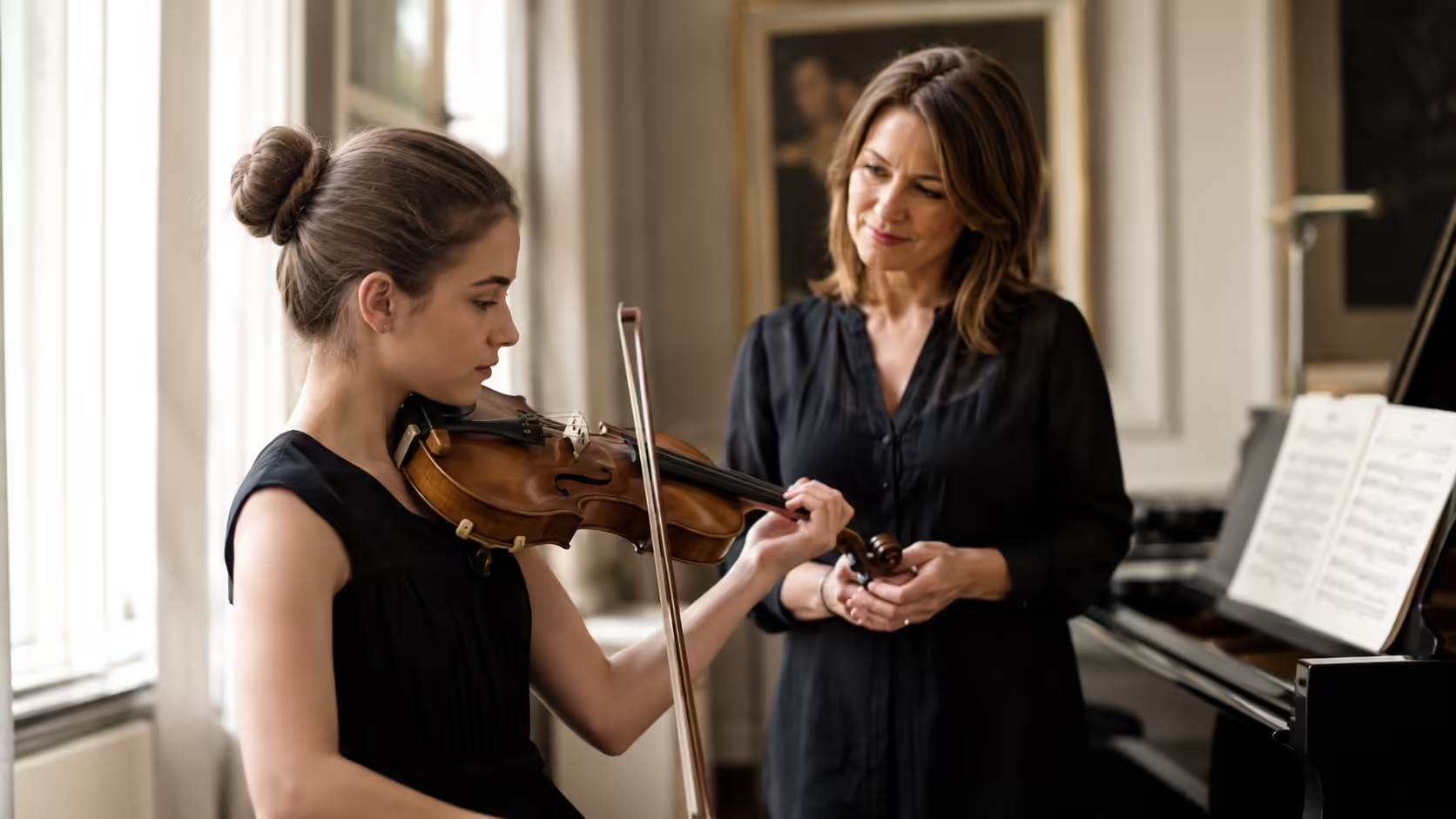

Short answer: Conservatory-style music lessons in San Diego are structured, sequenced lessons where every week builds on the last. Students work on technique, music reading, theory, ear training, repertoire, and performance — not just songs of the week. It fits kids, teens, and adults who want real progress. At K&M Music School in Mira Mesa, this is delivered through a 9-level Russian conservatory program adapted for every instrument we teach.

What "Conservatory-Style" Actually Means
The simplest way to understand the term is this: conservatory-style music lessons follow a plan. Every lesson builds on the last one. The student learns how to play, how to read, how to listen, and how to improve — in that order, on purpose.
It's the opposite of week-to-week guesswork. There's a clear path from where the student is now to where they're going, with measurable progress along the way.
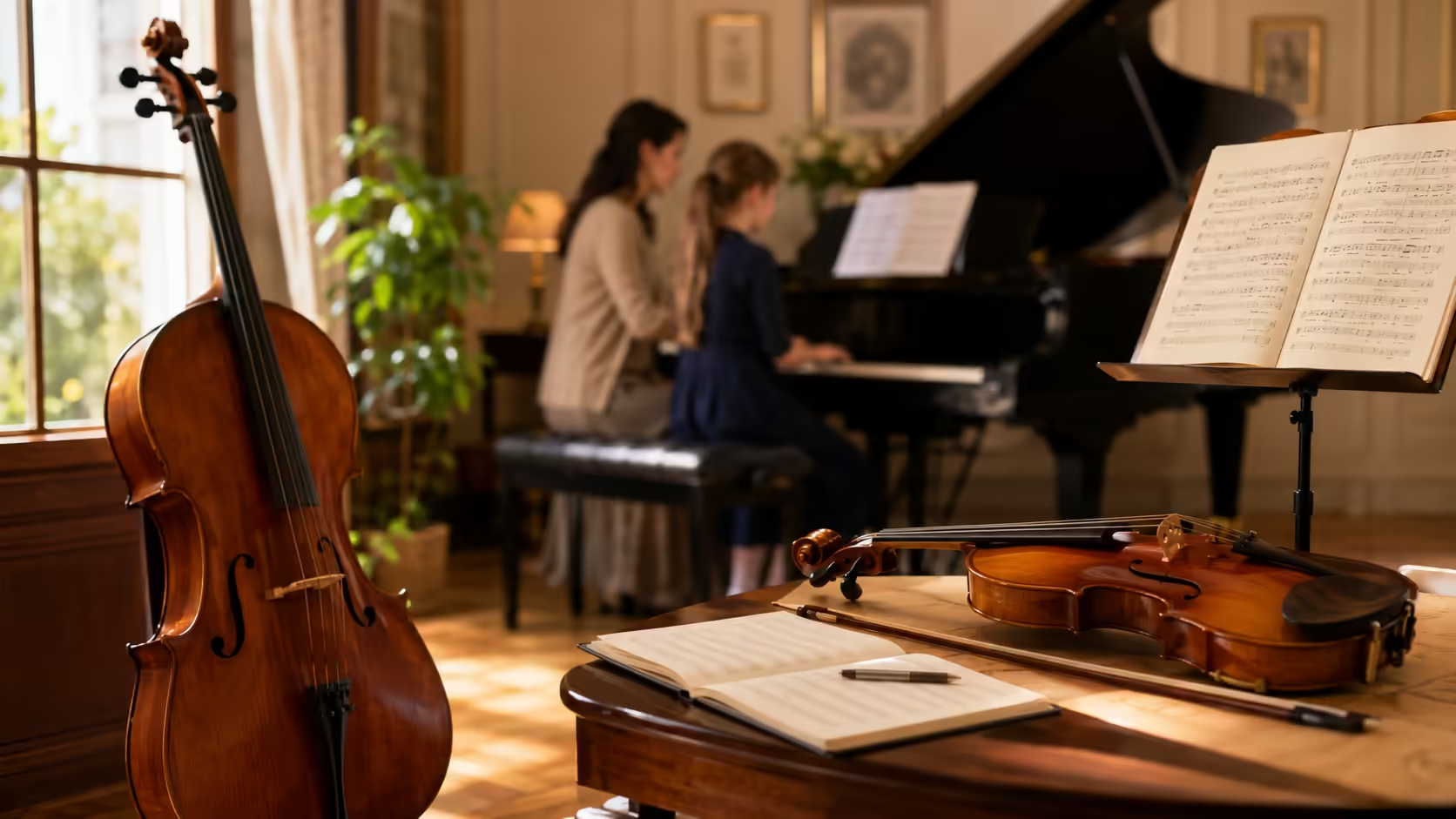
Inside K&M's Mira Mesa studio — purpose-built for structured lessons across 10 instruments.
Conservatory-style lessons are usually built around six core parts:
- Technique — hand position, posture, tone, coordination, breath support, bow hold, finger strength
- Music reading — notes, rhythm, symbols, form
- Theory — scales, chords, intervals, key signatures, harmony basics
- Ear training — pitch matching, interval recognition, listening accuracy
- Repertoire — pieces chosen for growth, not just for fun
- Performance work — recitals, mock auditions, stage confidence
And one more piece that ties it all together: assessment. Clear goals, teacher feedback, and step-by-step improvement so the student (and the parent) actually knows what "better" looks like this month.
That's the difference between a structured lesson path and a casual one. A casual lesson can be fun. A casual lesson can teach a song. But it usually focuses on short-term song learning. A conservatory-style lesson builds deeper musical habits over time.
Why San Diego Families Search for This
Most parents don't search "conservatory-style music lessons in San Diego" because they want pressure. They search it because they want clarity.
They usually want:
- A teacher who fixes bad habits early
- A lesson plan that feels organized
- Better music reading
- Better practice habits at home
- Preparation for recitals, youth orchestra, or auditions
- A stronger base for piano, violin, cello, voice, guitar, or winds
Teen students search for the same thing for different reasons. Some want to prepare for auditions. Some want better technique. Some want more challenge than they get in school music. Some want private lessons that feel more serious and less random.
Adult students search this term too. Many adults say the same thing: "I don't want to just drift." They want a real plan. They want to know what to practice. They want to understand why a piece is hard and how to fix it.
So the appeal is simple. Conservatory-style music lessons promise structure, direction, and measurable growth.
What Happens in a Conservatory-Style Lesson
A typical lesson has a clear flow. The teacher isn't guessing what to do next. The student isn't left wondering what matters most.
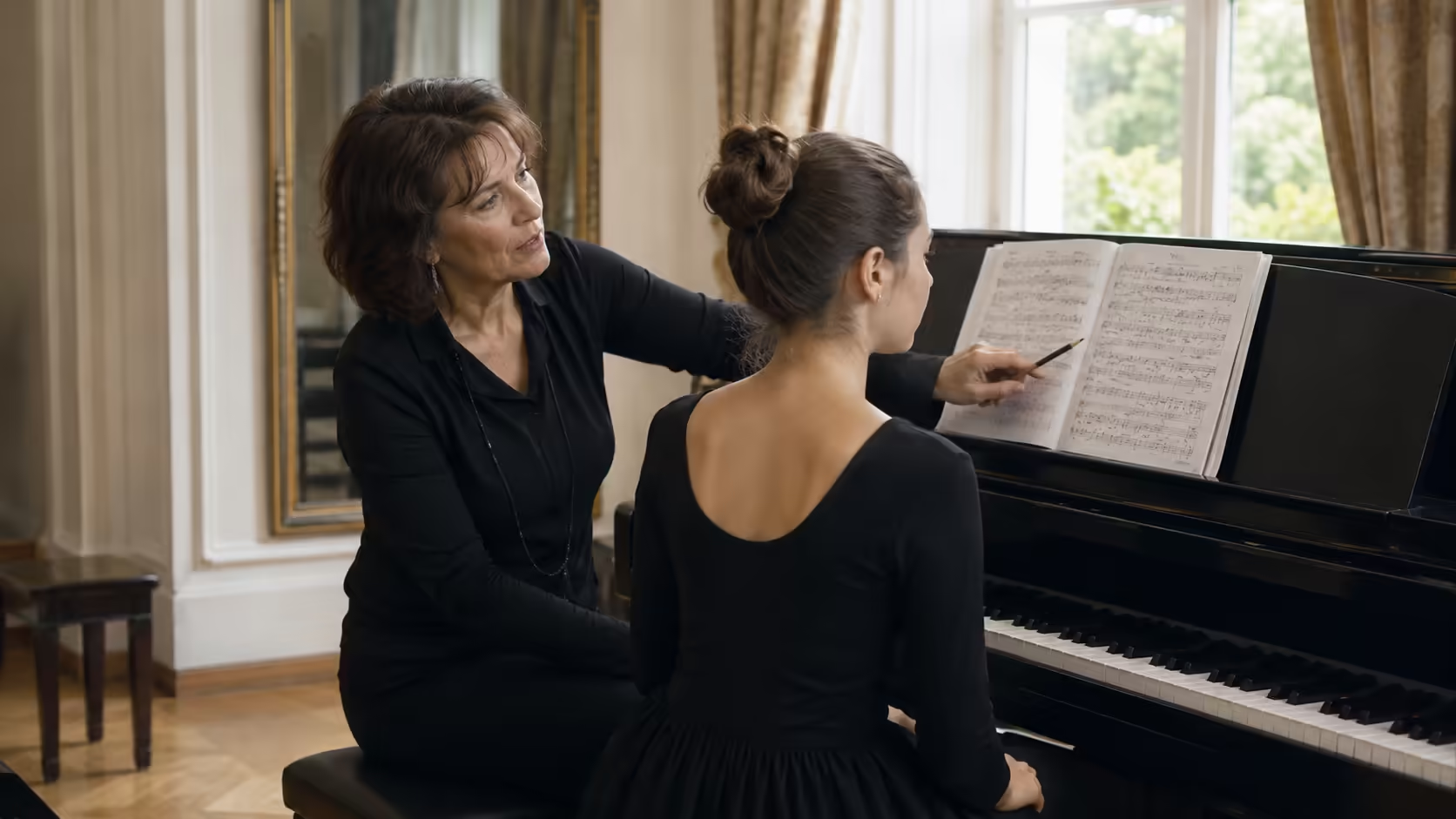
Reading the score is part of every K&M lesson — not an afterthought once the song is memorized.
A common lesson structure
Warm-up
A short physical warm-up to get the body and ears ready. For singers, that's breath and resonance work. For pianists, it's wrist and finger prep. For strings, it's posture and bow setup.
Technique work
Scales, finger drills, breathing exercises, articulation. Five to ten focused minutes that pay off for years.
Reading or rhythm work
Sight-reading practice, rhythm counting, or short reading exercises. This is what makes students independent learners over time.
Repertoire study
The piece of the week — chosen on purpose to teach a specific skill, not just to be enjoyable (though it usually is both).
Problem solving
The teacher diagnoses what's hard and gives a small, targeted fix. This is where conservatory training really earns its name.
Home practice assignment
A short, clear plan for the week. Parents see exactly what to support at home.
Why technique matters so much
For piano, technique means scales, hand balance, fingering, and wrist movement. For voice, it means breath support, vowel shape, resonance, diction, and range work. For violin or cello, it means bow control, intonation, posture, and left-hand setup.
These details matter because technique affects everything else. A student can love a piece of music, but if the body setup is weak, progress slows down — and stays slow.
Why sight-reading is non-negotiable
Students in structured music lessons spend real time on reading. This matters a lot. A student who reads well learns faster, plays with more confidence, and depends less on memory alone. Rhythm work — counting, subdivision, pulse, meter — falls in the same bucket. They're basic tools, and casual students often skip them. Later, they hit a wall.
Ear training in plain language
Ear training sounds advanced, but it starts with simple skills:
- Can the student hear if a note is sharp or flat?
- Can the student match pitch?
- Can the student hear phrase shape?
- Can the student notice uneven rhythm?
This kind of listening is one reason serious music training in San Diego produces stronger long-term results.
Repertoire as a teaching tool
In conservatory-style lessons, each piece has a purpose. A piece may teach smooth phrasing, clear articulation, better pitch, pedaling, breath control, or musical style. The music isn't picked at random — it's part of the training plan.
How It Differs From Regular Private Music Lessons
The simplest answer is depth and structure.
A regular private music lesson may focus on enjoyment, quick wins, and favorite songs. That can be a good fit for some students. But conservatory-style music lessons ask a bigger question: how do we build a real musician over time?
| Regular Private Lessons | Conservatory-Style Lessons |
|---|---|
| Focus on songs the student likes | Songs are part of a planned curriculum |
| Technique is touched on as needed | Technique is built every week, on purpose |
| Reading often takes a back seat to memorization | Reading and rhythm are core skills, not extras |
| Practice assignments vary week to week | Practice is structured around clear weekly goals |
| Recitals are optional or rare | Performance prep is built into the program |
| Progress is informal | Progress is assessed against a real curriculum |
That doesn't make one style "good" and one style "bad." It makes them different.
A child who wants to explore music with low pressure may enjoy a flexible lesson. A child preparing for youth orchestra, a school audition, or classical study usually needs something more structured. K&M's 9-level conservatory program is built specifically for the second group — and it works just as well for adults and hobbyists who want depth.
Is Conservatory-Style Training Too Intense for Beginners?
Usually, no. The problem isn't the method. The problem is poor pacing.
A strong teacher can teach a beginner in a conservatory-style way without making lessons feel harsh. In fact, beginners often benefit the most from good structure — because early habits matter so much.

Structure done well looks calm and encouraging — not heavy. The right pace is what makes the difference.
What healthy beginner training looks like
- Short, clear assignments
- Easy pieces with a purpose
- Small, achievable technique goals
- Lots of review of what's already working
- Warm encouragement, not pressure
- Simple practice plans the parent can support
A beginner doesn't need an extreme workload. A beginner needs the right workload.
Signs the pace is too fast
- The student feels lost every week
- Practice turns into daily frustration
- Pieces are much too hard
- The teacher corrects without explaining
- The child starts to dread lessons
Good conservatory-style training matches the student's age, level, and personality. That's what the K&M trial lesson is for — to see whether the pace actually fits your child before committing.
Skills Students Actually Build
This training style aims to build more than song memory. It develops several skills at once.
1. Technique
Finger control, hand shape, wrist freedom, posture, breath support, tone production, articulation, intonation. These are the physical skills that help a student play with ease.
2. Music literacy
Staff reading, rhythm reading, key signatures, time signatures, dynamic markings, tempo markings, form. Reading is what gives students independence — the ability to learn new music without waiting for the teacher.
3. Musicianship
This is where music starts to sound alive. Phrasing, dynamics, style, tone color, balance, expression, listening. The difference between playing the notes and making music.
4. Performance ability
Performance is part of music study for most students at K&M, with regular recitals in our on-site recital hall. Conservatory-style lessons build stage confidence, memory, focus under pressure, audition prep, and the ability to recover gracefully when something goes wrong on stage.
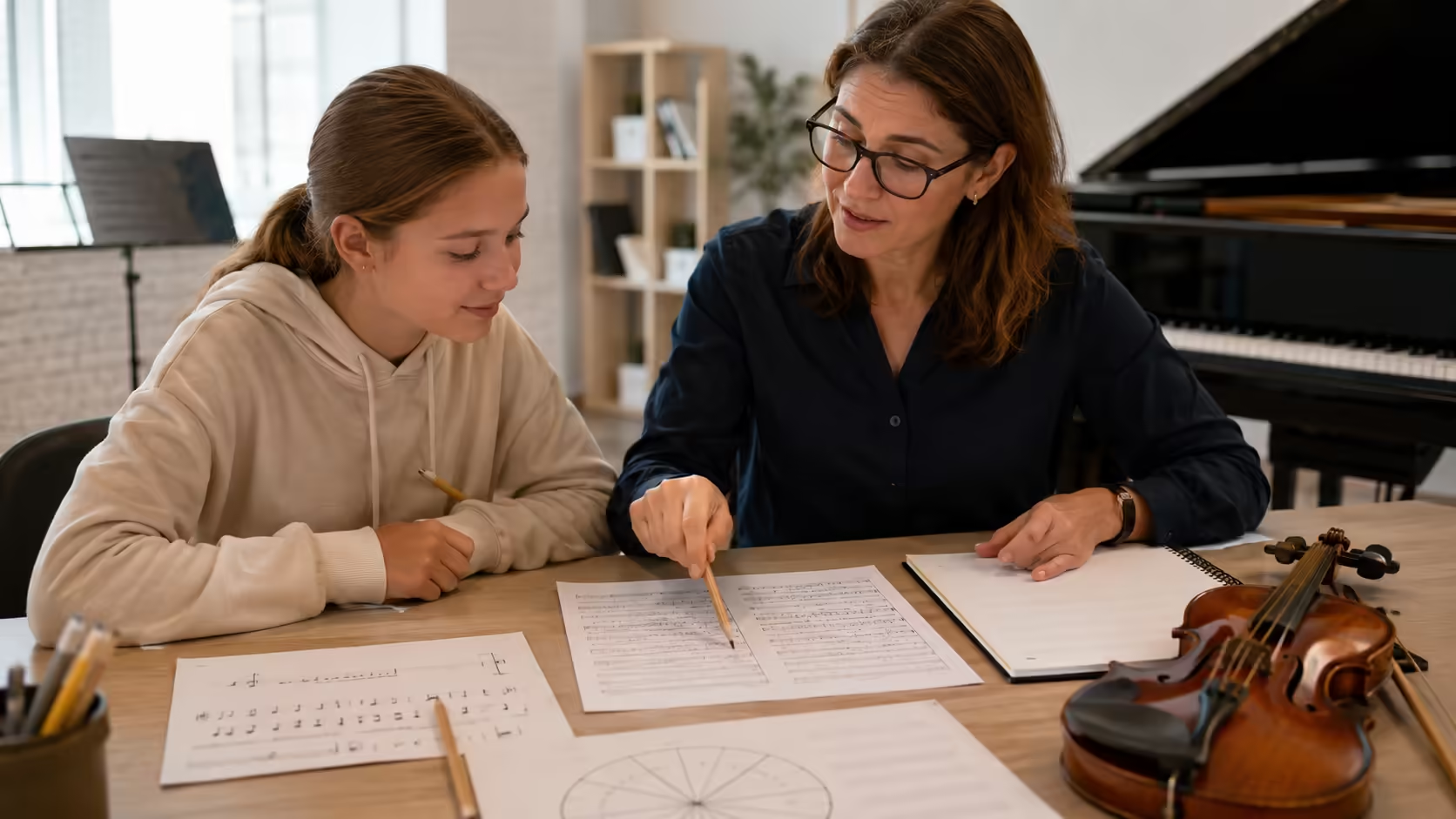
Theory and score study turn music from "what fingers go where" into "what the piece is actually saying."
5. Life skills
Parents often notice side benefits too: better focus, patience, follow-through, time management, and the kind of confidence that comes from small wins stacking up. That's one reason many San Diego families look for serious music training rather than very casual instruction.
Which Instruments Fit Conservatory-Style Training Best?
The short answer: almost all of them.

Bow hold, left-hand setup, posture, intonation — small details, taught early, that pay off for years.
Piano
Piano is a natural match. It supports technique, reading, theory, and solo performance all at once. It's one of the most common starting points for conservatory-style training in San Diego.
Violin and cello
String players need a clear plan because posture, bow hold, pitch, and tone all take steady practice and close feedback. Without structure, bad habits set in early and become hard to undo.
Voice
Voice lessons can be structured beautifully. Students work on breathing, sound production, diction, phrasing, and healthy singing — all of which need careful, sequenced training.
Guitar
Classical guitar fits this style especially well. Other guitar styles can also use a conservatory approach when lessons include reading, technique, ear training, and planned repertoire — not just chord charts.
Winds, brass, and harp
Saxophone, bassoon, and harp all benefit. Structured practice improves breathing, tone, articulation, and the kind of ensemble awareness that prepares students for school orchestra or band.
Drums and percussion
Even drums benefit from structure. Rudiments, reading, timing, and groove all develop faster when the teacher works from a real curriculum — not week-by-week jam sessions.
How Much Should Students Practice?
This is one of the most common questions families ask. The honest answer: it depends on age, level, and goals. But there are useful ranges.
| Student Level | Typical Daily Practice |
|---|---|
| Young beginners (ages 5–8) | 10–20 minutes, most days |
| Older beginners (ages 9–12) | 20–30 minutes |
| Intermediate students | 30–45 minutes |
| Advanced teens & pre-college | 45–90 minutes (or more) |
| Adult learners | 15–45 minutes, depending on goals |
The main point is simple: steady daily practice beats long, random sessions. Twenty focused minutes every day will outpace two hours on Saturday — every time.
A simple home practice formula
- 3 minutes — warm-up
- 5 minutes — scale or technique drill
- 5 minutes — reading or rhythm work
- 10 minutes — main piece of the week
- 5 minutes — review of older material
- 2 minutes — play something you love (always end on a win)
That kind of plan feels manageable — and it's one reason structured music lessons help families feel less confused at home. The K&M teacher gives you the assignment; the template tells you how to use the half hour.
What Results Families Can Expect
Families often want to know: "If we commit to this, what changes will we actually see?" That's a fair question. Music progress is real, but it's rarely instant.
Short-term results (first few months)
- Better posture and physical ease at the instrument
- Cleaner tone
- Better focus during practice
- Better note reading
- More organized practice habits
Mid-term results (6–12 months)
- More confidence
- Faster learning of new pieces
- Cleaner rhythm
- Stronger memory
- More musical expression — the piece starts to sound like the student is saying something
Long-term results (year 2 and beyond)
- Independent learning skills
- Strong audition readiness
- Confident ensemble playing
- Solid technique that holds up under pressure
- A deeper, lasting connection to music
The best results come from three things working together: a good teacher, a clear home practice routine, and goals that match the student. Take away any of the three and progress slows down.
How to Tell if a Teacher Really Offers Conservatory-Style Lessons
This is where many San Diego families get stuck. A website might say "professional" or "advanced," but those words are broad. Here's what to actually look for — and what to walk away from.
- The teacher can explain their curriculum in plain language
- Technique is part of weekly lessons, not an afterthought
- Reading and rhythm are taught clearly and consistently
- Assignments are written down each week
- Progress is tracked against real benchmarks
- Repertoire is chosen on purpose, not at random
- Recital or performance opportunities exist on a regular schedule
- The teacher can explain what "the next level" actually looks like for your student
Red flags to walk away from
- Every week feels random. No through-line, no clear progression
- The teacher only teaches songs. No technique, no theory, no reading work
- No written practice plan. The student leaves not knowing what to do at home
- No clear answer when you ask about curriculum. Vague terms, no examples
- No performance opportunities. Or recitals are an afterthought, held in a hallway or empty classroom
- Pressure to commit before a trial. Real schools let you try the lesson first
- The child is consistently anxious or shut down. Structure should feel safe, not threatening
Local questions worth asking
- Is the studio close enough for weekly consistency? (San Diego traffic eats commitment.)
- Does the school offer regular recitals?
- Does the teacher prepare students for school orchestra, band, or auditions?
- Is there a clear path beyond beginner level?
- Does the teacher work with both hobby students and serious students — or only one?
These are smart questions. They help you see whether private music lessons truly match your family's goals.
K&M Music School is a 501(c)(3) nonprofit conservatory in Mira Mesa, San Diego — built on a 9-level Russian conservatory program adapted for all 10 instruments we teach. Book a free trial lesson and see the structure in action.
Book Your Free Trial Lesson5703 Oberlin Dr, Unit 108, San Diego, CA 92121 (Mira Mesa) • 858-588-3938 • 100% free trial, no credit card
Frequently Asked Questions
What does conservatory-style music lessons in San Diego actually mean?
Conservatory-style means lessons follow a structured, sequenced plan instead of a week-to-week guessing game. Students work on technique, music reading, theory, ear training, repertoire, and performance — and each lesson builds on the one before. At K&M Music School in Mira Mesa, this is delivered through a 9-level Russian conservatory program adapted for every instrument we teach.
Is conservatory-style training too intense for beginners?
No. The method is not intense by itself — only poor pacing is. Beginners often benefit most from structure because early habits matter most. K&M's program is sequenced so beginners get clear, small steps with warm encouragement, not a heavy workload.
Who is conservatory-style music training for?
Kids, teens, and adults who want steady, measurable progress. It fits hobby students who want a real plan, teens preparing for auditions or youth orchestra, and adults who don't want to drift. It does not require a goal of becoming a professional musician.
Which instruments work with conservatory-style training?
Almost all of them. K&M offers conservatory-style lessons across 10 instruments — piano, violin, cello, guitar, ukulele, saxophone, bassoon, harp, voice, and drums — plus toddler group classes. The 9-level program is adapted for each instrument.
How much should students practice in a conservatory-style program?
It depends on age and level. Young beginners practice about 10–20 minutes a day, older beginners 20–30, intermediate students 30–45, and advanced teens 45–90 minutes. Steady daily practice beats long, random sessions.
How is conservatory-style different from regular private music lessons?
Regular private lessons often focus on song learning and enjoyment. Conservatory-style lessons add structured technique, music reading, theory, ear training, planned repertoire, and performance prep. Both have value — conservatory-style is the choice when families want depth and measurable growth.
Does K&M offer a trial lesson to see if conservatory-style fits my child?
Yes. Every new student gets a 100% free trial lesson with no credit card required. It's the easiest way to see how a structured lesson actually feels for your child before committing to a regular schedule.
Where is K&M Music School located?
K&M Music School is at 5703 Oberlin Drive, Unit 108, San Diego, CA 92121 — in Mira Mesa. The school is a 501(c)(3) nonprofit conservatory serving families from across San Diego, including La Jolla, UTC, Sorrento Valley, Carmel Valley, and Scripps Ranch.