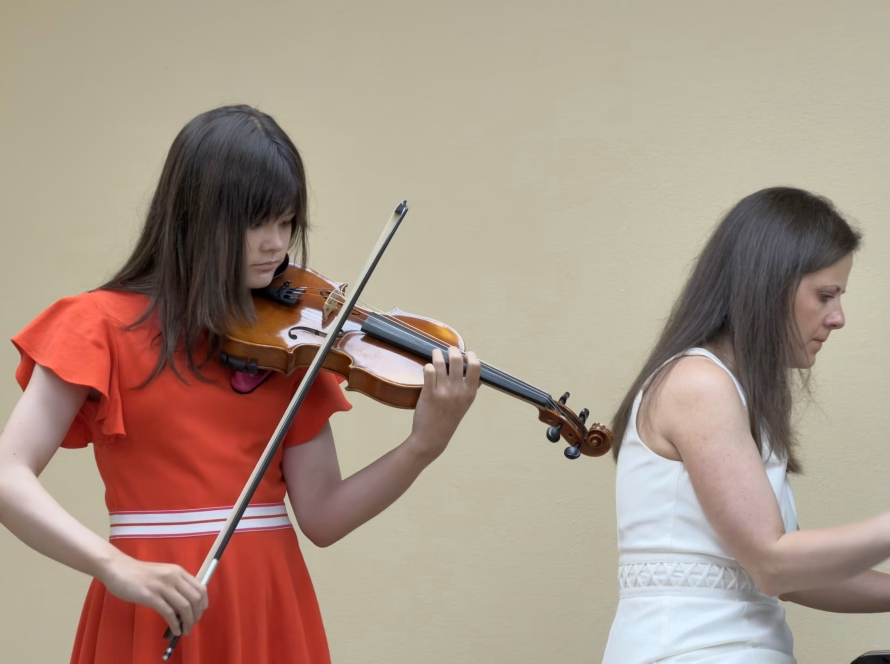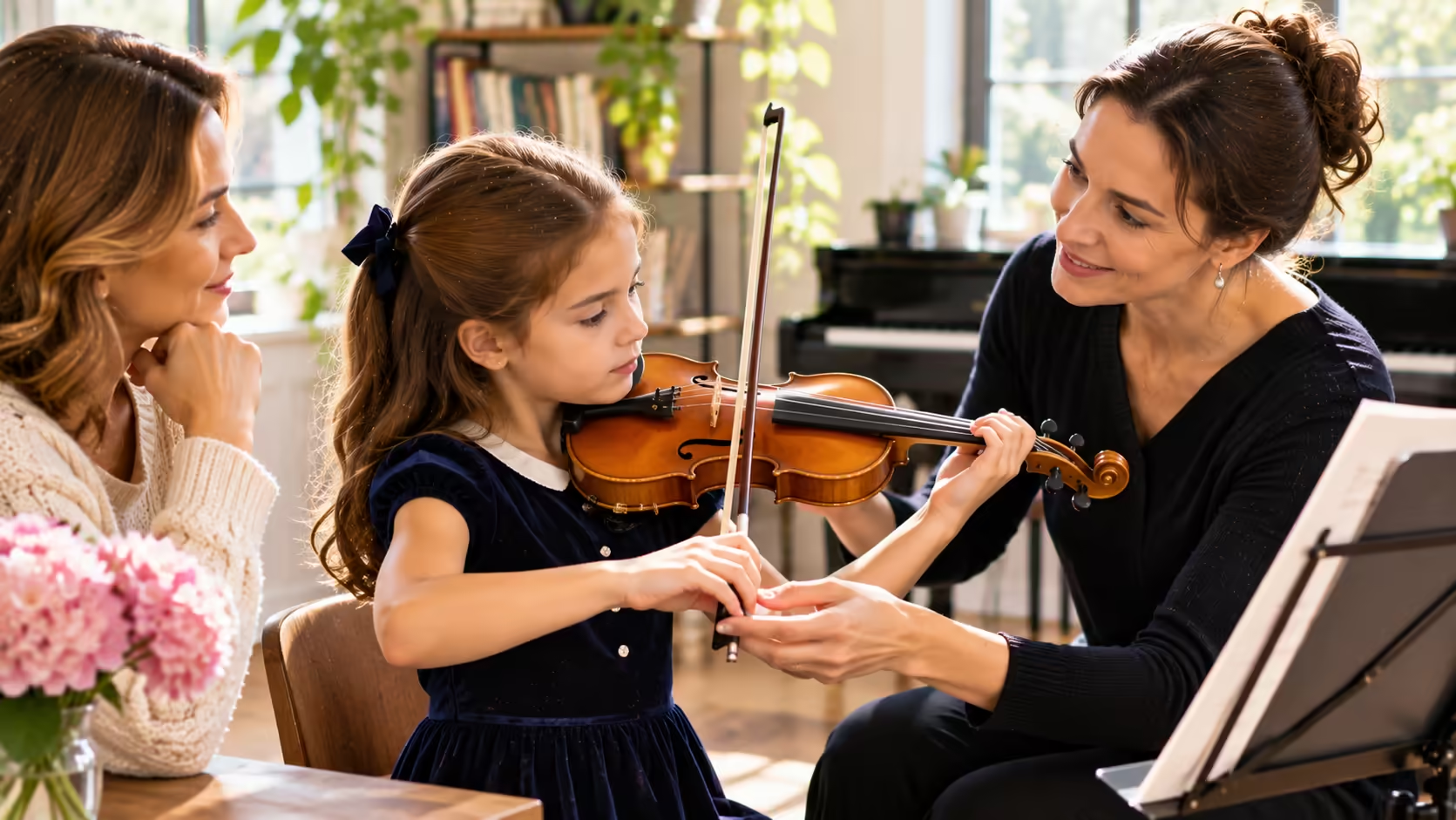

Short answer: Starting music lessons in January is one of the smartest moves a San Diego family can make. The holidays are over, the school routine is back, and teachers still have open slots before the spring rush.
A January beginner gets 14 to 20 lessons before spring recital season — enough to play two short pieces well. Private lessons in San Diego run $55 to $110 per lesson, or about $230 to $450 a month.
The best move right now: book a trial lesson in December. The good after-school times are gone by the second week of January.

Why January Is the Best Month for Starting Music Lessons
January is the calmest month of the year to enroll a child in music. Five things line up at once.
The school calendar gives you a natural window
San Diego Unified students return from winter break in the first week of January (check the district calendar for the exact date). Families are rebuilding the weekly routine anyway, so adding a lesson day now feels natural instead of disruptive.
Teacher schedules are quieter
Most studios see a December dip and a February surge. The popular after-school slots, roughly 3:30 to 6:00 p.m., fill first. Mid-afternoon and Saturday morning stay open longer.
You get a full runway before recital season
Spring recitals cluster between April and June. A January start gives a beginner 14 to 20 lessons first, which is enough to play two short pieces well without feeling rushed.
San Diego weather keeps the habit steady
No snow days, no cancelled weeks. Summer is actually the harder season to begin here, because beach weekends and camps break up practice routines.
The new year is a built-in reason to commit
Make one small promise: four practice days a week for eight weeks. Small promises survive. Grand resolutions do not.
Is Your Child Ready? An Age-by-Age Check
There is no set age when a child has to begin. Readiness decides more than talent does, and it looks different at each stage.
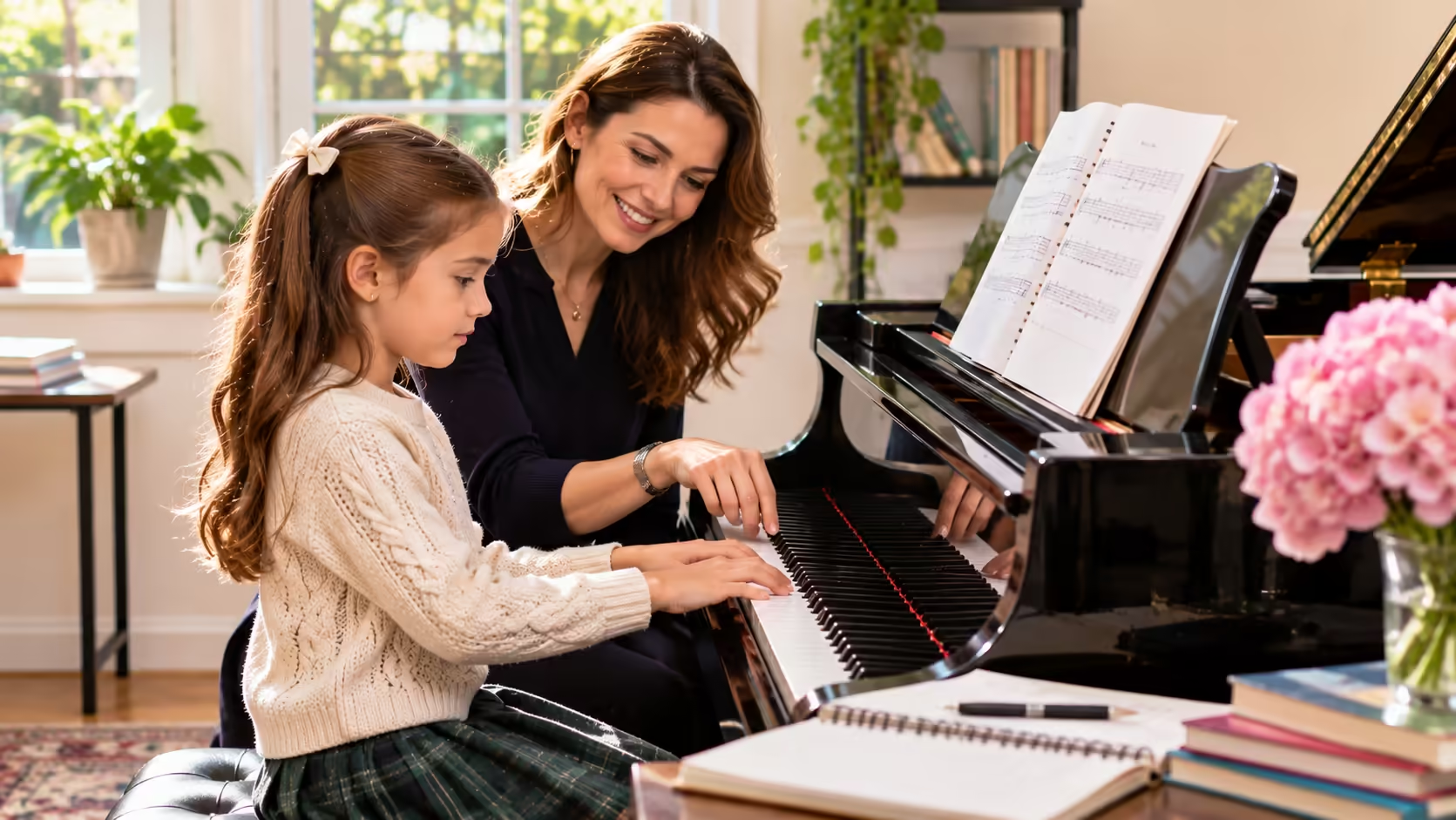
Ages 5 to 7 is the usual window for piano, and a 30-minute lesson fits that attention span.
| Age | What fits | What to know |
|---|---|---|
| 3–5 | Movement, singing, rhythm games | Most instruments need hand size and focus that arrive later. Shakers, a small drum, or a toy keyboard at home count as real music at this age. |
| 5–7 | Piano, violin, ukulele | Piano and violin are the usual first instruments, and violins come in small sizes. Book 30-minute lessons. |
| 8–11 | Almost everything | The widest window. Flute, clarinet, saxophone, guitar, cello, and drums all fit, and school band begins. |
| 12–18 | Whatever they love | Motivation matters more than talent. Ask which song they want to play first and build the plan around it. |
| Adults | Any instrument | No growth spurts, no exam pressure. Progress feels slow for a few weeks, then jumps. |
Signs a young child is ready for formal lessons: they follow a two-step direction, sit for 15 minutes, and can sing a familiar tune back to you.
Three signs to wait one more term
- Your child cannot stay in a 30-minute class without leaving the room
- No instrument or musical toy in the house gets touched, even for fun
- You are the only one who wants it. Enthusiasm cannot be borrowed.
For more detail on a specific instrument, see our guides to the best age to start violin lessons and choosing between clarinet and flute.
What Music Lessons Cost in San Diego
Local rates vary more than most parents expect. Here is the realistic range for a January 2027 start.
| Lesson type | Per lesson | Per month (weekly) | Good for |
|---|---|---|---|
| Private, 30 min | $55–$85 | $230–$340 | Beginners under 10 |
| Private, 45 min | $65–$95 | $260–$380 | Older children, teens, adults |
| Private, 60 min | $75–$110 | $300–$450 | Advanced students |
| Group class | $20–$50 | $80–$200 | Testing interest on a budget |
What pushes the price up or down
- Teacher experience. A teacher with a degree and years of studio work charges more than a college student.
- In-home lessons add $10 to $30 per visit, because the teacher drives to you.
- Location. Coastal neighborhoods run higher than inland ones.
- Lesson length. A 30-minute lesson costs more per minute than a 60-minute one.
- Group classes cut the per-student rate roughly in half.
- School programs cost little or nothing, and some nonprofit schools offer scholarships. Ask directly.
The fees to ask about before you sign
Many schools charge a registration fee of $45 to $95. Ask whether it is one-time or yearly. Also ask whether recitals carry a fee, and whether months with five lesson days cost extra.
Instrument costs for January beginners
| Instrument | Typical starting cost |
|---|---|
| Violin, flute, or clarinet rental | $20–$45 a month |
| Cello rental | $40–$80 a month |
| Digital piano, 88 weighted keys | $400–$800 to buy, or $40–$150 a month to rent |
| Student guitar or ukulele | $60–$400 to buy |
| Voice | No instrument cost |
Renting first is usually the smart choice, and many shops let rental payments count toward buying later. Avoid the very cheap online violins and band instruments. A poor instrument makes learning harder and convinces a child the problem is them.
Choosing the Right Instrument for a January Start
The instrument decides whether practice feels like play or like work.
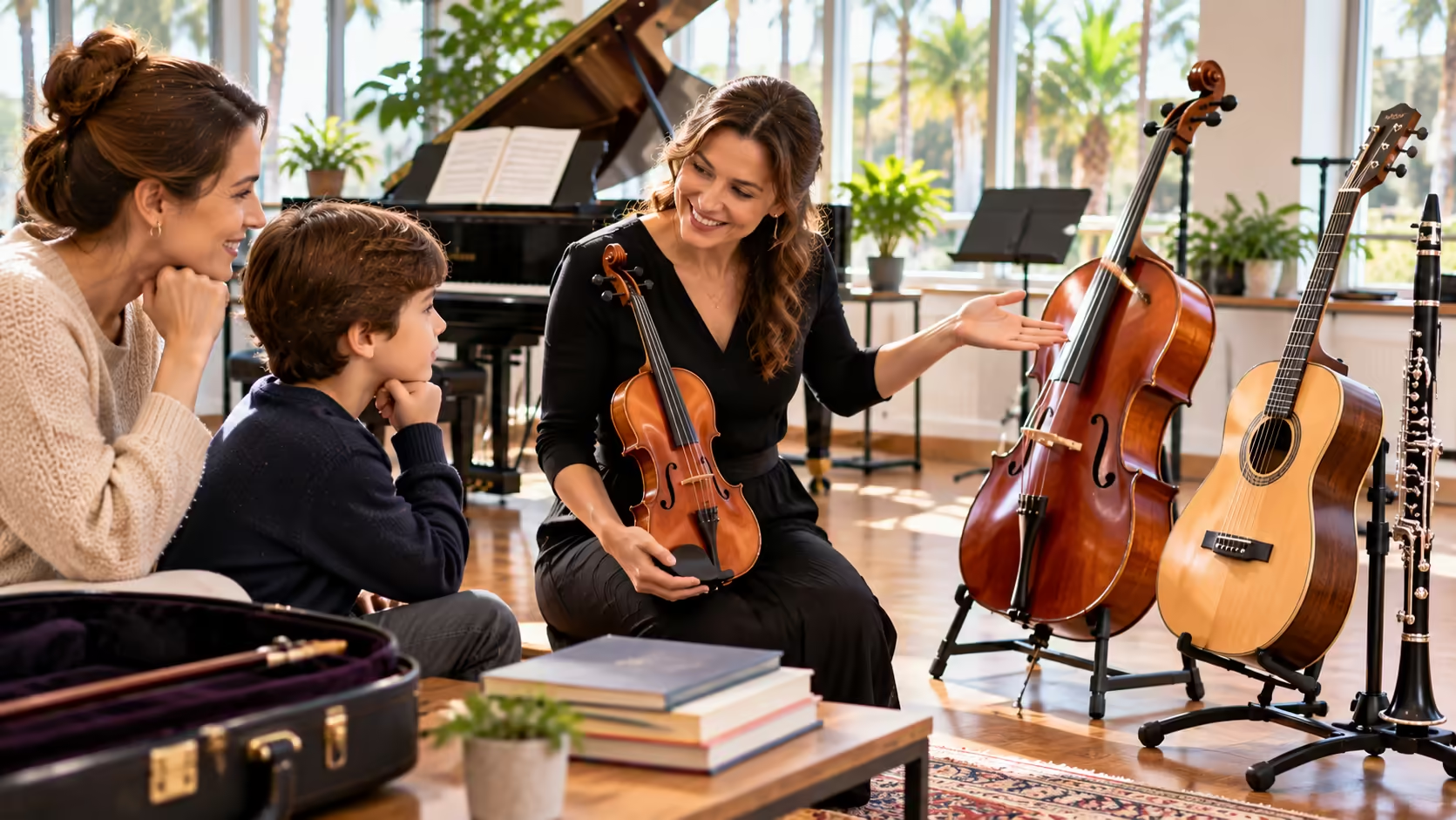
Some children only show which instrument is theirs after they have held two or three.
Match the instrument to the child. Ask what sound your child copies around the house. That is the real clue, and it beats any quiz. High-energy kids often love drums. Patient kids often love piano. Small hands do better on piano, ukulele, or violin than on cello or full-size guitar.
Five good first instruments
- Piano — press a key and the right note sounds. It teaches melody and harmony together.
- Violin — comes in small sizes and leads into school and youth orchestras.
- Guitar — cheap to start, and a few chords unlock many songs.
- Flute or clarinet — school band staples with steady rental supply.
- Voice — no gear to buy. Best from about age 10.
Instruments worth postponing
Bassoon costs more in reeds and repairs, so it makes a good second-year choice. A drum kit needs space and sound control, though an electronic kit solves half of that problem.
Rent or buy?
- Rent if your child is under 12, undecided, or still growing.
- Rent-to-own makes sense when you expect at least a year of study.
- Buy used only after a teacher inspects the instrument. A bargain with a warped bridge is not a bargain.
Finding and Vetting a Music Teacher in San Diego
A great teacher changes everything. The wrong teacher ends the habit.
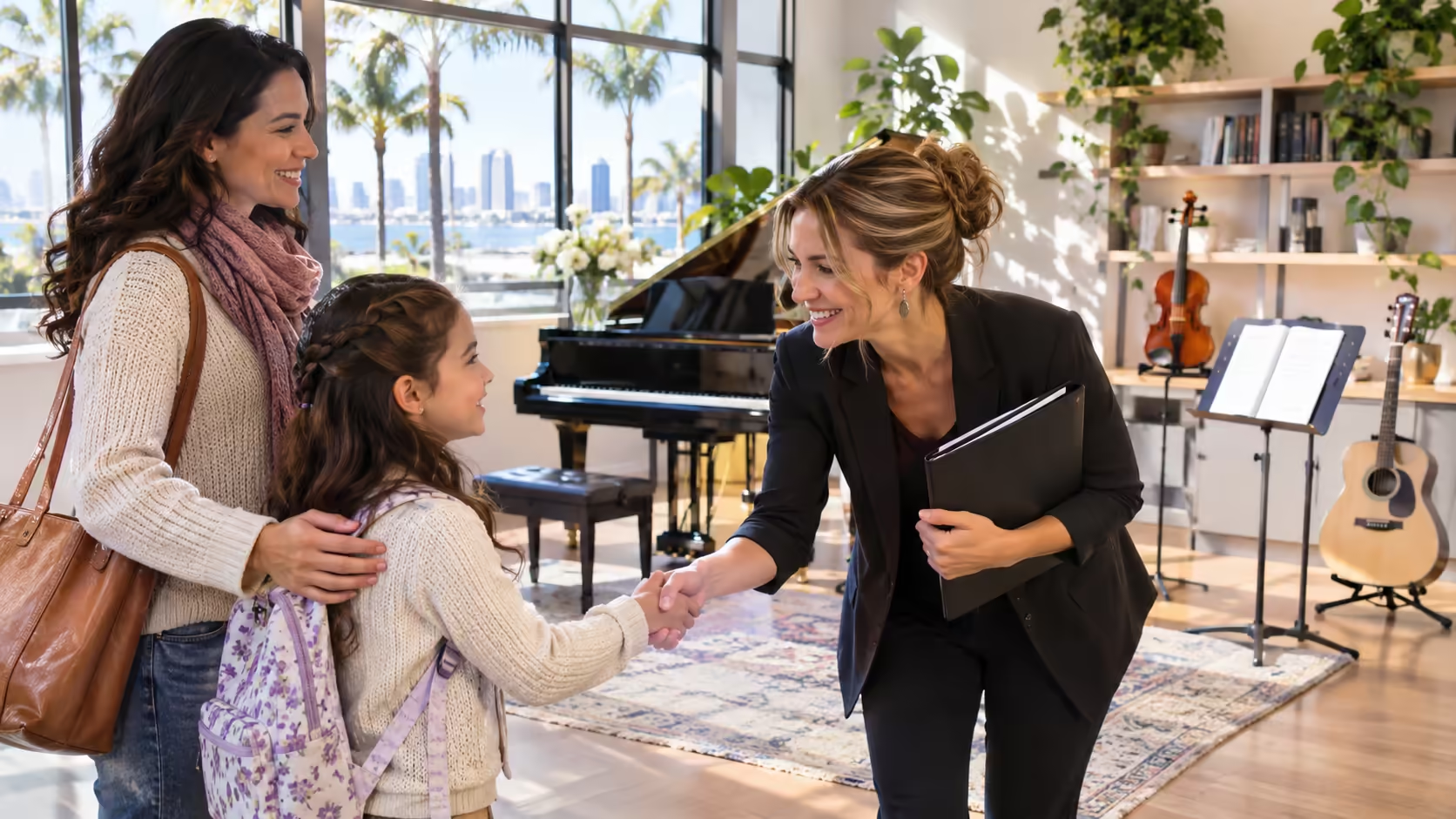
One trial lesson tells you more than a week of reading reviews.
Where to start: ask your school's music director. Directors hear the results of every private teacher in the area, and the advice is free. Then visit two or three schools near home. Our guide to music lessons near Mira Mesa covers what each neighborhood offers.
Seven questions to ask before you book
- What is your training, and do you still perform?
- What does a typical 30-minute lesson look like for a beginner?
- Do you adapt lessons to my child's interests, or use one method for everyone?
- How much practice do you expect each week?
- Do you hold recitals, and is there a fee?
- What is your cancellation and make-up policy?
- Can we do a trial lesson before we commit?
How to test a teacher in one lesson
Watch how much the teacher plays versus talks. Beginners need demonstration, not a lecture. Notice whether the teacher adjusts to your child's energy in the room. Then check the exit: a child who leaves smiling and can repeat one thing they learned is the only review that counts.
Signs of the wrong teacher
- No clear plan for the first six weeks
- Pressure to buy a specific instrument brand on day one
- Lessons that drift into babysitting, with no correction
- Nothing said about practice between lessons
School Band and Youth Orchestras: The January Reality
Ensembles do not run on a January calendar. Here is how each kind fits.
- Youth orchestras hold auditions on a seasonal schedule, usually in late spring or summer. Some keep a beginner string group or have mid-year openings, so it is worth an email. Most also offer need-based tuition help with limited funds, so apply early.
- School band and orchestra place students near the start of the school year. January is the practical moment to ask about a second-semester seat, a loaner instrument, or an instrument switch. Email the school music director in the first week back.
- Free community programs exist in San Diego for grades 4 to 12, some with free instruments and group lessons. Ask about joining a spring session.
1. Start private lessons in the first two weeks of January.
2. Join a school ensemble or community group for social playing.
3. Audition for a youth orchestra on its normal calendar.
4. Add competitions in year two, not year one.
Your December-to-June Timeline
| When | What to do |
|---|---|
| Now through December | Pick two instruments to try. Book trial lessons. Reserve a weekly time before the January rush. |
| Week 1 of January | Confirm the weekly slot. Rent the instrument. Buy a tuner, a stand, and the first book. |
| Week 2 | Set up the practice corner. First lesson. |
| Weeks 3–4 | Write one practice goal on paper and tape it to the wall. |
| February | Settle into four or five practice days a week. Miss nothing for three straight weeks. |
| March | Ask the teacher for a realistic first-piece goal. Review posture and hand position. |
| April | Choose a small spring recital. Keep it low pressure. |
| May | Review honestly: continue, adjust the lesson length, or switch instruments. |
| June | Plan summer. Keep weekly lessons going to protect the habit. |
Spring break and the end of the school year both interrupt routines. Plan around those two breaks so momentum survives.
Practice Habits That Survive February
Enthusiasm fades in every family. Systems carry you through.
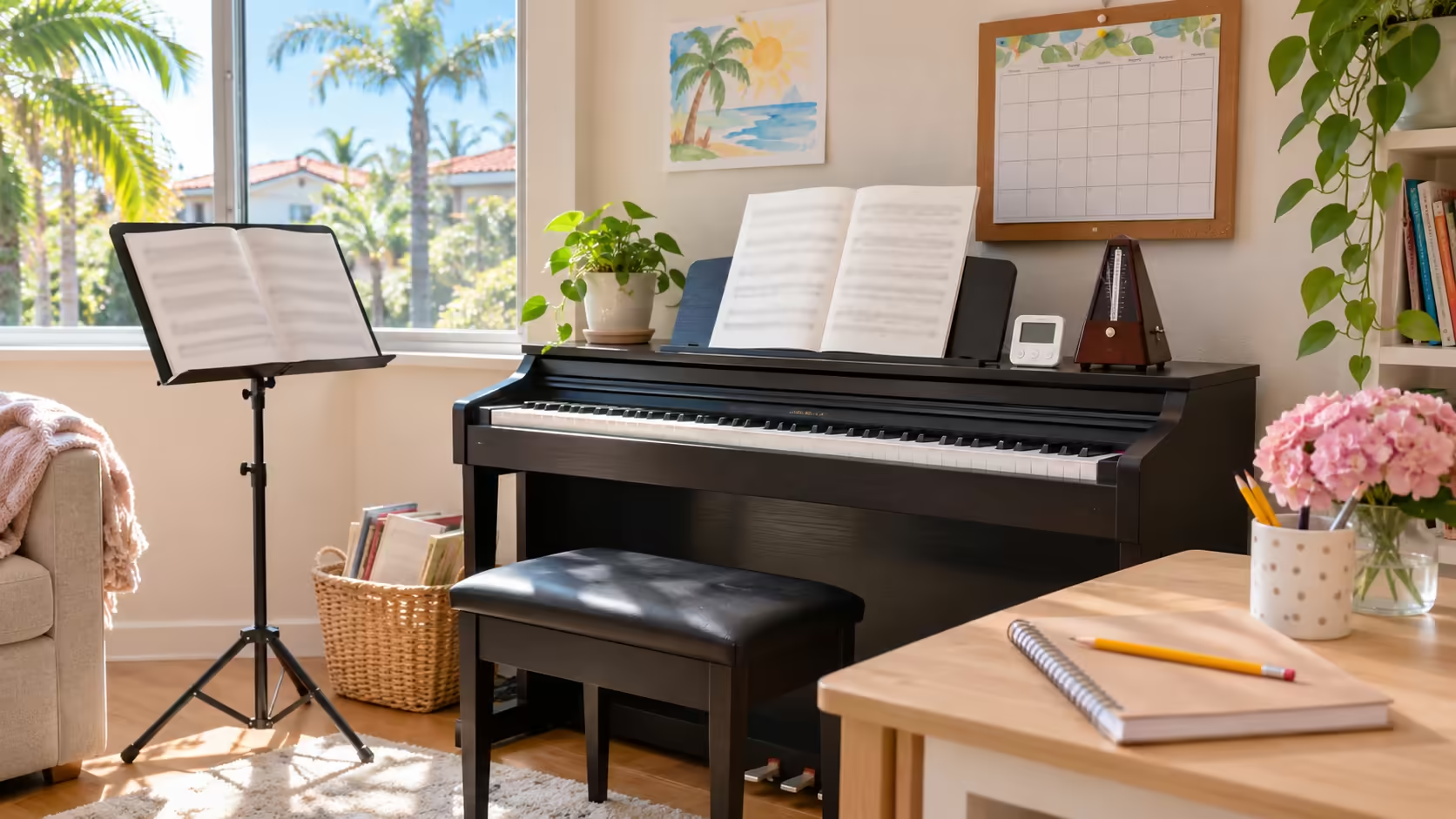
Set the practice corner up before the first lesson. Visible instruments get played.
Set the room up first
Keep the instrument on a stand, not in its case. Keep the music stand, tuner, and pencil in one spot. A digital piano needs headphones if the house is busy at night.
Use the 15-minute rule
Children 7 and older should practice 15 to 20 minutes, five days a week. Ages 5 and 6 do well with 5 to 10 minutes. Split the time into a short warm-up and the assigned piece, and stop while it still feels good. We cover this in depth in how often a child should take piano lessons.
Leave two minutes for play
Let your child finish each session by making up a melody or picking out a favorite theme song by ear. That small dose of freedom turns practice into something they own.
What parents should and should not do
- Do sit nearby for the first two weeks. Quiet presence beats instruction.
- Do ask “what did your teacher ask you to fix?” instead of “did you practice?”
- Don't correct hand position yourself unless the teacher asked you to.
- Don't turn practice into punishment.
Almost every beginner loses enthusiasm around week three or four
This is normal, not a verdict. Change one thing: a new piece, a new time of day, or a practice buddy.
Then decide at week eight, not before.
Month One: What to Expect
Lessons one and two are about setup and sound. The teacher checks hand size, posture, and how your child holds the instrument. Expect small wins: one note, one chord, one rhythm. Ask the teacher to write the assignment down, because memory fades by dinner.
Lessons three and four bring the first real piece. Most beginners can play something short and recognizable by now. Practice gets repetitive here, and that repetition is what builds skill. Record a 20-second clip on your phone. It becomes proof of progress in March.
Month one carries the one-time purchases. From month two, plan on tuition plus the rental.
Signs the plan is working
- Your child plays the instrument without being asked
- Practice complaints drop after week three
- The teacher gives specific next steps instead of vague praise
6 Mistakes Parents Make With a January Start
| Mistake | What to do instead |
|---|---|
| Buying before renting | Rent until you know the interest will last |
| Booking an hour for a six-year-old | Start at 30 minutes and move up when your child asks for more |
| Choosing the cheapest teacher | Compare how much correction your child gets, not the hourly rate |
| Skipping the trial lesson | One trial prevents months with the wrong teacher |
| Ignoring the spring calendar | Ask about recital dates in January so spring is not rushed |
| Quitting in week four | Give it eight weeks. The first slump is not the final answer. |
Starting in January at K&M Music School
K&M Music School is a 501(c)(3) nonprofit conservatory in Mira Mesa, about 15 minutes from La Jolla, UTC, Sorrento Valley, and Carmel Valley. Twelve teachers, 200+ students, and 25 years in the same neighborhood.
Music Lessons at K&M
Weekly one-on-one lessons, any of our 12 instruments, flat monthly rate
- Free trial lesson — no credit card required
- Same monthly rate whether the month has 4 lessons or 5
- One-time $50 registration fee — not yearly
- No recital fees and no accompanist fees
- No material surcharges
From month two it is $280. Your instrument rental and first book are separate, as they are everywhere.
How a January start works here
- Book a free trial lesson in December. Your child meets the teacher and tries the instrument. Not sure between two instruments? Try both.
- Reserve your weekly time. After-school slots go first, so December bookings get the best choice.
- Start the first full week of January with a written plan for the first six weeks.
- Play in the spring recital in our on-site hall, with accompaniment provided.
What students get
- Every lesson is private — one student, one teacher
- A structured 9-level curriculum from the Russian conservatory tradition. Read more about what conservatory-style lessons mean.
- Twelve instruments under one roof, so siblings can share one trip
- Adult students welcome, with daytime times available
Book a free trial lesson in Mira Mesa this December. Meet the teacher, try the instrument, and reserve a weekly time before the January rush. No credit card, no obligation.
Book Your Free Trial Lesson5703 Oberlin Dr, Unit 108, San Diego, CA 92121 (Mira Mesa) • 858-588-3938 • Explore all our music lessons
Quick Recap
Your January plan
- Book a trial lesson in December to get a good after-school time
- Start in the first two weeks of January, when school routines restart
- Book 30-minute lessons for beginners under 10
- Rent the instrument before you buy
- Practice 15 minutes, five days a week
- Expect a slump in week four and decide at week eight
- Aim for a small spring recital between April and June
Starting music lessons in January is a decision about rhythm, not talent. Get the weekly rhythm right, and by June your child will be playing real music.
Frequently Asked Questions
Is January a good time to start music lessons?
Yes. School routines restart, teachers still have open slots before the spring rush, and a beginner gets roughly 14 to 20 lessons before spring recital season. Families who book a trial lesson in December get the best choice of after-school times.
How much do kids' music lessons cost in San Diego?
Private lessons generally run $55 to $110 per lesson depending on length, or roughly $230 to $450 a month for weekly instruction. Group classes run $20 to $50 per class. Budget a little more in month one for an instrument rental, a book, and accessories.
What age should a child start music lessons?
There is no single correct age. Piano and violin usually start between 5 and 7, guitar and drums around 7 to 8, flute around 7, and clarinet or saxophone at 8 to 10. Readiness matters more than the birthday: following a two-step direction and sitting for 15 minutes are the usual signs.
Should we rent or buy an instrument for a January start?
Rent first if your child is under 12, undecided, or still growing. Rentals run about $20 to $45 a month for band and string instruments and often apply toward a later purchase. Avoid very cheap online instruments, which are often hard to play and discourage beginners.
Should I buy a piano or a keyboard?
For a beginner, a digital piano with 88 weighted keys and a sustain pedal is enough. Weighted keys build real finger strength, which a light unweighted keyboard does not. An acoustic piano becomes more useful in the intermediate years.
How long should a beginner practice each day?
About 15 to 20 minutes, five days a week, for children 7 and older. Children aged 5 or 6 do well with 5 to 10 minutes. Consistency matters more than length in the first six months.
What if my child wants to quit after a month?
Wait until week eight before deciding. Almost every beginner loses enthusiasm around week three or four. Change one thing first, such as the piece, the time of day, or the practice setup, and then review.
Are online music lessons as good as in-person lessons?
For teens and adults, often yes. Young beginners usually do better in person, where a teacher can correct posture and hand position directly.
Do San Diego youth orchestras take beginners in January?
Most youth orchestras audition on a seasonal calendar, usually in late spring or summer, so January is rarely an entry point. The practical sequence is to start private lessons in January, join a school ensemble, and audition on the orchestra's normal schedule.
How much do music lessons cost at K&M Music School?
Private lessons at K&M Music School are $70 for 30 minutes, $80 for 45 minutes, and $90 for 60 minutes, billed as a flat $280, $320, or $360 a month. There is a one-time $50 registration fee and the first trial lesson is free.