Short answer: Choose piano for the best all-around music base. Choose guitar for fast song-playing, portability, and singing along. Choose violin for expressive melody and a classical or orchestra path. There's no single winner — but there is a best choice for you.
Quick Answer: Verdict by Goal
If you only have 30 seconds, here is the verdict by goal. Each instrument is a strong choice — for different reasons.
| Your Goal | Best Pick |
|---|---|
| Total beginner, broad music base | Piano |
| Play songs quickly, take it anywhere | Guitar |
| Classical music, expressive melody | Violin |
| Music theory and reading | Piano |
| Singer-songwriter, sing along | Guitar |
| Orchestra, ensemble path | Violin |
| Quietest home practice | Piano (digital with headphones) |
| Easiest to carry | Violin or Guitar |
The Three Instruments at a Glance
Here is the same comparison broken into the three things parents and adult learners ask about most: how hard it is to start, how easy it is to carry, and how loud it is at home.

Each of the three is a strong first instrument — for different students and different goals.
What Makes Piano, Violin, and Guitar Different?
Piano
The piano is a keyboard instrument: press a key, get a note. On an acoustic piano, hammers strike strings; on a digital keyboard, speakers create the sound. The piano's biggest strength is its layout — notes move left to right in a clean visual pattern, which makes scales, chords, intervals, and harmony easier to understand. Many teachers consider piano one of the best first instruments for understanding music as a whole.
Violin
The violin is a bowed string instrument. You hold it under your chin and draw a bow across the strings (you can also pluck them). It has no frets, so your ear and hand have to work together to find the right pitch. That's also why violin is so expressive — small changes in finger placement, bow speed, and bow pressure all change the sound. It can sing, cry, whisper, and soar like few other instruments.
Guitar
The guitar is a fretted string instrument. You can strum chords, pick single notes, or both. Acoustic guitar fits folk, pop, and singer-songwriter music; electric guitar lives in rock, blues, metal, and pop. The guitar's biggest strength is practicality — learn three or four chords and you can play hundreds of real songs. That early reward is a big reason it stays so popular.
Which Is Easiest to Learn?
Why piano is usually easiest at the start
Piano gives clean notes instantly. Press a key and the pitch is right. No callouses, no tuning each note by ear. Many beginners can play simple melodies within their first few lessons. The visual layout — white keys and black keys in clear patterns — also helps new players see scales and chords faster.

Piano gives a clean, in-tune note from day one — no setup required.
Why guitar feels easy and hard at the same time
Guitar can be painful at first: sore fingertips, awkward chord shapes, hand strength to press strings cleanly. The first week or two can feel rough. But guitar also gives fast wins — once you know a few common chords, you can strum your way through real songs. That early success is the reason most guitar beginners keep going.
Why violin is the hardest at the start
Violin asks for three things at once: good bow control, accurate finger placement (no frets to guide you), and careful listening for pitch. Beginners often play slightly sharp or flat for the first few weeks. Drawing a smooth, non-scratchy sound with the bow also takes time. Violin has the slowest early reward curve of the three — but the long-term payoff is huge.
Don't ask "which instrument is hardest?" Ask "which hard parts will bother me least?" If you hate sore fingertips, guitar will frustrate you. If you can't stand squeaky sounds, violin will test your patience. If you get bored sitting in one place, piano may feel less fun.
Cost Comparison: Instrument & Lessons
Cost matters. The best instrument choice can become the wrong choice if it doesn't fit your budget. Here's the rough picture, both for the instrument itself and ongoing lessons.
Instrument cost: starter range
- Digital keyboard: $150–$500 for a usable beginner model. Acoustic upright pianos start around $3,000 used and go much higher new.
- Beginner violin set: $100–$300 typically includes case and bow. Mid-range student violins run $500–$1,200.
- Beginner acoustic guitar: $100–$300 for a usable starter. Electric guitar starter packs (with amp) usually $200–$400.
Lesson cost: rough national ranges
Private lesson rates depend on location, teacher experience, lesson length, and whether lessons happen at home or in a studio. Here are typical 60-minute private lesson ranges in the US:
| Lesson Type | Piano | Violin | Guitar |
|---|---|---|---|
| 30 minutes | $35–$55 | $40–$60 | $30–$50 |
| 45 minutes | $55–$85 | $60–$95 | $50–$75 |
| 60 minutes | $75–$110 | $80–$120 | $65–$90 |
Extras parents forget
Every instrument has accessories. Piano: bench, pedal, headphones, tuning. Violin: rosin, shoulder rest, extra strings, bow rehairing. Guitar: picks, capo, strap, tuner, strings, case. None of these are huge individually, but they add up over the first year.
Cheapest path overall
For most families, a digital keyboard or beginner acoustic guitar is the cheapest entry. A full acoustic piano is the most expensive route. Violin sits in the middle for the instrument, but lesson rates can run slightly higher over time.
Best Choice for Kids
Parents usually ask a slightly different question: "which instrument will my child actually stick with?" The honest answer depends as much on the child's personality as on the instrument.

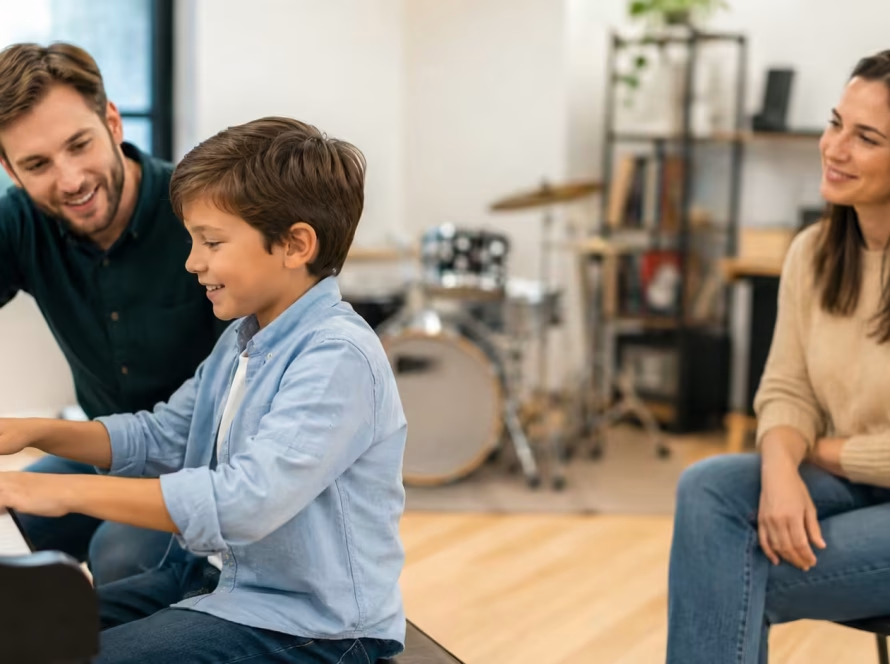
Piano is one of the most beginner-friendly first instruments for kids — but the right choice depends on the child.
Piano for kids
Piano works well for kids because the notes are easy to see and the keyboard explains basic music ideas clearly. It can be challenging for very young children since it requires finger control and both hands working independently. Most kids are ready around age 5–7. Our piano program covers beginners through advanced students.
Violin for kids
Violin works well for kids because it comes in small sizes — some children start as young as four. Violin builds focus, posture, and discipline, but beginners often need more parent support at first because tone takes time to develop. Violin lessons usually start with very short, focused practice sessions.
Guitar for kids
Guitar appeals strongly to kids who want to play songs fast. It also covers many styles, from pop and rock to classical and jazz. Hand size and string pressure matter — young children often need a smaller guitar (3/4 size) and a patient teacher to set up good habits early. Our guitar lessons match the kit and approach to the child's age.
What parents should look at
A good first instrument should match the child's music taste, attention span, hand size, body comfort, and your family's budget and home practice space. Interest and personality matter as much as the instrument itself.
Best Choice for Adults
Adult beginners care most about time, stress relief, and steady progress.
Piano for adults
Piano works very well for adults who want structure and clear progress. A digital keyboard with headphones makes late-night practice easy, even in apartments. It's especially good for adults who want to play full pieces alone — bass, chords, and melody all on one instrument.
Guitar for adults
Guitar is great for adults who want a flexible, casual instrument. Keep it in the living room, pick it up for ten minutes, strum a few chords without much setup. Perfect for adults who want music to fit around a busy life rather than become a major commitment.
Violin for adults
Violin works for adults too, but it suits people who enjoy careful, focused practice and don't mind slow early gains. The first months can feel rough. Adults who push through often fall deeply in love with the instrument's expressive range.
What Music You Can Play on Each
This matters more than most guides admit. If you don't love the music your instrument plays best, you'll quit.
| Instrument | Strongest For | Songwriting Strength |
|---|---|---|
| Piano | Classical, jazz, pop, worship, film music, musical theatre | Harmony & full-song structure |
| Violin | Classical, orchestra, folk, Celtic, chamber music, film scores | Melody & phrasing |
| Guitar | Pop, rock, folk, blues, country, indie, singer-songwriter | Lyrical & chord-driven songs |
Piano is one of the best solo instruments because it handles melody and harmony at the same time. Violin shines in melodic lines and is less common for self-accompanied singing. Guitar is the easiest fit if you want to sing and play at the same time.
Music Theory & Reading Skills

Piano makes music theory visible — steps, intervals, and chords are easy to see on the keyboard.
Piano is strongest for theory
The keyboard makes music theory visible. Steps, intervals, chord shapes — all immediately clear. That's why most music schools and conservatories use piano to teach theory, even to students who play other instruments.
Guitar teaches theory through patterns
Guitar teaches theory through shapes — barre chords, scale boxes, fretboard patterns. These are useful but take longer to "see" than the linear keyboard layout.
Violin builds the strongest ear
Because violin has no frets, players must listen carefully for pitch from day one. That sharpens pitch awareness more than any other instrument. If you want a strong ear, violin gives that benefit early.
Reading music
Piano players read both clefs (treble and bass) and full scores. Violin reads treble clef. Guitar often uses tablature plus chord charts plus standard notation — three systems at once. For the broadest music-reading base, piano leads.
Sound, Feel & Physical Demands

Violin's expressive sound is one of its biggest draws — and one reason students push through the harder start.
Sound character
Piano can fill a room by itself — bass, chords, melody, and inner voices all at once. Violin sounds the closest to the human voice; it's one of the most expressive instruments for pitch shaping, vibrato, and phrasing. Guitar sits close to the body and feels natural for strumming, groove, and singing along.
Physical demands
- Piano: finger independence, relaxed wrists, posture. Lower physical strain at the start than the other two.
- Violin: shoulder support, neck comfort, left-hand precision, right-arm bow control. Most posture adjustment of the three.
- Guitar: finger pressure, finger stretches, both-hand coordination. Most fingertip soreness early — usually clears once callouses build.
Solo, Bands, and Orchestra
Think about where you want your music to live.

Guitar fits naturally into bands, worship teams, and singer-songwriter settings.
- Best for solo playing: Piano. It gives full harmony and melody on one instrument. Guitar is also strong, especially with vocals.
- Best for bands: Guitar fits band life most naturally. Piano works well in many bands, but instrument access matters. Violin appears in some bands and folk groups, less commonly than guitar.
- Best for orchestra and ensemble: Violin clearly wins. It has a major role in orchestras, youth ensembles, and chamber groups. Piano usually plays solo or accompaniment roles.
Which Should You Start With First?
If you might learn more than one instrument later, the choice of first instrument matters even more.
Why many start with piano
Piano builds a broad base. It teaches theory, note reading, and how chords move — all of which transfer to any second instrument you pick up later. Pianists usually find guitar or violin easier to start than vice versa.
Why some start with guitar
If your goal is songs, singing, and quick enjoyment, guitar can be the smarter first choice. Motivation matters more than perfect theory. A guitarist who plays every day will go further than a piano student who quits in three months.
Why some start with violin
If violin is the sound that moves you most, start there. A hard instrument you love beats an easy instrument you don't care about — every time.
How to Choose: 5 Simple Steps
Pick your main goal
Fun? Formal lessons and exams? Singing? Orchestra? Songwriting? Stress relief? Be honest — the answer narrows the field by half.
Set your budget
Instrument cost, lesson cost, accessories, and home space. Budget for the first 12 months — that's where most beginners give up.
Match your music taste
Pop, rock, folk, indie? Guitar fits. Classical, film music, jazz harmony? Piano fits. Lyrical melody and orchestral sound? Violin fits.
Think about home and schedule
Need quiet practice? Digital piano or electric guitar with headphones. Need to travel? Guitar or violin. Need short practice blocks? Piano or guitar.
Try before you decide
A trial lesson can save you months of doubt. Touching all three for 30 minutes each is the fastest way to find the one your hands and ears prefer.

A single trial lesson often answers the question faster than another week of reading reviews.
Final Verdict: Which Is Best?
For the widest range of beginners, piano is the best all-around answer. It's clear, visual, theory-friendly, and strong for solo playing — a great first instrument for both kids and adults.
Guitar wins if you want fast song-playing, easy travel, and a social instrument that pairs naturally with singing.
Violin wins if you care most about expressive melody, classical sound, and the orchestra path.
The truth that matters most: the best instrument is the one you'll keep picking up next week, next month, and next year. A 10-minute daily habit on the "wrong" instrument beats a perfect plan you never start.
Book a free trial lesson and let your hands and ears help you decide. No commitment — just 30 minutes with a teacher who'll match the right instrument to you or your child.
Book a Free Trial Lesson100% free trial • No credit card required
Frequently Asked Questions
Is piano easier than violin and guitar?
For most beginners, yes. Piano gives the clearest first step because the note is already in tune the moment you press a key. You don't need to build callouses, and the layout makes scales and chords easy to see.
Is guitar easier than piano?
At the very start, piano is usually easier. But guitar can feel more rewarding faster because once you know three or four chords, you can strum your way through dozens of real songs.
Why is violin harder at first?
Violin has no frets, so your fingers must find each note by feel and ear. You're also coordinating bow control and pitch at the same time. Tone takes weeks to clean up, even for talented beginners.
Which is cheapest: piano, violin, or guitar?
Usually guitar or a digital keyboard. A beginner acoustic guitar is one of the cheapest entry points. An acoustic piano is the most expensive route. Violin sits in the middle for the instrument itself, but lesson rates can be slightly higher over time.
Which instrument is best for a child?
Piano is a strong general choice because it teaches a broad music foundation. Violin works well for kids drawn to classical sound and willing to be patient. Guitar is great for kids who want to play songs quickly. The child's interest matters more than any of the rankings.
Which instrument is best for adult beginners?
Piano and guitar are usually the strongest adult picks because both give early wins. Piano suits adults who want structure and clear progress. Guitar suits adults who want a flexible, casual instrument. Violin fits adults who are patient and deeply drawn to its sound.
Which instrument is best for music theory?
Piano. The keyboard layout makes scales, chords, and intervals visually clear. Many teachers use piano to teach theory because the patterns are easier to see and play than on guitar or violin.
Which instrument is best for singing along?
Guitar is usually the easiest fit because you can hold it casually, strum chords, and sing at the same time. Piano is also strong for accompanying yourself, but the seated position can feel less natural for singer-songwriter style.
Which instrument is easiest to carry?
Violin is the easiest to carry, with guitar close behind. A piano is the least portable unless you use a small digital keyboard. Portability matters more than people think — a portable instrument tends to get played more often.
Can I learn more than one instrument?
Yes, and many people do. Skills transfer — especially music reading and timing. But starting with one gives better focus. Build real basics on the first instrument before adding a second.