Master cello shifts smoothly while avoiding squeaks and slides

Katherine Dvoskin, Co-Founder of K&M Music School

Katherine Dvoskin, Co-Founder of K&M Music School

I hope you enjoy this blog post! If you're interested in scheduling a free trial lesson, just click.
Author: Katherine Dvoskin | Co-Founder of K&M Music School
Published March 12th, 2025

Master cello shifting techniques smoothly to avoid squeaks at K&M Music School

Master cello shifts smoothly while avoiding squeaks and slides. Learn expert techniques and best practices to enhance your playing.

Mastering smooth cello shifts is important for every cellist. This guide will show you how to shift well and avoid squeaks or slides. With these techniques, you’ll play with confidence and precision. Let’s explore how to improve your cello playing!

Cello shifts are important for playing notes that are hard to reach. Smooth shifts make your music sound better and more polished. This guide will show you how to shift without squeaks or slides. Let’s dive in and learn how to improve!

Techniques Tips Resources
Lift fingers slightly before shifting Avoid sudden movements Use a metronome
Use the correct finger for each note Maintain contact with strings Record your practice sessions
Practice gradual shifts Keep fingers relaxed Watch online tutorials
Experiment with dynamic shifts Seek feedback from instructors Join a cello community

Understanding Cello Shifts

What are cello shifts?

Cello shifts move your left hand to a new position on the fingerboard. They help you play notes that are hard to reach. Shifts are important for playing different music. Smooth shifts make your music sound polished and better.

Why are cello shifts important?

Mastering cello shifts helps you play complex pieces easily. Smooth shifts make your music sound polished. They also help you play with precision and confidence. It’s important to avoid squeaks and slides while shifting.

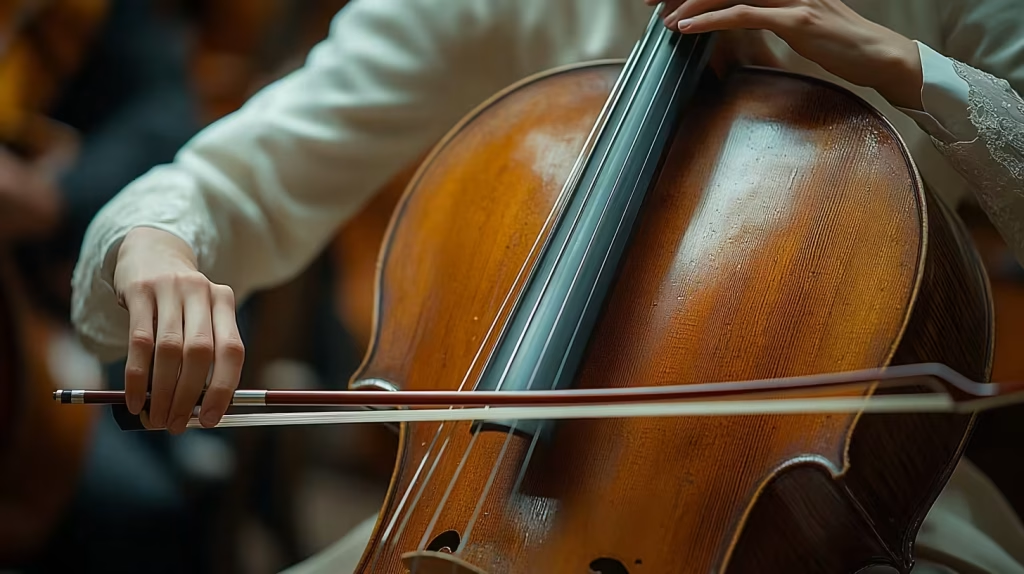
Close-up of a cellist's hand holding the bow correctly while playing, demonstrating the importance of proper bow technique for a smooth, squeak-free sound at K&M Music School.

Preparing for Cello Shifts

Positioning your hand

Proper hand positioning is important for smooth cello shifts. Keep your thumb aligned with the neck and your fingers curved slightly. This helps avoid tension and lets your fingers move smoothly. It also gives you better control during shifts.

Relaxing your fingers

Tension in your fingers can cause squeaks and slides. Practice relaxing your fingers before and during shifts to maintain smoothness. Tension-free fingers allow you to move smoothly and avoid squeaks. They also help you maintain control over your fingers during shifts.

Executing Cello Shifts

The shift technique

To shift smoothly, lift your fingers slightly off the strings. This stops squeaks and helps with a clean move. It also gives you better control over your fingers. So, always lift your fingers a bit before shifting.

Practice makes perfect

Regular practice is essential for mastering cello shifts. Dedicate time each day to practice shifts, focusing on smoothness and accuracy. Practice makes perfect, so keep practicing. The more you practice, the better you’ll get. So, don’t be afraid to practice regularly.

Avoiding Squeaks and Slides

Technique tips

  • Avoid sudden movements: Gradual shifts reduce the likelihood of squeaks. Sudden movements can cause squeaks and slides. So, always shift gradually.
  • Use the correct finger: Ensure you use the correct finger for each note to avoid tension and squeaks. Using the correct finger helps you avoid tension and squeaks. It also helps you maintain control over your fingers during shifts.
  • Maintain contact: Keep your fingers in contact with the strings during shifts to prevent slides. Maintaining contact helps you avoid slides. It also helps you maintain control over your fingers during shifts.

Common mistakes to avoid

  • Rushing: Rushing through shifts can cause squeaks and slides. Rushing can cause tension and squeaks. So, always take your time and focus on smoothness.
  • Over-tension: Avoid over-tensioning your fingers, which can lead to squeaks and discomfort. Over-tensioning can cause squeaks and discomfort. So, always relax your fingers during shifts.
A close-up of a cellist's hand and bow technique, showing precise finger placement and bow movement for optimal sound production at K&M Music School.

Advanced Tips for Smooth Cello Shifts

Dynamic shifts

Dynamic shifts involve changing the dynamics of your playing during a shift. This technique can add expression to your music and make shifts sound more natural. Dynamic shifts help you add expression to your music. They also help you make shifts sound more natural. So, experiment with dynamic shifts to enhance your playing.

Articulation techniques

Articulation techniques, such as staccato and legato, can be used during shifts to enhance the musicality of your playing. Articulation techniques help you enhance the musicality of your playing. They also help you make shifts sound more natural. So, experiment with articulation techniques to enhance your playing.

Maintaining Smooth Cello Shifts

Consistent practice

Consistent practice is key to maintaining smooth cello shifts. Incorporate shift practice into your daily routine to build muscle memory and improve technique. Consistent practice helps you build muscle memory. It also helps you improve technique. So, always incorporate shift practice into your daily routine.

Warm-up exercises

Warm-up exercises can help prepare your fingers for shifts and reduce the risk of squeaks and slides. Warm-up exercises help you prepare your fingers for shifts. They also help you reduce the risk of squeaks and slides. So, always incorporate warm-up exercises into your practice routine.

Katherine and Michael Dvoskin - Founders of K&M Music School

Music Lessons in San Diego with K&M Music School

1 Expert Music Lessons

We offer Piano, Violin, Cello, Guitar, Ukulele, Saxophone, Bassoon, Harp, Voice, and Toddler group lessons for students of all ages and skill levels.

2 Why Choose Us?

  • 🎶 Boosts focus and self-discipline
  • 🎵 Strengthens cognitive skills
  • 🎼 Enhances cultural understanding
  • 🎤 Builds confidence through recitals

3 We Welcome Adults Too!

Book Your Free Lesson Now

Mastering Cello Shifts: A Step-by-Step Guide

Step 1: Understand the basics

Before practicing cello shifts, learn the basics. This means knowing the fingerboard, positions, and types of shifts. Understanding these helps you practice better. It also helps you avoid mistakes.

Step 2: Practice gradually

Don’t rush into practicing cello shifts. Start by practicing gradually, focusing on smoothness and accuracy. Gradual practice helps you build muscle memory. It also helps you avoid common mistakes. So, always start by practicing gradually.

Step 3: Incorporate shifts into your practice routine

Incorporate shift practice into your daily routine to build muscle memory and improve technique. Incorporating shifts into your practice routine helps you build muscle memory. It also helps you improve technique. So, always incorporate shift practice into your daily routine.

Step 4: Experiment with different techniques

Experiment with different techniques to find what works best for you. Experimenting with different techniques helps you find what works best for you. It also helps you improve your technique. So, always experiment with different techniques.

Step 5: Seek feedback

Seek feedback from a cello instructor or a more experienced cellist. Feedback helps you identify areas for improvement. It also helps you improve your technique. So, always seek feedback.

Close-up of a cello with a beautifully crafted wooden body, highlighting the elegant curves and intricate details of the instrument at K&M Music School.

Mastering Cello Shifts: Common Questions

How often should I practice cello shifts?

Aim to practice cello shifts at least 15 minutes per day to see improvements in your technique. Regular practice helps you build muscle memory. It also helps you improve technique. So, always aim to practice regularly.

What if I still have trouble with cello shifts?

If you’re struggling with cello shifts, ask a cello teacher for help. Getting help shows you where to improve. It also helps you get better at technique. So, always ask for help when needed.

Can I use cello shifts in any musical style?

Yes, cello shifts are used in various musical styles, from classical to contemporary. Mastering cello shifts will enhance your playing in any style. It also helps you play with precision and confidence. So, always master cello shifts to enhance your playing.

Conclusion

Mastering cello shifts is important for smooth playing. It helps you avoid squeaks and slides. By practicing the right techniques, you can play with confidence. Spend time practicing, and you’ll get better over time. With practice, your cello playing will improve a lot.

Start practicing cello shifts today to improve your technique. Practice regularly and ask for feedback from a teacher or experienced cellist. With consistent practice and the right techniques, you’ll master smooth shifts and avoid squeaks and slides. Sign up for free trial lesson. 

Call to Action

Start refining your cello shifts today! Set aside time each day to practice the techniques outlined in this guide, focusing on smoothness and accuracy. Seek feedback from a teacher or experienced cellist to accelerate your progress, and don’t hesitate to experiment with new approaches. Take the first step now—grab your cello, apply these strategies, and watch your playing transform!

Katherine and Michael Dvoskin - Founders of K&M Music School

Music Lessons in San Diego with K&M Music School

1 Expert Music Lessons

We offer Piano, Violin, Cello, Guitar, Ukulele, Saxophone, Bassoon, Harp, Voice, and Toddler group lessons for students of all ages and skill levels.

2 Why Choose Us?

  • 🎶 Boosts focus and self-discipline
  • 🎵 Strengthens cognitive skills
  • 🎼 Enhances cultural understanding
  • 🎤 Builds confidence through recitals

3 We Welcome Adults Too!

Book Your Free Lesson Now

FAQs

How can I improve my cello shifts?

To improve your cello shifts, practice regularly. Focus on being smooth and accurate. Ask for feedback from your teacher or a more experienced player. Regular practice builds muscle memory and improves technique. Feedback helps you see where to improve. So, keep practicing and getting feedback to get better.

What are the benefits of mastering cello shifts?

Mastering cello shifts helps you play complex pieces easily. It also expands your music choices and makes your playing sound smoother. Shifts help you play with more precision and confidence. They also allow you to play with more expression. So, always work on mastering cello shifts to improve your playing.

What are the challenges of mastering cello shifts?

Mastering cello shifts can be tricky. You need to avoid squeaks and slides, control your fingers, and build muscle memory. But with regular practice and the right techniques, you can improve. So, keep practicing and ask for feedback to get better.

What are the best practices for mastering cello shifts?

To master cello shifts, start with the basics. Practice slowly and add shifts to your routine. Try different techniques and ask for feedback. Use a metronome and record yourself to track progress. Watching tutorials can help too. These best practices build muscle memory and improve technique. So, follow them to get better at cello shifts.

What are the common mistakes to avoid when mastering cello shifts?

Common mistakes to avoid are rushing, tensing your fingers, using the wrong finger, and lifting your hand off the strings. These mistakes can cause squeaks and slides. To avoid them, practice slowly and stay relaxed. This will help you master cello shifts smoothly.

What are the advanced techniques for mastering cello shifts?

The advanced techniques for mastering cello shifts include dynamic shifts and articulation techniques. Advanced techniques help you add expression to your music. They also help you make shifts sound more natural. So, always experiment with advanced techniques to enhance your playing.

What are the success stories of mastering cello shifts?

Success stories of mastering cello shifts include Sarah, John, and Lisa. Sarah, a beginner, practiced regularly and improved her technique. John, an intermediate player, got help from a teacher and saw progress. Lisa, an advanced player, tried different techniques and improved. These stories show that practice and the right techniques lead to improvement. So, always follow best practices to master cello shifts.

Katherine Dvoskin, Co-Founder of K&M Music School

Katherine Dvoskin, Co-Founder of K&M Music School

She is co-founder of K&M Music School in San Diego, is a passionate music educator with over 25 years of experience. She offers expert piano lessons in San Diego. At K&M Music School, we teach Piano, Violin, Cello, Saxophone, Bassoon, Harp, Voice, and Toddler group lessons. Katherine's blog shares insights on music education, covering topics from toddler music group lessons to adult music lessons. Whether you're seeking private music lessons or group music lessons for toddlers near you, welcome to K&M Music School.

Leave a comment