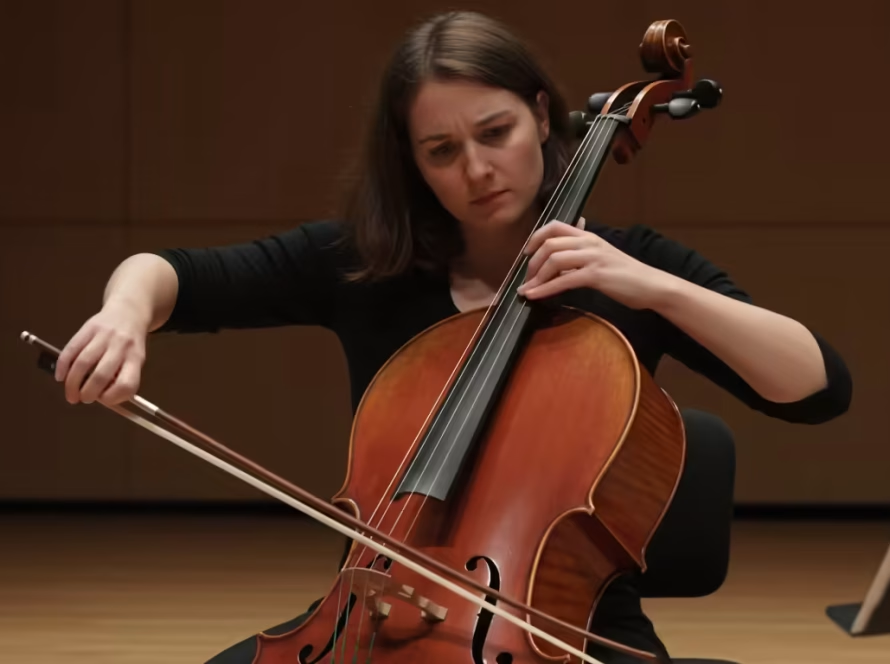
For generations, musicians and listeners have been charmed by the cello’s versatility and exquisite sound. Its resonant and warm tones can evoke a wide range of emotions, from sorrowful to joyful, and its ability to harmonize with other string instruments makes it an essential component of any string ensemble.
Nevertheless, mastering the cello requires a solid grasp of music theory and technique, as well as extensive practice. Yet, for those who are committed to investing their time and energy, the benefits are significant.
Mastering the cello requires a thorough understanding of both technique and music theory. Achieving a clear, resonant tone demands meticulous attention to posture, bowing technique, and hand placement, all of which necessitate diligent practice. Moreover, students must possess a discerning ear to achieve intonation, a skill that is especially challenging on the cello.
Alongside technique, a fundamental grasp of music theory is essential for cello students. They must learn to read sheet music and comprehend subtleties like dynamics, phrasing, and tempo. Additionally, they must develop their knowledge of theoretical concepts such as chord progressions, scales, and harmony. With this knowledge, they can perform with precision and interpret music with greater expression.
The cello is an incredibly satisfying instrument to play, despite the challenges that come with it. Its versatility makes it perfect for playing in various contexts, from an orchestral setting to a solo performance. Mastering the cello takes dedication and perseverance, but the rewards are unmatched.
To excel at playing the cello, one must be committed to regular lessons and consistent practice. Weekly lessons provide a structured approach to learning and offer valuable feedback from a teacher. Consistent practice is crucial for developing muscle memory and skills necessary to play the cello proficiently.
Effective practice requires focus on proper technique and intonation. Short, frequent practice sessions are more effective than occasional long ones, with the length and complexity of sessions gradually increasing as skills develop.
In addition to lessons and practice, listening to and studying recordings of great cellists can be beneficial. This provides inspiration and guidance for developing one’s own style and interpretation.
Learning the cello is a journey, and progress may not always be straightforward. It is important to approach the instrument with patience and perseverance, celebrating achievements and learning from mistakes. Dedication and hard work are key to mastering the cello and experiencing the joy of making music with this beautiful instrument.
Enroll in Lessons with a Trained, Experienced Teacher
Choosing the right cello teacher is essential for the success and enjoyment of learning the instrument. A qualified teacher who is patient and compatible with the student’s personality can make a significant difference in their progress.
A professionally trained cello teacher should possess a deep understanding of classical music and cello techniques, including hand position, intonation, and bowing technique. Moreover, they should be knowledgeable in music theory and able to teach sheet music reading, musical notation, and phrasing interpretation.
Performance experience is also crucial for a cello teacher. Such experience can provide valuable guidance on techniques and interpretations, preparing students for performances and auditions.
A cello teacher should have a broad music education, including music history, theory, and composition, and exposure to various musical genres and styles. This enables them to inspire and guide students to explore new creative avenues and appreciate music more profoundly.
Selecting the right-sized cello is critical for younger students, and a trained cello teacher can help in this aspect. Additionally, they can advise adult students on selecting a quality instrument suitable for their budget and experience level.
Private cello lessons offer several benefits, including personalized guidance, individualized feedback, effective practice strategies, and performance opportunities. Through effective instruction and guidance from a skilled and experienced cello teacher, students can progress in their studies and develop a lifelong passion for music.
Grasp Basic Cello Fundamentals
Learning to play a string instrument like the cello, requires mastering a number of fundamental elements that are essential for producing a clear and resonant sound. Two of the most important of these elements are tuning and bow care.
Tuning is a crucial aspect of cello playing, as it ensures that the instrument produces the correct pitch and is in tune with other instruments in an ensemble. A cello teacher can teach students how to tune their instrument correctly, using tuning pegs or fine tuners to adjust the pitch of each string. This requires careful listening and attention to detail, as even a slight variation in pitch can significantly affect the sound of the instrument.
Indeed, tuning is an ongoing challenge that cello players face, regardless of their level of experience. The tuning process involves adjusting the tension of the strings to produce the correct pitch, and this requires a keen ear and a steady hand. For beginners, it can be particularly challenging to use fine tuners and pegs effectively to achieve the correct pitch. However, with regular practice and guidance from a skilled teacher, students can gradually become more confident in their tuning abilities.
A cello teacher can provide students with exercises and techniques to help them develop their tuning skills. For example, they may recommend using a tuning app or a tuning fork to help students train their ears to recognize the correct pitch. They may also suggest specific exercises that focus on intonation, such as playing scales or arpeggios and checking the pitch with a tuner or other reference tool.
As students progress in their cello studies, they may encounter additional challenges with tuning, such as tuning the cello in different keys or adjusting the tuning for playing different contexts, such as playing with an orchestra or in a chamber ensemble. A teacher can help students navigate these challenges and develop the skills needed to tune their instruments effectively in a variety of settings.
Overall, tuning is an essential skill for any cello player, and it requires patience, practice, and a willingness to learn from mistakes. With the guidance of a skilled cello teacher, students can develop their tuning abilities and build a strong foundation for their cello studies.
Proper bow care is also essential for producing a good sound on the cello. The bow is responsible for producing the vibration that creates the sound, and therefore it must be handled carefully and maintained properly. A cello teacher can teach students how to dominate their bow correctly, ensuring that it grips the strings and produces a clear and resonant sound. They can also teach students how to care for their bow, such as cleaning and repairing it when necessary, so that it remains in good condition and produces a consistent sound over time.
One of the key aspects of bow care is rosin, which is a resinous substance that is applied to the bow hair to create friction with the strings. Rosin helps the bow grip the strings more effectively, which produces a clearer and more resonant sound. However, applying rosin properly requires careful attention to technique and consistency.
A cello teacher can provide students with guidance on how to rosin their bow correctly, including the amount of rosin to use, how often to apply it, and how to apply it evenly to the bow hair. They can also teach students how to properly tighten and loosen the bow, which is another crucial aspect of bow care. The tension of the bow affects the sound that it produces, and students must learn how to adjust the tension to achieve the desired sound.
In addition to these basic steps, cello students will also need to learn proper hand positioning and bowing technique to produce a good sound on the instrument. A teacher can provide students with exercises and techniques to develop these skills, such as practicing scales, arpeggios, and other exercises that focus on hand position, bowing technique, and tone production.
Learning to play the cello requires a dedicated commitment to mastering the fundamental elements of the instrument, including tuning, bow care, and proper hand positioning and bowing technique. With regular practice and guidance from a skilled teacher, students can develop the skills and confidence needed to become accomplished cello players.
Furthermore, cello students will also need to learn proper hand position, bowing technique, and finger placement, as well as develop a strong understanding of music theory and notation. With dedicated practice and the guidance of a skilled cello teacher, students can gradually master these elements and develop the skills and confidence needed to become accomplished cello players.
Learn to Read and Interpret Music
Reading music is an indispensable skill that is necessary for anyone who wants to play the cello effectively. While there are many fantastic pieces of music written for the cello, students will be unable to explore them without a good understanding of music theory, including notes, rhythms, and notation specific to string instruments.
Beginner students usually start with learning to read essential note values in bass clef, which is the most common clef used for cello music. As they progress, they will also learn to read tenor and some treble clef notes.


They will practice counting simple note values like quarter notes and half notes and eventually progress to more complex rhythms like triplets and sixteenth notes.

Learning to read music can seem overwhelming at first, but an experienced cello teacher can guide students through each step, ensuring that they accomplish small goals each week until they become fluent and natural at reading music. The teacher will also teach students how to identify and interpret musical notation and symbols, including articulation, dynamics, and expression markings.
In addition, to note reading and music theory, cello students will also need to develop a good ear for intonation, which refers to pitch accuracy. The cello is an instrument that requires careful attention to intonation, and students will need to learn how to hear and adjust their pitch to produce a clear and in-tune sound.
Overall, learning to read music is a vital aspect of playing the cello, and it requires practice, dedication, and patience. However, with the guidance of an experienced cello teacher, students can develop the skills and confidence needed to master this essential skill and explore the vast repertoire of music written for the cello.
Achieve the Technical Skills Needed for Playing Cello
Playing the cello is not only a physical experience but also a mental one. Cello students must be highly attentive and focused while playing, as they must listen to the notes they produce and adjust their playing to maintain a consistent and accurate sound. This requires both concentration and a critical ear.
In addition to mental focus, playing the cello also demands a high degree of physical control and coordination. Proper posture is essential to produce a good tone and prevent injury. Cello players need to maintain a straight back, relaxed shoulders, and a balanced stance to distribute weight evenly and allow for free movement of the arms and hands.
The left hand, which controls the fingerboard, must also have considerable finger dexterity to place the fingers precisely on the strings and execute accurate intonation. The proper finger placement on the strings is crucial to create clear and resonant tones that are in tune. This requires careful attention to the spacing between fingers and the use of muscle memory to play consistently.
Meanwhile, the right hand holds the bow, which is an essential element in producing a cello’s characteristic sound. The bow must be held with the right amount of tension to create a clear and consistent tone. The bowing technique involves using the full length of the bow and adjusting bow pressure, and bow speed to create different dynamic levels and articulations. The proper bowing technique is critical to creating the cello’s expressive and nuanced sound.
Overall, playing the cello is a challenging yet rewarding endeavor that requires dedication and commitment to master. With consistent practice and guidance from an experienced teacher, students can develop the skills and abilities necessary to play with confidence and expressiveness. Despite the challenges, the rich and warm tones of the cello make it an instrument well worth the effort to learn.
Concluding Thoughts
The journey of learning the cello is a complex one that presents both physical and intellectual challenges. However, the benefits of becoming proficient at such an instrument are considerable. By receiving instruction from an experienced teacher, practicing diligently, and having genuine dedication, students can develop the necessary skills and techniques to produce exquisite music.
Playing the cello necessitates physical and mental discipline. Students must maintain good posture and equilibrium while managing the agility needed to execute finger placements and bow techniques. The synchronization between the left and right hands is crucial in generating a lucid, precise, and expressive sound.
Moreover, students must also engage with the intellectual aspects of music theory, including notation, rhythm, and dynamics. These elements allow students to read music and produce a musical interpretation that expresses their unique voice through the instrument.
Nevertheless, with persistent practice and the support of an erudite teacher, students can overcome these difficulties and experience the joy of creating beautiful music. The cello’s exceptional and enthralling sound is well worth the hard work and commitment required to master the instrument.