
Is a $5,000 Violin Actually Worth It for Students?

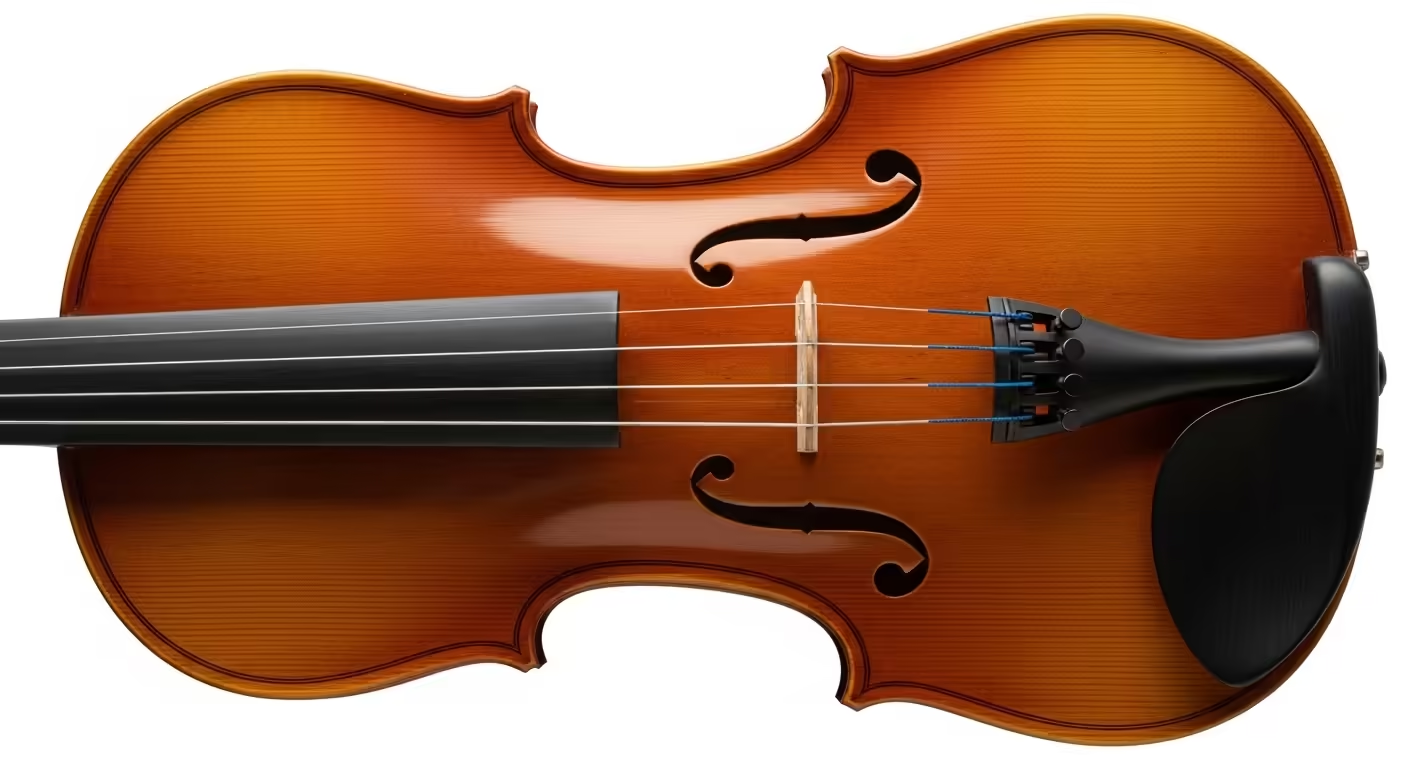
You're standing in a music shop, staring at price tags that range from $300 to $5,000. Your child has been playing violin for a few years now. The teacher mentioned upgrading. But is spending $5,000 on a student violin smart or just throwing money away?
Not every student needs an expensive violin. However, some students really do benefit from an upgrade. The goal is to figure out what your student needs right now. This comprehensive guide will answer every question you have about student violin investments, from sound quality to resale value.

Table of Contents
Understanding Violin Price Ranges

Student violins come in several price categories. Each category serves different skill levels. Understanding these tiers is crucial to avoiding overspending.
Entry Level ($200 - $500)
Factory-made with laminated wood. Good for the first 1-2 years. Focus is on durability, not tone. If your child just started, this is where you should be.
Intermediate ($500 - $2,000)
Better construction with solid carved wood tops. Ideal for committed students (Years 2-4). Noticeable sound improvement over entry models.
Advanced ($2,000 - $5,000)
Hand-carved elements, premium aged tonewoods, and professional setup. This is where serious students invest for high school, youth orchestra, or pre-college play.
Answer 3 quick questions to get a personalized recommendation.
1. How long has the student been playing?
The Real Difference: $500 vs. $5,000

The price isn't just about the label. It changes how the instrument behaves under the bow.
| Feature | $500 Beginner Violin | $5,000 Advanced Violin |
|---|---|---|
| Materials | Laminated or basic wood | Aged European Tonewoods |
| Sound Projection | 10–15 feet (Living Room) | 30–50 feet (Concert Hall) |
| Response Time | Slight delay / resistance | Instant, effortless sound |
| Tone Color | Simple, sometimes nasal | Complex, warm, rich overtones |
| Sustain | Notes fade quickly (2 sec) | Notes ring long (4-6 sec) |
Real Stories: When It Worked & When It Failed
Buying an instrument is a huge decision. Here are two real-world scenarios to help you see where you fit.
✅ Success Story: The College Bound Musician
Student: Sarah, High School Junior (8 years experience).
Situation: She practiced 90 minutes daily and played in the top regional youth orchestra. She planned to audition for university music programs.
Outcome: Her parents invested in a $5,000 violin. The improved projection and dynamic range allowed her to ace her auditions. She was accepted into three top music programs. The instrument was a necessary tool for her career path.
❌ Cautionary Tale: The Impulse Purchase
Student: David, Sophomore (4 years experience).
Situation: David practiced sporadically (30 mins, 3 times a week). His parents heard a soloist and impulsively bought a $5,000 violin to "motivate" him.
Outcome: The expensive violin sat mostly unused. David felt guilty but wasn't motivated to practice more. The family stretched their budget for an instrument that didn't match his commitment level. A $1,500 intermediate violin would have been a smarter choice.
The Hidden Costs of Ownership
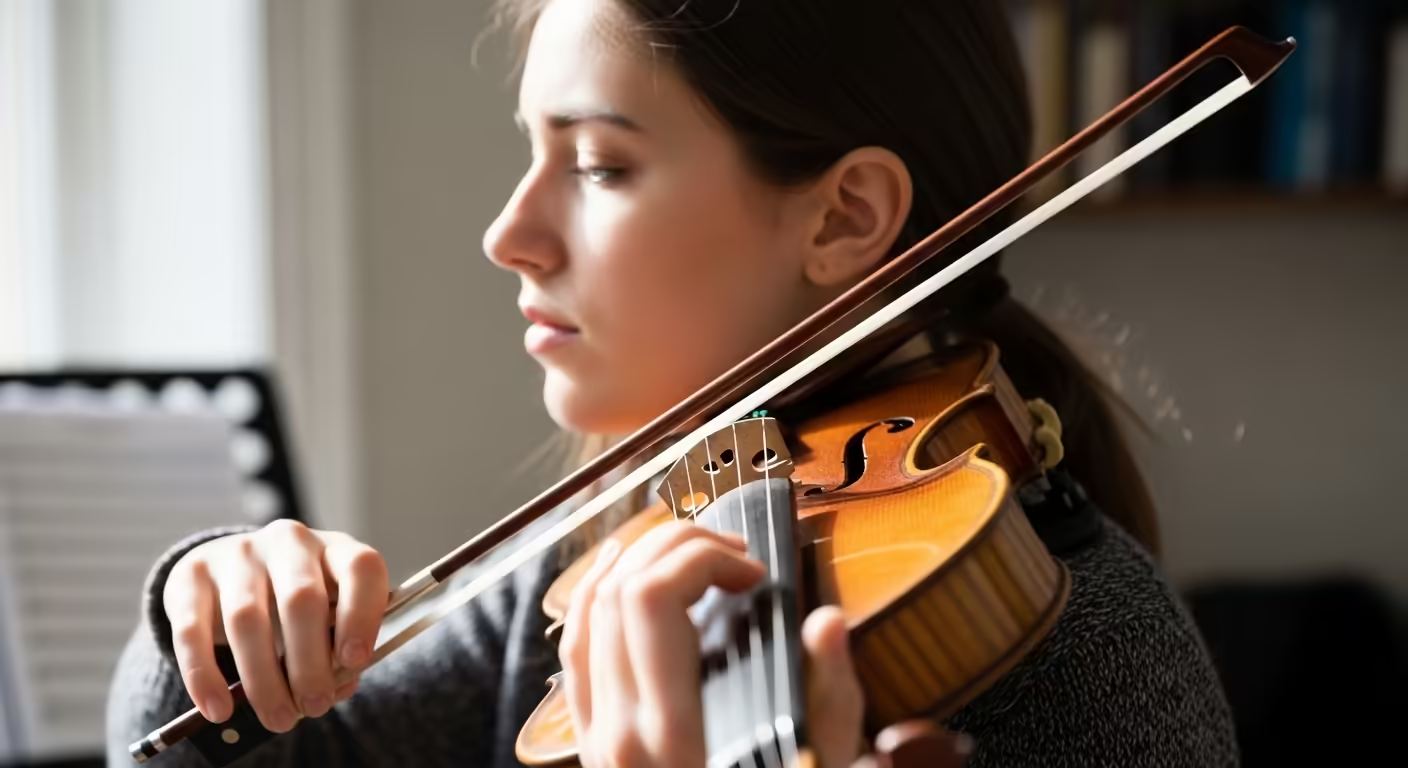
Budgeting $5,000 isn't enough. You need to account for the ecosystem around a fine instrument. A professional violin requires professional accessories.
- The Bow ($300 - $1,500): A cheap bow on a great violin is like bad tires on a Ferrari. It limits what the instrument can do.
- The Case ($100 - $400): You need a hard shell with humidity control to protect the wood from cracking.
- Insurance ($100 - $300/year): Specialized instrument insurance is essential. Homeowner's insurance often has high deductibles or doesn't cover accidents outside the home.
- Maintenance ($100 - $200/year): Expect annual luthier checkups, bridge adjustments, and professional string replacements.
Alternatives to Buying New
Rent-to-Own: Many shops let you apply rental credit toward a purchase. This lowers risk if the student quits.
The Used Market: A used violin often sounds better because the wood has aged and opened up. You can often find $5,000 quality for $3,500 if you shop carefully and have a teacher inspect it.
Step-by-Step Decision Guide

Never buy the first violin you see. Follow this framework to ensure you make the right choice:
1. Ask the Teacher: Your teacher knows your student's potential best. If they say "wait," believe them. Our faculty members guide parents through this process regularly.
2. The 5-Violin Rule: Test at least 5 different instruments in your price range. Each one has a unique personality.
3. Blind Test: Have someone else play the violins while you and the student listen with your eyes closed. Pick the one that sounds best, not the one with the best label.
Frequently Asked Questions
Will a $5,000 violin increase in value?
Does my child need a full-size violin first?
Can a beginner sound good on an expensive violin?
Final Verdict
A $5,000 violin is worth it only if the student has advanced skills, consistent practice habits, and long-term goals. For everyone else, a $1,500 intermediate violin is the smarter choice.
If you aren't sure, wait. Let the student's skill outgrow their current instrument before you buy the next one.
Katherine Dvoskin, Co-Founder of K&M Music School
Katherine Dvoskin, Co-Founder of K&M Music School in San Diego, is a passionate music educator with over 25 years of experience. She offers expert piano lessons in San Diego. At K&M Music School, we teach Piano, Violin, Cello, Saxophone, Bassoon, Harp, Voice, and Toddler group lessons. Katherine's blog shares insights on music education, covering topics from toddler music group lessons to adult music lessons. Whether you're seeking private music lessons or group music lessons for toddlers near you, welcome to K&M Music School.

