How to Play the Electric Guitar for Beginners

Katherine Dvoskin, Co-Founder of K&M Music School
I hope you enjoy this blog post! If you're interested in scheduling a free trial lesson, just click.
Author: Katherine Dvoskin | Co-Founder of K&M Music School
Published April 8th, 2025
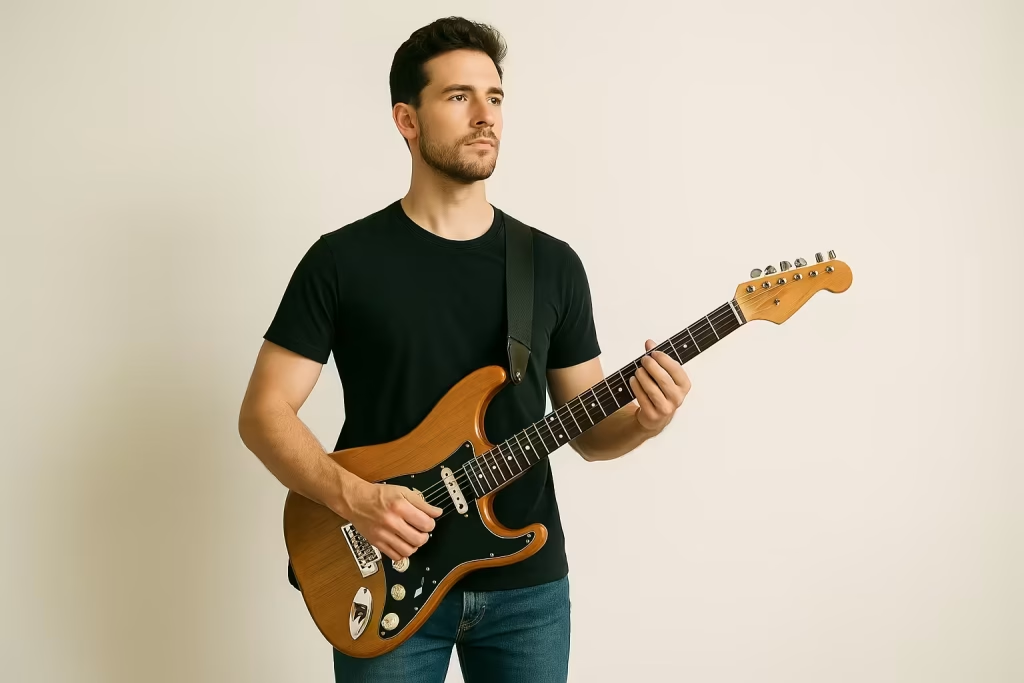
Want to learn the electric guitar but don’t know where to start? This guide will help you choose your first guitar and play your first songs. You'll learn key techniques, practice tips, and mistakes to avoid. Whether you want to play rock, blues, or pop, these basics will get you started right away.
Learning to play the electric guitar opens up many musical possibilities. It's a versatile instrument that works for many genres and styles. This guide will teach you the basics, from the parts of the guitar to playing your first songs. By practicing regularly, you'll build a strong foundation for your guitar journey.
For additional tutorials and comprehensive reviews on the latest guitar equipment, Guitar Chalk is an excellent resource for budding musicians.
| Getting Started | Basic Skills | First Steps to Success |
|---|---|---|
| Squier Affinity - Budget-friendly Fender-style guitars perfect for beginners | Learn proper posture and hand position to avoid injuries | Practice 15-30 minutes daily for steady progress |
| Epiphone Les Paul - Classic design with humbuckers for rock and blues | Master essential power chords to play countless songs | Start with simple riffs and songs to build confidence |
| Yamaha Pacifica - Well-built guitars with great value for money | Develop finger strength through basic exercises | Use a metronome to improve timing and rhythm |
| Ibanez GIO - Lighter necks ideal for smaller hands and beginners | Learn standard tuning (E-A-D-G-B-E) for most rock and pop songs | Record yourself practicing to track improvement |
| Boss Katana - Versatile practice amp with built-in effects | Focus on clean transitions between basic chord shapes | Join online communities for feedback and motivation |

Music Lessons in San Diego with K&M Music School
1 Expert Music Lessons
We offer Piano, Violin, Cello, Guitar, Ukulele, Saxophone, Bassoon, Harp, Voice, and Toddler group lessons for students of all ages and skill levels.
2 Why Choose Us?
- 🎶 Boosts focus and self-discipline
- 🎵 Strengthens cognitive skills
- 🎼 Enhances cultural understanding
- 🎤 Builds confidence through recitals
3 We Welcome Adults Too!
Introduction to Electric Guitar for Beginners
The electric guitar has changed modern music and attracts new players every day. Unlike acoustic guitars, electric guitars need an amplifier to make sound. This gives them more tone options and control over volume. For beginners, electric guitars can be easier to play. They have lighter strings and thinner necks than acoustic guitars.
Starting to play the electric guitar may seem hard, but it's not if you follow the right steps. This guide will help you pick your first guitar, learn the basics, and set up a practice routine. After that, you'll be ready to play with confidence.
Understanding the Electric Guitar
What is an Electric Guitar?
An electric guitar is a string instrument. It uses pickups to turn string vibrations into electrical signals. These signals go to an amplifier, which makes the sound. Unlike acoustic guitars, electric guitars need an amplifier to make sound. This gives electric guitars their unique sound.
Electric guitars are used in many music styles, like rock, blues, metal, pop, and jazz. They can make different sounds with amplification and effects. Understanding how your guitar works helps you play better and enjoy it more.
Parts of an Electric Guitar
Before you start playing the electric guitar, it’s essential to know its main parts.
- Body: The main part of the guitar, which comes in various shapes and sizes
- Neck: The long wooden piece attached to the body where you press the strings
- Headstock: Located at the end of the neck, it holds the tuning pegs
- Tuning Pegs: Used to adjust string tension and tune the guitar
- Fretboard: The surface of the neck where you press strings to create notes
- Frets: Metal strips embedded in the fretboard that divide it into semitones
- Pickups: Electromagnetic devices that capture string vibrations
- Bridge: Where strings are anchored to the body
- Control Knobs: Adjust volume and tone
- Pickup Selector: Switches between different pickups for varied sounds
- Output Jack: Where you plug in your guitar cable to connect to an amplifier
- Strap Buttons: Attachment points for a guitar strap

Getting Started: Essential Equipment
Choosing Your First Electric Guitar
When learning the electric guitar, picking the right one is important. Here are things to consider:
- Budget: Quality beginner guitars typically cost between $200 $ 400
- Body Style: Different styles suit different music and body types
- Stratocaster-style: Versatile, comfortable, good for rock/blues/pop
- Les Paul-style: Thicker sound, good for rock/metal
- Telecaster-style: Bright sound, good for country/rock
- Neck Profile: Thinner necks are easier for beginners with smaller hands
- Pickups: Single-coil (brighter sound) vs. humbucker (fuller, warmer sound)
- Weight: Lighter guitars are more comfortable for longer practice sessions
- Setup: Proper setup makes playing easier (string height, intonation)
Recommended beginner electric guitars:
- Squier Affinity Series (Stratocaster or Telecaster)
- Epiphone Les Paul or SG models
- Yamaha Pacifica 112V
- Ibanez GIO series
- Jackson JS series
If you're not sure which guitar to pick, our beginner guide can help. It will show you how to choose based on your likes and music goals.
Amplifiers and Basic Equipment
To start playing the electric guitar, you'll need:
- Amplifier: A small practice amp (10-20 watts) is perfect for beginners
- Digital modeling amps offer various sounds and built-in effects
- Look for headphone outputs for quiet practice
- Many modern amps include USB connectivity for recording
- Essential Accessories:
- Guitar cable: To connect your guitar to the amp
- Guitar picks: Medium thickness (0.60-0.80mm) is a good starting point
- Guitar strap: Even if you mostly play sitting down
- Electronic tuner: Clip-on or pedal tuners are convenient
- Extra strings: Always have a spare set (light gauge recommended for beginners)
- Guitar stand: Keeps your guitar safe and accessible
- Gig bag or case: Protects your guitar when not in use
- Optional but Useful:
- Capo: Changes the key without changing fingerings
- String winder: Makes string changes faster
- Metronome: Helps develop timing (many free apps available)
- Guitar learning resources: Books, online courses, or lessons

Basic Electric Guitar Techniques
How to Hold an Electric Guitar
Good posture is important when learning the electric guitar. It helps you avoid injury. It also makes playing easier and more efficient.
Sitting Position:
- Sit in a chair without arms
- Rest the guitar on your dominant leg
- Keep your back straight
- Position the neck at about a 45-degree angle
- Your fretting arm should be relaxed, with a slight bend at the elbow
Standing Position:
- Use a guitar strap adjusted to a comfortable height
- The guitar should sit at roughly the same position as when sitting
- Practice in front of a mirror to check your posture
- Avoid hunching over to see the fretboard
Hand Positioning:
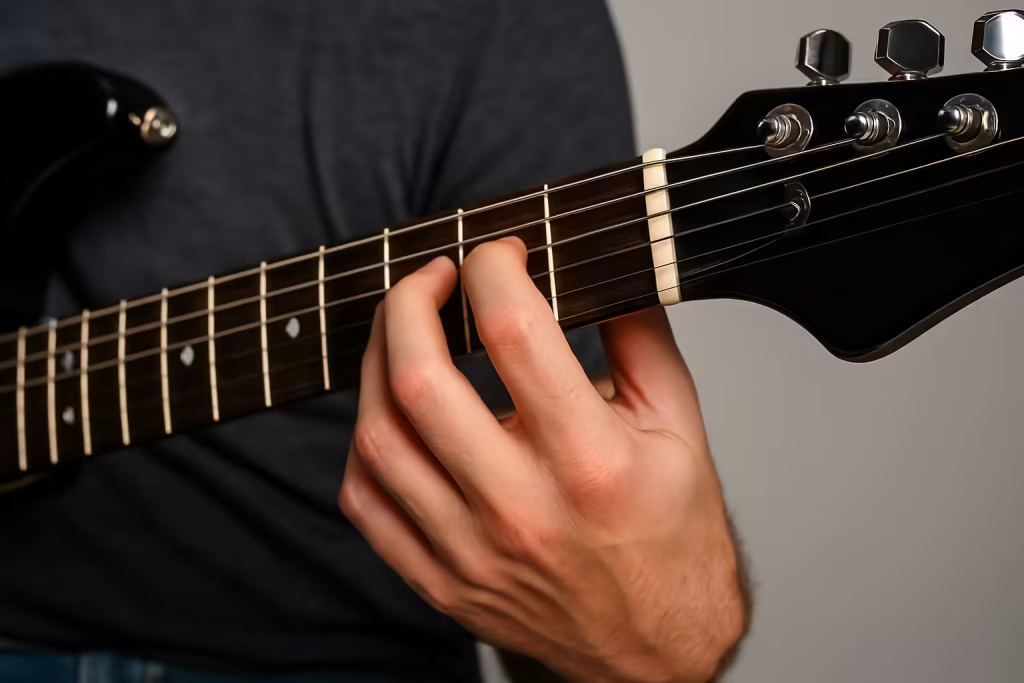
- Fretting Hand: Thumb rests behind the neck, fingers curved like holding a ball
- Picking Hand: Positioned over the strings near the pickups
- Keep wrists relatively straight to avoid strain
Tuning Your Electric Guitar
Websites like Ultimate Guitar, Songsterr, and Guitar Tab Universe have song tabs. You can use them to learn songs easily.
Using an Electronic Tuner:
- Clip-on tuners attach to your headstock and detect vibrations
- Pedal tuners connect to your guitar via a cable
- Smartphone apps can also work in quiet environments
Tuning Process:
- Pluck one string at a time
- Watch the tuner display and adjust accordingly
- Tune up to the note (tighten) rather than down when possible
- Check tuning frequently during practice
String Names and Notes:
- 6th string (thickest): E (lowest pitch)
- 5th string: A
- 4th string: D
- 3rd string: G
- 2nd string: B
- 1st string (thinnest): E (highest pitch)
Basic Fretting Technique
When learning to play the electric guitar, proper fretting technique is crucial:
Finger Placement:
- Press strings with fingertips, not the flat part of your fingers
- Place fingers just behind the fret (not on top of it)
- Apply just enough pressure to get a clear sound
- Keep fingers arched, not flat against the fretboard
Left Hand Position:
- Thumb positioned behind the neck for support
- Wrist slightly bent but not excessively
- Fingers hovering close to the strings, ready to play
Common Challenges:
- Finger pain is normal at first; calluses will develop
- Hand fatigue improves with practice
- Start with short practice sessions and gradually increase duration
Finger Numbering:
- Index finger = 1
- Middle finger = 2
- Ring finger = 3
- Pinky = 4
Our beginner guitar lessons explain these techniques clearly. They also include helpful visual guides to help you develop the right form from the start.
Picking and Strumming Basics
For beginners learning electric guitar, mastering these picking techniques is essential:
Holding the Pick:
- Hold between the pad of your thumb and the side of your index finger
- Only a small portion of the pick (about 1/4 inch) should extend beyond your fingers
- Grip firmly but not too tightly
Basic Picking Techniques:
- Downstrokes: Moving the pick downward across the strings
- Upstrokes: Moving the pick upward across the strings
- Alternate picking: Alternating between down and upstrokes (down-up-down-up)
Picking Position:
- Picking near the bridge produces a brighter, more defined tone
- Picking near the neck gives a warmer, rounder sound
- Most players pick somewhere between the bridge and neck pickups
Developing Accuracy:
- Start slowly, focusing on hitting only the intended strings
- Use a metronome to develop consistent timing
- Gradually increase speed only after achieving accuracy

Learning Electric Guitar Chords for Beginners
Power Chords: The Perfect Starting Point
Power chords are easy two-note chords. They are used in many rock, punk, and metal songs. They're great for beginners because they are simple to play.
Simple Structure:
- Just two notes: the root note and the fifth
- Usually played on the 6th and 5th strings, or the 5th and 4th strings
Basic Power Chord Shape:
- Place your index finger on any fret of the 6th string
- Place your ring finger two frets higher on the 5th string
- Mute the remaining strings by lightly touching them
Movable Shape:
- The same finger pattern can be moved anywhere on the fretboard
- The root note (where your index finger is) determines the chord name
One-Finger Power Chords:
- For a simpler version, just bar your index finger across one fret on the lowest strings
Common Power Chord Progressions:
- E5 - G5 - A5 (used in many rock songs)
- A5 - D5 - E5 (another popular progression)
- G5 - C5 - D5 (used in countless rock and pop songs)
Essential Open Chords
After power chords, these open chords are essential for beginners learning electric guitar:
- E minor (Em):
- One of the easiest chords to form
- Place your middle finger on the 2nd fret of the 5th string
- Place your ring finger on the 2nd fret of the 4th string
- Strum all six strings
- A major (A):
- Place your index, middle, and ring fingers on the 2nd fret of the 2nd, 3rd, and 4th strings
- Strum from the 5th string down (avoid the 6th string)
- D major (D):
- Place your index finger on the 2nd fret of the 3rd string
- Place your middle finger on the 2nd fret of the 1st string
- Place your ring finger on the 3rd fret of the 2nd string
- Strum only the bottom four strings
- G major (G):
- Place your middle finger on the 3rd fret of the 6th string
- Place your index finger on the 2nd fret of the 5th string
- Place your ring finger on the 3rd fret of the 1st string
- Strum all six strings
- C major (C):
- Place your ring finger on the 3rd fret of the 5th string
- Place your middle finger on the 2nd fret of the 4th string
- Place your index finger on the 1st fret of the 2nd string
- Strum from the 5th string down (avoid the 6th string)
For a full guide on key guitar chords and finger placement, check out our beginner chord guide.
Transitioning Between Chords
Smoothly changing between chords is challenging for beginners learning to play the electric guitar. Try these tips:
Practice Methods:
- Start with two chords (like Em and A) and switch back and forth slowly
- Count "1-2-3-4, change" and switch on "change"
- Gradually increase speed as transitions become smoother
Transition Tips:
- Keep your fingers close to the fretboard
- Move fingers as a unit when possible
- Look ahead to the next chord while playing the current one
- Practice problem transitions in isolation
Common Chord Progressions for Practice:
- Em - G - C - D
- G - D - Em - C
- A - D - E
- C - G - Am - F
Chord Transition Exercise:
- Set a metronome to a slow tempo (60 BPM)
- Play each chord for four beats, then switch
- Gradually reduce to two beats per chord, then one
- Focus on clean chord sounds without buzzing
Music Lessons in San Diego with K&M Music School
1 Expert Music Lessons
We offer Piano, Violin, Cello, Guitar, Ukulele, Saxophone, Bassoon, Harp, Voice, and Toddler group lessons for students of all ages and skill levels.
2 Why Choose Us?
- 🎶 Boosts focus and self-discipline
- 🎵 Strengthens cognitive skills
- 🎼 Enhances cultural understanding
- 🎤 Builds confidence through recitals
3 We Welcome Adults Too!
Reading Guitar Tablature and Notation
Understanding Guitar Tabs
Tabs show where to place your fingers on the guitar. They are easier for beginners to read than regular music notation.
Tab Basics:
- Six horizontal lines represent the six strings of your guitar
- The bottom line is your low E string (thickest), the top line is your high E string (thinnest)
- Numbers indicate which fret to press on that string
- 0 means play the open string (no frets pressed)
Example of Simple Tab:
 e|---0------|
 B|---1------|
 G|---0------|
 D|---2------|
 A|---3------|
 E|---0------|
This shows an E major chord.
Special Symbols in Tabs:
- h = hammer-on
- p = pull-off
- b = bend
- r = release bend
- / = slide up
- \ = slide down
Finding Tabs Online:
Websites like Ultimate Guitar, Songsterr, and Guitar Tab Universe have song tabs. You can use them to learn songs easily. These sites help you play your favorite music. They make learning fun and simple.
- Look for tabs with high ratings for better accuracy
- Compare multiple tabs of the same song to find the most accurate version
Basic Scale Patterns
Scales are sequential patterns of notes that form the building blocks of music. For beginners playing electric guitar, these scales are most useful:
Minor Pentatonic Scale:
- Used extensively in rock, blues, and many other genres
- Pattern in A minor (5th fret):
e|---5---8----|
B|---5---8----|
G|---5---7----|
D|---5---7----|
A|---5---7----|
E|---5---8----|
Major Scale:
- The foundation of Western music
- Pattern in G major (3rd fret):
 e|---3---5---|
 B|---3---5---|
 G|---4---5---|
 D|---3---5---|
 A|---3---5---|
 E|---3---5---|
Scale Practice Tips:
- Start slowly, focusing on clean notes
- Play scales ascending and descending
- Use a metronome to develop timing
- Practice in different positions on the neck

Conclusion: Your Electric Guitar Journey
Learning the electric guitar is fun and gives you lots of music choices. Every guitarist started like you. To succeed, practice often. Be patient and stay motivated, even when progress is slow.
Start with the basics: learn your guitar, proper technique, chords, and simple songs. Practice often to build strength and music skills. Don't rush – taking your time will help you play better later.
Most importantly, have fun. Play music you like and celebrate small wins. Connect with other guitarists. Whether you want to join a band, write songs, or just play for fun, the skills you learn will bring you joy for years.
Take Action Today!
Ready to start your electric guitar journey? Here's what to do next:
- Choose and set up your electric guitar and amp using the guidelines in this article
- Establish a daily practice routine, even if it's just 15 minutes
- Start with power chords and simple songs that excite you
- Record your progress to stay motivated
- Connect with other guitarists online or in your community
And if you want personalized feedback and a structured path to follow, scheduling your free trial lesson is a great way to kickstart your journey with expert help.
The most important step is simply to begin. Pick up that guitar and start making music today!
Avoiding Beginner Mistakes
Common pitfalls when learning to play the electric guitar as a beginner:
Technical Mistakes:
- Using too much finger pressure on the fretboard
- Improper picking technique (holding the pick too tightly)
- Poor posture leads to back and wrist strain
- Ignoring proper muting techniques
Practice Mistakes:
- Practicing too fast before mastering slower tempos
- Not using a metronome
- Skipping the basics to learn advanced techniques
- Inconsistent practice schedule
Equipment Issues:
- Playing with an improper setup (high action, poor intonation)
- Using strings that are too heavy for beginners
- Poor amplifier settings are making it hard to hear mistakes
Mental Approach:
- Getting discouraged by slow progress
- Comparing yourself to advanced players
- Not breaking difficult passages into smaller parts
- Rushing through material without mastery
Playing Your First Songs on Electric Guitar
Easy Beginner Riffs and Songs
Start with these beginner-friendly songs when learning how to play the electric guitar:
Single-Note Riffs:
- "Smoke on the Water" by Deep Purple - Uses just 3 notes
- "Seven Nation Army" by The White Stripes - Simple but iconic
- "Iron Man" by Black Sabbath - Slow tempo, easy to follow
Power Chord Songs:
- "Smells Like Teen Spirit" by Nirvana - Basic power chord progression
- "Wild Thing" by The Troggs - Three-chord song with easy changes
- "Back in Black" by AC/DC - Classic rock with straightforward power chords
Easy Open Chord Songs:
- "Horse With No Name" by America - Just two chords (Em and D6/9)
- "Knockin' on Heaven's Door" by Bob Dylan - G-D-Am-G-D-C
- "Sweet Home Alabama" by Lynyrd Skynyrd - D-C-G progression
Learning Tips:
- Start with just the main riff or chorus
- Learn one section at a time
- Use backing tracks to practice playing with timing
- Slow down difficult parts using YouTube's playback speed feature
Breaking Down Songs into Manageable Parts
When learning songs on electric guitar as a beginner, follow this approach:
Song Analysis:
- Listen to the song multiple times
- Identify the main sections (intro, verse, chorus, bridge)
- Find the repeating patterns
- Look for the easiest parts to learn first
Learning Process:
- Start with the chord progression or main riff
- Practice each section slowly until comfortable
- Gradually connect sections
- Add in strumming patterns or picking techniques
Practice Strategies:
- Use a looper pedal or backing track to practice over chord progressions
- Record yourself and compare to the original
- Play along with the recording at reduced speed
- Focus on timing and clean transitions

Understanding Electric Guitar Tone
Basic Amp Settings
Getting a good tone is important when learning to play the electric guitar. Start with these amp settings:
Clean Tone Settings:
- Gain/Drive: Low (around 2-3)
- Bass: Medium (around 5-6)
- Middle: Medium (around 5)
- Treble: Medium-high (around 6-7)
- Volume: Adjust to a comfortable level
Light Overdrive Settings:
- Gain/Drive: Medium (around 4-6)
- Bass: Medium-low (around 4)
- Middle: Medium (around 5)
- Treble: Medium (around 5)
- Volume: May need to be lower than clean settings
Distortion Settings:
- Gain/Drive: High (7-8)
- Bass: Medium-high (around 6-7)
- Middle: Scooped (around 3-4) for metal, higher for blues/rock
- Treble: Medium-high (around 6-7)
- Volume: Adjust to match other settings
Tone Tips:
- Start with everything at noon (5) and adjust from there
- Make small adjustments one at a time
- Your pick attack affects the tone significantly
- Different pickup positions dramatically change your sound
Introduction to Effects
As you learn the basics, try these common effects.
Overdrive/Distortion:
- Creates the classic rock sound
- Start with low gain settings and increase gradually
- Different pedals emulate different styles (blues, rock, metal)
Delay:
- Creates echoes of your playing
- Start with subtle settings (short delay time, low feedback)
- Great for solos and creating space in your playing
Reverb:
- Adds depth and ambience
- Small room settings work well for most situations
- Nearly all styles use at least some reverb
Simple Effects Chain:
- Tuner → Overdrive/Distortion → Modulation (Chorus/Phaser) → Delay → Reverb
- This order works well for most beginner setups
Developing Your Skills Further
Next Steps After Mastering Basics
After learning the basics of the electric guitar, try these intermediate skills.
Techniques to Practice:
- String bending: Push or pull strings to raise pitch
- Vibrato: Subtle pitch variation for expression
- Hammer-ons and pull-offs: Creating notes without picking
- Palm muting: Dampening strings with your picking hand
- Slides: Moving between notes smoothly
Music Theory Concepts:
- Learn the notes on the fretboard
- Understand how scales relate to chords
- Study common chord progressions
- Learn about keys and how they work
- Understanding the essential basics of music theory for guitar can accelerate this process.
Stylistic Exploration:
- Try different genres (blues, rock, metal, jazz)
- Study techniques specific to each style
- Learn songs that challenge your current abilities
- Experiment with different tones and effects
When to Consider Lessons
While self-teaching works for many beginners playing electric guitar, consider lessons if:
Benefits of Lessons:
- Personalized feedback on your technique
- Structured learning path
- Accountability and motivation
- Help breaking through plateaus
Lesson Options:
- In-person private lessons: Most direct feedback
- Group lessons: More affordable, social aspect
- Online lessons: Flexible scheduling, often cheaper
- Video courses: Learn at your own pace
Finding the Right Teacher:
- Look for someone who teaches your preferred style
- Check reviews and ask for recommendations
- Try a trial lesson before committing
- Ensure they have a teaching method, not just playing skills
Looking for lessons? Check out guitar lessons in San Diego at our school. We offer personal instruction for all ages and skill levels.
Electric Guitar Maintenance for Beginners
Basic String Changing
Changing strings is an important skill for electric guitar players.
When to Change Strings:
- When they sound dull or feel rough
- If they show visible corrosion or discoloration
- After about 20-30 hours of playing for regular players
- Immediately, if a string breaks
String Changing Process:
- Remove old strings by loosening them completely
- Clean the fretboard while the strings are off
- Insert the new string through the bridge or tailpiece
- Thread through the tuning post, leaving slack
- Wind neatly (2-3 wraps for bass strings, 3-4 for treble)
- Stretch strings gently and retune several times
String Selection for Beginners:
- Light gauge (9-42 or 10-46) is easier on fingers
- Nickel-plated strings offer good tone and durability
- Standard (not coated) strings are more affordable for beginners
Simple Care and Maintenance
Keep your electric guitar in good condition with these basic maintenance tips:
Daily Care:
- Wipe down strings and body after playing
- Store in a case or gig bag when not in use
- Keep in a moderate temperature and humidity
Monthly Maintenance:
- Check for loose hardware
- Clean the fretboard with an appropriate cleaner
- Polish body with guitar-specific products
When to Seek Professional Help:
- Buzzing that you can't eliminate
- Electronic issues (crackling, cutting out)
- Neck warping or severe action problems
- Annual setup is recommended for optimal playability
Music Lessons in San Diego with K&M Music School
1 Expert Music Lessons
We offer Piano, Violin, Cello, Guitar, Ukulele, Saxophone, Bassoon, Harp, Voice, and Toddler group lessons for students of all ages and skill levels.
2 Why Choose Us?
- 🎶 Boosts focus and self-discipline
- 🎵 Strengthens cognitive skills
- 🎼 Enhances cultural understanding
- 🎤 Builds confidence through recitals
3 We Welcome Adults Too!
Conclusion: Your Electric Guitar Journey
Learning the electric guitar is fun and gives you lots of music choices. Every guitarist started like you. To succeed, practice often. Be patient and stay motivated, even when progress is slow.
Start with the basics: learn your guitar, proper technique, chords, and simple songs. Practice often to build strength and music skills. Don't rush – taking your time will help you play better later.
Most importantly, have fun. Play music you like and celebrate small wins. Connect with other guitarists. Whether you want to join a band, write songs, or just play for fun, the skills you learn will bring you joy for years.
Take Action Today!
Ready to start your electric guitar journey? Here's what to do next:
- Choose and set up your electric guitar and amp using the guidelines in this article
- Establish a daily practice routine, even if it's just 15 minutes
- Start with power chords and simple songs that excite you
- Record your progress to stay motivated
- Connect with other guitarists online or in your community
- Ready for expert guidance? Schedule your free trial lesson today!
The most important step is simply to begin. Pick up that guitar and start making music today!
FAQ
How long does it take to learn the electric guitar as a beginner?
Most beginners can play simple songs in 2-3 months with regular practice. After about 6 months, you can switch between basic chords and play along with songs. It usually takes 1-2 years to develop intermediate skills. Remember, learning guitar is a journey. Even professional guitarists always keep learning and improving.
Is the electric guitar harder than the acoustic for beginners?
Electric guitars are easier for beginners. They have thinner necks, lighter strings, and lower action. This means you need less finger strength. However, electric guitars also need amplifiers and extra controls. Choose an electric guitar if you want to play rock, blues, or metal.
How much should I spend on my first electric guitar?
A good beginner electric guitar usually costs between $200 and $ 400. A basic practice amp adds another $100-200. Cheaper guitars may have problems that make playing harder. If you're on a budget, look for a starter pack with the guitar, amp, and accessories. A better instrument can be more fun to play and keep you motivated.
Do I need an amplifier to practice the electric guitar?
Yes, you need an amplifier to hear an electric guitar. You can play without one, but the sound will be very quiet and thin. To get a better tone and technique, you need amplification. If noise is an issue, practice amps have headphone jacks for silent practice. You can also use headphone amps or audio interfaces to practice quietly with a computer or phone.
How often should I practice the electric guitar as a beginner?
Practicing every day is better than long sessions once a week. Even 15-30 minutes daily is more effective than hours of practice, only sometimes. As you get better, you can practice for longer. Quality is more important than quantity. Practice with goals, not just repeating the same things over and over.
Can I teach myself to play electric guitar?
Many successful guitarists are self-taught, especially with online resources. YouTube tutorials, courses, and apps offer lessons for beginners. But, without a teacher, you must be careful to avoid bad habits. It’s helpful to have occasional lessons with a teacher to check your technique. This way, you can stay on track while learning on your own.
What style of music is easiest for beginners on electric guitar?
Rock and blues are great for beginners. They use easy power chords, pentatonic scales, and simple rhythms. Songs by AC/DC, Black Sabbath, and The White Stripes are good examples. As you get better, you can try harder styles like jazz, funk, or metal. These require more skills and music knowledge.
Katherine Dvoskin, Co-Founder of K&M Music School
She is co-founder of K&M Music School in San Diego, is a passionate music educator with over 25 years of experience. She offers expert piano lessons in San Diego. At K&M Music School, we teach Piano, Violin, Cello, Saxophone, Bassoon, Harp, Voice, and Toddler group lessons. Katherine's blog shares insights on music education, covering topics from toddler music group lessons to adult music lessons. Whether you're seeking private music lessons or group music lessons for toddlers near you, welcome to K&M Music School.