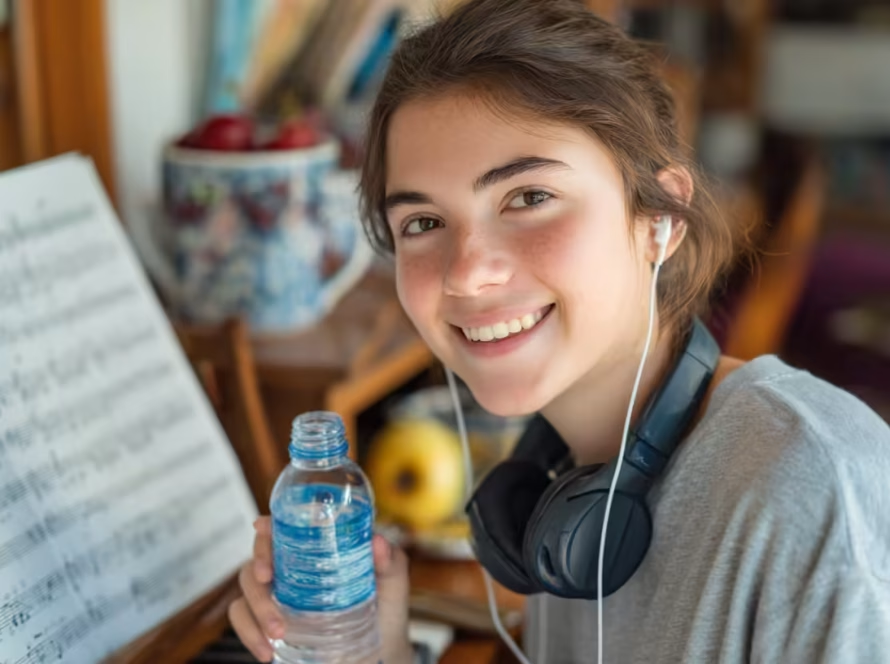
Can Voice Lessons Help Tone Deaf Children?

Katherine Dvoskin, Co-Founder of K&M Music School
I hope you enjoy this blog post! If you're interested in scheduling a free trial lesson, just click.
Author: Katherine Dvoskin | Co-Founder of K&M Music School
Published December 23rd, 2025

Your child loves to sing, but they cannot match the notes. Then other kids giggle, and your child feels embarrassed. So, you may wonder if voice lessons can help, or if it is a waste of money.
The good news is that most kids called “tone deaf” are not truly tone deaf. True tone deafness is called congenital amusia. It affects about 4% of people. However, most kids with pitch trouble can improve a lot with the right training and practice. This guide explains what “tone deaf” really means. Then it explains how voice lessons build pitch skills and what results to expect. Your child may not become a perfect singer, but the process can still build confidence and other useful skills.
What it is, what lessons can do, and what affects success
True tone deafness (amusia): This is rare and neurological. So, pitch improvement may be limited. However, lessons can still build confidence and music enjoyment.
Common pitch problems: This is very common and often developmental. So, many kids improve a lot in about 6–12 months with steady practice.
Late musical development: This is normal for many children. So, many kids can learn to match pitch by around ages 9–10.
Lack of musical exposure: This is usually environmental, not genetic. So, kids often improve faster once they train regularly.
🎵 Is My Child Ready for Voice Lessons?
Answer 8 quick questions to get personalized guidance
Success factors
Your child’s interest and motivation matter. Also, teacher quality and patience matter.
Consistent practice helps most. So, aim for about 10–30 minutes a day.
A supportive, low-pressure home environment helps too.
Realistic parent expectations matter as well.
Best age and cost
Formal lessons often work best starting around ages 6–8.
Private lessons often cost about $30–$100 per week.
Extra benefits
Even if pitch takes time, lessons can still build confidence, focus, memory, and social skills.
What Does “Tone Deaf” Actually Mean?

The term “tone deaf” gets thrown around loosely. Parents use it when their child sings off-key. Teachers use it to describe students who can’t match pitches. But most of these children aren’t actually tone deaf in the medical sense.
The Medical Definition of Amusia
True tone deafness is called congenital amusia. This is a rare neurological condition affecting about 4% of the population. People with amusia have brains that can’t process pitch differences properly. They hear sounds, but their brains can’t distinguish between different musical notes.
Amusia can run in families, so it may have a genetic cause. It seems to be present from birth. Brain scans show different connections in the parts of the brain that process sound. This is not a problem with the ears. Instead, the brain has trouble interpreting the sounds it hears.
🎵 Music Lessons in San Diego
Transform Your Musical Journey with K&M Music School

Expert Music Lessons
Piano, Violin, Cello, Guitar, Ukulele, Saxophone, Bassoon, Harp, Voice, and Toddler group lessons.
Why Choose Us?
All Ages Welcome!
From toddlers to adults—everyone can discover the joy of music.
100% Free trial lesson • No credit card required
Doctors diagnose actual amusia through specialized testing. These tests measure pitch discrimination, melody recognition, and musical memory. A child who truly has amusia will struggle with all these tasks consistently. They can’t tell if a note goes up or down. They can’t recognize familiar melodies like “Happy Birthday.” This level of difficulty is extremely rare.
Common Pitch Problems vs. True Tone Deafness
Most children who seem “tone deaf” actually have common pitch problems. These issues are completely different from amusia. Pitch matching difficulties are very common in young children. Many kids can hear pitch differences but struggle to reproduce them with their voices.
Poor pitch discrimination can improve dramatically with training. A child might not notice small pitch differences at first. With practice, their brain learns to pay attention to these details. This is a skill that develops, not a permanent disability.
Vocal coordination issues are often developmental. Young children’s vocal cords and breathing systems are still maturing. They might hear pitches correctly but lack the physical coordination to match them. This improves naturally with age and practice.
Lack of musical exposure creates pitch problems too. Children who rarely hear music or singing can’t develop pitch skills. They haven’t had enough examples to learn from. Once exposed to regular musical experiences, these children often catch up quickly.
Why So Many Children Seem “Tone Deaf”
Limited musical exposure in early childhood is surprisingly common. Many modern families don’t sing together regularly. Background music plays constantly, but active listening and singing don’t happen. Children need direct engagement with music, not just passive exposure.
Self-consciousness affects performance significantly. A child who feels embarrassed about their singing will tense up. This tension makes pitch matching harder. They might actually be able to match pitches when relaxed but fail when anxious or watched.
Developmental timelines vary widely among children. Some kids match pitches easily by age 5. Others don’t develop this skill until age 10 or later. This variation is completely normal. Late bloomers in pitch development aren’t defective. They’re simply on their own timeline.
Cultural emphasis on talent versus skill creates problems. When we treat musical ability as a fixed trait, children give up trying. If we emphasize skill development through practice, children keep working to improve. The mindset matters enormously.
🎵 Quick Pitch Games for Home Practice
5 fun games to help your child develop pitch skills — no equipment needed!
🔊 Echo Challenge
Click "Play Note" to hear a musical note. Then try to sing or hum that same note back. This game helps train pitch matching — the foundation of singing in tune!
↕️ Up or Down?
Listen to two notes played in sequence. Did the pitch go UP or DOWN? This trains pitch discrimination — hearing the difference between notes.
🎼 Hum That Tune
Listen to a simple 4-note melody, then try to hum it back! This builds melodic memory and pitch sequence recognition.
🧠 Pitch Memory
A short pattern of notes will play. Try to sing them back in the same order. Start with 2 notes, then challenge yourself with longer patterns!
😄 Silly Sounds
Just for fun! Click the buttons to make silly vocal sounds together. No right or wrong — just play and have fun with your voice!
Age-Appropriate Pitch Accuracy Expectations
Ages 3-5 show wide pitch variations that are completely normal. Preschoolers typically sing in the general vicinity of correct pitches. They might be several notes off. This is expected and not concerning.
Ages 6-8 bring improving but still developing pitch accuracy. First and second graders can usually match simple pitches when working one-on-one with a teacher. In group singing, they still struggle. Their attention wanders, and they lose track of the melody.
Ages 9-12 represent when most children can match pitches reliably. Fourth through sixth graders typically sing in tune most of the time. They can hold harmony parts in choir. Individual variation still exists, but the majority reach functional pitch accuracy.
Teenage years bring continued refinement of pitch skills. Adolescents develop more sophisticated musical understanding. Their voices change, especially boys, which temporarily disrupts pitch accuracy. With practice, they adjust to their new vocal range.
How the Brain Processes Pitch and Music
Understanding brain function helps parents set realistic expectations. Musical learning isn’t magic. It’s a neurological process that follows predictable patterns.
Neuroplasticity and musical learning
The brain can change through practice. This is called neuroplasticity. It is especially strong in kids. So, each time a child practices matching pitches, the brain builds stronger pathways. Then pitch matching gets easier over time.
The auditory cortex helps the brain process sound. This area grows a lot in childhood. Also, music training can change it. Brain studies show musicians often have stronger sound-processing connections.
Research shows these changes can happen within months. Kids who practice music regularly often improve at hearing and processing sound. Also, these gains can help attention and language skills.
Early childhood is a great time to learn music. However, learning is still possible later. So, starting lessons at age 8 or 10 can still work very well.
Hearing vs. perceiving pitch
Hearing is your ears turning sound into signals. Most kids can hear normally. However, ear infections or hearing loss can make pitch harder.
Perceiving pitch is the brain noticing differences between notes. A child might hear two notes but not realize they are different. So, training teaches the brain what to listen for.
Some kids have auditory processing disorders. This is not the same as hearing loss or true amusia. These kids may struggle with many sound tasks, not just music. So, a speech-language pathologist can help evaluate this.
Focus also matters a lot. A distracted child will not match pitches well. So, learning to listen carefully is part of singing training.
What research shows about pitch improvement
Studies show pitch accuracy improves with training. Many children get better with regular lessons and practice.
Most kids show changes in about 3–12 months. Some improve in weeks, but others need longer. So, consistency matters more than speed.
Studies also show hopeful results. About 70–80% of kids labeled “tone deaf” can learn to match pitch with the right training. Only a small group truly cannot improve much.
Music training can help beyond singing. Kids often improve memory, attention, and language skills. These benefits can last even if lessons stop later.
What voice lessons can and cannot do
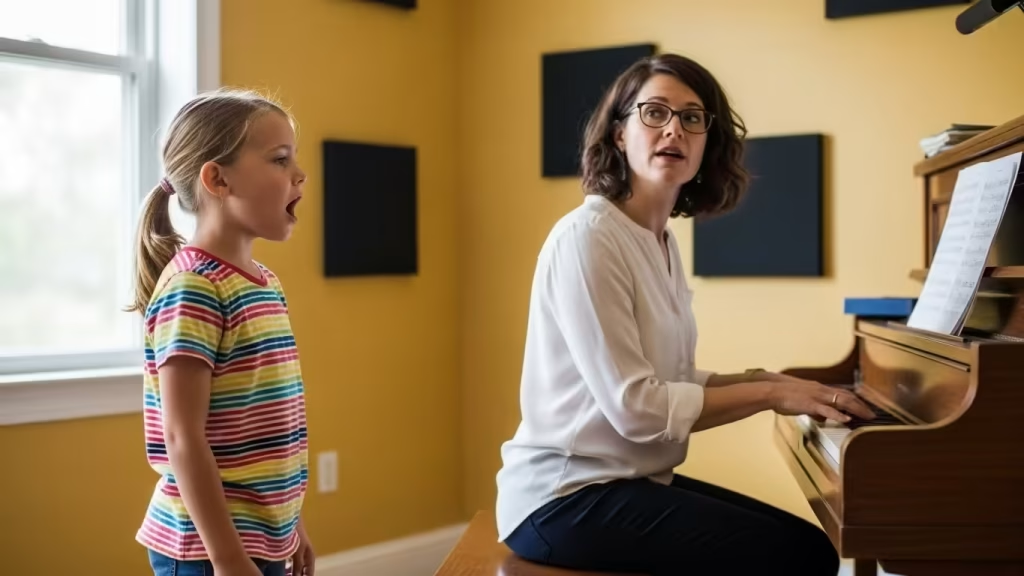
Voice lessons help a lot, but they are not instant fixes. So, realistic expectations matter.
Teachers use simple pitch games. For example, “echo singing” helps kids copy short patterns. Then the patterns slowly get harder.
Lessons also build ear training. Kids learn if notes go up or down. They also learn to recognize melodies by listening.
Technique matters too. Breath control and posture help make pitch steadier. So, better singing habits can improve pitch accuracy.
Good teachers build confidence. They celebrate small wins. So, kids stay motivated and keep trying.
What to expect
Progress usually takes months. So, give it at least 3–6 months before judging results. Some kids may need a year.
Most kids improve, even if they never become “perfect.” So, the goal is “good enough” to sing in choir, with friends, or at karaoke without feeling embarrassed.
Results depend on practice, the teacher, support at home, and where the child starts. So, two kids can improve at different speeds.
When lessons work best
Lessons work best for kids with common pitch problems, not true amusia. If your child can sometimes match pitch, even rarely, lessons often help a lot.
Kids with little music exposure often catch up quickly. They usually just need structured practice.
Daily practice helps most. So, 10–15 minutes a day is better than one long session a week.
A supportive home helps too. So, sing together, encourage effort, and avoid criticizing mistakes.
🎵 Music Lessons in San Diego
Transform Your Musical Journey with K&M Music School
Expert Music Lessons
Piano, Violin, Cello, Guitar, Ukulele, Saxophone, Bassoon, Harp, Voice, and Toddler group lessons.
Why Choose Us?
All Ages Welcome!
From toddlers to adults—everyone can discover the joy of music.
100% Free trial lesson • No credit card required
When lessons may not help much
True congenital amusia usually improves only a little with normal voice lessons. However, these kids can still enjoy music through rhythm and listening skills.
If a child has an auditory processing disorder, they may need therapy first. So, if they struggle with many sound tasks, talk to a speech-language pathologist before starting lessons.
Hearing loss or ear problems must be addressed medically. Chronic ear infections, fluid buildup, or other ear issues interfere with pitch perception. Resolve these medical problems first.
Extreme resistance or anxiety about singing suggests timing issues. If a child is terrified of singing or adamantly refuses, forcing lessons won’t help. Wait until they’re ready. Consider starting with instrumental music instead.
Different Approaches to Helping Tone Deaf Children
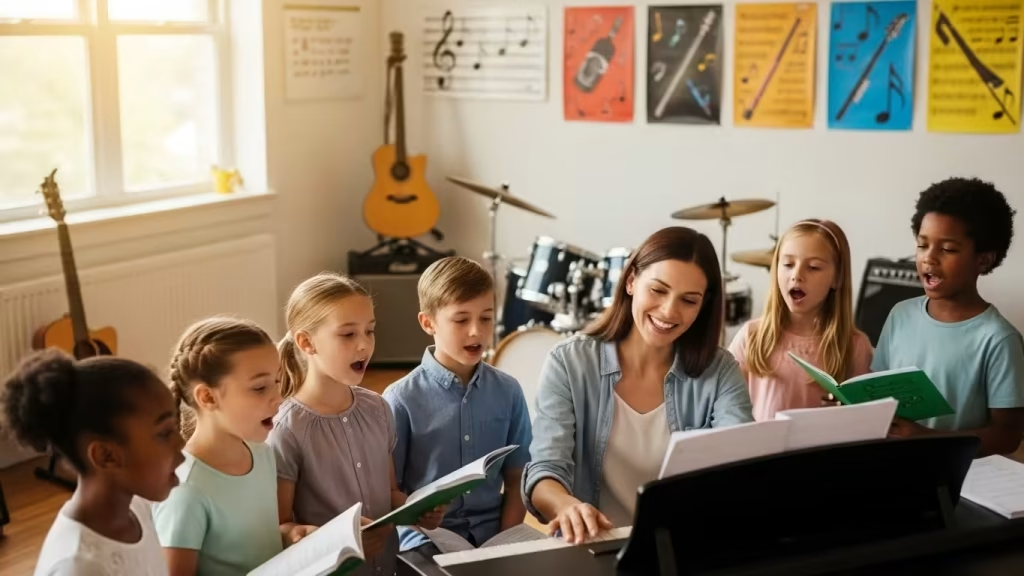
Multiple pathways exist for developing pitch skills. Voice lessons aren’t the only option, though they’re often the most direct approach.
Traditional Private Voice Lessons
One-on-one instruction offers maximum customization. Teachers can adapt every exercise to your child’s specific needs. They notice and correct problems immediately. Attention never gets divided among multiple students.
Cost considerations matter for most families. Private voice lessons typically cost $30-$100 per lesson. Most teachers recommend weekly lessons. This adds up to $120-$400 monthly. Financial commitment is significant.
Finding qualified children’s voice teachers requires research. Not all voice teachers specialize in children. Not all understand pitch development issues. Ask potential teachers specifically about their experience with pitch-challenged students.
In voice lessons, you can expect warm-ups first. Then you do pitch-matching exercises and ear-training games. After that, you sing simple songs and practice performing. Good teachers keep it fun and encouraging. Lessons for younger kids are usually 30–45 minutes.
Group music classes can also help
When kids learn together, mistakes feel less embarrassing. Also, kids see others improve, so the process feels normal.
Group classes usually cost less than private lessons. For example, programs like Music Together or community choirs may cost about $15–$40 per week. So, it can be a cheaper way to get started.
Group settings can feel lower pressure, which helps anxious kids. However, some kids need more one-on-one help than a group can give. So, think about your child’s personality.
Group singing also has social benefits. Kids can make friends who like music too. So, for social kids, group classes can be a great fit.
Online Voice Lesson Options
Apps for pitch training like Yousician, Perfect Ear, and SingSharp offer gamified learning. Children earn points and badges for accuracy. The game format motivates some kids who resist traditional lessons.
Video lesson platforms provide alternatives to local teachers. If your area lacks qualified children’s voice teachers, online lessons expand your options. However, technology challenges and internet reliability issues can interrupt lessons.
Self-paced learning advantages mean no pressure to keep up with peers or rigid schedules. Children can repeat exercises as many times as needed. This flexibility suits some learning styles perfectly.
Cost-effective alternatives exist throughout the online space. Many apps offer free basic versions. Video lessons often cost less than in-person instruction. This makes trying voice training low-risk financially.
Ear Training Programs and Apps
Specific pitch recognition training accelerates improvement for some children. Apps like EarMaster, Theta Music Trainer, and Perfect Ear focus purely on listening skills. These complement voice lessons beautifully.
Game-based learning approaches keep children engaged. Points, levels, and rewards motivate practice. Children who resist traditional lessons might happily play these “games” daily.
Daily practice integration is easier with apps. Five minutes on an app feels manageable. It fits into morning routines, car rides, or before-bed wind-down time. Consistency becomes easier.
Recommended apps for children should be age-appropriate in interface and content. Look for colorful, simple designs. Avoid apps with complex navigation that frustrates young users.
Other Ways to Help Children Develop Pitch Skills
Voice lessons work best as part of a comprehensive musical experience. Supplementing formal lessons with additional musical activities accelerates progress.
General Music Education Benefits
Learning instruments provides different angles for understanding pitch. Piano, in particular, helps children visualize pitch relationships. Guitar frets create clear pitch distinctions. Violin requires pitch discrimination without frets, developing the ear intensively.
Music theory foundations support practical singing skills. Understanding intervals, scales, and key signatures gives children intellectual frameworks for pitch. Some children understand music better intellectually before they can execute it vocally.
Rhythmic training supports pitch development indirectly. Strong rhythm skills free up mental processing for pitch focus. Children who struggle with both rhythm and pitch should work on rhythm first.
Ensemble participation teaches children to blend their pitch with others. Orchestra, band, or choir membership provides regular pitch practice in social contexts. The group accountability encourages consistency.
Home Activities to Support Pitch Development
Singing together regularly creates pressure-free practice opportunities. Family car rides, dinner preparation, and bedtime routines all offer chances to sing. Make it fun and casual, not a lesson.
Pitch matching games can be as simple as playing echo. Hum a note and have your child match it. Take turns choosing notes. Make silly sounds together. Keep it playful.
Listening to music actively means focusing on melody, not just having background music playing. Ask your child to hum along with songs. Discuss whether melodies go up or down. Point out interesting musical moments.
Making music part of daily routines normalizes musical participation. Morning songs, cleanup songs, and celebration songs integrate music into family life. This constant exposure develops musical skills naturally.
How to Choose a Voice Teacher for a Tone Deaf Child
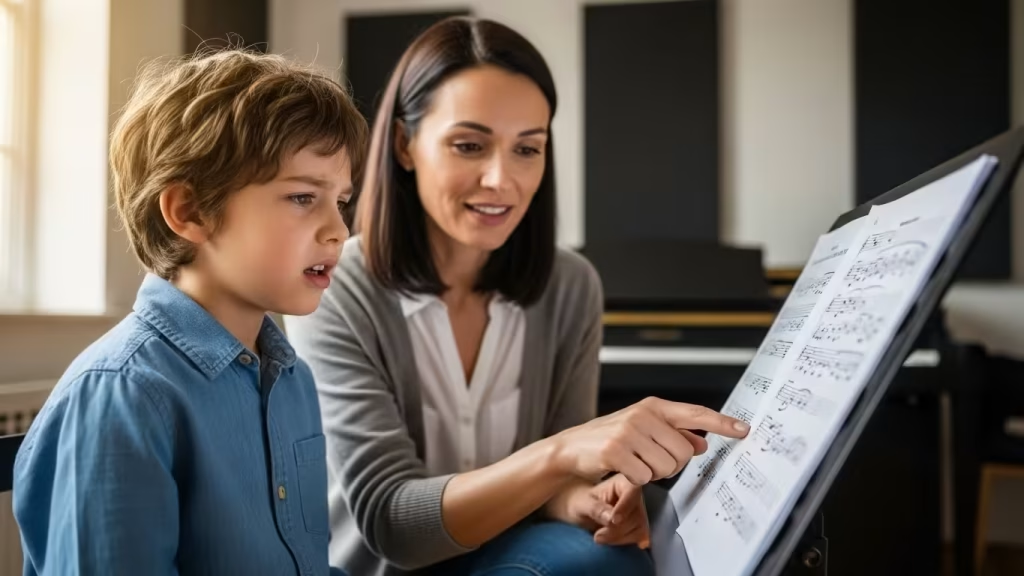
Teacher selection dramatically affects outcomes. The wrong teacher can damage confidence. The right teacher creates breakthroughs.
Essential Qualifications to Look For
Experience teaching children specifically is non-negotiable. Teaching adults and teaching children require completely different skills. Ask how many children teachers currently work with.
Understanding of pitch development issues matters enormously. Some teachers have never worked with pitch-challenged students. They assume everyone can match pitches easily. Find teachers who specialize in this problem.
Patience and positive reinforcement approach must dominate their teaching style. Ask teachers how they handle student frustration. Listen for emphasis on encouragement rather than criticism.
Music education or vocal pedagogy degrees indicate formal training in teaching methods. While not absolutely required, formal education usually correlates with better teaching practices.
Questions to Ask Potential Teachers
“What’s your experience teaching children who struggle with pitch?” should produce specific examples. Teachers should describe particular students and methods used.
“What’s your teaching philosophy for beginners?” reveals whether they emphasize fun or strict technique, effort or results, growth or talent.
“Can you share success stories with students similar to my child?” helps you understand realistic outcomes. Ask for specifics about timeline and progress.
“What practice do you expect between lessons?” clarifies commitment requirements. Make sure expectations align with what your family can realistically manage.
Red Flags to Avoid
Teachers who claim miracles or guarantees should raise suspicion. No ethical teacher promises that every child will become a perfect singer.
Rigid, one-size-fits-all approaches don’t work for pitch-challenged children. Each child needs customized instruction. Teachers who describe only one teaching method likely can’t adapt.
Criticism or shaming techniques damage children psychologically. Some old-school teachers believe harsh criticism motivates improvement. Research proves the opposite. Run from these teachers.
Poor communication with parents suggests you’ll struggle to stay informed about progress. Teachers should regularly update you on what’s happening in lessons and what to practice at home.
How Parents Can Help Tone Deaf Children Succeed
Parental support dramatically affects outcomes. Your attitude and actions at home matter as much as what happens in lessons.
Creating a Supportive Home Environment
Emphasizing effort over talent changes how children approach challenges. Praise like “You practiced so consistently this week” beats “You’re naturally talented.” Growth mindset language focuses on improvement, not fixed ability.
Celebrating small improvements maintains motivation. Notice when your child matches a pitch they previously missed. Point out how their range has expanded. Acknowledge their persistence through difficulties.
Making music fun, not stressful, keeps children engaged long-term. If voice lessons become a source of anxiety and conflict, children will quit as soon as they’re old enough to refuse.
Singing together without judgment models that music is for everyone. If you sing off-key yourself, demonstrate that it doesn’t matter. Music brings joy regardless of perfection.
Practice Strategies That Work
Short, frequent practice sessions work better than long, infrequent ones. Ten minutes daily beats one hour weekly. Young brains learn better through spaced repetition.
Making practice playful and fun prevents resistance. Turn exercises into games. Use stuffed animals as an audience. Create silly lyrics. Whatever makes your child smile during practice is productive.
Parent participation and modeling show that practicing matters to you. Sit nearby during practice. Learn the exercises yourself. Show interest in the music. Your involvement signals value.
Consistency without rigidity means having regular practice times, but staying flexible. So, if your child is sick, tired, or having a hard day, it is okay to skip practice.
Managing Expectations
Realistic expectations help a lot. If you expect perfection in three months, you will feel disappointed. However, if you expect steady progress over a year, you will notice real improvement.
Define success in a realistic way. Success might mean singing in tune most of the time, not all the time. Also, success might mean singing confidently at school, not winning competitions.
Keep your child’s interests in mind. You may love singing and want that for them. However, your child might prefer piano, art, or something else. So, follow what they enjoy.
Know when to change plans. If your child truly hates singing after six months, do not force it. Instead, try another instrument or a different activity.
Beyond Pitch: Additional Benefits of Voice Lessons
Lorem ipsum dolor sit amet, consectetur adipiscing elit. Ut elit tellus, luctus nec ullamcorper mattis, pulvinar dapibus leo.

Voice lessons can still help even if pitch is not perfect. The benefits go beyond singing the right notes.
Confidence and Self-Expression Benefits
Singing can build confidence and self-expression. So, kids may speak up more in class and share ideas more easily. Performance practice can also improve public speaking. Also, small performances can reduce social anxiety over time.
Singing can be an emotional outlet too. It helps kids express feelings in a safe way.
Cognitive Development Benefits
Music training can also support learning. Memorizing songs builds working memory. Also, research shows music students often do better on memory tests.
Mathematical skills correlation exists because music involves patterns, ratios, and counting. Children who study music often excel in math. The cognitive skills overlap significantly.
Language development support comes from the auditory discrimination required in music. Children who train their ears for pitch differences process speech sounds more accurately. This helps with reading and language learning.
Attention and focus enhancement results from musical practice requirements. Learning to focus on pitch, rhythm, and lyrics simultaneously builds concentration skills. These transfer to academic tasks.
Social and Emotional Development
Teamwork in ensembles teaches cooperation. Choir members must listen to others and adjust their own singing to blend. These are life skills applicable everywhere.
Discipline and commitment learning happen through regular practice requirements. Children learn that consistent effort produces results. This lesson applies to academics, sports, and relationships.
Setting goals and reaching them builds confidence. Kids pick a clear goal, like learning one song. Then they feel proud when they achieve it.
Resilience building through challenges teaches children to persist through difficulties. Voice lessons provide safe environments to struggle, fail, try again, and eventually succeed.
Is the Investment in Voice Lessons Worth It?
Financial and time investments are significant. Evaluating worth requires considering both musical and non-musical benefits.
Financial Investment Breakdown
Private lesson costs of $30-$100 weekly translate to $1,560-$5,200 annually. This represents a major family expense. Compare this to other enrichment activities in your decision.
Group class alternatives costing $15-$40 weekly equal $780-$2,080 annually. This represents substantial savings while still providing instruction.
Online program costs of $10-$30 monthly mean $120-$360 yearly. This budget-friendly option works well for trying voice training with minimal financial risk.
Additional materials and books typically add $50-$200 yearly. Music books, apps, and accessories accumulate. Budget beyond just lesson fees.
Time Commitment Requirements
Weekly lesson duration of 30-60 minutes is just the beginning. Add transportation time to and from lessons. This might double the time investment.
Daily practice time of 10-30 minutes must happen consistently. This totals 70-210 minutes weekly beyond lessons. Schedule this time like you would sports practice.
Evaluating Progress and Success
Give lessons enough time to work. So, expect 6–12 months before you decide if they help. Quitting after two months is usually too soon.
When you check progress, look at more than pitch. For example, notice pitch accuracy, confidence, basic music skills, comfort performing, and enjoyment. Also, notice non-music benefits like focus, social skills, emotion control, and discipline.
Decide based on value and joy. If lessons make your child miserable, stop. However, if your child feels good and keeps improving, continue.
Making Your Decision
First, figure out what’s going on. True amusia is rare, but common pitch problems are normal. So, if your child sometimes matches pitch, notices mistakes, or likes music, lessons will likely help.
If you can, ask an expert for advice. A school music teacher can often give a quick opinion. Also, check hearing and auditory processing before you pay for lessons.
Use a trial period to lower risk. Try 3–6 months, then evaluate. This gives enough time to see change without a huge commitment.
Signs You Should Try Lessons
Your child wants to sing or loves music. Also, the pitch problem seems developmental, not neurological. A supportive teacher is available. And your family can afford the time and cost without stress.
Signs You Should Wait or Choose Something Else
Your child does not want lessons right now. Medical or hearing issues are not addressed yet. Time or money is too tight for consistent practice. Or other needs, like speech or occupational therapy, should come first.
Conclusion
Voice lessons can help most kids who struggle with pitch. True tone deafness is rare and affects about 4% of people. Most kids called “tone deaf” just have common pitch problems. So, with training and practice, they can improve a lot. Lessons build pitch matching, ear training, breath control, and confidence.
Set realistic expectations. Your child may not become a professional singer, and that is okay. The goal can be “good enough” singing. Then they can sing in choir, sing with friends, and enjoy music without embarrassment. Also, lessons can build confidence, memory, focus, and social skills.
Most families need time to see results. So, try lessons for about 6–12 months to judge progress. Start by getting a hearing check to rule out medical problems. Then talk to local voice teachers and ask if they work with pitch-challenged students. Start with a 3-month trial and track progress honestly. Any improvement is a win, and support at home matters a lot.
Katherine Dvoskin, Co-Founder of K&M Music School
She is the co-founder of K&M Music School in San Diego, is a passionate music educator with over 25 years of experience. She offers expert piano lessons in San Diego. At K&M Music School, we teach Piano, Violin, Cello, Saxophone, Bassoon, Harp, Voice, and Toddler group lessons. Katherine's blog shares insights on music education, covering topics from toddler music group lessons to adult music lessons. Whether you're seeking private music lessons or group music lessons for toddlers near you, welcome to K&M Music School.