Beyond Pop Charts: Exploring Repertoire in Voice Lessons

Katherine Dvoskin, Co-Founder of K&M Music School

Katherine Dvoskin, Co-Founder of K&M Music School

I hope you enjoy this blog post! If you're interested in scheduling a free trial lesson, just click.
Author: Katherine Dvoskin | Co-Founder of K&M Music School
Published July 17th, 2025

Music teacher helping a student understand a complex piece of classical or jazz repertoire at the piano.

Most students sing pop songs from the radio. But learning songs from different styles can make your voice stronger. This guide shows how variety helps you sing better and be more confident.

Getting Started with Expanded Voice Lesson Repertoire

Finding the Right Voice Teacher

Choosing a good voice teacher is important to learn many songs. Teachers should know different music styles and have experience. They should be patient and teach in ways that fit you. If you need help, you can learn how to find the best singing lessons near me to connect with a qualified instructor. Ask teachers about their background and how they teach. Watch a lesson or try one to see if you like it. The right teacher makes learning new songs fun and rewarding.

Katherine and Michael Dvoskin - Founders of K&M Music School

Music Lessons in San Diego with K&M Music School

1 Expert Music Lessons

We offer Piano, Violin, Cello, Guitar, Ukulele, Saxophone, Bassoon, Harp, Voice, and Toddler group lessons for students of all ages and skill levels.

2 Why Choose Us?

  • 🎶 Boosts focus and self-discipline
  • 🎵 Strengthens cognitive skills
  • 🎼 Enhances cultural understanding
  • 🎤 Builds confidence through recitals

3 We Welcome Adults Too!

Book Your Free Lesson Now

Voice lessons include more than hits. Classical, jazz, folk, and world music teach skills pop songs don’t. This helps you get ready for auditions and shows. It also builds strong, flexible singing skills.

What Is Voice Lesson Repertoire? Understanding the Basics

Defining Repertoire in Voice Lessons

Voice lesson repertoire means the songs singers learn and perform. It’s more than just singing your favorite songs. Repertoire helps you learn different music styles and improve your voice.

Good teachers pick songs based on your skill, range, and goals. This helps you get better with every song. You also learn about the composer, history, and how to perform the music right.

Why Exploring Repertoire Beyond Pop Charts Matters

Pop music is just one part of many music styles singers can learn. Pop songs are fun but don’t always build strong singing skills. Classical and traditional music teach skills pop can’t.

Voice teacher guiding a student through a new piece of vocal repertoire from sheet music during a lesson.

Learning many types of songs makes you a better singer. It helps you perform in different places. This also gives you more career choices, like opera, musical theater, jazz, or folk. Many pro singers say learning many styles helped them succeed.

Classical Voice Repertoire for Modern Voice Lessons

Art Songs and Lieder for Voice Students

Art songs are some of the most beautiful and hard vocal music. German songs by Schubert and Schumann teach singing with skill and feeling. These songs mix poetry and music to help students learn.

Art songs help with breath control because they have long, flowing melodies. They also teach how to sing with emotion and expression. Many have hard notes and rhythms that make you a better musician.

Benefits of Art Songs for Voice Development:

  • Enhanced breath support and control
  • Improved legato singing technique
  • Development of musical phrasing
  • Increased emotional expression abilities
  • Better German, French, and Italian pronunciation

Opera Arias in Voice Lesson Repertoire

Opera arias can be hard for beginners, but simple versions help you learn. These songs need good breath control, clear words, and acting. Young singers can learn from easy opera songs with their teachers.

Student practicing expressive singing, applying techniques learned from her diverse voice lesson repertoire beyond pop music.

Opera helps singers build strong, powerful voices without hurting them. It also teaches how to show feelings and characters while singing. Many famous opera songs have easy versions for learners.

Popular Beginner Opera Pieces:

  • “Caro mio ben” by Giordani
  • “O mio babbino caro” from Puccini’s Gianni Schicchi
  • “Una furtiva lagrima” from Donizetti’s L’elisir d’amore
  • “Che farò senza Euridice” from Gluck’s Orfeo ed Euridice

Sacred Music and Spirituals

Sacred music and spirituals help singers learn beyond pop songs. They have rich harmonies, strong meanings, and cultural importance. Spirituals teach about important American music and build vocal strength.

Sacred songs have long notes that improve breath control. The feelings in these songs help singers connect with their true voice. This connection makes performances better in all music styles.

Jazz and Blues Repertoire in Voice Lessons

Jazz Standards for Voice Students

Jazz standards are popular songs that are hard to sing. Composers like Porter and Gershwin used tricky chords and clever words. These songs help you sing with flexibility and improvise. They also improve music skills.

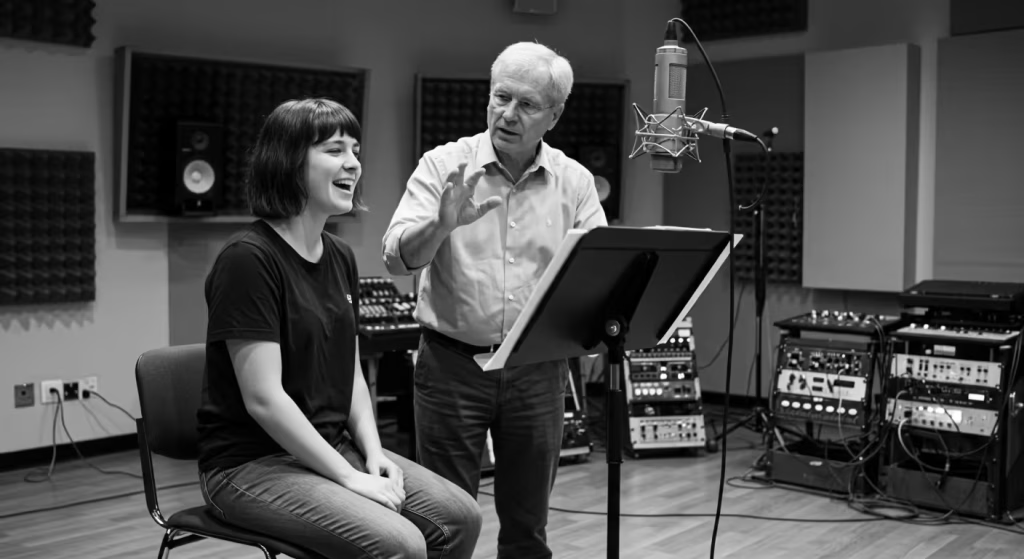
Vocal coach providing instruction to a student on a non-pop song in a professional recording studio setting.

Jazz songs help you sing on pitch because they have many notes and changed chords. Jazz singing needs good rhythm and timing, which helps in other music too. Many jazz songs have wide vocal ranges that make your voice stronger.

Essential Jazz Standards for Beginners:

  • “Autumn Leaves”
  • “Summertime”
  • “Fly Me to the Moon”
  • “The Way You Look Tonight”
  • “Blue Moon”

Blues Repertoire for Voice Development

Blues music teaches singers how to show feelings with voice changes. It focuses on keeping rhythm and using call-and-response. Blues singing also uses blue notes and bends to sound special. Blues songs have simple patterns, so beginners can learn them. They also teach song structure and basic improvisation. Many teachers use blues to help students find their own voice.

Scat Singing and Improvisation

Scat singing mixes singing skills and creativity. It uses made-up sounds to improvise melodies. Even beginners can practice simple scat to get better. Scat helps you improvise in all music styles. It also builds confidence and lowers stage fear. Scat singing is fun and a good part of lessons.

Folk and Traditional Music in Voice Lesson Repertoire

American Folk Songs for Voice Students

American folk songs help singers use their natural voice and tell stories. They have simple tunes and meaningful words. Folk music also teaches about American culture and music history. Many folk songs have different versions to try. This helps singers make their own style. Folk songs usually fit easy vocal ranges, so all singers can learn them.

Singer recording a song from her expanded vocal repertoire, accompanied by a pianist in a studio.

Classic American Folk Songs:

  • “Danny Boy”
  • “Scarborough Fair”
  • “Shenandoah”
  • “Black is the Color”
  • “Amazing Grace”

International Folk Music Exploration

International folk music helps singers learn about different cultures and new singing skills. Celtic music uses decorations and special scales that are hard to sing. Latin American songs have different rhythms and languages that help your voice. These songs also teach new languages and culture. They include special singing techniques that improve your skills. Learning music from around the world makes your singing lessons more interesting.

Sea Shanties and Work Songs

Sea shanties and work songs were made for specific jobs. They teach rhythm, group singing, and music history. The repeated parts help build singing stamina and control. These songs help singers keep good timing and beat. They often use call-and-response, which teaches teamwork. Many singers today enjoy the energy of these old songs.

Musical Theatre Repertoire Beyond Pop Charts

Golden Age Musical Theatre Songs

Rodgers and Hammerstein wrote songs that mix singing and acting. These songs teach singers how to perform and use good technique. Musical theatre has many singing styles, from slow ballads to fast songs. This lets singers try different ways to use their voice. Many songs come in different keys, so all voice types can sing them.

Classic Musical Theatre Songs:

  • “Memory” from Cats
  • “Somewhere” from West Side Story
  • “Edelweiss” from The Sound of Music
  • “Try to Remember” from The Fantasticks
  • “I Could Have Danced All Night” from My Fair Lady
Katherine and Michael Dvoskin - Founders of K&M Music School

Music Lessons in San Diego with K&M Music School

1 Expert Music Lessons

We offer Piano, Violin, Cello, Guitar, Ukulele, Saxophone, Bassoon, Harp, Voice, and Toddler group lessons for students of all ages and skill levels.

2 Why Choose Us?

  • 🎶 Boosts focus and self-discipline
  • 🎵 Strengthens cognitive skills
  • 🎼 Enhances cultural understanding
  • 🎤 Builds confidence through recitals

3 We Welcome Adults Too!

Book Your Free Lesson Now

Contemporary Musical Theatre

Modern musical theatre mixes rock, pop, and other styles with classic storytelling. These songs have tricky rhythms and wide vocal ranges. They challenge singers in new ways and feel relevant to young people. These songs teach singers to mix different styles in one song. This helps if you want to sing many kinds of music. Many modern shows also talk about important social issues.

Choosing the Right Repertoire for Your Voice Lessons

Assessing Your Vocal Range and Type

Knowing your vocal range and voice type helps pick the right songs. Teachers check your comfortable range, voice tone, and body to identify your vocal range and voice type as a beginner singer. This helps choose songs that keep your voice healthy.

Voice Type Characteristics:

  • Soprano: High female voice, often light and agile
  • Alto: Lower female voice, rich and warm
  • Tenor: High male voice, bright and penetrating
  • Bass: Low male voice, deep and resonant
  • Baritone: Medium male voice, versatile and warm

Working with Your Voice Teacher

Good voice teachers know how to pick the right songs for each student. They think about your skills, interests, and goals. Teachers can change songs to fit your voice by changing keys or style. Talk openly with your teacher about songs you like and listen to their advice. Working together makes learning better.

Building a Repertoire Plan

Start with easy songs like folk and simple art songs. Then move to harder songs step by step. This helps you build skills and confidence slowly. A well-planned repertoire program includes pieces from multiple genres and time periods. Additionally, progressive planning that considers performance opportunities is key to learning how to select the perfect audition repertoire. This comprehensive approach prepares singers for various musical situations they might encounter.

Common Mistakes When Exploring Voice Lesson Repertoire

Avoiding These Repertoire Selection Errors

Many students pick songs that are too hard for them. This can hurt their voice and cause bad habits. Only singing favorite songs can limit how much they grow. Another mistake is skipping warm-ups and technique work. Learning songs is important but should not replace exercises.

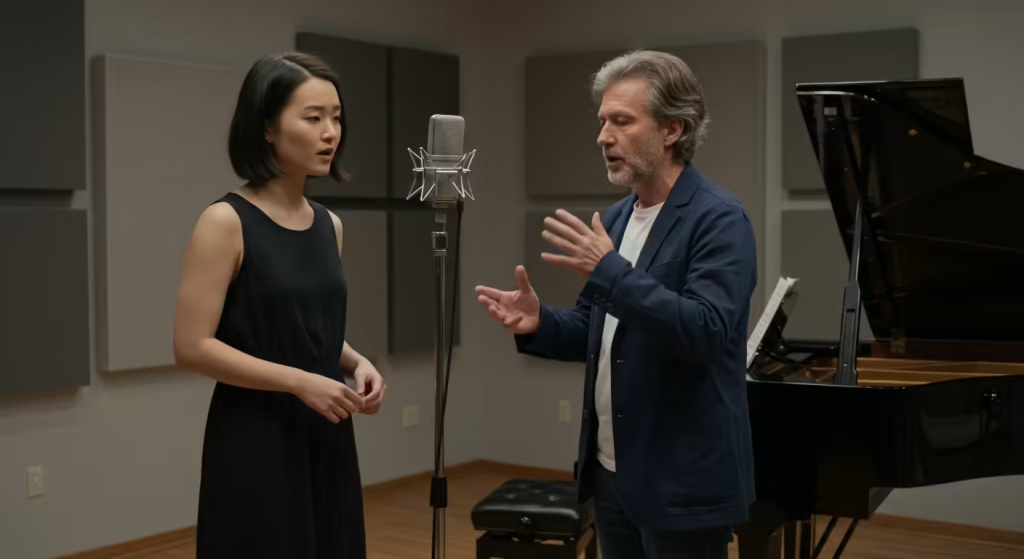
A voice teacher and student work on a challenging piece of musical theatre or classical repertoire in a professional music studio.

Common Repertoire Mistakes:

  • Selecting pieces beyond current ability level
  • Ignoring teacher recommendations
  • Focusing only on familiar genres
  • Neglecting proper vocal warm-ups
  • Rushing through technical details

Benefits of Diverse Repertoire in Voice Lessons

Vocal Technique Improvements

Learning songs beyond pop helps your voice in many ways. Classical music builds breath control and smooth singing. Jazz songs improve pitch and rhythm. Folk songs teach natural singing and storytelling. Each musical style emphasizes different aspects of vocal technique, creating well-rounded singers.

Career and Performance Advantages

Singers who know many styles have better career chances than those who stick to one. Auditions often need different types of songs to show skills. Pro singers must adapt to many music styles. Singers who can do many styles find work in opera, jazz, and folk. This gives more job options and makes singing fun.

Katherine and Michael Dvoskin - Founders of K&M Music School

Music Lessons in San Diego with K&M Music School

1 Expert Music Lessons

We offer Piano, Violin, Cello, Guitar, Ukulele, Saxophone, Bassoon, Harp, Voice, and Toddler group lessons for students of all ages and skill levels.

2 Why Choose Us?

  • 🎶 Boosts focus and self-discipline
  • 🎵 Strengthens cognitive skills
  • 🎼 Enhances cultural understanding
  • 🎤 Builds confidence through recitals

3 We Welcome Adults Too!
Book Your Free Lesson Now

FAQs About Voice Lesson Songs

How long does it take to learn different styles? It depends on your music experience and the style’s difficulty. Easy folk songs take weeks. Hard opera songs take months or years.

Can I learn many styles at once? Yes, but don’t overload yourself. Teachers suggest 2-3 songs from different styles at the same time. This keeps learning fun and not too hard.

What if I don’t like classical music? Many students don’t like it at first but learn to enjoy it. Start with simple songs like “Caro mio ben” or “Danny Boy.”

How do I know if a song fits my voice? Your teacher will help pick good songs. Songs that feel easy and don’t hurt your voice are best.

Should beginners start with pop or classical music? Most voice teachers recommend starting with simple folk songs or beginner classical pieces. These provide better technical foundations than pop music, which can be added later.

Conclusion

Learning songs beyond pop helps your voice grow and makes music more fun. Classical songs teach important singing skills. Jazz songs help you improvise and get better with music. Folk songs teach natural singing and culture. Musical theater mixes singing and acting.

Learning many types of songs takes time and good teachers. But it helps you sing better and know more about music. It also gives you more chances to perform and find your own style.

Ready to try new songs? Talk with your voice teacher about your goals. Together, you can plan practice that challenges you and fits your interests. There’s a big world of music beyond pop waiting for you.

Katherine Dvoskin, Co-Founder of K&M Music School

Katherine Dvoskin, Co-Founder of K&M Music School

Katherine Dvoskin, Co-Founder of K&M Music School
She is the co-founder of K&M Music School in San Diego, is a passionate music educator with over 25 years of experience. She offers expert piano lessons in San Diego. At K&M Music School, we teach Piano, Violin, Cello, Saxophone, Bassoon, Harp, Voice, and Toddler group lessons. Katherine's blog shares insights on music education, covering topics from toddler music group lessons to adult music lessons. Whether you're seeking private music lessons or group music lessons for toddlers near you, welcome to K&M Music School.

Leave a comment