
Why Did Einstein Stop Playing Violin?

Katherine Dvoskin, Co-Founder of K&M Music School
I hope you enjoy this blog post! If you're interested in scheduling a free trial lesson, just click.
Author: Katherine Dvoskin | Co-Founder of K&M Music School
Published October 21st, 2025
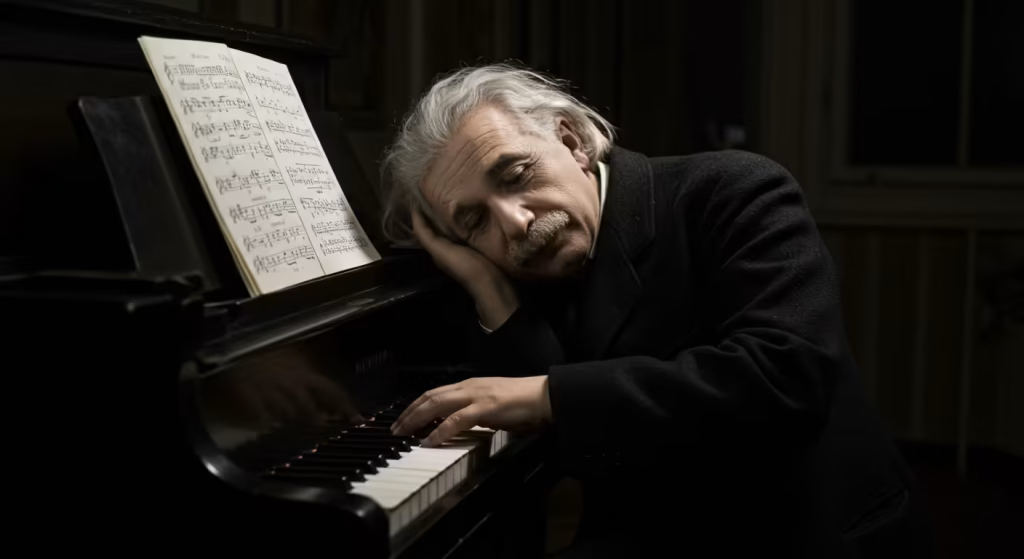
First, many people ask why did Einstein stop playing violin? Next, he had a deep musical passion for decades. Also, this story explains why he left the instrument.
In childhood (1885–1900), he changed from reluctant to passionate. Because his mother insisted on lessons. Then he discovered Mozart’s violin sonatas and felt inspired.
Next, in his peak years (1900–1930), he practiced daily. So the violin fueled his scientific ideas. Also, it helped him bond with people.
Finally, in the decline (1930–1955), he played less and then stopped. Because health issues made playing harder. Also, time was limited. And perfectionism reduced his enjoyment.

Music Lessons in San Diego with K&M Music School
1 Expert Music Lessons
We offer Piano, Violin, Cello, Guitar, Ukulele, Saxophone, Bassoon, Harp, Voice, and Toddler group lessons for students of all ages and skill levels.
2 Why Choose Us?
- 🎶 Boosts focus and self-discipline
- 🎵 Strengthens cognitive skills
- 🎼 Enhances cultural understanding
- 🎤 Builds confidence through recitals
3 We Welcome Adults Too!
The Main Reasons Einstein Stopped Playing
Einstein stopped playing because of health problems. Holding and playing the violin became physically hard. Also, his scientific work took most of his time. Then, his perfectionism made him frustrated with the decline. Therefore, he lost enjoyment in playing.
Finally, these factors came together in the 1940s. His musical journey ended after more than four decades. It was not sudden. Instead, it was a gradual change with age and new priorities.
Einstein’s Early Musical Education (1885–1900)
First, Albert Einstein started violin at age six. Next, it was not his choice. His mother, Pauline, insisted on music lessons. At first, he resisted the lessons. Also, he showed little interest.
Then, the early years were hard. He felt the violin lessons were tedious and mechanical. Teachers focused on technique and drills. So there was little musical expression. Therefore, the curious child felt bored and frustrated.
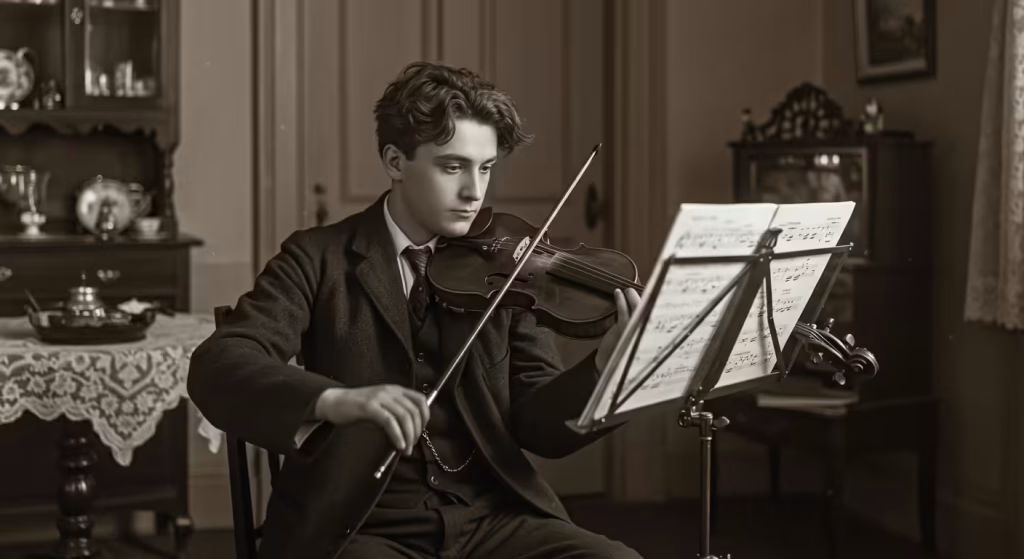
Everything changed at thirteen. He discovered Mozart’s violin sonatas. The math-like beauty and deep emotion drew him in. So the violin became a real passion. Finally, this new love lasted for decades.
Einstein’s Musical Education and Influences
Einstein’s growth sped up after discovering Mozart. Next, he studied Bach, whose precise style fit his scientific mind. Then Bach’s fugues and harmonies challenged his thinking. Also, chamber music became his favorite activity as a teen. He played with friends and family often as a musician. So he learned listening and cooperation in performance. After early lessons, his study was mostly self-directed. He preferred practice and performance over formal classes. Therefore, he built a personal bond with music that matched his scientific style.
Listen to Our Podcast
If you’d like to learn more about Why Did Einstein Stop Playing Violin? Tune in to our podcast, where we share expert tips and insights. Check it out on our YouTube channel and elevate your music journey today!
University Years and Musical Development (1900–1909)
At the Swiss Federal Polytechnic, he played to reduce stress. Next, classmates heard him practice hard passages in his room. Then he showed the same persistence he used in physics. Also, practice helped clarify scientific ideas. Because the steady rhythm let his mind work in the background. Therefore, many insights came during or after practice. Finally, music expanded his social life. He joined informal groups and played at gatherings. So he met people who loved both music and ideas.
Violin Playing During His Patent Office Days (1902–1909)
Einstein’s violin reached its peak in Bern. Next, his patent office job had regular hours. So he had time for daily practice. Also, he played often with friends and colleagues.
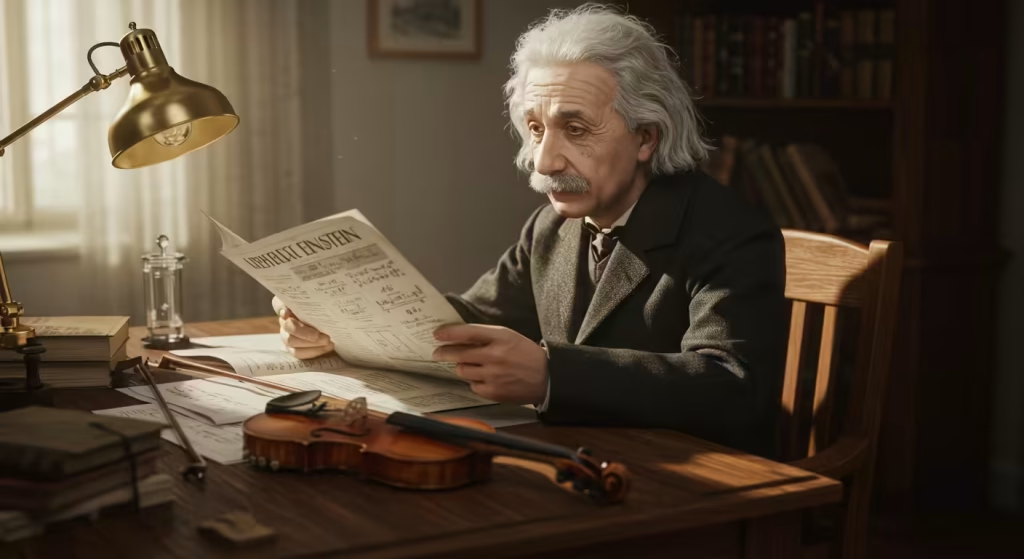
Then, he developed special relativity during this time. Meanwhile, he kept an active musical life. He said violin playing helped him think clearly. Therefore, disciplined practice improved his focus on abstract ideas and theory.
Einstein formed lasting friendships with local musicians during his Bern years. These relationships provided regular opportunities for chamber music performance and musical discussion. The social aspect of music-making became as important as the intellectual stimulation.
Chamber Music Sessions with Fellow Scientists
Many scientists shared Einstein’s love of music. Max Planck was an accomplished pianist. He hosted musical evenings at his Berlin home. Then these gatherings became famous in academic circles. Einstein and colleagues played chamber music for hours. Also, they discussed music and science together. Therefore, ideas from both fields helped each other.
Einstein especially enjoyed string quartets with academics. These sessions required precise coordination and listening. So they matched the teamwork needed in research. Also, the math in classical music fit his view of physical laws.
Einstein’s Peak Musical Years (1920–1930)
Einstein’s Violin Performance at Its Peak
At his peak, he was a strong amateur violinist. Professional players praised his musical sensitivity and musicality. However, they noticed some technical limits. Next, his main repertoire was Bach, Mozart, Beethoven, and Brahms. He liked clear, structured music. He avoided highly romantic works that demanded advanced technique.
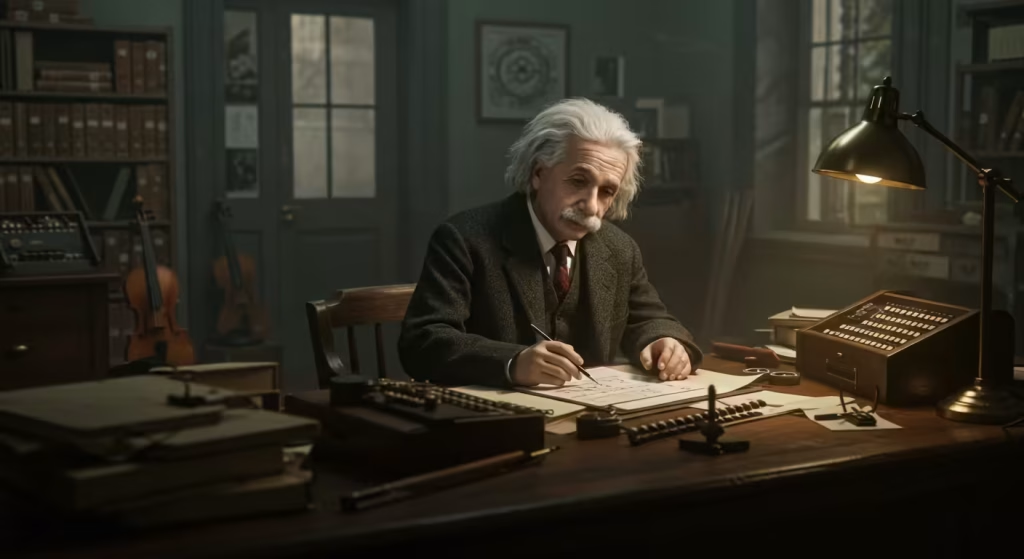
Finally, accounts describe him as enthusiastic, not virtuosic. His joy in music made up for imperfections. Therefore, musicians liked playing with him. Because he brought energy and deep musical understanding to his instrument.
The Beginning of the Decline (1930–1940)
Einstein’s fame grew, and he used more time and energy. Next, lecture tours and conferences filled his schedule. Also, administrative duties cut into practice time. So casual music sessions became rare. Then general relativity needed long, intense work. Therefore, he chose research over violin practice. Finally, public attention changed his music life. Journalists wrote about his playing. So it felt less personal and spontaneous.
Physical Changes Affecting His Playing
In his forties, age began to affect his playing. Next, years of hunching over papers hurt his posture. Also, this interfered with proper violin technique. Then his shoulders and neck stayed tense. Therefore, long practice sessions became uncomfortable.
Einstein also noticed decreased finger flexibility and speed. The rapid passages that had once come naturally now required extra effort and practice. His perfectionist nature made these physical limitations particularly frustrating. The reason was clear: his body was aging.
Music Lessons in San Diego with K&M Music School
1 Expert Music Lessons
We offer Piano, Violin, Cello, Guitar, Ukulele, Saxophone, Bassoon, Harp, Voice, and Toddler group lessons for students of all ages and skill levels.
2 Why Choose Us?
- 🎶 Boosts focus and self-discipline
- 🎵 Strengthens cognitive skills
- 🎼 Enhances cultural understanding
- 🎤 Builds confidence through recitals
3 We Welcome Adults Too!
Eyesight changes associated with aging made reading music more difficult. Einstein had always been a strong sight-reader, able to play through new pieces easily. When this skill declined, his enjoyment of spontaneous musical sessions decreased accordingly.
Changes in Musical Preferences
Einstein’s musical tastes became more focused with age. Next, he lost interest in new pieces. Instead, he returned to favorites by Bach and Mozart. So this narrowing matched his lower practice time and energy.
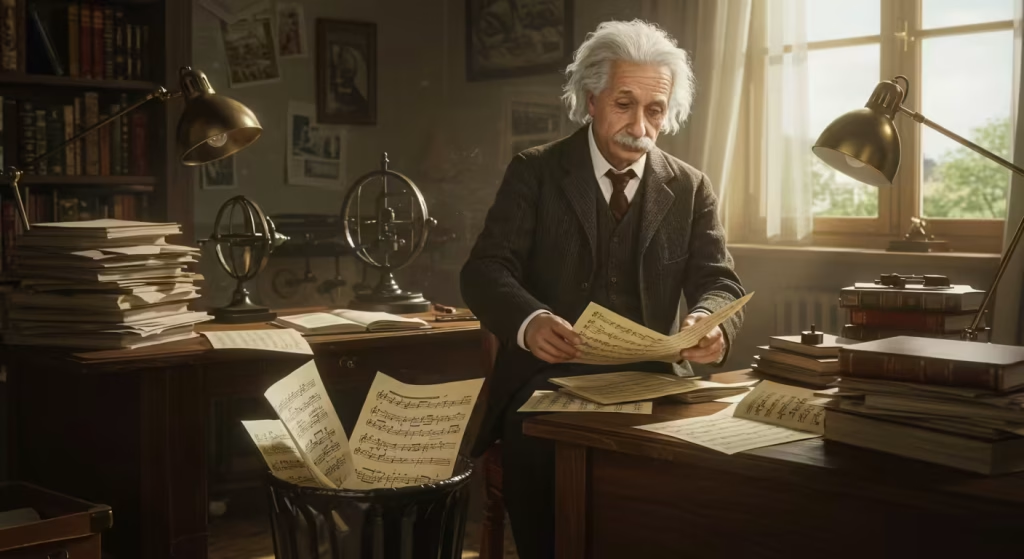
Then, modern classical music did not appeal to him. He found atonal works intellectually interesting. However, they felt emotionally unsatisfying. Therefore, his taste stayed in classical and romantic periods, preferring traditional composers.
Finally, he valued listening more than playing. He attended more concerts and heard recordings. So he shifted from participant to observer. Therefore, this marked the start of his withdrawal from active playing.
The Final Years: Why Einstein Completely Stopped (1940–1955)
Health Issues That Ended His Playing
Health problems drove Einstein’s final choice to stop playing the violin. Next, arthritis in his fingers and hands caused pain on the strings and bow. Also, stomach issues and fatigue drained his energy for music. Then the physical demands of the violin became too much for his health. Therefore, doctors advised him to avoid extra strain on his heart.
Finally, his famous unruly hair reflected a neurological condition. Also, age-related tremors reduced fine motor control. So the precise finger movements became very difficult. Therefore, he completely stopped playing the violin.
Time Constraints from Scientific Work
Einstein chased a unified field theory. This quest used nearly all his time and mental energy. So little was left for music. Also, his duties at Princeton took many hours. He attended meetings, reviewed papers, and mentored young physicists. Therefore, personal interests like music were pushed aside. Finally, his fame brought constant mail. He answered hundreds of letters daily. So there was almost no time for violin practice.
Personal and Emotional Factors
Einstein was a perfectionist. Next, declining skills frustrated him. So instead of accepting lower performance, he stopped completely. Also, close musical friends died or moved away. Therefore, he lost regular chamber partners and motivation. Finally, his science reputation kept rising while his playing fell. This contrast created emotional conflict. So he chose to abandon the violin.
Einstein’s Own Words About Stopping
Direct Quotes About His Decision
Einstein seldom spoke publicly about stopping violin. Next, private letters show his feelings. In 1951 he wrote, “Music no longer brings me the joy it once did.” Also, he said, “My fingers are stiff, and my ear less keen.” Then, in a 1953 interview, he said, “The violin was my companion for many years.” However, he added, “Age changes all things.” So he preferred to remember music from his prime. Finally, in 1954 he said, “I sometimes hear music in my mind more clearly than I ever played it.” Therefore, he called it “the gift of age—perfect memory of imperfect performance.”
Regrets and Reflections on His Musical Journey
He did not regret his years as an amateur violinist. Next, he told young people that music fueled his creativity and happiness. Also, he advised scientists to keep musical interests. Because musical training builds discipline and pattern recognition. Therefore, it strengthens scientific thinking and problem-solving. Finally, he said music taught patience, precision, and practice. So these qualities supported his scientific work. Therefore, he felt the time spent on music was well invested, even though it ended.
The Science Behind Music and Einstein’s Brain
How Violin Playing Enhanced His Scientific Mind
Music training boosts skills used in science. Next, it strengthens math ability, spatial reasoning, and pattern recognition. Therefore, these skills support theoretical physics.
Then, violin practice builds discipline. It needs steady focus and careful attention to detail. Also, you repeat hard parts until they are mastered. So these habits transferred to Einstein’s research.
Finally, music may have improved his visual thinking. Reading notation and understanding harmony use spatial reasoning. Therefore, those same skills help with complex math in physics.
Modern Research on Musician-Scientists
Studies of scientist-musicians show common patterns. Next, musical training improves working memory. Also, it boosts cognitive flexibility. Therefore, creative problem-solving gets stronger.
Then, brain scans show better links between hemispheres in musicians. So communication between analytical and creative centers improves. Therefore, this may explain why many scientists are strong musicians.
Finally, music theory has math at its core. Understanding ratios and proportions helps with science. Also, harmonic relationships relate to math used in physics. Therefore, music study prepares the brain for scientific thinking.
Myths and Misconceptions
Common False Stories About His Decision
Some say Einstein quit because of one injury or dramatic event. However, this is not true. Instead, the change was gradual over several years.
Next, some biographers claim music distracted him from science. However, this conflicts with his own statements. He said music helped his creativity and thinking.
Finally, another myth says his violin was damaged or stolen. However, this is also false. He owned multiple violins. So he still had access to instruments even after he stopped playing regularly.
What Einstein Never Actually Said About Violin
The internet is filled with fake Einstein quotes about music and violin playing. One popular fabrication claims he said, “I would have been a musician if I hadn’t become a scientist.” Einstein never made this statement.
Some people claim Einstein said violin playing was “the greatest waste of time in human history.” However, this quote is false. Next, it goes against what he truly said about music. He often praised music’s importance in his life and thinking. Therefore, do not trust that fake quote.
Many websites attribute the quote “Music is the wine of life” to Einstein’s thoughts about giving up violin. This poetic sentiment, while appealing, has no basis in Einstein’s actual words or writings.
Einstein’s Violins: The Instruments Themselves
Einstein’s Violins During His Life
Einstein began with a modest student violin from his mother. Next, as he loved music more, he bought better instruments. Then he owned a prized German violin from the late 1800s. He used it in Berlin and Princeton during his peak years. Also, he received violins as gifts from friends and admirers. However, he valued them mostly for sentiment, not sound. His violin case contained his most cherished musical instrument.

Einstein’s final decade saw him transition from active musician to appreciative listener. His love of music continued even after he could no longer play violin himself.
Einstein’s Musical Connections and Contemporary Musicians
During his lifetime, Einstein interacted with many famous musicians and composers. He met George Gershwin at parties in Berlin, though their musical styles differed greatly. Einstein preferred classical forms like opera and symphony over jazz innovations.
His wife Elsa Einstein also appreciated music, though she was not a musician herself. She often attended recitals with Albert and supported his musical interests throughout their marriage.
Einstein’s musical ability impressed many professional musicians. Some described him as having natural talent despite being largely self-taught after his early violin lessons. His battered violin case became a familiar sight at Princeton, where colleagues would often hear him practicing.
The Physicist’s Approach to Music
As a brilliant physicist, Einstein approached music with scientific curiosity. He understood the mathematical relationships in Bach’s compositions and Mozart’s structures. This analytical approach complemented his emotional response to music.
Einstein received the Nobel Prize in Physics in 1921, but he never stopped discussing music’s role in creativity. He believed that great physicists and great composers shared similar thinking patterns.
During the World Year of Physics, scientists often referenced Einstein’s musical interests as evidence of his well-rounded intellect. His example inspired many physicists to pursue musical instruments alongside their research.
Musical Influences on Einstein’s Scientific Work
The theory of relativity emerged during Einstein’s most active musical period. He often said that relativity theory came to him while playing violin. The regular practice helped organize his thoughts about space and time.
Einstein’s favorite composer Mozart influenced his scientific thinking through mathematical precision. The clear structures in Mozart’s music matched Einstein’s preference for elegant physical theories.
Even when he stopped playing, Einstein continued to use musical metaphors in his physics lectures. He compared atomic behavior to symphony orchestras and described particle interactions like musical harmonies.
Einstein’s Musical Legacy
Today, Einstein’s story inspires both musicians and scientists. His example shows that technical skill matters less than genuine love for music. Many amateur musicians find encouragement in his journey from reluctant student to passionate player.
Einstein’s approach to balancing science and music continues to influence education. Music programs often cite his example when advocating for arts education in science curricula.
The reason Einstein stopped playing violin remains a lesson about aging, priorities, and accepting change. His musical journey from childhood through old age reflects universal human experiences.
Frequently Asked Questions
“Did Einstein really say ‘I would have been a musician’?”
First, no—he did not say this. Next, the quote is fake. Also, it appears on social media and quote sites. However, it contradicts his real views. He saw music and science as complementary. Therefore, he never regretted choosing science as his career.
“Was Einstein actually good at playing violin?”
First, he was a competent amateur. Next, he was strong in chamber music and interpretation. Also, professionals praised his musicality. However, they noted technical limits typical of amateurs. Therefore, he played well with friends and colleagues. Finally, he was realistic and called himself an enthusiastic amateur.
“Did Einstein write any music compositions?”
First, he did not compose original music. Next, he sometimes improvised during practice. Also, he preferred performing classical masters. However, he wrote about music theory and science links. Therefore, his writings show deep understanding of musical structure.
“What was Einstein’s favorite piece to play on violin?”
First, he loved Bach’s sonatas and partitas. Next, he often played Mozart’s violin sonatas. Also, these works first inspired his love of music. Finally, he enjoyed chamber music by Beethoven and Brahms. Therefore, he preferred clear, logical structures that fit his scientific mind.
Did Einstein’s violin playing influence his science?
First, yes—Einstein said violin playing boosted his creativity. Next, music practice built strong concentration. So those skills transferred to his theoretical work. Then many insights came during or right after practice. Because the rhythmic, calm routine let his mind solve problems.
Conclusion
First, why did Einstein stop playing violin? He faced health issues, time limits, and perfectionism. Next, he shifted from passionate player to appreciative listener. Also, his violin journey lasted over four decades. Therefore, music deeply shaped his thinking and happiness.
Then, his story teaches balance. We can hold multiple interests and accept aging. Also, amateur art can be deeply fulfilling. Therefore, mixing music and science strengthens the brain.
Finally, the question shows human limits and music’s power. Einstein set down the bow. However, music stayed central to his mind until the end. His legacy as both physicist and musician continues to inspire people worldwide.
Your turn
First, what part of his story fits your life? Next, how do you balance creativity with work? Also, how does music shape your thinking and problem-solving?

Einstein’s final decade saw him transition from active musician to appreciative listener. His love of music continued even after he could no longer play violin himself.
Einstein’s Musical Connections and Contemporary Musicians
During his lifetime, Einstein interacted with many famous musicians and composers. He met George Gershwin at parties in Berlin, though their musical styles differed greatly. Einstein preferred classical forms like opera and symphony over jazz innovations.
His wife Elsa Einstein also appreciated music, though she was not a musician herself. She often attended recitals with Albert and supported his musical interests throughout their marriage.
Einstein’s musical ability impressed many professional musicians. Some described him as having natural talent despite being largely self-taught after his early violin lessons. His battered violin case became a familiar sight at Princeton, where colleagues would often hear him practicing.
The Physicist’s Approach to Music
As a brilliant physicist, Einstein approached music with scientific curiosity. He understood the mathematical relationships in Bach’s compositions and Mozart’s structures. This analytical approach complemented his emotional response to music.
Einstein received the Nobel Prize in Physics in 1921, but he never stopped discussing music’s role in creativity. He believed that great physicists and great composers shared similar thinking patterns.
During the World Year of Physics, scientists often referenced Einstein’s musical interests as evidence of his well-rounded intellect. His example inspired many physicists to pursue musical instruments alongside their research.
Musical Influences on Einstein’s Scientific Work
The theory of relativity emerged during Einstein’s most active musical period. He often said that relativity theory came to him while playing violin. The regular practice helped organize his thoughts about space and time.
Einstein’s favorite composer Mozart influenced his scientific thinking through mathematical precision. The clear structures in Mozart’s music matched Einstein’s preference for elegant physical theories.
Even when he stopped playing, Einstein continued to use musical metaphors in his physics lectures. He compared atomic behavior to symphony orchestras and described particle interactions like musical harmonies.
Einstein’s Musical Legacy
Today, Einstein’s story inspires both musicians and scientists. His example shows that technical skill matters less than genuine love for music. Many amateur musicians find encouragement in his journey from reluctant student to passionate player.
Einstein’s approach to balancing science and music continues to influence education. Music programs often cite his example when advocating for arts education in science curricula.
The reason Einstein stopped playing violin remains a lesson about aging, priorities, and accepting change. His musical journey from childhood through old age reflects universal human experiences.
Frequently Asked Questions
“Did Einstein really say ‘I would have been a musician’?”
First, no—he did not say this. Next, the quote is fake. Also, it appears on social media and quote sites. However, it contradicts his real views. He saw music and science as complementary. Therefore, he never regretted choosing science as his career.
“Was Einstein actually good at playing violin?”
First, he was a competent amateur. Next, he was strong in chamber music and interpretation. Also, professionals praised his musicality. However, they noted technical limits typical of amateurs. Therefore, he played well with friends and colleagues. Finally, he was realistic and called himself an enthusiastic amateur.
“Did Einstein write any music compositions?”
First, he did not compose original music. Next, he sometimes improvised during practice. Also, he preferred performing classical masters. However, he wrote about music theory and science links. Therefore, his writings show deep understanding of musical structure.
“What was Einstein’s favorite piece to play on violin?”
First, he loved Bach’s sonatas and partitas. Next, he often played Mozart’s violin sonatas. Also, these works first inspired his love of music. Finally, he enjoyed chamber music by Beethoven and Brahms. Therefore, he preferred clear, logical structures that fit his scientific mind.
Did Einstein’s violin playing influence his science?
First, yes—Einstein said violin playing boosted his creativity. Next, music practice built strong concentration. So those skills transferred to his theoretical work. Then many insights came during or right after practice. Because the rhythmic, calm routine let his mind solve problems.
Conclusion
First, why did Einstein stop playing violin? He faced health issues, time limits, and perfectionism. Next, he shifted from passionate player to appreciative listener. Also, his violin journey lasted over four decades. Therefore, music deeply shaped his thinking and happiness.
Then, his story teaches balance. We can hold multiple interests and accept aging. Also, amateur art can be deeply fulfilling. Therefore, mixing music and science strengthens the brain.
Finally, the question shows human limits and music’s power. Einstein set down the bow. However, music stayed central to his mind until the end. His legacy as both physicist and musician continues to inspire people worldwide.
Your turn
First, what part of his story fits your life? Next, how do you balance creativity with work? Also, how does music shape your thinking and problem-solving?
Katherine Dvoskin, Co-Founder of K&M Music School
She is the co-founder of K&M Music School in San Diego, is a passionate music educator with over 25 years of experience. She offers expert piano lessons in San Diego. At K&M Music School, we teach Piano, Violin, Cello, Saxophone, Bassoon, Harp, Voice, and Toddler group lessons. Katherine's blog shares insights on music education, covering topics from toddler music group lessons to adult music lessons. Whether you're seeking private music lessons or group music lessons for toddlers near you, welcome to K&M Music School.

