
How Musical Performance Builds Essential Life Skills

Katherine Dvoskin, Co-Founder of K&M Music School
I hope you enjoy this blog post! If you're interested in scheduling a free trial lesson, just click.
Author: Katherine Dvoskin | Co-Founder of K&M Music School
Published August 11th, 2025
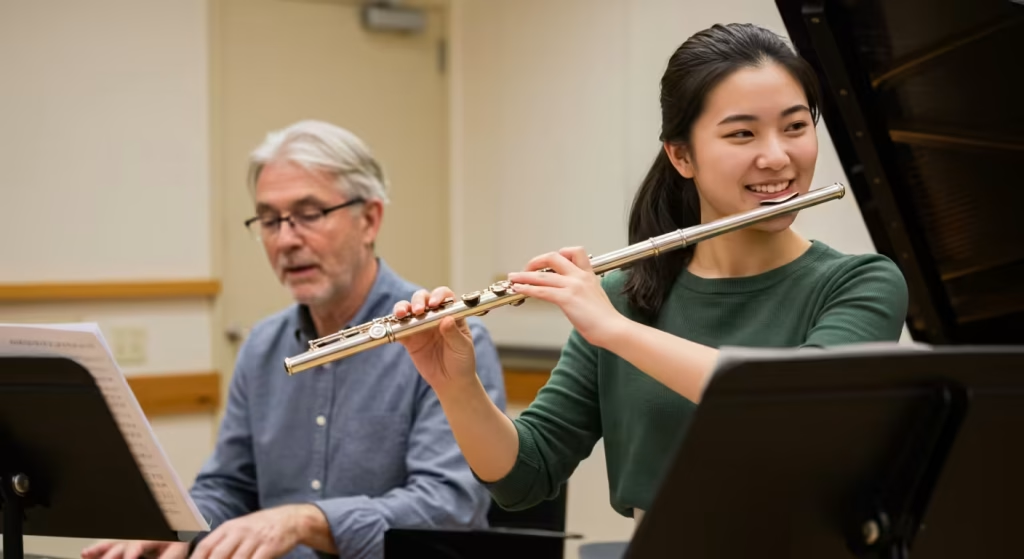
Musical performance offers far more than entertainment—it’s a powerful catalyst for developing essential life skills that benefit individuals throughout their entire lives. From building discipline and emotional intelligence to fostering teamwork and creative problem-solving, music education creates a foundation for success in academics, careers, and personal relationships.
Introduction to Musical Performance and Life Skills
Playing music helps develop crucial skills that extend far beyond the concert hall. Research consistently demonstrates that musical training enhances cognitive function, emotional regulation, and social abilities. The multifaceted nature of musical performance requires simultaneous engagement of motor, cognitive, auditory, and emotional systems, creating a unique learning environment that builds transferable life skills.

Parents and educators increasingly recognize music’s role in developing well-rounded individuals. This comprehensive exploration examines how musical performance builds lasting capabilities that serve students throughout their academic journey and professional careers.

Music Lessons in San Diego with K&M Music School
1 Expert Music Lessons
We offer Piano, Violin, Cello, Guitar, Ukulele, Saxophone, Bassoon, Harp, Voice, and Toddler group lessons for students of all ages and skill levels.
2 Why Choose Us?
- 🎶 Boosts focus and self-discipline
- 🎵 Strengthens cognitive skills
- 🎼 Enhances cultural understanding
- 🎤 Builds confidence through recitals
3 We Welcome Adults Too!
The Science Behind Musical Performance and Brain Development
How Musical Training Changes Brain Structure
Learning music literally reshapes the brain. Musicians demonstrate increased connectivity between brain hemispheres, with the corpus callosum—the bridge connecting left and right brain regions—showing significantly larger size. Musical performance simultaneously engages multiple brain networks responsible for reading, movement, listening, and emotional processing.
These neurological changes occur remarkably quickly. Research indicates measurable brain differences in children after just 15 months of musical instruction. These structural modifications enhance:
- Faster processing of speech sounds
- Improved attention control and focus
- Enhanced working memory capacity
- Stronger executive function abilities
- Better ability to filter background noise

Cognitive Skills Developed Through Musical Performance
Musical performance builds essential thinking skills through regular practice and performance. Musicians develop superior working memory by simultaneously holding musical information while executing complex motor movements—a pianist must remember melodies, read notation, and coordinate hand movements simultaneously.
Pattern recognition, crucial for mathematical thinking, strengthens through understanding musical structures and sequences. A landmark longitudinal study found children receiving musical training showed 27% greater brain development compared to non-musical peers, with particular improvements in language processing and reasoning abilities.
Discipline and Time Management Through Musical Practice
Building Self-Discipline Through Practice Routines

Musical practice inherently builds self-discipline through structured, goal-oriented activity. Beginning musicians might practice 20 minutes daily, while advanced players dedicate 2-4 hours to daily practice. This consistent commitment develops:
- Goal Setting: Breaking complex pieces into manageable sections
- Consistent Effort: Understanding that small daily improvements accumulate
- Self-Monitoring: Constantly evaluating personal performance
- Delayed Gratification: Accepting that results come after sustained effort
Research demonstrates that music students score 31% higher on time management assessments compared to their non-musical peers.
Time Management Skills From Musical Study
Musicians learn efficient time management through:
- Prioritization: Identifying which musical passages require focused attention
- Task Chunking: Dividing practice into concentrated segments
- Deadline Management: Preparing for recitals and performances
- Balanced Scheduling: Integrating practice with other responsibilities
These organizational skills directly transfer to academic homework management, project planning, and eventually workplace productivity.
Emotional Intelligence Development
Self-Awareness Through Musical Expression
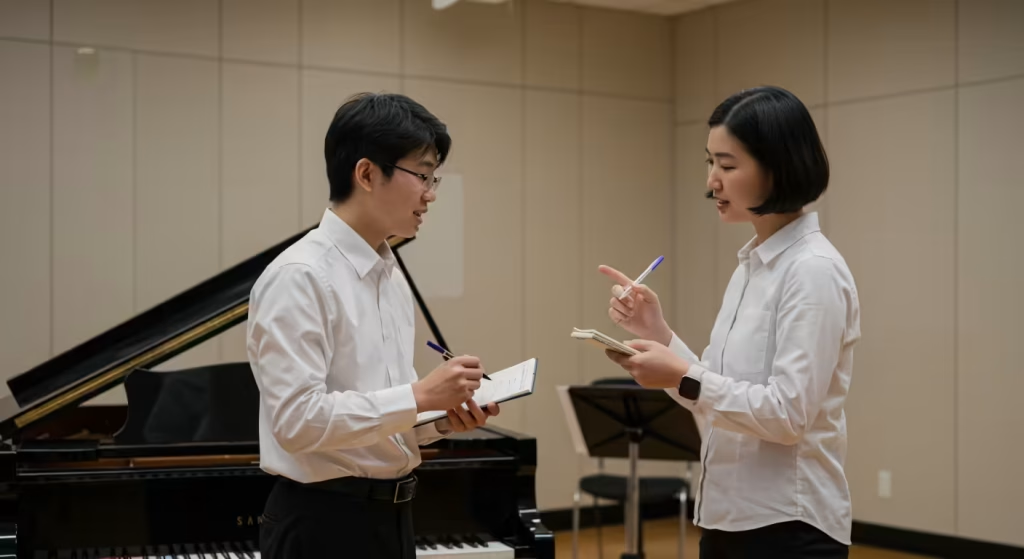
Musical performance builds profound self-awareness as musicians constantly monitor their internal states while playing. They learn to:
- Recognize and release physical tension
- Manage performance anxiety effectively
- Control breathing and physiological responses
- Connect personal emotions to musical expression
Studies indicate children with 3+ years of musical training demonstrate 15% higher emotional intelligence scores compared to non-musical peers.
Expressing Complex Emotions Through Music
Music provides a safe space for exploring and expressing complex feelings that might be difficult to articulate verbally. Through performance, musicians develop skills in:
- Identifying subtle emotional nuances
- Communicating feelings through non-verbal means
- Processing difficult emotions constructively
- Sharing emotional experiences with audiences
This emotional literacy proves invaluable in personal relationships and conflict resolution throughout life.
Social Skills and Teamwork
Collaboration in Musical Ensembles

Group musical performance builds essential teamwork capabilities. In orchestras, bands, and choirs, musicians must:
- Listen Actively: Hearing how individual parts integrate with the whole
- Communicate Nonverbally: Using visual cues and musical signals
- Demonstrate Role Flexibility: Sometimes leading, sometimes supporting
- Problem-Solve Collectively: Working together to improve difficult passages
Survey data indicates that 72% of business executives identify musical training as building the collaborative skills they value most in employees.
Leadership Through Musical Experience
Musical performance develops leadership capabilities through various pathways:
- Section leaders guide peers while following conductors
- Soloists develop confidence performing before audiences
- Chamber groups function without conductors, requiring shared leadership
- Student conductors learn to direct and inspire others
Research shows music students are 33% more likely to assume leadership roles in college organizations compared to their non-musical peers.
Building Confidence and Performance Skills

Self-Confidence Through Regular Performance
Musical performance builds lasting confidence by requiring courage—standing before others, accepting evaluation, and risking mistakes. Through this experience, musicians develop:
- Comfort with visibility and attention
- Resilience when performances don’t go perfectly
- Pride in accomplishing challenging tasks
- Ability to manage nerves under pressure
Studies demonstrate that adults with musical performance experience report 27% higher confidence in professional presentations and public speaking situations.
Professional Presentation Skills
Musicians develop performance elements that transfer directly to professional contexts:
- Physical Presence: Effective posture, movement, and body language
- Preparation Techniques: Mental readiness for important moments
- Recovery Skills: Bouncing back from mistakes or unexpected events
- Professional Etiquette: Appropriate behavior in performance contexts
Problem-Solving and Creative Enhancement
Musical performance builds creative thinking through regular interpretive decisions and improvisation. Musicians constantly make creative choices about:
- How pieces should sound and feel
- Solutions for technically challenging passages
- Personal expression within written frameworks
- New musical ideas through improvisation

Research indicates music students score 31% higher on creative thinking assessments, demonstrating enhanced flexibility and originality in problem-solving approaches.
Stress Management and Emotional Regulation
Musical performance naturally teaches stress management through:
- Breathing Techniques: Deep breathing that calms the nervous system
- Focus Skills: Redirecting attention away from anxiety
- Flow State Access: Regular experience in deeply focused states
- Emotional Expression: Healthy outlets for processing feelings
Musicians demonstrate 23% lower stress levels during challenging life circumstances compared to non-musical individuals.
Age-Specific Benefits
Early Childhood Development

Young children gain unique advantages from early musical training:
- Brain Development: Rapid neural connection formation between ages 2-7
- Language Skills: Enhanced phonological awareness supporting literacy
- Motor Development: Fine motor control through instrument manipulation
- Social Growth: Early collaborative skills through group activities
Teenage Benefits
Adolescents find particular value in musical activities for:
- Identity Formation: Musical styles supporting personal expression
- Peer Connection: Ensemble participation creating healthy relationships
- Emotional Regulation: Constructive outlets during developmental challenges
- Achievement Recognition: Performance success building self-esteem
Adult Learning Benefits

Adults beginning musical training demonstrate:
- Cognitive Flexibility: New neural pathway development regardless of age
- Stress Reduction: Mental breaks from work pressures
- Community Building: Social connections through group music-making
- Lifelong Learning: Continued brain activation and engagement
Research shows adults over 60 beginning musical instruction improve attention, memory, and processing speed within six months.
Academic and Career Applications
Academic Achievement Connections
Multiple studies demonstrate clear connections between musical performance and academic success:
- Music students score 63 points higher on verbal SATs and 44 points higher on math SATs
- Musical participants maintain 20% higher GPAs than non-participants
- Schools with strong music programs achieve 15% higher graduation rates
These benefits occur because musical training develops enhanced memory, improved focus, better sound discrimination, and stronger pattern recognition—all crucial for academic learning.
Career Skill Transfer
Musical performance skills transfer effectively to various career contexts:
- Performance Under Pressure: Managing presentations and deadlines
- Team Collaboration: Successful project teamwork
- Disciplined Practice: Consistent work habits and project management
- Creative Problem-Solving: Innovative approaches to challenges
- Attention to Detail: Quality focus and precision
LinkedIn research indicates 72% of employers consider arts skills, including musical training, essential for hiring decisions.
Practical Implementation Strategies
Creating Effective Practice Environments
Supporting musical development requires appropriate environments featuring:
- Minimal distractions and consistent practice spaces
- Regular scheduling that builds sustainable habits
- Proper equipment and materials
- Positive associations that maintain motivation
Finding Quality Instruction
Effective musical mentors demonstrate:
- Teaching methods matched to individual learning styles
- Balance between challenge and encouragement
- Focus on fundamentals while maintaining enjoyment
- Connection between technical skills and musical expression
Balancing Musical Training
Music education works best within balanced lifestyles that consider:
- Realistic time commitments appropriate for age and experience
- Complementary activities using different skills
- Seasonal planning during busy academic periods
- Joy preservation—keeping music enjoyable rather than overwhelming
Conclusion: The Lifelong Value of Musical Performance Skills
Musical performance builds essential life skills that benefit individuals across all areas of human experience. From cognitive enhancement and emotional intelligence to teamwork and creative problem-solving, musical training creates capabilities that support academic achievement, career success, and personal fulfillment.
The research evidence overwhelmingly demonstrates that musical performance changes brain structure, enhances cognitive abilities, and builds crucial soft skills valued in educational and professional contexts. These benefits are accessible to individuals of all ages who commit to regular musical practice and performance.
Whether beginning in childhood or adulthood, musical performance offers transformative potential that extends far beyond musical notes and rhythms. The discipline, creativity, collaboration, and confidence developed through musical training create a foundation for lifelong learning and achievement.
Ready to experience how musical performance builds essential life skills? Consider exploring local music programs, community ensembles, or private instruction opportunities. The journey begins with a single note—and the skills you’ll develop will resonate throughout your entire life.
Music Lessons in San Diego with K&M Music School
1 Expert Music Lessons
We offer Piano, Violin, Cello, Guitar, Ukulele, Saxophone, Bassoon, Harp, Voice, and Toddler group lessons for students of all ages and skill levels.
2 Why Choose Us?
- 🎶 Boosts focus and self-discipline
- 🎵 Strengthens cognitive skills
- 🎼 Enhances cultural understanding
- 🎤 Builds confidence through recitals
3 We Welcome Adults Too!
FAQ: How Musical Performance Builds Essential Life Skills
Getting Started
Q: What’s the best age to start music? A: Any age works! Kids 2-7 get rapid brain development, teens build identity and social skills, adults gain stress relief and cognitive flexibility. Research shows benefits at every life stage.
Q: How much practice is needed? A: Just 20-30 minutes daily shows brain changes in 15 months. The sweet spot is 3-5 hours weekly for significant benefits without stress.
Q: Which instrument is best? A: All instruments build life skills. Choose based on interest: piano for cognitive development, strings for patience, winds for focus, drums for coordination, voice for confidence.
Academic & Brain Benefits
Q: Does music really help with school? A: Yes! Music students score 63 points higher on verbal SATs, 44 points higher on math SATs, and maintain 20% higher GPAs. They also graduate at higher rates.
Q: How does music change the brain? A: Music literally reshapes the brain, creating better connections between hemispheres and improving memory, attention, and executive function in just 15 months.
Q: Does music help with math and science? A: Absolutely. Musical pattern recognition enhances mathematical thinking, and music students show 27% greater brain development in areas crucial for STEM subjects.
Social & Emotional Skills
Q: How does music build emotional intelligence? A: Music teaches self-awareness, emotional expression, and empathy through performance. Kids with 3+ years of training score 15% higher on emotional intelligence tests.
Q: Can shy kids benefit from music? A: Yes! Music provides non-verbal expression and gradual confidence building. Many introverted children find their voice through musical performance.
Q: How does group music build teamwork? A: Ensembles teach active listening, nonverbal communication, role flexibility, and collective problem-solving. 72% of executives value these musical teamwork skills.
Career & Professional Benefits
Q: Do music skills help in careers? A: Definitely. Musical training develops performance under pressure, attention to detail, creative problem-solving, and leadership. 72% of employers consider arts skills essential for hiring.
Q: Does music help with public speaking? A: Yes! Musicians learn breath control, stage presence, and nerve management. Adults with musical experience report 27% higher confidence in presentations.
Stress & Mental Health
Q: Can music reduce stress? A: Music naturally teaches breathing techniques, focus skills, and emotional expression. Musicians show 23% lower stress levels during difficult times.
Q: Is it worth it if my child won’t become a professional musician? A: Absolutely! The goal isn’t creating professionals—it’s developing well-rounded individuals. The cognitive, social, and emotional benefits last a lifetime and enhance every aspect of life.
Practical Concerns
Q: What if my child wants to quit? A: Common and manageable. Identify the cause (boredom, difficulty, scheduling), adjust the approach, focus on enjoyment, and remember that even temporary musical training provides lasting benefits.
Q: How much does music education cost? A: Beginner instruments: $100-$500, lessons: $25-$75 per session, group classes: $50-$150 monthly. Many schools offer rentals and financial assistance. The life skills investment far exceeds the cost.
Q: Can adults learn effectively? A: Yes! Adults have better focus, analytical thinking, and motivation than children. Adults over 60 show improved attention and memory within 6 months of starting music.
Katherine Dvoskin, Co-Founder of K&M Music School
Katherine Dvoskin, Co-Founder of K&M Music School
She is the co-founder of K&M Music School in San Diego, is a passionate music educator with over 25 years of experience. She offers expert piano lessons in San Diego. At K&M Music School, we teach Piano, Violin, Cello, Saxophone, Bassoon, Harp, Voice, and Toddler group lessons. Katherine's blog shares insights on music education, covering topics from toddler music group lessons to adult music lessons. Whether you're seeking private music lessons or group music lessons for toddlers near you, welcome to K&M Music School.

