Are Group Piano Lessons a Good Value? A Cost Breakdown

Katherine Dvoskin, Co-Founder of K&M Music School
She is the co-founder of K&M Music School in San Diego, is a passionate music educator with over 25 years of experience. She offers expert piano lessons in San Diego. At K&M Music School, we teach Piano, Violin, Cello, Saxophone, Bassoon, Harp, Voice, and Toddler group lessons. Katherine's blog shares insights on music education, covering topics from toddler music group lessons to adult music lessons. Whether you're seeking private music lessons or group music lessons for toddlers near you, welcome to K&M Music School.
Group piano lessons save money and still give good learning.
Cost: Group lessons are $15–35 per class. Private lessons are $30–80.
Yearly cost: Groups cost $600–1,400. Private lessons cost $1,200–3,200.
Class size: Groups have 3–8 students. Private is one-on-one.
Social: Group lessons include peer interaction. Private lessons have less.
Performances: Groups often have group recitals. Private lessons focus on solo recitals.
Learning pace: Groups follow a set plan. Private lessons adjust to each student.

Music Lessons in San Diego with K&M Music School
1 Expert Music Lessons
We offer Piano, Violin, Cello, Guitar, Ukulele, Saxophone, Bassoon, Harp, Voice, and Toddler group lessons for students of all ages and skill levels.
2 Why Choose Us?
- 🎶 Boosts focus and self-discipline
- 🎵 Strengthens cognitive skills
- 🎼 Enhances cultural understanding
- 🎤 Builds confidence through recitals
3 We Welcome Adults Too!
Group piano lessons make music lessons more affordable for families. They give kids quality learning without costing too much. Learning with friends adds social benefits that private lessons don’t have. Teachers see that group lessons work well and save money. Students in groups build teamwork, stay motivated, and gain confidence. This helps them grow as musicians.
Understanding Group Piano Lesson Costs
Average Group Piano Lesson Pricing
Group piano lessons usually cost $15–35 per class. The average price is about $25.
Prices depend on where you live. Cities often charge $25–35, while suburban or rural areas charge $15–25. Big coastal cities with high living costs are usually the most expensive.
Studios sometimes give summer or back-to-school discounts to bring in new students.
Typical Group Piano Lesson Pricing by Region:
- Northeast US: $28-35 per lesson
- Southeast US: $18-28 per lesson
- Midwest US: $15-25 per lesson
- Southwest US: $20-30 per lesson
- West Coast US: $25-35 per lesson
Factors That Affect Group Piano Lesson Prices
Smaller groups of 3–4 students cost more but give more personal attention. Bigger groups of 6–8 cost less but have less focus on each student.
Teachers with high degrees or lots of experience charge more. Their teaching quality often makes the cost worth it.
Lesson length changes the price. Shorter classes cost less, but 45–60 minutes is best for good progress.
Music schools with top pianos and soundproof rooms cost more. Community centers or home studios cost less.
Hidden Costs in Group Piano Lessons
Music books and method materials represent the most common additional expense. Group piano programs typically require specific method books costing $15-30 per student. Some programs include materials in their fees, while others require separate purchases.
Recital fees can surprise families. Many programs charge $10–25 per student to pay for space, programs, and snacks. But recitals give students good practice and motivation.
Having a piano at home is important. Families may rent or buy keyboards ($200–800) or pianos ($2,000–8,000) for practice.
Travel costs add up too. Gas, parking, and time should be included when looking at total lesson costs.
Group Piano Lessons vs Private Piano Lessons Cost Comparison
Direct Price Comparison Analysis
Private lessons cost $30–80 each. Group lessons cost $15–35 each. Families save 50–70% with group lessons.
For a year, private lessons cost $1,200–3,200. Group lessons cost $600–1,400. Families save $600–1,800 per year.

But private lessons give full teacher attention for 30–60 minutes. In group lessons, time is shared. You need to compare how much personal time each option gives.
Annual Cost Comparison (40 lessons):
- Group Piano Lessons: $600-1,400
- Private Piano Lessons: $1,200-3,200
- Potential Annual Savings: $600-1,800
Value-Added Benefits in Group Settings
Group piano lessons give social benefits that private lessons don’t.
Students learn by watching friends, playing together, and staying motivated with friendly competition.
Group lessons teach ensemble skills like listening, rhythm, and teamwork.
Peers encourage each other, which helps everyone improve faster.
Performing for classmates first reduces stage fright and builds confidence for bigger audiences.
Private lessons cost more but help with advanced skills. They are best for students preparing for competitions, auditions, or music careers.
Private lessons work well for students with learning challenges. They also help students who need a special pace.
Some students do well in groups, but others need constant personal feedback.
Competition prep usually needs private lessons for focused coaching.
Music Lessons in San Diego with K&M Music School
1 Expert Music Lessons
We offer Piano, Violin, Cello, Guitar, Ukulele, Saxophone, Bassoon, Harp, Voice, and Toddler group lessons for students of all ages and skill levels.
2 Why Choose Us?
- 🎶 Boosts focus and self-discipline
- 🎵 Strengthens cognitive skills
- 🎼 Enhances cultural understanding
- 🎤 Builds confidence through recitals
3 We Welcome Adults Too!
Are Group Piano Lessons Worth the Investment?
Educational Quality in Group Piano Lessons
Group piano lessons help students learn as well as private lessons.
Group students often get better at sight-reading, playing with others, and building confidence.
Group lessons boost motivation because of friends. Many students stay longer and build stronger skills.
Students can switch to private lessons when they get advanced. Programs make this move easy when they need more focus.
Group piano has a 60-80% completion rate. Private lessons are lower at 50-70%. Social support helps students keep going.
Group students do well in ensemble skills, sight-reading, and confidence. They also match private students in technique and learning pieces.
Surveys show students enjoy group lessons, friends, and value for money. Parents are happy with progress, cost, and their children’s excitement.
Parents also like the social benefits, lower costs, and balanced music education. Many appreciate the low-pressure and welcoming group setting.
Group Piano Lesson Cost Breakdown by Age Groups
Preschool Group Piano Lessons (Ages 3-5)
Preschool piano lessons cost $15-25 per class and last 30-45 minutes. Kids learn music through games, basic keyboard skills, and fun activities.
Materials cost $10-15 for books, stickers, and activities. Many programs provide instruments and supplies in class, so families pay less.
Parents often join in, which helps kids learn at home and creates family bonding.
These lessons build brain skills, social skills, and a love of music that can last a lifetime.
Elementary Group Piano Lessons (Ages 6-12)
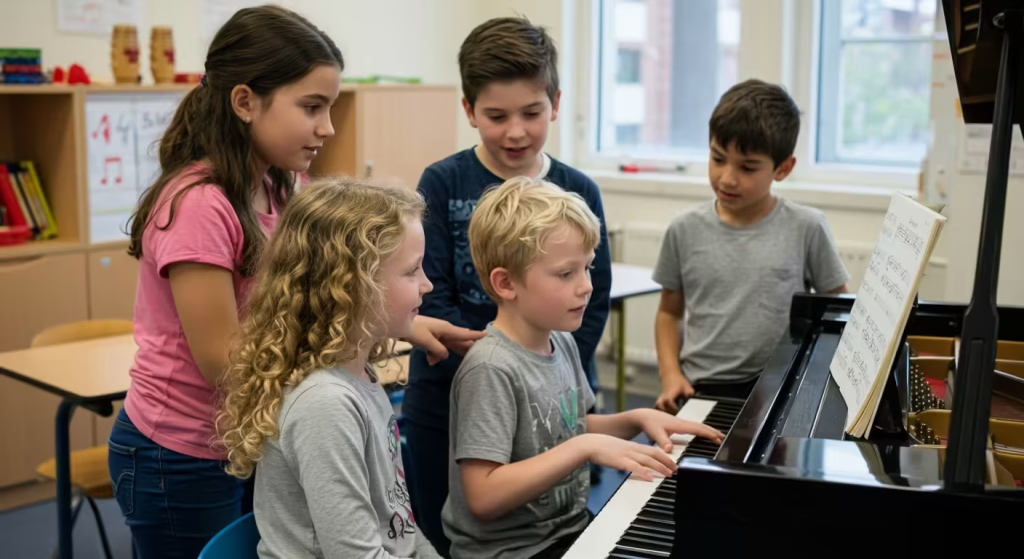
Elementary group piano lessons cost $20-30 each. They last 45-60 minutes. Kids this age can focus longer and learn harder music skills.
Groups of 4-6 students work best for kids. They give friends to play with and still enough teacher attention. Larger groups cost less but may hurt learning.
Students learn reading notes, basic theory, exercises, and simple songs. Books cost $15-25 per level, and most students finish 2-3 levels each year.
Families must balance lessons with sports and other activities. Group piano lessons give strong value compared to other options.
Teen and Adult Group Piano Lessons

Teen and adult group piano lessons usually cost $25-35 per class. These lessons are longer and use harder material.
Evening and weekend classes may cost more but give busy students flexibility.
Older students learn theory, improvisation, popular music, and performance skills. The extra content makes the higher cost worth it.
Adults learning for fun find great value in groups. Serious students may later need private lessons to advance further.
Ways to Maximize Group Piano Lesson Value
Choosing Cost-Effective Group Piano Programs
Check teacher credentials carefully. Good teachers may cost more but give better results. Look for music degrees, piano training, and group teaching experience.
Check the curriculum. Strong programs use clear books, goals, and performance steps.
Look at facilities and equipment. Good pianos and acoustics help students learn better, even if lessons cost more.
Read reviews from families. Positive feedback shows the program is worth the money.
Questions to Ask When Evaluating Programs:
- What are the instructor’s qualifications and experience?
- How many students are typically in each group?
- What method books and materials are required?
- Are performance opportunities included?
- What is the makeup lesson policy?
- Are trial lessons available?
Budget-Friendly Tips for Group Piano Lessons
Seasonal discount opportunities often provide 10-20% savings on registration fees or tuition. Many studios offer back-to-school specials, summer discounts, or holiday promotions throughout the year.
Many programs give discounts for families with more than one child. The second or third child often gets 10-25% off tuition. This makes group piano lessons cheaper for big families.
Long-term commitment savings may include semester or annual payment discounts. Some programs offer 5-10% discounts for paying several months in advance.
Shared transportation arrangements with other families reduce travel costs and time investments. Carpooling creates community connections while lowering the total cost of participation.
Supplementing Group Lessons Cost-Effectively
Free online practice resources supplement group instruction without additional costs. YouTube tutorials, app-based games, and method book companion websites provide extra practice support.
Borrowing music books from the library saves money. Many libraries have piano books and sheet music.
Having a set practice space and schedule at home helps students get the most out of lessons. Family support also makes practice easier.
Practicing with classmates gives more playing time. It also builds skills without extra cost.
Group Piano Lesson Formats and Their Costs
Traditional In-Person Group Piano Lessons
Classroom lessons cost more because of rent, piano care, and utilities. Better spaces with many pianos and good sound cost more but help students learn better.
Studios with top pianos, recording tools, and nice rooms charge higher prices.
Smaller groups (3–4 students) cost more but give more teacher time. Bigger groups (6–8 students) cost less but give less attention.
Travel, parking, and time also add hidden costs to lessons.
Online Group Piano Lessons
Good internet, a camera, and audio gear are needed. Basic setups cost $100–300. Pro setups cost $500–1,000.
Online group programs cost $30–80 a month. They often include lessons, practice tools, and teacher feedback.
At home, students need a keyboard or digital piano with good sound and weighted keys. Budget ones start at $200. Professional ones cost $800–2,000.
Better internet and music apps may cost $20–50 more each month.
Hybrid Group Piano Lessons
Hybrid lessons mix online and in-person classes. They cost about 10–20% more but give both flexibility and personal interaction.
Flexibility premium costs reflect the additional planning and technology requirements for hybrid programs. However, the convenience and adaptability often justify higher fees for busy families.
Sharing resources gives students good pianos in class and online tools at home.
Flexible schedules let students choose in-person or online. This way, they don’t miss lessons and keep learning.
Financial Benefits of Group Piano Lessons
Immediate Cost Savings Analysis
Group piano costs about $60–140 a month. Private lessons cost $120–320. Families save $60–180 each month.
Sibling discounts make lessons cheaper for families with more kids.
Carpooling and shared locations save gas and time.
Some programs share books and fees, so families pay less.
Long-Term Financial Advantages
Multi-year cost projections reveal substantial savings accumulating over time. A family saving $1,200 annually on group piano lessons saves $6,000 over five years of musical education.
Group lessons usually stay the same price. Private lessons often cost more each year.
Students can play on good pianos in class without buying one right away.
Recitals and performances are included, so families don’t pay extra fees.
Group lessons give more value, especially for beginners and intermediate students.
They teach music theory, performance skills, and confidence at lower costs.
Group classes also help kids make friends, work as a team, and feel confident on stage.
Strong foundations from group lessons save money later by avoiding extra lessons.
Common Concerns About Group Piano Lesson Value
Individual Attention in Group Settings
In group classes, teachers give feedback to each student using rotation and corrections.
Feedback is less than private lessons, but students also learn by watching peers.
Good teachers track progress for all students and give the right challenges.
They also adapt lessons with new explanations or practice tips to fit each student’s needs.
Learning Pace Variations
Teachers plan lessons so all students can learn at their own speed.
Faster students can help slower ones, and everyone gets the right challenge.
Advanced students stay engaged with leadership roles, peer teaching, and extra materials.
Good programs give extra help, easier work, and practice tips for struggling students.
Teachers can change songs, skills, or theory to fit the group while still teaching the basics.
Signs of good programs are trained teachers, student progress, concerts, and happy parents.
Group students learn basics, songs, and theory as fast as private students in the first 2–3 years.
Group lessons often teach theory better because students share ideas.
Technical skills grow the same, and classmates help each other fix mistakes.
Families can save about $1,000 each year. In 5–10 years, that’s $5,000–10,000 saved.
Students in group piano for 3–5 years usually keep their skills. They also keep playing, just like private students.
Group Piano Lesson Cost Comparison by Location
Music School vs. Community Center Pricing
Music schools charge $25–35 per group lesson. They have great teachers, strong programs, and good instruments.
Community centers cost $15–25 per lesson. They are cheaper but teacher quality and facilities can vary.
Differences include instrument care, room sound, lesson plans, and teacher support. These affect how well students learn.
Parking, flexible schedules, and easy locations also add value beyond just lesson price.
Private Teacher vs. Institution Group Lessons
Private teacher prices change a lot. They depend on the teacher’s skills and the local market. Some charge less than schools for group lessons.
Music schools cost more because they add fees for buildings, staff, and insurance. But they offer more stability.
Schools usually have licenses, insurance, and professional standards. This makes them more reliable than some private teachers.
When choosing, think about teacher availability, lesson policies, and long-term program stability.
Regional Cost Variations
Group piano lessons cost more in big cities because living costs are higher.
Urban areas have more options but often higher prices. Rural areas may be cheaper but with fewer choices.
Lesson costs change by state. Southern and Midwestern states cost less. Northeast and West Coast states cost more.
Travel costs matter too. Long drives in rural areas can make lessons more expensive overall.
Making the Group Piano Lesson Investment Decision
Budget Planning for Group Piano Lessons
Cost worksheets should include tuition, books, recital fees, travel, and instrument costs.
Monthly payment plans make lessons easier to afford by spreading out costs.
Families should also plan for extras like makeup lessons, special shows, or repairs.
It’s smart to compare lesson costs to other activities to see what gives the best value.
Trial Periods and Money-Back Guarantees
Trial lessons let families test the teacher, program, and student interest before paying.
Refund policies show how confident a program is. Generous refunds mean they care about quality and satisfaction.
Satisfaction guarantees protect families and push programs to keep high standards.
Transfer and cancellation options give flexibility if family plans change. Reasonable rules show programs understand family needs.
Signs Group Piano Lessons Are Good Value
Student progress shows in excitement, steady practice, new skills, and a positive attitude.
Families check if skills match the money spent.
Family satisfaction includes student happiness, parent convenience, results, and the experience.
Long-term commitment shows the program is working and worth it.
Frequently Asked Questions About Group Piano Lesson Value
Cost and Payment Questions
Q: Are group piano lessons cheaper than private lessons? A: Yes. Group lessons cost about 50-70% less. Group sessions are $15-35. Private lessons are $30-80.
Q: What payment options are typically available? A: Most programs offer monthly payments, semester discounts, and annual payment plans. Some provide family discounts for multiple children or financial assistance for qualifying families.
Q: Do group piano lessons require long-term contracts? A: Contract requirements vary by program. Many offer month-to-month enrollment, while others require semester commitments. Always review cancellation policies before enrolling.
Q: Are there extra fees? A: Yes. Books cost $15–30. Recital fees are $10–25. You may also need to rent or buy an instrument.
Educational Quality Questions
Q: Do students learn well in group lessons? A: Yes. Beginners and intermediate students learn as much as in private lessons. Group students often get better at sight-reading and playing with others.
Q: How fast do students learn in groups? A: Most play simple songs in 2–3 months and build strong basics in the first year.
Q: Are group lessons good for all ages? A: Yes, they work for preschoolers to adults with age-appropriate classes.
Q: Can students switch to private lessons? A: Yes, many move to private lessons later with strong skills from group classes.
Practical Considerations

Q: What equipment do students need for group piano lessons? A: Students typically need method books and access to a piano or keyboard for home practice. Some programs provide instruments during lessons but recommend home instruments for practice.
Q: How many students are in group piano lessons? A: Usually 3–8 students. Most classes have 4–6 for the best balance.
Q: Do students get makeup lessons? A: It depends on the program. Some give makeup classes. Some share online materials. Some already include missed lessons in the price.
Q: Do group lessons include performances? A: Yes. Most programs have recitals, small concerts, and group playing to build confidence.
Real Student and Parent Experiences
Success Stories from Group Piano Lessons
The Johnson family saved $2,400 a year with group piano lessons. Their three kids learned strong skills and kept playing through high school. One child even earned a music scholarship.
Eight-year-old Sarah was shy before lessons. Her classmates gave her support and confidence. Now she performs solos at school and family events.
Mark felt nervous in private lessons but enjoyed group piano with other beginners. After two years, he plays at church and leads sing-alongs.
Jessica gained leadership skills by helping classmates. Now she tutors younger students and wants to study music education in college.
Challenges and Solutions
Parents saw that teachers still gave personal feedback in group lessons. Kids stayed motivated with practice buddies who kept them accountable.
Makeup lessons and flexible schedules helped avoid conflicts. Discounts, payment plans, and scholarships made lessons affordable.
Getting Started with Group Piano Lessons
Research and Comparison Process
Make a cost chart that shows tuition, books, travel, and extra fees. Check teacher experience, the curriculum, and what families say.
Visit the school and watch how teachers work with students. Read reviews, ask for references, and talk to families for honest feedback.
Budget Preparation Steps
Getting Started Checklist:
- Research local group piano lesson programs
- Compare costs and value propositions
- Visit facilities and meet instructors
- Read reviews and speak with current families
- Calculate total annual costs and budget impact
- Schedule trial lessons or program consultations
- Review policies for cancellation and makeups
- Plan for instrument needs and home practice setup
Conclusion
Group piano lessons are a smart choice. They cost less but still give strong music education. They work well for beginners and intermediate students. Kids build skills, gain confidence, and make friends. The benefits last long-term and help in school and life. Families save money while kids keep making progress.
Parents can choose group piano lessons with confidence. They give good teaching, peer learning, and big savings compared to private lessons. Group lessons mix low cost, quality learning, and social growth. This makes them a smart choice for a child’s music future.
They are budget-friendly, build strong music skills, and encourage teamwork. The benefits last a long time and make the cost worth it.
Don’t just dream about playing—make it a reality. Discover the joy and confidence that come from mastering an instrument with our supportive instructors. Your musical journey is unique, and we’re here to help you every step of the way. Explore our lessons and start your story today.
Katherine Dvoskin, Co-Founder of K&M Music School
I hope you enjoy this blog post! If you're interested in scheduling a free trial lesson, just click.
Author: Katherine Dvoskin | Co-Founder of K&M Music School
Published August 25th, 2025