80/20 Piano Practice Plan for Beginners (20 Minutes a Day)


You don't need to practice piano for hours every day. You can make real progress with just 20 minutes a day. This plan uses the 80/20 rule, so you focus on the few exercises that give the biggest results. Instead of long, frustrating practice, you follow a simple routine that builds skills faster.
This guide works for busy adults and beginners of any age. We will show you exactly how to use your 20 minutes to master the instrument without burnout.

Table of Contents ⬇️
What Is the 80/20 Piano Practice Plan?
The 80/20 rule (Pareto Principle) states that 20% of your efforts create 80% of your results. Italian economist Vilfredo Pareto first noticed this pattern in the early 1900s. In piano learning, most beginners waste time on activities that don't move the needle.
The 80/20 approach focuses on high-impact activities. These are the fundamentals that appear in every piece of music you'll ever play:
- Scales & Finger Exercises: Build coordination and speed.
- Chord Progressions: Unlock hundreds of popular songs instantly.
- Rhythm Training: Improves your timing and "feel."
- Sight-Reading: Helps you learn new music faster.
Everything else is the 80% that matters less. Advanced techniques, extensive theory, and perfecting pieces beyond your level can wait.
Why 20 Minutes Is the Perfect Length
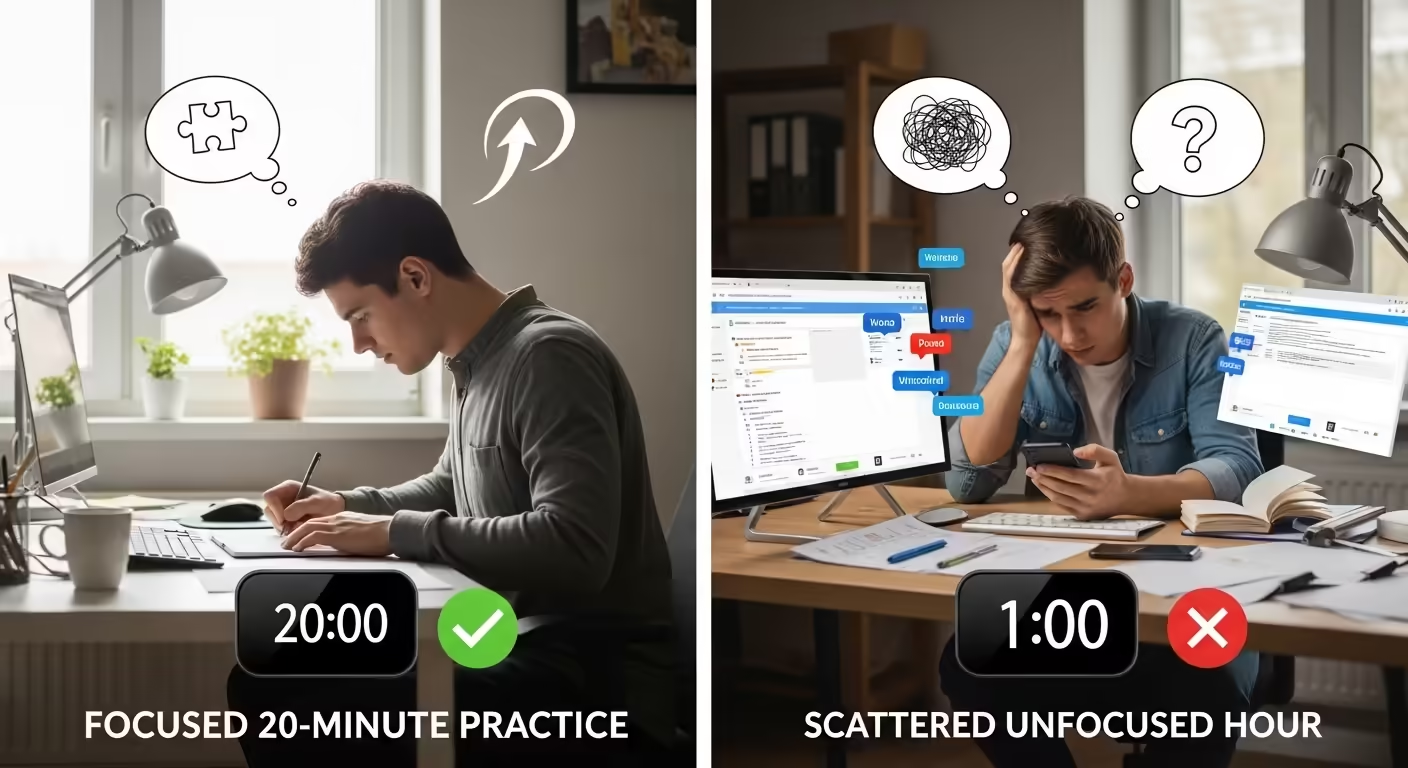
Twenty minutes hits the sweet spot for learning. Research on attention spans shows that focus peaks during short, intensive sessions. After 20-25 minutes, your concentration starts to drift.
Quality beats quantity every time. Twenty minutes of focused practice builds more skill than an hour of mindless repetition. This duration also fits real life. Busy adults can find 20 minutes before work. Students can practice before homework.
Distributed practice (shorter daily sessions) beats massed practice (long occasional sessions) for retention. Your fingers remember patterns better when you reinforce them daily.
The Complete 20-Minute Plan (Step-by-Step)

Here breaks down exactly what to do each day. Follow this structure, and you'll see steady improvement.
Min 1-3: Warm-Up (3 Minutes)
Start every session with warm-ups. Cold fingers make mistakes. Try simple 5-finger patterns or chromatic scales. Keep the tempo slow. This isn't a race; it's about waking up the connection between brain and fingers.
Min 4-8: Scales & Technique (5 Minutes)
Scales are the 20% that unlock the 80%. Master your scales, and everything else becomes easier. Start with C Major and A Minor. Use a metronome at 60 BPM.
Min 9-13: Chords (5 Minutes)
Chords are magical. Learn four basic chords (C, F, G, Am), and you can play thousands of songs. Practice the I-IV-V progression (C-F-G-C). Read our Music Theory Guide to understand why these chords work together.
Min 14-18: Sight-Reading (4 Minutes)
Sight-reading transforms you from someone who memorizes songs to someone who can play anything. Read through new music slowly without stopping. Don't aim for perfection; aim for forward momentum.
Min 19-20: Review (2 Minutes)
End on a high note. Play something you've already mastered and enjoy. This creates positive associations with practice, making you eager to return tomorrow.
Daily Practice Generator
Don't know what to play today? Click below to generate a focused 20-minute session.
How to Customize Your Plan
Your musical goals should shape your practice. Here is how to tweak the plan:
Goal: Pop Songs
Increase chord practice to 7 minutes. Reduce scales to 3 minutes. Focus on smooth transitions between chords like C to F.
Goal: Classical
Maximize sight-reading and technique. Spend 6 minutes on scales and 5 minutes on sight-reading. Add arpeggios.
Common Beginner Mistakes
Avoid these traps to keep your progress fast.
- Practicing too many things: Don't try to learn 5 songs at once. Focus on one method book.
- Skipping fundamentals: Scales are tools, not chores. Every hour on scales saves you 5 hours learning songs.
- Inconsistency: Missing one day is fine. Missing three days sets you back.
Essential Tools and Resources
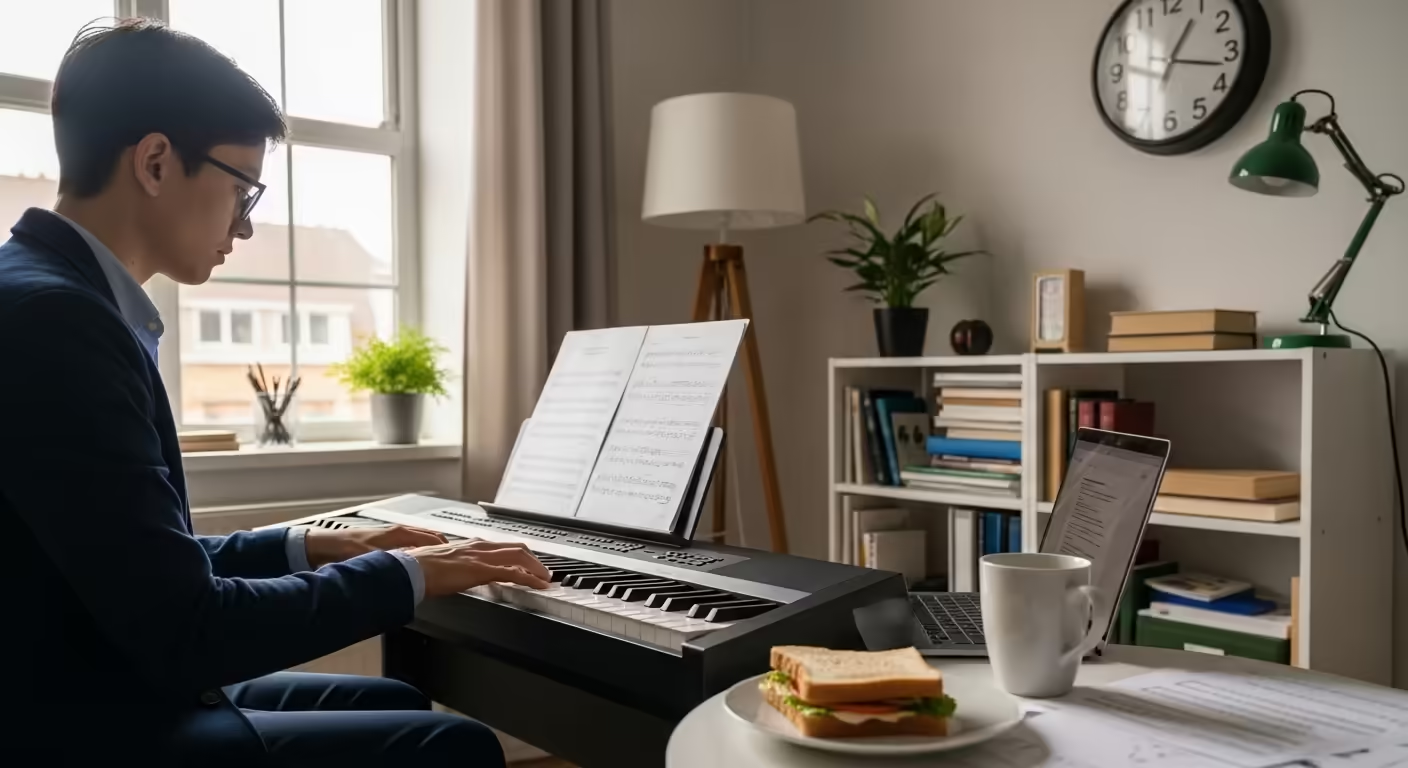
You don't need a grand piano. Start with a quality digital keyboard with 88 weighted keys (like a Yamaha P-45). You also need a Metronome (non-negotiable for timing) and a Music Stand to prevent neck pain.
For adult learners, we recommend method books like "Alfred's Basic Adult Piano Course".
Sample Weekly Schedule
Monday: New scales (Right hand only). New chord progression.
Tuesday: Scales (Left hand). Review chord transitions.
Wednesday: Hands together scales. Sight-read rhythm focus.
Thursday: Increase scale tempo by 5 BPM. Practice chord inversions.
Friday: Review all material. Record yourself to hear progress.
Staying Motivated
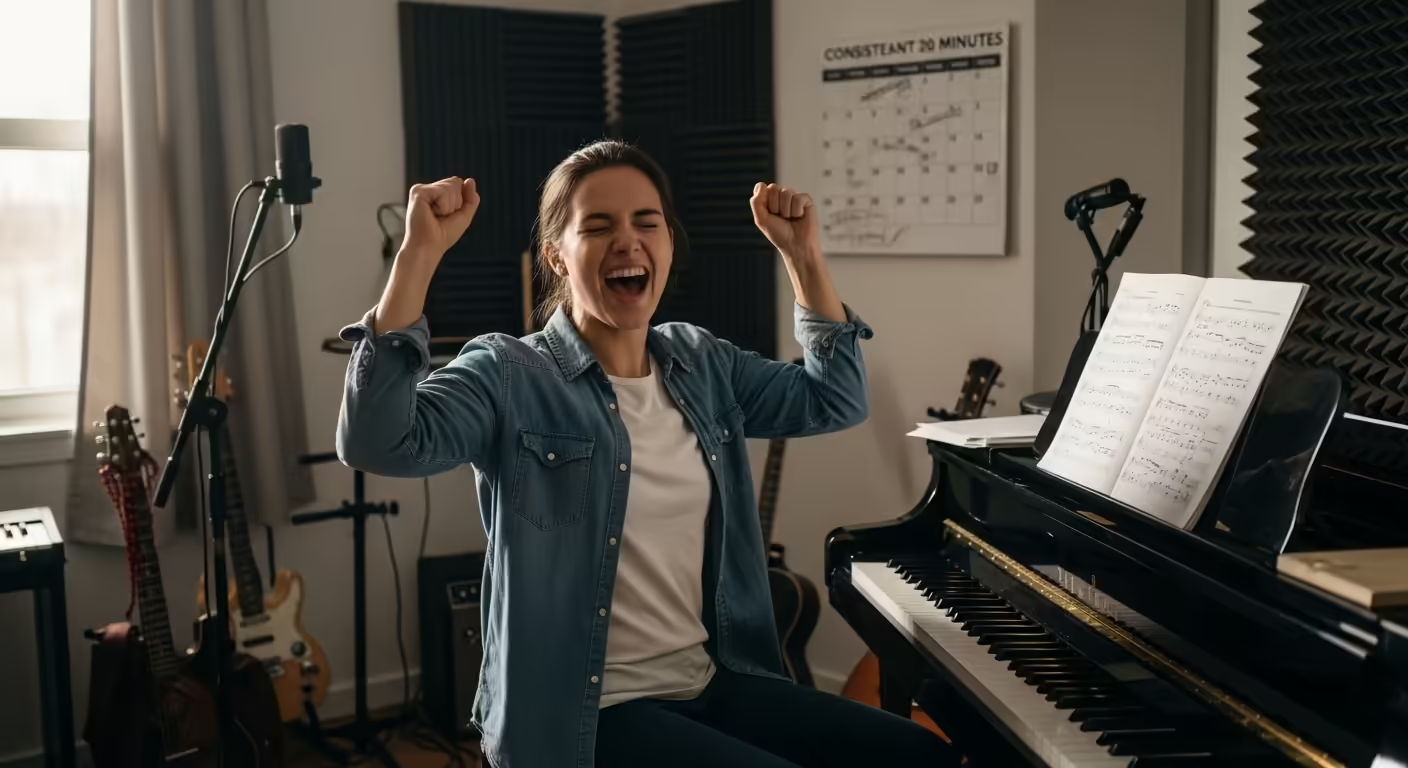
Big goals feel overwhelming. Set micro-goals like "Master C Major at 80 BPM." Achieving these releases dopamine, which fuels your motivation. Also, track your progress. Keep a simple log of what you practiced and what improved.
Frequently Asked Questions
Can I really learn in 20 minutes a day?
What if I miss a day?
Do I need a teacher?
Conclusion: Your 20 Minutes Start Now
The 80/20 plan eliminates overwhelm. You know exactly what to do. Progress happens through consistency, not perfection. Start your first session today. Open your keyboard, set a timer, and begin.
Katherine Dvoskin, Co-Founder of K&M Music School
Katherine Dvoskin, Co-Founder of K&M Music School in San Diego, is a passionate music educator with over 25 years of experience. She offers expert piano lessons in San Diego. At K&M Music School, we teach Piano, Violin, Cello, Saxophone, Bassoon, Harp, Voice, and Toddler group lessons. Katherine's blog shares insights on music education, covering topics from toddler music group lessons to adult music lessons. Whether you're seeking private music lessons or group music lessons for toddlers near you, welcome to K&M Music School.