
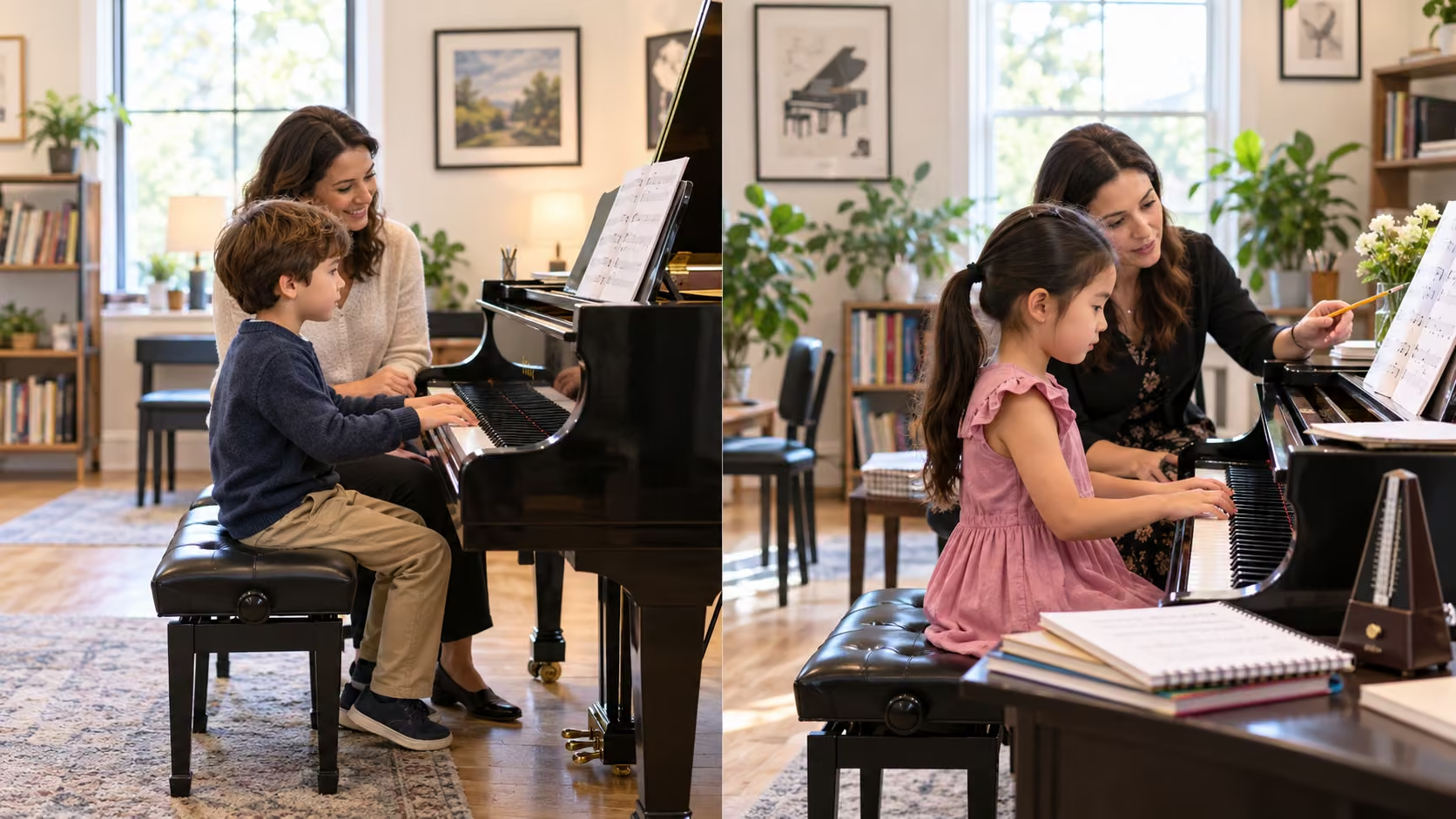

Short answer: How often should a child take piano lessons? One private lesson a week suits most children, at 30 minutes for students under 12.
Twice-weekly lessons help in specific cases — a recital, an exam, or an audition on the calendar, with practice already consistent at home. They cost roughly double.
The thing almost nobody tells parents: lesson frequency sets the pace, but practice volume sets the result. A second lesson adds supervision. It cannot add practice.

How Often Should a Child Take Piano Lessons? The Short Answer
You signed your child up for piano, paid the first month, and then a small question crept in. Is one lesson a week actually enough?
Most parents ask it on the first phone call to a studio. Most never get a straight answer, because the honest one isn't a sales pitch.
Here it is: one 30-minute private lesson a week suits most children.
| Question | Recommendation |
|---|---|
| Best schedule | Once a week for most children |
| Lesson length | 30 minutes for ages 5–12 |
| Twice-weekly lessons | Worth it for ages 8+ with a performance goal |
| Every other week | Usually not enough for a child |
| Daily practice | Roughly the child's age × 2, in minutes |
| What matters most | Regular practice, not more lessons |
Weekly instruction sets a steady rhythm, and it leaves enough room between lessons to practice what the teacher assigned. That gap is not dead time — it's where the learning happens. The lesson shows a child what to do. The days at home are where they learn to actually do it.
One honest limit is worth stating up front: twice as many lessons does not produce twice the progress. Growth depends on the student and on what happens between sessions.
Adults ask the same question about themselves, and the answer is similar — though most adults prefer 45 or 60 minutes once a week.
Weekly vs. Twice-Weekly Piano Lessons: What Each Gives You
Both schedules work. They solve different problems.
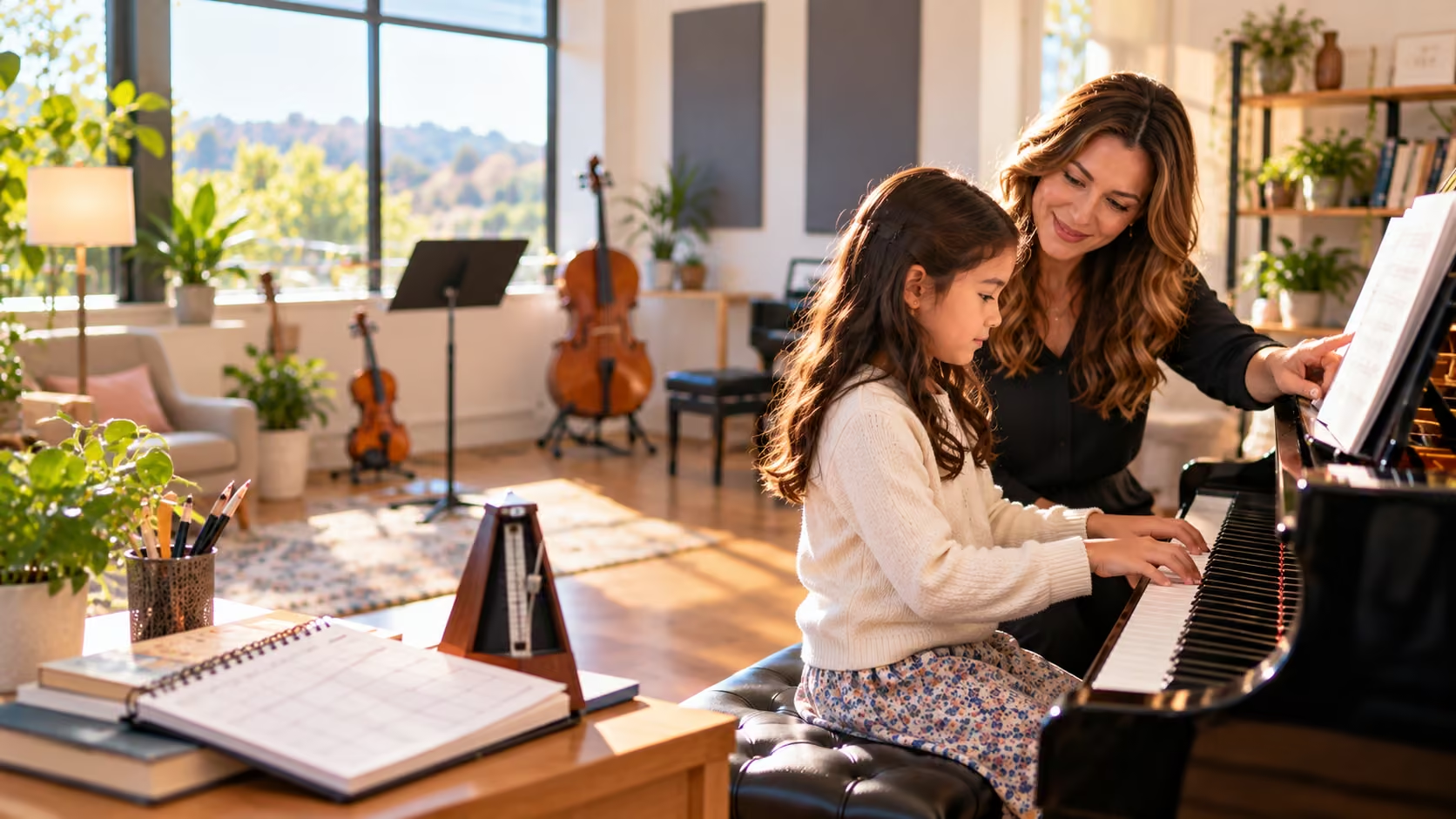
A weekly lesson gives a child a clear plan and six days to build the habit of following it.
What one weekly lesson gives you
- A clear plan for the week ahead
- Enough breathing room for a practice habit to form
- Lower cost, and one trip instead of two
- A schedule that survives school, sports, homework, and siblings
For most families this is the right starting point, and it's by far the easiest schedule to sustain through a long school year.
What twice-weekly lessons give you
- Shorter gaps between teacher check-ins
- Faster correction of hand position, rhythm, and reading habits
- More guided repetition with the teacher in the room
- Less time for a small error to harden into a habit
- A real advantage before a recital, exam, or audition
Notice the pattern in that list. A second lesson buys more teacher time and more supervision. That's genuinely valuable — but it's a different thing from buying more progress.
| Factor | Once a week | Twice a week |
|---|---|---|
| Cost | Lower | About double |
| Travel | One trip | Two trips |
| Catching mistakes | Within a week | Within 3–4 days |
| Room for practice habit | Good | Tighter |
| Best for | Most beginners | Recitals, exams, auditions |
The honest trade-off
Teachers genuinely disagree here. Some studio directors recommend two lessons a week for beginners, especially young children, on the grounds that two short sessions hold a small child's attention better than one longer one. Many others hold firmly to one.
That split usually comes down to a single variable: how much practice the family can realistically supply. A second lesson guides practice. It never does the practising for you.
How Many Piano Lessons Per Week, by Age and Level
Age doesn't set the schedule on its own. It shapes lesson length, lesson structure, and how much practice a child can absorb.
Ages 4 to 6
Start at 30 minutes once a week, or 15 to 20 minutes if focus runs short. A good lesson at this age changes pace constantly — a few minutes at the keys, a rhythm game, a song, back to the keys. That variety is deliberate; it lets a young child re-engage instead of drifting.
Practice at home matters far more than a second lesson here. Five to ten minutes a day is plenty.
Ages 7 to 10
One 30-minute lesson a week is the standard plan, and it's enough for the overwhelming majority of students in this range. Practice grows to 10 to 20 minutes daily.
Ages 11 to 13
Move to 45 minutes once a week as pieces get longer and need more time in the lesson. Add a second lesson only once practice is already consistent — otherwise you're paying twice to review the same unfinished assignment.
Teens, exams, and auditions
Forty-five to 60 minutes weekly is normal. This is where twice-weekly genuinely earns its cost, because a deadline exists and the standard is externally set.
| Age | Lesson length | Lessons per week | Daily practice |
|---|---|---|---|
| 4–6 | 15–30 min | 1 | 5–10 min |
| 7–10 | 30 min | 1 | 10–20 min |
| 11–13 | 45 min | 1, or 2 when preparing | 20–30 min |
| 14+ | 45–60 min | 1–2 | 30–45 min |
| Exam or audition year | 45–60 min | 2 | 45+ min |
Why Practice Beats Lesson Frequency
This is the part most parents never hear, so here it is plainly.
Lesson frequency sets the pace. Practice volume sets the result.
A child who practices 10 to 15 minutes on five or six days a week will almost always outpace a child who practices 45 minutes once a week — even though the second child spends similar total time at the instrument.
The reason is how motor learning works. Skills consolidate through repetition spread across days, not crammed into a single session. Sleep between practice sessions is part of the mechanism.
How much practice, by age
A simple rule of thumb that most teachers use: roughly the child's age times two, in minutes, capped somewhere around 45.
- Ages 4–6: 5–10 minutes a day
- Ages 7–10: 10–20 minutes a day
- Ages 11–13: 20–30 minutes a day
- Teens and intermediate students: 30–45 minutes a day
Those numbers look small written down. They are not small in effect, because they happen every day.
Think of practice like brushing teeth — short, daily, and slightly boring in the best way. Nobody brushes for an hour on Sunday to make up for the week.
So here is the real answer to how many piano lessons per week a child needs: the lesson count matters much less than whether the practice habit exists. Fix the habit first. Then consider the schedule.
How Long Should a Piano Lesson Be for a Child?
Length and frequency work together. A short lesson twice a week can deliver roughly what a longer lesson once a week does.
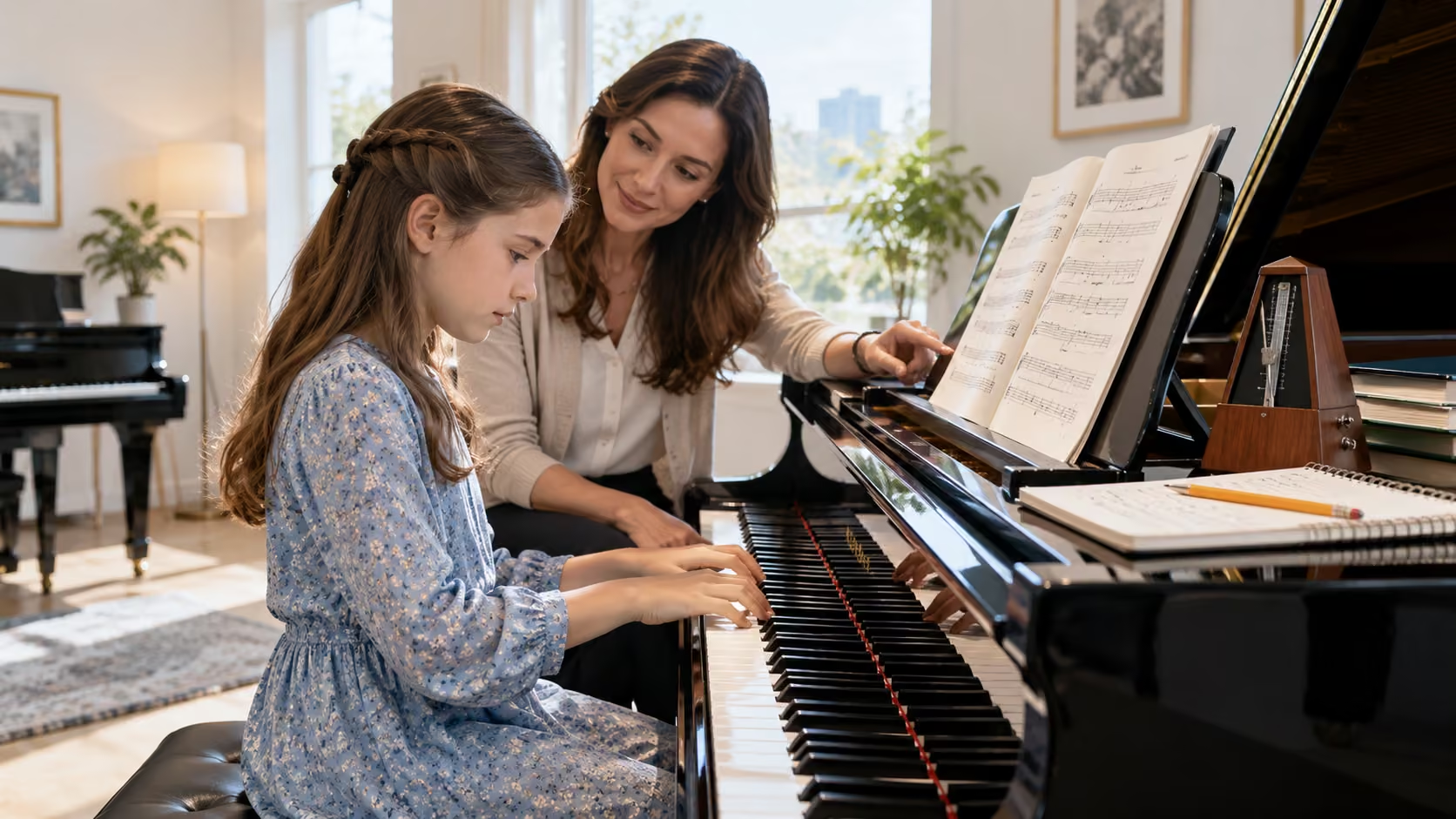
A well-designed 30-minute lesson never feels long, because it's built from short segments.
The common lengths are 30, 45, and 60 minutes. Most teachers start every beginner at 30 and move to 45 once the student is consistently ready for more material.
Lesson design matters as much as length
A good teacher builds a lesson from short segments — warm-up, technique, the new piece, a review, something fun — so 30 minutes passes without a child noticing. A badly structured 30 minutes feels longer than a well-structured 45.
Good teaching also changes what happens at home. When a lesson trains a child to listen — to hear rhythm, dynamics, and their own mistakes — they start practicing instead of just playing. That shift is worth more than any amount of extra lesson time.
How to tell whether the length fits
Watch your child, not the clock. If they stay engaged and curious to the end of the lesson, the length is right. If a hard lesson regularly ends in tears, something is too long — either the session, or the material for right now.
| What you notice | What to do |
|---|---|
| Focus fades after 20 minutes | Stay at 30 minutes |
| Finishes assignments before the next lesson | Try 45 minutes |
| Preparing for an exam or audition | Move to 45–60 minutes |
| Rarely practices | Keep lessons short and fix the habit first |
A longer lesson only pays off when practice is happening. Otherwise you've bought more minutes of the teacher re-teaching last week.
Private Lessons vs. Group Classes
Format sits alongside frequency as a decision, and it's often the cheaper lever to pull.
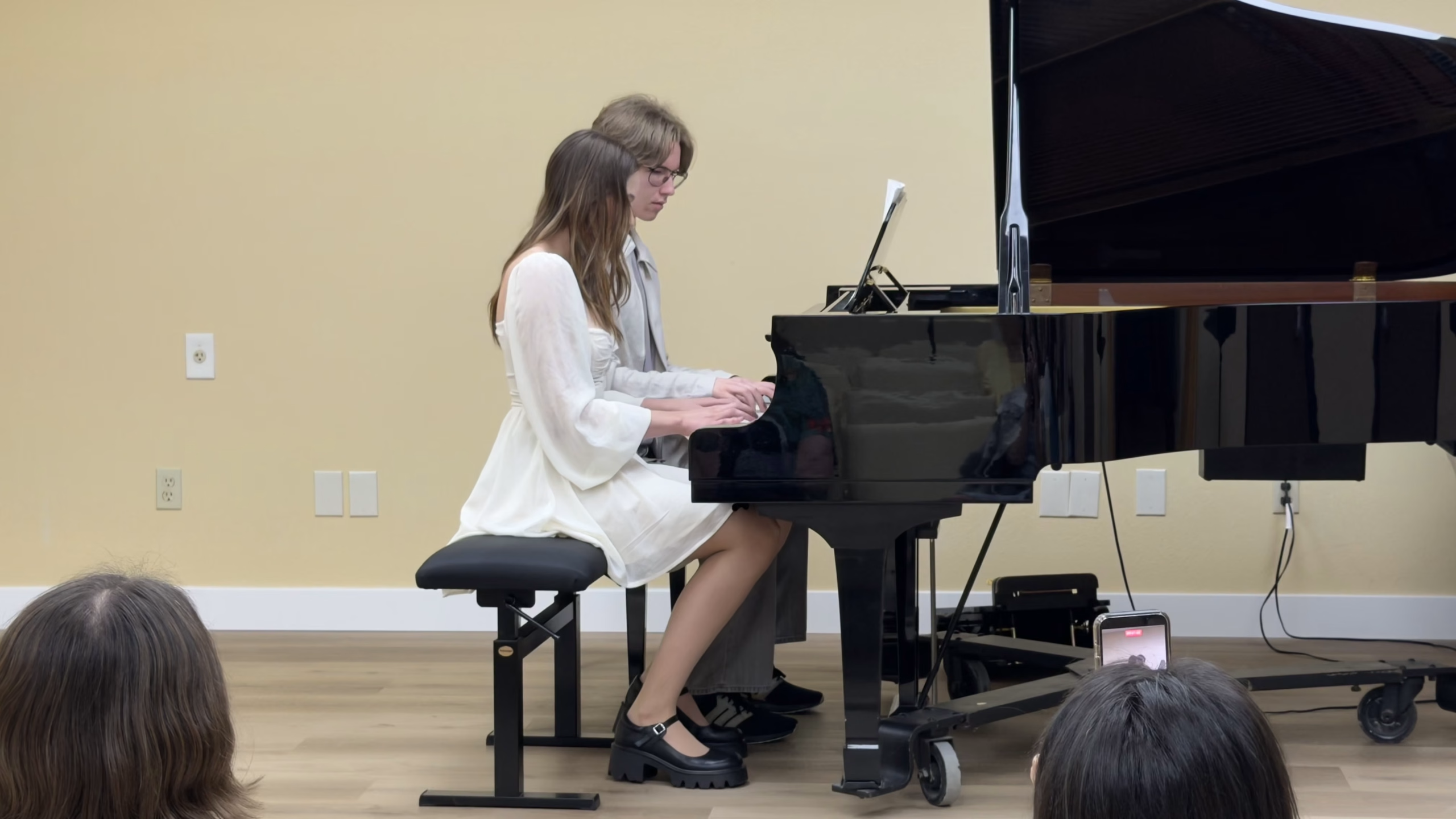
Playing with someone else teaches a skill solo lessons can't: holding your part while hearing theirs.
Private lessons — one teacher, one student — let the teacher correct posture, hand position, and reading errors the moment they appear, and move on as soon as the child is ready. That responsiveness is what you're paying for.
Group classes cost less and teach something private lessons genuinely cannot: playing with other people and holding a shared beat. A weekly after-school group class is a sensible, low-risk way to test whether the interest is real.
The trade-off is attention. In a group, the teacher divides time across several students, so individual correction comes around less often. That's why many families start with a group class and move to private instruction once a child shows real commitment.
Either format works best with daily practice at home. That variable doesn't change.
What Weekly vs. Twice-Weekly Piano Lessons Cost
For a lot of families, cost settles the schedule before anything else does. Here's the arithmetic.
| Schedule | Per lesson | Per month |
|---|---|---|
| 30 min, once a week | $55–$85 | $230–$340 |
| 45 min, once a week | $65–$95 | $260–$380 |
| 60 min, once a week | $75–$110 | $300–$450 |
| 30 min, twice a week | $55–$85 | $460–$680 |
| 45 min, twice a week | $65–$95 | $520–$760 |
Then add the things that don't appear in the quoted rate: registration fees (commonly $45 to $95 — ask whether they're one-time or annual), method books, and recital fees at many studios.
Look at the table again. Moving from 30 minutes once a week to 45 minutes once a week adds roughly $30 to $40 a month. Adding a second 30-minute lesson adds $230 to $340.
Both buy more teaching time. One costs a tenth as much and doesn't add a second trip across town.
If the goal is more teacher contact, lengthen the lesson before you double the schedule. That single swap is the most useful thing in this guide.
7 Signs Your Child Is Ready for Twice-Weekly Lessons
A second lesson is a tool, not a reward. Run this list honestly.
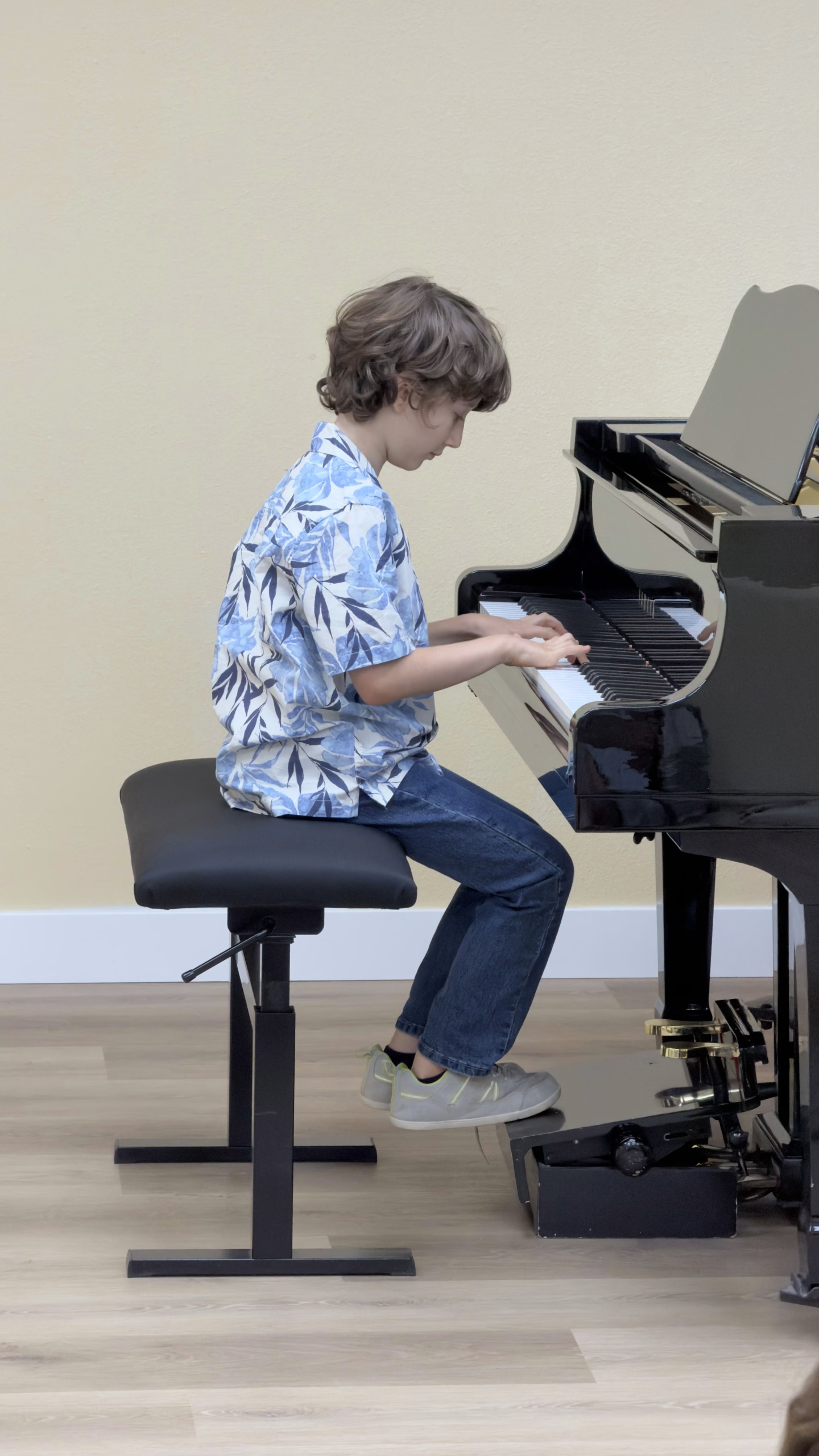
A recital, exam, or audition on the calendar is the clearest case for a second weekly lesson.
Check each one that's true today
- Your child practices most days without being reminded
- Your child finishes assigned pieces before the next lesson
- Your child plays beyond the assignment, for fun
- A recital, exam, or audition sits within the next six months
- The teacher raised the idea first
- Your family can absorb double the cost and a second trip
- Your child still enjoys lessons at the end of a full school day
Four or more checks? A one-month trial of twice-weekly lessons is worth testing. Not a year — a month. Then reassess.
And one warning worth repeating: a second lesson will never fix skipped practice. It just adds supervision to an empty week, at double the price.
When One Lesson a Week Is Clearly Better
Weekly wins in more situations than parents expect:
- Your child is new and still building the practice habit
- Your family calendar already feels tight
- Your child plays a second instrument or a sport
- Your budget is fixed, and consistency matters more than volume
- Your child is under 7 and tires quickly
Here's the reassurance worth holding onto: one steady weekly lesson beats two chaotic ones. Every time. A schedule your family actually keeps through a busy March is worth more than an ambitious one abandoned in November.
Every-Other-Week Lessons: Why Most Teachers Say No
Some families ask about fortnightly lessons to save money. Most teachers push back, and the reason is specific rather than commercial.
Two weeks is long enough for mistakes to settle in as habits. A child practices a wrong fingering or a wrong rhythm for fourteen days, and by the next lesson it's automatic — so the teacher spends that lesson undoing instead of building. The details of the previous lesson have also faded by then.
Where it does work: older teens, adult hobbyists, and students with heavy travel schedules. All three can retain instructions across a longer gap and self-correct in between.
A better middle path: take weekly lessons through a full term, then drop to alternate weeks during a genuinely busy season. That keeps the habit alive without the calendar strain — and it's much easier to restart from than a full stop.
How Many Piano Lessons Before Progress Shows?
Most beginners show clear, visible progress after about 10 to 12 weekly lessons — roughly a school term — assuming steady practice alongside.
| Weeks | What to expect |
|---|---|
| 1–4 | Keyboard geography, hand position, simple note reading |
| 5–8 | Two hands together, short complete songs |
| 9–12 | Steadier rhythm, longer pieces, early dynamics |
Judge progress in three-month blocks, not week by week. Weekly judgments make parents anxious and children defensive, and they miss the thing that actually matters — the direction of travel over a term.
Every child moves at their own pace. A slow first term says almost nothing about the fifth.
Building a Weekly Piano Routine That Actually Works
A schedule only works if practice happens. Four habits make it stick.
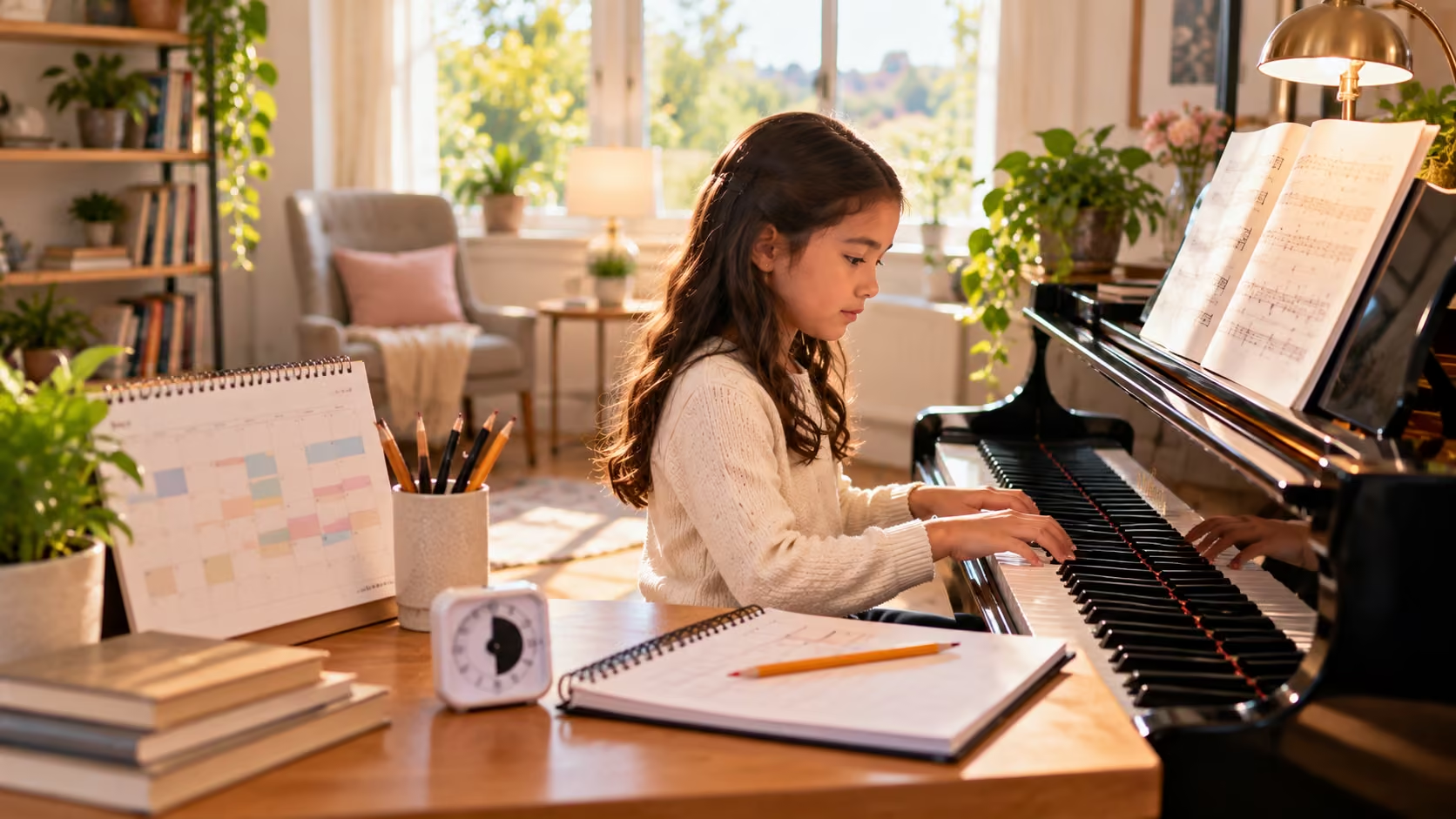
A predictable practice slot removes the daily negotiation, which is the real battle.
Pick the same days and times
Put practice on the calendar like a soccer game. A predictable slot removes the daily negotiation, and the negotiation is what exhausts families, not the practice.
Keep it short and daily
Fifteen minutes works better than forty when a child is tired after school. A visible timer helps far more than reminders shouted from the hallway.
Sit in on part of the lesson
Parents who've heard the assignment can support it at home. Ask the teacher for two sentences you can repeat on Wednesday — that's all you need.
Track practice, not perfect practice
Mark the days, not the mistakes. In the first year, consistency is the goal. A sticker chart on the fridge genuinely outperforms nagging.
A sample week you can print
| Day | What to practice | Time |
|---|---|---|
| Monday | New song, right hand only | 15 min |
| Tuesday | New song, left hand only | 15 min |
| Wednesday | Both hands together, slowly | 15 min |
| Thursday | Light day — listen to music instead | 5–10 min |
| Friday | Review an older, easier song | 15 min |
| Saturday | Play through everything | 20 min |
| Sunday | Rest | — |
Notice Thursday. A deliberate light day prevents the burnout that kills practice habits in month three — and listening is real musical work, not a day off.
Print the chart and put it on the fridge. Simple beats clever when a child is learning. For broader context on how school music programs fit alongside private lessons, NAfME is a useful reference.
Piano Lessons at K&M Music School
If you're choosing a studio, or wondering whether to add a second lesson at the one you're in, here's how we approach it.
K&M Music School is a 501(c)(3) nonprofit conservatory in Mira Mesa — about 15 minutes from La Jolla, UTC, Sorrento Valley, and Carmel Valley. Twelve teachers, 200+ students, 25 years.
We'll tell you when one lesson is enough.
Most students don't need two a week, and we'd rather say so
- Every lesson is private — one student, one teacher, every week
- A written practice plan weekly — specific assignments, not "practice more"
- Flat monthly tuition — the same whether the month holds 4 lessons or 5
- No recital fees — performances in our on-site hall are part of the program
- No accompanist fees — accompaniment provided, including two grand pianos
- No annual re-registration — the registration fee is one-time
- A 100% free trial lesson — no credit card, no obligation
Why a nonprofit can give you this answer straight
There's an obvious conflict of interest buried in this topic. A studio paid per lesson has a financial reason to recommend two.
We're a nonprofit, and our teachers' judgment isn't tied to filling a second slot. So when a parent asks whether their child needs twice-weekly lessons, the answer is based on what we're seeing in the practice — and for most students, most of the time, that answer is no.
When the answer is yes — a serious audition, a student who's genuinely outgrowing one weekly session — we'll say that too, and explain why.
What piano students get here
- A structured 9-level curriculum from the Russian conservatory tradition — technique, reading, and repertoire introduced in the right order, not improvised weekly
- Lessons designed in segments, so a 30-minute session holds a young child's attention all the way through
- An on-site recital hall with two grand pianos — performance built into the program at no extra charge
- Exam and audition preparation when a student wants it, with the schedule adjusted to match
- Adult students welcome, including daytime slots that are easier to book than after-school hours
- Twelve instruments under one roof, so siblings on different instruments share one trip
If you're still deciding on an instrument or a starting age, we've written about the best age to start violin lessons and choosing between clarinet and flute. For families comparing studios locally, see our guide to music lessons near Mira Mesa, or browse all our music lessons.
Book a free trial piano lesson in Mira Mesa. A teacher will assess where your child actually is, recommend a lesson length honestly, and tell you whether one lesson a week is enough — which it usually is. No credit card, no obligation.
Book Your Free Trial Lesson5703 Oberlin Dr, Unit 108, San Diego, CA 92121 (Mira Mesa) • 858-588-3938 • Explore all our music lessons
Quick Recap
What to remember
- One 30-minute lesson a week fits most children under 12
- Twice-weekly helps when practice is already steady and a recital, exam, or audition is coming
- Practice beats frequency — roughly age × 2 in minutes, daily
- Lengthen before you double — 30 to 45 minutes costs a fraction of a second lesson
- Every other week is too long a gap for most children
- Judge progress in three-month blocks, not week to week
- Test changes for one month, not a full year
So, how often should a child take piano lessons? For most families: one 30-minute lesson a week, plus a practice habit you can actually sustain. Add a second lesson when practice is steady and a real goal sits on the calendar — not before.
Your next step is one question. Ask your child's teacher this week: "Is my child practicing enough to justify a second lesson?" That single answer settles more than any schedule chart, including this one.
And if you're still choosing a studio, ask two things on the first call: how long are beginner lessons, and how much daily practice do you expect? Those two answers tell you most of what you need to know about how a school thinks.
Frequently Asked Questions
How often should a child take piano lessons?
Most children do well with one private lesson each week, and 30 minutes is the standard length for students under 12. Weekly instruction sets a steady rhythm and leaves enough time between lessons for practice, which is where the actual learning happens. A second weekly lesson helps only when practice at home is already consistent.
Is one piano lesson a week enough for a beginner?
Usually yes. One weekly lesson is the right starting rhythm for almost every beginner, provided practice happens between lessons. The lesson shows the child what to do; the days at home are where they learn to do it. Adding lessons cannot substitute for that.
Are twice-weekly piano lessons better?
They are better in specific situations, not in general. Two lessons a week shorten the gap between teacher check-ins, so errors in hand position or rhythm get caught before they harden. That matters most when a recital, exam, or audition is on the calendar. They cost roughly double and do not replace home practice.
How many piano lessons should a 6-year-old have per week?
One 30-minute lesson a week is standard. Some teachers start a child under 6 at 15 to 20 minutes and extend the lesson as attention grows. At that age, 5 to 10 minutes of daily practice matters far more than a second lesson.
What is the ideal piano lesson length for a child?
Thirty minutes suits most children aged 5 to 12. Move to 45 minutes when your child regularly finishes assignments before the next lesson, usually around age 11 to 13 as pieces get longer. Sixty minutes is for advanced students and exam preparation.
How much should my child practice between piano lessons?
A useful rule of thumb is roughly the child's age times two, in minutes, capped around 45. That works out to 5 to 10 minutes daily for ages 4 to 6, 10 to 20 minutes for ages 7 to 10, 20 to 30 minutes for ages 11 to 13, and 30 to 45 minutes for teens. Daily and short beats long and rare.
Can a child take piano lessons every other week?
It is possible but most teachers advise against it for children. Two weeks is long enough for mistakes to settle in as habits and for the details of the last lesson to fade. Alternate weeks can work for older teens, adult hobbyists, and families with heavy travel.
How long before a beginner shows real progress?
Most beginners show clear progress after about 10 to 12 weekly lessons, assuming steady practice alongside them. Judge progress in three-month blocks rather than week by week — weekly judgments make parents anxious and children defensive.
How much do weekly piano lessons cost?
Private piano lessons generally run $55 to $110 per lesson depending on length, which is roughly $230 to $450 a month for weekly instruction. Twice-weekly lessons cost approximately double. Ask whether registration fees are one-time or annual, and whether recitals carry a separate charge.
Is a longer lesson better than a second lesson?
Often yes, and it is usually cheaper. Extending one weekly lesson from 30 to 45 minutes costs considerably less than adding a whole second lesson, and it avoids a second trip. If the goal is more teaching time, lengthen before you double.
Is a group piano class a good substitute for private lessons?
Group classes cost less and teach genuine ensemble skills like keeping a shared beat. They are a good low-risk way to test interest. They cannot match private lessons for fixing posture, hand position, and reading errors, because the teacher divides attention across several students.
Should a child take piano lessons year-round or only during the school year?
Year-round keeps skills steady, and short summer breaks are fine. A long layoff costs more ground than parents expect, because piano technique is physical and fades without regular repetition. Many families reduce frequency over summer rather than stopping.


