
Is Ukulele the Best First Instrument for Your 5-Year-Old?

Katherine Dvoskin, Co-Founder of K&M Music School
I hope you enjoy this blog post! If you're interested in scheduling a free trial lesson, just click.
Author: Katherine Dvoskin | Co-Founder of K&M Music School
Published December 7th, 2025
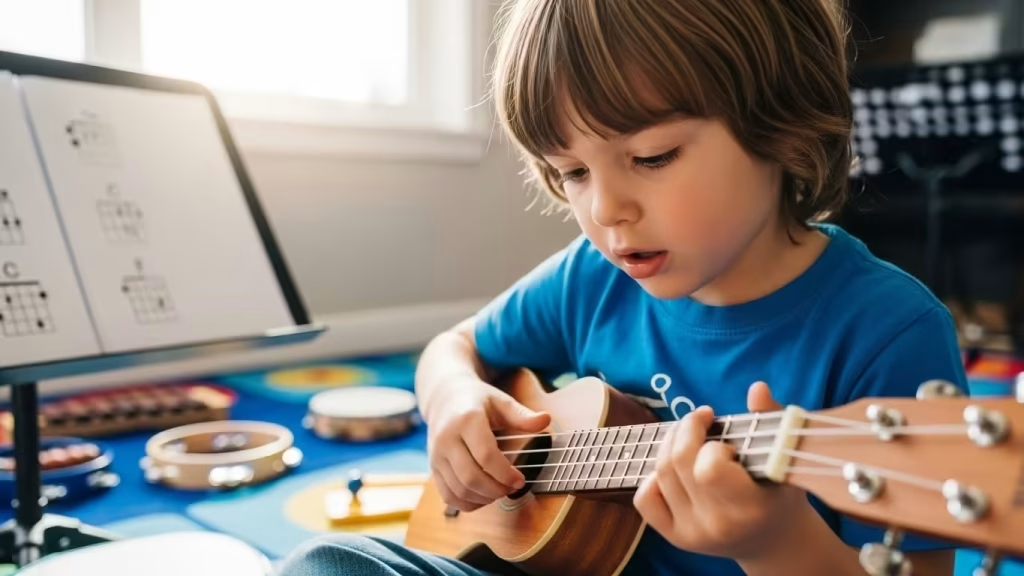
Finding the best first instrument for your 5-year-old can feel overwhelming. Is ukulele the right choice for young children starting music lessons?
Choosing your child’s first instrument is a big decision. You want an instrument that fits small hands, keeps them interested, and does not cost too much. So, many parents ask if a ukulele is better than piano, guitar, or drums for a 5-year-old.
Ukuleles have special advantages for young kids. They are small, affordable, and easier to play than many other instruments. So, this guide helps you decide if a ukulele is a good match for your child.
Music lessons can shape kids in strong ways. For example, starting early can build confidence and coordination. Also, it can teach skills that last a long time. However, the instrument choice matters just as much as the start age. The right instrument keeps kids motivated, but the wrong one can cause frustration. So, this guide explains what you need to know about ukulele as a first instrument.

Music Lessons in San Diego with K&M Music School
1 Expert Music Lessons
We offer Piano, Violin, Cello, Guitar, Ukulele, Saxophone, Bassoon, Harp, Voice, and Toddler group lessons for students of all ages and skill levels.
2 Why Choose Us?
- 🎶 Boosts focus and self-discipline
- 🎵 Strengthens cognitive skills
- 🎼 Enhances cultural understanding
- 🎤 Builds confidence through recitals
3 We Welcome Adults Too!
Best age to start: Kids can start around ages 4–6, depending on hand size and attention span. So, most 5-year-olds can begin with the right support.
Cost: A good beginner ukulele usually costs about $40–$100. Also, lessons often cost less than other instruments. So, it is one of the most affordable string options.
Learning speed: Kids can play simple songs in about 2–4 weeks. Also, they can learn basic chords in just a few days. So, it is a fast way to play real music quickly.
Physical fit: A soprano ukulele fits small hands. Plus, it has soft nylon strings and only four strings. So, it is made for what kids can handle.
Skill transfer: Ukulele skills help with guitar, bass, banjo, and music theory. So, what they learn can carry over later.
Compared to piano: Ukulele is more portable and cheaper, and it gives faster early wins. However, piano is often better for a strong theory foundation.
Compared to guitar: Ukulele is smaller, easier, and gentler on fingers. However, a guitar is often too big for most 5-year-olds.
Practice time: Young beginners only need about 5–10 minutes a day. So, short sessions help prevent burnout.
Why Parents Choose Ukulele as a First Instrument for Young Children
Parents across the country are discovering what music teachers have known for years. The ukulele makes an excellent first instrument for young learners. But what makes it so special compared to other options?
The Perfect Size for Small Hands
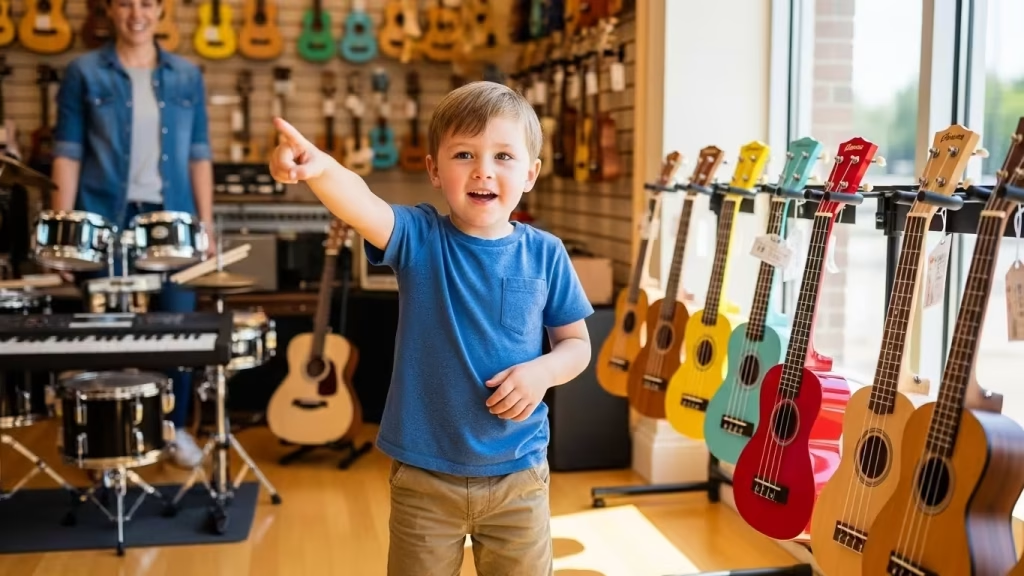
The soprano ukulele measures just 21 inches long. That’s about half the size of a full guitar. For a 5-year-old, this size difference matters enormously.
Young children can wrap their arms around a ukulele comfortably. They can reach all the frets without straining. Their fingers can press down strings without stretching painfully. Meanwhile, even a 3/4 size guitar feels awkward and oversized.
Think about it this way. You would not give a 5-year-old an adult tennis racket. So, you should not give them an instrument that is too big. A good fit prevents frustration and injury. Also, it helps kids focus on music instead of fighting the instrument.
Many parents say their child can hold a ukulele on their own after one or two sessions. Because it is light, their arms do not get tired fast. So, they can practice longer and learn better.
Ukuleles also use soft nylon strings. So, kids usually do not get finger pain. In fact, finger pain is a big reason many kids quit guitar early. Guitar has steel strings, and they can hurt small fingers. Also, steel strings need more finger strength, which many 5-year-olds do not have.
With ukulele, kids can play for 10–15 minutes without discomfort. So, they want to practice again the next day. This helps them build a good practice habit.
Only Four Strings to Learn
Simplicity is powerful for young learners. A ukulele has four strings compared to a guitar’s six. This might seem like a small difference, but it’s actually huge for a 5-year-old brain.
Fewer strings mean simpler chord shapes. Basic chords require just one or two fingers instead of three or four. Your child can play real songs within weeks instead of months.
The four-string layout also makes it easier to remember string names. Kids learn the strings (G-C-E-A) quickly through simple songs and games. Pattern recognition becomes straightforward and manageable.
Additionally, fewer strings mean faster tuning and less confusion. Your child won’t get lost trying to figure out which string is which. This clarity helps build confidence during those crucial early weeks of learning.
What Makes Ukulele the Best First Instrument for 5-Year-Olds?
Besides being easy to handle, ukuleles have benefits that match how young kids learn.
Fast Learning Curve Keeps Kids Engaged
Five-year-olds have short attention spans. They need quick wins to stay motivated. The ukulele delivers results faster than almost any other instrument.
Most children can play a simple two-chord song within their first week. By week three or four, they’re strumming along to recognizable tunes. This rapid progress feels magical to a young child.
Compare this to piano, where reading music notation creates an initial barrier. Or guitar, where finger pain and complex chords delay the reward. The ukulele lets kids make real music almost immediately.
Kids can start with songs like “Twinkle Twinkle Little Star,” “You Are My Sunshine,” and “Row Row Row Your Boat.” These songs are familiar and use only one or two chords. So, kids feel proud because they can play music they know.
Playing ukulele also builds important motor skills. It fits a 5-year-old’s hands well, so it matches their development. Pressing strings strengthens finger muscles. Also, strumming improves hand-eye coordination. Then switching chords builds muscle memory. So, these skills can help with writing, sports, and daily tasks.
Ukulele also trains both hands to do different jobs. The left hand makes chords, while the right hand keeps rhythm. So, kids learn coordination and control.
Some parents worry the ukulele is “too simple.” However, it still teaches real music basics. Kids learn rhythm, melody, and harmony. Also, they learn chord patterns and how songs are built. So, these skills transfer to other instruments.
Because of that, many kids move from ukulele to guitar, bass, or banjo easily. The fretboard idea is similar, so the transition is smoother. Also, many teachers recommend starting with ukulele before guitar.
Your child will also develop their musical ear. They’ll learn to hear pitch differences and stay in tune. They’ll recognize chord changes in songs they hear. These listening skills are priceless for any future musical pursuit.
Budget-Friendly for Families
Let’s talk money. Music education can get expensive fast. Piano lessons, a quality piano or keyboard, and ongoing maintenance add up quickly.
A good beginner ukulele costs between $40 and $100. Compare that to:
- Piano or keyboard: $300-$3,000+
- Guitar with accessories: $150-$400
- Violin: $200-$800
- Drum set: $300-$1,000+
Ukulele lessons also tend to cost less. Many teachers charge lower rates for beginner ukulele compared to other instruments. Plus, excellent free resources exist online specifically for young learners.
The instrument is durable and requires minimal maintenance. No professional tuning needed like with a piano. No reed replacements like with woodwinds. Just occasional string changes that cost about $10.
If your child decides music isn’t for them, you’re out less than $100. That’s a small price for exploring a potentially lifelong passion.
Comparing Ukulele to Other First Instruments for 5-Year-Olds
How does the ukulele stack up against other popular beginner instruments? Let’s break down the comparisons.
Ukulele vs. Piano for Young Beginners
Piano remains the most recommended first instrument by traditional music teachers. And for good reason—it offers real advantages.
Piano Advantages:
- Visual layout makes music theory easier to understand
- Requires no tuning or maintenance from the child
- Both hands learn to read different clefs simultaneously
- No pitch accuracy issues—keys always sound correct
- Strong foundation for reading sheet music
Ukulele Advantages:
- Portable—practice anywhere, take to grandma’s house
- Costs 75% less than piano or quality keyboard
- Faster initial success with simple songs
- More engaging for kids who love singing
- Easier to play along with favorite songs
Size Comparison: A piano or keyboard requires dedicated space. It stays in one room. A ukulele lives in a small case and travels anywhere. For apartments or small homes, this matters.
Cost Comparison: Piano lessons average $30-60 per 30-minute session. Ukulele lessons often run $20-40. Over a year, that’s $500-1,000 difference.
Piano is best for kids who like classical music or have space for a big instrument. In contrast, ukulele is better for active kids, families on a budget, and kids who like popular music.
Ukulele vs. Guitar for 5-Year-Old Children
This comparison comes up constantly. Many parents wonder if they should just start with guitar instead.
Size Difference: A standard acoustic guitar is roughly 38 inches long. Even a 3/4 size guitar measures about 34 inches. That’s 13+ inches longer than a soprano ukulele. For a child standing 42-46 inches tall, this difference is massive.
Most 5-year-olds cannot comfortably hold a guitar. Their arms don’t reach around it properly. Their fingers can’t stretch across the fretboard. It’s like asking them to play an adult cello.
String Comparison: We touched on this earlier, but it bears repeating. Guitar strings are steel and painful. Ukulele strings are nylon and comfortable. Six strings versus four strings. The ukulele wins for young beginners every time.
Learning Curve: Basic guitar chords require three or four fingers in specific positions. Young children often lack the finger independence and strength. Ukulele chords need just one or two fingers for the most common shapes.
Transition Path: Here’s the secret many music teachers share. Starting on ukulele actually makes learning guitar easier later. The smaller instrument builds foundational skills without the frustration. When your child’s hands grow, transitioning to guitar feels natural.
Expert Recommendation: Most music educators recommend ukulele for children under 7 years old. After age 8-9, guitar becomes manageable for most kids.
Ukulele vs. Drums and Percussion
Drums have obvious appeal to energetic 5-year-olds. Hitting things is fun! But several factors make drums challenging as a first instrument.
Rhythm Instruments: Drums teach rhythm and timing—valuable skills. However, they don’t teach melody or harmony. Your child won’t learn song structure or chord progressions.
Noise Factor: This matters more than parents initially realize. Drums are loud. Very loud. Neighbors might complain. Siblings might revolt. Even practice pads create significant noise.
A ukulele’s volume is manageable. You can practice in an apartment without disturbing anyone. Grandparents won’t cringe when it comes out at family gatherings.
Space Requirements: Even a compact drum set takes up considerable floor space. Add in the drum throne, and you’re dedicating a corner of a room. A ukulele hangs on a wall hook or fits under a bed.
Music Versatility: Drums play rhythm. That’s essential but limited. A ukulele plays melody, harmony, and rhythm. Your child can perform complete songs solo.
Which Child Benefits: High-energy kids who struggle sitting still might prefer drums initially. However, many eventually want an instrument that plays melodies. Starting with ukulele develops more comprehensive musical skills.
Ukulele vs. Violin for Preschoolers
Violin is another common recommendation for young children. Suzuki method programs start kids as young as 3 or 4.
Size Availability: Both instruments come in appropriate sizes for 5-year-olds. Violins are available in 1/16, 1/10, 1/8, and 1/4 sizes. Ukuleles come in soprano and sopranino sizes.
Difficulty Level: Here’s where differences emerge sharply. Violin is fretless. Finding the correct pitch requires precise finger placement. There’s no visual guide. Young children often produce squeaky, unpleasant sounds for months.
Ukulele has frets. Press your finger behind any fret, and the note sounds correct. This built-in accuracy guide makes learning much easier.
Sound Quality: Let’s be honest. Beginning violin sounds painful. Even with talent and practice, pleasant sounds take months to produce. Parents need serious patience and tolerance.
Beginning ukulele sounds musical almost immediately. Even if your child strums all strings together, it creates a pleasant chord. This encourages both child and parent.
Posture Requirements: Violin requires specific posture. The instrument rests on the collarbone. The chin holds it in place. The arm stays elevated. This position can be tiring and uncomfortable for small children.
Ukulele rests naturally against the body. No awkward arm positions. No chin strain. Kids can even play while sitting cross-legged on the floor.
Long-Term Benefits: Violin training develops extraordinary musical ear and intonation skills. The classical repertoire is rich and rewarding. However, the initial investment in patience and tolerance is substantial.
Ukulele builds musical skills with much less frustration. Children can play songs they recognize and love quickly. This positive early experience often leads to lifelong music appreciation.
Key Benefits of Ukulele as Your Child’s First Instrument
Beyond comparisons, let’s explore the specific advantages ukulele offers young learners.
Boosts Confidence Through Quick Success
Confidence is everything for a 5-year-old. Children this age are developing their sense of competence and self-worth.
When a child plays their first full song after a few days, they feel proud. So, their confidence grows, and they want to show others. This confidence can also help in school, sports, and friendships.
Psychologists call this a “mastery experience.” Because of that, kids start thinking, “I can learn hard things.” Then they feel more willing to try new challenges.
Ukulele is also easy to perform on. For example, kids can play at family dinners, show-and-tell, or casual jam sessions. Also, it is tiny and portable, so you can bring it anywhere. In contrast, pianos and drums are harder to move and set up.
Many parents notice more confidence after ukulele lessons. So, kids may raise their hand more, try new activities, and bounce back from mistakes faster.
Music Lessons in San Diego with K&M Music School
1 Expert Music Lessons
We offer Piano, Violin, Cello, Guitar, Ukulele, Saxophone, Bassoon, Harp, Voice, and Toddler group lessons for students of all ages and skill levels.
2 Why Choose Us?
- 🎶 Boosts focus and self-discipline
- 🎵 Strengthens cognitive skills
- 🎼 Enhances cultural understanding
- 🎤 Builds confidence through recitals
3 We Welcome Adults Too!
Supports Brain Development and Cognitive Skills
Ukulele can also support brain skills. Learning songs means memorizing chord changes and lyrics. So, kids practice working memory. Also, music helps kids notice patterns in chords, rhythm, and melody. Because of that, it can support skills used in math, reading, and problem-solving.
USC research says music training may help the brain develop faster. Also, it may support language and reading.
At age five, the brain is very flexible. So, it can build new connections quickly. Because of that, music training now can create pathways that last for a long time.
Encourages Creative Expression
Five-year-olds also have strong imaginations. So, the ukulele can help them express creativity. Once your child learns a few chords, they start experimenting. For example, they make their own strumming patterns. Also, they may invent silly songs about toys or pets. This kind of play helps children understand their world.
Many kids start “writing” simple songs early. These songs might use only one or two chords with made-up lyrics. However, the creative process is still growing. So, they learn they can make original music, not only copy songs.
Emotions can also come out through music. If a child struggles to explain feelings, playing can help. For example, a frustrated child might strum hard. On the other hand, a happy child might make bouncy rhythms. So, this can support emotional control over time.
Teachers and child psychologists also notice a pattern. Musical kids often show stronger creative thinking. They try different angles and imagine more than one solution. So, these skills can help them in a complex world.
Provides Stress Relief and Emotional Regulation
Even 5-year-olds experience stress. New schools, peer conflicts, learning challenges—childhood isn’t always easy.
Playing music provides a healthy coping mechanism. The repetitive motion of strumming can be calming, almost meditative. The focus required pushes worries aside temporarily.
Music also provides a safe space for processing difficult emotions. Sad songs help kids understand sadness. Energetic songs match excitement. This emotional vocabulary develops through musical experience.
Many parents notice their child naturally gravitates to their ukulele when upset. They play for a few minutes and emerge calmer. This self-soothing skill is incredibly valuable.
Creates Family Bonding Opportunities

Music brings families together. Unlike video games or individual activities, music invites participation.
Many parents learn ukulele alongside their children. You don’t need previous music experience. Adult beginners and child beginners can learn together. This shared experience creates special bonding time.
Imagine Sunday afternoon jam sessions where everyone plays together. Older siblings on guitar, parents on ukulele, younger kids shaking maracas. These moments create lasting memories.
Community ukulele groups exist in most cities. Many welcome families and children. These gatherings provide social opportunities beyond typical playdates. Your child meets other young musicians and sees adults passionate about learning.
Some families make ukulele part of their vacation traditions. The instrument travels easily. Beach sing-alongs and campfire songs take on new life when everyone can participate.
Research shows that doing activities together, especially creative ones, can strengthen family relationships. So, learning ukulele can help families bond naturally.
What Age is Best for Starting Ukulele? Is 5 Too Young?
Age appropriateness is crucial when choosing a first instrument. Let’s examine whether 5 is too young, too old, or just right.
Developmental Readiness Signs in 5-Year-Olds
Not all 5-year-olds are ready for formal music lessons. Here’s what to look for:
Physical Readiness Indicators:
- Can hold a small object steadily with both hands
- Finger independence—can move individual fingers separately
- Hand size can wrap around a soprano ukulele neck
- Fine motor skills allow pressing down strings firmly
Cognitive Readiness Signs:
- Can follow two-step instructions consistently
- Attention span of at least 10-15 minutes for focused activity
- Understands that practice leads to improvement
- Can recognize simple patterns and sequences
Emotional Readiness Factors:
- Shows genuine interest when hearing music
- Asks to play with toy instruments repeatedly
- Doesn’t get frustrated easily with new challenges
- Enjoys singing and rhythm activities
Most 5-year-olds can focus for about 10–15 minutes. So, that is a good practice length for ukulele. Short daily sessions work better than long practice once a week. Also, if your child can sit for a picture book or a puzzle for 10 minutes, they can likely handle ukulele practice.
Every child is different. Some 4-year-olds are ready early. However, some 6-year-olds still need more time. So, trust what you know about your child’s personality and focus.
Here is one example. Emma started soprano ukulele and practiced 5 minutes a day. After two weeks, she could play “Twinkle Twinkle Little Star.” Then, after three months, she played “You Are My Sunshine” at her preschool graduation. So, her confidence grew.
Jackson was very active, so piano did not work for him. Then his family switched to ukulele, and the shorter sessions fit him better. Also, he could practice while standing or moving around. After six months, he learned about 12 songs and started teaching his younger sister.
Sophia had very small hands, so other instruments felt too big. However, a soprano ukulele fit well. She learned her first song in about 10 days. Also, her teacher said small hands can help because moving between frets is easier.
Typical Achievements Timeline:
- Week 1: Learn to hold instrument, basic strumming motion
- Week 2-4: First simple one or two-chord song
- Month 2-3: Three to five songs in repertoire, basic rhythm patterns
- Month 4-6: Eight to twelve songs, simple fingerpicking, can perform for others
Challenges Overcome: Most young learners face similar hurdles. Fingers get tired quickly at first. Chord changes feel clunky. Keeping the ukulele in tune is tricky. However, with patient encouragement and short practice sessions, these challenges resolve within weeks.
When to Wait vs. When to Start
How do you know if now is the right time or if waiting would be better?
Signs Your Child is Ready Now:
- Actively asks about playing music or a specific instrument
- Shows sustained interest over weeks, not just a passing fancy
- Can follow simple instructions and learn new physical skills
- Enjoys singing and moving to music
- Parents are ready to commit to daily practice supervision
Signs Your Child Might Benefit from Waiting:
- Shows no particular interest in music or instruments
- Gets frustrated very easily with new challenges
- Cannot yet sit still for 5-10 minutes
- Parents are in a particularly busy or stressful season
- Child shows strong preference for a different instrument
If your child is not ready yet, they can still explore music in other ways:
- Rhythm instruments (drums, maracas, tambourine)
- Music and movement classes
- Singing songs together regularly
- Listening to diverse music styles
- Attending live music performances appropriate for children
Reassessment Timeline: If you decide to wait, revisit the question in 3-6 months. Children develop rapidly at this age. What seems impossible in January might be achievable by summer.
There’s no deadline for starting music. Some successful musicians didn’t begin until age 8, 10, or even later. The key is starting when your child is ready and interested.
How to Choose the Best Ukulele for Your 5-Year-Old
You’ve decided a ukulele is right. Now comes the practical question—which one should you buy?
Ukulele Size Guide for Young Children
Ukuleles come in four main sizes. For a 5-year-old, two options make sense:
Soprano Ukulele (Most Common Choice):
- Length: 21 inches total
- Scale length: 13 inches
- Weight: 12-14 ounces
- Best for: Children ages 4-7
- Sound: Bright, traditional ukulele tone
- Price range: $30-$150 for beginner models
The soprano ukulele is the classic size. It’s what most people picture when they think “ukulele.” For a 5-year-old, this size is nearly always ideal. They can reach all frets comfortably. The lightweight body doesn’t cause arm fatigue.
Concert Ukulele (For Larger 5-Year-Olds):
- Length: 23 inches total
- Scale length: 15 inches
- Weight: 14-16 ounces
- Best for: Larger 5-year-olds or ages 7+
- Sound: Fuller, slightly deeper tone
- Price range: $40-$200 for beginner models
Some tall or large-framed 5-year-olds might benefit from a concert size. The extra 2 inches provide more room between frets. This helps if your child has longer fingers. However, most 5-year-olds find soprano more comfortable.
Avoid These Sizes for Young Children:
- Tenor ukulele (26 inches)—too large for most children under 10
- Baritone ukulele (30 inches)—essentially a small guitar, different tuning
How to Test Proper Fit: Bring your child to a music store if possible. Have them hold the ukulele in playing position. Check these points:
- Can their arm reach comfortably around the body?
- Can they reach the furthest fret without straining?
- Does the weight feel manageable after holding for 30 seconds?
- Can they see the fretboard without excessive neck bending?
If all answers are yes, the size is appropriate.
Price Range: What to Expect
Budget concerns are real for most families. Here’s what different price points offer:
Budget Options ($30-50):
- Brands: Makala Dolphin, Hola! Music, First Act
- Materials: Laminate wood or plastic
- Pros: Affordable, good for testing interest
- Cons: Harder to keep in tune, less pleasing tone
- Best for: Families wanting to try before bigger investment
These instruments are functional but not inspiring. They work for a month or two of experimentation. However, poor tone quality and tuning instability can frustrate learners.
Mid-Range Options ($50-100)—Recommended:
- Brands: Kala KA-15S, Cordoba 15CM, Lanikai LU-21
- Materials: Quality laminate or solid top
- Pros: Stay in tune better, pleasant sound, durable
- Cons: Slightly higher investment
- Best for: Most families starting serious lessons
This price range offers the best value. These ukuleles sound good enough to be rewarding. They’re built well enough to last through the learning years. Most music teachers recommend starting here.
Premium Options ($100-200):
- Brands: Kala KA-S, Cordoba 20TM, Flight NUS310
- Materials: Solid wood construction
- Pros: Beautiful tone, excellent craftsmanship, may last a lifetime
- Cons: Higher cost for a beginner
- Best for: Families confident in long-term commitment or with multiple children
Premium ukuleles sound noticeably better. However, a 5-year-old won’t fully appreciate the difference. Consider upgrading after a year if your child shows serious dedication.
What Affects Ukulele Pricing:
- Wood type (laminate vs. solid wood)
- Country of manufacture
- Hardware quality (tuners, bridge, nut)
- Brand reputation and quality control
- Finish and cosmetic details
Essential Features for Beginner Instruments
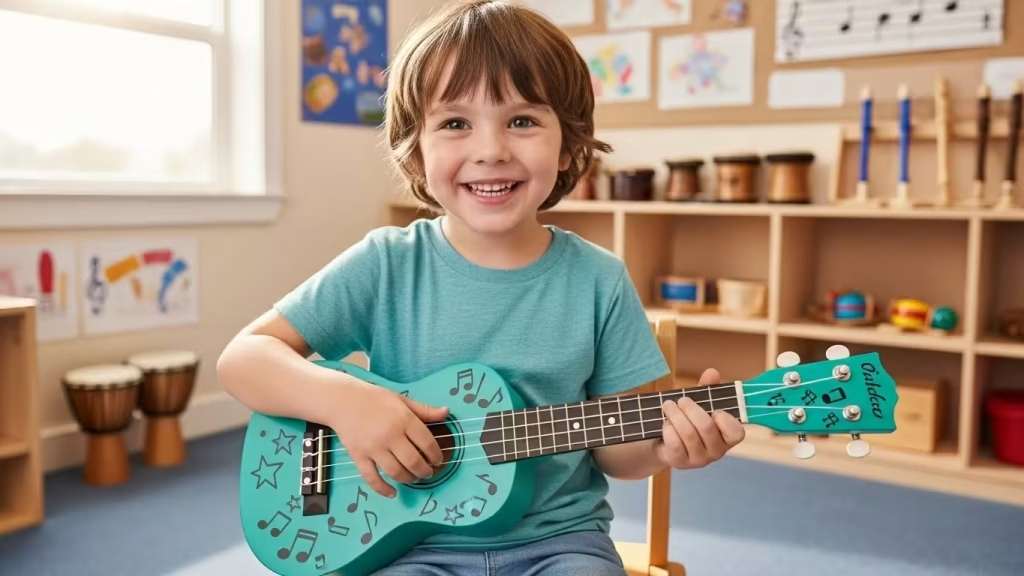
Beyond price, certain features matter for young learners:
Geared Tuners: Quality geared tuners keep the ukulele in tune longer. Cheap friction pegs slip constantly. Retuning before every practice session frustrates children and parents.
Look for smooth-turning tuners with gears inside. These should adjust pitch gradually, not slip suddenly. This feature alone is worth spending an extra $10-20.
Action Height: “Action” means the distance between strings and fretboard. Lower action is easier for small fingers to press. Too high, and your child’s fingers will tire quickly.
Ideal action at the 12th fret: approximately 3mm (about 1/8 inch). Most quality beginner ukuleles come properly set up. Very cheap models often have action too high.
Quality Materials: For beginners, laminate wood is perfectly acceptable. It’s durable and less sensitive to humidity changes than solid wood. However, avoid plastic-bodied ukuleles. They sound tinny and don’t stay in tune well.
Look for mahogany or spruce laminate. These woods produce warm, pleasing tones at affordable prices.
Brand Recommendations for Kids:
- Kala KA-15S: Industry standard beginner, excellent quality ($55-75)
- Lanikai LU-21: Smooth playing, stays in tune well ($60-80)
- Cordoba 15CM: Slightly larger, great sound ($70-90)
- Makala Dolphin: Budget option that actually works ($35-45)
- Flight TUS35: Child-friendly designs, quality construction ($45-60)
What to Avoid:
- Ukuleles under $25 (usually unplayable)
- Brightly painted toys marketed as “children’s ukuleles” (won’t stay in tune)
- Used ukuleles without trying first (may have damage)
- Unusual tunings (stick with standard G-C-E-A tuning)
Where to Buy Your Child’s First Ukulele
Shopping location matters almost as much as which model you choose.
Local Music Stores:
- Advantages: Try before buying, expert advice, support local business, easy returns
- Disadvantages: Limited selection, potentially higher prices, requires trip to store
- Best for: First-time buyers who value hands-on experience
Speaking with knowledgeable staff helps enormously. They can ensure proper fit and explain features. Many stores offer starter packages with accessories included.
Online Retailers:
- Advantages: Wider selection, competitive prices, customer reviews, convenient
- Disadvantages: Can’t try first, shipping time, return process if wrong
You can buy a ukulele on Amazon for easy returns. Also, Sweetwater has great customer service. And Uke Like The Pros focuses on ukuleles. So, these options are best for families who already know what they want.
Read reviews carefully. Look for comments specifically about children using the instrument. Watch video reviews when available.
Used Instruments:
- Advantages: Significant cost savings, environmentally friendly
- Disadvantages: Unknown history, possible hidden damage, limited warranty
- Where to look: Facebook Marketplace, Craigslist, music store consignment sections
- What to inspect: Cracks in body, warped neck, stripped tuners, excessive fret wear
If buying used, ideally have someone knowledgeable examine it first. A $40 used ukulele that doesn’t stay in tune is no bargain.
Starter Kit Recommendations: Many retailers offer “starter kits” that include accessories. Quality varies, but good kits include:
- Ukulele
- Padded gig bag or case
- Clip-on tuner (essential!)
- Extra strings
- Strap (helpful for young children)
- Instructional materials
Kits typically save $15-30 compared to buying items separately. Look for kits from reputable brands like Kala, Lanikai, or Cordoba.
Common Concerns About Ukulele as a First Instrument
Parents often share similar worries. Let’s address the most common concerns directly.
“Will My Child Take It Seriously?” Addressing Toy Perception
The ukulele has an image problem. Its cheerful sound and small size make some people view it as a toy rather than a “real” instrument.
This perception is completely unfair. Consider these facts:
Professional Ukulele Musicians:
- Jake Shimabukuro sells out concert halls worldwide
- Taimane Gardner performs complex classical and rock pieces
- James Hill teaches at prestigious music institutions
- Eddie Vedder from Pearl Jam features ukulele prominently
These artists prove the instrument’s legitimacy. The ukulele has a rich history in Hawaiian, jazz, and contemporary music.
Simple does not mean low value. For example, schools use the recorder to teach music basics. Also, orchestras still use the triangle. So, simplicity makes an instrument easier to learn, not worse.
Your child learning ukulele develops the same foundational skills as any instrument:
- Reading music notation
- Understanding rhythm and timing
- Recognizing chord progressions
- Training their ear for pitch
- Building performance confidence
Path to “Serious” Instruments: Many professional guitarists started on ukulele. The skills transfer seamlessly. Starting simple and building complexity is good pedagogy, not lowering standards.
Instead of thinking, “it’s just a ukulele,” think of it as a first step in music. It is like training wheels on a bike. So, it helps your child learn before moving to something harder.
“What About Long-Term Musical Development?”
If your child wants to switch later, that is normal. In fact, ukulele makes switching easier. Guitar chords are similar, and the fretboard works the same way. Also, skills can transfer to bass, banjo, and mandolin because the playing style is similar. So, kids who start on ukulele often learn guitar faster than kids who start on guitar first.
Ukulele also teaches music basics that work on any instrument. For example, kids learn how chords are made and how songs are built. They also learn rhythm, melody, and how to learn by ear. So, these ideas carry over to piano, drums, or saxophone.
Many musicians play more than one instrument. Some pros play 3, 4, or even 10+ instruments. So, each new instrument gets easier because basic music skills stay the same. Also, starting with ukulele does not limit your child. Instead, it gives a strong foundation for whatever comes next.
“Do They Need to Read Music?”
Can they learn without reading music? Reading music is helpful. However, it is not required to start making music.
Chord charts come first. Most young beginners use chord charts instead of standard notation. These simple diagrams show where to put the fingers. So, even 5-year-olds can follow them. Then kids can start playing right away and feel success early.
When to start note reading. Many teachers add note reading after about 3–6 months. By then, kids have stronger fingers and better coordination. Also, they have more confidence and motivation. So, reading music feels more useful because they can apply it immediately.
Tab is another step. Ukulele tablature (tab) shows which fret to press on which string. So, it is easier than standard notation at first. Also, tab teaches rhythm ideas and reading left to right. Then it helps prepare kids for standard music reading.
Many excellent musicians read tablature but not standard notation. While standard notation has advantages, it’s not mandatory for musical success.
Ear Training is Valuable: Learning songs by ear develops critical listening skills. Your child learns to recognize intervals, chord changes, and melodic patterns. These aural skills are arguably more important than notation reading.
Many jazz and rock musicians learned primarily by ear. Classical musicians emphasize notation more. Both approaches create successful musicians.
“What About Lessons? Are They Necessary?”
The short answer: lessons help but aren’t strictly required. The longer answer involves several factors.
Self-Taught vs. Lesson Benefits:
Advantages of Lessons:
- Proper technique from the beginning prevents bad habits
- Structured curriculum ensures steady progress
- Teacher motivation and accountability
- Immediate feedback and correction
- Social opportunities in group lessons
Advantages of Self-Teaching:
- Schedule flexibility fits family life
- Lower cost or free
- Child learns at own pace
- Develops independent learning skills
- No pressure or comparison with other students
Getting Started: Your 5-Year-Old’s First Ukulele Lessons
You’ve bought the ukulele. Now what? These practical tips set your child up for success.
Setting Up for Success at Home
Environment matters enormously for young learners.
Create a Dedicated Practice Space: Your child needs a specific place for practicing. This doesn’t require a whole room—just a consistent spot. Options include:
- Corner of their bedroom
- Section of family room
- Quiet spot in playroom
Make sure the area has:
- Good lighting (can see fretboard clearly)
- Comfortable seat at proper height
- Music stand or tablet holder for instructional materials
- Ukulele stand or wall hook for easy access
Establish a Routine Without Pressure: Consistency beats intensity for young children. Five minutes daily outperforms 30 minutes once a week.
Tie practice to existing routine:
- After breakfast before school
- Right after arriving home
- Before bedtime story
Use a timer for young kids. “We practice until the timer beeps” creates clear boundaries. Starting with just 5 minutes prevents burnout.
Make Practice Fun: Avoid military-style drilling. Instead:
- Let them choose which song to work on
- Celebrate attempts, not just successes
- Play along with them
- Create silly lyrics to practice songs
- Record videos to show progress
The goal is building a positive association with practice. Your child should see the ukulele as a fun activity, not a chore.
Set Appropriate Practice Time: Age-appropriate expectations prevent frustration:
- Age 4-5: 5-10 minutes daily
- Age 6-7: 10-15 minutes daily
- Age 8+: 15-20 minutes daily
Quality practice is focused time, not just holding the instrument. Ten focused minutes beat 30 minutes of distracted noodling.
First Skills to Teach Your Young Beginner
What should your child learn first? Follow this logical progression:
Proper Holding Position:
- Rest ukulele body against chest
- Right forearm holds it in place from the top
- Left hand supports neck but doesn’t grip tightly
- Neck angles slightly upward at 45 degrees
- Can see fretboard without hunching over
Common mistake: gripping the neck too tightly. Remind your child the left hand should feel relaxed.
Gentle Strumming Technique:
- Use index finger or soft felt pick
- Strum near where neck meets body
- Down strokes first—up strokes come later
- Light, brushing motion, not aggressive
- Wrist does the work, not whole arm
Play “ocean waves” game: gentle strumming that sounds like waves on a beach.
First Chord to Learn (C Major): C major requires just one finger on one string. Perfect first chord!
- Place ring finger on 3rd fret of bottom string
- Other strings play open (no fingers on them)
- Strum all four strings
- Listen for clear, bright sound
Practice pressing firmly enough that the string sounds clear. Many beginners press too lightly at first.
Start with a simple song like “Twinkle Twinkle Little Star” using one chord. Just strum C major on each syllable. So, your child can play a full song on day one. This quick success builds confidence.
After mastering C, add F major (next easiest chord). Now they can play dozens of two-chord songs.
Best Learning Resources for 5-Year-Olds
Supplement your teaching with quality resources:
Top YouTube Channels:
- “Ukulele Mike Lynch”: Clear, slow instruction perfect for children
- “The Ukulele Teacher”: Song-based learning approach
- “Nancy”: Fun, encouraging teaching style
- “Bernadette Teaches Music”: Theory concepts explained simply
Recommended Apps:
- Yousician: Gamified lessons that listen and give feedback ($10/month)
- Fret Zealot: LED strips on fretboard show where to place fingers ($100 one-time)
- Ultimate Ukulele Tuner: Free, accurate, easy to use
Beginner Books for Young Children:
- “Ukulele for Kids” by Chad Johnson: Large pictures, simple explanations
- “My First Ukulele” series: Progressive method with fun illustrations
- “Alfred’s Kid’s Ukulele Course”: Comprehensive, age-appropriate
Music Lessons in San Diego with K&M Music School
1 Expert Music Lessons
We offer Piano, Violin, Cello, Guitar, Ukulele, Saxophone, Bassoon, Harp, Voice, and Toddler group lessons for students of all ages and skill levels.
2 Why Choose Us?
- 🎶 Boosts focus and self-discipline
- 🎵 Strengthens cognitive skills
- 🎼 Enhances cultural understanding
- 🎤 Builds confidence through recitals
3 We Welcome Adults Too!
Frequently Asked Questions About Ukulele as a First Instrument
Can a 5-year-old really play ukulele?
Yes, absolutely. Most 5-year-olds can successfully learn ukulele basics. The instrument’s small size fits their hands perfectly. Soft nylon strings don’t hurt small fingers. Simple chord shapes require just one or two fingers.
“Playing” at age 5 means strumming simple songs with basic chords. Your child won’t be performing complex solos. But they’ll definitely make recognizable music within weeks. Many children this age successfully play 10-15 songs within six months.
Physical readiness varies by child. If your 5-year-old can hold a small book and turn pages, they can probably hold and strum a ukulele.
How long until my child can play a song?
Most children play their first complete song within 2-4 weeks of starting. Simple one-chord songs like “Twinkle Twinkle” can happen in the first few days.
Timeline for skill development:
- Week 1: Basic strumming, holding position
- Week 2-4: First song with 1-2 chords
- Month 2-3: Five to eight songs
- Month 6: Ten to fifteen songs, basic performance ready
Several factors speed or slow progress:
- Daily practice vs. sporadic practice
- Quality instruction vs. random YouTube watching
- Natural musical aptitude
- Finger strength and dexterity
Define “play a song” appropriately for age. A 5-year-old “playing” means strumming the right chords while singing. Technical perfection isn’t the goal—making joyful music is.
What if my child has small hands?
Small hands are actually perfect for soprano ukulele. The instrument was designed for compact Hawaiian players originally.
The soprano ukulele neck measures just 13 inches. Frets sit close together. Most 5-year-olds easily reach all frets. Small hands can actually move between positions faster than larger hands.
If your child’s hands seem especially small:
- Choose soprano size specifically (not concert)
- Start with single-finger chords
- Build finger strength through simple exercises
- Be patient—strength develops with practice
Very few 5-year-olds have hands too small for soprano ukulele. If they can pick up and hold a hardcover book, they can handle the ukulele.
Growth happens quickly at this age. Hands that seem tiny now will gain strength and size within months of playing.
Should I get lessons or teach them myself?
Both approaches work. The ideal combines elements of both.
Pros of Professional Lessons:
- Correct technique from the start
- Structured progression prevents gaps
- Expert troubleshooting of problems
- Scheduled commitment encourages consistency
- Social learning in group settings
Pros of Self-Teaching:
- Zero or low cost
- Flexible schedule
- Learns at their own pace
- Builds independent learning skills
- No performance pressure
Recommended Hybrid Approach:
- Start with free online resources for 1-2 months
- See if interest and enjoyment remain high
- Add group lessons or occasional private instruction
- Continue supplementing with online materials
Cost Considerations:
- Private lessons: $25-40 per 30-minute session
- Group lessons: $12-20 per session
- Online courses: $10-30 per month
- Free YouTube: $0
For most families, it makes sense to start with free options. Then add paid lessons later if needed. No point paying for lessons if your child loses interest in week two.
Resources for Parent-Teachers: If teaching your child yourself:
- “Ukulele for Kids” books with parent guides
- YouTube channels explaining teaching techniques
- Online forums for parent-teachers
- Apps with structured curricula to follow
Many parents successfully teach basic skills. Consider professional help if you notice technique problems or hit learning plateaus.
How much practice is needed for a 5-year-old?
For 5-year-olds, aim for 5-10 minutes of focused practice daily. This short duration matches their attention span and prevents burnout.
Quality Over Quantity: Ten focused minutes beat thirty distracted minutes. During practice time:
- Eliminate distractions (toys, screens away)
- Work on specific skills, not random strumming
- Stay present and encouraging
- End on a positive note
Signs of Practice Fatigue: Stop if you see:
- Fingers turning red or complaining of pain
- Frustration tears or anger
- Complete loss of focus
- Sloppy, careless playing from tiredness
Better to end after 5 good minutes than push through 15 miserable minutes.
Making Practice Playful: Incorporate games:
- “Can you play this chord 10 times perfectly?”
- “Let’s make up a silly song about our dog!”
- “Show me your favorite song to play!”
- “Can you teach me what you learned?”
Playful practice doesn’t feel like practice. Your child’s brain learns just as effectively through games.
Building Habit: Consistency matters more than duration. Practice at the same time daily. The routine becomes automatic. Morning before school or evening before bedtime works well.
Miss a day? No problem. Just resume tomorrow. Avoid guilt or punishment around practice. Keep it joyful.
What’s the best ukulele brand for beginners?
Several brands consistently deliver quality at beginner prices:
Top Recommendations:
1. Kala (Best Overall)
- Models: KA-15S ($60-75)
- Why: Industry standard, reliable quality, stays in tune
- Best for: Most beginners
2. Lanikai (Close Second)
- Models: LU-21 ($65-80)
- Why: Smooth playing action, warm tone
- Best for: Slightly larger hands
3. Cordoba (Premium Budget)
- Models: 15CM ($75-90)
- Why: Excellent build quality, beautiful sound
- Best for: Families wanting room to grow
4. Makala (Budget Option)
- Models: Dolphin ($40-50)
- Why: Surprisingly playable for the price
- Best for: Tight budgets or testing interest
5. Flight (Fun Designs)
- Models: TUS35 ($50-70)
- Why: Child-friendly designs, quality construction
- Best for: Kids who like colorful instruments
What Makes These Suitable:
- Stay in tune during practice sessions
- Comfortable action for small fingers
- Durable construction withstands drops
- Pleasant tone encourages playing
- Readily available online and in stores
Where to Purchase:
- Amazon (easy returns, competitive prices)
- Sweetwater (excellent customer service, free shipping)
- Local music stores (try before buying)
- Uke Like the Pros (specialist retailer)
Avoid ukuleles sold only in toy stores. If the box has cartoon characters, it is probably a toy, not a real instrument.
Will ukulele help with guitar later?
Yes. Ukulele is a strong foundation for guitar. The fretboard logic is the same. Also, many chord shapes are similar, and you just add more strings on guitar. Strumming patterns also carry over. Plus, music theory and finger strength transfer too.
Most kids switch to guitar around ages 8–10. By then, their hands are bigger, and they have more skill. So, the switch often takes only about 2–3 months. They are not starting from zero, because they already understand fretted instruments.
Guitar is different in a few ways. It has two extra strings. It is larger, but it is usually manageable by age 8+. It also uses steel strings, so fingers may need time to build calluses. Finally, the tuning is different, but kids can learn it quickly.
Children who start on ukulele typically:
- Progress faster than direct-to-guitar beginners
- Experience less frustration
- Maintain enthusiasm better
- Have stronger musical foundations
Think of ukulele as guitar with training wheels. When ready, the training wheels come off and real riding begins.
What if my child loses interest quickly?
Interest fluctuation is completely normal, especially with young children.
Normal Pattern: Most kids cycle through phases:
- Week 1-4: Excited, practices enthusiastically
- Week 5-8: Novelty wears off, practice becomes sporadic
- Week 9-12: Either deepening commitment or fading interest
This pattern is developmentally appropriate. Young children explore many interests before finding lasting passions.
Strategies to Maintain Engagement:
- Introduce new songs regularly
- Find performance opportunities
- Connect with other young players
- Vary practice activities
- Take short breaks when needed
- Focus on fun over perfection
When to Take Breaks vs. Quit:
Take a Break If:
- Interest seems temporarily low
- Other activities are particularly busy right now
- Frustration with specific technique (not the instrument itself)
- Still mentions wanting to play occasionally
Consider Quitting If:
- Months pass with zero interest
- Strong resistance every practice session
- Clear preference for different instrument
- No joy whatsoever in playing
No-Pressure Approach: Frame learning as exploration, not obligation. “We’re trying ukulele to see if you like it” removes pressure. If they discover it’s not their passion, that’s valuable information too.
Remember your minimal investment. If your child moves on after three months, you’ve spent $50-75. That’s less than many hobbies cost. Consider it tuition in self-discovery.
Conclusion
Is ukulele the best first instrument for a 5-year-old? For most families, yes. It is small, affordable, and easier to learn quickly. Also, it still teaches real music skills, so it is a strong choice for beginners.
Your child will learn real music skills. They’ll build confidence through early success. They’ll develop fine motor skills and cognitive abilities. All while having fun making music they actually want to play.
Ukulele is not the best choice for every child. Some kids will do better with piano, drums, or waiting until they are ready for guitar. For most 5-year-olds who like music, ukulele is a great first instrument.
Remember that the best instrument is the one your child will practice. Genuine enthusiasm beats technical superiority every time. If your child’s eyes light up at the sight of a ukulele, that’s your answer.
Your Next Steps
Ready to start your child’s musical journey? Follow these action steps:
Assess readiness: Does your child show sustained interest? Can they focus for 5-10 minutes? Are their hands large enough for soprano ukulele?
Set your budget: Plan for $50-100 for instrument plus $20-30 for accessories. Consider lesson costs if desired.
Research options: Visit local music stores to try instruments. Read reviews of recommended models online. Watch videos of different ukuleles.
Involve your child: Let them help choose their instrument. Show them videos of kids playing. Get them excited about learning.
Start simple: Focus on joy and exploration for the first month. Keep practice sessions short and fun. Celebrate every small achievement.
Your child can start music with one simple strum. Then they can learn songs, build confidence, and enjoy making music for life. Also, the cost is usually small compared to the long-term benefits.
Music lessons are not only about becoming a professional musician. Instead, they help kids grow as people. They learn to notice beauty, express feelings in a healthy way, and create something new.
Share Your Experience
We’d love to hear about your family’s musical journey. What questions do you still have about choosing a first instrument? Has your child started learning ukulele? What challenges or successes have you experienced?
Leave a comment below with your thoughts and questions. Your experience might help another parent making this same decision.
Ready to take the next step? Check out our companion guides:
- “Top 10 Ukuleles for Children Under $100”
- “Easy Ukulele Songs Your 5-Year-Old Can Learn in One Week”
- “How to Practice With Your Young Child Without Tears”
- “Ukulele vs. Guitar: A Complete Comparison for Parents”
Start your child’s musical adventure today. That small instrument in their hands might be the beginning of something beautiful.