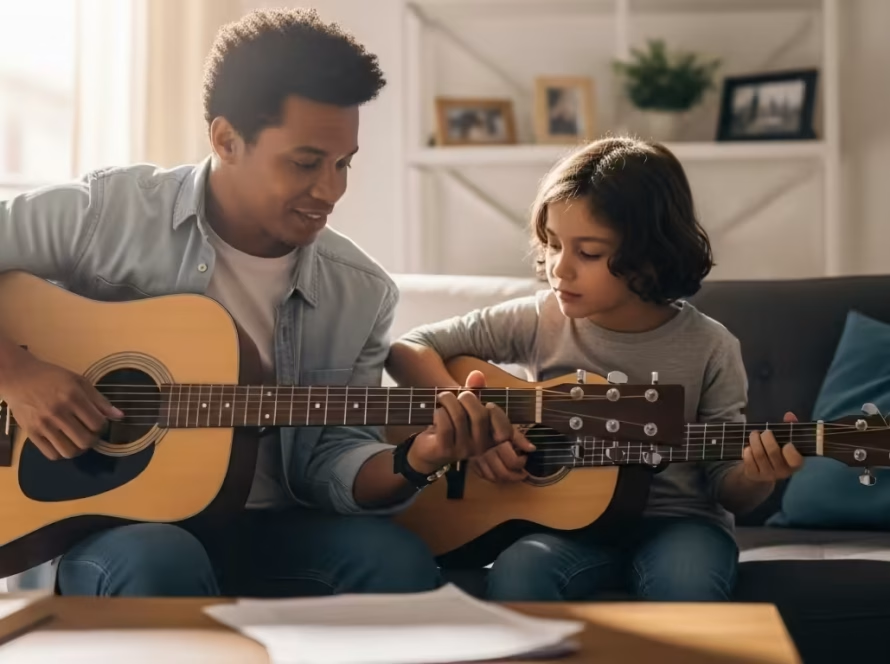
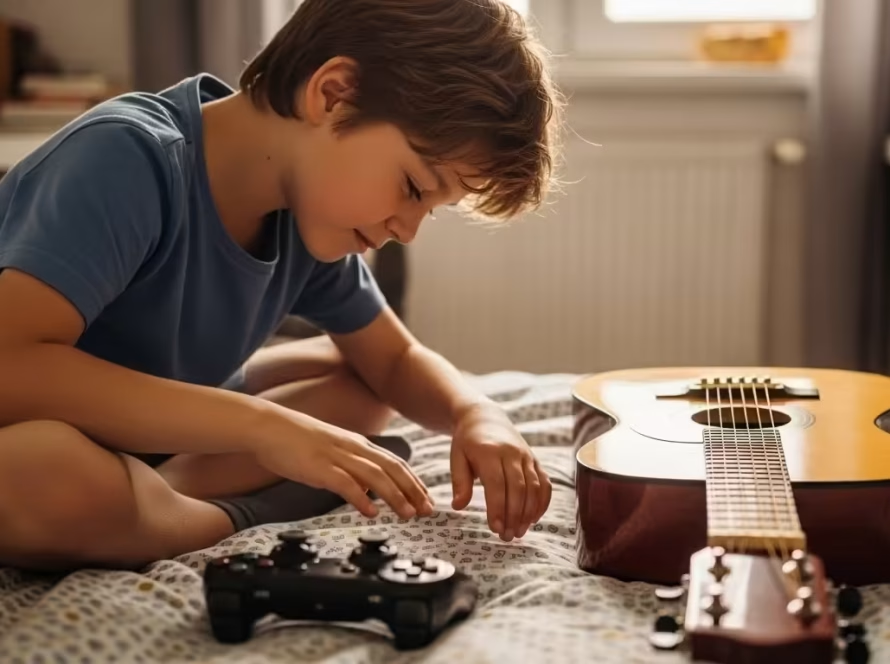
How Kids Learn Guitar Faster With Micro-Practice Sessions

Katherine Dvoskin, Co-Founder of K&M Music School
I hope you enjoy this blog post! If you're interested in scheduling a free trial lesson, just click.
Author: Katherine Dvoskin | Co-Founder of K&M Music School
Published November 25th, 2025
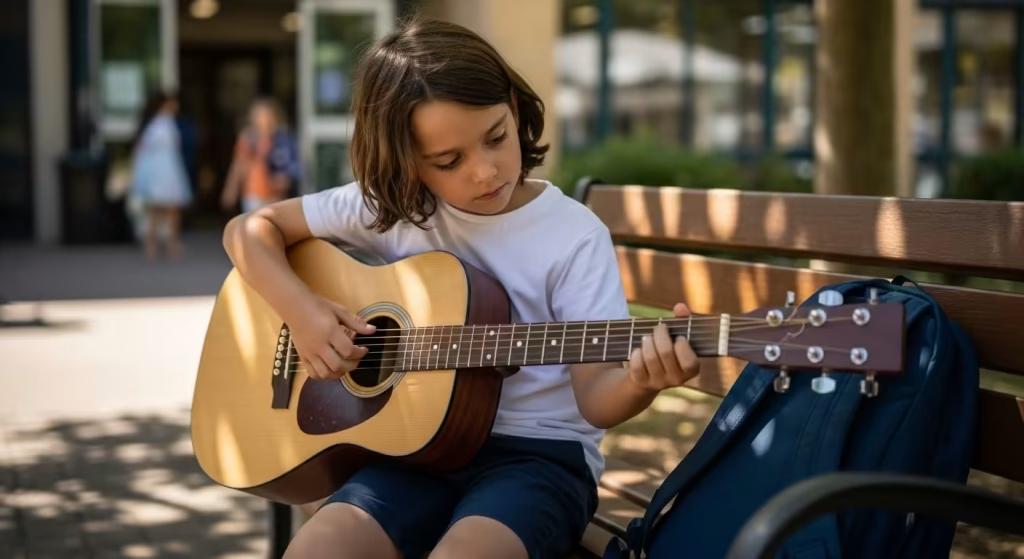
Kids learn guitar faster with short practice. Use 5–10 minute sessions. Simple tips that work.
Long practices burn kids out. Short sessions work better. Do 5–15 minutes at a time. Kids build skills without stress. This guide shows how.
| Age Group & Duration | Key Methods & Tools | Expected Progress |
|---|---|---|
|
Ages 5–7 5–7 min • 3×/day • games & rewards
|
|
|
|
Ages 8–10 8–12 min • 2×/day • student-chosen songs
|
|
|
|
Ages 11–13 10–15 min • 2–3×/day • self-directed
|
|
|
|
Core Principle One skill per session • 3–4 hr spacing
|
|
|
|
Practice Mindset Stop before frustration • end on a win
|
|
|
Understanding Micro-Practice for Young Guitarists
What Exactly Are Micro-Practice Sessions?
Micro-practice sessions are short, focused guitar practice periods lasting 5-15 minutes. They differ completely from traditional 30-60 minute practice blocks. The key difference is quality over quantity.
These brief sessions focus on mastering one specific skill. Your child might spend 7 minutes practicing just the transition between two chords. Nothing else. This focused approach works better than trying to cover everything in one long session.

Music Lessons in San Diego with K&M Music School
1 Expert Music Lessons
We offer Piano, Violin, Cello, Guitar, Ukulele, Saxophone, Bassoon, Harp, Voice, and Toddler group lessons for students of all ages and skill levels.
2 Why Choose Us?
- 🎶 Boosts focus and self-discipline
- 🎵 Strengthens cognitive skills
- 🎼 Enhances cultural understanding
- 🎤 Builds confidence through recitals
3 We Welcome Adults Too!
Most children ages 5-12 benefit most from micro-practice. Their natural attention spans match perfectly with shorter sessions. A 7-year-old typically focuses well for about 8-12 minutes before their mind wanders.
Why micro-practice works Kids focus for short times. A 6-year-old can focus about 12–18 minutes. Skills grow from repeats, not long time. Many short sessions beat one long one. Small wins release dopamine. Dopamine makes practice feel good. Long, hard sessions do the opposite. Brains store skills between sessions. Breaks help memories stick. Daily short practice keeps progress strong.
Micro-practice vs. traditional Length: Traditional 30–60 min. Micro 5–15 min. How often: Traditional 1 per day. Micro 2–3 per day. Focus: Traditional many skills. Micro one skill. Attention: Traditional drops after 15 min. Micro stays high. Finish: Traditional ends tired. Micro ends on a win. Schedule: Traditional needs a big block. Micro fits anywhere. Frustration: Traditional builds stress. Micro stops before it. Retention: Traditional good with discipline. Micro great with consistency.
Listen to Our Podcast
If you’d like to learn more about How Kids Learn Guitar Faster With Micro-Practice Sessions. Tune in to our podcast, where we share expert tips and insights. Check it out on our YouTube channel and elevate your music journey today!
Can you combine both methods? Absolutely. Many families use micro-practice sessions during weekdays and longer practice on weekends. This hybrid approach works well for intermediate students ready for more challenge.
The key is matching practice length to your child’s current ability and attention span. Start with micro-sessions and expand naturally as skills grow.
Why micro-practice helps kids learn guitar
Short, focused practice builds skills fast. Five minutes on one skill beats a messy 30 minutes. More repeats = stronger muscle memory.
Chord change example In 5 minutes, a child can switch G→C 50–60 times. In 30 mixed minutes, maybe only 20 times.
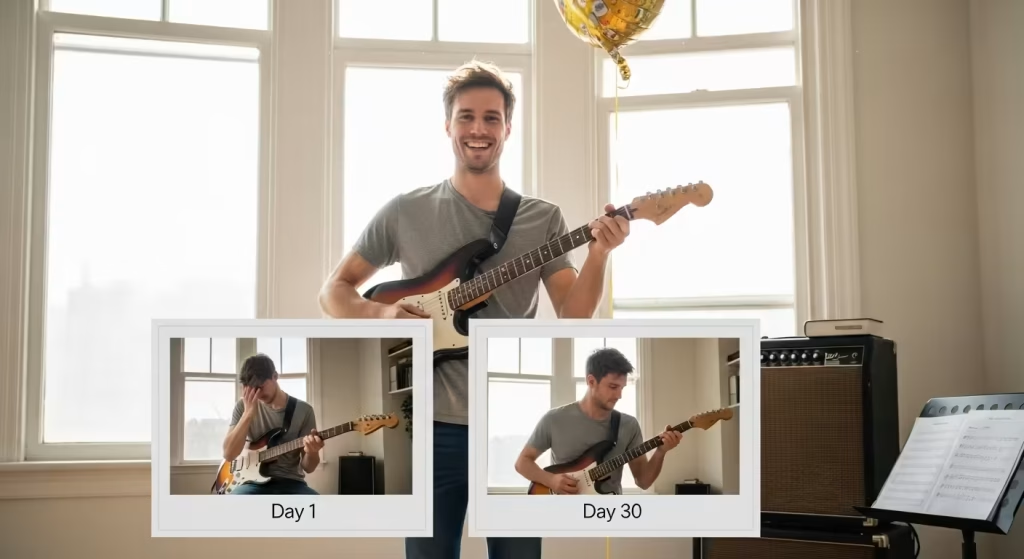
What studies suggest Focused sessions improve accuracy faster. Target one skill for better results.
Real story Emma, age 9, struggled with the D chord. She did 6 minutes a day on only the D chord. After one week, the D chord was clean. After two weeks, D↔A changes were smooth.
Reduced Frustration and Practice Burnout
Long practice sessions follow a predictable pattern. The first 10 minutes go well. Minutes 10-20 show declining focus. Minutes 20-30 often involve mistakes, frustration, and tears.
Short guitar practice sessions for kids end at the peak of engagement. Your child finishes feeling accomplished instead of defeated. This psychological difference matters enormously for long-term motivation.
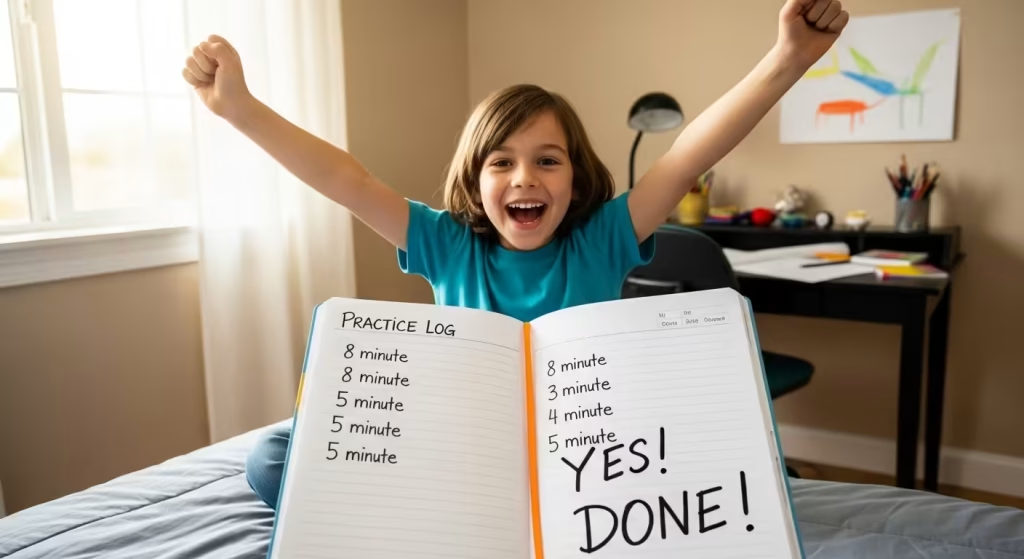
Practice burnout is real. Studies show that 67% of children who quit music lessons do so because practice feels like punishment. Micro-practice sessions prevent this by keeping practice enjoyable and manageable.
When sessions end on a high note, kids look forward to the next one. They develop positive associations with their guitar instead of dreading practice time.
Better Focus and Attention During Practice
A child’s attention quality matters more than duration. Minute 5 of practice shows much sharper focus than minute 25.
Here’s how attention spans typically work by age:
Age 5–7: Best focus 8–12 minutes. Practice 5–7 minutes. Age 8–10: Best focus 12–18 minutes. Practice 8–12 minutes. Age 11–13: Best focus 18–25 minutes. Practice 10–15 minutes. Age 14+: Best focus 25–40 minutes. Practice 15–20 minutes or use a hybrid.
Quick guitar practice for children works because it uses their best attention minutes. You get maximum effort during the entire session instead of declining focus.
Video game designers understand this principle well. Games keep levels short and achievable. Players stay engaged because they can see the end goal. Apply this same principle to guitar practice.
Pro tip: Use a visible timer. Kids focus better when they know exactly how much time remains. The ticking timer creates gentle urgency that improves concentration.
Easier to Fit Into Busy Family Schedules
Modern families juggle school, sports, homework, and activities. Finding a 30-minute block for guitar practice feels impossible most days.
Ten minutes is different. You can find 10 minutes before school, after homework, or before dinner. These small pockets of time exist throughout your day.
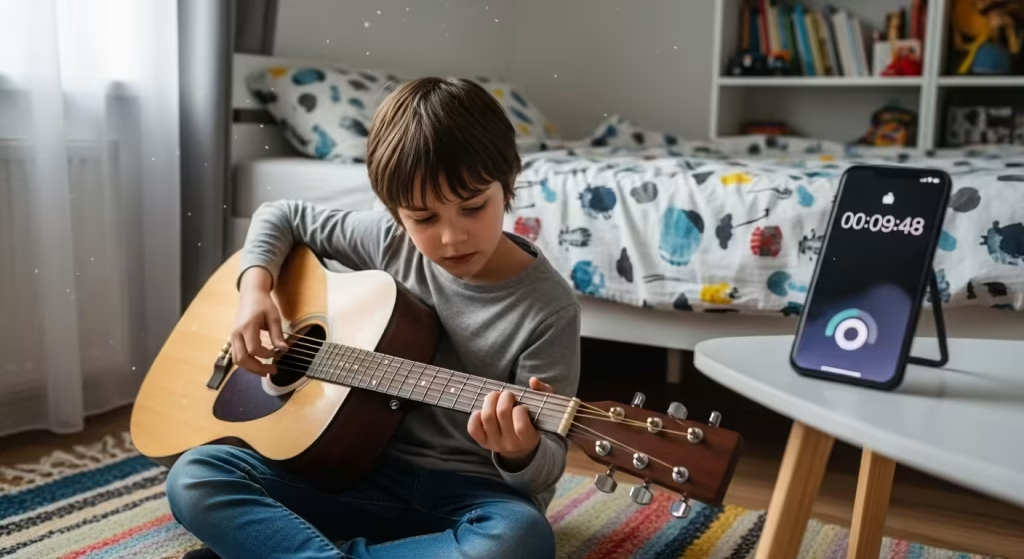
Multiple brief sessions work perfectly for busy schedules. Your child practices 8 minutes in the morning before school. Another 10 minutes after homework. Maybe 7 minutes before bedtime. That’s three quality sessions totaling 25 minutes with zero scheduling stress.
Consistency beats duration every time. Seven days of 10-minute practice (70 minutes weekly) produces better results than one 70-minute Sunday session. The daily repetition reinforces learning more effectively.
Jennifer, a working mom of three, shares: “We couldn’t make traditional practice work with our schedule. Micro-sessions saved us. My son practices 10 minutes after breakfast and 10 minutes before dinner. He’s progressed more in three months than he did in six months before.”
Builds Long-Term Practice Habits
Habit formation in children takes 21-66 days depending on the complexity of the behavior. Small habits stick better than big commitments.
Asking your child to practice 10 minutes daily is much easier than 30 minutes. The smaller commitment creates less resistance. Over time, this small habit becomes automatic.
James Clear, author of “Atomic Habits,” explains that tiny habits compound over time. A child who practices 10 minutes daily for a year completes over 60 hours of guitar practice. That’s substantial skill development from a small daily action.
Something magical happens around month three of micro-practice. Many kids start practicing voluntarily beyond their scheduled sessions. They pick up the guitar “just to try something” or “play their favorite song.” This intrinsic motivation is the ultimate goal.
The habit becomes part of their identity. They see themselves as “someone who plays guitar” rather than “someone who has to practice guitar.” This shift in self-perception drives long-term musical development.
How to Structure Micro-Practice Sessions
The Ideal Length for Different Age Groups
Matching session length to your child’s age and development stage is critical. Too short and they don’t accomplish much. Too long and you lose the micro-practice benefits.
Ages 5-7: The Foundation Stage Keep sessions very short at 5-7 minutes maximum. Young children have limited fine motor control and focus. They’re building basic hand positions and simple strumming patterns. Three 5-minute sessions daily works perfectly for this age.
Ages 8-10: The Growth Stage Extend to 8-12 minute sessions as focus improves. These children can handle chord learning and simple songs. Two 10-minute sessions daily builds skills steadily. They can practice before school and after homework with good results.
Ages 11-13: The Development Stage These students manage 10-15 minute sessions well. They’re ready for more complex techniques and longer song sections. Two 12-minute sessions or three 8-minute sessions both work effectively. Let them help choose session timing and length.
Ages 14+: The Advanced Stage Teens can handle 15-20 minute micro-sessions or transition to hybrid practice. Some days they do three 15-minute sessions. Other days they practice 45 minutes straight. Flexibility increases as maturity grows.
Can sessions be too short? Yes. Sessions under 4 minutes don’t allow enough repetition for skill building. The sweet spot balances attention span with adequate practice repetition.
Lorem ipsum dolor sit amet, consectetur adipiscing elit. Ut elit tellus, luctus nec ullamcorper mattis, pulvinar dapibus leo.
How Many Sessions Per Day for Best Results?
Research on spaced repetition shows clear patterns. Multiple practice sessions throughout the day beat one long session for skill retention.
Recommended frequency: 2-3 sessions daily
Space sessions at least 3-4 hours apart. This timing allows memory consolidation between practices. Your child’s brain processes and strengthens skills during these rest periods.
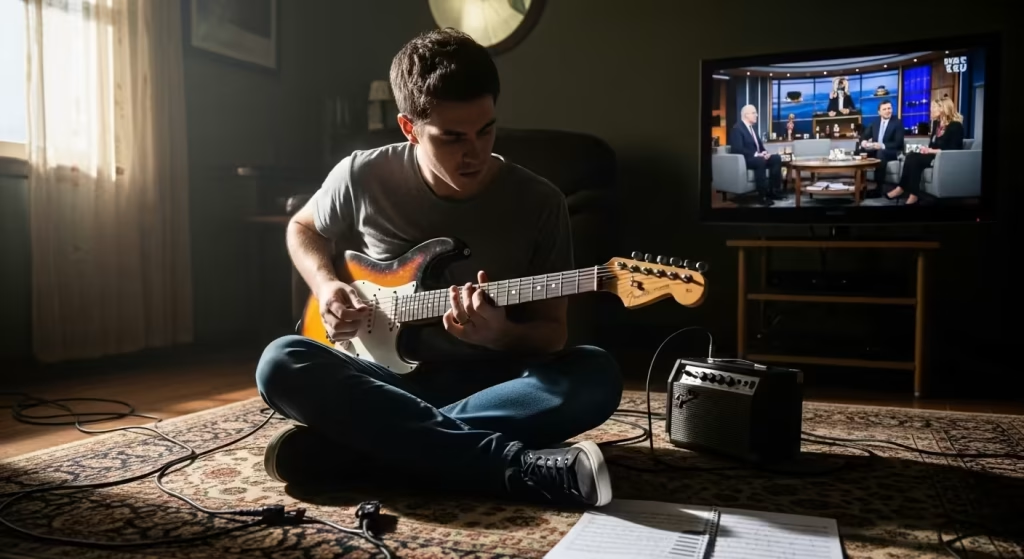
Here’s an example schedule for different family situations:
Busy Weekday Schedule:
- Morning session: 8 minutes before school (7:15 AM)
- After-school session: 10 minutes after snack (4:00 PM)
- Evening session: 7 minutes before bedtime (7:30 PM)
- Total: 25 minutes across three sessions
Relaxed Weekend Schedule:
- Morning session: 12 minutes after breakfast (9:00 AM)
- Midday session: 15 minutes before lunch (12:30 PM)
- Afternoon session: 10 minutes before dinner (5:00 PM)
- Total: 37 minutes across three sessions
Is once daily enough? Yes, if that’s all your schedule allows. One consistent 10-minute session beats sporadic longer practices. Build from there as routine solidifies.
Can you do too many sessions? Potentially. More than four sessions daily may cause finger fatigue in beginners. Watch for discomfort and adjust accordingly.
What to Practice in Each Micro-Session
The golden rule: One focus per session. This rule makes micro-practice work.
Your child shouldn’t practice chords, songs, and strumming in one 10-minute session. Pick one element and master it. Tomorrow’s session can focus on something different.
Session Type Rotation: Create variety across the day through different focus areas:
- Session 1 (Morning): Technique focus – chord transitions, finger placement
- Session 2 (Afternoon): Song practice – work on favorite song section
- Session 3 (Evening): Review session – play through previously learned material
Example Session Focuses:
Here are 10 micro-session ideas you can use:
- G to C Chord Transition (5 min) – Practice switching between these two chords smoothly
- Favorite Song Chorus (10 min) – Learn and repeat the catchiest part of a song they love
- Finger Strength Exercise (7 min) – Simple fretting hand exercises building dexterity
- One Strumming Pattern (8 min) – Master a single rhythm pattern on muted strings
- A Chord Perfect Formation (6 min) – Form the A chord cleanly 50 times
- Four Measures of a Song (10 min) – Learn just four beats perfectly
- Down-Strum Timing (5 min) – Practice even downstrokes with a metronome
- Spider Walk Exercise (7 min) – Finger independence drill across frets
- E to Em Transition (8 min) – Quick change between E major and E minor
- Playing Along with Track (10 min) – Strum along with a backing track or simple song
Music Lessons in San Diego with K&M Music School
1 Expert Music Lessons
We offer Piano, Violin, Cello, Guitar, Ukulele, Saxophone, Bassoon, Harp, Voice, and Toddler group lessons for students of all ages and skill levels.
2 Why Choose Us?
- 🎶 Boosts focus and self-discipline
- 🎵 Strengthens cognitive skills
- 🎼 Enhances cultural understanding
- 🎤 Builds confidence through recitals
3 We Welcome Adults Too!
Balance between fun and fundamentals works best. Aim for about 60% skill-building sessions and 40% enjoyable song practice. This mix develops ability while maintaining enthusiasm.
Creating a Micro-Practice Session Template
Structure helps children know what to expect. A simple three-part template works for any skill level:
The 3-Part Session Structure:
Part 1: Quick Warm-Up (1-2 minutes)
- Shake out hands and stretch fingers
- Play open strings or a simple scale
- Get comfortable holding the guitar
- This prepares muscles and mind
Part 2: Focused Practice (3-8 minutes)
- Work on the chosen skill
- Repeat the target technique multiple times
- Maintain high concentration
- This is where learning happens
Part 3: Fun End Activity (1-2 minutes)
- Play something they already know well
- Strum their favorite chord progression
- Jam freely for a moment
- End feeling successful and happy

Example Beginner Template (7 minutes total):
- Warm-up: Open string strumming (1 min)
- Focus: D chord formation practice (5 min)
- Fun end: Play the one song they know (1 min)
Example Intermediate Template (12 minutes total):
- Warm-up: Finger stretches and scale run (2 min)
- Focus: New song verse practice (8 min)
- Fun end: Play through favorite chorus (2 min)
The ending matters most psychologically. Always finish sessions on a positive note. If your child struggles during the focus section, switch to something easier for the final minute. They should leave practice feeling capable, not defeated.
Using Timers and Visual Cues
Tools help micro-practice sessions run smoothly. The right timer keeps your child focused and aware.
Timer Options:
For Young Children (Ages 5-8): Visual timers work best. These show the time remaining as a shrinking colored section. Kids see exactly how much practice is left. The Time Timer brand is popular, but many apps offer similar visual displays.
For Older Children (Ages 9+): Simple phone timer apps work fine. Good options include:
- Forest App (gamifies focus time)
- Toggl Track (simple and clean)
- Be Focused (Pomodoro-style timer)
- iPhone built-in timer (free and easy)
For extra motivation ideas that keep kids consistent (stickers, streaks, simple goals), here are more ideas for young students that encourage daily music practice.

Practice Tracking:
Visual progress motivates kids powerfully. Try these tracking methods:
- Sticker Charts: Kid puts a sticker on calendar after each session. Seeing rows of stickers builds pride.
- Checkmark Calendars: Simple check for each completed session. Chain of checks becomes motivating.
- Progress Bars: Draw or print a progress bar. Color in one section per session completed.
- Marble Jars: Add a marble to a jar after practice. Watch the jar fill up over weeks.
Gamification works because it makes practice feel like winning. Each completed session becomes a small victory. String enough victories together and you have a skilled young guitarist.
Practical Micro-Practice Techniques for Guitar
The Single-Chord Focus Method
This technique is perfect for absolute beginners. Choose one chord. Spend the entire session practicing just that chord shape.
Your child places their fingers in the chord position. They strum and check if it sounds clean. They lift their fingers and place them again. Repeat for 5 minutes.
Why this works: Muscle memory develops through pure repetition. Doing one thing 50 times in 5 minutes beats doing five things 10 times each.
Example session: The A chord mastery session. Set timer for 5 minutes. Child forms A chord, strums, lifts fingers, forms it again. They count how many clean-sounding A chords they can make. Tomorrow they try to beat their score.
Mastery of one chord builds confidence for the next. Kids feel accomplished when they can form a chord perfectly every single time.
The Two-Chord Transition Drill
After mastering individual chords, focus on smooth transitions. Pick two chords that appear together in real songs.
Common beginner pairs include:
- G to C
- D to A
- E to Am
- C to F
The drill: Form the first chord. Strum once. Change to second chord. Strum once. Repeat continuously for the entire session.
Count successful changes in 5 minutes. Track this number daily. Watching it increase from 15 transitions to 40 transitions over two weeks shows clear progress.
Numbers create motivation. Kids love beating their personal records. This turns technical practice into a game.
The “Play Along” Mini-Session
This technique builds rhythm and timing skills. Use backing tracks or simple songs your child knows.
Don’t worry about playing perfectly. Focus on strumming in time with the music. Even if chord changes are rough, keeping steady rhythm matters most.
Beginner-friendly songs for play-along practice:
- “Twist and Shout” (D, G, A chords)
- “Three Little Birds” (A, D, E chords)
- “You Are My Sunshine” (C, G, F chords)
- “Brown Eyed Girl” (G, C, D, Em chords)
- “Knockin’ on Heaven’s Door” (G, D, Am, C chords)
Find backing tracks on YouTube by searching “[song name] backing track no guitar.” Hundreds of options exist for free.
This session type feels less like practice and more like playing music. That’s the point. Kids need to experience the joy of making music, not just drilling techniques.
The Finger Independence Exercise
Young children often struggle with finger independence. Their fingers want to move together. Specific exercises fix this.
Spider Walk Exercise: Put your hand at the first fret. Use one finger per fret. 1st finger on fret 1. 2nd finger on fret 2. 3rd finger on fret 3. 4th finger on fret 4. Play each note in order on one string. Then switch to the next string. Keep the same finger-to-fret rule. Move the pattern up the neck. Then walk it back down. Stay slow. Keep notes clean. Keep your hand relaxed.
Do this for 5 minutes. It feels weird at first. That awkwardness means the exercise is working. You’re training fingers to move independently.
Benefits:
- Builds finger strength
- Improves coordination
- Prevents hand strain
- Prepares fingers for complex chords
Physical conditioning matters for guitar. These exercises are like stretching before sports. Five minutes of finger work prevents fatigue during regular practice.
The “One Measure” Song Method
Learning entire songs overwhelms beginners. Break songs into tiny pieces instead.
A measure contains just 4 beats. Learn those 4 beats perfectly in one session. Tomorrow add the next 4 beats. By week’s end, you have a complete song section.
Why this works: Success feels achievable. Your child sees the finish line. They master each small piece before adding more. This prevents the discouragement of “I’ll never learn this whole song.”
Example: Learning “Let It Be” by The Beatles:
- Day 1: First 4 beats of verse (C, G progression)
- Day 2: Next 4 beats (Am, F progression)
- Day 3: Combine first two measures
- Day 4: Third measure (C, G)
- Day 5: Fourth measure (F, C)
- Day 6: Complete verse practice
- Day 7: Verse smooth play-through
One week from knowing nothing to playing a recognizable song section. That’s motivating progress.
The Strumming Pattern Practice
Many beginners struggle more with rhythm than chords. Isolate strumming practice to master it separately.

The technique: Mute all strings with left hand. Practice strumming patterns on muted strings. This lets your child focus completely on rhythm without worrying about chord changes.
Start with simple down-strums. Progress to down-up patterns. Eventually add syncopated rhythms. Ten minutes of focused strumming practice improves overall playing dramatically.
Beginner patterns to practice:
- Four down-strums per measure (simplest)
- Down-down-up-up-down (common folk pattern)
- Down-up-down-up (steady eighth notes)
- Down-down-up-down-up (island strum)
Use a metronome app set to 60-80 BPM. Start slow. Speed increases naturally with practice.
Once strumming feels natural, applying patterns to actual chords becomes much easier. This separated practice saves time overall.
Common Mistakes Parents Make (And How to Avoid Them)
Mistake #1: Extending Sessions When Kids Are “On a Roll”
Your child is practicing well. They’re focused and making progress. You think, “Let’s keep going while they’re motivated!”
This backfires. Micro-practice works because it ends before fatigue and frustration set in. Extending sessions ruins this benefit.
Why this is wrong: The magic of micro-practice comes from leaving kids wanting more. They should finish thinking, “That was fun, I want to play again later.” Pushing beyond the timer changes this to “Finally, that’s over.”
The fix: Respect the timer always. When it rings, practice ends. Period. Even if your child begs to continue, say “Great! You can practice again in a few hours.” This builds anticipation for the next session instead of exhaustion.
Mistake #2: Packing Too Much Into One Session
Some parents think: “We have 10 minutes, let’s practice chords AND strumming AND that new song AND…”
Cognitive overload happens quickly in children. Asking them to focus on multiple things in a brief session guarantees shallow practice on everything.
The one-focus rule: Each session targets exactly one skill. One chord. One transition. One song section. One technique. Nothing else.
Example of overloaded session (DON’T DO THIS):
- 2 minutes: Practice G chord
- 3 minutes: Work on strumming pattern
- 2 minutes: Try new song
- 3 minutes: Review old song Result: Surface-level practice, minimal skill development
Example of focused session (DO THIS):
- 10 minutes: G to C chord transition exclusively Result: Deep practice, measurable improvement
Quality beats quantity every time. Master one thing rather than dabbling in five things.
Mistake #3: Inconsistent Session Timing
Ten minutes Monday. Skip Tuesday. Five minutes Wednesday. Twenty minutes Thursday. This pattern hurts habits. Practice at the same time daily. Keep sessions consistent.
Consistency matters more than total time. Your child’s brain strengthens neural pathways through regular repetition. Irregular practice doesn’t allow this process to work effectively.
The science: Habit formation requires consistent cues. Same time, same place, same routine. This is why “practice after breakfast” works better than “practice sometime today.”
Solutions for busy schedules:
- Anchor practice to existing habits (“right after I brush my teeth”)
- Set phone alarms as reminders
- Create visual cues (guitar in visible spot)
- Lower expectations temporarily rather than skip entirely
Remember: 5 minutes daily beats 35 minutes once weekly
Missing occasional days is fine. Missing days regularly means your schedule needs adjustment. Scale back to one daily session if three sessions is unrealistic.
Mistake #4: Making Practice Feel Like Punishment
Never use guitar practice as a consequence. Never say “You can’t play video games until you practice.”
This creates negative associations with guitar. Your child will resent practice instead of enjoying it. They’ll comply minimally and quit the moment they’re allowed.
If this is already a struggle at home, this article helps reset the mindset fast: help your child value music practice instead of viewing it as punishment.
Keep practice positive:
- Frame it as something they “get to do” not “have to do”
- End every session on success, never frustration
- Praise effort and improvement, not just perfect playing
- Show genuine interest in what they’re learning
- Celebrate small victories enthusiastically
Music should be joyful. Practice should feel like playing, not punishment. Your attitude about practice influences your child’s attitude more than anything else.
Mistake #5: Comparing Progress to Other Children
“Jenny’s daughter can already play three songs and she started the same time as you!”
This comparison destroys motivation instantly. Every child learns at their own pace. Genetics, prior experience, natural aptitude, and practice quality all affect progress speed.
Better approach: Use past self as benchmark. “Look how much smoother your chord changes are compared to last week!” This focuses on personal improvement, which is the only comparison that matters.
Avoid sibling comparisons especially. Nothing kills motivation faster than feeling like you’ll never measure up to your talented brother or sister.
Celebrate individual progress. Your child is competing with themselves, not with anyone else.
Age-Specific Micro-Practice Strategies
Micro-Practice for Ages 5-7
Young children need play-based approaches. Guitar is a game they enjoy, not a skill they study.
Session length: Maximum 5-7 minutes. Their attention spans are short. Their fingers are still developing fine motor control.
Make it playful:
- “Let’s make loud sounds on the guitar!”
- “Can you press this string down like a button?”
- “Let’s count how many times you can strum before the timer rings”
- Frame everything as games, not exercises
Focus areas:
- Very basic open string strumming
- Holding the guitar properly
- Using a pick (if hands are big enough)
- Pressing down one string at a time
- No full chord shapes yet for most 5-year-olds
Visual rewards work best: Sticker charts make practice visible and exciting. Put a star sticker on the calendar after each session. Five stars earn a small reward (extra bedtime story, choosing dinner, etc.).
Parent participation: Sit with your child during practice at this age. Your presence provides security and guidance. Make it bonding time, not just music time.
Micro-Practice for Ages 8-10
These children can handle more structure. They understand practice leads to improvement. Their fingers can form basic chord shapes.

Session length: 8-12 minutes works well. Two sessions daily (morning and after school) builds skills steadily.
Focus areas:
- Simple chord shapes (A, D, E, G, C)
- Basic two-chord songs they recognize
- Steady strumming patterns
- Reading simple chord charts
- Playing along with familiar songs
Song choices matter enormously: Let them practice songs they actually like. If they love “Let It Go” from Frozen, find a simple version of that. Music should connect to their interests.
More independence. Once they know the routine, they can practice alone. Check in at the start. Check in at the end. Let them work on their own in between.
Practice journal: Introduce a simple practice log. They write what they practiced each session. This builds accountability and lets them see patterns in their progress.
Micro-Practice for Ages 11-13
Pre-teens and early teens can handle legitimate musical challenges. They’re ready for more complex songs and techniques.

Session length: 10-15 minutes of focused practice. They can maintain concentration longer. Some days they might naturally extend beyond the timer. That’s fine if self-directed.
Autonomy increases motivation: Let them choose songs they want to learn. They know what music is popular with their friends. YouTube tutorials give them additional learning resources.
Focus areas:
- Barre chords and power chords
- More complex strumming patterns
- Fingerpicking basics
- Full song arrangements
- Playing along with recordings
- Maybe beginning improvisation
Self-directed practice: Encourage them to plan their own sessions. “What do you want to work on today?” This ownership builds intrinsic motivation.
Blend micro-practice with longer sessions: Some days they do three 10-minute sessions. Other days they get inspired and play for 45 minutes straight. That’s perfect. The micro-practice foundation allows natural expansion when motivation is high.
Social motivation: Playing for family and friends becomes important. Create opportunities for informal performances. Maybe they play one song at grandma’s house or for the neighbor. Showing others what they’ve learned reinforces motivation.
Measuring Progress With Micro-Practice
What Progress Looks Like Week by Week
Set realistic expectations. Guitar skill develops gradually. Here’s what typical progress looks like with consistent micro-practice:
Week 1-2: Getting Comfortable
- Learning to hold guitar properly
- Basic strumming on open strings
- Pressing down individual strings
- First simple chord shape (usually E or A)
- Finger soreness is normal
Week 3-4: First Chord Mastery
- Can form 2-3 chords cleanly
- Transitioning between chords slowly
- Playing very simple one or two-chord songs
- Finger calluses beginning to form
Week 4-8: Building Coordination
- Smoother chord transitions
- Playing 3-4 chord songs
- More consistent strumming rhythm
- First complete song learned
- Growing confidence
Week 8-12: Real Playing
- Multiple songs in repertoire
- Chord changes becoming automatic
- Beginning to keep steady time
- Can play along with recordings
- Enjoys playing for others
This timeline assumes 2-3 micro-sessions daily with reasonable consistency. Faster progress happens with perfect consistency. Slower progress happens with irregular practice.
The key is seeing improvement, not comparing to arbitrary standards. Is your child better than last week? That’s success.
Using Video to Track Improvement
Video recordings provide powerful motivation. Your child won’t notice their own gradual improvement. Video makes it obvious.
Simple system:
- Record a 30-second clip every Sunday
- Same song or exercise each week
- Keep videos in one folder labeled by date
- Watch older videos monthly to see change
What to record:
- Chord transition exercises
- Strumming patterns
- Complete song performances
- Specific techniques they’re developing
When your child feels discouraged (“I’m not getting better!”), show them their video from four weeks ago. The difference will amaze them. Visual proof of progress defeats negative self-talk.
Some parents create progress montages. Put all the weekly videos together showing the same song over 12 weeks. Watching themselves improve across three months builds powerful confidence.
Tracking Systems That Work for Kids
Different children respond to different motivation systems. Try these approaches:

Sticker Charts (Best for ages 5-9): Simple calendar with space for stickers. One sticker per completed session. Full week of stickers earns small reward. This visual progress motivates consistently.
Practice Streak Apps (Best for ages 10+): Apps like Habitica or Streaks track consecutive days. Kids love maintaining streaks. “I’ve practiced 37 days in a row!” becomes a point of pride.
Goal-Based Rewards: Set specific musical goals (learn three chords, play one song, make clean transitions). Achieving goal earns predetermined reward. This is different from bribery because the reward follows achievement, not compliance.
Practice Journals (Best for ages 9+): Simple notebook where they write what they practiced. Add brief notes: “G to C getting smoother” or “Learned chorus of Wonderwall.” They see written proof of their journey.
Video Progress Library: Keep folder of all practice videos. This becomes their personal achievement archive. Years later they’ll love seeing where they started.
The best tracking system is the one your child actually uses. Experiment to find what motivates them individually.
Real Parent Success Stories
Case Study: Emma’s Journey from Quitting to Playing
Emma, age 8, received a guitar for her birthday. Her parents hired a teacher who assigned 30-minute daily practice. Within three weeks, Emma cried before every practice session. By week six, she asked to quit.
Her parents heard about micro-practice and decided to try it before giving up completely. They made dramatic changes:
- Cut practice to 7 minutes per session
- Scheduled three sessions daily (morning, after school, before bed)
- Let Emma choose what to practice each session
- Ended sessions before frustration appeared
Results after 3 months:
- Emma could play four complete songs
- She practiced voluntarily most days
- Morning practice became automatic routine
- She asked for a guitar amp for Christmas
- No more tears or resistance
Emma’s mom shares: “The difference was night and day. Those short sessions removed all the pressure. She actually looked forward to practice because she knew it would be over quickly. Now she often plays longer because she wants to, not because we make her.”
How Jake Learned His First Song in 3 Weeks
Jake, age 10, had been taking traditional guitar lessons for four months. He could form a few chords but had never played a complete song. His practice consisted of scale exercises and technique drills. He was bored and discouraged.
His teacher switched to micro-practice with a specific goal: learn “Let It Be” by The Beatles in three weeks.
The micro-practice schedule:
- Morning (10 min): One song section focus
- After school (8 min): Previous section review
- Evening (10 min): Play-through of learned portions
Week 1: First verse only (four chord progression) Week 2: Second verse and chorus Week 3: Complete song integration
By week three, Jake played through the entire song. Not perfectly, but recognizably. He performed it at his school talent show the next month.
Jake’s dad explains: “Seeing that finish line made all the difference. Instead of abstract ‘get better at guitar,’ he had a specific song goal. The short sessions let him focus intensely on just the next piece. It worked brilliantly.”
Music Lessons in San Diego with K&M Music School
1 Expert Music Lessons
We offer Piano, Violin, Cello, Guitar, Ukulele, Saxophone, Bassoon, Harp, Voice, and Toddler group lessons for students of all ages and skill levels.
2 Why Choose Us?
- 🎶 Boosts focus and self-discipline
- 🎵 Strengthens cognitive skills
- 🎼 Enhances cultural understanding
- 🎤 Builds confidence through recitals
3 We Welcome Adults Too!
The Family That Practices Together
The Martinez family has three children ages 7, 10, and 13. All three started guitar together. Traditional practice schedules were impossible with their busy life.
They created a micro-practice system that works for their whole family:
Their approach:
- 8-minute sessions three times daily
- Timer rings, everyone stops what they’re doing and practices
- Parents practice too (mom on piano, dad on guitar)
- Sessions happen 7:30 AM, 4:00 PM, and 7:00 PM daily
- Family jam sessions on Sunday afternoons
Results after 8 months: All three children play guitar at different skill levels. The older child has progressed to electric guitar and rock songs. The middle child loves playing folk songs. The youngest can play three chords and simple songs.
The best outcome? Music became part of their family identity. The kids encourage each other. They share songs they’ve learned. They collaborate on playing together.
Mrs. Martinez reflects: “We almost quit multiple times with traditional practice. It was too much pressure. These short sessions made it manageable. Now we can’t imagine our family routine without music time.”
Troubleshooting Common Challenges
“My Child Still Doesn’t Want to Practice”
Even with micro-practice, some children resist. Here’s how to address continued resistance:
Make sessions even shorter. If 10 minutes feels like too much, try 3-5 minutes. Remove every possible excuse. Three minutes is so short they can’t reasonably refuse.
Offer choices and autonomy. Instead of “time to practice,” ask “do you want to practice before or after dinner?” or “which song should we work on today?” Choice creates buy-in.
Check instrument fit. Wrong-size guitar or uncomfortable setup creates resistance. Ensure proper sizing and comfortable practice space.
Gamify everything. Turn practice into challenges and games. “How many times can you switch between G and C in 5 minutes? Let’s beat yesterday’s score!”
Take a break when needed. Sometimes kids need a week off. If you’ve pushed through months of resistance, a break might reset their attitude. Just don’t let break become permanent quitting.
Question whether guitar is right instrument. Honest evaluation: maybe guitar isn’t their instrument. Some kids prefer piano, drums, or singing. That’s okay. The goal is musical development, not specifically guitar.
“We Keep Missing Sessions”
Life gets busy. Consistency is hard. Here’s how to maintain regular practice:
Anchor to existing habits. Connect practice to something that already happens daily. “Right after breakfast” or “immediately after getting home from school.” Habit stacking makes new behaviors stick.
Set multiple phone reminders. Phone alarms at practice times ensure you don’t forget. Label them clearly: “Morning Guitar Practice.”
Create visual cues. Put the guitar where you can’t miss it. Seeing it triggers practice memory.
Lower expectations temporarily. If three sessions daily is unrealistic, do one session. One consistent session beats zero sessions. You can build back up later.
Remember consistency over perfection. Missing occasional days is normal and fine. The goal is overall pattern, not perfect execution. Five days weekly is excellent. Six days is outstanding. Seven days is ideal but not required.
Involve your child in solutions. Ask them: “What time works best for your practice? Where should we keep the guitar so you remember?” Their ideas often work better than parent-imposed schedules.
“Progress Seems Slow”
If you feel discouraged about how quickly skills develop:
Check realistic timelines. Learning guitar takes months and years, not weeks. Three months of practice might yield 5-6 songs and basic chord skills. That’s appropriate progress, even if it feels slow.
Compare with traditional learners. Ask other guitar parents how long skills took. You’ll likely see your child is on track. Many progress as fast or faster than 30-minute session students.
Celebrate small wins. Notice every improvement: smoother chord changes, clearer strumming, better rhythm. These small steps matter. They compound into real skill over time.
Use video comparison. Record your child playing something today. Watch their video from two months ago. The difference will likely amaze you. We don’t notice gradual daily improvement, but comparison reveals significant change.
Practice patience. This is hard for parents. We want to see quick results. Music education researchers say meaningful guitar proficiency takes 1-3 years of consistent practice. Your child is on that timeline. Trust the process.
“Should We Add More Session Time?”
Some children naturally want to practice longer. Here’s how to handle extending practice:
Watch for these readiness signs:
- Child asks to keep playing after timer rings
- They pick up guitar voluntarily outside sessions
- Frustration has disappeared from practice
- They show excitement about guitar, not just compliance
Extend gradually. Don’t jump from 10-minute sessions to 30-minute sessions. Add 2-3 minutes. Then stabilize. Then add more later.
Keep some micro-sessions. Even advanced students benefit from focused short practices. Maybe do two 10-minute targeted sessions and one longer creative session daily.
Let them lead expansion. If extension is child-driven (not parent-imposed), it will stick. Intrinsic motivation is what you want. Support their desire to play more.
Maintain focus principles. Longer sessions still benefit from the one-focus rule. A 20-minute session should still target one specific skill, just with more depth and repetition.
Transitioning to Longer Practice Sessions
When Kids Are Ready for Extended Practice
Most children naturally expand practice time after 6-12 months of consistent micro-practice. They’ve built the habit. They enjoy playing. They want more time.
Clear readiness indicators:
- Regularly asks to practice longer than the timer allows
- Picks up guitar during free time without prompting
- Shows frustration when session ends, not when it starts
- Wants to learn more complex songs requiring longer work
- Talks excitedly about guitar to friends and family
Don’t rush this transition. Expanding too early can recreate the original problems. Wait for genuine readiness.
Keep the micro-sessions on weekdays. Add one longer session on Saturday. Make it 30 minutes of free play. After a few weeks, add a second long session. Then add a third. Over time, most days become longer. The micro-practice base makes this easy.
Keep the micro-practice mindset Focus still matters. Split 45 minutes into three 15-minute blocks. Plan each block: new song, technique, then fun. Quality beats quantity. Forty-five focused minutes beat two messy hours. Short sessions still help on busy days. Ten good minutes is better than nothing. Pros also use focused blocks with breaks. These habits last for life.
Bottom line Micro-practice builds strong habits. Then you grow the time slowly. Your child learns faster and stays motivated.
Frequently Asked Questions
Can adults use micro-practice too?
Yes, absolutely. Micro-practice works for all ages. Adults often have even more schedule constraints than children. Three 10-minute sessions fits easily into busy adult life. The focus principles work identically. Many adult learners report better progress with micro-sessions than traditional practice schedules. The same attention and motivation benefits apply regardless of age.
How long before my child can play a full song?
Most children play their first recognizable song within 4-8 weeks of consistent micro-practice. This assumes 2-3 sessions daily of focused work. The first song will be very simple—usually two or three chords with basic strumming. More complex songs come after several months of skill building. Remember that “playing a song” has different levels. Playing slowly with some mistakes comes first. Smooth, confident playing comes later.
Should we hire a teacher with micro-practice?
A teacher helps a lot. They set structure and fix bad habits early. Tell them you use short sessions. Good teachers can plan for that. If money is tight, start online. Try monthly lessons to cut cost.
What if my child wants to practice longer?
That’s great. Let them play longer when they want. Keep the short sessions, too. Extra practice builds love for music.
Is micro-practice good for other instruments?
Yes. It works for piano, violin, drums, and winds. Short, focused reps help all skills. Kids with short attention spans benefit most.
Do online lessons work with micro-practice?
Yes. Apps use short lesson chunks. One mini-lesson fits one session. Instant feedback helps daily practice. Add in-person checks when possible.
How to reduce distractions at home
Set a small practice spot. Keep it away from TV and siblings. Use headphones if needed. Make practice time non-negotiable. Put a sign on the door. Silence phones for 10 minutes.
Music Lessons in San Diego with K&M Music School
1 Expert Music Lessons
We offer Piano, Violin, Cello, Guitar, Ukulele, Saxophone, Bassoon, Harp, Voice, and Toddler group lessons for students of all ages and skill levels.
2 Why Choose Us?
- 🎶 Boosts focus and self-discipline
- 🎵 Strengthens cognitive skills
- 🎼 Enhances cultural understanding
- 🎤 Builds confidence through recitals
3 We Welcome Adults Too!
Conclusion
Short, focused practice beats long, messy practice. Match session length to attention span. Work on one skill per session. Practice a few times each day. These habits build real skills without burnout.
Start today with just one 5-minute session. Pick one simple thing to practice. Set a timer. End on a positive note. That’s your beginning.
Remember that every skilled guitarist started exactly where your child is now. One chord. One song. One small practice session at a time. The compound effect of daily micro-practice creates remarkable progress over months.
Your child absolutely can learn guitar. They can progress faster than you expect. They can actually enjoy practicing. Micro-practice makes it happen.
Ready to start? Set a timer for 5 minutes right now. Have your child practice one thing. Just one. Watch what happens when you make practice this simple and achievable.
What’s your biggest challenge with your child’s guitar practice? Share in the comments below. Let’s help each other support our young musicians.
Katherine Dvoskin, Co-Founder of K&M Music School
She is the co-founder of K&M Music School in San Diego, is a passionate music educator with over 25 years of experience. She offers expert piano lessons in San Diego. At K&M Music School, we teach Piano, Violin, Cello, Saxophone, Bassoon, Harp, Voice, and Toddler group lessons. Katherine's blog shares insights on music education, covering topics from toddler music group lessons to adult music lessons. Whether you're seeking private music lessons or group music lessons for toddlers near you, welcome to K&M Music School.