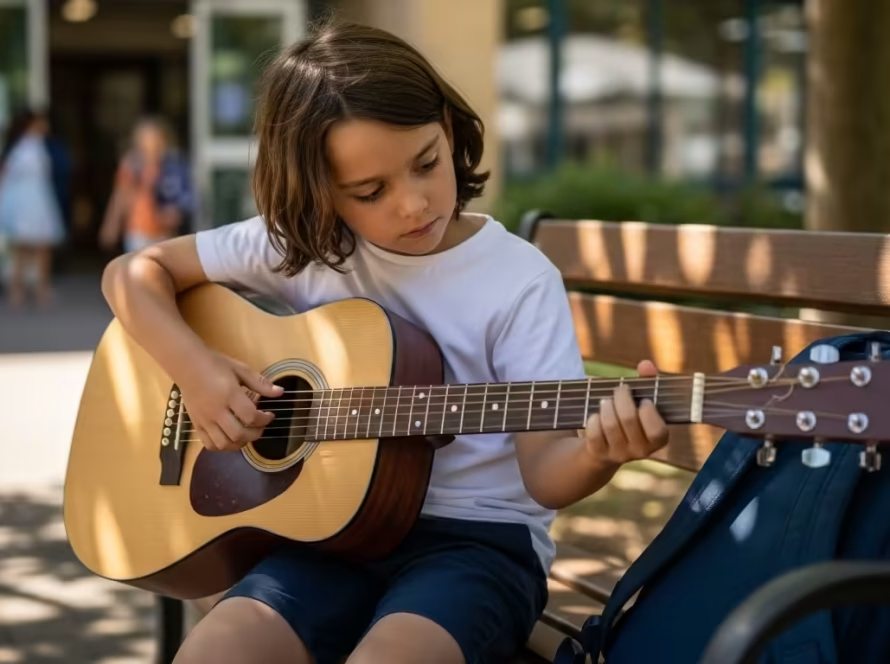
Guitar Lessons vs. Video Games: Which Builds the Brain?

Katherine Dvoskin, Co-Founder of K&M Music School
I hope you enjoy this blog post! If you're interested in scheduling a free trial lesson, just click.
Author: Katherine Dvoskin | Co-Founder of K&M Music School
Published December 4th, 2025
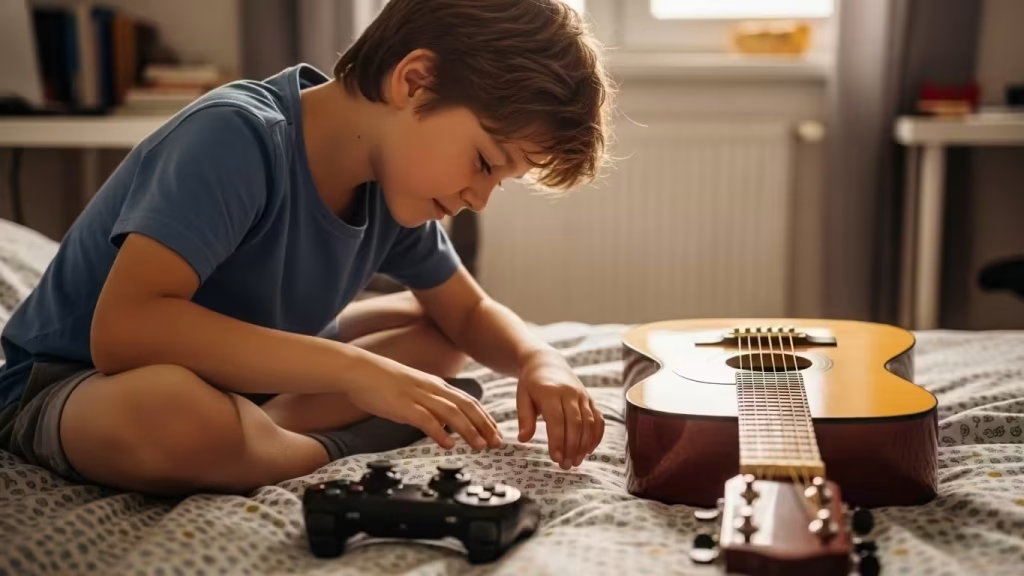
Guitar vs. video games: which helps the brain more?
Guitar trains many brain areas at once.
Games help some skills, not all.
| Area | Guitar | Games |
|---|---|---|
| Memory & learning | Very high | Moderate |
| Motor skills | Very high | Moderate |
| Creativity & expression | Very high | Low–Moderate |
| Focus & attention |
High
long focus
|
High
short bursts
|
| Social-emotional skills | High | Moderate |
| Academic transfer | Very high | Low–Moderate |
Bottom line:
- Guitar gives broader, longer-lasting benefits.
- Games give narrower, faster benefits.
- Best plan: do both with balance.

Music Lessons in San Diego with K&M Music School
1 Expert Music Lessons
We offer Piano, Violin, Cello, Guitar, Ukulele, Saxophone, Bassoon, Harp, Voice, and Toddler group lessons for students of all ages and skill levels.
2 Why Choose Us?
- 🎶 Boosts focus and self-discipline
- 🎵 Strengthens cognitive skills
- 🎼 Enhances cultural understanding
- 🎤 Builds confidence through recitals
3 We Welcome Adults Too!
How the brain builds itself
Your brain is not fixed. It changes with what you do. This change is called neuroplasticity.
Think of the brain like a forest. Learning makes a new trail. Using the trail makes it wider and clearer.
Practice builds brain links. These links are called synapses. Repeating a skill makes synapses stronger. Stronger synapses make skills feel automatic.
Young brains are especially plastic. Children and teenagers can form new connections more easily than adults. But here’s good news: adult brains remain plastic throughout life. You’re never too old to learn guitar or benefit from brain-building activities.
The principle “use it or lose it” applies to your brain. Connections you don’t use weaken and eventually disappear. This is why consistent practice matters more than occasional marathon sessions.
What Makes an Activity “Brain-Building”?
Not all activities build your brain equally. Some are passive and require little mental effort. Others challenge multiple brain systems at once.
Brain-building activities share these key traits:
- Sustained attention – They require focus for extended periods
- Multi-sensory processing – They engage sight, sound, touch, or movement together
- Problem-solving – They present challenges that require thinking
- Progressive difficulty – They get harder as you improve
- Immediate feedback – You know right away if you’re doing it correctly
Passive activities don’t build your brain much. TV and endless scrolling are passive. They don’t challenge you.
Guitar and some video games do help. They build the brain in different ways.
Quality beats quantity. Thirty focused minutes > three hours of mindless practice.
“Left brain vs right brain” is a myth. Both sides work together on most tasks.
Guitar uses the whole brain. Left side handles rhythm and timing. Right side handles melody and emotion. They work as a team.
Games also use the whole brain. Different games use different areas. No game uses only one side.
What matters is teamwork in the brain. Activities that connect many areas give the biggest benefits.
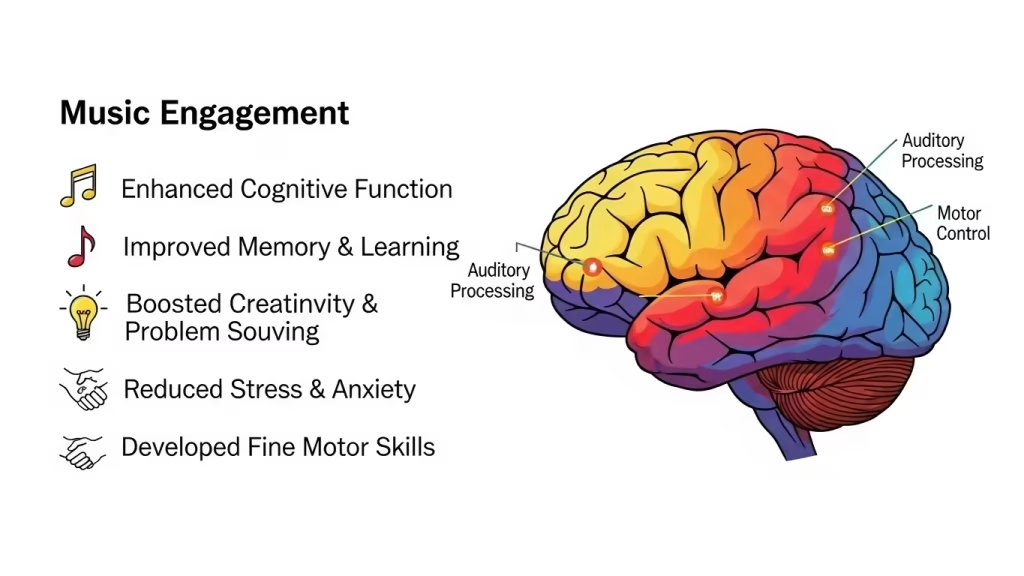
Learning guitar is like a full-body workout for your brain. It activates more brain regions simultaneously than almost any other activity. This creates powerful changes in brain structure and function.
The Neuroscience of Learning Guitar
When you play guitar, your brain lights up like a Christmas tree on an MRI scan. Multiple brain regions activate at once:
Your motor cortex controls your finger movements. Each finger has its own dedicated brain area. Guitar training makes these areas larger and more precise.
Your auditory cortex processes the sounds you’re creating. It learns to distinguish between correct and incorrect notes. Over time, this area becomes more sensitive to pitch and tone.
Your visual cortex watches your hands and reads music notation. It coordinates what you see with what you do.
Your prefrontal cortex plans and coordinates everything. It decides which finger goes where and when. It manages the sequence of movements needed to play a song.
These regions don’t work alone. Guitar playing creates “superhighways” of communication between them. This integration is what makes music so powerful for brain development.
MRI studies show visible structural changes in musicians’ brains. These changes appear after just a few months of regular practice. The earlier you start, the more dramatic the changes, but adults benefit too.
Specific Cognitive Benefits of Guitar Lessons

Physical Brain Changes
Learning guitar literally grows your brain in specific areas. Research shows these measurable changes:
Gray matter volume increases in motor regions. This is the brain tissue that contains neuron cell bodies. More gray matter means better processing power.
The corpus callosum strengthens. This is the bridge connecting your brain’s two hemispheres. Musicians have thicker corpus callosums, allowing faster communication between brain sides.
Neural connections in the auditory cortex multiply. Musicians can hear subtle differences in sound that non-musicians miss.
These changes are visible on brain scans after just months of practice. Long-term musicians show even more dramatic differences.
Memory Enhancement
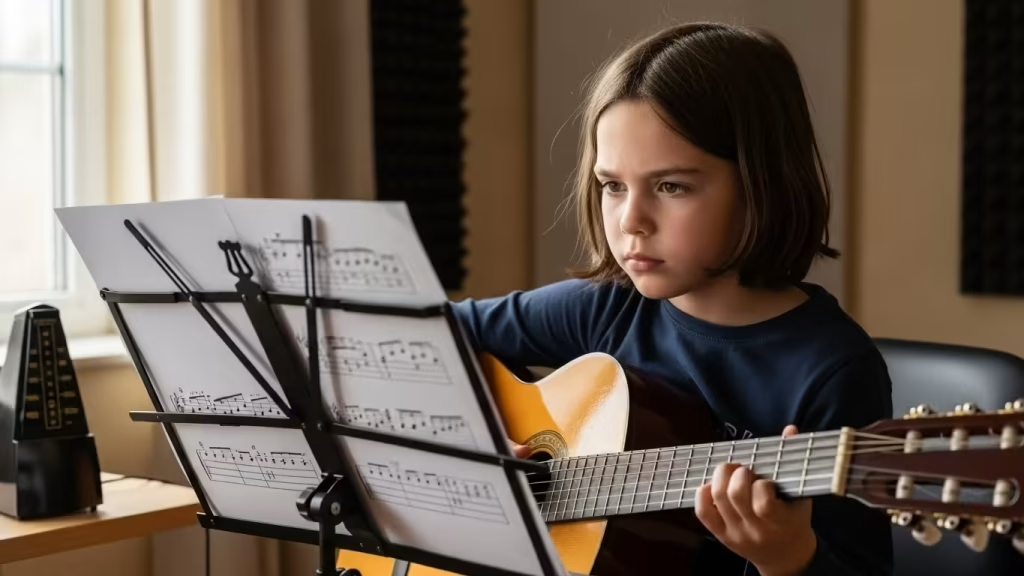
Guitar playing is a memory workout. You must remember chord shapes, finger positions, song structures, and lyrics.
Working memory improves dramatically. This is your brain’s ability to hold and manipulate information. When you play guitar, you’re constantly updating what your fingers should do next.
Long-term memory strengthens. Learning songs requires encoding information into permanent storage. The process of retrieval (remembering a song) further strengthens these memories.
Muscle memory develops. Your fingers learn patterns that become automatic. This frees up mental resources for expression and creativity.
Pattern recognition skills grow. Music is full of patterns – chord progressions, rhythmic structures, melodic phrases. Your brain becomes expert at spotting and predicting patterns.
Executive Function Boost
Executive function is your brain’s control center. It manages planning, organization, impulse control, and goal pursuit.
Guitar lessons strengthen all aspects of executive function:
- Planning and sequencing abilities improve. You must plan finger movements ahead of time to play smoothly.
- Multi-tasking coordination develops. You’re managing rhythm, melody, dynamics, and sometimes lyrics simultaneously.
- Impulse control grows through practice discipline. You learn to delay gratification – putting in boring practice time for the reward of playing well later.
- Goal-setting becomes natural. You set small goals (learn this chord) and big goals (play this song). You track your progress and adjust your approach.
Emotional and Social Benefits
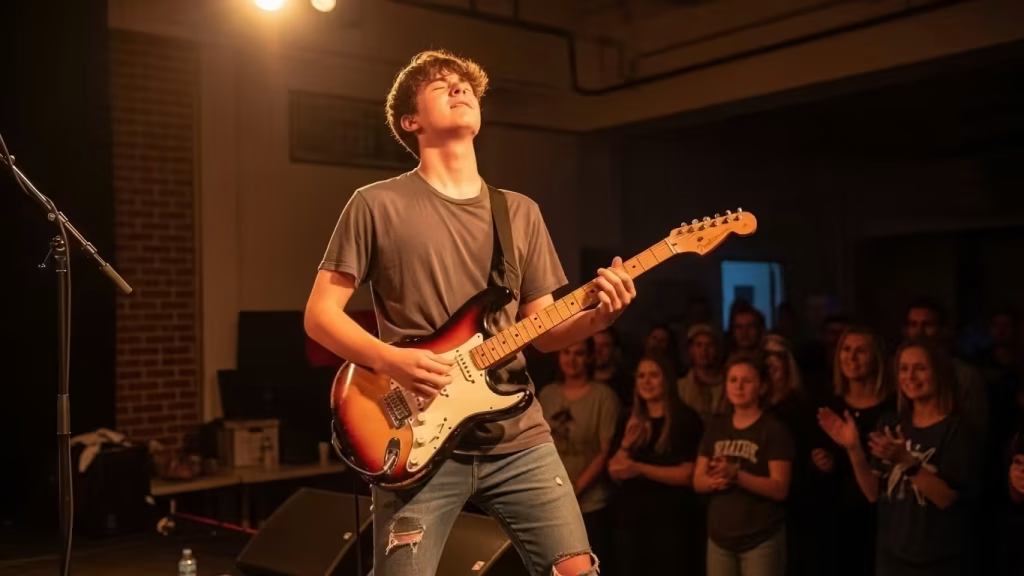
Music is fundamentally emotional. Learning guitar provides an outlet for feelings that words can’t express.
Stress reduction happens quickly. Playing guitar lowers cortisol (your stress hormone). Even beginners feel calmer after practice sessions.
Emotional expression improves. You learn to convey feelings through music. This emotional literacy transfers to other life areas.
Social bonding occurs through music. Playing with others creates powerful connections. Bands, ensembles, and jam sessions build community.
Confidence builds with every mastery milestone. Successfully learning a difficult song proves you can tackle hard challenges.
Skills Guitar Lessons Develop

Beyond direct brain benefits, guitar lessons build practical skills:
- Fine motor coordination – Your fingers learn precise, independent movements
- Hand-eye coordination – Your hands follow what your eyes see
- Auditory discrimination – You hear subtle pitch and tone differences
- Reading comprehension – Music notation is a complex written language
- Mathematical thinking – Rhythm involves fractions, patterns involve sequences
- Patience – Mastery takes time and persistence
- Creativity – Improvisation and composition stretch creative muscles
These skills transfer to many life areas. Musicians often excel in math, language, and science classes.
Research Studies on Musicians’ Brains
The scientific evidence for music’s brain benefits is overwhelming:
Harvard doctors found this in musicians. Their brain areas for movement are bigger. Their hearing centers are bigger. They also have stronger spatial skills. This helps with judging space and distance.
German researchers discovered music training increases IQ scores. Children who took music lessons showed greater IQ gains than those who didn’t.
Northwestern University research proved music training improves language skills. Musicians process speech sounds more accurately, even in noisy environments.
Long-term studies show benefits lasting decades. Even people who quit music lessons as kids retain cognitive advantages as adults.
The consensus is clear: learning guitar builds the brain in profound and lasting ways.
How Video Games Build the Brain

Video games get a bad reputation, but research shows they’re not all harmful. Certain games do provide real cognitive benefits. The key is understanding what types of games help and what potential problems to watch for.
The Neuroscience of Gaming
Video games engage different brain regions than music does. The specific areas depend on the game type.
Visual processing centers work overtime. Games bombard you with rapidly changing images. Your brain must identify threats, opportunities, and important details instantly.
Spatial reasoning areas activate strongly. Many games require mental rotation, navigation, and tracking objects in 3D space.
Reward centers release dopamine. Games provide frequent small rewards that feel good. This can enhance motivation but also create addiction risk.
Decision-making networks engage during strategy games. You must weigh options, predict outcomes, and choose actions under pressure.
The intensity and type of engagement varies dramatically by game. An action shooter activates different areas than a puzzle game.
Specific Cognitive Benefits of Video Games
Visual and Spatial Skills
This is where video games shine brightest. Action games especially improve:
- Visual attention and tracking. Gamers can follow multiple moving objects better than non-gamers.
- Spatial reasoning. You improve at mentally rotating objects and understanding 3D relationships.
- Mental rotation abilities grow. This skill helps in fields like engineering, architecture, and surgery.
- Visual processing speed increases. Gamers make faster decisions based on visual information.
- 3D navigation improves. You get better at finding your way through complex environments.
These skills transfer to real-world tasks. Surgeons who play video games make fewer errors. Pilots and drivers show better spatial awareness.
Reaction Time and Processing Speed
Video games, especially action games, speed up your brain’s processing:
- Decision-making under pressure improves. You learn to assess situations and act quickly.
- Hand-eye coordination sharpens. Your hands respond faster to what your eyes see.
- Stimulus-response connections strengthen. The time between seeing something and reacting shrinks.
- Multi-tasking in fast environments becomes easier. You track multiple things at once.
These improvements are measurable in lab tests. Gamers consistently outperform non-gamers on reaction time tasks.
Music Lessons in San Diego with K&M Music School
1 Expert Music Lessons
We offer Piano, Violin, Cello, Guitar, Ukulele, Saxophone, Bassoon, Harp, Voice, and Toddler group lessons for students of all ages and skill levels.
2 Why Choose Us?
- 🎶 Boosts focus and self-discipline
- 🎵 Strengthens cognitive skills
- 🎼 Enhances cultural understanding
- 🎤 Builds confidence through recitals
3 We Welcome Adults Too!
Problem-Solving Abilities
Certain game types develop problem-solving skills:
- Strategy games build strategic thinking. Games like chess, Civilization, or StarCraft require planning ahead.
- Resource management improves. You learn to allocate limited resources for maximum benefit.
- Pattern recognition grows. Many games have patterns you must identify to succeed.
- Adaptability develops. Game environments change, requiring you to adjust your strategy.
- Trial-and-error learning accelerates. Games let you fail safely and try again immediately.
These problem-solving skills can transfer to academic and professional contexts.
Social and Emotional Aspects
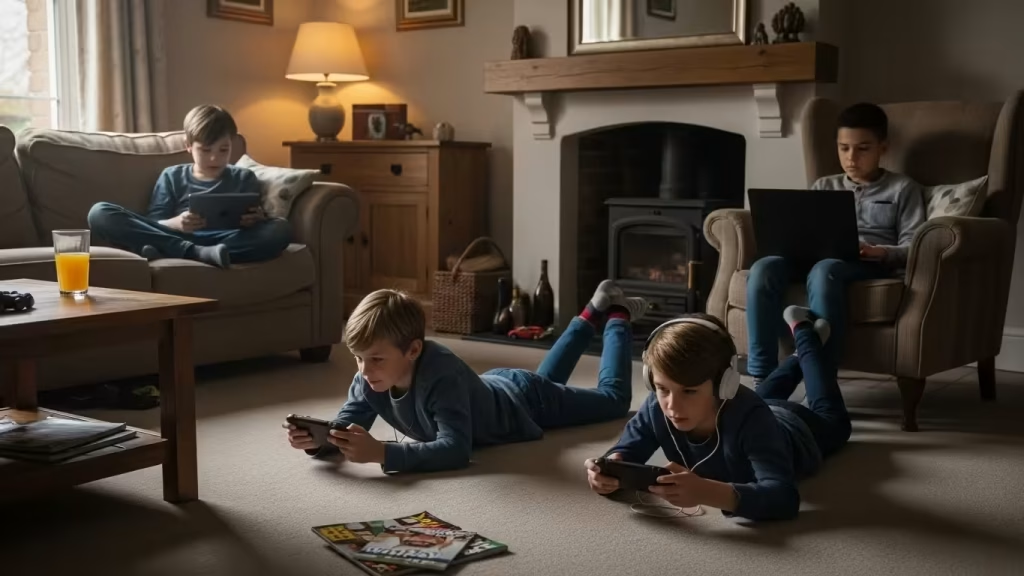
Modern gaming is highly social. Multiplayer games create communities:
- Team coordination develops in cooperative games. You must communicate and work together.
- Communication skills improve in team-based games. Clear communication makes the difference between winning and losing.
- Stress relief occurs with casual games. Simple games can reduce anxiety and provide mental breaks.
- Achievement motivation grows. Games provide clear goals and rewards for reaching them.
However, addiction and overuse are real concerns. Gaming activates reward pathways in ways that can become compulsive.
Types of Games and Their Brain Effects
Not all games are equal for brain building. Different genres provide different benefits:
Action Games: Fast-paced shooters and platformers improve attention and focus. They enhance visual processing and boost reaction times. However, they may reduce attention span for slower tasks.
Puzzle Games: Games like Tetris, Portal, or Sudoku develop logical reasoning. They improve problem-solving and enhance planning abilities. They’re excellent for pattern recognition.
Strategy Games: Real-time and turn-based strategy games strengthen executive function. They improve resource management and long-term planning. They develop tactical thinking skills.
Educational Games: These target specific skill development. They reinforce academic curriculum. Quality varies widely. Some are effective, others are just regular games with educational labels.
What Research Shows
Action video games can sharpen vision. Gamers spot small details in busy scenes better.
Gaming can increase brain matter. Growth happens in areas for spatial skills and memory.
Stanford research examined gaming’s effect on reward pathways. They confirmed games trigger dopamine release similar to gambling.
The concerns about excessive gaming are well-founded. Gaming addiction is now recognized as a clinical disorder in some countries.
The verdict: video games provide real but narrow cognitive benefits. They’re not inherently bad, but moderation matters.
Guitar Lessons vs. Video Games: Direct Comparison
Now for the main question: which builds the brain better? Let’s compare them directly across key brain areas and skills.
| Brain Area/Skill | Guitar | Video Games | Winner |
|---|---|---|---|
| Motor skills | Very high | Moderate | Guitar |
| Auditory processing | Very high | Low–Moderate | Guitar |
| Visual–spatial skills | Moderate | Very high | Video games |
| Reaction time | Low–Moderate | Very high | Video games |
| Long-term memory | Very high | Moderate | Guitar |
| Creativity | Very high | Low–Moderate | Guitar |
| Multi-sensory use | Very high | Moderate | Guitar |
| Social interaction | High | High | Tie |
| Emotional control | High | Varies | Guitar |
| Executive function | Very high | Moderate–High | Guitar |
| Academic transfer | Very high | Low–Moderate | Guitar |
Time Investment and Results
Both activities require time to see benefits, but the patterns differ:
Guitar needs steady practice. Do 30–60 minutes a day. Progress starts slow. Few weeks show small changes. After months, skills and brain improve.
Video games offer flexible time commitment. You can play 15 minutes or 3 hours. Engagement is instant. However, benefits plateau without progressive challenge.
Guitar involves delayed gratification. The first months are frustrating. Your fingers hurt. Songs sound bad. But pushing through this period leads to lifelong mastery.
Gaming provides immediate rewards. Games are designed to be instantly fun. This can undermine motivation for harder activities that require patience.
Both activities require thousands of hours for true expertise. Malcolm Gladwell’s “10,000-hour rule” applies to both guitar mastery and elite gaming.
Transferable Skills: Real-World Applications
The big question is: do skills from these activities transfer to real life?
Guitar Lessons Transfer To:
Academic performance improves across subjects. Music students score higher on math, reading, and science tests. The discipline and pattern recognition from music help in all learning.
Professional discipline develops. The habit of daily practice transfers to any career. Musicians learn to work hard for long-term goals.
Creative problem-solving strengthens. Music teaches you to approach problems from different angles. Improvisation skills help in brainstorming and innovation.
Public performance confidence builds. Playing for audiences reduces general anxiety about presentations and public speaking.
It’s a lifetime skill and hobby. You can play guitar at any age. It provides joy and social connection for decades.
Video Games Transfer To:
Certain professional fields benefit directly. Surgeons who play video games make 37% fewer errors and work 27% faster. Drone pilots and air traffic controllers use similar visual-spatial skills.
Quick decision-making careers benefit. Emergency responders and military personnel use reaction skills similar to gaming.
Visual design and spatial planning improve. Architects, engineers, and graphic designers may benefit from enhanced spatial reasoning.
However, gaming doesn’t transfer to musical, artistic, or physical skills. It’s a narrower benefit than music training.
The Addiction and Motivation Factor
This is where the guitar lessons vs. video games comparison gets crucial:
Gaming’s instant dopamine hits make it highly engaging but potentially addictive. Games are designed to keep you playing. They exploit psychological triggers for maximum “stickiness.”
Risk of gaming addiction is real. The World Health Organization recognizes “gaming disorder” as a clinical condition. Signs to watch for:
- They can’t stop playing
- They choose games over homework and chores
- They keep gaming even when it causes problems
Guitar’s delayed reward structure is less addictive but harder to maintain. You must practice for weeks before feeling competent. Many beginners quit during this “valley of despair.”
Building intrinsic vs. extrinsic motivation differs between activities. Guitar teaches you to find joy in the learning process itself (intrinsic motivation). Games often rely on external rewards like points and achievements (extrinsic motivation).
Balancing immediate pleasure with long-term growth is the key challenge. Guitar builds the brain more comprehensively but requires more discipline. Video games are easier to stick with but offer narrower benefits.
Age Matters: Brain Building at Different Stages
Kids & Teens (5–18)
This is the best brain-growth window. Young brains change fast.
Before age 7 gives the biggest brain changes. Starting later still helps.
Guitar boosts language and math. Music uses patterns, rhythm, and fractions.
Games build digital skills. Some learning games help, too.
Limit screens to 1–2 hours daily. Practice music every day, even 20 minutes.
Quality beats quantity for screen time.
Young Adults (18–30)
The brain is still maturing. Planning and self-control are still growing.
Guitar reduces stress in school and work. Games can give social connection online.
Pick what fits your career goals. Design needs spatial skills? Games can help. Most jobs value discipline and creativity. Guitar helps there.
Build habits now that last for life.
Adults (30–60)
Adult brains can still learn. Keep skills sharp with regular practice.
Guitar builds new brain pathways. It also gives a creative outlet.
Puzzle and strategy games keep the mind flexible. Both can slow mental aging.
Music shows stronger protection. Even 20 minutes a day helps.
Seniors (60+)
Brain health is crucial now. Training the brain fights decline.
Music gives the strongest protection. Lessons improve memory and planning.
Some brain games may boost speed.
Playing music with others fights isolation. Music helps even in Alzheimer’s care.
If you must choose one, pick guitar.
What Science Says: The Verdict on Brain Building
We’ve looked at the neuroscience, the benefits, and the research. Now for the bottom line: which builds the brain better?
Guitar Lessons: What Research Says
Music trains the whole brain. Many brain areas work at the same time. This builds strong brain networks.
Guitar boosts memory and creativity. It helps language and math skills. It strengthens planning and self-control. It also improves emotional balance.
These benefits cover more areas than gaming.
Long-lasting structural brain changes: MRI studies show visible brain differences in musicians. These changes persist even decades after stopping music.
Better emotional and social outcomes: Musicians report higher life satisfaction. They have better stress management and emotional expression.
Transfers to academic and professional success: Music students outperform non-musicians academically. The discipline and creativity transfer broadly.
Multiple large-scale studies confirm these findings. The evidence base for music’s brain benefits is rock-solid.
Video Games: What Research Shows
Gaming gives specific brain benefits. It improves visual-spatial skills. It improves reaction time. These gains are real and measurable.
Results depend on the game type. Action games help different skills than puzzle games. Many popular games give little brain benefit.
Gaming can become addictive for some people. The dopamine reward loop can be a problem.
Gaming skills don’t transfer widely to school or work.
Gaming helps, but its benefits are narrow.
Why Music Often Wins
Guitar builds more areas of the brain. Music changes the brain for a long time. It uses sight, sound, touch, and emotion together.
For whole-brain growth, music wins.
For spatial skills and fast reactions, games can win.
Your goals should guide your choice.
Why Pick Video Games Sometimes
Games are easy to start. They feel fun right away. Guitar is harder at first.
Some jobs need strong spatial skills. Gaming can help those goals.
Online games can build real friendships.
Can complement other activities: Gaming doesn’t have to replace music. Both together provide diverse brain training.
The key is making an informed choice based on your goals and understanding the trade-offs.
The Best Approach: Combining Both Activities

Who says you must choose only one? The best brain-building strategy often combines different activities.
Creating a Balanced Brain-Building Plan
Neither activity must be exclusive. Many people successfully do both.
Complementary benefits work well together. Gaming provides the spatial and reaction skills that music doesn’t. Music provides the creative, emotional, and auditory skills that gaming doesn’t.
Recommended time splits by age:
Kids (5-12): 30 min guitar daily, 1 hour gaming on weekends only
Teens (13-18): 45 min guitar daily, 1-2 hours gaming 3-4 days/week
Adults (18+): 30-60 min guitar 5+ days/week, gaming as desired but not interfering with responsibilities
Using gaming as a reward for practice works brilliantly. “After 30 minutes of guitar, you can game for an hour.” This builds discipline while allowing enjoyment.
Finding educational or music-based games bridges both worlds. Games like Rocksmith combine gaming and music learning. Rhythm games improve timing.
Common Myths Debunked
Myth 1: “Video Games Make You Smarter Overall”
❌ Not true. Games boost specific skills, not general IQ. You improve at what the game trains. That doesn’t mean better grades in school. Transfer is narrow, not broad. Better spatial skills won’t fix reading or writing. It won’t improve most real-world tasks. Gaming helps in a few areas, not everywhere.
Marketing hype exceeds scientific evidence. “Brain training” games often claim to boost IQ or prevent dementia. Most of these claims aren’t supported by independent research.
Gaming has real benefits, but “making you smarter overall” isn’t one of them.
Myth 2: “Learning Guitar Is Only for Musical Careers”
❌ Not true. Brain benefits apply to all life areas, regardless of career goals.
Music training improves academic performance across all subjects. The skills transfer broadly. You don’t need to become a professional musician to benefit.
Cognitive benefits last a lifetime. Even if you quit music as a teenager, brain changes persist. Former musicians maintain cognitive advantages decades later.
Hobby value and personal enrichment matter. Not everything must be career-focused. Playing guitar provides joy, stress relief, and social connection throughout life.
Some of the most successful people in non-music fields played instruments as kids. The discipline and creativity transferred to their actual careers.
Myth 3: “Kids Can Learn Both Equally Well”
❌ Not true. Guitar requires more discipline and delayed gratification than gaming.
Gaming is easier and more immediately rewarding. Kids naturally gravitate to gaming if given free choice between the two.
Most kids will prefer gaming without guidance. This is because our brains are wired to seek immediate rewards. Gaming delivers, guitar doesn’t (initially).
Active parental involvement is needed for music. You must structure practice time, provide encouragement, and help through frustration. Gaming requires no such support—kids will do it on their own.
Kids can do both, but guitar needs your active support while gaming doesn’t.
Myth 4: “All Video Games Are Bad”
❌ Not true. Game type and limits matter. Some games help the brain. Puzzles and strategy games build skills. Too much gaming is the problem. 2 hours a week is not 6 hours a day. Balance your life. Move, learn, and see friends too. Judge each game on its own. Tetris ≠ shooter ≠ building game.
Myth 5: “You’re Too Old to Learn Guitar”
❌ Not true. Adult brains can still change. Music helps at any age. Even seniors gain brain benefits. Adults learn differently but well. Focus and steady practice help. It’s never too late to start. You can still grow new brain pathways. Many people start in their 50s or 60s. Your brain loves new challenges.
Making Your Decision: Which Should You Choose?
You’ve seen the evidence. Guitar lessons build the brain more comprehensively than video games. But the best choice depends on your personal situation and goals.
Questions to Ask Yourself
Before deciding, consider:
What are your primary goals?
- Comprehensive brain development → Guitar
- Specific visual-spatial skills → Gaming
- Creative expression → Guitar
- Social connection through gaming communities → Gaming
- Academic improvement → Guitar
- Career-specific skills (surgeon, pilot) → Possibly gaming
How much time can you commit?
- 30-60 minutes daily consistently → Guitar works well
- Irregular, unpredictable schedule → Gaming is more flexible
- Want lifetime skill → Guitar
- Want casual entertainment → Gaming
What’s your budget?
- Limited budget → Gaming (cheaper long-term)
- Can invest in lessons → Guitar
- Want free option → Online guitar resources exist
Are you motivated by instant or delayed rewards?
- Need immediate feedback → Gaming
- Can delay gratification → Guitar
- Want to build discipline → Guitar
- Want instant fun → Gaming
Do you want a lifelong skill or entertainment?
- Skill that grows with you → Guitar
- Entertainment → Gaming
- Both → Do both with balance
Conclusion
Guitar beats gaming for full brain growth. It activates many brain areas at once. It builds memory, creativity, and motor skills. It helps with emotions and self-control. These benefits last for years.
Video games are not “bad.” They boost reaction time and spatial skills. Some games improve problem-solving. Too much gaming is the real problem.
Best plan: do both in balance. Guitar gives broad benefits. Games add specific skills and fun. Set clear limits.
If you must pick one, choose guitar. It helps more areas and lasts longer. It’s a skill you can enjoy for life.
Start now. Practice 20 minutes a day for three months. Your brain will improve.
If you game, set time limits. Pick puzzle and strategy games. Keep a balanced life with movement, friends, and creativity.
Your brain can change at any age. Challenge it often. Learn new skills. Stay active.
The best activity is the one you’ll do daily. Choose your path and begin today.
Team guitar, team gaming, or both—what’s yours?
Katherine Dvoskin, Co-Founder of K&M Music School
She is the co-founder of K&M Music School in San Diego, is a passionate music educator with over 25 years of experience. She offers expert piano lessons in San Diego. At K&M Music School, we teach Piano, Violin, Cello, Saxophone, Bassoon, Harp, Voice, and Toddler group lessons. Katherine's blog shares insights on music education, covering topics from toddler music group lessons to adult music lessons. Whether you're seeking private music lessons or group music lessons for toddlers near you, welcome to K&M Music School.