
5 Fun and Effective Ways to Master Singing Lessons for Beginners

Katherine Dvoskin, Co-Founder of K&M Music School
I hope you enjoy this blog post! If you're interested in scheduling a free trial lesson, just click.
Author: Katherine Dvoskin | Co-Founder of K&M Music School
Published February 4th, 2025

Master singing lessons for beginners in 5 fun and effective ways. Improve your pitch, tone, and range. Start your singing journey today!
Singing lessons can be fun and rewarding. Whether you’re new or have some experience, these 5 tips will help you improve. Let’s explore singing and make the most of your lessons!
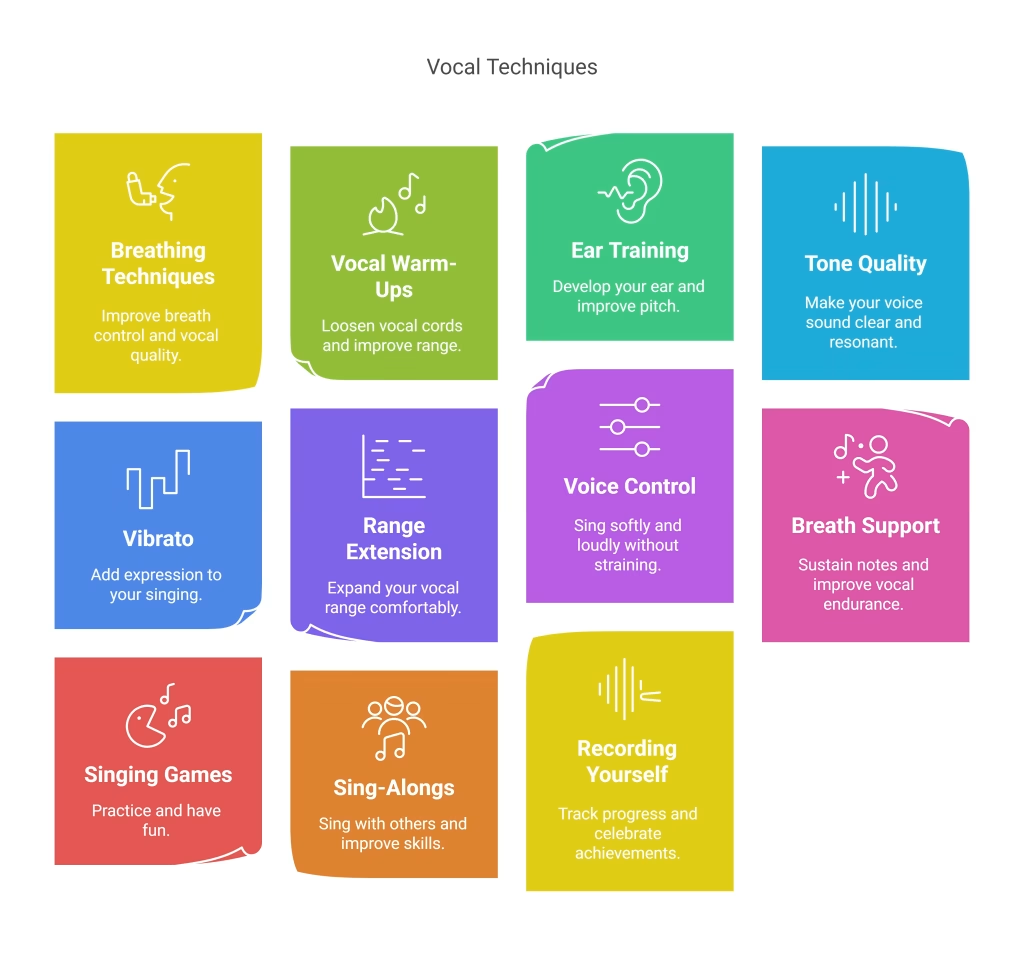
To master singing, you need practice, dedication, and some fun. Start by learning the basics, improving pitch and tone, and developing your voice. Add fun to your practice, and you’ll get better. Let’s sing!
| Focus Area | Key Techniques | Practice Tips |
|---|---|---|
| Breathing | Diaphragmatic breathing, pursed-lip breathing | Practice daily to improve vocal control and quality. |
| Warm-Ups | Humming, lip trills, tongue twisters | Incorporate into your routine to loosen vocal cords and enhance range. :contentReference[oaicite:0]{index=0} |
| Ear Training | Interval training, pitch matching | Regular practice to develop pitch accuracy and musical awareness. |
| Tone & Vibrato | Vowel/consonant practice, vibrato exercises | Use mirror practice and dynamic exercises to enhance vocal clarity and expression. |
| Range & Control | Scale/arpeggio practice, dynamic singing | Regularly practice to extend vocal range and sing with varying dynamics. |
| Fun & Engagement | Singing games, sing-alongs, recording | Incorporate to keep practice engaging and track progress. |
Understanding the Basics of Singing Lessons
Singing lessons for beginners often start with the fundamentals. This includes learning proper breathing techniques, vocal warm-ups, and basic music theory. By mastering these basics, you’ll lay a strong foundation for more advanced techniques.
Breathing Techniques
Proper breathing is crucial for singing. Learn to breathe deeply and evenly, using your diaphragm. This will help you sing longer and louder without straining your voice. Here are some tips to improve your breathing:
Diaphragmatic Breathing
Diaphragmatic breathing helps you breathe deeply using your diaphragm. Here’s how to do it:
- Positioning: Sit or stand with good posture. Place one hand on your chest and the other on your belly.
- Inhale: Inhale deeply through your nose, feeling your belly expand. Your chest should stay relatively still.
- Exhale: Exhale slowly through your mouth, feeling your belly contract.
- Practice: Repeat this process for several minutes to get used to the sensation.
Controlled-lip breathing
Controlled lip breathing aids in managing your breath flow and enhancing vocal clarity. Follow these steps:
- Posture: Maintain an upright position, either sitting or standing.
- Breathe In: Take a deep breath through your nose.
- Breathe Out: Slowly exhale through slightly closed lips, similar to whistling.
- Training: Repeat this technique for a few minutes to familiarize yourself with the feeling.

Music Lessons in San Diego with K&M Music School
Expert Music Lessons
We offer Piano, Violin, Cello, Saxophone, Bassoon, Harp, Voice, and Toddler group lessons for students of all ages and skill levels.
Why Choose Us?
- 🎶 Boosts focus and self-discipline
- 🎵 Strengthens cognitive skills
- 🎼 Enhances cultural understanding
- 🎤 Builds confidence through recitals and performances
We Welcome Adults Too!
Book Your Free Lesson NowBreathing Exercises
Breathing exercises help improve your breath control and endurance. Here are some exercises to try:
- 4-7-8 Method: Inhale for 4 seconds, hold your breath for 7 seconds, then exhale for 8 seconds. Repeat this cycle for several minutes.
- Alternate nostril breathing is simple. Inhale through one nostril, hold your breath, then exhale through the other nostril. Repeat, switching nostrils each time.
- Lip Trills: Make a “brr” sound with your lips and gradually increase the pitch. This exercise helps improve your vocal range.
Vocal Warm-Ups
Vocal warm-ups are essential for preparing your voice for singing. They help loosen your vocal cords and improve your range. Simple exercises like humming, lip trills, and tongue twisters can be very effective. Here are some vocal warm-up ideas:
- Humming: Start with a low hum and gradually increase the pitch. This helps warm up your vocal cords.
- Lip Trills: Make a “brr” sound with your lips and gradually increase the pitch. This exercise helps improve your vocal range.
- Tongue twisters help loosen your tongue. Try saying “She sells seashells by the seashore.” This will improve your articulation.
Humming
Humming is a simple way to warm up your vocal cords. Here’s how to do it:
- Start Low: Begin with a low hum and gradually increase the pitch.
- Increase the pitch gradually. Keep going until you reach a comfortable high note.
- Repeat: Repeat this process several times to fully warm up your vocal cords.
Lip Trills
Lip trills help improve your vocal range and control. Here’s how to do it:
- Make a Sound: Make a “brr” sound with your lips.
- Increase Pitch: Gradually increase the pitch of the sound.
- Control Pitch: Practice controlling the pitch to improve your vocal range.
Tongue Twisters
Tongue twisters help loosen your tongue and improve your articulation. Here are some examples:
- “She sells seashells by the seashore.”
- “How much wood would a woodchuck chuck if a woodchuck could chuck wood?”
- “Peter Piper picked a peck of pickled peppers.”
Basic Music Theory
Understanding music theory is key to singing. Learn about notes, scales, and rhythms. This knowledge will help you read sheet music and understand the structure of songs. Here are some music theory basics:
- Notes: Learn the names of the notes on the staff and their corresponding pitches.
- Scales: Practice major and minor scales to understand the structure of music.
- Rhythms: Understand different note values and how to count them. This will help you sing in time with the music.
Notes
Notes are the building blocks of music. Here’s how to understand them:
- Staff: The staff is the five lines on which notes are written.
- Pitch: Pitch is the highness or lowness of a sound. Higher notes are on the top lines of the staff, and lower notes are on the bottom lines.
- Duration: The duration of a note is determined by its shape. For example, a whole note is held for four beats, while a quarter note is held for one beat.
Scales
Scales are patterns of notes that follow a specific sequence. Here’s how to practice them:
- Major Scales: Major scales have a bright, happy sound. They follow the pattern Whole, Whole, Half, Whole, Whole, Whole, Half.
- Minor Scales: Minor scales have a sad, melancholy sound. They follow the pattern Whole, Half, Whole, Whole, Half, Whole, Whole.
- Practice singing and playing major and minor scales. Try different keys to improve your ear and singing.
Rhythms
Rhythms are the patterns of sounds and silences in music. Here’s how to understand them:
- Note Values: Note values determine the duration of a note. For example, a whole note is held for four beats, while a quarter note is held for one beat.
- Counting: Counting rhythms helps you understand the timing of music. For example, a quarter note is counted as “1,” while a half note is counted as “1 and 2.”
- Practice clapping and singing rhythms. This will help improve your timing and singing.
Diaphragmatic Breathing
Diaphragmatic breathing helps you breathe deeply using your diaphragm. Here’s how to do it:
- Positioning: Sit or stand with good posture. Place one hand on your chest and the other on your belly.
- Inhale: Inhale deeply through your nose, feeling your belly expand. Your chest should stay relatively still.
- Exhale: Exhale slowly through your mouth, feeling your belly contract.
- Practice: Repeat this process for several minutes to get used to the sensation.
Controlled lip breathing
Controlled lip breathing aids in managing your breath flow and enhancing vocal clarity. Follow these steps:
- Posture: Maintain an upright position, either sitting or standing.
- Breathe In: Take a deep breath through your nose.
- Breathe Out: Slowly exhale through slightly closed lips, similar to whistling.
- Training: Repeat this technique for a few minutes to familiarize yourself with the feeling.
Improving Your Pitch and Tone
One of the most important aspects of singing is maintaining a consistent pitch and tone. Here are some tips to help you improve in this area.
Ear Training
Ear training is a great way to improve your pitch. Practice singing intervals and scales to develop your ear. This will help you sing in tune and match pitches more accurately. Here are some ear-training exercises:
- Interval Training: Practice singing intervals like major 2nds, minor 3rds, and perfect 5ths. This will help you develop your ear and improve your pitch.
- Scale Singing: Practice singing major and minor scales in different keys. This will help you understand the structure of music and improve your pitch.
- Pitch Matching: Use a pitch pipe or app to match pitches. This will help you develop your ear and improve your pitch.

Interval Training
Interval training helps you develop your ear and improve your pitch. Here’s how to do it:
- Choose an Interval: Start with a simple interval like a major 2nd (e.g., C to D).
- Sing the Interval: Sing the interval from the lower note to the higher note.
- Repeat: Repeat this process with different intervals, gradually increasing the difficulty.
Scale Singing
Scale singing helps you understand the structure of music and improve your pitch. Here’s how to do it:
- Choose a Scale: Start with a major scale in a simple key like C major.
- Sing the Scale: Sing the scale from the root note to the octave.
- Repeat: Repeat this process with different scales and keys, gradually increasing the difficulty.
Pitch Matching
Pitch matching helps you develop your ear and improve your pitch. Here’s how to do it:
- Use a Pitch Pipe: Play a pitch pipe and try to match the pitch with your voice.
- Use an App: Use a pitch-matching app to practice matching pitches.
- Repeat: Repeat this process with different pitches, gradually increasing the difficulty.
Tone Quality
Tone quality refers to the sound of your voice. Work on making your voice sound clear and resonant. Practice singing different vowels and consonants to improve your tone. Here are some tips to improve your tone:
- Vowel Sounds: Practice singing different vowels like “ah,” “ee,” “oh,” and “oo.” This will help you understand the different sounds your voice can make.
- Consonant Sounds: Practice singing different consonants like “b,” “d,” “g,” and “k.” This will help you improve your articulation and tone.
- Resonance: Practice singing in front of a mirror to see how your vocal tract moves. This will help you understand how to shape your mouth and throat for better resonance.
Music Lessons in San Diego with K&M Music School
Expert Music Lessons
We offer Piano, Violin, Cello, Saxophone, Bassoon, Harp, Voice, and Toddler group lessons for students of all ages and skill levels.
Why Choose Us?
- 🎶 Boosts focus and self-discipline
- 🎵 Strengthens cognitive skills
- 🎼 Enhances cultural understanding
- 🎤 Builds confidence through recitals and performances
We Welcome Adults Too!
Book Your Free Lesson NowVowel Sounds
Vowel sounds help you understand the different sounds your voice can make. Here’s how to practice them:
- Choose a Vowel: Start with a simple vowel like “ah.”
- Sing the Vowel: Sing the vowel sound on a steady note.
- Repeat: Repeat this process with different vowels, gradually increasing the difficulty.
Consonant Sounds
Consonant sounds help you improve your articulation and tone. Here’s how to practice them:
- Choose a Consonant: Start with a simple consonant like “b.”
- Sing the Consonant: Sing the consonant sound on a steady note.
- Repeat: Repeat this process with different consonants, gradually increasing the difficulty.
Resonance
Resonance helps you make your voice sound clear and resonant. Here’s how to practice it:
- Sing in Front of a Mirror: Sing in front of a mirror to see how your vocal tract moves.
- Shape Your Mouth and Throat: Shape your mouth and throat to create a resonant sound.
- Practice: Practice singing with good resonance to improve your tone.
Vibrato
Vibrato is a natural wavering of pitch that adds expression to your singing. Learn to control your vibrato to make your singing more engaging and dynamic. Here are some tips to improve your vibrato:
- Natural Vibrato: Sing a note and let your pitch naturally waver. This is your natural vibrato.
- Controlled Vibrato: Practice singing a note with a controlled vibrato. Start with a small wavering and gradually increase the amount.
- Vibrato Exercises: Practice vibrato exercises like singing a scale with a controlled vibrato. This will help you develop your vibrato and improve your singing.
Natural Vibrato
Natural vibrato is a natural wavering of pitch that adds expression to your singing. Here’s how to practice it:
- Sing a Note: Sing a steady note.
- Let Your Pitch Waver: Let your pitch naturally waver. This is your natural vibrato.
- Practice: Practice singing with natural vibrato to improve your singing.
Controlled Vibrato
Controlled vibrato is a slight change in pitch that adds feeling to your singing. Here’s how to practice it:
- Sing a Note: Sing a steady note.
- Waver Your Pitch: Waver your pitch in a controlled manner. Start with a small wavering and gradually increase the amount.
- Practice: Practice singing with controlled vibrato to improve your singing.
Vibrato Exercises
Vibrato exercises help you develop your vibrato and improve your singing. Here are some exercises to try:
- Scale Vibrato: Practice singing a scale with a controlled vibrato. This will help you develop your vibrato and improve your singing.
- Arpeggio Vibrato: Practice singing arpeggios with a controlled vibrato. This will help you develop your vibrato and improve your singing.
- Song Vibrato: Practice singing songs with a controlled vibrato. This will help you develop your vibrato and improve your singing.

Developing Your Range and Voice Control
To become a better singer, you need to expand your vocal range and control your voice. Here are some ways to do this:
Range Extension
Range extension involves learning to sing higher and lower notes comfortably. Practice scales and arpeggios to gradually expand your range. Here are some range extension exercises:
- Scale Practice: Practice singing major and minor scales in different keys. This will help you understand the structure of music and improve your range.
- Arpeggio Practice: Practice singing arpeggios (broken chords) in different keys. This will help you improve your range and articulation.
- Range Tests: Use range tests to identify your current range and track your progress. This will help you set goals and improve your singing.
Scale Practice
Scale practice helps you understand the structure of music and improve your range. Here’s how to do it:
- Choose a Scale: Start with a major scale in a simple key like C major.
- Sing the Scale: Sing the scale from the root note to the octave.
- Repeat: Repeat this process with different scales and keys, gradually increasing the difficulty.
Arpeggio Practice
Arpeggio practice helps you improve your range and articulation. Here’s how to do it:
- Choose an Arpeggio: Start with a simple arpeggio like a C major arpeggio (C, E, G).
- Sing the Arpeggio: Sing the arpeggio from the root note to the octave.
- Repeat: Repeat this process with different arpeggios and keys, gradually increasing the difficulty.
Range Tests
Range tests help you identify your current range and track your progress. Here’s how to do it:
- Use a Range Test: Use a range test to identify your current range.
- Track Your Progress: Track your progress over time to see how your range improves.
- Set Goals: Set goals for improving your range and work towards them.
Voice Control
Voice control is about learning to sing softly and loudly without straining. Practice dynamic exercises to improve your voice control and avoid vocal strain. Here are some voice control exercises:
- Dynamic Scales: Practice singing scales with different dynamics (soft, loud, soft, loud). This will help you improve your voice control and avoid strain.
- Dynamic Arpeggios: Practice singing arpeggios with different dynamics. This will help you improve your voice control and articulation.
- Dynamic Songs: Practice singing songs with different dynamics. This will help you improve your voice control and expressiveness.
Dynamic Scales
Dynamic scales help you improve your voice control and avoid strain. Here’s how to do it:
- Choose a Scale: Start with a major scale in a simple key like C major.
- Sing the Scale: Sing the scale with different dynamics (soft, loud, soft, loud).
- Repeat: Repeat this process with different scales and keys, gradually increasing the difficulty.
Dynamic Arpeggios
Dynamic arpeggios help you improve your voice control and articulation. Here’s how to do it:
- Choose an Arpeggio: Start with a simple arpeggio like a C major arpeggio (C, E, G).
- Sing the Arpeggio: Sing the arpeggio with different dynamics (soft, loud, soft, loud).
- Repeat: Repeat this process with different arpeggios and keys, gradually increasing the difficulty.
Dynamic Songs
Dynamic songs help you improve your voice control and expressiveness. Here’s how to do it:
- Choose a Song: Start with a simple song in a simple key like C major.
- Sing the Song: Sing the song with different dynamics (soft, loud, soft, loud).
- Repeat: Repeat this process with different songs and keys, gradually increasing the difficulty.
Breath Support
Breath support helps you sing long notes and phrases. Use your breath correctly to hold notes and build strength. Here are some exercises to improve your breath support:
- Long Tone Practice: Practice singing long tones (sustained notes) with good breath support. This will help you improve your breath control and endurance.
- Phrase Singing: Practice singing phrases with good breath support. This will help you improve your breath control and expressiveness.
- Breathing exercises help with control and endurance. Try the “4-7-8” method. Inhale for 4 seconds, hold for 7, and exhale for 8. This will improve your breath control.

Long Tone Practice
Long-tone practice helps you improve your breath control and endurance. Here’s how to do it:
- Choose a Note: Start with a simple note like middle C.
- Sing the Note: Sing the note with good breath support, sustaining it for as long as possible.
- Repeat: Repeat this process with different notes, gradually increasing the difficulty.
Phrase Singing
Phrase singing helps you improve your breath control and expressiveness. Here’s how to do it:
- Choose a Phrase: Start with a simple phrase like “Twinkle, twinkle, little star.”
- Sing the Phrase: Sing the phrase with good breath support, expressing it clearly.
- Repeat: Repeat this process with different phrases, gradually increasing the difficulty.
Breathing Exercises
Breathing exercises help you improve your breath control and endurance. Here are some exercises to try:
- 4-7-8 Method: Inhale for 4 seconds, hold your breath for 7 seconds, then exhale for 8 seconds. Repeat this cycle for several minutes.
- Alternate nostril breathing helps with relaxation. First, breathe in through one nostril. Then, hold your breath. Exhale through the other nostril. Repeat this process, switching nostrils.
- Lip Trills: Make a “brr” sound with your lips and gradually increase the pitch. This exercise helps improve your vocal range.
Music Lessons in San Diego with K&M Music School
Expert Music Lessons
We offer Piano, Violin, Cello, Saxophone, Bassoon, Harp, Voice, and Toddler group lessons for students of all ages and skill levels.
Why Choose Us?
- 🎶 Boosts focus and self-discipline
- 🎵 Strengthens cognitive skills
- 🎼 Enhances cultural understanding
- 🎤 Builds confidence through recitals and performances
We Welcome Adults Too!
Book Your Free Lesson NowConclusion
Starting your singing journey is an exciting adventure that can bring joy and personal growth. By using these fun and effective techniques, you’ll improve your vocal skills and enjoy the process. Consistency and dedication are key to mastering singing.
Call to Action
Ready to begin? Grab your microphone and dive into these techniques! Make each session enjoyable and productive whether you practice alone or with friends. Record your progress, celebrate your milestones, and, most importantly, have fun! Your vocal potential is waiting to be discovered—so let’s sing!
FAQ
What are the best breathing techniques for singing?
The best breathing techniques for singing are diaphragmatic breathing, pursed-lip breathing, and “4-7-8.” These help you control your breath and improve your singing.
How can vocal warm-ups help improve my singing?
Vocal warm-ups help loosen your voice and improve your range. Exercises like humming, lip trills, and tongue twisters are helpful. Adding warm-ups to your routine will make singing lessons easier and more fun.
What is ear training, and why is it important for singing?
The best breathing techniques for singing are diaphragmatic breathing, pursed-lip breathing, and “4-7-8.” The best breathing techniques for singing are diaphragmatic breathing, pursed-lip breathing, and “4-7-8.” These help you control your breath and improve your singing.
How can I improve my tone quality?
Improving your tone involves practicing vowels and consonants to make your voice clear. Singing in front of a mirror helps you see how your mouth and throat move. Regular practice will help you sound better and more consistent.
What is vibrato, and how can I control it?
Ear training helps you recognize and sing notes, rhythms, and intervals. It helps you stay in tune and match pitches. Exercises like interval training and pitch matching can improve your singing.
How can I extend my vocal range?
To extend your vocal range, practice scales and arpeggios regularly. Use range tests to see where you are and track your progress. Setting goals will help you improve. With practice and patience, you can safely expand your range.
What are some fun ways to incorporate singing into my practice routine?
Making singing fun can help keep you motivated. Playing games like “Name That Tune” and “Singing Telephone” can improve your ear and pitch. Singing with friends or in a choir helps you practice with others. Recording yourself and listening to your progress is a fun way to celebrate your growth.
Katherine Dvoskin, Co-Founder of K&M Music School
She is co-founder of K&M Music School in San Diego, is a passionate music educator with over 25 years of experience. She offers expert piano lessons in San Diego. At K&M Music School, we teach Piano, Violin, Cello, Saxophone, Bassoon, Harp, Voice, and Toddler group lessons. Katherine's blog shares insights on music education, covering topics from toddler music group lessons to adult music lessons. Whether you're seeking private music lessons or group music lessons for toddlers near you, welcome to K&M Music School.

