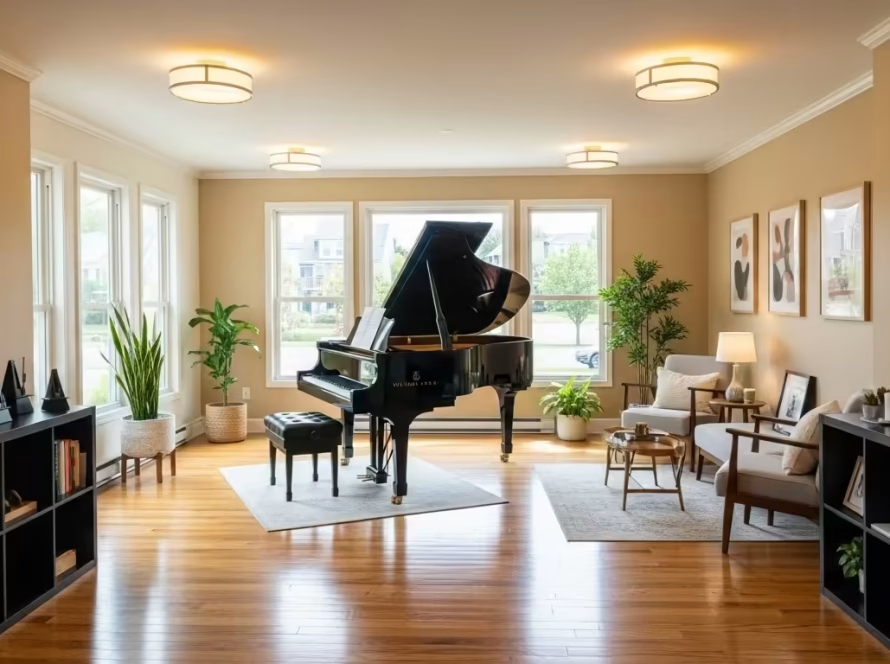
Why Grand Pianos Are Heavier Than Upright Pianos

Grand pianos are generally heavier than upright pianos, with weights ranging from about 400 lbs (181 kg) for small grants to over 1000 lbs (454 kg) for large concert grands. Upright pianos typically weigh between 500-1000 lbs (227-454 kg) but are usually on the lighter end of this range. This significant weight difference is due to size and complex design choices that affect sound production and playing experience. This guide will explore the factors that contribute to this weight difference. It will also explain how this impacts pianists of all levels.
| Anatomy and Design | Playing Experience | Historical Context and Myths |
|---|---|---|
| Longer strings, larger soundboard, sturdier frame, and thicker woods in grands contribute to weight | Key length, action mechanism, hammer size, and key weighting affect touch and dynamic range | Evolving demands for power and resonance increased weight; heavier doesn’t always mean better sound |
The Anatomy of Piano Weight
To understand why grand pianos are heavier than upright pianos, we need to look at their anatomy. Both types of pianos have similar basic parts. However, their arrangement and size are quite different.
Grand Pianos: Built for Power and Resonance
Grand pianos are designed with a horizontal layout, contributing significantly to their weight. Let’s explore the key components that make grand pianos heavier:
- Longer Strings and Larger Soundboard
One major factor in a grand piano’s weight is the length of its strings. Another is the size of its soundboard.
- Grand piano strings can stretch up to 7 feet long, especially in the bass register.
- Soundboards in grand pianos typically range from 150 to 200 square feet in surface area.
- The Steinway Model D concert grand has a soundboard of over 160 square feet. It is made from solid spruce wood.
The larger soundboard lets grand pianos produce louder, richer tones. These tones can fill concert halls. The increased size adds more weight, but it’s crucial for the grand piano’s unique sound.
- Sturdier Frame Construction
Grand pianos have longer strings and larger soundboards. To support this, they need a sturdier frame.
- Modern concert grand frames can withstand over 40,000 pounds of string tension.
- Early piano frames in the 1800s could only handle about 30,000 pounds of tension before cracking.
- The cast iron plate provides this stability. It adds considerable weight to the instrument.
- Thicker, High-Quality Woods
Grand piano cases require thicker, solid hardwoods to handle their amplified string tension:
- Woods like spruce or maple are commonly used in grand piano construction.
- These dense woods add significant weight. They are crucial for the piano’s structural integrity and sound quality.
For more on piano construction, check out our article on Upright vs. Grand Pianos: Key Differences and Which to Choose.

Upright Pianos: Compact Design for Versatility
In contrast, upright pianos are built with a vertical orientation. This allows for a more compact design.
- Strings are positioned vertically, typically extending only 3 to 5 feet.
- Soundboards in upright pianos are about 80 square feet, less than half the size of a grand piano.
Their frames don’t need to withstand as much tension as grand pianos. This allows for lighter construction.
Upright piano makers use space efficiency and specialized materials. This helps achieve rich musicality in a smaller package. Tight string spacing saves room while retaining harmonic vibrancy.
- Laminated bridges focus and amplify soundboard vibrations for maximum volume projection.
- Metal reinforcement bars strengthen the back of upright pianos. They prevent buckling under string tension.
Learn more about the benefits of upright pianos in our guide on Piano Lessons for Adult Beginners in San Diego.
The Playing Experience: Grand vs. Upright
The weight difference between grand and upright pianos affects more than just portability. It also impacts how they feel to play. Let’s explore the factors that create the unique playing experience of each type.
Key Length and Leverage
A key difference between grand and upright pianos is the length of the keys. Grand pianos have longer keys than upright pianos, which provides several advantages:
- Longer keys act as levers, allowing more precise control over the hammer action.
- Nuanced playing: Pianists can achieve a wider range of expression with better control.
- Even feel: Longer keys ensure a consistent touch across the entire keyboard.
The increased key length in grand pianos adds to their weight. However, it is crucial for the refined playing experience they offer.
For tips on improving your playing technique, see 7 Piano Practice Tips to Prevent Hand, Arm, or Back Pain.
Action Mechanism
A grand piano’s action is horizontal. This creates a different playing experience. An upright piano’s action is vertical.
- In a grand piano, gravity helps return the hammers. This happens after they strike the strings.
- Upright pianos, on the other hand, rely more on springs and other mechanisms to return the hammers.
- The gravity-based system in grands creates a more substantial feel. Many pianists prefer this.
The grand piano action allows for faster note repetition. This is important for advanced repertoire. The horizontal layout also enables a double escapement mechanism. This enhances repetition speed and control further.

Hammer Size and Weight
Grand pianos, especially larger models, often have bigger hammers. These hammers strike their longer strings.
- Larger hammers are needed to produce enough volume and tone quality for the longer strings.
- These bigger hammers create a weightier touch. Many pianists associate this with a more premium playing experience.
- The increased mass of the hammers allows for greater dynamic range and tonal control.
Key Weighting and Dynamic Range
The way keys are weighted in grand pianos contributes significantly to their playing feel:
- Grand piano keys are typically weighted by hand in the factory to counteract the force of gravity.
- This meticulous weighting process results in a more even feel across the keyboard.
- The result is often perceived as slightly heavier but more balanced compared to uprights.
Grand pianos generally offer a wider dynamic range than upright pianos:
- This increased range of expression from soft to loud can make the piano feel more responsive.
- The ability to produce a wider range of volumes can make the action feel heavier, especially when attempting to produce louder sounds.
- This dynamic range is crucial for advanced repertoire and nuanced musical expression.
Historical Context: The Evolution of Piano Weight
To understand why grand pianos are heavier than upright pianos, we should look at their history. The development of the instrument over time explains the weight difference.
Early Pianos: Lighter Beginnings
The piano’s history dates back to the early 1800s. Instrument makers wanted to improve the harpsichord and clavichord.
.

- Bartolomeo Cristofori invented the first piano around 1700.
- His instrument used hammers to strike the strings, allowing for dynamic control based on key pressure.
- The name “piano” comes from “pianoforte.” It means “soft-loud” in Italian, reflecting the instrument’s new dynamic capability.
For a deeper dive into the history of piano techniques, read The Fundamentals of Music Theory: A Beginner’s Guide.
The Drive for More Power and Resonance
As the piano gained popularity, composers and performers began to demand more from the instrument:
- Famous composers like Mozart and Beethoven began writing piano music. Their compositions pushed the limits of existing instruments.
- This demand drove instrument makers to expand the piano’s range and resonance.
Through the mid-1800s, several key changes were made to pianos. These changes significantly increased their weight.
- Heavier strings were introduced to produce more volume.
- Larger soundboards were developed to amplify the string vibrations more effectively.
- Metal frames replaced wooden ones to withstand the increased string tension.
These changes greatly improved volume and tone but came at the cost of added weight. By adding more mass, piano makers created the powerful modern grand piano we know today.
The Development of the Upright Piano
While grand pianos were growing larger and heavier, there was also a push to create more compact instruments for home use:
- Upright pianos originated as “pyramid” pianos in the mid-1700s.
- Their vertical orientation conserved space but initially limited volume.
- During the Victorian era, upright piano frames changed from wood to metal. This improved durability and tuning stability.
By the 1920s, upright pianos had taken on their familiar form:
- They were typically about 4 feet tall and 3 feet deep.
- This compact size made them suitable for homes and smaller venues.
- Modern uprights deliver impressive sound despite their more modest dimensions.
Debunking Myths: Weight and Sound Quality
It’s a common misconception that heavier pianos always sound better. While weight can contribute to sound quality, it’s not the only factor:
- Some high-quality upright pianos can outperform smaller grand pianos in terms of tone and volume.
- Factors like materials, craftsmanship, and maintenance play crucial roles in sound quality.
- A well-maintained upright piano can often sound better than a poorly-maintained grand piano.
It’s important to note that the feeling of “heaviness” when playing can be influenced by psychological factors:
- The perception of weight can be affected by the size and appearance of the piano.
- Playing a grand piano, with its larger size and more powerful sound, may lead pianists to perceive the action as heavier.
For insights on choosing the right piano, visit our article on How Much Will It Cost Me to Learn Piano? A Breakdown of Expenses.

Choosing Between Grand and Upright: Practical Considerations
When deciding between a grand and an upright piano, there are several factors to consider beyond just the weight:
Space Requirements
- Grand pianos require significant floor space, with lengths ranging from 5 to 9 feet.
- Upright pianos are much more compact, typically requiring only about 5 square feet of floor space.
- Consider the acoustics of your room – grand pianos often sound best in larger spaces.
Budget Constraints
- Grand pianos are generally more expensive than upright pianos.
- High-quality upright pianos can offer excellent value for money.
- Consider long-term costs, including maintenance and potential resale value.
Intended Use
- For professional performances or serious classical training, a grand piano might be preferable.
- For home practice or casual playing, a high-quality upright can be more than sufficient.
- Consider the level of the player and their long-term goals.
For advice on starting piano lessons for children, check out Identifying the Ideal Age to Begin Piano Lessons for Kids.
Personal Preference
- Some pianists prefer the touch and feel of a grand piano.
- Others may find they can express themselves just as well on a good upright.
- It’s essential to try out different pianos to see what feels right for you.
Maintenance Considerations
The weight difference between grand and upright pianos can affect their maintenance needs:
- Grand pianos may require more frequent tuning due to their larger soundboard and longer strings.
- The complex action of a grand piano might need more regular adjustment.
- Upright pianos, being more compact, can be easier to maintain in some respects.
Regardless of the type of piano, regular maintenance is crucial for optimal performance:
- Both types should be tuned at least twice a year.
- Regular cleaning and humidity control are essential for both grands and uprights.
- Professional regulation of the action should be performed regularly. This maintains optimal playing conditions.
For tips on efficient practice, read Piano Practice Hacks: Maximize Your Learning in Minimum Time.

Conclusion: The Weighty Matter of Piano Choice
The weight difference between grand and upright pianos comes from complex design choices. These choices affect sound production and playing experience. Grand pianos offer advantages due to their size and construction. High-quality upright pianos provide excellent touch and responsiveness for all skill levels.
Understanding these weight differences helps pianists and enthusiasts choose the right instrument. Whether you choose a grand or an upright, regular maintenance and care are essential. This ensures your piano continues to bring joy and beautiful music for years to come.
Are you looking for a new piano teacher? Whether you prefer a grand or an upright, it’s important to try different models. Visit your local music school to experience the differences firsthand. Consider factors beyond weight, such as space, budget, and musical goals.
If you found this article helpful, please share it with other piano enthusiasts. We would love to hear about your experiences with different types of pianos. Share your insights in the comments below. Your input is valuable!
Frequently Asked Questions
Are grand pianos always better than uprights?
Not necessarily. High-quality uprights can match grands in sound and touch for many players. Your needs and circumstances should guide your choice.
Do heavier pianos always sound better?
Nope. Weight isn’t everything. Materials, craftsmanship, and maintenance matter just as much. A well-kept upright can outshine a neglected grand.
Can I put a grand piano in my apartment?
It depends on your space. Grand pianos need lots of room. Uprights are usually better for apartments. Consider your room’s size and acoustics.
How often should I have my piano tuned?
Aim for twice a year, whether it’s a grand or upright. Frequently used pianos or those in changing climates might need more tuning.
Are grand pianos more expensive to maintain than uprights?
Generally, yes. Grands often need more frequent and pricier maintenance due to their complex mechanisms. But it varies based on the model and usage.
Can playing a grand piano improve my technique?
While grand offers nuanced control, good technique comes from practice, not piano type. A grand’s heavier feel might build finger strength, but proper practice habits matter most.
Do professional pianists always prefer grand pianos?
Many pros like grands for performances due to their range and tone. But plenty own and practice on quality uprights, especially when space is tight.
For more insights, check out The Role of Piano Lessons in Developing Creativity in Adults.