
How to Start Learning Piano Online with Virtual Lessons for Adults

Katherine Dvoskin, Co-Founder of K&M Music School
I hope you enjoy this blog post! If you're interested in scheduling a free trial lesson, just click.
Author: Katherine Dvoskin | Co-Founder of K&M Music School
Published January 3rd, 2025

If you want to start piano lessons online, this guide can help. First, it helps busy adults choose the best platform. Then, it shows how to improve your practice. Also, it provides extra resources to boost your creativity.
This guide clears up myths about adult learners. It also shows the rewards you can gain. Additionally, it answers most questions new adult students have. Finally, it’s time to begin your musical journey.
| Platform Features | Learning Journey | Benefits for Adults |
|---|---|---|
| Video lessons | Start with basics | Flexible scheduling |
| Interactive games | Progress to intermediate | Self-paced learning |
| Multiple genres | Develop advanced skills | Cost-effective |
| Personalized curriculum | Explore improvisation | Comfortable environment |
| Progress tracking | Prepare for performances | Diverse musical interests |
Why Learn Piano Online? Myriad Benefits for Adult Beginners
First, we will look at the main benefits of virtual lessons for adults. Then, we will talk about choosing an online piano program.
Convenience and Flexibility
Pre-recorded video lessons are always available. This helps adults with busy schedules. You can watch them whenever you want. Also, you don’t need to match a teacher’s time. Additionally, you can practice regularly, even when traveling.
Comfortable Self-Paced Learning
Adults may feel self-conscious starting lessons later in life alongside young students. Virtual platforms allow learning piano fundamentals privately at your own pace. Progression goals stay personalized rather than conforming to a group class curriculum.
Interactive and Engaging Format
Online piano lessons include games for sight reading and challenges for technique. This makes learning fun and interactive. Therefore, adults stay more interested. Also, using visuals helps deliver the lessons better. As a result, students remember more than with printed methods.
Expanded Musical Interests
Some local teachers teach only certain music styles. However, online piano lessons offer many types. For example, you can learn classical, pop, rock, blues, jazz, folk, and more. This way, adults can choose the music they like best.
Reduced Costs
Adults save money by not traveling or paying studio fees. So, they can afford quality piano lessons for less each month. This means they don’t have to pay expensive private rates. As a result, they can keep learning affordably for a long time.
People who have played piano before can easily restart online lessons. They can also improve their skills. Additionally, there is no pressure. They can work alone to close any gaps in their experience.
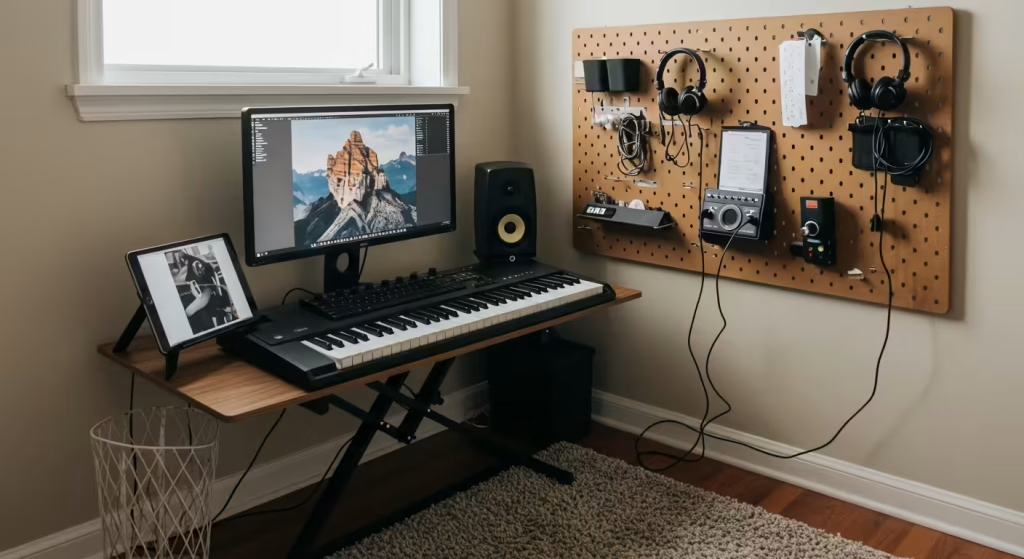
Quality online piano lessons are flexible. They can be customized for each learner. Therefore, adults can progress steadily. Also, they learn in a way that works best for them.
Now that we know the benefits, let’s choose the right online piano platform. First, think about what you need. Then, compare different options. Finally, pick the one that fits you best.
Optimizing Your Learning Environment for Online Piano Success
Choosing the right online curriculum greatly affects your progress. Also, improving your learning space and habits helps you grow. Therefore, both are important for your piano learning.
Obtain Proper Equipment
An acoustic piano has the best sound for online lessons. However, good digital keyboards are also great for beginners. They let you practice with headphones. So, consider these options:
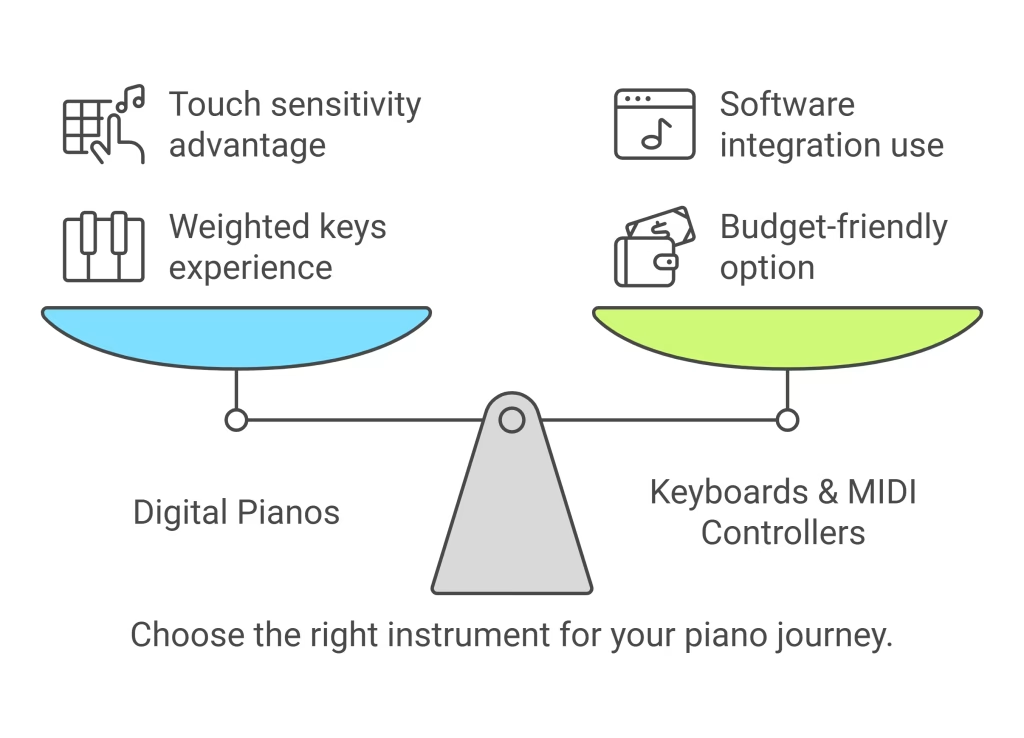
- Digital pianos have weighted keys that feel like acoustic pianos. However, the touch sensitivity can be different. So, you should try one before buying. Additionally, look for at least 61 semi-weighted keys.
- Keyboard – Less expensive keyboards feature light, spring-loaded unweighted keys. Lack of touch sensitivity fails to strengthen finger technique. Avoid purchasing keyboards for lessons unless extremely budget-limited.
- A MIDI controller has keys that are not weighted and don’t make sound. Instead, they trigger software instruments on a computer. This is useful for intermediate students. They can explore composing music in digital audio workstations.
Used weighted-key digital pianos are great for affordable home setups. They often have built-in speakers. Also, they offer multiple instrument sounds. Additionally, they have headphone jacks for private practice. So, they provide great value.

Music Lessons in San Diego with K&M Music School
Expert Music Lessons
We offer Piano, Violin, Cello, Saxophone, Bassoon, Harp, Voice, and Toddler group lessons for students of all ages and skill levels.
Why Choose Us?
- 🎶 Boosts focus and self-discipline
- 🎵 Strengthens cognitive skills
- 🎼 Enhances cultural understanding
- 🎤 Builds confidence through recitals and performances
We Welcome Adults Too!
Book Your Free Lesson NowDesignate a Distraction-Free Practice Area
Set up your instrument in a quiet and comfortable place. Make sure there is good lighting and your seat is the right height. Also, place your computer or tablet so you can see it easily during lessons.
This way, you won’t have to hunch or move your head too much. However, avoid practicing in bed or on a couch. Good posture is important for your technique.

Commit to a Consistent Practice Routine
Set regular practice times that fit your schedule. Even 15-30 minutes each day is good. Next, mark these times in your calendar app to stay disciplined. Also, set weekly goals like learning one new song or technique.
Remember, progress happens when you practice consistently. So, be patient.
What Will I Learn as a Piano Beginner? Core Concepts and Skills
Different platforms have different curriculums. However, online piano lessons for adults usually cover the basics. These include:
Proper Hand and Finger Position
- Hand shape and curvature
- Finger arching, spacing, alignment
- Wrist, knuckle, elbow positioning
- Preventing tension through release motions
Good form makes your movements efficient and prevents injuries. In-person teachers can adjust you physically. However, virtual lessons use words, videos, and diagrams instead. Therefore, you need to pay close attention to instructions. Additionally, practicing regularly helps maintain good form.
Basic Music Notation Reading
- Grand staff, treble & bass clefs
- Ledger line reading
- Note values and rests
- Time signatures and measures
Various games and exercises develop fluid recognition skills connecting notation to keys. Students lacking music reading experience often spend several months developing literacy.
Rhythm, Timing, and Tempo
- Steady beat vs. syncopation
- Counting note durations
- Change/maintenance of pace
- Accelerando/ritardando
Hearing and feeling rhythms help your brain keep time. Also, it connects your ears with your fingers. This improves your playing skills.

Finger Numbers and Coordination
- Numbering systems (1-5 or A-E)
- Finger independence
- Substitution/crossover exercises
- Scales/arpeggios strengthening dexterity
Use strategies to practice both hands and fingers. This helps you play evenly. Therefore, you build technical skills. Also, this is needed before learning harder songs.
Common Chords and Harmony
- Triad structures (major/minor/diminished/augmented)
- Inversions and voicings
- Chord progressions following patterns
- Accompaniment techniques like vamping
When you recognize chords by ear, you can play them on the piano. This connects what you hear with what you do. Therefore, you learn the basics of writing music. Also, it helps you improvise better.
Sight Reading Skills
- Methodically processing notation
- Maintaining pulse continuity
- Rhythmic subdivision feel
- Eye-hand coordination/position leaping
Read new music every day. This helps you build translation skills. Therefore, you can play more fluently.
Dynamics and Musical Expression
- Volume, color, and touch variation
- Accents/articulations as interpretation
- Developing an artistic sensibility beyond notes
Layering expressive qualities allows performers to infuse creativity into even simple pieces.
If adults practice regularly, they can reach early intermediate skills in 6 to 12 months. This includes learning these concepts. Next, we will explore how to build on the basics.
Spotlight: Susan’s Path to Piano Progress
Susan is 49 years old. She always dreamed of playing the piano. However, she found it hard to read music. During the pandemic, she started online lessons. She practiced for 25 minutes every night after work on her digital keyboard.
Interactive sight-reading games helped Susan improve her music reading. After one year, she could read lead sheets for popular songs. She also played along by herself. Her instructor praised her for being consistent. Because of her consistency, she advanced every week.
After a year, Susan expanded her musicianship further.
Moving Beyond Piano Basics as an Intermediate Player
After conquering beginner fundamentals, online students can progress to:
- Expanding repertoire across various genres
- Advancing technique and finger dexterity
- Exploring improvisation and composing original tunes
- Playing songs by ear and harmonizing melodies
- Preparing polished performance pieces
During this phase, adults build well-rounded musical skills. These skills can be used in band settings. Also, they follow their own musical interests. For example, some explore jazz improvisation. Others try electronic music production.
Online lesson platforms help adults keep improving. They offer many tutorials from intermediate to advanced levels. Also, regularly practicing the techniques you learn makes your skills grow.
We’ll break down specifics on advancing core skills:
Expanding Repertoire
- Classical literature including Bach, Mozart, Chopin
- Film scores and video game themes
- New-age piano works
- Traditional hymns or holiday songs
- Pop/rock chart hits or old favorites
- Disney and Broadway show tunes
- Jazz standards
Accumulating pieces in diverse styles exercises adapting techniques.
Elevating Technique
- Scales/arpeggios to higher speeds
- Ornamentation – trills, turns, mordents
- Quick hand position shifts
- Expanded chord vocabularies
- Voicing melodies across wider ranges
Conquering more complex musical patterns boosts technical dexterity.
Digital Metronome
Improvisation and Composition
- Jamming to backing tracks or standard progressions
- Adding left-hand accompaniment to melodies
- Creating original musical motifs and phrases
- Songwriting expands harmonic ideas
- Sound design manipulating digital audio effects
Spontaneously generating fresh musical ideas stimulates creativity.
Playing by Ear
- Identifying chord progressions used in songs
- Transcribing melodies note-for-note
- Mimicking stylistic performance elements
- Following along with recordings
Decoding how to perform songs without written notation flexes musical intuition.
Music Lessons in San Diego with K&M Music School
Expert Music Lessons
We offer Piano, Violin, Cello, Saxophone, Bassoon, Harp, Voice, and Toddler group lessons for students of all ages and skill levels.
Why Choose Us?
- 🎶 Boosts focus and self-discipline
- 🎵 Strengthens cognitive skills
- 🎼 Enhances cultural understanding
- 🎤 Builds confidence through recitals and performances
We Welcome Adults Too!
Book Your Free Lesson NowPerformance Preparation
- Programing contrasting repertoire
- Memorizing music early in the process
- Emulating stylistic traditions of periods/genres
- Developing stage presence and communication
Competitive recitals help you develop skills for playing in public. For example, you can perform at church services or weddings. This builds your confidence and ability to play for others.
Spotlight: Grant Gets Creative with Piano Skills
Grant, 58, started lessons two years ago to revive childhood piano memories. He has since unlocked deep creativity, joyfully whipping up bluesy improvised solos.
Keep important items in your carry-on bag. Bring your medicine and a copy of your music. This way, you’re ready if your checked bag gets lost. Transport your instrument in a strong case. Avoid places with extreme temperatures to keep it safe.
Establishing Consistency to Reach Piano Goals
This guide gives many tips for online piano lessons. But practicing core ideas over time matters most. There are no quick shortcuts to improving. Staying consistent helps you get better.
Competitive recitals help you develop skills for playing in public. For example, you can perform at church services or weddings. This builds your confidence and ability to play for others.
Call to Action
Eager to unleash your musical talents? Kickstart your online piano adventure now! Select a platform tailored to your needs, establish a dedicated practice area, and devote yourself to consistent, focused sessions. Every moment you invest brings you closer to mastering your favorite tunes and reaching your musical aspirations! Sign up for a free trial lesson.
Conclusion
Learning piano online helps busy adults learn at their own pace. Virtual lessons are customized to match skill levels and music preferences. Apps track progress and keep lessons interactive. Setting up good equipment and a practice space makes learning easier. Practicing regularly is important for success.
Beyond basics, adults can learn intermediate songs, improvise, compose, and perform. Adding extra resources can help you grow even more. Online piano lessons are a fun way for adults to explore music.
Frequently Asked Questions
What piano method books are best for adult beginners?
Alfred’s Adult All-In-One Course or Faber’s Piano Adventures (Adult Piano Adventures).
How many times per week should an adult practice piano?
Aim for 4-5 shorter daily sessions rather than longer practice once or twice weekly. Consistency is key.
What should an adult know before buying a keyboard to learn piano?
Look for touch-sensitive weighted keys and a stand. Avoid small keyboards lacking proper dynamics. Research accessories like pedals and headphones for private practice.
Is learning piano online cheaper than taking lessons locally?
Yes, online lessons are usually cheaper. This is because you don’t need to travel or pay for studio costs. Therefore, the lessons cost less. Also, you can compare different prices.
Can I learn piano online as a complete beginner?
Absolutely! Virtual platforms cater nicely to adult beginners starting from zero experience. Their flexibility prevents feeling overwhelmed early on.
What musical styles do online piano lessons teach?
Top programs have many types of music. They include classical, pop, rock, blues, jazz, folk, worship, soundtracks, and holiday songs. So, adults can choose what they like.
What supplemental resources help reinforce my online piano lessons?
There are apps for practicing piano techniques. Also, YouTube channels help you learn music theory. Additionally, piano forums give advice and keep you accountable. Moreover, notation software lets you compose your music. Finally, libraries provide more sheet music to play.

Katherine Dvoskin, Co-Founder of K&M Music School
She is co-founder of K&M Music School in San Diego, is a passionate music educator with over 25 years of experience. She offers expert piano lessons in San Diego. At K&M Music School, we teach Piano, Violin, Cello, Saxophone, Bassoon, Harp, Voice, and Toddler group lessons. Katherine's blog shares insights on music education, covering topics from toddler music group lessons to adult music lessons. Whether you're seeking private music lessons or group music lessons for toddlers near you, welcome to K&M Music School.

