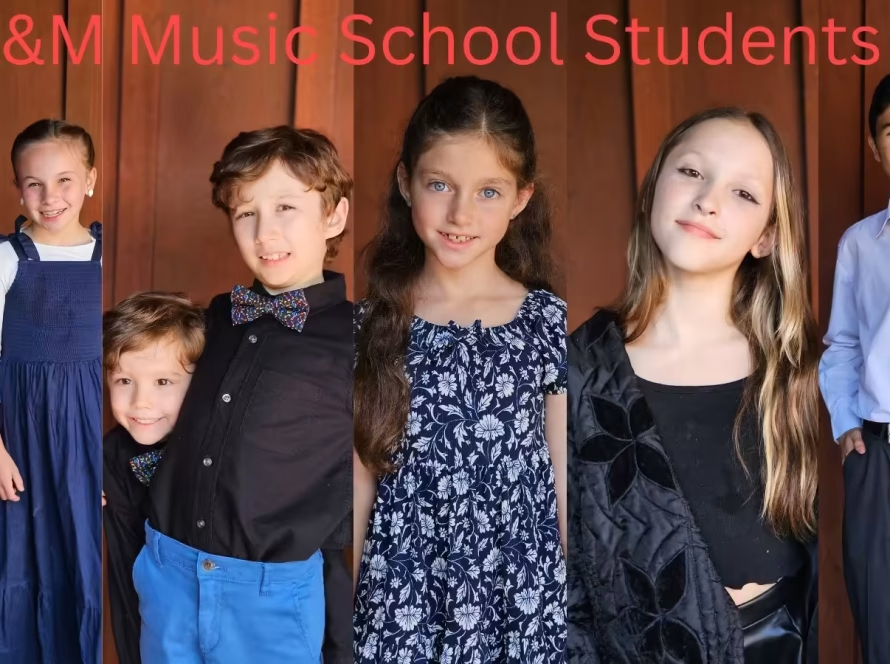
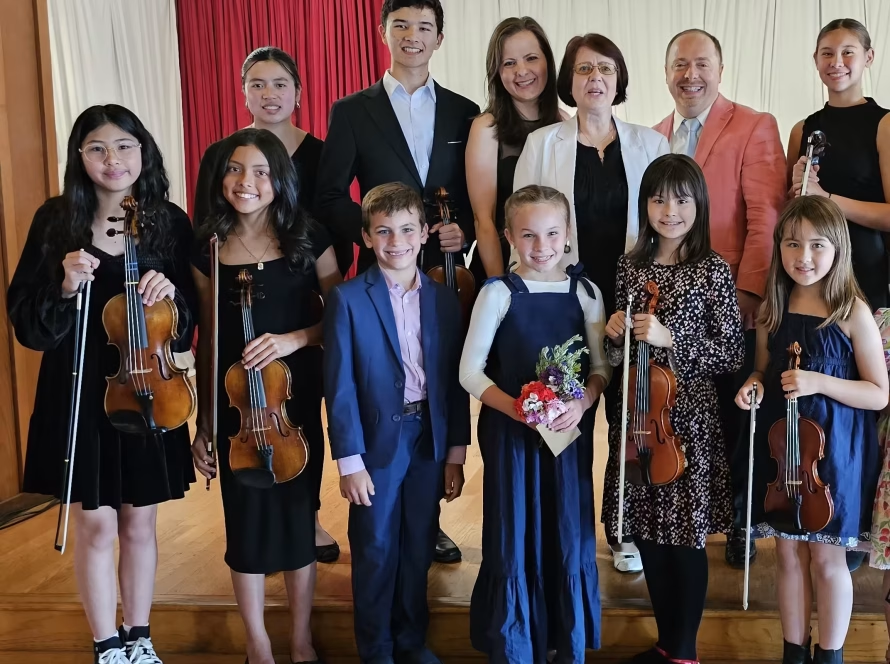
Music lessons are expensive due to the immense expertise gained, tailored oversight required, and immense lifelong value provided.
Music lessons require immense expertise, training, facilities, and customization. These value drivers clarify the significant investments in quality instruction.
Introduction: Key Factors Driving Music Lesson Costs
High-caliber music lessons draw on instructors with years of honed skills and professional credentials. Tailored curriculums, customized feedback, and elite training facilities carry premiums.
With musical mastery demanding extensive knowledge and practice time, these lessons warrant significant investments. But most understand long-lasting enrichments musical abilities provide over one’s lifetime justify costs.
This article will extensively break down the core elements that make quality music education expensive:
- Instructor expertise gained from long-term skill development
- Administrative overheads and rental of teaching facilities
- The length and customization level expected of each lesson
- Market competition that drives instructor wages upward
- And the immense lifelong value artistic skills offer students

Instructor Musical Expertise and Ongoing Training
Exceptional music instructors invest over 10,000-25,000 hours across years perfecting instrumental abilities, music theory knowledge, teaching techniques, and performance skills. Most hold advanced degrees like MM, MMA, and DMA credentials qualifying their expertise. This vast skillset development commands premium lesson pricing.
Instructors also pursue rigorous professional development annually studying new pedagogies, refreshing core competencies, and learning additional instruments. These require further investments of time and money. Staying updated with the best teaching strategies allows for offering students cutting-edge, diverse musical guidance.
Elite educators often still maintain active performing careers highlighting real-world applications. Their professional industry connections help dedicated students pursue career opportunities. Top instructors integrate current insider perspectives.
These instructor qualification and dedication factors justify elevated ongoing lesson rates to students serious about maximizing potential.

Music Instructor Skill Building Areas
Instructors accumulate expertise across diverse competency areas:
Instrument or Vocal Technique: Attaining professional-caliber technical abilities alone can take 11-17 years to build muscle memory through consistent practice. Common instruments like piano, violin, cello, or voice require unique complex technique mastery.
Music Theory & Composition: Learning harmony, arrangement, and key signatures fluently translate ideas between composition, analysis, and performance applications. Instructors connecting theory to practice accelerate student growth.
Teaching Methods: Certification programs and classroom hours equip educators with the best strategies around learning styles, student motivation, lesson planning, assessment tools, and recital preparation. Strong oversight is both an art and a science.
Repertoire Exposure: Master instructors possess expansive repertoire familiarity – both seminal core works alongside lesser-known niche pieces spanning Baroque counterpoint through modern extended techniques. Broad exposure expands student perspectives.
Ear Training & Sight Reading: Essential peripheral abilities like detecting pitches, auditioning intervals, rhythmic dictation translation and sight reading new scores quickly let instructors assess and develop student musicality indicators in lessons.
Performance & Improvisation: Real-world techniques around interpreting compositions, stylistic nuances, memorization confidence, anxiety mitigation, audience communication and improvisational reactions help students prepare for applauded public displays of competency.
This breadth explains extensive lesson pricing. Excellence across specialties shows deep dedication.

Facilities Overhead and Administration Expenses
Independently operating studio spaces incurs costs around:
- Facility rental or property purchase/maintenance fees
- Inventory expenses like instruments, amplifiers, speakers
- Administrative components including staff, registration systems, advertising platforms, and websites
While virtual lessons mitigate facility overheads, inventory access coordination, attendance tracking, and payment processing still carry operational expenses instructors account for in balancing pricing. Developing strong home office infrastructure improves remote lesson quality.
Top studios also invest in specialized tools like recording equipment, customizable seating options, advanced music notation software and more to deliver premium experiences exceeding expectations.
Overall these major areas comprise standard studio and lessons business overheads:
Facilities: retail property rental, utilities, permits, maintenance
Inventory: musical equipment, replacements, repairs, supplies
Staffing: administrator hourly wages, contractors, substitute teachers
Systems: scheduling/records software, payment processors, CRMs
Advertising: online listings, Google Ads, recital programs, flyers
Insurance & Licensing: business/liability coverage, state credentials
Other: office supplies, web hosting, continuing education, professional associations, etc.
So while virtual teaching improves flexibility and expands student reach globally, it does not eliminate key costs inherent in running a polished music instruction operation. Rate balancing must still cover essential overheads.
Typical Lesson Length Means More Instructor Time Investment

Most private music lessons range from 30 minutes to a full 60-minute session of highly customized content and direct 1-on-1 instructor attention. Shortening durations risks compromising guidance quality.
These standard lengths allow tailored curriculum, exercises, and supplemental resources precisely towards each student’s evolving strengths and growth opportunities.
More lesson minutes mean investing more instructor time and energy per student. Exceptional oversight requires heavy preparation analyzing strengths, assessing new pieces, curating personalized recommendations, and demonstrating techniques in real-time preferentially suited to the individual.
It also necessitates post-lesson follow-ups around customized assignment check-ins, tips to overcome practice obstacles, additional video examples, and answering outstanding student questions.
Such commitment explains elevated pricing. But the shortcutting effort could undermine progress. Standard durations optimize outcomes so serious students get full long-term money’s worth.
Custom-Tailored Skill Progression Planning is Key

Top music instructors personalize strategic student advancement benchmarking current progress against final expertise criteria to promote optimal lesson-over-lesson skill growth. This entails an in-depth assessment identifying strengths, weaknesses, and learning preferences to precisely target necessary improvements.
Regular check-ins inform curriculum adjustments introducing new repertoire, exercises, and tools keeping material perpetually fresh yet sequenced for engaging student focus while pushing them to higher competence levels.
Such individual customization demands far greater instructor effort than any templated, one-size-fits-all lesson model could sustain long-term. The tailored oversight and flexible response to evolving student needs to clarify the elevated per-session rates.
However, it provides dynamic student-specific value progression not achievable otherwise through standardized curriculums. Customization quality requires pricing reflecting extensive personalization efforts.
Components of Customized Oversight
Exceptional oversight includes:
- Initial assessment benchmarking abilities
- Customized curriculum planning
- Pacing aligned to skill progression
- Repertoire matched to technical level
- Assignment feedback and adaptations
- Question answering and micro lessons
- Recital and audition preparation
- Lifelong learning emphasis
This degree of customization explains music lesson pricing and better aligning rates to the true depth and quality of value provided.
Instructor Talent Scarcity Drives Competitive Wage Growth
Highly skilled music instructors are scarce commodities. Top talent gravitates toward prestigious universities, organizations, or private studios attracting serious students.
This amplifies hiring competition between institutions seeking to recruit and retain exceptional educator abilities—competitive pressures in turn drive instructor wages higher across environments to attract and retain elite skills.
For example, a study showed average hourly rates increased 22% over 5 years in metro regions with the most qualified instructors. More musical knowledge workers can command greater compensation. Location-based supply-demand imbalances exacerbate pricing effects.
So instructor pay often proxies the scarcity of true excellence. But coveted experts then deliver hard-to-find high-caliber guidance worth rate premiums for dedicated students prioritizing education quality over bargain hunting. This talent competition dynamic informs pricing.
Music Lesson Pricing Aligned With Immense Lifelong Value

Music lessons warrant significant investments because their lifelong value is immense though difficult to quantify. Excellence demands years of skill accumulation – quick routes to mastery hardly exist. Progress requires deep consistent effort over time before reaching advanced levels.
But the artistic capabilities, creative outlets, social belonging, brain benefits, and more manifest profound personal and social value daily across life for those sticking with it.
For example, research shows musical training improves focus, memory, conflict resolution skills, confidence, lowered anxiety, and more – all prized lifelong assets.
Those serious about self-actualizing through fine arts pursuit accept the required tradeoffs around significant time, money, and effort invested towards reliably gaining ultimately priceless abilities. This long-horizon contextualizes expenses against immense durable reward potential.
Additional Benefits from Music Training Throughout Life:
- Sense of community via ensembles and performances
- Mental benefits like discipline, visual-audial skills
- Emotional outlet for stress relief, mood regulation
- Physical benefits like hand-eye coordination
- Professional networking pipeline within the arts
- Transferable competencies to other domains
- Pure life enrichment through art appreciation
- Opportunities to mentor next-generation
So the quantifiable monetary and hourly inputs expected of students aiming for high achievement convert into a lifetime of qualitative artistic, cognitive, and wellness rewards returned exponentially in proportion to the consistency invested. This aligns with pricing.
Supporting Market Research Data on Music Lessons:
- 78% of polled students say high instructor quality overrides hourly lesson rate concerns
- $60 average rate for 30-minute private music lessons in major metro areas
- 4x higher average wages for instructors holding Master’s or Doctoral musical credentials vs. Bachelor’s alone
- 89% of lifelong musicians report decreased anxiety, 66% improved mood stability

Conclusion
So in summary, exceptional musical training draws on immense expertise and customization often developed over instructors’ entire careers warranting significant investments. But years of gaining skills, community connections, and artistic outlets provide rare value for life impossible to commodify.
This likely explains why so many still seek world-class lesson instruction despite modern life’s financial hurdles and distractions competing for resources. The sheer lifelong enrichment music provides at the highest levels outweighs transient costs.
Frequently Asked Questions
Should cost be the main concern when looking for music lessons?
No, highly qualified instructors should take priority over bargain hunting – significant lifelong skill gains warrant investing in excellence.
What are signs an instructor offers strong value?
Customized oversight, impressive mastery demonstration via performances/recordings, investing in advancing their offerings and music connections.
How can virtual lessons cut expenses?
Some overhead reductions but still investments in teacher time/talent and learning tools matter most. Focus on value, not bargains.
What if I don’t aspire to a professional music career?
Musical training provides immense lifelong wellness and brain benefits no matter your goals – so invest wisely according to your aims.
Should parents invest significantly in children’s lessons?
Yes, high-level instruction forms foundations advancing skill gains year-over-year over time – discipline learned young pays dividends.
What should students expect to contribute?
Consistent practice effort between lessons to accelerate growth. Applying instructor guidance toward tangible advancement.