
Which Instrument Is Best for the Brain?

Katherine Dvoskin, Co-Founder of K&M Music School
I hope you enjoy this blog post! If you're interested in scheduling a free trial lesson, just click.
Author: Katherine Dvoskin | Co-Founder of K&M Music School
Published November 11th, 2025
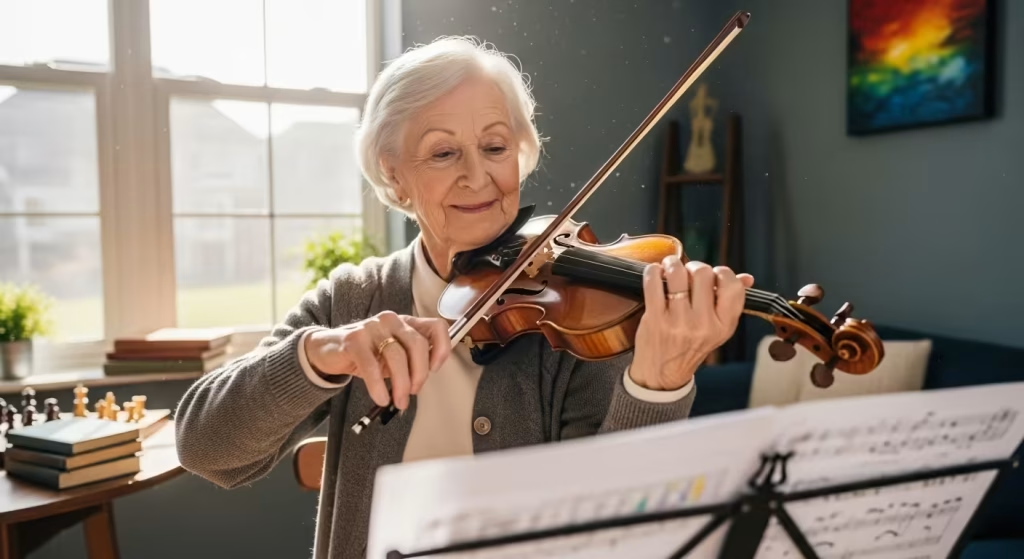
Learning an instrument is great for your brain. It helps you think, remember, and focus. Playing music works motor, visual, and hearing skills at the same time.
Piano, guitar, drums, winds, and singing all help the brain. Each instrument trains different skills. Some boost memory and coordination. Others improve focus and emotional health.
Pick the instrument that fits your goals and routine. Choose what you enjoy so you’ll practice. That is how you get the most brain benefits.

Music Lessons in San Diego with K&M Music School
1 Expert Music Lessons
We offer Piano, Violin, Cello, Guitar, Ukulele, Saxophone, Bassoon, Harp, Voice, and Toddler group lessons for students of all ages and skill levels.
2 Why Choose Us?
- 🎶 Boosts focus and self-discipline
- 🎵 Strengthens cognitive skills
- 🎼 Enhances cultural understanding
- 🎤 Builds confidence through recitals
3 We Welcome Adults Too!
Piano/Keyboard: Boosts memory and planning. Builds two-hand coordination. Great for kids and adults.
Drums/Percussion: Improves timing and coordination. Reduces stress. Good for focus and ADHD.
Listen to Our Podcast
If you’d like to learn more about Which Instrument Is Best for the Brain? Tune in to our podcast, where we share expert tips and insights. Check it out on our YouTube channel and elevate your music journey today!
Strings (Violin, Guitar, Cello): Builds fine motor control and patience. Trains hand independence. Best for detail-focused learners.
Woodwinds/Brass (Flute, Trumpet, Sax): Trains breath control and focus. Builds steady attention and listening. Helps kids with attention and breathing.
Singing/Choir: Strengthens memory and emotions. Creates social connection. Good for all ages, including seniors.
Learning music strengthens the brain.
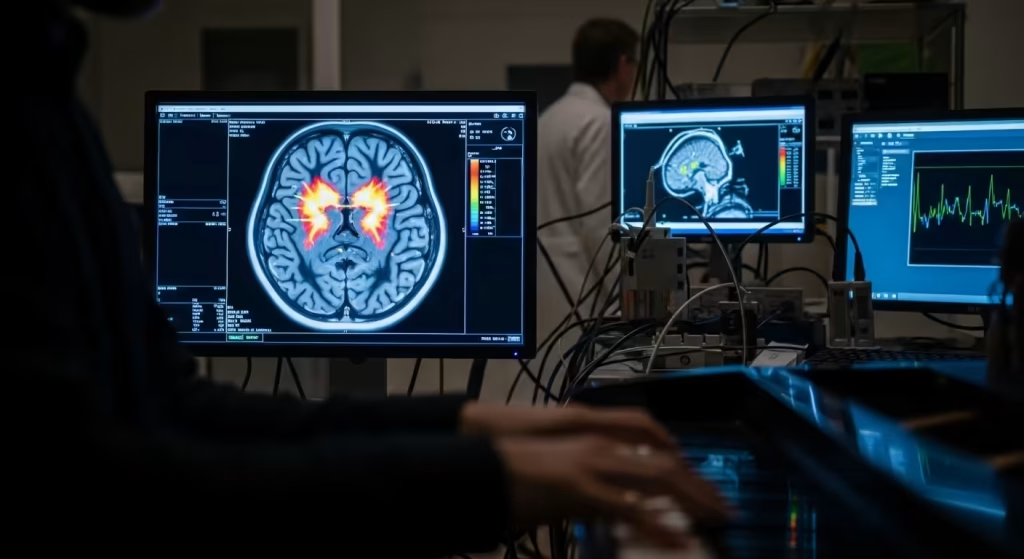
Musicians have stronger links between brain sides. These links help memory, attention, and problem-solving.
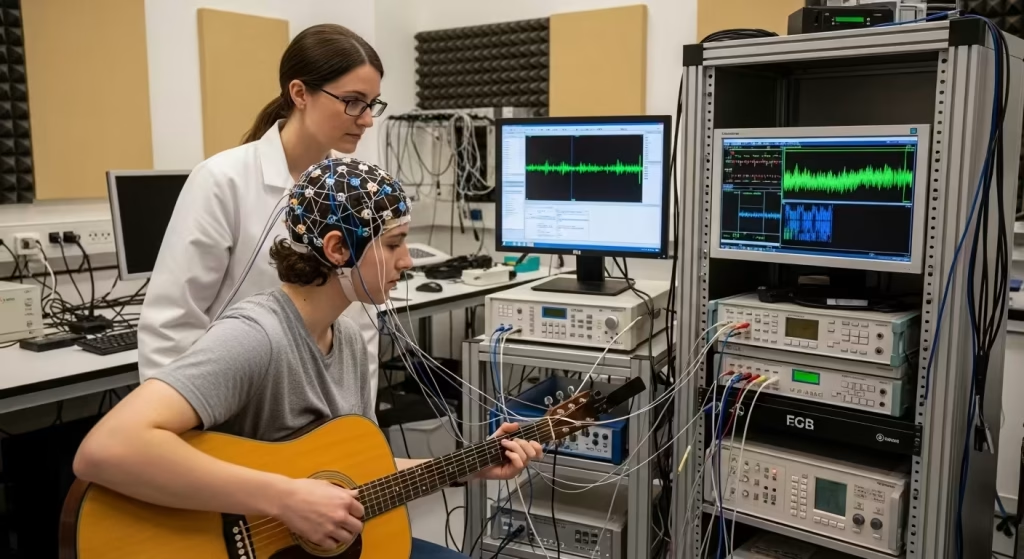
Playing an instrument uses many brain areas. Motor cortex moves your fingers. Auditory cortex hears the sounds. Visual cortex reads the notes. Prefrontal cortex plans and decides.
This full-brain work boosts thinking skills.
The brain grows with practice, like a muscle. Scales and new songs build neural pathways. These pathways get faster and stronger over time.
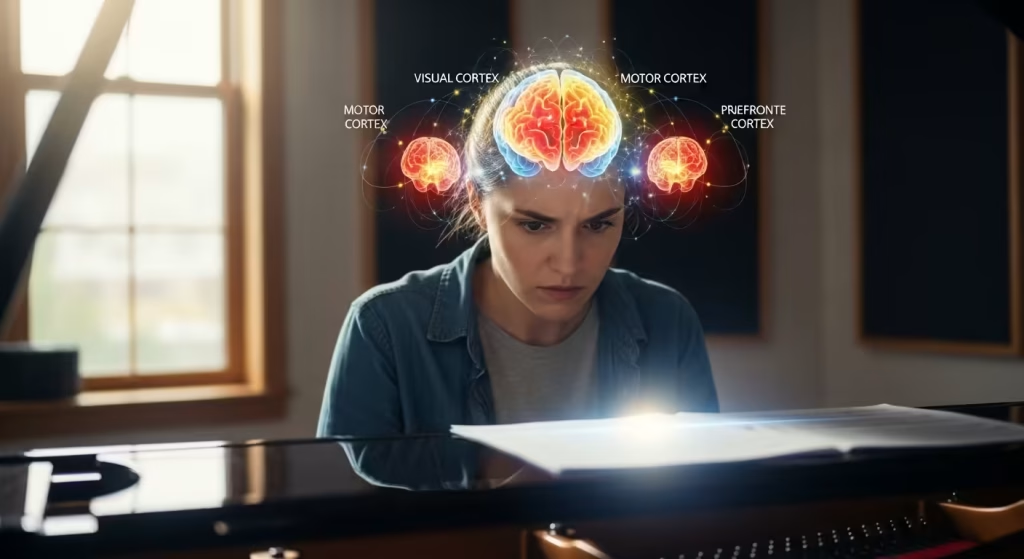
Neuroplasticity means the brain can change. Music training increases this change at any age. Kids improve language and math. Adults improve working memory and speed. Seniors slow cognitive decline.
Research shows music sharpens sound processing. Musicians hear speech better in noise. Their brains respond faster to complex sounds. These benefits help in school and daily life.
What Cognitive Functions Improve with Music Training?
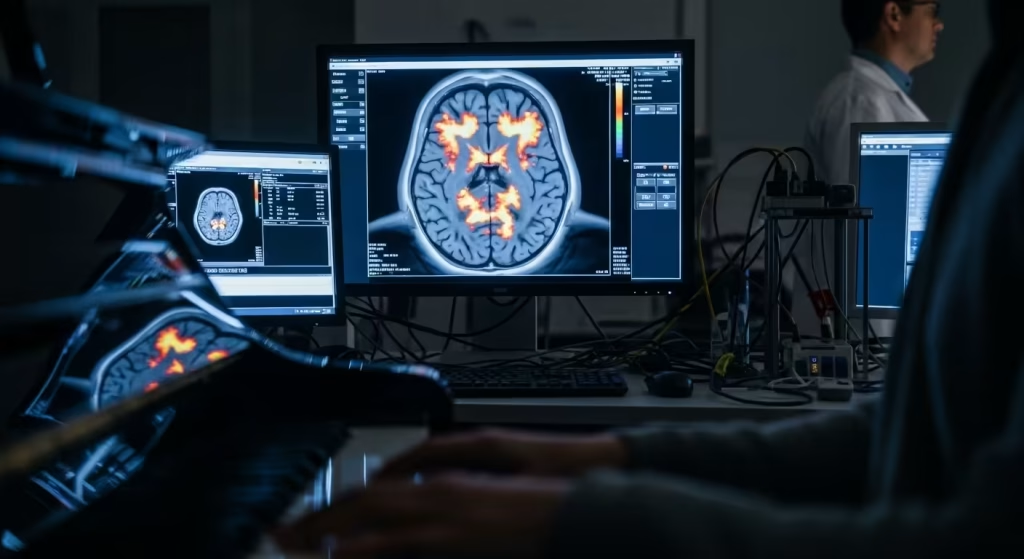
Music education strengthens several key brain functions:
Memory enhancement happens through repetition and recall. Musicians memorize notes, rhythms, and finger positions. This constant memorization exercise strengthens both working memory and long-term retention. Students who play instruments score higher on memory tests compared to non-musicians.
Regular practice improves focus. Playing needs steady attention. You read music and watch your hands. You listen to pitch and fix timing. This multitasking trains your brain to stay focused.
Executive function means planning and self-control. Music practice builds these skills. You plan sessions, set goals, and track progress. Kids who study music often have stronger executive skills.
Music builds coordination. Piano and violin improve fine motor skills. Drums and big instruments build gross motor skills. Better coordination helps with sports, writing, and daily tasks.
Music sharpens hearing skills. Musicians notice tiny changes in pitch, tone, and rhythm. This helps with language, reading, and understanding voices.
Both kids and adults benefit from music. Kids’ brains are very flexible. Early lessons can shape the brain for life. Starting before age seven can strengthen brain connections. This can boost reading and math. Music also teaches patience, discipline, and social skills.
Adults bring strong motivation and self-awareness. Adult learners improve mental flexibility and multitasking. Music also reduces stress and lifts mood. It is never too late to start. Seniors who learn music improve memory and thinking speed. Quality of life gets better. Consistency matters more than age.
Piano and Keyboard Instruments – Best for Executive Function and Memory
Piano stands out as one of the most researched instruments for brain development. The layout is visual and logical. Each key produces a clear, immediate sound. This direct feedback helps learners understand cause and effect quickly.
Piano uses both hands independently. Left hand plays bass. Right hand plays melody. This builds two-hand coordination. It strengthens the corpus callosum. That bridge links left and right brain. Better linking improves thinking and creativity.
Piano activates many brain areas. Reading notes uses vision. Moving fingers uses motor planning. Listening uses hearing. Memorizing and planning use executive function.
Studies show piano boosts spatial-temporal reasoning. This helps with math, science, and engineering. Kids who study piano for two years often score higher on tests.
Pressing keys gives instant feedback. You feel the key. You hear the sound. Your brain learns action → result fast. With practice, this becomes automatic. Then you can focus on musical expression.
Cognitive Skills Piano Players Develop
Piano players develop enhanced executive function. Executive function includes working memory, flexible thinking, and self-control. These skills help you plan, organize, and complete tasks in all areas of life.
Working memory improves because pianists must remember multiple elements at once. You track which notes come next, which fingers to use, and how loud or soft to play. This constant juggling strengthens your brain’s ability to hold and manipulate information.
Hand-eye coordination reaches high levels in piano players. Your eyes read ahead on the music while your hands play current notes. This coordination transfer improves driving, sports performance, and fine motor tasks like typing.
Piano practice builds multitasking. You read music, move both hands, use pedals, and listen at once. This trains your brain to handle many things together.
Piano is a great first instrument for kids. The keyboard is clear: low notes left, high notes right. You press a key and get sound right away. No bow or breath control needed at the start. Kids can focus on notes, rhythm, and reading.
Piano teaches music theory fast. It shows melody and harmony on one instrument. Skills transfer well to other instruments later. Most kids can start at 5–6 years old. Smaller keyboards help tiny hands. What matters most: hand size and sitting still for short practice.
Keyboard Alternatives and Their Benefits
Other keyboard instruments offer similar brain benefits with unique features:
Organ requires foot pedals in addition to hand coordination. This adds another layer of complexity, engaging even more brain regions. Church organs and electronic organs both provide this multi-limb challenge.
Synthesizers allow sound exploration and creativity. Modern synthesizers offer hundreds of sounds and effects. This encourages experimentation and creative thinking alongside traditional keyboard skills.
Accordions combine keyboard skills with breath-like bellows control. The push-pull motion adds a physical element. Accordion music connects to cultural traditions, providing social and emotional benefits.
Digital keyboards offer affordable entry points. Many include built-in lessons, recording features, and different instrument sounds. These features keep practice interesting for beginners.
Music Lessons in San Diego with K&M Music School
1 Expert Music Lessons
We offer Piano, Violin, Cello, Guitar, Ukulele, Saxophone, Bassoon, Harp, Voice, and Toddler group lessons for students of all ages and skill levels.
2 Why Choose Us?
- 🎶 Boosts focus and self-discipline
- 🎵 Strengthens cognitive skills
- 🎼 Enhances cultural understanding
- 🎤 Builds confidence through recitals
3 We Welcome Adults Too!
Woodwind and Brass Instruments – Boosting Focus and Breath Control
Wind instruments create unique brain challenges through breath control and embouchure (mouth positioning). Playing flute, clarinet, saxophone, trumpet, or trombone requires conscious regulation of breathing. This breath awareness has surprising cognitive benefits.
Breath control improves focus. Slow, steady breathing calms your body. It lowers stress. You feel more relaxed. Wind players learn efficient breathing. This calm can last after practice.
How wind instruments challenge the brain: You coordinate breath, fingers, and listening. You keep steady air while changing notes. This takes strong concentration. Embouchure trains small face muscles. Brass uses strong lips. Woodwinds use precise tongue moves. These skills need exact brain-to-muscle control. Pitch depends on your ear and breath. You adjust notes with lips and air speed. This builds sharp listening and sound processing.
Reading music while managing breath creates a unique multitasking challenge. You must read ahead to plan breaths at appropriate moments. This forward planning strengthens executive function and working memory.
Cognitive Benefits of Woodwind Instruments
Each woodwind instrument offers specific advantages:
Flute players develop excellent posture and breath support. Holding the flute requires balanced body positioning. The sideways embouchure strengthens unilateral muscle control. Flute music often includes fast passages, improving finger dexterity and processing speed.
Clarinet demands coordination between hands positioned far apart on the instrument. The thumb and fingers work independently. Reed control requires subtle pressure adjustments. These factors combine to enhance motor planning and fine motor control.
Saxophone challenges players with complex fingerings and dynamic breath control. Jazz saxophone improvisation strengthens creative thinking and musical decision-making. The social nature of jazz and band settings adds emotional and social brain benefits.
Oboe requires extreme breath control due to its small reed opening. Oboists develop exceptional focus and patience. The difficult technique builds perseverance and problem-solving skills as players work through challenges.
Brass instruments help the brain. Trumpet needs strong breath and lips. This builds fine muscle control. Trumpet players memorize hard solos. That strengthens memory. Trombone uses a slide. You learn exact slide positions. That trains spatial reasoning. Sliding uses different brain pathways. It adds variety to motor skills.
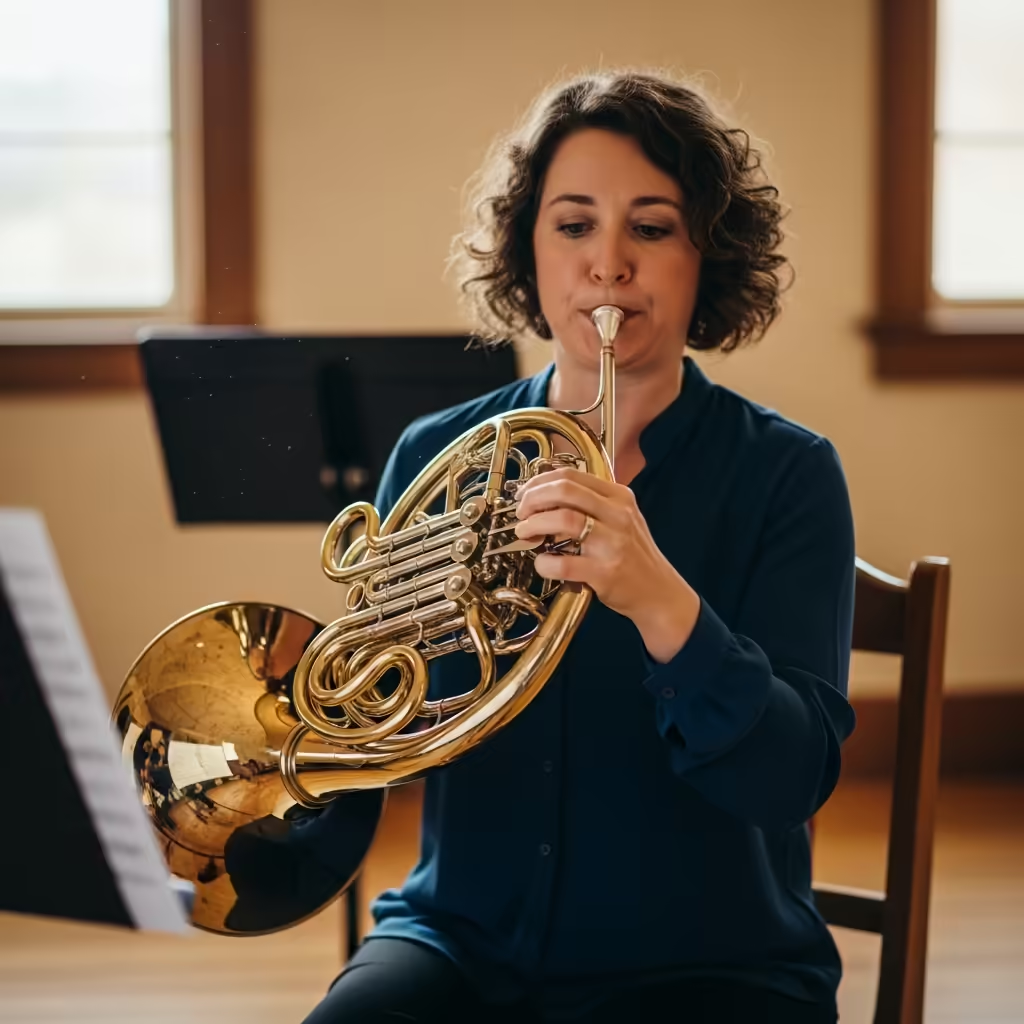
French Horn challenges musicians with complex fingerings and difficult tuning. The horn is considered one of the hardest brass instruments to master. This difficulty builds resilience and determination alongside musical skills.
Better focus and sustained attention emerge from wind instrument practice. You can’t pause mid-phrase without disrupting the music. This requirement trains continuous attention span. Students who play wind instruments often show improved concentration in academic settings.
Wind instruments fit students who like active music. Breathing makes playing feel calm. Kids with attention issues often do well. Wind playing demands strong focus.
You need enough lung power. Tooth position matters. Most teachers wait for permanent front teeth. That is usually age 8–9. Some kids can start earlier with special gear.
Respiratory health actually improves with wind instrument practice. Players develop stronger lungs and better breath control. This can benefit overall fitness and stress management.
Percussion and Drums – Strengthening Timing and Problem-Solving
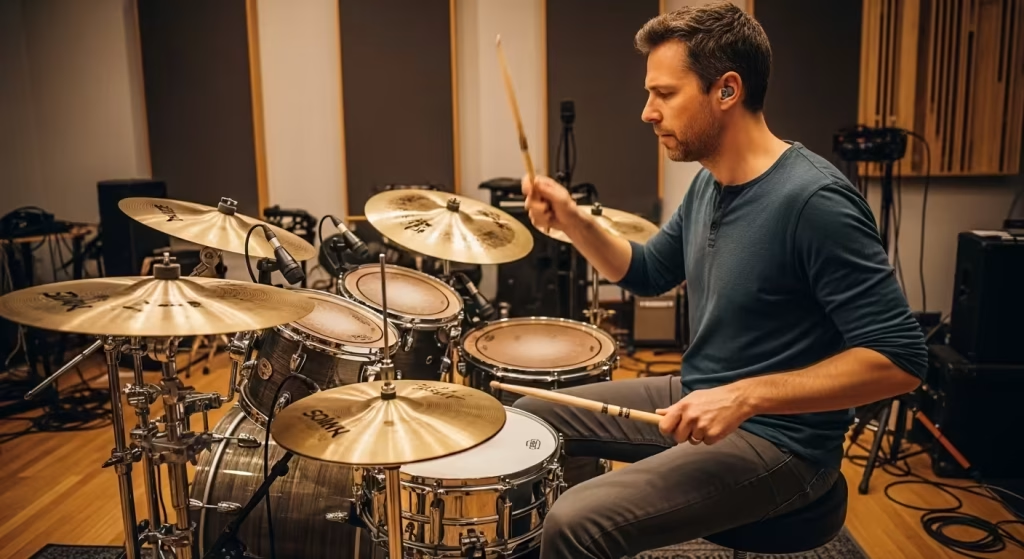
Drums and percussion instruments engage the brain differently than melodic instruments. Rhythm, timing, and coordination take center stage. Drummers often develop unique cognitive strengths related to mathematical thinking and pattern recognition.
Playing drums requires four-limb independence. Your right hand plays one rhythm on the hi-hat cymbal. Your left hand plays another on the snare drum. Your right foot keeps time on the bass drum. Your left foot controls the hi-hat pedal. This complex coordination creates intricate neural pathways.
What Makes Drums Unique for Brain Health?
Drumming activates multiple brain regions intensely. The cerebellum, responsible for coordination and timing, shows high activity. The motor cortex engages all four limbs. The auditory cortex processes rhythmic patterns. The frontal lobe plans and sequences drum patterns.
Physical movement in drumming provides stress relief. The act of hitting drums releases physical tension. Many people find drumming therapeutic and emotionally cathartic. This emotional release supports mental health alongside cognitive benefits.
Timing and rhythm engage mathematical brain regions. Drummers subdivide beats, count complex rhythms, and maintain steady tempo. These mathematical processes strengthen quantitative reasoning skills.
Improvisation in drumming strengthens creative thinking. Jazz drummers and world music percussionists often improvise within structured rhythms. This balance of structure and creativity exercises both analytical and creative brain functions.
Cognitive Skills Drummers Excel At
Research shows drummers develop superior timing abilities. Their internal sense of rhythm becomes highly refined. This timing precision helps with athletic performance, dance, and even speech rhythm.
Coordination skills in drummers exceed those of most other musicians. Four-limb independence requires intense practice and brain plasticity. These coordination benefits transfer to other physical activities and fine motor tasks.
Pattern recognition improves through rhythmic training. Drummers identify and recreate complex rhythmic patterns. This skill relates to mathematical thinking, coding, and problem-solving in various fields.
Concentration under pressure strengthens through performance. Drummers must maintain steady time even when other musicians make mistakes. This reliability requires intense focus and confidence. These skills translate to leadership and stress management in non-musical situations.
Types of Percussion Instruments and Their Benefits
Percussion includes diverse instruments beyond drum kits:
Drum kits provide the full-body coordination challenge described above. Rock, jazz, and pop styles offer different rhythmic vocabularies. Electronic drums provide quiet practice options for home learners.
Hand drums like djembe, congas, and bongos develop fine motor control in hands and fingers. Different hand positions create different tones. This variety builds tactile awareness and listening skills. Hand drums also connect to cultural traditions, providing social and emotional context.
Mallet percussion instruments include xylophone, marimba, vibraphone, and glockenspiel. These melodic percussion instruments combine rhythmic skills with pitch reading. Players develop both musical elements simultaneously, offering cognitive variety.
Auxiliary percussion includes tambourine, triangle, shakers, and countless specialized instruments. Each requires unique technique and timing. Orchestral percussionists who play multiple instruments develop exceptional adaptability and quick learning skills.
Are Drums Good for Children with ADHD?
Drumming can particularly benefit children with attention challenges. The physical outlet provides a channel for excess energy. The structure of rhythmic patterns creates predictable frameworks that many children find comforting.
Drumming helps kids with ADHD focus better. A study from the University of Chichester showed this. Regular practice builds routine and discipline. Hitting a drum gives instant feedback. Kids see cause and effect right away.
Repetition improves focus. When kids see progress, they feel motivated. More motivation leads to steadier practice. Steady practice improves focus even more. Music therapy often uses drumming for attention and behavior support.
String Instruments – Building Independent Hand Coordination
String instruments like violin, viola, cello, guitar, and bass require sophisticated hand independence. Each hand performs different complex tasks. This bilateral coordination strengthens brain connections and cognitive flexibility.
Violin family instruments demand extreme precision. Without frets marking finger positions, players must develop perfect pitch memory. This challenge accelerates auditory processing development.
Violin strongly trains the brain. It needs very fine finger control. Your left fingers press exact spots. Your right arm keeps smooth bow speed and pressure.
Your ear gets sharp fast. You adjust finger position to stay in tune. This builds pitch accuracy. It also helps language and clear speech.
Posture improves with practice. You stand balanced and tall. Your left arm stays lifted. Your bow arm moves with control. This builds body awareness and proprioception.
Mathematical precision in finger placement relates to fractional thinking. String positions correspond to mathematical ratios. Players develop intuitive understanding of these relationships, supporting mathematical reasoning.
Guitar Benefits for Cognitive Health
Guitar offers accessible entry to string instrument benefits. The fretted fingerboard makes it easier to play in tune initially. This accessibility encourages beginners and builds confidence quickly.
Acoustic versus electric guitars provide different learning experiences. Acoustic guitar requires more finger strength, building hand muscles. Electric guitar often involves amplifier technology, adding technical learning elements. Both styles develop core guitar skills and cognitive benefits.
Chord patterns strengthen pattern recognition. Guitar players learn chord shapes that transfer across the fretboard. This transferable knowledge relates to abstract thinking and problem-solving strategies.
Fingerpicking develops hand independence similar to piano. The thumb often keeps a steady bass line while fingers play melody. This coordination challenges both brain hemispheres to work together.
Cello, Bass, and Other String Instruments
Cello combines string technique with physical engagement. The seated position and bow arm movements provide proprioceptive feedback. Cello music spans from bass to tenor range, developing full-spectrum listening skills.
Upright bass provides rhythm and harmonic foundation in ensembles. Bass players develop strong understanding of musical structure. This foundational thinking relates to organizational skills and systems thinking.
Viola teaches middle-voice listening. Viola parts often fill harmonic gaps between violin and cello. This requires different listening focus than melody instruments, building auditory flexibility.
Harp demands complex coordination between pedals and both hands. Pedals change note pitches while hands pluck strings. This three-way coordination creates unique neural challenges and cognitive benefits.
Concentration and Focus Benefits
String instruments demand sustained attention throughout practice. Small adjustments in finger position or bow angle dramatically change sound quality. This sensitivity requires careful listening and constant micro-adjustments.
Practice builds patience naturally. Progress on string instruments comes gradually. Students learn to persist through challenges and celebrate small improvements. This patience transfers to academic work and life challenges.
Long-term commitment to string instruments strengthens discipline. Most string players study for years before reaching advanced levels. This extended timeline teaches goal-setting and delayed gratification.
Singing and Choir – Most Powerful for Brain and Social Connection
Singing stands out as the most accessible instrument. You carry your instrument everywhere. No purchase required. No maintenance needed. Just your voice and willingness to use it.
Voice training provides full-body engagement. Proper singing technique involves breath support, core muscles, posture, and facial muscles. This whole-body involvement creates comprehensive brain-body connections.
Singing is easy to start. You don’t need any equipment. Anyone can try it, no matter the budget.
Singing uses your whole body. You control breath, posture, and sound together. Deep belly breathing activates the vagus nerve. This helps you feel calm and lowers stress. That’s why singing can be very therapeutic.
Language processing and memory activate intensely during singing. Remembering lyrics exercises verbal memory. Learning songs in foreign languages accelerates language acquisition. The combination of words and melody creates powerful memory associations.
Emotional expression through singing supports emotional regulation. Music allows safe expression of feelings. Singing sad songs can process sadness. Joyful songs lift mood. This emotional outlet supports mental health.
Cognitive Benefits of Voice Training
Memory enhancement through vocal training is substantial. Opera singers memorize hours of music and text. Choral singers learn dozens of songs per season. This constant memorization strengthens memory systems used for all learning.
Breath control in singing directly improves focus and calmness. Controlled breathing activates the parasympathetic nervous system. This physiological response reduces anxiety and increases mental clarity. Singers often report feeling calm and centered after practice.
Pitch matching develops auditory processing. Learning to match pitches accurately trains fine discrimination in the auditory cortex. This skill helps with tone recognition in language and improved listening in conversations.
Confidence building through performance transforms self-perception. Successfully performing songs creates achievement feelings. This success builds self-esteem and reduces performance anxiety. These psychological benefits support overall mental health.
Choir Participation and Social Brain Development
Lorem ipsum dolor sit amet, consectetur adipiscing elit. Ut elit tellus, luctus nec ullamcorper mattis, pulvinar dapibus leo.
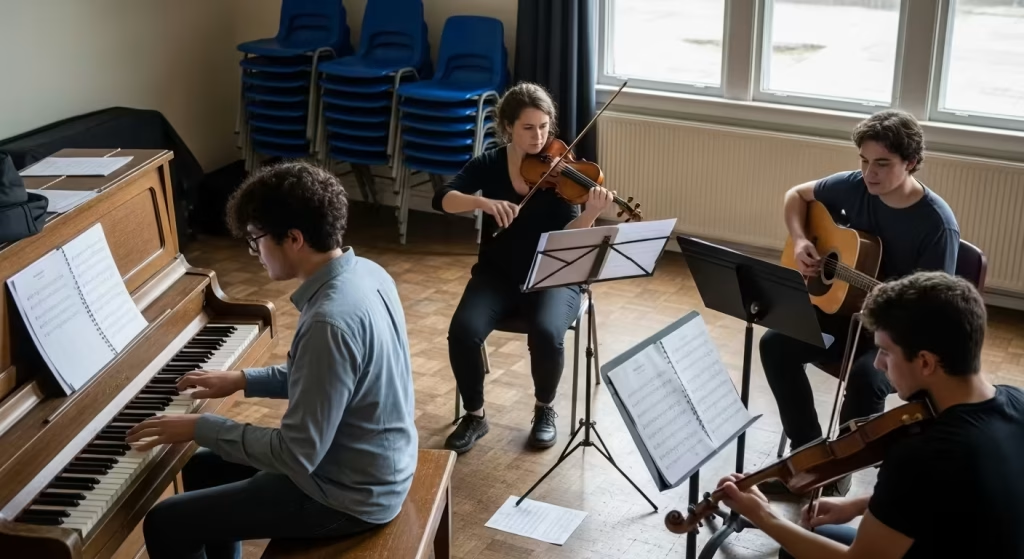
Singing in a choir creates unique cognitive challenges. You must listen to your own voice while simultaneously hearing other parts. This dual-focus listening strengthens selective attention abilities.
Social connection in choirs reduces cognitive decline. Studies show that social engagement protects brain health as we age. Choir members form supportive communities, providing social connection alongside musical benefits.
Emotional well-being and sense of belonging emerge from choir participation. Singing together creates bonding through shared experience. This social bonding releases oxytocin, sometimes called the “bonding hormone.” These emotional connections support mental health.
Teamwork and cooperation skills develop naturally in choirs. Each voice part contributes to the whole sound. This interdependence teaches collaboration and mutual support. These social skills transfer to work and family relationships.
Singing for Adults and Seniors
Low barrier to entry makes singing ideal for adult beginners. You don’t need to purchase expensive equipment. Community choirs often welcome singers of all skill levels. This accessibility encourages adults who might feel intimidated by traditional instruments.
Community choirs provide social engagement opportunities. Many cities offer choirs for specific interests: gospel, jazz, classical, show tunes. Finding a choir that matches your musical taste increases enjoyment and commitment.
Singing may help protect the brain as we age. Regular singing helps keep thinking and memory sharp. You use memory, move your body, and connect with people. This mix gives strong, overall brain support.
Breathing exercises in singing support overall health. Controlled breathing improves lung capacity and oxygen circulation. These physical benefits complement the cognitive and emotional advantages of singing.
Which Instrument Is Best for the Brain? The Complete Comparison
Each instrument offers unique brain benefits. The “best” instrument depends on your personal goals, learning style, and interests. However, we can compare general cognitive advantages across instrument families.
Brain Benefits Comparison (Simple)
Memory: Piano, singing, guitar. You memorize notes, lyrics, and fingers. It strengthens recall.
Focus: Woodwinds, drums, violin. You must concentrate. Attention span grows.
Coordination: Drums, piano, violin. Hands move independently. The brain builds strong pathways.
Social skills: Choir, band instruments. You play with others. Teamwork and empathy improve.
Stress relief: Drums, singing, guitar. Movement and breathing calm the body. Anxiety drops.
Executive function: Piano, brass, strings. You plan and sequence steps. Organization improves.
Auditory processing: All instruments (especially strings). You hear tiny pitch changes. Listening gets sharper.
Creativity: Drums, guitar, piano. Improvising builds flexible thinking. Problem-solving improves.
Factors to Consider When Choosing an Instrument
Age and physical development matter for some instruments. Small children may struggle with instruments requiring large hand spans. However, many instruments come in child-sized versions. Guitar, violin, and cello all have fractional sizes for young learners.
Learning style influences instrument success. Visual learners often enjoy piano because of the clear keyboard layout. Kinesthetic learners might prefer drums or guitar. Auditory learners may gravitate toward singing or wind instruments.
Time commitment and practice requirements vary by instrument. Most instruments require daily practice for steady progress. However, some instruments like piano allow shorter, effective practice sessions. Others like string instruments benefit from longer sessions focused on tone quality.
Budget matters. Singing costs nothing to start. Keyboards and guitars have cheap beginner options. Oboe and bassoon are pricey, but schools often rent them.
Interest matters most. The best instrument is the one you’ll practice. If you love saxophone, that love will keep you going. Don’t pick only for “brain benefits.” Pick what you enjoy.
Social opportunities through band, orchestra, or choir add value. Playing with others creates accountability and enjoyment. Ensemble experience teaches collaboration and provides performance opportunities that solo instruments might lack.
Can You Learn Multiple Instruments for Maximum Brain Benefits?
Learning multiple instruments compounds cognitive benefits. Each instrument challenges the brain differently. Piano strengthens one set of skills. Drums develop another. Combining instruments creates well-rounded cognitive development.
Transfer of skills between instruments accelerates learning. Music theory knowledge transfers completely. Rhythm understanding moves across instruments. Even finger dexterity developed on guitar helps with piano practice.
When to add a second instrument depends on proficiency with the first. Most teachers recommend establishing solid foundation on one instrument before adding another. This usually means one to three years of consistent practice.
Avoiding overwhelm matters more than maximizing benefits. Two instruments practiced poorly provide less value than one instrument practiced well. Be realistic about time availability and energy levels before adding a second instrument.
You can start music at any age.
Kids get early advantages, but adults and seniors still gain a lot. The brain stays flexible for life. Adults can make new brain connections. Music training changes brain areas for movement and hearing.
Best for ages 3–7: piano or keyboard. Keys are easy to see and understand. You get sound right away, so it’s fun to try things. Small keyboards fit little hands.
Percussion is great for young kids, too. Drums, shakers, and xylophones are simple to play. Kids can move and keep a beat. Rhythm practice also helps math skills.
Recorder introduces breath control and finger coordination in an affordable package. Many elementary schools teach recorder as a gateway to band instruments. The simple fingering system allows quick progress, building confidence.
Ukulele fits small hands perfectly. The four strings are easier to manage than six-string guitar. The soft nylon strings don’t hurt fingers. Ukulele allows children to play songs quickly, maintaining motivation.
Optimal Choices for School-Age Children (Ages 8-14)
School-age children can begin any instrument. This age range offers opportunities for band and orchestra participation. Group learning provides social benefits alongside cognitive development.
Band instruments often start at age 9–10. Clarinet, trumpet, and saxophone are common. Schools offer rentals, so it’s affordable. Band teaches teamwork. Band builds friendships.
Orchestra instruments can start earlier. Violin, viola, cello, and bass often start at 7–8. Group classes make learning fun. Orchestra builds discipline. Orchestra builds commitment.
School years are great for music. The brain is very flexible then. Music and academics help each other. Middle school music boosts executive function. Students often see better grades.
Building long-term skills and discipline during these years creates lasting benefits. Students who persist through early challenges develop resilience. They learn that consistent effort produces results. These life lessons extend far beyond music.
Learning an Instrument as an Adult
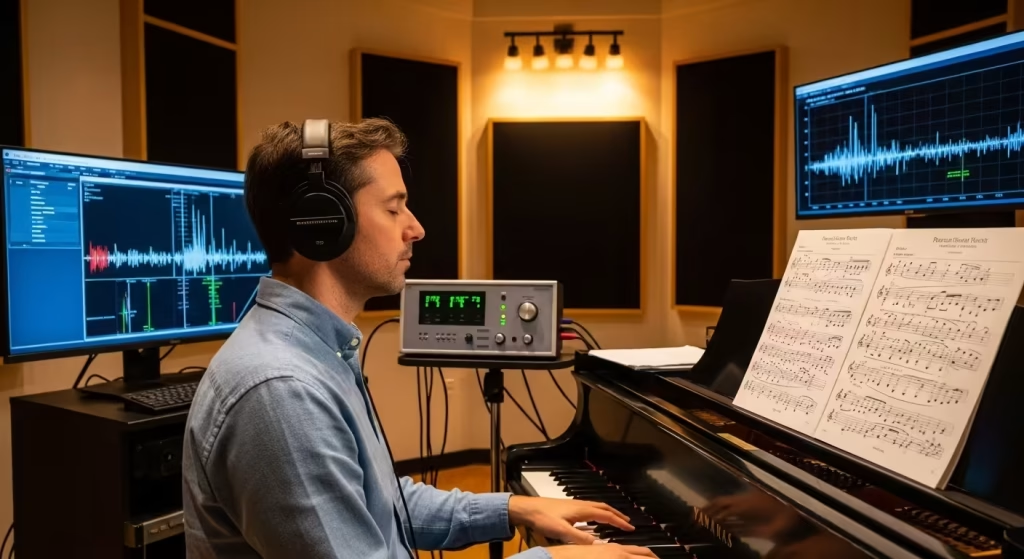
Adult learners bring unique advantages to music study. You understand your learning style. You can articulate questions clearly. You have motivation based on personal choice rather than parental pressure.
Motivation in Adult Learners
Adults choose music. This boosts steady practice. They value small wins. They don’t expect overnight results.
Cognitive Advantages
Adults learn theory fast. Reading notes makes sense. New ideas link to what they know. This speeds up learning.
Early Challenges
The brain knows, but fingers lag. That’s normal at first. Patience helps. Practice closes the gap.
Good Starter Instruments
Try piano, guitar, ukulele, or voice. You can learn with online lessons. Easy to practice at home. Simple songs keep you motivated.
Music for Seniors and Brain Health
Music helps the aging brain. Seniors who learn piano improve memory. Attention and speed get better, too. Gains can show in about six months.
Preventing cognitive decline through music offers hope and empowerment. Unlike many brain health strategies, music is enjoyable and intrinsically rewarding. Seniors stick with music practice because it’s fun, not just because it’s healthy.
Never too late to start learning applies especially to music. Many successful musicians began after retirement. The goal isn’t professional performance. The goal is brain engagement, social connection, and personal fulfillment.
Adapted instruments for physical limitations make music accessible. Keyboards require less finger strength than acoustic piano. Ukulele and smaller guitars accommodate limited hand mobility. Auto-accompaniment features on keyboards create full band sounds with simple playing.
Community music programs for older adults exist in most cities. Senior centers often host music groups. Community choirs welcome older singers. These programs provide social engagement alongside musical learning, maximizing brain and emotional benefits.
Beyond Cognitive Benefits – Emotional and Mental Health Advantages
Music helps more than grades. It improves mood. It boosts confidence. It builds friendships. These gains matter as much as memory and focus.
The holistic benefits of music make it unique among brain-training activities. Crossword puzzles exercise memory but don’t provide emotional expression. Sports build physical health but may not engage auditory processing. Music combines cognitive, emotional, physical, and social elements.
How Music Education Builds Confidence and Self-Esteem
Mastery through practice creates genuine self-confidence. Each song learned and skill acquired provides evidence of capability. This evidence-based confidence differs from empty praise. Students know they’ve achieved something real.
Performance opportunities, even informal ones, build courage. Playing for family, friends, or music teachers requires vulnerability. Successfully managing performance anxiety builds emotional resilience that transfers to other challenging situations.
Music lets you express yourself. It shares feelings that words can’t. It gives a safe way to feel and release emotions. It supports mental health. It helps people who find talking about feelings hard.
Overcoming challenges builds resilience. Every musician faces difficult passages, frustrating plateaus, and disappointing performances. Working through these challenges teaches persistence and problem-solving. These skills apply to academic, career, and relationship challenges.
Music Practice and Stress Reduction
Mindfulness through focused practice creates meditation-like states. When fully absorbed in music, worries fade. This mindful focus provides mental rest from daily stressors. The repetitive nature of practice can be calming and centering.
Emotional regulation through musical expression provides healthy coping mechanisms. Feeling angry? Play aggressive music. Feeling sad? Express it through melancholy songs. This emotional processing prevents bottling up feelings.
Physical stress release, especially in percussion and singing, discharges physical tension. Drumming allows vigorous movement. Singing releases breath-held tension. These physical releases complement emotional processing.
Music as therapy for anxiety and depression shows strong research support. Music therapy programs help people manage mental health conditions. Even informal music practice provides therapeutic benefits, reducing symptoms and improving mood.
Social Connection Through Music
Ensemble playing builds teamwork automatically. You must listen to others while maintaining your own part. You adjust volume and timing to blend with the group. These collaborative skills transfer to work teams and family dynamics.
Music communities create lifelong friendships. People who play music together form strong bonds. These relationships often endure for decades. Band friends from high school reunite. Adult choir members socialize outside rehearsals.
Cultural connection through diverse musical traditions enriches understanding. Learning music from different cultures opens windows into those cultures. This cultural awareness builds empathy and global perspective.
Family bonding through shared musical experiences creates lasting memories. Families who play music together have shared language and activities. Parent-child duets, family sing-alongs, and concerts attended together strengthen family relationships.
How to Get Started – Practical Tips for Choosing Your Instrument
Starting your musical journey requires some planning but doesn’t need to be overwhelming. These practical steps will help you choose an instrument and begin learning effectively.
Questions to Ask Before Choosing an Instrument
What are your goals? Are you learning for fun, cognitive benefits, or performance aspirations? Clear goals guide instrument choice and practice approach. Casual learners might choose accessible instruments. Serious students might invest in higher quality instruments and private lessons.
How much time can you dedicate to practice? Realistic time assessment prevents frustration. Most instruments need 20-30 minutes of daily practice for steady progress. If you can only practice three times weekly, choose an instrument that fits that schedule.
What’s your budget? Consider instrument cost, lessons, accessories, and maintenance. Some instruments like singing require no purchase. Others like violin need regular bow maintenance. Budget honestly to avoid financial stress.
Do you prefer solo or group learning? Some people thrive in group classes with peer support. Others prefer individual attention in private lessons. Your preference affects both instrument choice and learning environment.
What type of music excites you? Your musical taste should guide instrument choice. Love classical music? Consider piano or violin. Drawn to rock? Guitar or drums might suit you. Jazz enthusiast? Saxophone or piano opens doors to jazz.
Finding Quality Instruction
Private lessons provide personalized attention and customized learning pace. Teachers identify specific challenges and create targeted exercises. Private lessons cost more but often accelerate progress.
Group classes offer social learning and affordable pricing. Many music schools offer group lessons for beginners. The shared experience motivates some learners more than solo practice.
Online learning platforms like YouTube, Simply Piano, and Yousician provide flexible, affordable options. Technology has revolutionized music education access. Apps provide instant feedback on pitch and rhythm. However, online learning works best with some self-direction.
Self-teaching is possible for some instruments and some learners. Guitar, ukulele, and piano have extensive self-teaching resources. Self-teaching requires discipline and ability to identify and correct mistakes.
Setting Up for Success
Creating a practice routine establishes consistency. Practice at the same time daily when possible. Morning practice energizes some people. Evening practice relaxes others. Find what works for your schedule and stick with it.
Setting realistic goals prevents discouragement. Break large goals into small milestones. Instead of “learn piano,” try “play one simple song” as your first goal. Celebrate each milestone before setting the next one.
Tracking progress provides motivation. Record yourself playing the same piece monthly. The improvement over time encourages continued effort. Keep a practice journal noting what you worked on and small victories.
Overcoming common beginner frustrations requires perspective. Everyone sounds rough at first. Fingers don’t cooperate initially. Notes don’t come quickly. These struggles are universal. Persistence through the awkward beginner phase leads to enjoyment.
Budget-Friendly Ways to Start
Renting versus buying makes sense for beginners. Renting allows you to try an instrument before major investment. School music programs often have rental partnerships with local music stores. Rent-to-own programs apply rental payments toward eventual purchase.
Free community programs exist in many areas. Public libraries sometimes offer music classes. Community centers host music programs. Places of worship often have music ministries welcoming new members. These free options provide both instruction and community.
Library instrument lending programs are growing nationwide. Some libraries lend ukuleles, keyboards, and other instruments just like books. This allows risk-free trial before purchasing.
Used instruments and starter packages save money. Used instruments from reputable dealers often sound as good as new at half the price. Starter packages bundle instrument, case, and essential accessories at reasonable prices.
Frequently Asked Questions
Which instrument is easiest for brain growth?
Piano is simple to see and play. Singing is most accessible. No gear needed. The easiest is the one you’ll practice.
Can music stop Alzheimer’s?
Music lowers dementia risk. It helps, but it’s not a cure. It supports long-term brain health.
How fast do brain benefits show up?
Changes can start in weeks. Adults see memory gains in a few months. More practice = more benefits over years.
Is it better to start as a kid?
Starting early helps, but not required. Adults still gain a lot. The best time to start is now.
Which instrument improves memory the most?
Piano, singing, and strings build strong memory. Pianists memorize complex pieces with both hands. Singers memorize lyrics and tunes. Playing from memory trains your brain. This practice strengthens memory for all learning.
Can you get brain benefits from learning music online?
Yes, online music learning provides brain benefits similar to in-person instruction. The cognitive challenge comes from the learning itself, not the delivery method. Online lessons offer flexibility and affordability. However, beginners may benefit from occasional in-person instruction to ensure proper technique.
What if I don’t have natural musical talent?
Brain benefits come from the learning process, not from talent level. Struggling and practicing create neural changes. Effortless performance doesn’t challenge the brain as much as working through difficulties. Everyone can learn music sufficiently to gain cognitive benefits regardless of natural ability.
How much practice is needed to see cognitive benefits?
Research suggests 20-30 minutes of daily practice provides optimal brain benefits. However, even shorter practice sessions help. Consistency matters more than duration. Three 15-minute practice sessions weekly provide more benefit than one 90-minute weekend session.
Conclusion
Learning an instrument boosts your brain. The benefits go beyond music.
Piano builds planning and memory. Drums improve timing and coordination. Singing is easy to start and builds connection. Any instrument can help your brain.
Studies show music strengthens memory and focus. It helps thinking at any age. Pick an instrument you like. Make it fit your life. Practice regularly. Even short, steady practice changes your brain.
The best instrument depends on your goals. Piano trains both hands and thinking. Singing is easy to start and social. Drums build timing and problem-solving. Strings build focus and fine motor skills. Winds improve breath control and attention.
The best choice is the one you’ll practice. Pick a sound you love. Use good lessons or solid apps. Set small goals. Celebrate small wins.
Check local schools, community programs, or online classes. This works for kids and adults. Music boosts your brain and mood. It can bring friends and the community.
Start today. Play a little every day. Your brain and future self will thank you.
Katherine Dvoskin, Co-Founder of K&M Music School
She is the co-founder of K&M Music School in San Diego, is a passionate music educator with over 25 years of experience. She offers expert piano lessons in San Diego. At K&M Music School, we teach Piano, Violin, Cello, Saxophone, Bassoon, Harp, Voice, and Toddler group lessons. Katherine's blog shares insights on music education, covering topics from toddler music group lessons to adult music lessons. Whether you're seeking private music lessons or group music lessons for toddlers near you, welcome to K&M Music School.

