
Adult Music Lessons in San Diego: Learn, Play, and Perform

Katherine Dvoskin, Co-Founder of K&M Music School
I hope you enjoy this blog post! If you're interested in scheduling a free trial lesson, just click.
Author: Katherine Dvoskin | Co-Founder of K&M Music School
Published January 13th, 2025

Learn, play, perform! Adult music lessons in San Diego offer enrichment. This guide has tips for starting lessons.
Learning music is fun at any age. In San Diego, adults can take music lessons to learn new skills and be creative. Lessons also help you meet other musicians. This guide explains the benefits of music lessons and gives tips to get started.
| Why Take Lessons? | Getting Started | Accelerating Progress |
|---|---|---|
| Learn new skills | Set SMART goals | Come prepared with questions |
| Unleash creativity | Pick inspiring instruments | Embrace feedback |
| Meet fellow musicians | Find qualified teachers | Track improvements |
| Gain confidence | Commit to practice | Remain patient |
| Reduce stress | Prepare for the first lessons | Perform publicly |
Why Take Music Lessons as an Adult?
Taking music lessons allows adults to experience a variety of personal benefits:
- Learn a new skill and challenge your brain in a fun, engaging way. Mastering an instrument builds confidence while keeping your mind sharp.
- Playing music reduces stress and promotes relaxation. Lessons provide a regular time to unwind and recharge.
- Meet new people who share your musical interests. Lessons facilitate making friends.
- Achieve a sense of accomplishment as your musical abilities progress. Tracking improvement week-to-week is extremely motivating.
- Tap into your creativity and self-expression through the joy of making music.
- Once you build your skills, you can join local bands or music groups. This gives you a chance to perform. It’s a great way to show what you’ve learned.

Music Lessons in San Diego with K&M Music School
Expert Music Lessons
We offer Piano, Violin, Cello, Saxophone, Bassoon, Harp, Voice, and Toddler group lessons for students of all ages and skill levels.
Why Choose Us?
- 🎶 Boosts focus and self-discipline
- 🎵 Strengthens cognitive skills
- 🎼 Enhances cultural understanding
- 🎤 Builds confidence through recitals and performances
We Welcome Adults Too!
Book Your Free Lesson NowMusic lessons are fun and rewarding. They can also help your brain, mood, and health. Learning an instrument builds new connections in your brain. This can make your thinking and memory stronger. Adults can get many benefits from music.
- Playing music helps lower stress. It relaxes your body and mind. The more you practice, the calmer you can feel over time.
- It makes you feel happier. It boosts dopamine, a chemical in your brain that improves your mood. Music activates the brain’s reward system, making you feel good.
- Sticking to a practice schedule builds self-discipline. This can help you stay focused on other parts of life too. It makes you more responsible and organized.
- Making music with others helps you feel closer to them. It can sync your breathing and heartbeats. This creates strong friendships and bonds.
Music lessons for adults are fun and rewarding. They help you grow and enjoy new skills. Science also shows that learning music has many benefits.
Music Lessons Available in San Diego
San Diego has many options for adults who want to learn music. You can make your musical dreams come true. There’s something for everyone.
Private Lessons
One-on-one instruction tailored to your abilities, goals, and learning style. Teachers develop customized curriculum plans based on your strengths and areas for growth. You receive their undivided attention, ongoing feedback, and accountability during weekly lesson times.
- Flexible scheduling based on your availability
- Personalized pacing that meets your learning speed
- Convenient locations including in-home lessons
- An intimate learning environment makes asking questions comfortable
- A trial period is offered to assess teacher/student compatibility
Private lessons allow focusing completely on your musical path under an instructor’s guidance. They represent the fastest route to progress but come at a higher cost than alternatives.
Instruments commonly offered for adults include:
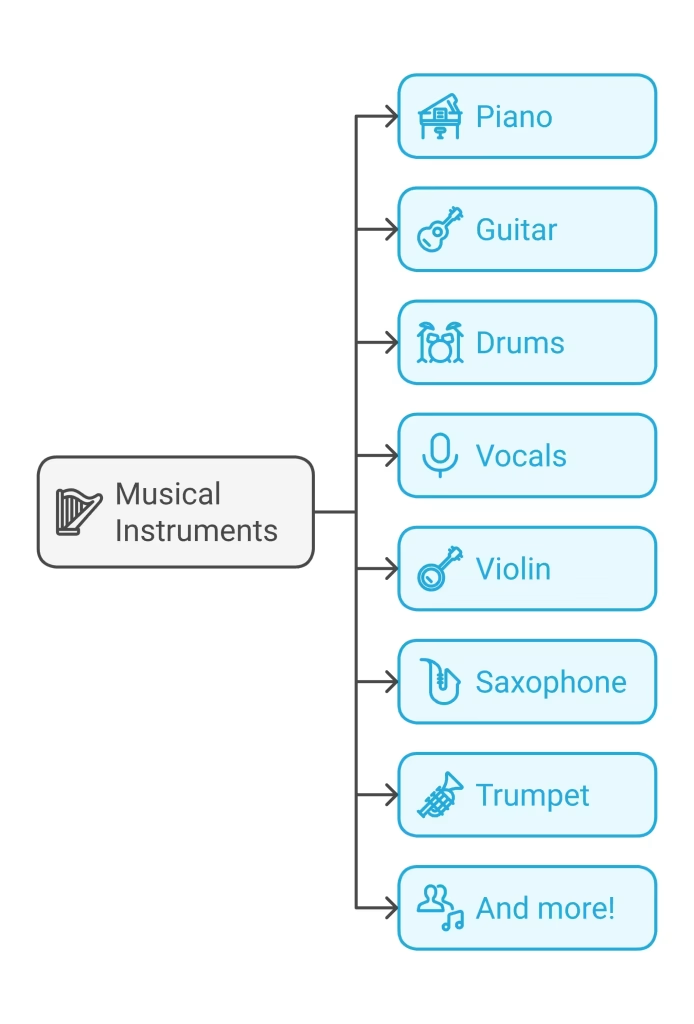
Group Lessons
San Diego has many options for adults who want to learn music. You can make your musical dreams come true. There’s something for everyone.
- Lower cost by sharing instructor time across multiple students
- Social atmosphere surrounded by like-minded adults
- Performance preparation through group ensemble work
- Musical variety with students learning different instruments
- Public performance opportunities to showcase improving skills
Group lessons move at a pace accommodating the spectrum of abilities. You compromise some personal customization for a built-in musical community.
Music Schools
For adults interested in a structured approach, music schools provide robust offerings including:
- Private and group lessons across instruments and ability levels
- Academic programs focused on musical theory, technique, history, and more
- Ensemble groups that prepare public performances
- Band workshops that group students by genre interests
- Recording studio access for experienced musicians
- Career development programs for aspiring professional musicians
Good music schools have great teachers. They offer lessons, music groups, and workshops. These schools create a strong music community. Some also have social events and partner with local places for performances.
Music lessons work well for adults who like learning on their own. They also help those who need more guidance. The structure helps you reach your music goals step by step.
Online Lessons
Online instructors offer lessons conducted via video chat. This convenient option connects you to talented teachers well outside your geographical area.
- Wider instructor selection since location doesn’t limit options
- Cost savings due to fewer overhead expenses for teachers
- Flexible scheduling by coordinating across time zones
- Accessibility for those with limited mobility/transportation
- Digital sheet music and playback facilitate remote learning
However, tradeoffs exist in losing in-person interactions including:
- Lack of real-time feedback on technique and posture
- Less personal rapport and accountability
- Audio/video lags can disrupt lessons
- Not ideal for group ensembles or performances
Online lessons are great for extra practice or if you can’t go in person. They help remote students keep learning. But local private or group lessons usually give a better learning experience.

Getting Started with Music Lessons
Ready to learn, play, and perform? Here is how to start:
Set Goals
Think about why you want to take music lessons. Setting goals helps you make good decisions later. It turns your plans into achievements.
Think about why you want to play music. Is it for fun, to learn new skills, to make friends, or to become a pro? Decide what matters most to you and rank your goals.
Set SMART goals to track what you want to achieve. These goals should be clear and have timelines. For example:
- Learn 3 new songs on the piano over summer break
- Perform live at an open mic night within 6 months
- Pass the grade 2 theory exam at the local music school by the end of the year
Whether modest or ambitious, articulate the objectives fueling your musical journey. Revisit and expand goals as your skills evolve.
Pick an Instrument
After setting your goals, pick an instrument you’re excited to play. Choose one that makes you feel happy and motivated. This will make learning more fun. Consider:
- Which instruments have always fascinated or inspired you?
- Do you adore certain musical genres that feature particular instruments?
- Have you tried learning an instrument before? Revisiting can build on that foundation.
- Are technique or music reading barriers with prior instruments discouraging you?
Pick an instrument that matches the music you love. You’ll learn faster if you enjoy what you play. Passion helps you keep practicing, even when it gets hard.
Stay open to new ideas! Unique instruments like the harp, oboe, or hang drum can be exciting. They give you fun, creative ways to explore music.
Find an Instructor
Seek out qualified instructors specialized in your instrument(s) of interest. Get recommendations from trusted sources like:
- Ask musically inclined friends and acquaintances for referrals
- Check NextDoor or neighborhood Facebook groups
- Search Yelp reviews for local music schools and instructors
- Check bulletins at nearby music shops and lesson studios
Check teacher websites and social media to see their experience and teaching style. Look at their education and performances. Try lessons with your top choices to see who fits best. Then, rank your goals to help you decide.
Ask Questions
Before signing up, ask about the rules and policies. Make sure they match your learning style and expectations. This helps you avoid surprises later.
- What is their lesson structure and teaching methodology?
- How are practice expectations communicated and accountability enforced?
- Does lesson pacing accommodate adult learners?
- What musical tastes/genres do they emphasize?
- Do they teach music theory alongside pieces?
- Are group classes or recitals offered? Any performance opportunities facilitated?
- What safety protocols are in place?
Clarify any ambiguities upfront. Confirm you feel comfortable asking questions and making occasional mistakes around them.

Commit to Practice
Finally, pledge to supplementary practice between lessons. Progress requires reinforcing new techniques and pieces routinely outside of weekly instruction.
- Set reminders to practice daily even if only for short intervals
- Designate a consistent time and space conducive to focus
- Invest in quality instruments and accessories
- Record practices to spot improvement areas
- Celebrate small wins like mastering a tricky chord change or passage
Regular practice cements muscle memory and confidence. Once the basics become second nature, the fun truly begins!
What to Expect in Your First Lessons
Once you dive in, here’s what to expect in your introductory music lessons:
Placement Evaluation
Teachers need to know your skill level, even if you’re a beginner. Tell them about any experience, even if it was short or a long time ago. Don’t feel nervous—you’re just starting out!
The assessment gauges abilities across:
- Physical dexterity: Finger, hand, and body flexibility and stamina
- Oral skills: Pitch matching, breathing, enunciation
- Music reading: Sight reading sheet music, grasping timing concepts
- Listening: Ability to recognize notes, intervals, and chords by ear
- Theory: Knowledge of notation, chord construction, key signatures
Results determine where to begin tailoring lesson plans rather than judging innate talent. Periodic reassessments track advancement.
Proper Technique Guidance
Instructors prioritize teaching proper instrumental techniques from the very first lesson. Proper form prevents short and long-term injury that can prematurely halt musical enjoyment.
You need to train your body to play instruments in new ways. It might feel strange at first. For example, drummers sometimes use an underhand grip with their strong hand.
Expect to focus on:
- Hand, arm, torso, and foot positioning
- Balancing tension and relaxation while playing
- Tips to avoid strain and fatigue like adjusting seat height
- When/how to properly warm up before playing
Mastering boring basics leads to successfully executing more exciting, complex pieces later!
Instrument Procurement Recommendations
Instructors offer specific recommendations on acquiring instruments for home practice. Major considerations include:
Cost
- Balance affordability with instrument quality that enables skills growth
- Consider using instruments to save money
- Some local shops rent instruments
Size
- Scale instrument size to your body proportions for comfort and playability
- Children-sized instruments won’t facilitate proper technique
Sound
- Test instrument sound projection, tone quality, and volume limits
- Digital options offer headphones but lack acoustic sound
Accessories
- Ensure you obtain all necessary accessories like drumsticks, extra strings, etc.
- Invest in quality accessories, not toy versions
Even if you’re excited, don’t buy an instrument too soon. Don’t rely only on online research or price. Ask your teacher for advice—it will help a lot.

Fundamentals First
Lessons start simply by practicing instrumental fundamentals like:
- Playing scales and arpeggios helps you remember note patterns. It builds muscle memory and shows how notes connect. This makes reading music easier. Finger exercises help your fingers move faster and more accurately. Drills make your fingers stronger and more flexible. Brass and woodwind players strengthen their mouth muscles to play more notes. This helps them reach higher and lower notes.
- Strumming patterns help guitarists play different rhythms. They pick and strum the strings in a set order. This makes songs sound more interesting. Drummers practice stick control to move their hands independently. This helps them play different patterns with each hand.
- Singers use solfège syllables to learn the sounds of notes in a scale. These basics may seem simple, but they are very important. Take your time to master the basics. They are the building blocks for future skills. Rushing can make it harder to improve later.
Music Literacy
Reading musical notation is non-negotiable for advancement. Instructors introduce notation concepts like:
- Clefs: Symbol at the beginning of a staff indicating pitch register
- Notes: Shapes correspond with tone lengths
- Key signatures: Sharps or flats persisting throughout a composition
- Time signatures: Indicate rhythmic accents and beats per measure
- Dynamics: Symbols denoting relative volume like pianissimo (very soft) to fortissimo (very loud)
- Articulation: Symbols defining note length and separation like staccato (short) or legato (smooth)
Connect notation to instrument technique – how written music dictates variations in sound. Grasp fundamentals before tackling more complex directions.
Goal Setting
After assessing your abilities, instructors collaborate to outline personalized goals. Differentiate between:
Short-term goals:
- Master specific techniques: Strum C major chord cleanly
- Polish pieces to performance-ready: Perfect timing in Fur Elise chorus
- Pass music reading benchmarks: Score 90% on grade 1 test
Long-term goals:
- Expand repertoire across genres/styles: Learn jazz, classical and rock pieces
- Perform publicly: Solo at summer recital; join jam band
- Achieve playing proficiency: Pass grade 6 theory exam
Realign goals regularly as you gain competency. Goal achievement motivates sustaining practice dedication.
Customized Curriculum
Instructors develop individualized lesson plans aligned to your abilities, musical tastes and goals. These roadmaps structure learning paths towards skill mastery.
Curriculums blend instructional elements like:
- Technique advancement using method books
- Music theory education
- Sheet music selections factoring interests/skill level
- Ear training exercises recognizing notes/chords
- Recital preparation for optional performances
Lesson diversity prevents boredom while incrementally progressing difficulty. Occasional student surveys supply feedback for curriculum adjustments.
The first lessons focus on building fundamentals across these areas. As the basics cement, instructors introduce more complex techniques and pieces.
Music Lessons in San Diego with K&M Music School
Expert Music Lessons
We offer Piano, Violin, Cello, Saxophone, Bassoon, Harp, Voice, and Toddler group lessons for students of all ages and skill levels.
Why Choose Us?
- 🎶 Boosts focus and self-discipline
- 🎵 Strengthens cognitive skills
- 🎼 Enhances cultural understanding
- 🎤 Builds confidence through recitals and performances
We Welcome Adults Too!
Book Your Free Lesson NowFinding the Right Music Instructor
Not all music instructors are equal when it comes to effectively educating adult students. Optimizing compatibility accelerates progress. Prioritize these traits:
Strong References
Ask prospective teachers for student references, or search online reviews. Contact current/former students about their experience and satisfaction with skill development.
Reviews over the years show the teacher works well with different students. This means they have lots of experience. Reviews that mention adults staying motivated show the teacher can help others too. This is a good sign for new students.
Customized Approaches
Music lessons should fit your favorite songs, skills, and learning speed. Check if the teacher knows your favorite music style. This helps make lessons more fun and interesting.
- Are lesson plans personalized using assessment results rather than one-size-fits-all?
- Do they accommodate your learning speed or push the pace too fast?
Ideally, instructors explain concepts in multiple ways until clarity clicks.
Patience
Learning music necessitates making ugly sounds initially! Instructors must demonstrate patience allowing you to make mistakes without judgment. Their feedback should inspire rather than criticize.
Pay attention if they sigh, interrupt you, or seem annoyed when repeating instructions. These signs show they may not be patient with adult learners. This can affect how you learn.
Availability
Make sure their schedule matches yours. Ask what happens if they need to cancel or reschedule. This helps you keep your lessons on track.
It’s good if they offer makeup lessons or a substitute teacher. This way, you won’t miss important practice each week. It helps you stay on track.
Comfort Level
A congenial student-teacher relationship keeps learning fun, especially for adult beginners. You should feel at ease asking endless questions without embarrassment.
Notice if your personality clicks or clashes. Overly rigid or pretentious attitudes could intimidate adult students and inhibit open communication.
Trial lessons allow assessing compatibility before committing long-term. Trust instincts on whether someone seems like the right mentor for you.
Tips for Getting the Most from Lessons
To accelerate your musical progress, apply these strategies:
Come Prepared
Arrive to lessons with questions ready about technique struggles encountered in practice. Instructors can troubleshoot hurdles on the spot.
- Record practices and pinpoint problem areas needing help
- Take notes during lessons to review later
- Bring sheet music marking areas requiring clarification
Valuable lesson time gets maximized by solving specific hurdles.
Embrace Feedback
Hear critiques as constructive guidance for strengthening performance rather than personal attacks. Park ego at the door!
- Repeat back feedback to confirm understanding
- Ask follow-ups about how to correct issues
- Thank instructors for dedicating time to your improvement
Feedback is easier to handle when you know your teacher wants you to improve. They care about your progress, just like you do. This makes it easier to listen and learn.

Track Improvement
Meticulously journal technique and repertoire improvements using practice logs. Concrete recognition of advancement builds confidence to tackle greater challenges.
- Feedback is easier to handle when you know your teacher wants you to improve. They care about your progress, just like you do. This makes it easier to listen and learn.
- Note areas still requiring work to address during the next lesson
- Measure your progress with clear goals. For example, “Held a high C for 8 counts” or “Learned the 12-bar blues pattern.” This helps you see how much you’ve improved. Maintain logs long-term to validate just how far you’ve come!
Remain Patient
Don’t expect to improve overnight. Progress takes time and regular practice. You’ll see changes after months, not days. Only compare yourself to where you started. This helps you stay focused on your growth.
Call to Action
Ready to Start Your Musical Journey?
Don’t let age or busy schedules hold you back from pursuing your musical dreams. Adult music lessons are designed to fit your lifestyle and help you achieve your goals. Whether you’re a beginner or looking to improve your skills, now is the perfect time to start.
Contact us today to schedule your first lesson and begin your musical adventure!
Conclusion
Adult music lessons offer a rewarding experience, regardless of your skill level. With tailored teaching methods, a focus on your favorite music, and a supportive learning environment, you can overcome challenges and achieve your musical goals. Embrace the journey, stay motivated, and enjoy the many benefits that music brings to your life.
Frequently Asked Questions
What are the cognitive benefits of music lessons? Music lessons stimulate brain areas involved in memory, reasoning, and language. Musical training is linked to higher IQ and better test performance, enhancing overall cognitive function.
How do music lessons relieve stress? Playing music releases endorphins and lowers the stress hormone cortisol, helping to calm anxiety and reduce depression. Engaging in music lessons can provide a relaxing and enjoyable outlet.
What music styles do most adult lessons teach? Teachers create lessons based on the music adults love, ranging from classical songs to popular hits. This personalized approach makes learning more exciting and relevant to your interests.
How frequently should an adult take lessons? Ideally, begin with weekly 30-60 minute lessons to build good habits and prevent mistakes. Once fundamentals are cemented, bi-weekly or monthly lessons can also be effective.
What if I don’t read music – will that hold me back? While reading notation allows playing more complex songs, beginners focus first on technique. Music theory can be introduced later as you progress, so don’t let this hold you back from starting.
How much should I expect to practice between lessons? Aim for at least 15-30 minutes daily, even if just doing scales or chords. Short, frequent sessions help instill good practice habits and ensure steady progress.
What happens if I miss a lesson as an adult learner? Teachers may allow makeup lessons or send supplemental materials to cover missed content. Consistency is key for progress, so try to maintain a regular lesson schedule.
Katherine Dvoskin, Co-Founder of K&M Music School
She is co-founder of K&M Music School in San Diego, is a passionate music educator with over 25 years of experience. She offers expert piano lessons in San Diego. At K&M Music School, we teach Piano, Violin, Cello, Saxophone, Bassoon, Harp, Voice, and Toddler group lessons. Katherine's blog shares insights on music education, covering topics from toddler music group lessons to adult music lessons. Whether you're seeking private music lessons or group music lessons for toddlers near you, welcome to K&M Music School.

