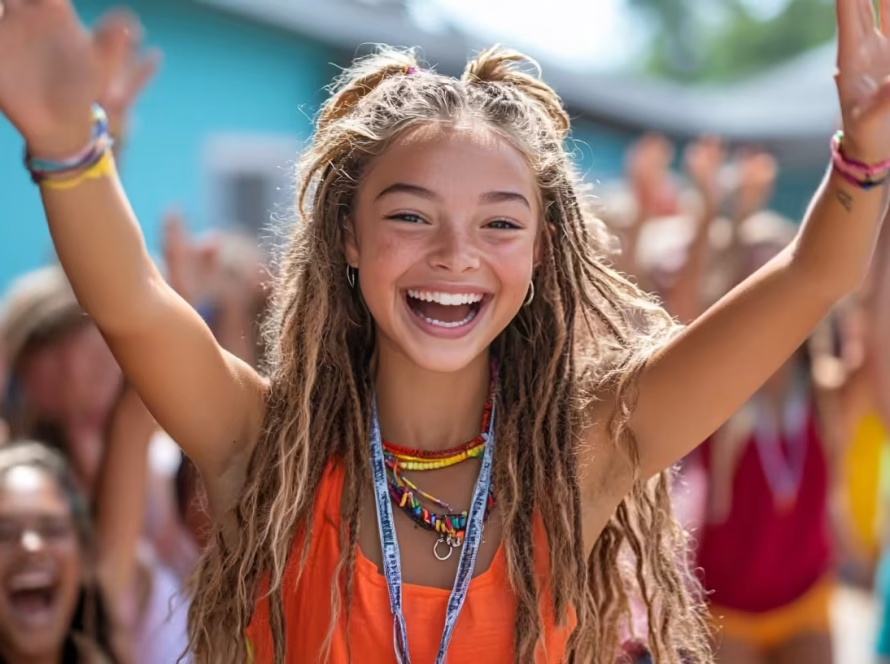
12 Signs Your Child is Ready for Music Lessons

Signs your child’s ready for music lessons – physical abilities, focus, curiosity, and home support. Concise guide on ideal age, instrument fit, and nurturing budding talent.
Starting music lessons early greatly benefits a child’s development and growth. Music ignites all areas of a child’s brain and helps build confidence, creativity, coordination, and more. But when is the right time to enroll your child in music lessons? The best age for music education varies by child. However, there are common signs that show your child is ready to start.
| Sign of Readiness | Key Indicators | Age Range |
|---|---|---|
| Interest in Music | Shows excitement, dances, sings along, asks questions | Any age |
| Focus and Attention | Can concentrate for 10-15 minutes, follows instructions | 5-9 years |
| Physical Coordination | Good hand-eye coordination can perform rhythmic movements | 5-7 years |
| Communication Skills | Expresses needs clearly, asks questions, shares preferences | 4-6 years |
| Curiosity and Eagerness | Asks “why,” seeks new information, engages in activities | Any age |
| Longer Attention Span | Engages in tasks without losing interest | 5-9 years |
| Independence Skills | Manages simple tasks, follows routines | 5-8 years |
| Fine Motor Skills | Controls small objects and performs delicate movements | 5-7 years |
| Support at Home | Regular practice, access to instruments, encouragement | Any age |
| Age Appropriateness | Typically between 5-9 years to start lessons | 5-9 years |
| Instrument Match | Instrument suited to age and physical abilities | Varies by instrument |
| Desire to Learn | Asks to learn, shows enthusiasm for music | Any age |
They Show Interest in Music
A primary indicator that your child may be ready for music lessons is their level of interest in music. Signs they are enthusiastic about music include:
- Notices and reacts when music is played, whether on the radio, TV, phone, or public places
- Enjoys dancing, bouncing, clapping, or singing along to favorite songs
- Asks lots of questions about the music playing like “Who is singing this song?” or “What instrument is making that sound?”
- Gets visibly excited and exclaims “Again, again!” when hearing a new song and wants to hear it repeatedly
As children learn to recognize different instruments by their sounds and appreciate various music genres, their natural curiosity builds. If your child often asks to replay songs over and over, it demonstrates an innate musical interest and appreciation.
Additional signs of musical interest:
- Frequently hum or sing short melodies they make up
- Dances spontaneously to music when they hear it
- Uses household items as makeshift drums or rhythm shakers
- Shows interest in musical toys and games
Nurture your child’s musical curiosity by exposing them to diverse music styles beyond typical children’s songs. Attend live music events designed for families, such as orchestral or cultural performances. Discuss the different instruments and types of voices. Learn more about how to prepare for music competitions for further inspiration.
Foster their interests with a selection of musical toys like toy pianos, drums, maracas, tambourines, and xylophones. Simple music apps also capture interest at this age. See if their attraction persists by observing them over several weeks or months.

They Can Focus and Pay Attention
Succeeding in music lessons requires discipline, focus, perseverance, and concentration. Before committing to weekly lessons, honestly assess if your child can:
- Maintain focus on picture books and stories without frequently getting distracted
- Follow two- or three-step directions for simple tasks
- Stick with moderately challenging tasks without getting excessively frustrated or giving up easily
The ability to pay attention, follow instructions, and not quit when facing challenges, even in short time increments, indicates readiness for the structure of music lessons. More about the benefits of performing in recitals can be found here.
Signs of Focus and Attentiveness
More specifically, observe if your child:
- Will sit and concentrate on puzzles, coloring, or crafts for 10-15 minutes
- Pays attention without distracting others during story time at school or library
- Follows along and listens to directions during organized activities
- Watches educational kid’s programs on TV for 15-30 minutes
Enroll them in organized activities like sports or dance to evaluate their willingness to follow instructions in a group environment. Gauge if they remain engaged throughout the entire session.
Their ability to focus in a distracting environment also comes into play during music lessons. Evaluate behavior on playgrounds, at birthday parties with lots of kids, or in loud public spaces. Notice if they can resist the urge to run off or be disruptive. The more attentiveness they demonstrate, the greater the chances of thriving in lessons.

They Have Physical Coordination Skills
Playing musical instruments demands coordination between the brain, eyes, hands, fingers, and often feet. Signs your child has developed the physical abilities for lessons include:
- Holds and manipulates writing tools properly, like crayons, markers, and pencils
- Has balance and coordination required for activities like walking, running, kicking a ball, climbing stairs
- Can move their body to some degree of rhythm by swaying, marching, tapping feet
These types of motor skills provide the foundation for properly handling and playing musical instruments.
Further examples of coordination include:
- Cuts paper with child safety scissors
- Assembles simple puzzles
- Catches throws, and kicks balls of various sizes
- Hops on one foot several times
Try fun activities that involve crossing the midline – reaching across the body with one hand to grasp objects. Have them fingerpaint, color, or play hand-clapping games. Building bilateral coordination strengthens connections between the left and right brain hemispheres. Find more about fine motor skills for beginners.

They Communicate Needs and Thoughts
A child’s verbal communication ability is vital for conveying needs, asking questions, and absorbing new information presented during music lessons. Signs your child has adequate language skills include:
- Can communicate basic wants and needs verbally without frequent whining or tantrums
- Asks questions politely when they don’t understand something
- Is comfortable expressing excitement about their interests, preferences, and opinions
Comfort with verbal expression allows students to build rapport with the teacher, seek clarification when confused, and share their musical likes/dislikes. Learn more about the influence of music education on communication skills.
Speech milestones usually reached by age 5 include:
- Carries on conversations of 5 or more exchanges
- Asks lots of “why” questions
- Uses future tense like “I will read that book”
- Tells simple stories from memory
- Speaks clearly enough for strangers to understand
If your child falls behind on language abilities, consult your pediatrician or consider speech therapy to get them ready for lessons. Strong communication fundamentals help them thrive.
They’re Curious and Eager to Learn
An innate curiosity and love of learning seems to predict a child’s readiness for the mental challenges of music education. Signs your child has these traits include:
- Shows curiosity about how things work by frequently asking “why”, “how”, and “what” questions
- Gets excited to learn more about topics they’re interested in
- Wants to participate in grown up activities like gardening, cooking, cleaning, etc
- Asks lots of questions when visiting new places like museums, zoos, etc
A drive to discover new activities and eagerness to take on new skills shows they will fully embrace learning to play an instrument.
Additional intellectual curiosity signs include:
- Remembers details about subjects that interest them
- Learns the alphabet, numbers, shapes, colors easily
- Pays attention to cause and effect relationships
- Makes connections between what they’re learning and the real world
Nurture their curiosity with games and activities focused on music and sound – build rain stick instruments, create sound effect stories, learn about echolocation. Feed their interests first, skills second. Discover more about nurturing musical curiosity.

They Have Longer Attention Span
Most music lessons require a child to focus for at least 10-15 minutes at a time. Signs your young one can handle this time frame include:
- Sits and pays attention for 10-15 minutes during storytime, TV shows, etc without getting antsy
- Will listen to short picture books from start to finish without walking away
- Can concentrate sufficiently to complete crafts or coloring book pages over a period of time
Preschool-aged children rarely have an attention span beyond 15 minutes. So limitations early on are perfectly normal. Simply observe if your child can engage in those intervals.
Games and activities that build focus stamina include:
- Listening to audiobooks for 15-minute sessions
- Putting together 30-50-piece jigsaw puzzles
- Playing educational iPad games for 10-minute stretches
- Drawing/coloring pictures for at least 15 minutes
Extending their attention span prepares them for fulfilling lesson concentration. Read more about the importance of a longer attention span.
They Have Independence Skills
A degree of independence is advantageous for a child to thrive in music lessons without hands-on parent involvement. Signs your child has acquired some self-management abilities include:
- Feeds themselves competently with utensils
- Cleans up minor messes when asked without constant reminders
- Remembers to do simple daily routines like brushing teeth without nagging
- Follows rules and multi-step directions well for their age
Skills like these empower children to manage their instruments and music largely on their own during lessons.
Examples of independence milestones include:
- Can use the bathroom fully independently
- Understands the concept of waiting patiently for short periods
- Goes to sleep fairly easily without parents in the room
- Works through emotions appropriately without frequent outbursts
Nurture self-help skills by making them minor responsibilities like feeding pets or setting the dinner table. Praise any initiative they show. Their competence will grow with consistency and encouragement. Discover more about independence skills and music lessons.

They Have Fine Motor Skills
Playing musical instruments utilizes fine motor skills – using the smaller muscles of the hands and fingers to dexterously manipulate objects. Signs your child has developed these abilities include:
- Has precision and control using writing tools, scissors, beads, and other small items
- Easily manipulates smaller objects like coins and buttons adeptly with their hands
- Turns pages in a book one at a time without tearing
These capabilities enable them to handle the intricate movements required to produce sound on instruments.
You can build fine motor strength with activities like:
- Stringing beads/pasta onto pipe cleaners
- Building structures with Lego bricks and blocks
- Putting together interlocking picture puzzles
- Playing fingerplays like Itsy Bitsy Spider and Where is Thumbkin?
- Molding clay or playdough into shapes
- Drawing pictures with crayons, markers, chalk
Mastering fine motor abilities prepares little fingers for musical success. Learn more about fine motor skills for beginners.
They Have Support at Home
A nurturing home environment with engaged caregivers sets up a budding young musician to thrive. Signs you can provide the needed support include:
- Parent or family member can regularly get them to lessons and practices on time
- Have musical family members who can nurture their talents and progress
- Live in an environment that allows space and time for daily practice
- Access to an instrument for home practice between lessons
- Financial means for lesson and instrument expenses
The guidance received in lessons only goes so far. Consistent involvement, encouragement, and reinforcement at home are critical for motivation and skill building.
Beyond logistics, your job is fostering an enthusiasm for music by:
- Playing a variety of music styles regularly at home
- Praising effort and small musical accomplishments
- Encouraging practice through fun family music time
- Asking them to show you what they’re learning week-to-week
- Prioritizing lessons/practices amid busy schedules
Your engaged support gives them the best opportunity to develop their talents. Learn more about supporting your child’s music education at home.

They’re Between Ages 5-9
Child development experts believe starting music lessons between ages 5-9 has the most benefits. There are physical and intellectual reasons for this guidance:
- Fine motor skills for playing instruments solidify between ages 5-7
- Cognitive ability to understand instructions sharply increases after age 5
- Starting young allows for longer-term skill development
- Peak memorization capability happens around age 9
- Attention span expands rapidly in early grade school years
However, use your child’s age primarily as a general guide. The other readiness signs detailed take priority over age. Some 4-year-olds may be ready for lessons while some 7-year-olds may not. Careful consideration of all factors is key.
They Have an Appropriate Instrument Match
Different instruments are better suited to various age ranges and physical characteristics. Consider these general guidelines when choosing an instrument:
Piano: Ideal starting age 5-7 years. Piano requires coordination between the eyes, ears, and small hand muscles. Most 5-year-olds can reach an octave on the keys.
Guitar: Best starting age 7-10 years. Younger children often find string instruments frustrating due to the need for hand placement and finger strength.
Violin: Ideal starting age 4-6 years. The small size of the violin is fitting for young children, and parents can assist with tuning and care early on. Discover more about violin lessons for children and adults.
Drums & Percussion: Best starting age 5-8 years. Eye-hand coordination to hold drumsticks develops around ages 5-6, with rhythm notation understanding improving in older elementary years.
Singing: Ideal starting age 7-10 years. Vocal cords and lungs mature around age 7, and children have better focus for voice lessons by early grade school. Learn more about voice lessons for different skill levels.
Woodwinds: Best starting age 8-10 years. Woodwind instruments require certain physical traits like lung capacity and finger length, which typically develop around age 8.
While these age ranges provide a helpful guideline, you understand your child’s abilities best. Gauging the specific signs of their readiness takes priority over age. A musically inclined 5-year-old may start lessons excellently. While another child may need to wait until age 8 or 9. Consider all factors when deciding.

They Express a Desire to Learn
Perhaps one of the most important indicators of readiness is your child’s own expressed interest in learning music. Look for these signs:
Certainly. I’ll continue from where we left off:
- Verbal requests: Your child asks to play instruments or take music lessons.
- Enthusiasm: They show excitement about the idea of learning music or a specific instrument.
- Willingness to practice: Your child expresses a readiness to put in effort and time to learn.
- Inspiration: They talk about musicians they admire or instruments they find fascinating.
When a child shows a genuine desire to learn, it can significantly impact their motivation and persistence in music lessons. This intrinsic motivation is often a key factor in long-term success and enjoyment of music.

Conclusion
Determining your child’s readiness for music lessons involves considering multiple factors. The 12 signs we’ve explored offer a helpful framework to assess whether your child is ready to start their musical journey. By considering these signs, you can make a more informed decision about their readiness for music lessons:
- Interest in Music: Shows enthusiasm for music, dancing, or singing.
- Focus and Attention: Can concentrate on activities for 10-15 minutes.
- Physical Coordination: Demonstrates good hand-eye coordination and motor skills.
- Communication Skills: Expresses needs clearly and asks questions.
- Curiosity and Eagerness: Shows desire to learn and explore new things.
- Longer Attention Span: Can engage in activities for extended periods.
- Independence Skills: Manages simple tasks without constant help.
- Fine Motor Skills: Controls small movements needed for instruments.
- Support at Home: Has a nurturing environment for practice and learning.
- Age Appropriateness: Generally between 5-9 years old.
- Instrument Match: Physical size and abilities suit the chosen instrument.
- Desire to Learn: Expresses personal interest in learning music.
Remember, every child develops at their own pace. Your child doesn’t need to show all the signs before starting music lessons. Use this guide to assess readiness and identify areas where your child may need support. Starting music lessons at the right time can offer lifelong benefits, such as:
- Improved cognitive skills
- Enhanced creativity
- Better time management
- A meaningful way to express themselves
Trust your instincts as a parent. Talk openly with your child about their interest in music. If you decide your child is ready, find a teacher whose style matches your child’s learning needs. Start with shorter lessons and gradually increase the duration as their skills improve. Learn more about helping your child value music practice.
Call to Action
We invite you to share your experiences in the comments below. What signs did you notice in your child? How did you decide it was the right time to start lessons? Your insights could help other parents navigate this important decision. If you found this guide helpful, consider sharing it with other parents who might be wondering if their child is ready for music lessons.
Frequently Asked Questions
What are the benefits of early music education?
Early music education helps children grow in many ways. It improves their thinking skills, memory, creativity, motor skills, discipline, and confidence. Learn more about the benefits of music education.
How do I choose the right instrument for my child?
When choosing an instrument, consider your child’s age, size, interests, and the instrument’s demands. Encourage them to try different options and consult a music teacher for advice. You can read more about how to choose a great-sounding starter cello.
How much should my child practice?
For beginners, practicing for 10-15 minutes daily is usually sufficient. Consistency is key, so it’s better to have shorter, regular sessions than infrequent, lengthy practices. Check out how long should beginners practice piano every day for more details.
What if my child wants to quit after a few lessons?
If your child expresses a desire to quit, have an open discussion about their concerns. Encourage them to persist for a set period and collaborate with their teacher to address any difficulties before making a final decision. Discover how to encourage your child to practice their instrument.
Can music lessons help with other academic subjects?
Absolutely! Music education has been linked to improved performance in subjects like math and language skills, contributing to overall academic success. Read more about the influence of music schools on kids’ future career choices.
How can I support my child’s music education at home?
Support your child’s music education in several ways. First, create a dedicated practice space. Next, set a regular practice routine. Show interest in their progress and attend their performances. Finally, communicate regularly with their teacher. Learn more about supporting music practice at home.
Are group lessons or private lessons better for beginners?
Both group and private lessons have their benefits. Group lessons provide peer motivation, while private lessons offer personalized instruction. Consider your child’s learning style and personality when making your choice. Check out group music lessons for toddlers for more information.
Remember, starting a musical journey is rewarding and fosters personal growth and creativity. Whether your child is beginning lessons or you’re considering them for yourself, investing in music education brings joy and fulfillment. Begin your musical adventure today!