The Role of the Accompanist in Vocal Performances

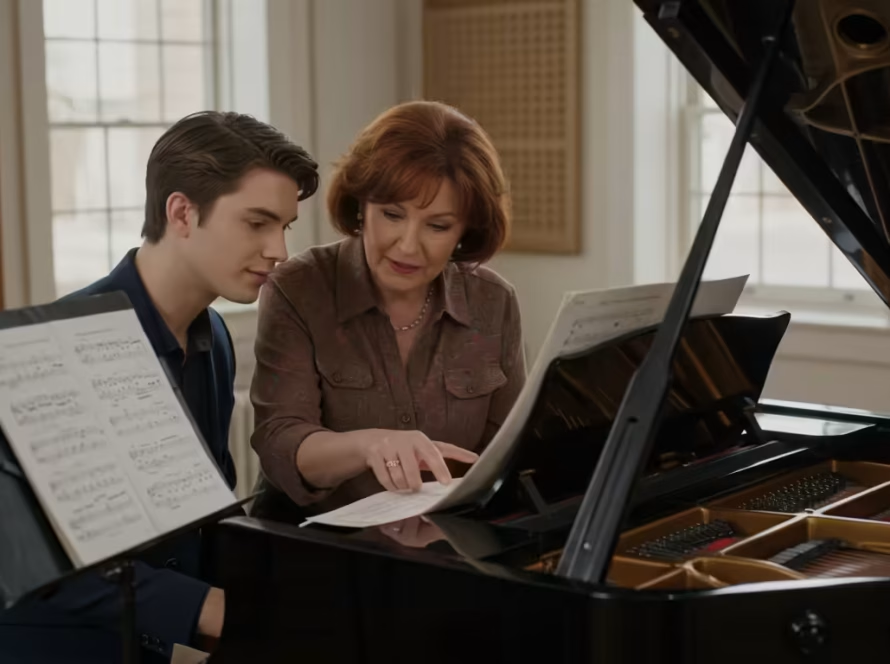
An accompanist plays a key role in vocal performances. Working closely with singers, they bring music to life. More than just playing piano in the background, an accompanist mainly provides instrumental music on a piano or keyboard for a vocalist. This music supports the singer’s performance, helping to make the song sound better overall.
For the singer and accompanist, frequent communication is important. Listening to each other and making eye contact are crucial. Using gestures and talking about the music also helps them work together better, more like how diaphragmatic breathing supports a vocalist’s control and performance.
| Aspect | Details | Examples |
|---|---|---|
| Role of the Accompanist | Provides instrumental support for vocal performances, enhancing the overall sound and helping singers shine on stage. | Operas, art songs, choral pieces |
| Key Responsibilities | – Maintain steady pulse – Cover mistakes – Adjust in real-time – Collaborate on interpretation | – Real-time adjustments during performances – Covering vocal errors smoothly |
| Artistic Contribution | Infuses creativity and emotional depth into performances, captivating audiences and enhancing the vocal lines. | Emotional communication, nuanced phrasing |
| Types of Performances | Accompanists work across various genres, including operas, musical theater, and art songs. | Musical theater numbers, choral works |

What Does an Accompanist Do?
The role of an accompanist includes:
Foundation
- Provides instrumental accompaniment
- Keeps steady pulse
- Covers mistakes
- Adjusts in real-time
Partnership
- Collaborates on interpretation
- Builds rapport and chemistry
- Rehearses thoroughly
- Has confidence and synergy
Artistry
- Brings creative flair
- Masters emotional communication
- Captivates during interludes
- Transports audiences
Types of Performances
Accompanists play music for many types of vocal works, including:
- Operas
- Songs and arias
- Art songs
- Musical theater numbers
- Choral pieces
The variety in performance types requires an accompanist to adapt their skills much like a singer might adjust their vocal technique based on the genre they are performing.

Key Tasks
Their role includes:
- Keeping time
- Setting a steady pulse and tempo
- Covering up small vocal mistakes smoothly
- Helping the singer shine on stage
The accompanists adjust their playing to match the singer and create beautiful melodies and lively rhythms. At times, they play softly to support the vocalist. They play more loudly on other occasions to show off the piano part, similar to how vocal dynamics are used by singers.
Musical Support
Good accompanists provide nuanced musical support by:
Adjusting Sound
- Changing dynamics and articulation to match the vocalist
- Using pedaling and voicing to let vocal lines shine
Modifying Parts
- Changing left-hand parts to reduce thick textures
- Adding tasteful ornamentation to complement the melody
Highlighting Structure
- Emphasizing important harmonic progressions
- Signaling vocal entrances through musical cues
Expressing Emotion
- Communicating mood and lyrics through phrasing
This musical sensitivity helps the vocalist give their best performance, especially during complex pieces that require careful attention to intonation and phrasing.

Handling Performance Issues
Skilled accompanists can handle various problems:
Quick Changes
- Vamping – Keeping the music going during tricky page turns
- Transposing – Changing key if the vocalist struggles
Tempo and Texture Fixes
- Altering speed – Slowing down if the vocalist loses their place
- Simplifying parts – Reducing complexity if it’s too hard
These quick adjustments are critical in live performances, where maintaining vocal health and endurance is key.
Key Skills and Qualities
To excel, accompanists need special skills and traits:
Artistic Abilities
- Creativity to bring music to life with imagination
Technical Skills
- Mastery of technique, sound, and musical elements
Professional Traits
- Reliability, preparation, and focus under pressure
Example of Excellence
Graham Johnson, a top pianist for French and English songs, brought flair to recitals through deep historical research. His ability to find subtle details others miss sets him apart, much like how the Bel Canto technique transforms a singer’s performance.

Working with Vocalists
Teamwork is key for singers and accompanists. Working as equals, they choose the music’s speed together and discuss how to shape the notes. This collaboration creates better performances, akin to the process of developing vocal vibrato.
Building Strong Partnerships
Good partnerships need:
- Open, friendly talks from the start
- Discussing musical ideas and choices
- Patience when giving and getting feedback
- Solving disagreements respectfully
- Lots of practice time together
- Showing appreciation for each other’s work
- Having fun while working hard
This musical “marriage” needs care, but leads to great performances, much like how consistent vocal practice leads to improvement.
Signs of Poor Teamwork
Even skilled musicians sometimes don’t work well together. Watch out for:
- Fighting over tempo, style, or how to play
- Poor talking and eye contact
- Being late or unprepared
- Not caring about the singer’s needs
- Trying to be the star instead of helping
- Being mean or too competitive
Rehearsal Duties
In rehearsals, accompanists help by:
- Giving feedback on music, style, words, and sound
- Building trust through steady practice
Working with Different Singers
Accompanists change their approach for each singer:
New Singers
- More help with technique and learning music
Advanced Students
- Special help for recitals and auditions
Professional Singers
- Working together on creative choices
Singing Teachers
- Helping plan lessons and solve problems
Older Singers
- Adjusting for voice changes or memory issues
Young Singers
- Guiding vocal health and growth
This personal attention makes accompanists very valuable, similar to how voice lessons are tailored to individual needs.
Practice Makes Perfect
Not enough practice leads to insecurity. Focusing too much on getting notes right, singers may neglect artistry.
Audiences can tell when performers aren’t ready. Well-practiced musicians, however, work together much better.

Performance Responsibilities
During shows, accompanists focus on helping the vocalist by:
- Adjusting to the singer’s choices in phrasing and breathing
- Covering mistakes smoothly
- Supporting the music’s emotion and style
- Captivating the audience during instrumental parts
Performance Mindset
The right mental approach is crucial:
- Focused – ignoring distractions
- Calm – avoiding nerves through preparation
- Attentive – listening closely to match the vocalist
- Flexible – making quick adjustments while playing
- Supportive – not trying to be the star
- United – feeling in sync with the vocalist
This mindset allows for confident, free performances, much like how a vocalist prepares for audition success.
Audition Support
In auditions, accompanists adjust to match the singer. Creating nice melodies and rhythms, they might play softly to support or loudly to showcase the piano.
Good accompanists provide stability in stressful auditions. They need:
- Quick learning of many different pieces
- Knowledge of audition rules
- Experience with different pianos and rooms
- Ability to stay steady despite long waits
- Strong sight-reading for unexpected changes
Choosing an Accompanist
Singers should look for accompanists with:
- Strong musical skills and experience
- Ability to follow, adjust, and match the singer
- Good communication and teamwork
- Knowledge of specific types of music
- Willingness to support, not outshine
- Good personal connection
Finding Accompanists
Good places to look include:
- Music schools and universities
- Teacher recommendations
- Local music groups
- Music unions
- Opera companies
- Orchestra members
- Online directories
Listening to their work and checking references before committing is important, just as researching different vocal styles can be for singers.

How Accompaniment Has Changed
Early Days
Baroque & Classical Times
- Players made up parts based on bass lines and chords
- Pianists played written parts for melodies in sonatas
Early Romantic Era
- Pianists played more complex parts in songs
- Operas had showy piano parts to impress audiences
- Amateur singers and pianists played for fun at home
Modern Times
Late Romantic to Now
- In art songs, pianists help tell the story through music
- Some composers wrote dreamy, atmospheric piano parts
- Jazz pianists make up parts to back up singers
- New classical works use complex rhythms and effects
Future of Accompaniment
Technology is changing accompaniment:
- Recorded tracks with adjustable speed and key
- Computer-made accompaniments
- Apps that follow and adjust to singers
- Tools to help more people play for themselves
Wrapping Up: Why Accompanists Matter
Great accompanists like Gerald Moore and Graham Johnson are very skilled. Their work has made accompaniment an art form, earning them much praise. Thanks to their efforts, more people now value what accompanists do.
Frequently Asked Questions
What do accompanists do?
They play music for many types of vocal works, including operas, songs, arias, and choral pieces.
What makes a good accompanist?
Working well with singers is key. Choosing tempos together and discussing how to shape the music leads to better performances.
How do accompanists handle rehearsals?
They adjust to match the singer, playing softly to support or loudly to show off the piano part as needed.
Why is talking important for accompanists and singers?
Good communication helps them work better, allowing them to listen, make eye contact, use gestures, and discuss the music effectively.
Where can singers find accompanists?
Music schools, teacher recommendations, local music groups, and online directories are good places to start. Working together as a team is crucial for choosing tempos and discussing phrasing.
How has accompaniment changed over time?
From improvising in Baroque times to using technology today, accompanists have always adapted to support singers, creating melodies and rhythms that enhance vocal performances.