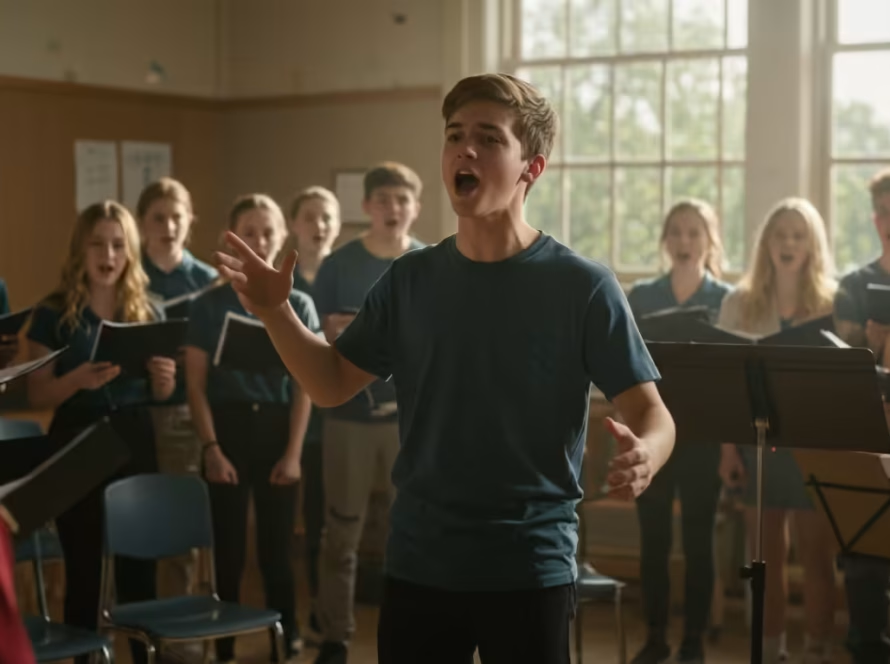
Voice lessons accelerating skill growth, accountability, and customized guidance explain singers like Adele. Discover why consistency compounds outcomes.
When Adele first emerged, her otherworldly voice stunned listeners with its sheer power and emotional resonance. Yet raw talent fails to explain such extraordinary vocal control and captivating delivery. Behind such prowess lies years of ongoing private lessons deliberately nurturing skills through tailored exercises, goal reviews, and trust-building. This guide details how consistency compounds outcomes, enabling tremendous capability growth spurts. Stick with it, and your instrument may likewise leave arena crowds spellbound!
The Transformative Impact of Ongoing Voice Lessons

Glancing back over a prolific decades-long career touring the globe, iconic singer Barbara Streisand reflected in an interview:
“Had I not persisted in studying technique in those early years struggling to control my wild instrument, I’d never have gained the vocal precision, stamina, and confidence fame demands night after night.”
Her statement further solidifies scientific research evidencing that mature vocal cords grow nerve connections optimizing coordination exponentially faster through regular deliberate practice versus sporadic singing.
So why do so many budding vocalists prematurely abandon lessons when progress stalls, erroneously believing further instruction unnecessary?
In truth, persistent expert coaching fine-tunes skills faster than lone practice by:
Building Step-by-Step Technique – Identifying gaps and then targeting solutions using specialized vocal exercises
Tracking Quantifiable Improvements – Celebrating measurable benchmark achievements over months/years, fueling motivation
Offering Hyper Customization – Personalizing activities and goals based on individual strengths and weak spots
Let’s break down exactly how quality consistent voice lessons deliver tangible results.

Cultivating Core Vocal Skills
Whether a vocalist dreams of belting Broadway standards or nailing the next pop chart-topper, fundamental skills separate dazzling singers from average shower warblers. Savvy voice teachers focus on establishing:
Proper Physiological Technique
Proper alignment, breath support, and tone placement ingrain healthy habits early, preventing damage from compensating with strain later. Diagnostic assessments pinpoint anatomical improvements and then targeted functional exercises address gaps.
For example, a student tensing neck muscles to reach higher notes might receive tailored stretching routines plus vocal siren drills activating better support.
As acclaimed instructor Andrew Wall notes, “Sloppy posture or forced airflow causes more student injury requests for corrective help than actual overuse. But prevention is readily treatable through patience and biomechanical awareness.”
Music Literacy
Reading musical scores, discerning rhythm patterns by ear, and listening actively hones intuitive familiarity with song structure unlocking delivery nuance later. Harmonizing exercises and improvisational games build upon basics.
Associate professor of voice Dr. Linda Jade notes, “By first mastering solfege sight-singing – assigning syllables to scale degrees – singers gain the ability to recognize, then replicate intervals and patterns improving accuracy across repertoire.”
Style/Genre Exposure
Each vocal genre requires subtle but important tonal variation and diction changes to channel era-appropriate emotions authentically. Extensive diverse repertoire exploration gives flexibility in code-switching styles confidently.
For example, choral pedagogue Dr. Angela Sheehan recounts, “We transformed a classically-trained 12-year-old soprano struggling with pop songs. Adding just 15 minutes of daily musical theatre tongue twisters unlocked the accent and sass that Broadway demands!”
In summary, patient practice ingraining proper alignment, music literacy, and exposure to varied genres compounds capability gains exponentially over time. Now let’s consider tracking transformations quantitatively!
Tracking Measureable Improvements Over Time

Celebrating small wins fuels intrinsic motivation sustaining practice through gradual plateaus. Smart voice teachers incorporate:
Collaborative SMART Goal Setting
Outlining specific, measurable, achievable, relevant, and time-bound objectives every few months provides a roadmap structure. These mini milestones offer visibility into long-term advancement trajectory.
Having targets like “sing a C5 evenly for 6 seconds” or “increase mix belt range a major 3rd matching original key” defines student and teacher expectations to hit while allowing flexibility adjusting along the way.
Documenting and Celebrating Advancement
Comparing early practice clip cringeworthiness to recent refined takes spotlights tangible progress over demand for perfection. Sharing wins privately or publicly leverages genuine student/parent excitement to incentivize perseverance.
As leading vocal coach and psychologist Dr. Angela Sheehan advocates, “Acknowledging effort evokes motivation. I chart small transformations like achieved high notes, memorized lyrics, better breath control, and clearer tone because concrete data builds perceived capability.”
Custom-Tailored Personal Guidance
While strong curricula certainly accelerate competency for all, each vocalist’s distinctive interests, aspirations, and challenges call for hyper-individualized accommodation maximizing unique strengths while patiently improving weaknesses within realistic parameters.
Top-tier instructors personalize via:
Student Interest-Based Song Selections – Custom activities harness passions fueling drive.
Assessing and Addressing Sticking Points – Check-ins pinpoint plateau spots allowing collaborative problem-solving. Meet students where they struggle!
Forging Trust Through Psychological Safety – Trying innovative techniques initially feels vulnerable. Validate discomfort then reward bravery.
By tailoring pacing and activities to individual progress curves powered by motivation plus gently nudging towards optimal growth zones, students surpass perceived potential consistently over the years through personalized nurturing guidance.
Now ready for your stage swagger as your custom-crafted vocal prowess crescendos towards courageous creative self-expression!
Core Components of Effective Voice Lessons

We’ve covered the main mechanisms by which ongoing private voice instruction accelerates outcomes like no other training methodology can. Now what should you expect in a typical customized session?
Here is an overview of key lesson pillars:
Warm-Ups – Low-intensity technique drills prime coordination and loosen muscles increasing control before singing fully. Expect breathing exercises plus gentle humming ascending and descending pitches.
Goal Review – Check progress on previously set targets, determine strategy adjustments needed then acknowledge and celebrate advancements!
New Technique Introduction – Sessions often build a single skill intensely through tailored exercises. Wait until properly activating the technique before applying it broadly.
Constructive Feedback – Instructors diagnose areas for fine-tuning using vocabulary emphasizing effort over failure because progress happens through iteration.
Practice Recommendations – Each session ends by outlining daily recommended routines to solidify skills introduced and guide improvement before the next lesson.
Wrap-Up Questions – Check for remaining points of confusion and encourage students to reflect on key takeaways while knowledge is fresh.
The perfect balance between nurturing guidance and high expectations challenges vocalists continually while avoiding overwhelm thanks to deep instructor familiarity with current competency levels from week to week.
Now let’s debunk some common lesson learning misconceptions!
Voice Lesson Myth Busting

A few pernicious assumptions sometimes prevent students from committing to the consistent practice an expert instructor facilitates so well:
Myth: Advanced singers no longer need lessons – Even professionals benefit from tweaking techniques and expanding style versatility from unbiased feedback.
Myth: Younger students show faster progress so lessons have limited usefulness for adult beginners – While kids absorb foundational concepts quicker neurologically, adults offset this with superior practice of self-regulation and theoretical comprehension. Both demographics advance admirably.
Myth: I must find a teacher specializing in my preferred genre – While stylistic mentors add value later, fundamentally sound technique applies across genres so newbies progress faster mastering basics with well-rounded pedagogues.
Myth: If I hit plateaus, further lessons are pointless – Plateaus indicate techniques requiring reinforcement, not abandonment! Troubleshoot plateaus with instructors.
Now equipped with knowledge dispelling lesson-learning fallacies, commit to signing up yourself or gifting training for a budding vocal talent at home. Soon enough, confidence and prowess crescendo towards courageous creative self-expression. Let your distinctive instrument shine center stage where it belongs at last!
Frequently Asked Questions
How often should voice lessons happen for optimal improvement?
Most instructors recommend either weekly 30-60 minute lessons or 45 minutes biweekly for beginners. Consistency breeds results.
What foundational skills will lessons build first before repertoire?
Expect an early focus on instilling posture, breath support, tone production, music reading, ear training, and vocal health habits setting the stage for phrasing artistry later.
How should I select the right voice teacher for me?
Trial a few instructors with varied musical backgrounds. Ensure excellent communicators who show technical knowledge, patience, and accountability.
What makes lessons better than self-teaching via YouTube or apps?
Unique troubleshooting, goal-setting, and motivation all greatly accelerate outcomes over generic video content lacking personalization.
Do vocal plateaus mean I should quit lessons?
Plateaus indicate optimal times for instructors to tweak training plans reinforcing fundamentals. Persist and communicate frustrations.
How soon will I advance from beginner levels?
Expect gradual progress consistently over months/years through regular lessons far outpacing sporadic practice. Vocal growth isn’t linear.
Should my child take voice lessons? What’s the ideal age?
Voice lessons greatly benefit kids aged 10+ by instilling healthy techniques before puberty changes register ranges. Earlier in formal settings risks forcing vocal strain.