

Violin care guide for protecting your instrument from temperature and humidity. Don’t risk cracks and warping. Learn pro tips for ideal storage, travel, and seasonal maintenance.
Playing the violin requires diligent instrument care and maintenance. One critical yet often overlooked aspect is protecting your violin from damage caused by temperature and humidity fluctuations. Dramatic shifts in temperature and moisture levels can wreak havoc on the sensitive wooden components of a violin. Without proper precautions, you risk cracks, warping, and other detrimental impacts on your instrument’s structure and sound quality.
This comprehensive guide will equip violin owners with the knowledge to safeguard their instruments against temperature and humidity risks. We’ll cover ideal conditions for violins, proper storage methods, traveling with violins, acclimating violins to new environments, recognizing damage signs, and protecting violins during performances. Follow these violin care tips, and you can feel confident your instrument will enjoy a long and harmonious life.
How Temperature and Humidity Affect Your Violin
To understand how to protect a violin, it helps to first learn why temperature and humidity cause damage. A violin’s wooden body, neck, bridge, fingerboard, and other parts are hygroscopic. This means they absorb and release moisture readily based on the surrounding relative humidity.
Higher humidity causes the wood to expand as it takes on water. Lower humidity leads to contraction as the wood dries out. Even small fluctuations outside the optimal 40-70% relative humidity range can stress the glued joints and delicate wood. Dramatic temperature swings create even more intense expansion and contraction.
Over time, constantly fluctuating humidity levels lead to cracks as the wood expands and contracts unevenly. This is especially likely across grain boundaries. Bridges may warp or lift off if the top wood soaks up excess moisture. Pegs can shrink and slip, causing strings to detune.
To avoid damage, violins are healthiest when environmental conditions are stable at 45-50% relative humidity and 65-70°F temperature. Let’s look at strategies to maintain ideal conditions during storage, travel, and performances.
Ideal Temperature and Humidity Levels for Violin Care:
- Temperature: 65-70°F
- Humidity: 45-50%
Additional Violin Care Tips:
- When not playing, keep violin in case with humidity control
- Avoid direct sunlight and heating/cooling vents
- Use a hygrometer to monitor temperature and humidity
- Travel with a sturdy case and humidifier packs
- Allow time to adjust to new environments
- Watch for cracks, warping, slipping pegs as damage signs

Why Violin Wood is So Sensitive
The intricate architecture of a violin’s wooden body gives this instrument its warm, resonant tone. But the delicate construction also makes it highly reactive to environmental fluctuations.
Violin tops are most often crafted from spruce, chosen for its stiffness and low density. The gracefully arched top soaks up less moisture than the back and sides, allowing it to vibrate freely as strings vibrate over the bridge.
The back and sides provide structural support. Harder woods like maple are common for excellent stability under string tension. Intricate arching patterns optimize resonance across the entire body.
At a microscopic level, wood consists of countless tube-like fibers held together by a lignin binder. When humidity rises, moisture is readily absorbed into these tiny tubes, causing the wood to swell. As it dries out, the tubes shrink, and the wood contracts.
Spruce and maple have different expansion rates based on the orientation of their grain lines. The mismatch strains the joints between pieces. Any uneven shrinkage or swelling between wood grains risks cracks across joints. Glued seams and linings are also put under intense pressure.
Add in the delicate soundpost, bass bar, and bridge – each positioned just so for optimal vibration – and you have a masterpiece of craftsmanship highly sensitive to its environment. With care, you can maintain ideal conditions to preserve your violin’s song for generations.

Violin Parts Most Vulnerable to Humidity Damage
While every piece of wood is vulnerable, certain violin components are most susceptible to warping and cracking with humidity changes:
Bridge: Delicate and not built into the structure, the movable bridge is vulnerable if the violin top soaks up moisture and swells unevenly. Watch for lifting corners or feet not fully contacting the violin top.
Fingerboard: Too much moisture causes the fingerboard to lift away from the neck as the swelling violin top pushes it upwards. Excessive dryness leads to a shrinking, sinking fingerboard.
Pegbox: The pegs anchor in small, precision-fitted holes. Even minimal shrinkage as wood dries can lead to loose, slipping pegs.
Purfling: Decorative inlaid purfling strips help protect edges. But joints between woods with different expansion rates are prone to separating.
Bridge and F-Holes: High-stress joints where bridge feet meet the violin top often show early cracking damage. Corners of f-holes are also vulnerable.
While all wood needs protection, pay the closest attention to these areas for any signs of trouble. Catching issues early allows for quick repairs before major harm occurs.
Seasonal Considerations for Violin Care
Outdoor temperature and humidity levels fluctuate not only day to day but season to season. Each time of year brings its considerations for violin care:
Winter Violin Care Tips
- Lower indoor humidity from winter heating. Use humidifiers.
- Avoid drafty windows and excessive AC ventilation while playing.
- Give extra time to adjust to cold outdoor temperatures if traveling.
Spring Violin Care Tips
- Outdoor humidity rises, but keep case levels consistent at around 45%.
- Slightly looser strings and bow when moving between indoors and outdoors help avoid cracks from rapid shrinkage/swelling.
- Pollen and grit increase; clean rosin buildup and wipe strings regularly.
Summer Violin Care Tips
- Very high humidity risks condensation inside the case. Use moisture-absorbing packs.
- Never leave violin in hot vehicles, even when cased.
- Avoid outdoor playing in direct sun which can damage finishes.
- Watch for swelling if moving between AC and heat; allow time to adjust.
Fall Violin Care Tips
- Cooler temperatures mean less expansion/contraction concerns.
- Heating kicks on again; use humidifiers as home air dries out.
- Prepare instruments for winter by addressing any maintenance needs.
- Gradually acclimate to drier indoor air as temperatures drop.
Adjusting your violin care routine for seasonal changes will keep your instrument happily playing all year long.
Violin Case Humidity Options
Given their importance, let’s take a deeper look at humidity control options for your instrument case:
Passive Humidity Control
- Dampit-style humidifiers – sponges inside plastic cases – slowly release moisture. Models like Humidipak offer 2-way humidity control.
- Salt spoon or tube options slowly absorb and release moisture. Affordable option.
- Some cases have built-in passive 2-way humidifiers, though ventilation affects efficiency.
Powered Humidifiers
- Case humidifiers like HygroSet attach to the case and plug in to emit cool mist. Offers precision control.
- Humidifier packs like HumidiGuitar have a rechargeable battery to release moisture. Convenient for travel.
- Combination temperature/humidity sensors allow turning on powered humidifiers automatically when the case drops below the ideal range.
Dehumidifying Options
- Silica and clay-based packs absorb excess moisture and contain it safely. Affordable option.
- Rechargeable packs like HygroSorb sorbed technology or D’Addario’s Humiditrol release moisture or absorb it as needed.
- Combination packs have humidity-regulating silica on one side, and a sponge humidifier on the other for 2-way control.
Try different options to find the best system to effortlessly maintain the 45-55% relative humidity sweet spot for your instrument.
Traveling Overseas with Your Violin
Traveling overseas with your instrument brings additional challenges. Here are tips to ensure safe transport:
- Research humidity at your destination. It may require extra preparation for the violin.
- Allow 1-2 weeks pre-travel to begin acclimating the violin to expected conditions.
- Obtain a sturdy flight case certified for aircraft transport in a cargo hold.
- Book airplane seats near the front; minimize climate changes in violin experiences.
- Consider shipping violin via climate-controlled air freight carriers. May be less stressful than carrying on.
- Upon arrival, do not open the case until fully acclimated to the new environment over several hours.
- After returning home, reverse the acclimation procedure. Slowly re-adapt to local conditions.
International performances, tours, auditions, and study programs deserve the extra planning to protect your precious instrument. With proper care before, during, and after overseas trips, your violin will make beautiful music around the globe.
Acoustic Considerations for Violin Storage

Beyond temperature and humidity, also consider the acoustic environment for storing and displaying your violin. General tips:
- Avoid storing violin in places with
○ Loud noises like TVs and speakers which can vibrate wood fibers
○ Equipment like vacuums or washing machines with motors that vibrate
○ Heavy foot traffic that shakes floors where case sits - Display violins in spaces away from vibrating elements like heating vents or closed doors that slam shut.
- Do not place decorative items or anything weighted directly on top of the case.
- For display out of case, set violin on proper mounting points like shoulder rest and tailpiece, not freely on surfaces.
- Return violin to case overnight; being out long-term risks warping even in ideal humidity.
- Keep case latches secure so the violin cannot fall over when closed. Use accessory straps.
Your violin will resonate best when its environment is free of excess noise, vibration, and movement. Give it the peace and stability it deserves.
Violin Case Safety Tips
A quality case is one of your primary lines of defense for day-to-day protection. Follow these safety precautions:
- Choose a case precisely fit to your violin without extra room to shift and vibrate. Soft padding should compress 25%.
- Do routine case maintenance like lubricating latches and hinges, replacing worn lining, and reinforcing joints.
- Never place heavier objects like music folders or cases on top of the violin case.
- When setting the case down, orient it to avoid toppling over. Use a case cover for extra stability.
- For young students, label cases clearly with name, school, and contact info in case forgotten at school.
- Always latch the case securely and double-check before lifting by the handle. Avoid drops.
- Use a hygrometer to confirm case maintains a proper interior environment when closed.
- Never step on a case or stack other heavy cases/items on top.
A sturdy, well-maintained case is the first defense for your violin, whether at home or on the go. Treat it with the same care you give your instrument.
Protecting Your Violin’s Finish
While the structural integrity of your violin’s wood is paramount, don’t overlook the vulnerability of your instrument’s external finish. Follow these tips to prevent finish damage:
Avoid Excessive Dryness
- Dryness causes finishes to contract and develop cracks or checking. Adequate interior case humidity prevents this.
- If finish cracks appear, address environmental factors first before attempting to finish repairs.
Prevent Direct Sun Exposure
- Ultraviolet light deteriorates and fades finishes over time. Keep the case away from windows and direct sunlight.
Handle with Clean Hands
- Oils and dirt from the skin transfer easily to finishes. Wash hands before handling, especially in higher areas like the neck and scroll.
Store Properly Between Uses
- Keep violin in case, not on stands or furniture between playing sessions. Surfaces can imprint on soft finishes.
- Rosin dust also sticks aggressively to finishes. Wipe off after playing before casing.
Clean Judiciously
- Use only soft microfiber cloths to gently remove surface rosin and dirt when needed. Avoid commercial polishes and cleaning solvents.
- For deep cleaning, consult a luthier – improper cleaning risks permanent finish damage.
With some care, you can keep your violin looking as gorgeous as it sounds for many years.
Signs of Pre-Existing Damage to Look for When Buying a Violin
When purchasing an acoustic violin, inspect it carefully for any signs of pre-existing wear, damage, or humidity-related issues:
Visible Cracks: Carefully examine wood grain for cracks, especially at joint seams, along purfling, and around f-holes.
Bridge Condition: Look for bridges with leaning posts or unequal foot gaps from warping. Broader foot gaps hint at a swollen top.
Worn Strings: Very old, dirty strings indicate neglect. Replacing them stresses the bridge further. Plan for new strings/bridge setup.
Fingerboard Wear: Dips around the central fretting area show sinking. Humps at either end signal lifting from the neck.
Peg Tightness: Turn the pegs gently using your thumb and forefinger only. Any slipping suggests shrinkage around peg holes.
Uneven Purfling: Gaps where decorative purfling strips meet hint at bad joints or cracking along edges.
Top Integrity: Press very lightly along the top to feel for pulsating, soft spots, or concave sections indicating interior damage.
Buying a used violin with pre-existing humidity damage will require extra maintenance and new parts more quickly. Factor any repairs needed into negotiations on price. Or continue looking for one in better structural condition.
Travel Safety Tips for Electric Violins
Electric violins have become popular thanks to their plug-and-play portability. But they still require care, especially when traveling:
- Pack electric violins in rigid hard cases, not just gig bags for maximum protection. Foam inserts secure instrument in place.
- Detach cables and remove any batteries before packing for transport to avoid damage.
- Unless using a very sturdy molded case, transport the bow separately or remove it from the case for trips.
- Avoid packing other items loose in the violin case like accessories, cables, and tuners. Use a compartmentalized backpack instead.
- Bring backups of essential items like cables, batteries, and shoulder straps in case any get damaged or lost.
- Carefully re-tune the instrument after arriving at the destination. Fragile tuning pegs can slip easily with jostling.
While convenient, electric instruments and their components still require diligent care and protection, especially when mobile. Treat them as delicately as you would an acoustic violin.
You can read more on Meduim
Protecting Wood Violins from Temperature Extremes

Violins are designed to produce their beautiful sounds in a comfortable human temperature range. But what happens when instruments are exposed to more extreme hot or cold conditions?
Avoid High Heat
- Prolonged heat exposure can cause wood joints and glues to soften and weaken.
- The bridge may droop as glue and joints under tension become pliable.
- Rosin particles embedded in wood may leach out as they melt, leaving marks.
Keep Away from Cold
- In very low temperatures, wood may contract enough to cause cracks across grain lines.
- The shorter, stiffer bass strings pose the highest risk of dangerous over-tensioning with severe shrinkage.
- Brittle wooden parts like pegs and tailpieces may split or snap if violins are played before warming up.
Gradual Adjustments Are Key
- When coming in from high/low temperatures, allow violins time to stabilize around room temperature before playing.
- Slow heating or cooling is best for acoustic instruments. Avoid sudden temperature shocks.
- Hygrometers help monitor case temperature along with humidity.
While portable, acoustic violins cannot endure the same extremes as solid-state instruments. Be mindful of avoiding damage from severe heat and cold.
Electric Violin Care & Maintenance Tips
Electric violins simplify transportation and allow for exciting effects. But their minimalist, high-tech design requires some specialized care:
- Wipe strings and fingerboard down before storing to prevent corrosion from sweat.
- Periodically clean string grooves on the bridge to avoid muffled string response.
- Check soldered cables for any weak points that may disconnect due to folding/bending.
- When changing strings, take care not to over-turn and strip delicate tuning pegs.
- Avoid overtightening the bow with fragile carbon fiber or fiberglass rods.
- Use cleaning cloths designed for electronics/guitar finishes to avoid damage.
- Let cold instruments warm indoors before playing to avoid any condensation issues.
While less sensitive to humidity and temperature than acoustic violins, treat your high-performance electric violin with care to keep it sounding its best.
Protecting Your Violin’s Sound Post
Hidden beneath the bass-side bridge foot is one of your violin’s most vital interior parts – the thin dowel-like sound post. As the bridge transfers string vibrations into the body, the post transmits these vibrations between the top and back plates. Even a slight shift in the post can alter an instrument’s sound. Here are sound post protection tips:
- Avoid knocking over your instrument, which risks the post falling. Never let a violin lay on its side.
- Mark the current post position with a pencil so the luthier can reposition it precisely if it falls.
- Have a luthier check post and cut to the ideal size when changing strings to handle increased tension.
- Request periodic sound post adjustment along with routine setups to keep it optimally transferring vibrations as wood ages.
- If new buzzing develops, a shifted sound post may be the culprit. Have it checked by a luthier immediately before further issues arise.
While hidden, nurture this critical interior violin part by handling your instrument with care and getting periodic setups.
Protecting Your Violin’s Bass Bar
Like the sound post, a bass bar is carefully positioned under the violin top to help transmit vibrations across the body. This slender spruce brace underlying bass-side bridge foot braces against the string tension. As it ages, it requires protection:
- Avoid knocks or drops that risk the bar cracking or pulling away from glue. This dramatically reduces sound projection and tonal quality.
- Listen for buzzing on bass-side strings, indicating a weakened or detached bar needing repair.
- Have the luthier thin and adjust the bar’s profile during soundpost adjustments to keep it working optimally as the violin ages.
- Request bass bar gluing reinforcement checks from luthiers during routine maintenance.
With attentive handling and proactive maintenance, the bass bar will continue transferring vibrations efficiently for excellent tone and volume.
Caring for Your Violin’s Pegs
The pegs anchoring the strings at the scroll seem simple, but require some maintenance for smooth tuning:
- Apply peg dope regularly to pegs so they slide smoothly without slipping. Rotating pegs during tuning keeps dope evenly distributed.
- If pegs still slip with dope, a luthier may need to ream holes for a tighter fit as the wood shrinks over time.
- Avoid forcing pegs to turn when stuck – excessive torque risks cracking pegbox wood or peg shafts.
- Turn pegs gently using just thumb and forefinger pressing on edges to avoid straining and breaking them.
- Replace cracked or warped pegs promptly before further tuning issues arise.
Well-lubricated, snug-fitting pegs are key to keeping your violin in tune through seasons of play.
Protecting Your Violin Bridge
As the dynamic link between strings and body, the bridge transfers its vibrations while withstanding all their tension. Safeguard it with:
- Bridge height and curve adjustments during routine setups as string tension wears it over time.
- New bridges cut precisely for your instrument if warping cannot be corrected by luthier adjustments.
- Letting strings down to low tension before transporting the instrument to minimize bridge stress.
- Loosening bow hair before packing the case to prevent accidentally turning the fine tuners and over-tightening strings.
- Humidity control to prevent swelling and unequal foot contact that stresses the bridge.
A well-fitted bridge standing straight and tall under proper string tension keeps your violin sounding its best.
Caring for Your Violin Tailpiece
The tailpiece anchors the critical violin end of strings and requires care:
- Inspect for cracks around peg holes that anchor the tailpiece to the instrument. Replace if cracked.
- Apply peg dope or graphite to tailpiece anchor pegs for smooth installation without cracking pegbox hole edges.
- Ensure the tailpiece sits centered on the violin to evenly distribute string tension forces.
- Clean and lubricate fine tuners regularly so strings easily slide through cleanly.
- With fine tuners, be careful not to over-tighten and break strings.
A smooth, well-anchored tailpiece optimizes vibration transfer and allows full tonal expression.
Protecting Your Violin Neck and Fingerboard

Supporting strings along the delicate neck and elevated fingerboard merit special care:
- Keep neck properly angled with fingerboard edge just slightly above top edge for correct string height.
- Ensure the fingerboard sits straight and flat without distorting under string tension.
- Clean the fingerboard regularly to prevent string groove buildup from eating into soft wood.
- Lubricate the fingerboard and wipe the strings down after playing to prevent corrosion.
- Humidify correctly to prevent fingerboard warping up or sinking from the neck.
Proper neck angle, flat fingerboard, and enough humidity will keep your violin playing comfortably for years.
Violin Case Humidity
Management Products
Specialized products help you conveniently regulate case humidity levels:
Humidifier Options:
- Humidipak – Sponge in plastic case model, passive 2-way humidity control
- Dampit Humidifier – Plastic case with water-soaked sponge
- Planet Waves Humidipak – Analog hygrometer and 2-way humidifier in one
- Musician’s Choice Humidifier – Plastic open design with foam insert
Dehumidifier Options:
- D’Addario Humiditrol – Rechargeable humidity-regulating crystal pouches
- Planet Waves Dry & Humidipak – Combination dual-pouch design 2-way humidifier
- Boveda Humidity Control Packs – 2-way humidity control packs
- Humitron – Electronic battery-powered dehumidifier with digital display
Hygrometers:
- Planet Waves Hygroclip – Analog hygrometer clamps inside case
- Musician’s Choice Digital Hygrometer – Battery-powered LCD display
- Boveda Humidipak – Analog hygrometer built into lid of control pack
- HygroSet – Digital display, can connect to powered humidifier
Try different options to find the best system to effortlessly maintain the 45-55% relative humidity sweet spot for your instrument.
Storing Multiple Violins Together
For violinists or collectors with several instruments, storing multiple violins together efficiently requires some care:
- Ideally use an enclosed cabinet with a built-in humidifier to easily maintain consistent humidity.
- Or, stack identical well-padded cases neatly without crushing. The top case can go on stands.
- Separate violins into individual cases still allows stable environments for each, albeit taking up more space.
- If stacking uncased violins on shelves, keep pegs facing down so strings don’t press on tops of other instruments.
- Never place decorative items or additional accessories inside storage spaces housing instruments.
- Rotate the usage of violins rather than just playing one to prevent uneven wear and drying out of strings.
- Keep insurance appraisals and documentation for each instrument in case of accidents.
Storing violins individually or collectively works with some simple precautions to avoid damage. Find the approach that best suits your space constraints.
Protecting Your Violin Rosin

Rosin is vital for generating friction and vibration as horsehair meets string. Protect your rosin’s integrity:
- Wipe rosin cake clean after playing so oil and dirt don’t accumulate. Use a soft cloth only.
- Return to the case after playing so rosin doesn’t roll off shelves or get stepped on.
- Keep rosin away from extreme heat like car dashboards and any solvents that can dissolve it.
- If cake becomes tacky from humidity, gently warm it to evaporate moisture rather than scraping it.
- Rotate between two cakes to allow even drying time and avoid constant re-softening in one spot.
- Lightly rub on denim or sandpaper only if the cake becomes glazed. Never immerse in water.
Your rosin will maintain an ideal grip and protect your strings if stored neatly and cleaned routinely.
Protecting Violin Strings

Strings are your violin’s sounding heartstrings. Safeguard them:
- Wipe rosin off strings after playing with a soft cloth to prevent corrosion from oils.
- Apply string lubricants like Paganini’s Violin Cream sparingly to deter rust between uses. Wipe excess.
- Unwind and loosen strings slightly when traveling to minimize bridge pressure and breakage risk.
- Avoid open flames which may singe or melt windings. Acoustic guitars are more vulnerable but still be careful.
- Change strings one at a time on the same side to balance the pressure on top and prevent soundpost issues.
- Rotate string sets to keep tone quality consistent and avoid premature wear in one spot.
- Discard old strings promptly since corrosion and grit quickly spread to new strings.
Pristine strings maintained through gentle cleaning will sing sweetly performance after performance.
You can read more on Linkedin.
Caring for Your Violin’s Chinrest
This practical accessory enhances playing comfort but requires some upkeep as well:
- Clean chinrest with disinfectant to prevent the buildup of oils, makeup, and dirt transferred from the skin.
- Tighten the chinrest clamp carefully and evenly to avoid cracking the back plate. Use minimal torque.
- Try different chinrest designs until you find the optimal ergonomic fit and freedom of movement.
- Have your luthier move location lower, higher, or side-to-side to suit playing style and comfort.
- Replace worn rubber pads to prevent sliding and stabilize the exact position.
A well-fitted, clean chinrest in the ideal position minimizes fatigue and distraction while playing.
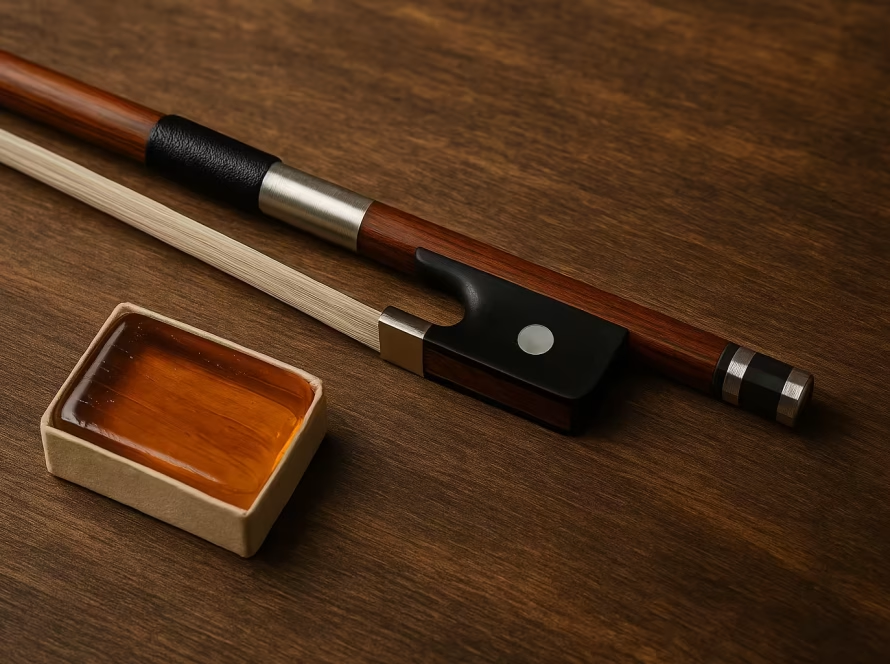
Protecting Your Violin Bow

The bow draws music out of strings. Maintain it through:
- Loosening bow hair before storage and transport so wood is not under constant compression.
- Applying rosin along the full length of hair, not just the middle, for consistent grip across all strings.
- Using quality rosin suited for the instrument. Bass rosin is too soft for violins.
- Wiping frog clean after use so sweat salts and grime don’t deteriorate the screw mechanism.
- Storing bow in case vertically on end so hair does not imprint on a stick.
- Avoid drops that can warp delicate sticks or crack fragile frog parts.
Fine bow hair applied with a balanced, straight bow makes all the difference in tone production. Handle with care.
Acoustic Considerations for Violin Cases
Beyond protecting from bumps, your violin case can also dampen acoustic noise:
- Hard case walls absorb some ambient sound vibrations rather than transferring directly to the instrument.
- Soft linings cushion the instrument against vibration when snapped shut for storage or transport.
- Cases help block sounds like nearby percussion that could transfer through stands to cause buzzing.
- Latched cases form tighter seals to preserve a humidified interior from exterior noise and climate fluctuations.
- Limit case openings to avoid sound and humidity exchange. Only open when accessing the violin.
Closed cases complement other strategies like isolation platforms that minimize vibration disturbances. Take advantage of this built-in acoustic benefit.
Storing a Violin for Extended Time
For storing a violin safely long-term when not playing:
- Document condition thoroughly with photos, especially any existing wear and imperfections.
- Have a luthier perform a check-up and any needed adjustments before storage.
- Humidify the case to a 45% moisture level and maintain this ideal humidity constantly.
- Use an electronic hygrometer with a humidity control system to monitor levels without opening the case.
- Ensure strings are at medium tension – not fully slackened but not fully played-in tight.
- Wrap the bridge loosely with a cloth between the top and strings to prevent imprints on top.
- Store the case in a climate and temperature-controlled room away from windows, vents, and direct light.
With proper prep and stable storage conditions, violins can rest safely for extended periods until ready to play again.
Protecting Your Violin’s Value
Beyond keeping your violin physically protected, also preserve its monetary value:
- Document appraisals, provenance paperwork, receipts, and certificates of authenticity in a safe place.
- Take high-resolution photos of instrument details for identification purposes.
- Insure violins separately under homeowners or renters policies. Organize appraisals by year for all instruments.
- For very high-value instruments, consider off-site bank vault storage of documentation and security microchips inside the violin.
- Photograph cases and accessories as well. Thieves target complete outfits.
- Back up any sentimental performance photos, concert programs, and history documentation digitally.
With diligent documentation and insurance coverage, your violin is protected against different forms of loss.
Displaying Violins Safely
When displaying violins in homes or shops:
- Never hang violins flat flush against walls. Pegs and tailpiece ends require space clearance.
- Display on angled pedestals or wall hooks that cradle the bottom for secure support.
- For flat wall mounting, use specialized plaque mounts with curved cutouts.
- Ensure solid, vibration-free attachment to studs or horizontal braces.
- Spotlight violins for dramatic effect but ensure lights emit minimal UV rays to prevent fading.
- Set displayed violins to lower string tension to avoid warping under tension.
- Group violins by size/type together. Separate rare collectibles on their stands.
- Keep highly valuable instruments in locked cases, only bringing them out temporarily for viewing.
Beautiful displays still require diligent safety steps to prevent damaging violins when out of the case.
Finding a Quality Violin Luthier

Caring for a violin yourself is important, but routinely visiting a luthier is also key. When choosing a luthier:
- Look for dedicated violin specialists, not just broad instrument repair.
- Seek experienced luthiers who trained through apprenticeships.
- Ask trusted musicians for personal recommendations.
- Search for luthiers accredited by national organizations.
- Schedule a check-up to get a feel for their expertise and approach.
- Assess communication style and ability to explain issues.
- Consider logistics like location, availability, and turnaround times.
- Request itemized estimates so you understand options and costs.
The right luthier becomes a trusted partner in maintaining your violin for the long run. Invest time in finding one with proven skills.
You can read more on Quora.
Questions to Ask Your Luthier
Luthiers offer personalized care. When meeting a new luthier, ask:
- How do you evaluate an instrument’s condition and needs?
- What are your maintenance recommendations for my violin’s age and construction?
- Which repairs do you handle yourself vs. outsourcing?
- What are your qualifications and training background?
- Do you have experience with contemporary versus antique instruments?
- What is the turnaround time for basic adjustments versus extensive repairs?
- Can you provide photos and details about the repairs needed?
- Do you offer payment plans for larger restoration projects?
- Are volume discounts possible if I bring multiple instruments/family members?
Come prepared with questions to find the best luthier fit.
Evaluating Violin Shops and Luthiers
Choosing where to take your instrument takes research:
- Search online reviews for feedback on customer service and expertise.
- Ask for references from other clients with instruments similar to yours.
- Look for clear price lists for common adjustments and repairs. Avoid vague estimates.
- Assess tools and workspace tidiness as a proxy for attention to detail.
- See if they stock a wide variety of acoustic instruments and accessories beyond violins.
- Request to see examples of past restoration work.
- Get a feel for how busy the shop is. Avoid long wait times.
- Look for recommendations or certifications from established luthier associations.
Find a shop that makes you feel comfortable entrusting the care of your precious violin.
Questions Your Luthier Should Ask You
A diligent luthier will also have questions for new clients:
- How long have you played the violin? What is your skill level?
- Can you share background on your instrument and past maintenance history?
- What issues have you been experiencing with playability or tone?
- Have you noticed any new buzzing, rattling, or loss of projection?
- Have there been any changes to your strings, rosin, or other accessories?
- Have you recently adjusted sound posts, bridges, or pegs yourself?
- What is your typical practice and performance schedule?
- Have you traveled recently or changed humidity or temperature conditions?
- Does your violin have any existing cracks or repairs I should know about?
Thorough luthiers seek context to make tailored recommendations. Be prepared to share details to help them evaluate your instrument’s status.
Preparing for Your First Violin Luthier Visit
Before your initial luthier appointment:
- Gather any documentation on violin age, origin, and restoration background.
- Note playing issues you want addressed like buzzing spots or difficult strings.
- Clean your violin to present it in optimal condition for inspection.
- Mark the current bridge position with a pencil in case it moves.
- Plan transportation method and case to protect violin before and after adjustments.
- Have new strings, rosin, and other accessories on hand in case replacements are recommended.
- Create a list of questions to understand their methods, philosophies, and pricing.
- Discuss your playing goals and plans to help guide the work needed.
Thoughtful preparation makes your appointment efficient so you start on the right path with your new luthier.
Protecting Your Violin in School Programs
For students learning violin through school programs:
- Label the instrument and case clearly with name, school, and phone number in case misplaced at school.
- Select durable student-quality instruments for daily transport. Avoid bringing heirloom violins.
- Find a lightweight case that fits precisely. Bulky cases are difficult for young hands.
- Keep violins in cases when not playing. Don’t leave unattended in practice rooms.
- Store carefully on an assigned shelf in instrument storage rooms. Avoid stack-ups.
- Advise music teachers of any maintenance and compliance with school policies.
- Review insurance options either through rentals, homeowners plans, or school policies.
Young students benefit from violins suited for the demands of school commutes and storage. Liaise with teachers to protect instruments.
Storing Violins in Educational Settings
School music programs require organized, safe storage methods:
- Use individual shelves, slots, or lockable cabinets for each student’s instrument. Avoid pile-ups.
- Label storage areas clearly with student names and instruments. Keep logs of assigned spaces.
- Position larger instruments on the bottom shelves. Store violins, violas, and small instruments up higher.
- Ensure shelves are smooth, free of splinters, and shaped to prevent instruments from rolling. Apply cushioned shelf liner.
- Set instruments in cases on their backs to keep them stationary. Use tie-downs or straps if needed.
- Avoid locating storage areas under noisy hallways or beside percussion rooms.
- Maintain stable room temperature and humidity year-round. Install hygrometers.
- Keep storage rooms locked when not supervised. Only staff should access instruments.
- Prohibit stacking instruments or piling accessories loosely near instruments.
With mindful racking and climate control, violins stay protected in academic music programs.
Teaching Young Students Violin Care
When introducing violin to young beginners also teach:
- How to loosen bow and strings when packing up after playing.
- Correct posture and holding the instrument to avoid tension and drops.
- Gentle handling by edges to pick up and pass violins when needed.
- Wiping strings and fittings down before packing up in case.
- Rotating between two violins to allow drying out fully between uses.
- Alerting teachers about any buzzing, pegs slipping, or new cracking noises.
- Marking instrument and case clearly with name and contact info.
- Asking for help carrying violin cases up/downstairs. Two hands-on cases!
Start students off with safe handling habits through patience and repetition. Prevent problems before they happen.
Ideal Violin Sizes for Children
Pick the right size violin as kids grow:
1/32 violin – Ages 3-5 or children under 3’8″ tall
1/16 violin – Ages 5-7 generally. Up to about 3’8″ to 4′ tall.
1/10 violin – Ages 6-10 around 4′ to 4’9″ in height. Most common starter size.
1/8 violin – Ages 8-13 around 4’6″ to 5′ tall. Many adult learners start here.
1/4 violin – Ages 10-14, 4’9″ to 5’3″ in height. Typical female teen starter size.
1/2 violin – Ages 12-adult, 5′ to 5’7″ in height. Standard adult female size.
3/4 violin – Ages 14-adult approaching 5’9″. Smaller adult male starter size.
4/4 (full) violin – Ages 15+ over 5’7″. Standard adult male size.
Measure arm length and match to instrument size for optimal playing comfort. Budget for upgrades as kids grow.
Teaching Adult Violin Care Basics
Adult beginners should also learn:
- How to loosen bow hair before storage using thumbwheel screw.
- Wip off rosin dust from instruments and strings before packing up.
- Precise tuning using pegs – turn gently and check often.
- Signs of overtightening strings like string trees cutting into windings.
- Humidity meters and ideal 45-55% case humidity range to monitor.
- Safe instrument handling, especially removing from the case by body not scroll.
- Proper lifting and passing of violins when needed using edges.
- Quality cleaning cloths to use on strings/fingerboards. No commercial sprays or polishes.
- Awareness of buzzing and rattling noises requiring a luthier visit.
- Adjusting endpin length and shoulder rest height for proper instrument hold.
Reinforce fundamentals continuously so new players ingrain safe techniques.
Finding a Violin for Adult Beginners
When equipping adult learners:
- Start with 1/2 or 3/4 size violins that fit most women and many men. Consider 1/8 size for a shorter stature.
- Select student-grade wood instruments for durability. Carbon fiber is very hardy but has different acoustic properties.
- Test instruments and bows from local shops. Seek recommendations from teachers too.
- Look for outfit bundles with case, bow, rosin, and extras for convenience.
- Consider renting before buying to try different sizes and see the commitment level.
- Research group classes at music schools and universities which may loan violins.
- Invest in quality shoulder rests, tuners, and other useful accessories. Don’t skimp.
With the right-sized instrument and supportive accessories, adult beginners will learn comfortably and efficiently.
Travel Considerations for Adult Students
Adult violin students who travel regularly should:
- Select a lightweight, durable case that fits precisely in vehicles. Test different shapes.
- Look into flight cases with higher durability for checked baggage transport.
- Bring humidifier packs designed for instrument cases. Monitor humidity.
- Have a backup violin for home and gigging to avoid frequent transport of the main instrument.
- For overseas trips research regulations on musical instrument transport in advance.
- For long car trips, secure the case in the foot space or the back seat. Avoid loose sliding.
- Take advantage of summer violin camps and masterclass destinations to limit personal travel with instruments.
With planning, adult students can safely bring their violins along on adventures near and far.
Guiding Adult Students on Violin Purchases
Offer adult students advice when purchasing violins:
- Be wary of labeled Stradivarius violins which are nearly always fakes. Authenticate carefully.
- For newer players, focus the budget on the bow, case, and accessories over the instrument. Upgrade violin later.
- Try instruments from local shops and luthiers before buying from anonymous online vendors. Test play.
- Have a teacher or advanced player assess potential instruments to identify quality and issues.
- Consider renting first to determine your commitment level before investing in an owned instrument long-term.
- Vintage instruments require inspection for damage. Modern violins offer more durability.
- Research violin construction like solid wood versus laminates to understand durability tradeoffs at different prices.
Arm adult students with the knowledge to find quality instruments suited to their skill level and budget.
Guiding Adult Students on Bow Purchases
Advise adult students on bow selection:
- Match bow weight and balance to current skill level. Heavier bows add playing challenges.
- Choose standard Brazilwood bows for students. Avoid cheap fiberglass or exotic woods until playing progresses.
- Select a stick with consistent flexibility and straightness. Gently bend to test.
- Assess bow hair tension when testing potential bows. Rehairing costs $60-$100 so avoid worn-out bow hair.
- Look for a snug thumb leather and smoothly winding screw mechanism at the frog.
- Check that hair strands are consistent in width and silvery white, not dirty brown.
- For worn bows, factor repairing costs into negotiations on the price.
The right bow greatly impacts progress during the critical adult beginner phase. Guide choices carefully.
Recommending Violin Shoulder Rests
Suggest student shoulder rest options:
Beginner Models
- Kun Bravo – entry-level, fully adjustable, wood
- Bon Musica – flexible plastic, various heights
- Everest – basic comfort, sponge padded
Intermediate Models
- Kun Collapsible – carbon composite, height adjustable
- Bon Musica Protege – larger size for adults
- Everest Shoulderpadd – thicker foam, replaces shoulder pad
Advanced Models
- Kun Super Rest – patented design, carbon fiber
- Bon Musica Model Max – premium spruce and ebony rest
- Kreutzer Rest – fully adjustable, wood, handmade in Germany
Consider student anatomy, playing style, and instrument size when fitting shoulder rests. Proper support prevents injury.
Guiding Students on Violin Case Selection
Recommend student violin case options:
Lightweight Cases
- Bobelock hard foam shell case – basic hardy protection
- Gewa Air carbon fiber case – ultra-light, backpack straps
- Bam Hightech – slim carbon fiber composite
Shaped Cases
- Musilia Oblong – contours to body, various colors
- Gewa Air Curve oblong case – contoured light carbon fiber
Wooden Cases
- Kaces wooden case – archtop models with plush lining
- Bam Classic – plywood shell with leatherette exterior
Durable Options
- Eastman fiberglass case – heavy duty protection
- Bam Hightech contrabass – circular design, airline safe
Guide case selection based on travel frequency, weight preferences, instrument size, and budget. Protect that investment!
Recommending Violin Accessories
Ensure adult students have these useful accessories:
- Shoulder rest – properly fitted rest prevents injury and fatigue
- Rosin – quality rosin suits instrument type; rotate to evenly wear
- Electronic tuner – convenient and precise; clip-on or headstock mount
- Cleaning cloth – microfiber gently removes rosin; no sprays
- Humidifier – 2-way packs maintain 45-55% case humidity
- Mute – brass/rubber practice mutes available; respect housemates!
- Chin rest – locate precisely and upgrade to avoid strain
- Stand – padded folding stands securely hold violin upright
- Peg drops – lubricates pegs for smooth tuning; apply sparingly
- Hygrometer – monitors case humidity levels; analog or digital displays
Having the right supportive accessories makes practicing comfortable, efficient, and safe.
Guiding Violin Bow Rehair Timing
Advise students on when to get bows rehaired:
- Bow hair becomes dirty and grimy with accumulated rosin dust.
- Noticeably frayed ends or hairs falling out.
- Consider repairing every 1-2 years with regular playing. Professionals repair more often.
- Bow has to be aggressively tightened to produce enough friction on strings.
- Slipping hair even when tightened, struggling to stay gripped after a long note.
- After cleaning and rosining again, playing still feels suboptimal.
- New strings installed but tone still seems weak or compromised.
- Hair won’t tighten fully or no longer straightens out when tightened.
Replacing worn, grimy bow hair restores the bow’s ability to produce a clean, vibrant tone. Stay proactive about repair timing.
Guiding Students on Violin Maintenance Schedule
Suggest this general maintenance schedule:
- Daily – Rosin strings and wipe down after playing
- Weekly – Check bridge position and tune pegs
- Monthly
○ Clean strings with microfiber cloth
○ Inspect bow hair and re-rosin evenly
○ Check case humidity levels - Every 3 months – Change strings
- Every 6 months – Get violin set up by luthier – bridge, soundpost check, peg tightness
- Yearly
○ Deep clean with luthier – polish varnish, clean fingerboard, replace pads
○ Rehair bow
Following a routine maintenance schedule keeps violins sounding their best for years of enjoyable playing.
Finding Quality Violin Strings for Students
Suggest student violin string sets under $20:
- D’Addario Prelude – warm synthetic core student strings
- Super Sensitive Red Label – affordable steel strings
- D’Addario Pro-Arte – composite core, mellow student strings
- Thomastik Dominant – long-lasting steel strings, bright tone
- Pirastro Oliv – synthetic core, balanced tone
- D’Addario Zyex – synthetic, minimizes pitch instability
- Thomastik Vision – soloist quality at student pricepoint
Avoid the cheapest strings that go out of tune quickly. Quality sets support learning with a pure, stable tone.
Conclusion

As we’ve explored, violins require diligent protection from temperature and humidity fluctuations to preserve their structural integrity and vibrant musical tone. By maintaining ideal conditions of 45-50% relative humidity and 65-70°F during storage, transport, and performances, you can spare your instrument from cracks, warping, and other damage. Monitor humidity levels, allow gradual climate adjustments, and avoid extremes. Look for warning signs like pegs slipping or cracks appearing to catch issues early. With proper precautions, your violin will resonate beautifully for many years to come, rewarding all your care with enduring songs. Treat your instrument as the cherished work of art and engineering it is, and you’ll be richly rewarded with a lifetime of harmonic bliss
FAQ
What humidity level should I aim for inside the violin case?
You should try to maintain 45-50% relative humidity inside the violin case. This is the ideal range to avoid expansion and contraction damage to the delicate wooden instrument.
How can I monitor the humidity level inside my violin case?
Use a hygrometer device inside the case to track the humidity levels. Analog or digital models are available. This allows you to monitor conditions without even opening the case.
What should I do if the humidity gets too low in my violin case?
If the case humidity drops below 40%, use humidifying devices like Dampits or Humidipaks to boost levels. Keep the case closed so the humidifier can work.
What should I do if the humidity gets too high in my violin case?
If humidity goes above 55%, use moisture-absorbing silicone packs or Humiditrol packs to safely lower the humidity down to the target range.
How can I acclimate my violin to a new environment?
Keep your violin in the closed case for several hours when entering a new environment before opening. Let the instrument adjust slowly to the new conditions.
How often should I bring my violin to a luthier?
Aim for professional setups and adjustments every 6 months. Annual deep cleanings are also recommended to keep the violin in top playing condition.
What are the signs of temperature/humidity damage I should watch for?
Look for cracks, warping, bridge feet lifting, slipping pegs, fingerboard lifting, or sinking. Catching problems early prevents further damage.

1 Comment